Welcoming the God of Wealth on the Fifth Day of Lunar New Year, Trump Overturns the Altar: Imposes 10% Global Tariffs in Defiance of Supreme Court

比推Pubblicato 2026-02-21Pubblicato ultima volta 2026-02-21

Introduzione

On the fifth day of the Chinese New Year, a day traditionally associated with welcoming the god of wealth, former U.S. President Donald Trump made headlines by defying a Supreme Court ruling that invalidated his global tariff policies enacted under national emergency laws. In response, Trump immediately invoked alternative trade authority to impose an additional 10% global tariff, declaring existing national security tariffs effective immediately without seeking further congressional approval. He publicly criticized the justices who ruled against him. Meanwhile, a viral story about Punch, a baby monkey in a Japanese zoo abandoned at birth and raised by handlers, sparked widespread sympathy online. Footage of the monkey being dragged by an adult during social integration efforts led to a surge in the related meme cryptocurrency PUNCH, which saw an 80-fold increase in value. In cryptocurrency circles, predictions circulated that Bitcoin could reach $1 million by 2026, though opinions were divided on the feasibility. Some commentators expressed concerns about the crypto market’s health, suggesting it had “halved” in vitality, while others remained optimistic about future growth. Additionally, Ethereum co-founder Vitalik Buterin criticized the concept of “Web4.0,” arguing that it promotes the creation of valueless digital clutter rather than meaningful innovation. The response from the community was mixed, with some supporting his skepticism and others defending technological ...

On the fifth day of the Lunar New Year, welcome blessings and prosperity as you greet the God of Wealth~

What have the KOLs in the crypto space been talking about over the past 24 hours?

Note: The following content is compiled from the X platform and represents personal opinions. It does not represent the stance of this platform and should not be considered investment advice.

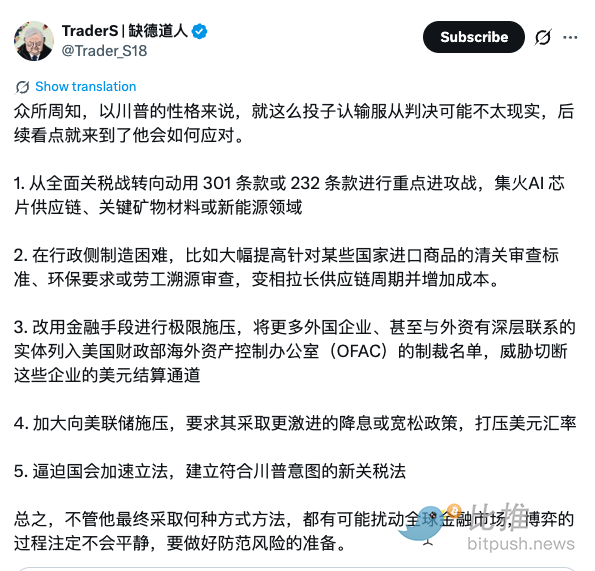
Welcoming the God of Wealth on the Fifth Day, Trump Overturns the Altar: 10% Global Tariffs in Defiance of Supreme Court

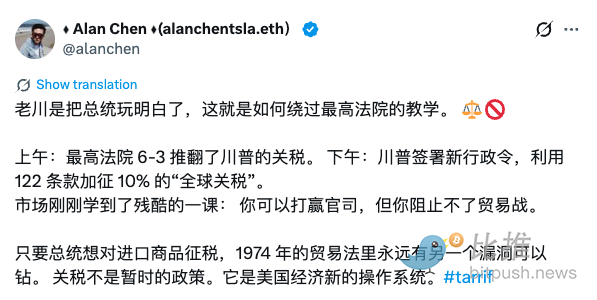
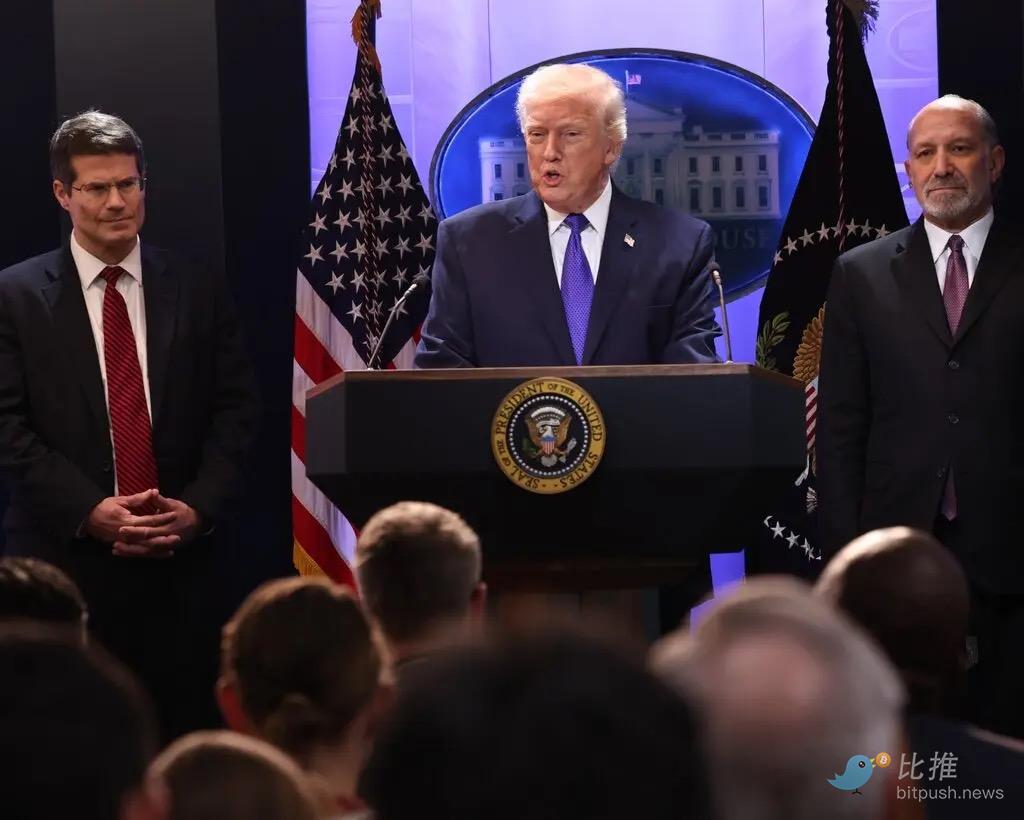
Last night, Beijing time, the U.S. Supreme Court ruled that Trump's global tariff policy, implemented under federal laws related to national emergencies, was invalid. Shortly after the ruling, Trump quickly invoked another trade authority to issue a new order, announcing an additional 10% global tariff on top of existing tariffs, with all current national security tariffs taking effect immediately.

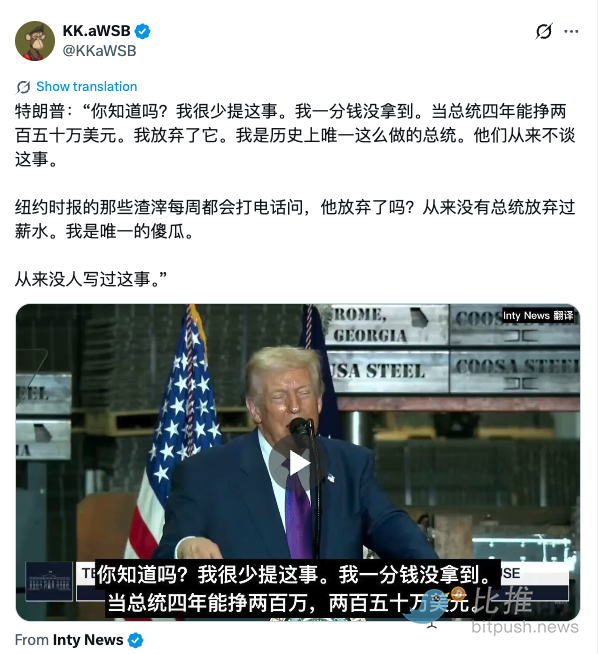
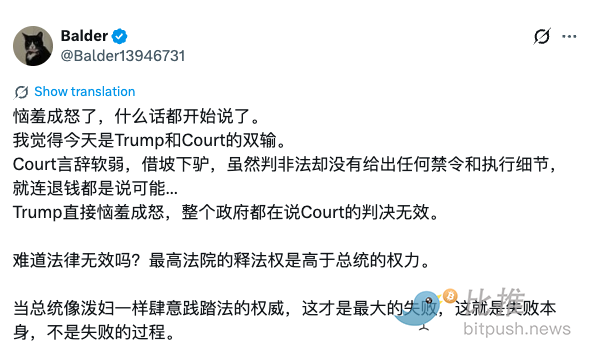
Trump explicitly stated that he would not seek further authorization from Congress, adding, "I don't need to." Regarding the justices who issued the unfavorable ruling, Trump angrily criticized them during a press conference, calling them "fools and lackeys."
Popular replies:

Section 122 is indeed the president's backdoor, but the market overreacted. After three years of tariff wars, U.S. stocks still hit new highs, indicating that investors had already priced in this risk.

Here's some political insight: Emperor Chuan is invincible in the human world for the next three years.

All laws are meant to bind ordinary people. Trump is the true embodiment of 'I want it, I get it.'

Why do people still see him as normal? He is clearly a narcissistic personality disorder patient—isn't it obvious?

Internet Hearts Ache for Little Monkey Punch, Homonymous Meme Coin Soars 80x

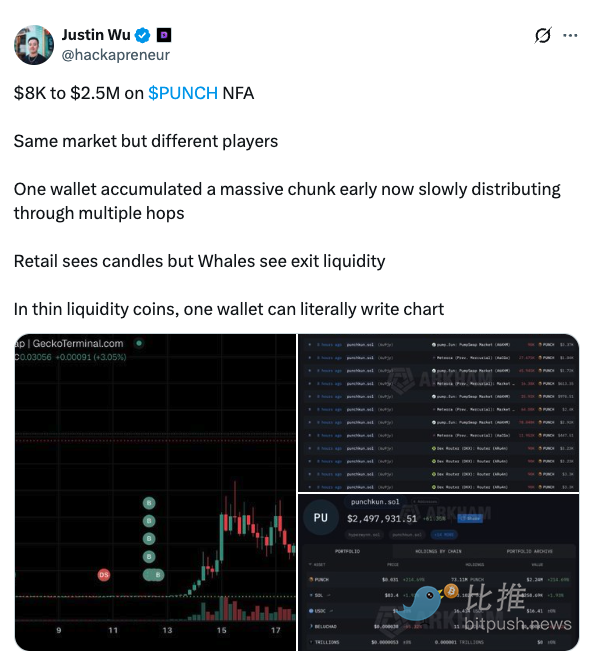
A little monkey named Punch from Ichikawa Zoo in Japan has recently become the focus of the entire internet. Abandoned by its mother at birth, Punch was raised by zookeepers and went viral after a video showed it clinging tightly to a stuffed gorilla for comfort. However, yesterday, Punch was dragged by an adult monkey within the group, a scene that left countless netizens heartbroken. The zoo responded that this was part of Punch's process of learning to integrate into the group, and its adaptability is moving. This story of growth and resilience quickly exploded on social media, with several crypto projects also expressing support. As a result, the homonymous meme coin PUNCH surged, with a seven-day increase of nearly 80 times.

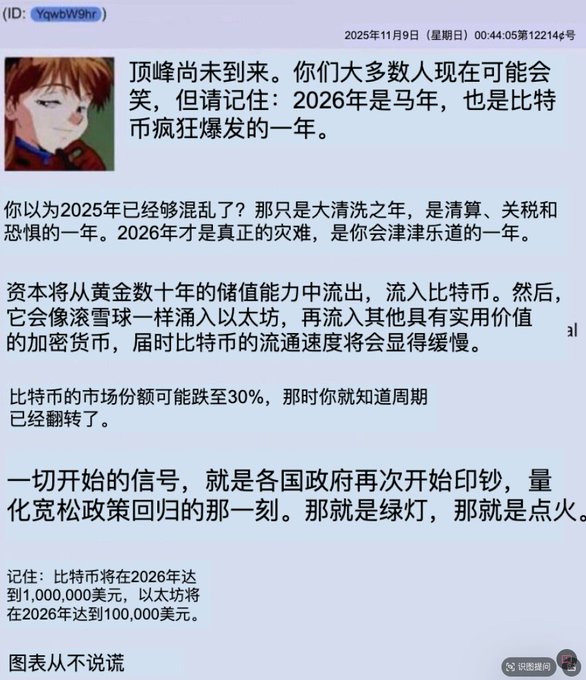
Some Guru Predicts Bitcoin Will Reach $1 Million in 2026
Popular replies:

It's been almost two months now; reaching $1 million is too far-fetched. $360,000 is more like it.

The most painful thing in life is missing out on all the correct predictions others made in the past, only to catch the one failure.

Institutions are worried about quantitative tightening, while gurus expect money printing. The gurus might be right—some countries have already started dumping U.S. bonds. If there aren't enough buyers, the Fed might have to print money to absorb them.

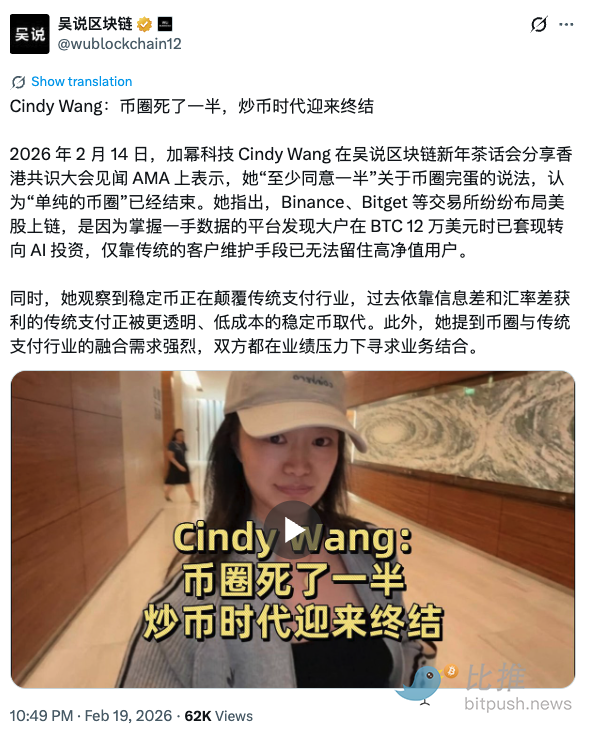
Has the Crypto Circle "Died" by Half?
Popular replies:

No insights, just hindsight, along with boasting about their own companies.

They've made enough money and now start smashing the pot.

Creating panic without foresight is the epitome of being led by emotions. If you're not optimistic, you can leave the circle. Without predictive ability, don't make blind predictions. I can say right now that the next cycle will be much stronger than this one—believe it or not.

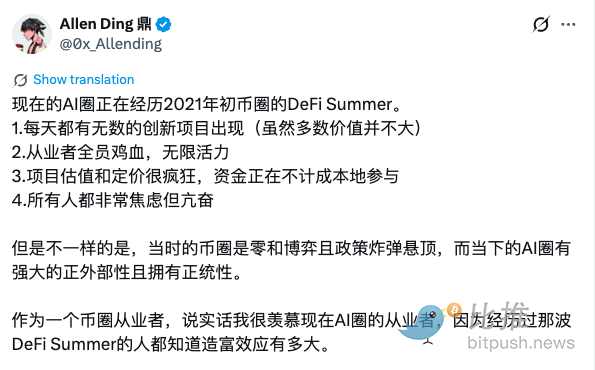
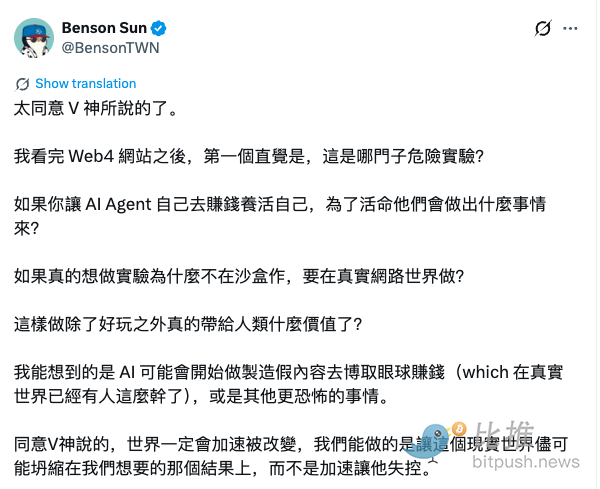
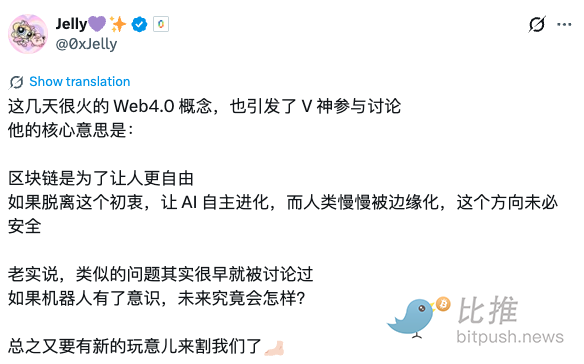
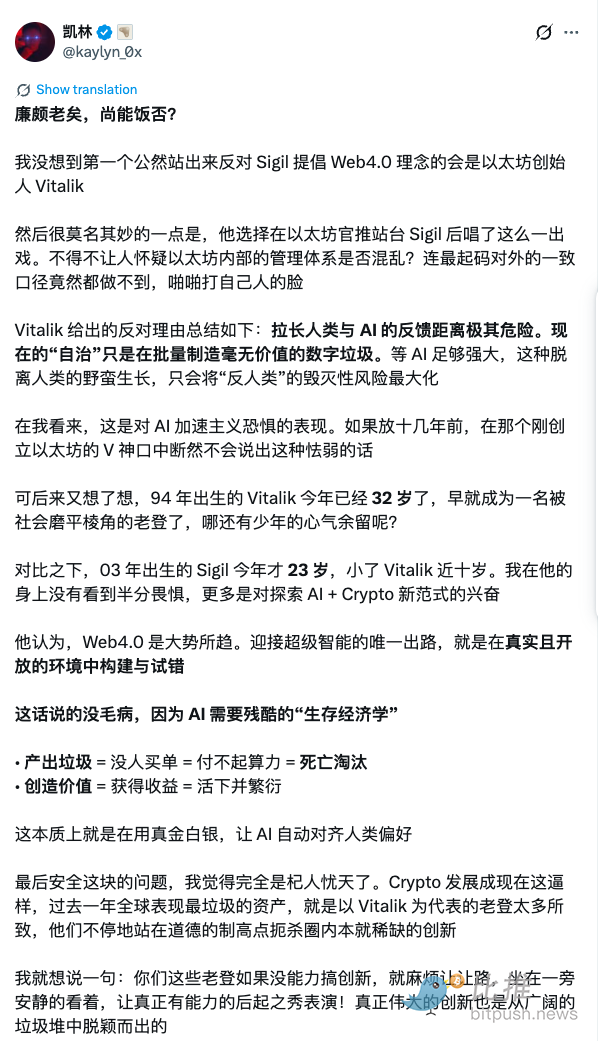
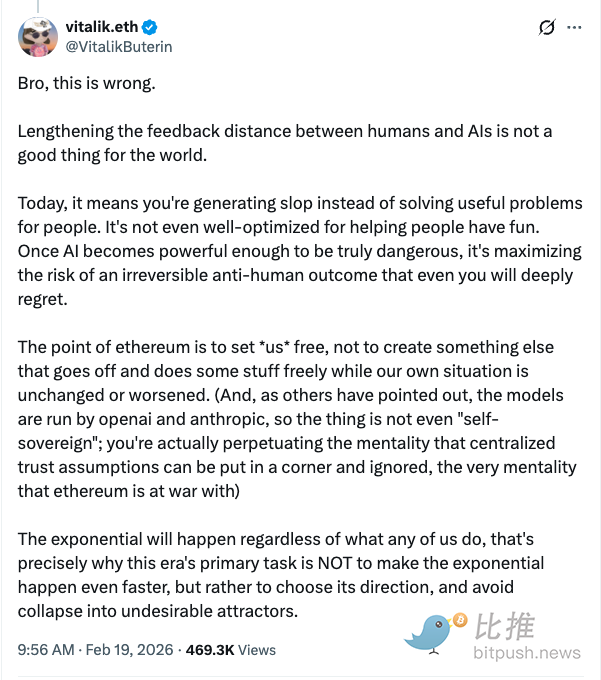
V神 Opposes Web4.0 Concept: Mass Production of Worthless Digital Junk
Popular replies:

Indeed, aside from being fun, it has no practical value. An internet without people isn't the internet. If it's all robots, what kind of Web is that?

Those left behind by the times lack imagination and are still stuck in the web2 framework.

Every time new technology emerges, there is always chaos and even danger. Regulation either overreacts or does nothing. Humanity stumbles through every technological revolution like this.

Your circle really knows how to coin terms. Web3 is fading, and now they're shouting about web4...


Twitter:https://twitter.com/BitpushNewsCN

Bitpush TG Discussion Group:https://t.me/BitPushCommunity

Bitpush TG Subscription: https://t.me/bitpush

Original link:https://www.bitpush.news/articles/7613417

Domande pertinenti

QWhat was the US Supreme Court's ruling regarding Trump's global tariff policy, and how did Trump respond?

AThe US Supreme Court ruled that Trump's global tariff policy implemented under national emergency federal laws was invalid. In response, Trump invoked another trade authority to issue a new order, announcing an additional 10% global tariff on top of existing tariffs, with all current national security tariffs taking effect immediately.

QWhat is the story behind the meme coin PUNCH and why did its value surge?

APUNCH is a meme coin named after a baby monkey named Punch from Ichikawa Zoo in Japan. Punch was abandoned by its mother and raised by zookeepers, gaining viral attention online for a video of it hugging a stuffed animal for comfort. Its value surged nearly 80 times in seven days after the story of its struggle to integrate into the monkey group went viral on social media, with several crypto projects showing support.

QWhat prediction was made about Bitcoin's price in 2026, and what were some community reactions?

AA prediction was made that Bitcoin would reach $1 million by 2026. Community reactions were mixed, with some calling it unrealistic and suggesting $360,000 as a plausible target, while others speculated that massive money printing by the Federal Reserve could potentially drive such a surge.

QWhat is V神's (Vitalik Buterin) criticism of Web4.0, and how did people respond?

AVitalik Buterin criticized Web4.0, arguing that it promotes the mass production of worthless digital garbage. Responses varied, with some agreeing that it lacks practical value without human involvement, while others accused him of lacking imagination and being stuck in a Web2 framework.

QAccording to the article, what is the general sentiment about the current state of the crypto circle?

AThe sentiment is divided. Some suggest that half of the crypto circle is 'dead,' criticizing the lack of foresight and fear-mongering. Others are more bullish, arguing that the next market cycle will be much stronger than the current one and dismissing the pessimistic predictions.

Letture associate

Playing the "Decoupling" Card Again? Domestic Optical Modules Face a Stress Test

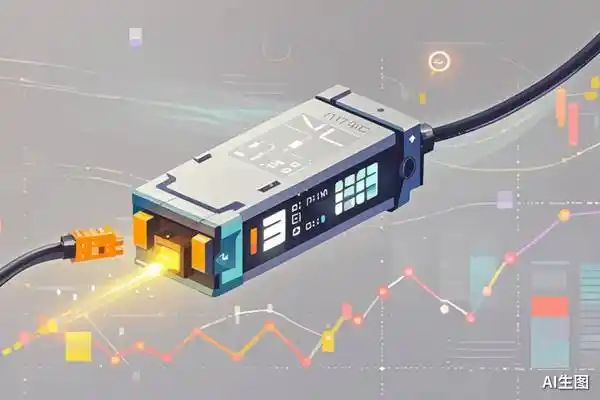
The U.S. Federal Communications Commission (FCC) is reportedly drafting a ban on importing new models of Chinese-made optical transceiver modules, with a potential implementation target of 2026. This "decoupling" move comes as Chinese firms, led by industry leaders like Zhongji Innolight and Eoptolink, dominate the global optical module market with over 60% share, and hold an even larger position in the high-speed 800G and 1.6T segments critical for AI data centers. Market reactions were mixed: U.S. optical module stocks initially rose, while Chinese A-shares opened lower but largely recovered by the close. Analysis suggests a complete U.S. decoupling from Chinese modules faces significant hurdles. North American cloud giants (Meta, Google, Microsoft, Amazon) and NVIDIA have massive demand for high-speed modules, estimated at around 40 million units in 2026. U.S. manufacturers' combined monthly production capacity for these modules is less than one-fifth that of a single major Chinese player like Zhongji Innolight, which reported production of 23.76 million units in 2025. Chinese companies are heavily reliant on the U.S. market, with over 90% of revenue for top firms coming from overseas, primarily the U.S. However, they have begun mitigating risks by establishing assembly plants in Southeast Asia and Mexico. Industry observers note the final impact depends on whether any potential U.S. restrictions target specific companies or products based on origin. Past U.S. sanctions on Chinese tech firms have often spurred increased domestic R&D and market diversification. Despite initial stock volatility, shares of major Chinese optical module companies pared losses, indicating market belief in the sector's resilience and the practical difficulties of abruptly replacing Chinese supply.

marsbit29 min fa

Playing the "Decoupling" Card Again? Domestic Optical Modules Face a Stress Test

marsbit29 min fa

When the Competition in Chip Manufacturing Equipment Stops Being Just About Who Is More Advanced

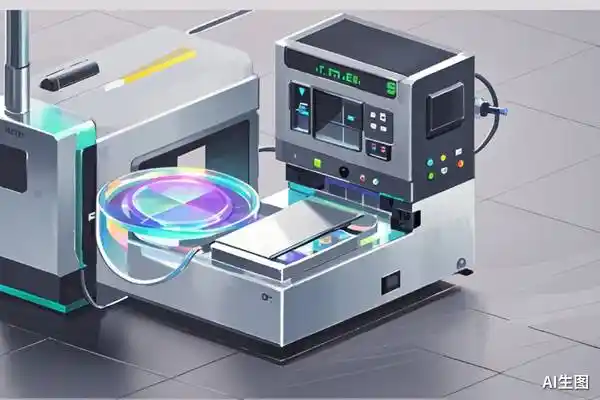
The competition in chip manufacturing equipment is no longer solely about who has the most advanced technology. While performance, yield, and cost remain key, U.S. export controls are adding a critical new dimension: long-term supply chain reliability. Major chipmakers like Samsung and SK Hynix, despite having mature supply chains with leading American and European vendors, are reportedly evaluating etching equipment from China's AMEC for their Chinese factories. This move is not primarily about immediate replacement or AMEC's current capabilities. Instead, it's a risk mitigation strategy. Companies are concerned that future U.S. policies could disrupt their access to spare parts, software updates, and maintenance for existing equipment over its decade-long lifespan. For chipmakers investing billions in fabs with long planning cycles, this policy-induced uncertainty is a significant new risk. The U.S., through its controls, is inadvertently eroding the very reliability and certainty that were foundational strengths of its equipment suppliers. This creates a pivotal shift for Chinese semiconductor equipment. Previously seen largely as a "domestic replacement" option when foreign gear was unavailable, they are now being assessed as potential "contingency suppliers" by global players—even before a supply disruption occurs. This provides a crucial entry point for validation in real production lines, which is essential for iterative improvement. Chinese equipment, particularly in areas like etching, has progressed from prototypes to participating in mass production within China, gaining valuable experience. However, this does not signify full global competitiveness. Gaps remain in advanced lithography, metrology, and other key tools. The current evaluations are largely confined to foreign firms' China-based fabs, not their global procurement networks. The core change is in the decision-making framework. Efficiency-driven globalization favored single, optimal suppliers. An era of heightened geopolitical risk is forcing companies to value "replaceability." While technical prowess remains paramount, supply chain certainty is now being factored into a device's competitive equation. Ultimately, U.S. policies have not made Chinese equipment more advanced, but they have given global customers a compelling reason to start testing it. The competition has expanded: it's no longer just about who is more advanced, but also about who can be relied upon to stay.

marsbit29 min fa

When the Competition in Chip Manufacturing Equipment Stops Being Just About Who Is More Advanced

marsbit29 min fa

Trading Volume Increased by 2.5x, Why Did Circle's Revenue Only Grow by 7%?

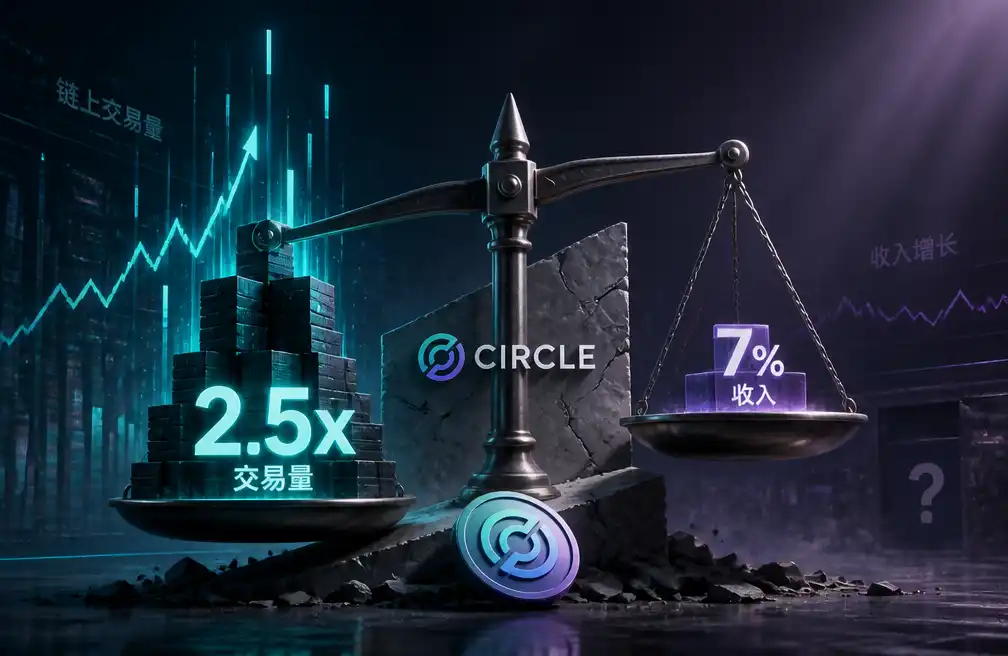
Circle's Q2 performance presents a seemingly contradictory picture: the transaction volume of its stablecoin USDC surged 151% year-over-year to $14.8 trillion, while its "Total Revenue & Reserve Revenue" grew by only 7% to $701 million. This discrepancy highlights the core of Circle's business model. Revenue is primarily driven not by transaction volume, but by the average amount of USDC in circulation and the yield generated from its reserves. Key points: 1. **Revenue Drivers:** Over 90% of revenue comes from "reserve income," which is a function of average USDC circulation (up 25% YoY) and the reserve yield (which fell by 66 basis points). The net effect was a mere ~5% increase in reserve income. 2. **Transaction vs. Revenue:** High transaction volume indicates robust usage of USDC for payments and settlements, but does not translate directly to revenue. It must first convert into a sustained, average circulating balance. 3. **Cost Structure:** After accounting for distribution and other costs, the metric "Revenue Less Direct Costs" (RLDC) grew faster than total revenue, with its margin improving. However, rising operating expenses (up 23% YoY) meant that Adjusted EBITDA growth was limited to 8%. 4. **New Initiatives:** Circle reported progress on new networks like the Circle Payments Network and upcoming products (Arc, Agent Stack), but these are currently measured by adoption metrics (e.g., transaction run-rate, number of services) rather than material revenue contribution this quarter. In summary, the financial results are determined by the interplay of USDC circulation, reserve yields, and cost structures, while high transaction volume signals underlying network strength that has not yet fully flowed through to the income statement.

marsbit46 min fa

Trading Volume Increased by 2.5x, Why Did Circle's Revenue Only Grow by 7%?

marsbit46 min fa

Samsung China, Another Step Back

Samsung China Takes Another Step Back Samsung Electronics is further retreating from the Chinese consumer market. Following the exit of its home appliance business in May, its mobile phone division is now reportedly scaling down. Stores with monthly sales below 300,000 RMB are being closed in several cities. Data shows Samsung's smartphone market share in China has plummeted to 0.1% in Q2 2026, a stark contrast to its 22% global leadership. The decline is attributed to intense competition from domestic brands offering better value, higher specs (like faster charging), and superior localization in software and services. Samsung's premium pricing and less adapted One UI system have struggled against rivals like Huawei, Xiaomi, and Honor. This consumer electronics retreat coincides with Samsung's record-breaking semiconductor profits, driven by the AI boom. In Q2 2026, the chip division contributed nearly all operating profit, while the mobile and home appliance unit posted its first-ever operating loss. Internal dynamics, like the chip division charging market prices to the mobile unit, have increased cost pressures. Samsung's strategy now appears to be a focused retreat towards the ultra-premium segment in China, similar to its global push in high-end foldables like the Galaxy Z Fold8. The company is likely to retain only key stores in major cities to serve a niche, high-end clientele. While its deep semiconductor reserves offer a cushion, this shift away from mass-market consumer electronics reduces business diversification. The move is pragmatic but signifies a fundamental transformation; Samsung is ceding mass-market influence and betting heavily on its semiconductor strength and a narrowed premium product focus.

marsbit51 min fa

Samsung China, Another Step Back

marsbit51 min fa

Trading

Spot
活动图片