Weekly Editor's Picks (0328-0403)

marsbitPubblicato 2026-04-04Pubblicato ultima volta 2026-04-04

Introduzione

Weekly Editor's Picks (0328-0403) provides a curated selection of in-depth analysis across macroeconomics, investment, Web3, AI, and crypto. Key topics include: the global economic recession redefined as a strategic state; Buffett’s cautious outlook and warning on nuclear risk; AI infrastructure investments driving inflation; Bitcoin reaching "escape velocity" as fiat weakens. In Web3 and AI, discussions cover AI agent engineering barriers, practical adoption challenges, and crypto-AI service trends. Prediction markets like Polymarket see low win rates, with AI tools identifying arbitrage. CeFi/DeFi analyses highlight Stripe’s AI payment strategy vs. PayPal’s struggles, and Hyperliquid’s innovative approach to derivatives. Bitcoin mining faces profitability crises, pushing firms toward AI infrastructure. Google’s quantum computing advances urge urgent crypto security upgrades. Also included: regional investor analyses, security incidents, and policy updates.

The information flow is too fast, and in-depth analysis articles are easily drowned out by hot topics. The 'Weekly Editor's Picks' column rescues this judgment-worthy content from the vast sea of information, filtering out the noise for you, leaving behind insights, and bringing inspiration.
Macro Situation

Has a Global Economic Recession Quietly Begun?

The author redefines recession from an 'economic outcome' to a 'strategic state.' It not only compresses growth and employment but also weakens a country's negotiating power, capital attractiveness, and external credibility, thereby losing the initiative in global games. Precisely because of this, governments are using fiscal, diplomatic, and even geopolitical means to replace monetary tools, essentially buying time for the growth slowdown and avoiding being forced to negotiate during a recession.

Under this framework, the market's core is no longer the interest rate path itself, but 'who can break free from constraints, and who remains trapped.'

This difference is first reflected in the foreign exchange and interest rate markets and further transmitted to asset prices and capital flows. When valuations continue to rise amid slowing growth, it may not be due to improved fundamentals but rather policy expectations that 'a recession will not be allowed to happen.'

Buffett's First Interview After Stepping Down: Now is Not the Time to Buy the Dip, Nuclear Weapons Will Be Used Sooner or Later

Sold Apple too early, but not buying now either.

Will not buy the dip in US stocks at this time.

The most dangerous situation is when the person with the nuclear button is about to die or is facing immense disgrace. In such a predicament, no one can predict what decision a person will make. Within the next hundred, maybe two hundred years, nuclear weapons will be used.

$700 Billion Poured into AI, Americans Taste the Bitter Fruit of Inflation First

The more AI investment, the higher the inflation, the further away rate cuts are, the higher the financing costs—but investment is still accelerating.

The arms race among big tech companies can no longer stop. One data center consumes as much electricity as an entire state.

$700 billion is pouring into AI infrastructure. Whether this money is the cause of inflation or the prelude to a productivity revolution depends on a question no one can yet answer: Will the models running in these data centers actually make the economy more efficient?

Conversation with Pantera Founder: Bitcoin Has Reached Escape Velocity, Traditional Assets Are Being Left Behind

It's not that gold hit a new high; it's that fiat currency is hitting a historic low.

The average age of first-time homebuyers in the US has already been delayed from 28 to 40.

We are facing a generational inflection point of monetary and state separation. Stablecoins are highly likely to take half of bank deposits within a decade. Bitcoin has reached escape velocity.

Investment & Entrepreneurship

Interviewing 10 Dubai Workers: Some Were Asked to Sign a "Life and Death Waiver"

On a practical level, Dubai is already in the midst of a battlefield.

Some Web3 workers are fleeing, some are holding fast, and others are signing waivers (company disclaimer) to return to Dubai, hoping to bet on high career returns amidst high risks.

The 've' Token Model 'Ebb Tide': Why Are Three Major Protocols Voluntarily Abandoning Their Former Trump Card?

The reason is not a theoretical error, but a failure in execution: low participation rates, captured governance rights, emissions flowing into unprofitable pools, token prices plummeting while usage grows.

Meanwhile, Curve's veCRV and Aerodrome's ve(3,3) are still healthy. But this model only works where the guided emissions can create real economic demand for liquidity.

Other protocols are choosing revenue-supported buybacks, deflationary supply mechanisms, or liquid governance tokens as alternatives to the ve token model.

Tiger Research: Analysis of the Current Situation of Retail Investors in Nine Major Asian Markets

Tiger Research covers 9 Asian markets with the largest user bases, analyzing barriers to entry for retail investors and exchange coping strategies. Core finding: Structural entry barrier differences exist in markets like South Korea, Japan, and Vietnam, and exchange localization strategy is a key variable for success. Valuable reference for projects looking at Southeast Asia expansion.

Also recommended: Odaily Interview with SharpLink: Ethereum's 'Productive Capitalist'.

Web3 & AI

What Exactly Are AI Agents Doing? Full Analysis of the 500k Line Claude Code Leak

The competitive moat for AI products may not be at the model layer, but at the engineering layer.
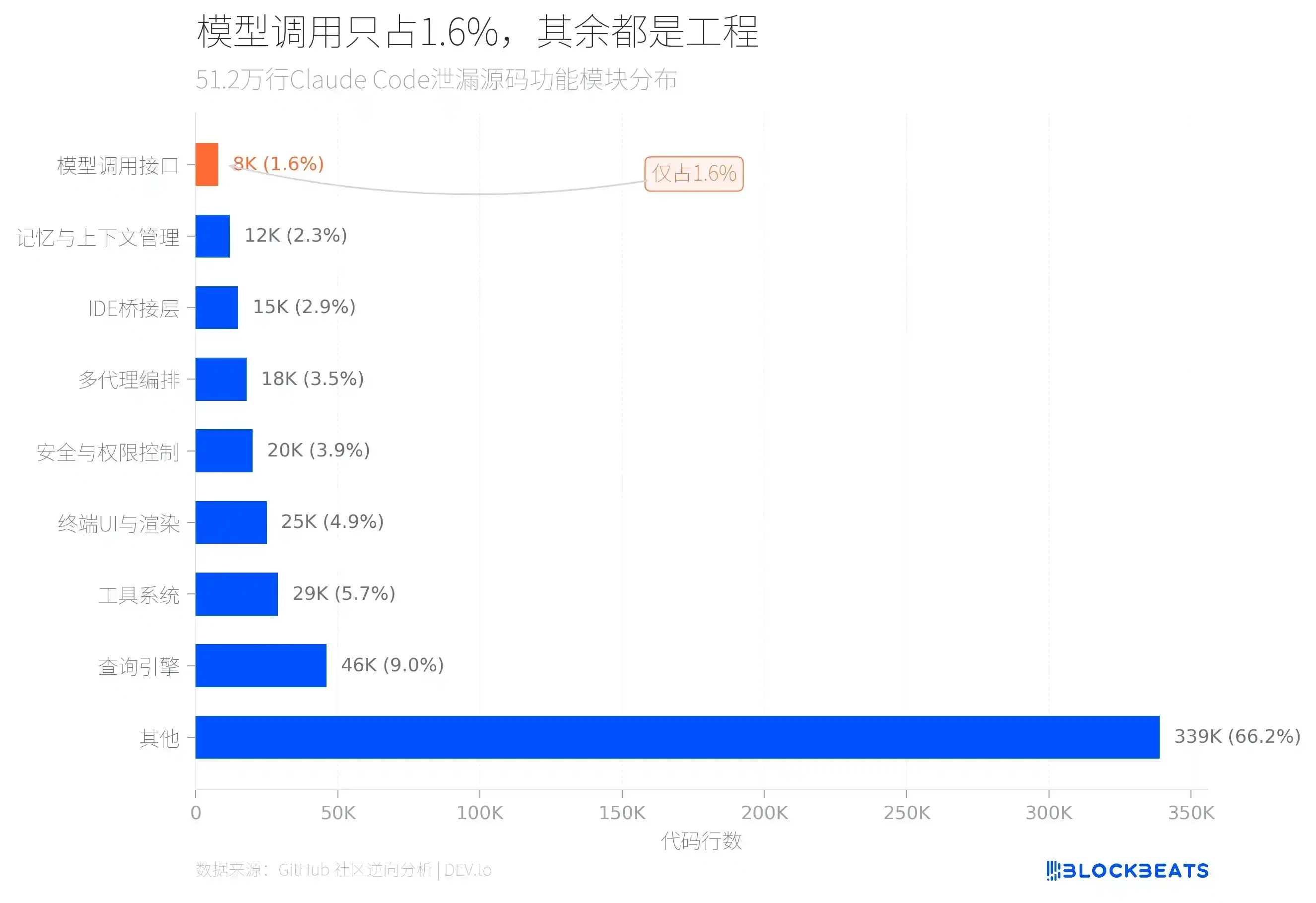
For AI products, model inference costs might not be the most expensive layer; failed cache management is.

Chased AI Tools for a Year, Zero Output: Reflections of a Serial Entrepreneur

Don't mistake 'trying new tools' for 'building something real.' When everyone can use the same models, the only moat is taste and depth, and taste can only be earned through real consequences and sustained focus.

Tiger Research: What AI Services Do Crypto Companies Offer?

Adoption motives vary by细分行业 (sub-sector): exchanges aim to prevent user churn; security companies aim to fill audit blind spots; payment infrastructure targets the emerging agent economy.

The "FOMO" and competitive pressure in the AI field are accelerating its application, far exceeding actual demand. Both real demand and competitive anxiety are at play.

Distinguishing between value-creating adoption and mere label-sticking adoption is the key question.

Prediction Markets

Only 43% Return on $1, Why Are 87% of Polymarket Players Losing Money?

"Longshot bias" is one of the most expensive mistakes in prediction markets. Traders often systematically overestimate low-probability events, paying too high a price for seemingly cheap contracts.

The traders who truly outperform prediction markets in the long run are not necessarily those with the "most accurate judgment," but those who can adjust their judgment the fastest and most reasonably when new evidence appears.

The Bayesian method essentially provides a scale for this "adjustment speed."

Stop Betting on Gut Feeling: AI is 'Picking Up Money' on Polymarket

The article introduces a method to identify arbitrage opportunities on Polymarket and execute them systematically: use Perplexity to complete research, locate the偏差 (deviation) between data and market pricing; use Claude to build trading logic, control risk, and execute automatically; finally, complete the trade and realize profits on Polymarket.

For ordinary participants, a more realistic path is to first find certainty through research, and then use systems to amplify gains.

Also recommended: Polymarket Smart Money Panorama: 26 Long-Term Trackable Addresses (Broken Down by Sector).

CeFi & DeFi

Stripe Up, PayPal Down: The New King of Payments Ascends

Stripe's judgment is straightforward: when AI Agents start making purchasing decisions for humans, whoever masters the payment channel抢先 (seizes first) masters the core lifeline of the AI economy. Stripe's超前 (forward-looking) vision puts it ahead of the entire payments industry.

PayPal, however, is步履蹒跚 (stumbling). PayPal's business model relies on "fund flow handling fees," while the stablecoin business model relies on "earning treasury interest on settled assets." There is a natural conflict between these two logics—every time PayPal promotes a PYUSD stablecoin payment, it is, to some extent, cannibalizing its own traditional fee income. This is a difficult problem to solve within PayPal's existing business framework.

BTC is Dying, Why Did HYPE Defy the Trend and Surge 20%?

The RWA trading market enabled by HIP-3 for Hyperliquid provides new value support.

Detailed Explanation of Hyperliquid HIP-4: Using Prediction Markets and Options Trading to Encroach on Traditional Finance

The market overall is in a downward trend, yet HYPE has shown极强的 (extremely strong) stability. The important reason is undoubtedly Hyperliquid's robust fundamentals, focus on generating revenue, and continuous use of profits to buy back HYPE.

HIP-3 (the perpetual contract market deployed by builders) has already shown a clear pattern: when the infrastructure is permissionless and already market-validated, liquidity tends to aggregate towards stronger teams, regardless of whether they receive additional ecosystem support.

The same logic will apply to HIP-4. HIP-4 focuses on "outcome trading," which will introduce prediction markets and certain types of options to Hyperliquid—these products can provide non-linear income outcomes without liquidation risk.

No protocol in the past was good enough to truly bring sustainable options trading into the crypto world. Hyperliquid has done it, and its approach is different from every other platform. This platform has no investors, is free from any external pressure, and Jeff can freely decide what the company wants to do. In this regard, Hyperliquid is very much like Telegram—it doesn't need to spend much money on marketing; the key is the belief itself. If the product is good enough, people will eventually come to use it.

Hyperliquid has a chance to capture the entire cryptocurrency options market.

Winners will build products truly面向 (oriented towards) the real world, embedding cryptocurrency as an underlying implementation detail; losers will continue to cling to the old narrative of "crypto for crypto's sake" and expect the world to adapt to them instead.

Airdrop Opportunities and Interaction Guides

Popular Interaction Collection | New Abstract Badge Task; Noise Beta Version Launched (April 2nd)

Meme

Post-00s Earning A7 Monthly, Trapped Between Three Screens

Odaily interviewed Meme P youngsters who still achieved great results in 2026, and former Meme diamond hands, to understand their ways of making money and their work lives.

Bitcoin

Losing $19K per Mined Coin, Bitcoin Miners Collectively Defect to AI

The latest mining report from CoinShares shows that the weighted average cost for listed mining companies to mine one Bitcoin has risen to about $80,000, while the current BTC price is $68K-70K—a loss of $19K per coin mined.

The Bitcoin mining industry is undergoing its most fundamental transformation since its inception. The clearest signal is not hash rate or difficulty adjustment, but the balance sheet, and the way out is a comprehensive shift towards AI infrastructure.

When Bitcoin Miners Fly into Space

For currently operating Bitcoin mining companies, space mining does not pose an immediate competitive threat in the short term, but a large number of startups continue to try. This also shows that the significant cost reduction space it represents still holds great attraction and imagination for the industry. This also侧面反映出 (reflects from the side) that the entire industry is under structural cost pressure.

The logic of space mining is an ultimate extrapolation of the above trend: if cheap electricity on the ground will eventually narrow due to demand competition, then go to the place with the most abundant energy, which is the universe.

Security

Major Google Quantum Computing Breakthrough, The Crypto World Needs to 'Change Locks' Early

The Google quantum research team (Google Quantum AI), led by world-renowned quantum circuit expert Craig Gidney and others, recently made two moves.

First, on March 25th, Google formally proposed its post-quantum cryptography (PQC) migration timeline, targeting 2029. Second, on March 31st, Google Quantum AI specifically released a research report aimed at the cryptocurrency industry,直言 (stating bluntly) that according to the latest research, the resources required for future quantum computers to crack the elliptic curve cryptography protecting cryptocurrencies are far less than previously thought.

The industry's past judgment about the timeline needs correction. Google has set its own migration target for 2029, and Google Quantum AI also mentioned in the article that it is working with institutions like Coinbase, the Stanford Blockchain Research Institute, and the Ethereum Foundation to responsibly advance according to the 2029 timeline plan.

For every crypto project, this意味着 (means) a new security watershed. Those who can admit the problem earlier, promote upgrades, and complete the "lock change" will have a better chance of preserving their security boundaries in the next era.

Also recommended: Odaily Interview with Yu Xian: How Does the Leak of Anthropic's Nuclear-Level New Model Affect Crypto Security Offense and Defense?.

Weekly Hotspot Recap

Policy & Macro Markets

US lawmakers' offices plan to release a stablecoin收益 (income/profit)条款 (clause) draft next week; industry preparing counter-proposal;

CFTC clarifies 5 key enforcement priorities: "Crack down" on prediction market insider trading and market manipulation;

Views & Voices

Trump: Negotiations have made significant progress; Trump threatens to attack Iranian energy facilities, oil prices continue to rise, US stock index futures fall; Iranian President: We are prepared to end the war, but want guarantees; Iran will impose tolls on ships passing through the Strait of Hormuz;

Trump: Bitcoin has an important status, the US needs to maintain leadership;

10x: Bitcoin's "safe-haven myth" fails under US-Iran conflict, ETF funds reshape pricing logic;

Trader Eugene: Has stopped loss and exited, plans to reduce trading frequency;

Institutions, Big Companies & Top Projects

SpaceX有望 (is expected to) list in June, IPO target valuation exceeds $2 trillion, plans to raise up to $75 billion; OpenAI completes $122 billion financing, valuation reaches $852 billion;

Bitfarms plans to liquidate all Bitcoin on its balance sheet, fully转向 (transition to) AI infrastructure;

Aster adjusts token economic structure, significantly reduces monthly unlock scale;

edgeX airdrop Waterloo (failure);

MagicEden: Wallet will be delisted tomorrow and enter export-only mode;

Dmail Network will gradually cease operations starting May 15th, users need to export emails before then;

Security

Drift Protocol attacked, losses至少 (at least) $200 million (Detailed explanation).

Attached is the portal to the "Weekly Editor's Picks" series. See you next issue~

Domande pertinenti

QAccording to the article, what is the new definition of a global economic recession and how does it affect a country's position in global negotiations?

AThe article redefines a recession from an 'economic outcome' to a 'strategic state' that not only compresses growth and employment but also weakens a country's negotiating power, capital attractiveness, and external credibility, causing it to lose initiative in global games.

QWhat is Warren Buffett's view on the current market and nuclear weapons as mentioned in the editor's picks?

AWarren Buffett stated it is not the time to buy the dip in the U.S. stock market. He also expressed that the most dangerous situation is when the person with the nuclear button is dying or facing immense disgrace, and he believes nuclear weapons will be used within the next one or two hundred years.

QWhat paradoxical relationship does the article highlight between AI investment and inflation in the U.S.?

AThe article points out a paradox where increased AI investment leads to higher inflation, which pushes interest rate cuts further away and increases financing costs, yet the investments continue to accelerate.

QWhat key security threat to the cryptocurrency world does Google Quantum AI's recent research highlight, and what is their proposed timeline for action?

AGoogle Quantum AI's research indicates that future quantum computers could crack the elliptic curve cryptography protecting cryptocurrencies with far fewer resources than previously thought. They have set a migration target of 2029 to post-quantum cryptography (PQC) and are collaborating with industry players to responsibly advance this timeline.

QAccording to the analysis of Polymarket, why are 87% of players losing money, and what is the key trait of successful traders?

AThe 'long-shot bias' is identified as the most expensive mistake, where traders systematically overestimate low-probability events and overpay for seemingly cheap contracts. Successful traders are not necessarily the most accurate in judgment but are those who can adjust their judgments the fastest and most rationally when new evidence appears, essentially employing a Bayesian method.

Letture associate

a16z: AI's 'Amnesia', Can Continuous Learning Cure It?

The article "a16z: AI's 'Amnesia' – Can Continual Learning Cure It?" explores the limitations of current large language models (LLMs), which, like the protagonist in the film *Memento*, are trapped in a perpetual present—unable to form new memories after training. While methods like in-context learning (ICL), retrieval-augmented generation (RAG), and external scaffolding (e.g., chat history, prompts) provide temporary solutions, they fail to enable true internalization of new knowledge. The authors argue that compression—the core of learning during training—is halted at deployment, preventing models from generalizing, discovering novel solutions (e.g., mathematical proofs), or handling adversarial scenarios. The piece introduces *continual learning* as a critical research direction to address this, categorizing approaches into three paths: 1. **Context**: Scaling external memory via longer context windows, multi-agent systems, and smarter retrieval. 2. **Modules**: Using pluggable adapters or external memory layers for specialization without full retraining. 3. **Weights**: Enabling parameter updates through sparse training, test-time training, meta-learning, distillation, and reinforcement learning from feedback. Challenges include catastrophic forgetting, safety risks, and auditability, but overcoming these could unlock models that learn iteratively from experience. The conclusion emphasizes that while context-based methods are effective, true breakthroughs require models to compress new information into weights post-deployment, moving from mere retrieval to genuine learning.

marsbit1 h fa

a16z: AI's 'Amnesia', Can Continuous Learning Cure It?

marsbit1 h fa

Can a Hair Dryer Earn $34,000? Deciphering the Reflexivity Paradox in Prediction Markets

An individual manipulated a weather sensor at Paris Charles de Gaulle Airport with a portable heat source, causing a Polymarket weather market to settle at 22°C and earning $34,000. This incident highlights a fundamental issue in prediction markets: when a market aims to reflect reality, it also incentivizes participants to influence that reality. Prediction markets operate on two layers: platform rules (what outcome counts as a win) and data sources (what actually happened). While most focus on rules, the real vulnerability lies in the data source. If reality is recorded through a specific source, influencing that source directly affects market settlement. The article categorizes markets by their vulnerability: 1. **Single-point physical data sources** (e.g., weather stations): Easily manipulated through physical interference. 2. **Insider information markets** (e.g., MrBeast video details): Insiders like team members use non-public information to trade. Kalshi fined a剪辑师 $20,000 for insider trading. 3. **Actor-manipulated markets** (e.g., Andrew Tate’s tweet counts): The subject of the market can control the outcome. Evidence suggests Tate’sociated accounts coordinated to profit. 4. **Individual-action markets** (e.g., WNBA disruptions): A single person can execute an event to profit from their pre-placed bets. Kalshi and Polymarket handle these issues differently. Kalshi enforces strict KYC, publicly penalizes insider trading, and reports to regulators. Polymarket, with its anonymous wallet-based system, has historically been more permissive, arguing that insider information improves market accuracy. However, it cooperated with authorities in the "Van Dyke case," where a user traded on classified government information. The core paradox is reflexivity: prediction markets are designed to discover truth, but their financial incentives can distort reality. The more valuable a prediction becomes, the more likely participants are to influence the event itself. The market ceases to be a mirror of reality and instead shapes it.

marsbit2 h fa

Can a Hair Dryer Earn $34,000? Deciphering the Reflexivity Paradox in Prediction Markets

marsbit2 h fa

Trading

Spot
Futures

Articoli Popolari

Cosa è $S$

Comprendere SPERO: Una Panoramica Completa Introduzione a SPERO Mentre il panorama dell'innovazione continua a evolversi, l'emergere delle tecnologie web3 e dei progetti di criptovaluta gioca un ruolo fondamentale nel plasmare il futuro digitale. Un progetto che ha attirato l'attenzione in questo campo dinamico è SPERO, denotato come SPERO,$$s$. Questo articolo mira a raccogliere e presentare informazioni dettagliate su SPERO, per aiutare gli appassionati e gli investitori a comprendere le sue basi, obiettivi e innovazioni nei domini web3 e crypto. Che cos'è SPERO,$$s$? SPERO,$$s$ è un progetto unico all'interno dello spazio crypto che cerca di sfruttare i principi della decentralizzazione e della tecnologia blockchain per creare un ecosistema che promuove l'impegno, l'utilità e l'inclusione finanziaria. Il progetto è progettato per facilitare interazioni peer-to-peer in modi nuovi, fornendo agli utenti soluzioni e servizi finanziari innovativi. Al suo interno, SPERO,$$s$ mira a responsabilizzare gli individui fornendo strumenti e piattaforme che migliorano l'esperienza dell'utente nello spazio delle criptovalute. Questo include la possibilità di metodi di transazione più flessibili, la promozione di iniziative guidate dalla comunità e la creazione di percorsi per opportunità finanziarie attraverso applicazioni decentralizzate (dApps). La visione sottostante di SPERO,$$s$ ruota attorno all'inclusività, cercando di colmare le lacune all'interno della finanza tradizionale mentre sfrutta i vantaggi della tecnologia blockchain. Chi è il Creatore di SPERO,$$s$? L'identità del creatore di SPERO,$$s$ rimane piuttosto oscura, poiché ci sono risorse pubblicamente disponibili limitate che forniscono informazioni dettagliate sul suo fondatore o fondatori. Questa mancanza di trasparenza può derivare dall'impegno del progetto per la decentralizzazione—un ethos che molti progetti web3 condividono, dando priorità ai contributi collettivi rispetto al riconoscimento individuale. Centrando le discussioni attorno alla comunità e ai suoi obiettivi collettivi, SPERO,$$s$ incarna l'essenza dell'empowerment senza mettere in evidenza individui specifici. Pertanto, comprendere l'etica e la missione di SPERO rimane più importante che identificare un creatore singolo. Chi sono gli Investitori di SPERO,$$s$? SPERO,$$s$ è supportato da una varietà di investitori che vanno dai capitalisti di rischio agli investitori angelici dedicati a promuovere l'innovazione nel settore crypto. Il focus di questi investitori generalmente si allinea con la missione di SPERO—dando priorità a progetti che promettono avanzamenti tecnologici sociali, inclusività finanziaria e governance decentralizzata. Queste fondazioni di investitori sono tipicamente interessate a progetti che non solo offrono prodotti innovativi, ma contribuiscono anche positivamente alla comunità blockchain e ai suoi ecosistemi. Il supporto di questi investitori rafforza SPERO,$$s$ come un concorrente degno di nota nel dominio in rapida evoluzione dei progetti crypto. Come Funziona SPERO,$$s$? SPERO,$$s$ impiega un framework multifunzionale che lo distingue dai progetti di criptovaluta convenzionali. Ecco alcune delle caratteristiche chiave che sottolineano la sua unicità e innovazione: Governance Decentralizzata: SPERO,$$s$ integra modelli di governance decentralizzati, responsabilizzando gli utenti a partecipare attivamente ai processi decisionali riguardanti il futuro del progetto. Questo approccio favorisce un senso di proprietà e responsabilità tra i membri della comunità. Utilità del Token: SPERO,$$s$ utilizza il proprio token di criptovaluta, progettato per servire varie funzioni all'interno dell'ecosistema. Questi token abilitano transazioni, premi e la facilitazione dei servizi offerti sulla piattaforma, migliorando l'impegno e l'utilità complessivi. Architettura Stratificata: L'architettura tecnica di SPERO,$$s$ supporta la modularità e la scalabilità, consentendo un'integrazione fluida di funzionalità e applicazioni aggiuntive man mano che il progetto evolve. Questa adattabilità è fondamentale per mantenere la rilevanza nel panorama crypto in continua evoluzione. Coinvolgimento della Comunità: Il progetto enfatizza iniziative guidate dalla comunità, impiegando meccanismi che incentivano la collaborazione e il feedback. Nutrendo una comunità forte, SPERO,$$s$ può affrontare meglio le esigenze degli utenti e adattarsi alle tendenze di mercato. Focus sull'Inclusione: Offrendo basse commissioni di transazione e interfacce user-friendly, SPERO,$$s$ mira ad attrarre una base utenti diversificata, inclusi individui che potrebbero non aver precedentemente interagito nello spazio crypto. Questo impegno per l'inclusione si allinea con la sua missione generale di empowerment attraverso l'accessibilità. Cronologia di SPERO,$$s$ Comprendere la storia di un progetto fornisce preziose intuizioni sulla sua traiettoria di sviluppo e sui traguardi. Di seguito è riportata una cronologia suggerita che mappa eventi significativi nell'evoluzione di SPERO,$$s$: Fase di Concettualizzazione e Ideazione: Le idee iniziali che formano la base di SPERO,$$s$ sono state concepite, allineandosi strettamente con i principi di decentralizzazione e focus sulla comunità all'interno dell'industria blockchain. Lancio del Whitepaper del Progetto: Dopo la fase concettuale, è stato rilasciato un whitepaper completo che dettaglia la visione, gli obiettivi e l'infrastruttura tecnologica di SPERO,$$s$ per suscitare interesse e feedback dalla comunità. Costruzione della Comunità e Prime Interazioni: Sono stati effettuati sforzi attivi di outreach per costruire una comunità di early adopters e potenziali investitori, facilitando discussioni attorno agli obiettivi del progetto e ottenendo supporto. Evento di Generazione del Token: SPERO,$$s$ ha condotto un evento di generazione del token (TGE) per distribuire i propri token nativi ai primi sostenitori e stabilire una liquidità iniziale all'interno dell'ecosistema. Lancio della Prima dApp: La prima applicazione decentralizzata (dApp) associata a SPERO,$$s$ è stata attivata, consentendo agli utenti di interagire con le funzionalità principali della piattaforma. Sviluppo Continuo e Partnership: Aggiornamenti e miglioramenti continui alle offerte del progetto, inclusi partnership strategiche con altri attori nello spazio blockchain, hanno plasmato SPERO,$$s$ in un concorrente competitivo e in evoluzione nel mercato crypto. Conclusione SPERO,$$s$ rappresenta una testimonianza del potenziale del web3 e delle criptovalute di rivoluzionare i sistemi finanziari e responsabilizzare gli individui. Con un impegno per la governance decentralizzata, il coinvolgimento della comunità e funzionalità progettate in modo innovativo, apre la strada verso un panorama finanziario più inclusivo. Come per qualsiasi investimento nello spazio crypto in rapida evoluzione, si incoraggiano potenziali investitori e utenti a ricercare approfonditamente e a impegnarsi in modo riflessivo con gli sviluppi in corso all'interno di SPERO,$$s$. Il progetto mostra lo spirito innovativo dell'industria crypto, invitando a ulteriori esplorazioni delle sue innumerevoli possibilità. Mentre il percorso di SPERO,$$s$ è ancora in fase di sviluppo, i suoi principi fondamentali potrebbero effettivamente influenzare il futuro di come interagiamo con la tecnologia, la finanza e tra di noi in ecosistemi digitali interconnessi.

75 Totale visualizzazioniPubblicato il 2024.12.17Aggiornato il 2024.12.17

Cosa è $S$

Cosa è AGENT S

Agent S: Il Futuro dell'Interazione Autonoma in Web3 Introduzione Nel panorama in continua evoluzione di Web3 e criptovalute, le innovazioni stanno costantemente ridefinendo il modo in cui gli individui interagiscono con le piattaforme digitali. Uno di questi progetti pionieristici, Agent S, promette di rivoluzionare l'interazione uomo-computer attraverso il suo framework agentico aperto. Aprendo la strada a interazioni autonome, Agent S mira a semplificare compiti complessi, offrendo applicazioni trasformative nell'intelligenza artificiale (AI). Questa esplorazione dettagliata approfondirà le complessità del progetto, le sue caratteristiche uniche e le implicazioni per il dominio delle criptovalute. Cos'è Agent S? Agent S si presenta come un innovativo framework agentico aperto, progettato specificamente per affrontare tre sfide fondamentali nell'automazione dei compiti informatici: Acquisizione di Conoscenze Specifiche del Dominio: Il framework apprende in modo intelligente da varie fonti di conoscenza esterne ed esperienze interne. Questo approccio duale gli consente di costruire un ricco repository di conoscenze specifiche del dominio, migliorando le sue prestazioni nell'esecuzione dei compiti. Pianificazione su Lungo Orizzonte di Compiti: Agent S impiega una pianificazione gerarchica potenziata dall'esperienza, un approccio strategico che facilita la suddivisione e l'esecuzione efficiente di compiti complessi. Questa caratteristica migliora significativamente la sua capacità di gestire più sottocompiti in modo efficiente ed efficace. Gestione di Interfacce Dinamiche e Non Uniformi: Il progetto introduce l'Interfaccia Agente-Computer (ACI), una soluzione innovativa che migliora l'interazione tra agenti e utenti. Utilizzando Modelli Linguistici Multimodali di Grandi Dimensioni (MLLM), Agent S può navigare e manipolare senza sforzo diverse interfacce grafiche utente. Attraverso queste caratteristiche pionieristiche, Agent S fornisce un framework robusto che affronta le complessità coinvolte nell'automazione dell'interazione umana con le macchine, preparando il terreno per innumerevoli applicazioni nell'AI e oltre. Chi è il Creatore di Agent S? Sebbene il concetto di Agent S sia fondamentalmente innovativo, informazioni specifiche sul suo creatore rimangono elusive. Il creatore è attualmente sconosciuto, il che evidenzia sia la fase embrionale del progetto sia la scelta strategica di mantenere i membri fondatori sotto anonimato. Indipendentemente dall'anonimato, l'attenzione rimane sulle capacità e sul potenziale del framework. Chi sono gli Investitori di Agent S? Poiché Agent S è relativamente nuovo nell'ecosistema crittografico, informazioni dettagliate riguardanti i suoi investitori e sostenitori finanziari non sono documentate esplicitamente. La mancanza di approfondimenti pubblicamente disponibili sulle fondazioni di investimento o sulle organizzazioni che supportano il progetto solleva interrogativi sulla sua struttura di finanziamento e sulla roadmap di sviluppo. Comprendere il supporto è cruciale per valutare la sostenibilità del progetto e il suo potenziale impatto sul mercato. Come Funziona Agent S? Al centro di Agent S si trova una tecnologia all'avanguardia che gli consente di funzionare efficacemente in contesti diversi. Il suo modello operativo è costruito attorno a diverse caratteristiche chiave: Interazione Uomo-Computer Simile a Quella Umana: Il framework offre una pianificazione AI avanzata, cercando di rendere le interazioni con i computer più intuitive. Mimando il comportamento umano nell'esecuzione dei compiti, promette di elevare le esperienze degli utenti. Memoria Narrativa: Utilizzata per sfruttare esperienze di alto livello, Agent S utilizza la memoria narrativa per tenere traccia delle storie dei compiti, migliorando così i suoi processi decisionali. Memoria Episodica: Questa caratteristica fornisce agli utenti una guida passo-passo, consentendo al framework di offrire supporto contestuale mentre i compiti si sviluppano. Supporto per OpenACI: Con la capacità di funzionare localmente, Agent S consente agli utenti di mantenere il controllo sulle proprie interazioni e flussi di lavoro, allineandosi con l'etica decentralizzata di Web3. Facile Integrazione con API Esterne: La sua versatilità e compatibilità con varie piattaforme AI garantiscono che Agent S possa adattarsi senza problemi agli ecosistemi tecnologici esistenti, rendendolo una scelta attraente per sviluppatori e organizzazioni. Queste funzionalità contribuiscono collettivamente alla posizione unica di Agent S all'interno dello spazio crittografico, poiché automatizza compiti complessi e multi-fase con un intervento umano minimo. Man mano che il progetto evolve, le sue potenziali applicazioni in Web3 potrebbero ridefinire il modo in cui si svolgono le interazioni digitali. Cronologia di Agent S Lo sviluppo e le tappe di Agent S possono essere riassunti in una cronologia che evidenzia i suoi eventi significativi: 27 Settembre 2024: Il concetto di Agent S è stato lanciato in un documento di ricerca completo intitolato “Un Framework Agentico Aperto che Usa i Computer Come un Umano”, mostrando le basi per il progetto. 10 Ottobre 2024: Il documento di ricerca è stato reso pubblicamente disponibile su arXiv, offrendo un'esplorazione approfondita del framework e della sua valutazione delle prestazioni basata sul benchmark OSWorld. 12 Ottobre 2024: È stata rilasciata una presentazione video, fornendo un'idea visiva delle capacità e delle caratteristiche di Agent S, coinvolgendo ulteriormente potenziali utenti e investitori. Questi indicatori nella cronologia non solo illustrano i progressi di Agent S, ma indicano anche il suo impegno per la trasparenza e il coinvolgimento della comunità. Punti Chiave su Agent S Man mano che il framework Agent S continua a evolversi, diversi attributi chiave si distinguono, sottolineando la sua natura innovativa e il potenziale: Framework Innovativo: Progettato per fornire un uso intuitivo dei computer simile all'interazione umana, Agent S porta un approccio nuovo all'automazione dei compiti. Interazione Autonoma: La capacità di interagire autonomamente con i computer attraverso GUI segna un passo avanti verso soluzioni informatiche più intelligenti ed efficienti. Automazione di Compiti Complessi: Con la sua metodologia robusta, può automatizzare compiti complessi e multi-fase, rendendo i processi più veloci e meno soggetti a errori. Miglioramento Continuo: I meccanismi di apprendimento consentono ad Agent S di migliorare dalle esperienze passate, migliorando continuamente le sue prestazioni e la sua efficacia. Versatilità: La sua adattabilità attraverso diversi ambienti operativi come OSWorld e WindowsAgentArena garantisce che possa servire un'ampia gamma di applicazioni. Man mano che Agent S si posiziona nel panorama di Web3 e delle criptovalute, il suo potenziale per migliorare le capacità di interazione e automatizzare i processi segna un significativo avanzamento nelle tecnologie AI. Attraverso il suo framework innovativo, Agent S esemplifica il futuro delle interazioni digitali, promettendo un'esperienza più fluida ed efficiente per gli utenti in vari settori. Conclusione Agent S rappresenta un audace passo avanti nell'unione tra AI e Web3, con la capacità di ridefinire il modo in cui interagiamo con la tecnologia. Sebbene sia ancora nelle sue fasi iniziali, le possibilità per la sua applicazione sono vaste e coinvolgenti. Attraverso il suo framework completo che affronta sfide critiche, Agent S mira a portare le interazioni autonome al centro dell'esperienza digitale. Man mano che ci addentriamo nei regni delle criptovalute e della decentralizzazione, progetti come Agent S giocheranno senza dubbio un ruolo cruciale nel plasmare il futuro della tecnologia e della collaborazione uomo-computer.

420 Totale visualizzazioniPubblicato il 2025.01.14Aggiornato il 2025.01.14

Cosa è AGENT S

Come comprare S

Benvenuto in HTX.com! Abbiamo reso l'acquisto di Sonic (S) semplice e conveniente. Segui la nostra guida passo passo per intraprendere il tuo viaggio nel mondo delle criptovalute.Step 1: Crea il tuo Account HTXUsa la tua email o numero di telefono per registrarti il tuo account gratuito su HTX. Vivi un'esperienza facile e sblocca tutte le funzionalità,Crea il mio accountStep 2: Vai in Acquista crypto e seleziona il tuo metodo di pagamentoCarta di credito/debito: utilizza la tua Visa o Mastercard per acquistare immediatamente SonicS.Bilancio: Usa i fondi dal bilancio del tuo account HTX per fare trading senza problemi.Terze parti: abbiamo aggiunto metodi di pagamento molto utilizzati come Google Pay e Apple Pay per maggiore comodità.P2P: Fai trading direttamente con altri utenti HTX.Over-the-Counter (OTC): Offriamo servizi su misura e tassi di cambio competitivi per i trader.Step 3: Conserva Sonic (S)Dopo aver acquistato Sonic (S), conserva nel tuo account HTX. In alternativa, puoi inviare tramite trasferimento blockchain o scambiare per altre criptovalute.Step 4: Scambia Sonic (S)Scambia facilmente Sonic (S) nel mercato spot di HTX. Accedi al tuo account, seleziona la tua coppia di trading, esegui le tue operazioni e monitora in tempo reale. Offriamo un'esperienza user-friendly sia per chi ha appena iniziato che per i trader più esperti.

835 Totale visualizzazioniPubblicato il 2025.01.15Aggiornato il 2025.03.21

Come comprare S

Discussioni

Benvenuto nella Community HTX. Qui puoi rimanere informato sugli ultimi sviluppi della piattaforma e accedere ad approfondimenti esperti sul mercato. Le opinioni degli utenti sul prezzo di S S sono presentate come di seguito.

活动图片