Walmart's Price Target Cut: How Long Can the 35 Times P/E Ratio Hold?

Pubblicato 2026-08-25Pubblicato ultima volta 2026-08-25

Introduzione

Walmart U.S. comparable store sales grew 2.6% this quarter. Excluding the impact of the health and wellness business, that figure looks much healthier, much closer to the 3% to 4% growth range the company has maintained for the past two and a half years.

Walmart just delivered a mixed bag to Wall Street.

Despite growing revenue and profits, the mega-retailer's stock fell more than 9% after its recent quarterly results.

Shortly after, JPMorgan Chase adjusted the price target for Walmart (WMT).

Walmart Stock Price Target Lowered to $125

At the time of writing, Walmart stock trades around $104. With a market capitalization of $825 billion, shareholders have seen total returns exceeding 400% over the past decade on a dividend-adjusted basis.

This strong decade-long performance has placed the stock at a price-to-earnings ratio of 35 times expected earnings, a significant premium for a company forecast to grow profits at a compound annual rate of 8.7% over the next five years.

By comparison, Walmart's 10-year average P/E ratio is much lower, at 25 times.

According to Investing.com:

JPMorgan lowered its price target on Walmart to $125 from $137 while maintaining an 'overweight' rating on the blue-chip stock.

The bank had already cut its same-store sales estimate for Walmart three weeks before the earnings release. The actual reported figures came in below even those lowered expectations.

Analysts described the pre-earnings landscape as 'muddled,' with various moving parts making the stock's trajectory difficult to predict.

Why Walmart Stock is Under Pressure

Walmart's health and wellness business weighed on revenue and margins in Q2 of fiscal 2027 (ending July).

Walmart CFO John David Rainey told analysts on the company's fiscal 2027 Q2 earnings call that new Maximum Fair Pricing regulations reduced total comparable sales by 125 basis points for the quarter, worse than the 100-basis-point hit the company had planned for at the start of the year.

Walmart U.S. same-store sales grew 2.6% for the quarter. Excluding the impact from the health and wellness business, that number looks much healthier, closer to the 3% to 4% growth range the company has maintained for the past two-and-a-half years.

Letture associate

Yangtze Memory Earns Nearly 4 Billion Per Day, Can It Replicate ChangXin's 4 Trillion Yuan Myth?

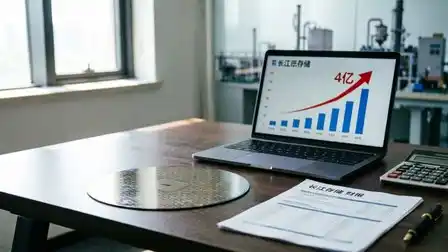
Yangtze Memory Technologies (YMTC), a leading Chinese NAND flash memory chipmaker, has filed for an IPO after completing listing guidance. Its prospectus reveals a staggering Q1 2026 net profit of 33.38 billion yuan, averaging nearly 4 billion yuan daily, surpassing competitor ChangXin Memory Technologies (CXMT) during the same period. This follows CXMT's recent blockbuster科创板 debut, which saw its market cap briefly exceed 4 trillion yuan. YMTC's journey has been fraught with challenges, including the bankruptcy of its former major shareholder, Tsinghua Unigroup, and subsequent takeover by Hubei state-owned capital, followed by U.S. sanctions restricting equipment and technology access. Despite these hurdles, YMTC has grown its global NAND bit shipment share to 14% in Q2 2026, ranking third worldwide. However, the article highlights key differences from CXMT's "4 trillion yuan myth." While profitable, YMTC's earnings surge is closely tied to a cyclical boom, with Q1 2026 NAND prices ~173% higher than 2025's average. Furthermore, YMTC operates in the more crowded NAND market, whereas CXMT, as China's sole major DRAM producer, benefits more directly from AI server demand and holds a scarcer strategic position. YMTC's future valuation, the article argues, will depend less on replicating CXMT's hype and more on its success in transitioning to higher-margin enterprise SSD products, securing global client certifications (like Apple, amid U.S. pressure), and maintaining profitability after the current memory price cycle peaks, which analysts warn could happen as early as 2027-2028. The IPO aims to raise funds to accelerate this transformation amidst a tightening competitive window.

marsbit5 min fa

Yangtze Memory Earns Nearly 4 Billion Per Day, Can It Replicate ChangXin's 4 Trillion Yuan Myth?

marsbit5 min fa

From "Building the Body" to "Building the Brain": The Key Shift in Capital Investment for Embodied Intelligence

From Building Bodies to Building Brains: The Key Shift in Capital Investment for Embodied Intelligence As of August 2026, the embodied AI sector has shifted from a conceptual stage to a heavily invested domain, underscored by Unitree Robotics' successful IPO at a $480 billion market cap. Data from IT桔子 reveals explosive growth: 425 Chinese startups in the field, with 75% founded within the last three years, and total investment in the first eight months of 2026 hitting ¥124.5 billion, 11.6 times the 2023 annual amount. Over 850 institutions are now invested. A critical trend is the capital pivot from "building bodies" (humanoid robots) to "building brains" (embodied AI systems). While humanoid robots attracted the most cumulative funding (¥84 billion), the number of funding deals for AI brain systems surpassed them in 2026 (38.8% vs. 21.1%). This mirrors the smartphone industry, where the OS and chip, not just the hardware, define success. Investment in core components like dexterous hands also surged, signaling a maturing supply chain. The entrepreneurial landscape is concentrated, with Beijing, Guangdong, and Shanghai hosting 67% of companies. It is also academically driven, with nearly a quarter of founders from Tsinghua University, whose startups raised a median amount ten times higher than others. Industry giants like Baidu, Alibaba, and Tencent are heavily involved through strategic investments. Despite the capital frenzy, Unitree's founder cautions that the industry's "ChatGPT moment"—where a robot can handle 80% of tasks in an unfamiliar environment—is still 2-10 years away. The consensus is that capital is betting ahead of the true commercial inflection point. The window for new entrants, especially outside core tech hubs, is narrowing as the race evolves from lab demos to full-scale industrialization.

marsbit6 min fa

From "Building the Body" to "Building the Brain": The Key Shift in Capital Investment for Embodied Intelligence

marsbit6 min fa

U.S. 'Operation Economic Outcast' Targets Iran's Crypto Sector, Over $100 Million in Oil-Related Payments Allegedly Facilitated via Cryptocurrency

U.S. Treasury Launches "Operation Economic Outcast," Sanctions Iran's Crypto Sector On August 24, the U.S. Treasury Department initiated "Operation Economic Outcast," a government-wide economic campaign against Iran. As part of this, the Office of Foreign Assets Control (OFAC) issued a sectoral sanctions determination targeting digital assets under Executive Order 13902, significantly expanding its authority. The Treasury stated that Iran is increasingly using cryptocurrency as a "tool of choice" to evade sanctions and support transactions linked to the Islamic Revolutionary Guard Corps (IRGC). Concurrently, OFAC sanctioned Ukrainian-Emirati broker Ivan Obukhov and his company, Foscom FZE. The Treasury alleges that since 2023, Obukhov has processed over $100 million in cryptocurrency payments to facilitate oil sales on behalf of the IRGC-Quds Force. Nearly 60 other entities, individuals, and vessels involved in nuclear procurement, cyber operations, and oil revenue networks were also sanctioned. This move marks an escalation from prior actions against specific exchanges, now establishing a broad basis to sanction any foreign entity deemed to operate in or support Iran's digital asset sector. Treasury Secretary Scott Bessent warned that any entity engaging economically with the Iranian regime will face the full reach of U.S. power, calling the operation an "economic D-Day" aimed at isolating Tehran.

marsbit30 min fa

U.S. 'Operation Economic Outcast' Targets Iran's Crypto Sector, Over $100 Million in Oil-Related Payments Allegedly Facilitated via Cryptocurrency

marsbit30 min fa

Trading

Spot
活动图片