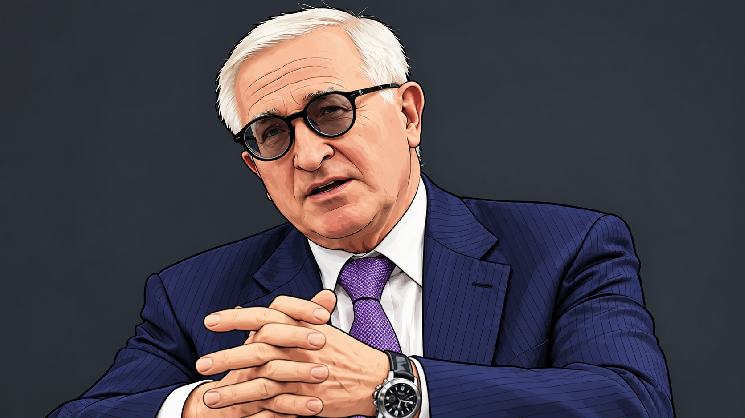
Waller: Inflation Cools in Recent Weeks, AI Reshapes Economy, Forward Guidance Loses Necessity

marsbitPubblicato 2026-07-02Pubblicato ultima volta 2026-07-02

Introduzione

Warsh: Inflation Cools in Recent Weeks, AI Reshapes Economy, Forward Guidance Deemed Unnecessary Federal Reserve Governor Christopher Warsh, speaking at the ECB's annual forum in Sintra, stated that the Fed will no longer provide forward guidance on future interest rate paths. He emphasized that policy decisions will be based on the latest data and discussed at each meeting, rather than pre-committing to a direction. Warsh noted that U.S. inflation risks have eased over the past four weeks. He highlighted that AI is transforming the economy at an unprecedented pace, potentially expanding supply and productivity, which could allow for faster growth with lower inflation. However, he stressed it remains uncertain whether AI will ultimately be inflationary or disinflationary, and the Fed must assess its impact based on incoming data. Regarding monetary policy, Warsh reiterated the Fed's independence, stating decisions will not be influenced by external political pressure. He confirmed the intention to continue reducing the size of the Fed's balance sheet, though the process will take time. He also announced that member lists for five new internal working groups, established to review policy frameworks and communication, will be released soon.


Author: Li Jia, Wall Street News


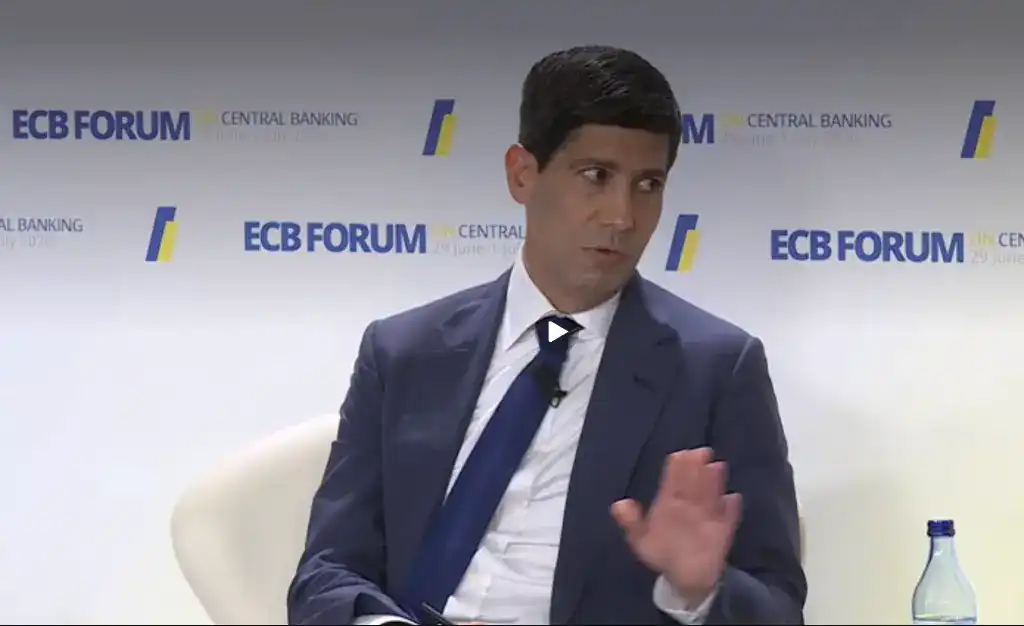
On July 1, at the annual Central Banking Forum held by the European Central Bank in Sintra, Portugal, Waller once again clearly stated that the Federal Reserve will not provide forward guidance on the future path of interest rates. He hopes that policymakers can engage in full discussions based on the latest data at each policy meeting, rather than pre-announcing the policy direction to the market.

He said that U.S. inflation risks have eased somewhat over the past four weeks, and the supply expansion brought by AI may profoundly change the way the economy operates. The United States is at the center of this transformation, but whether AI will ultimately bring inflation or deflation should be determined by the central bank based on data.
Will Not Provide Any Interest Rate Forward Guidance

Waller stated that the Federal Reserve is "charting a new course" and will not signal interest rate moves in advance as it did in the past. He said:

"We will hold our next meeting in four weeks, and I hope we can have a real family debate at that time."

He reiterated that forward guidance is not the right policy tool for the current economic situation, and the Fed will continue to make decisions based on the latest economic data, rather than committing to a policy path in advance.

This means the Federal Reserve will rely more on real-time economic data, rather than releasing policy signals to the market in advance.

At the June policy meeting, the Federal Reserve unanimously decided to keep the federal funds rate unchanged in the range of 3.5%-3.75%. However, the latest dot plot shows that 9 out of 18 officials still expect at least one rate hike this year, and the market has largely priced in the possibility of at least one 25-basis-point hike before the end of the year.

However, Waller himself declined to reveal his own policy inclination, emphasizing only that future policy decisions will depend on the performance of the data.

AI Is Changing the Economy at an Unprecedented Pace

Waller discussed the impact of artificial intelligence on the macroeconomy at the forum. He stated that the rate of improvement in AI model capabilities shows clear exponential growth.

He pointed out that the expansion of supply capacity driven by AI will become a new variable that future monetary policy must focus on, as productivity improvements mean the economy can achieve faster growth with lower inflationary pressures.

However, he simultaneously acknowledged that there remains enormous uncertainty about how AI will impact the job market.

"There is still a serious question about when AI will truly start to affect employment."

He emphasized that the Federal Reserve must continue to achieve both of its statutory goals of maximum employment and price stability, and any policy adjustment needs to balance the two.

Inflation Risk Declines, But Whether AI Has an Inflationary Effect Remains to Be Seen

Waller said that U.S. inflation risks have declined over the past four weeks, meaning there has been a degree of easing in recent price pressures.

However, regarding the widespread market discussion on whether AI is a deflationary force or a new source of inflation, Waller did not give a clear answer. He said:

"Whether AI has an inflationary effect should be decided by the central bank."

In his view, AI can enhance production efficiency and expand supply on one hand, while also potentially stimulating new investment and demand on the other. Therefore, the final effect needs to be judged based on data, not predetermined conclusions.

Additionally, Waller noted that Federal Reserve policy not only affects the U.S. but also has significant spillover effects through global financial markets.

Reiterating Fed Independence: Policy Will Not Be Affected by External Pressure

In response to ongoing concerns about Federal Reserve independence, Waller once again made a clear response. He said:

"The Federal Reserve has long been independent, remains independent now, and you will not see any change in that."

This statement is also seen by the market as a response to recent calls by U.S. President Trump for the Fed to cut rates. Waller emphasized that the Fed will autonomously decide the appropriate policy path and will not alter decisions due to external political pressure.

The U.S. Faces a Great Opportunity for Productivity Enhancement

Besides monetary policy, Waller also focused on the long-term growth prospects of the U.S. economy that day.

He said that for the past four weeks, he has been focused on monetary policy work, and for the U.S., this is an era of great opportunity. Waller believes that the supply side of the U.S. economy remains strong, and the potential growth rate appears to be trending upward. Therefore, there is good reason to be optimistic about future productivity.

He said that if the economic performance of the past four quarters can serve as a reference for the future, then the U.S. economic outlook warrants optimism. He stated:

"The United States does not fear productivity-driven economic growth."

However, he simultaneously acknowledged that it is currently unclear whether productivity improvements will have a direct impact on short-term monetary policy, but the ongoing expansion of supply capacity will undoubtedly profoundly affect future policy formulation.

Unchanged Stance on Balance Sheet Reduction

Besides interest rate policy, Waller also discussed the Federal Reserve's balance sheet.

He said that his view on the balance sheet has not changed over the past four weeks. "It's no secret that I want the Federal Reserve's balance sheet to shrink."

However, he simultaneously stated that regarding what size the balance sheet should ultimately be, the Fed remains open-minded. Waller noted that balance sheet policy primarily works through asset prices; therefore, any significant decisions regarding the balance sheet will undergo public discussion and be collectively decided by the FOMC.

He also said that the current balance sheet size of about $6.7 trillion is still far above pre-pandemic levels, and even if balance sheet reduction continues, it cannot be completed in a short time. "18 weeks is far from enough."

Five Reform Working Groups to See New Progress

In fact, abandoning forward guidance is only part of Waller's push for Federal Reserve reform.

Last month, Waller announced the establishment of five internal special working groups, responsible for studying communication mechanisms, the balance sheet, data usage, productivity and employment, and the inflation framework, among other topics. He recently revealed that the list of members for the special working groups could be announced as early as next week.

Waller said these working groups will not only include internal Federal Reserve officials but will also invite external experts to participate, including some international figures from outside the United States. He hopes that through these reforms, the Fed's policy framework and communication mechanisms will be re-examined to make monetary policy better suited to the current rapidly changing economic environment.


Domande pertinenti

QWhat is Waller's stance on the Federal Reserve providing forward guidance on future interest rate paths?

AWaller clearly stated that the Federal Reserve will not provide forward guidance on the future path of interest rates. He emphasized that policymakers should have full discussions at each meeting based on the latest data, rather than pre-announcing policy directions to the market.

QAccording to Waller, how has the U.S. inflation risk changed recently?

AWaller indicated that U.S. inflation risks have moderated over the past four weeks, meaning recent price pressures have eased to some extent.

QWhat is Waller's view on the impact of Artificial Intelligence (AI) on the economy and monetary policy?

AWaller believes AI is reshaping the economy at an unprecedented pace. It drives supply-side expansion and productivity improvements, which could allow faster growth with lower inflationary pressure. However, the ultimate effect of AI on inflation (whether inflationary or deflationary) and its impact on the job market remain uncertain and need to be judged by the central bank based on data.

QWhat did Waller say about the Federal Reserve's independence and external pressures?

AWaller strongly reaffirmed the Federal Reserve's independence. He stated that the Fed has long maintained its independence and will continue to do so, and its policy decisions will not be influenced by external political pressures, such as recent calls from President Trump for rate cuts.

QWhat progress has been made regarding the five internal reform task forces announced by Waller?

AWaller revealed that the list of members for the five special task forces (focusing on communication, the balance sheet, data usage, productivity & employment, and the inflation framework) is expected to be announced as soon as next week. These groups will include both internal Fed officials and external experts, including some international participants.

Letture associate

Ray Dalio's Latest Macro Analysis Full Text: Buy More Gold, Add Some Bitcoin

In his latest macro analysis, Ray Dalio applies his framework from "How Countries Go Broke: The Big Cycle" to the current global debt environment. He highlights recent events like Japan selling U.S. Treasuries and rising U.S. long-term yields as signs of an unsustainable debt dynamic. Dalio explains that excessive government debt leads to either unacceptably high interest rates, severe economic downturns, or significant currency debasement through central bank money printing. He summarizes the U.S. fiscal situation: with $5.5 trillion in revenue, $7.5 trillion in spending, a $2 trillion deficit, and total debt at six times annual revenue, debt servicing costs are immense. Without correction, U.S. debt could reach $55-$60 trillion in a decade. Dalio proposes a "3% Three-Way" solution: reducing the budget deficit to 3% of GDP through balanced spending cuts, tax increases, and interest rate reductions to avoid a traumatic adjustment. In response to FAQs, he argues that the risk of a U.S. debt crisis is high and could materialize within a few years if the current path continues. He dismisses the notion that the dollar's reserve status makes the U.S. immune, citing historical precedents of reserve currency declines. He is also unconvinced by Japan's high-debt stability, noting poor returns for yen-denominated assets. For investors, Dalio recommends diversifying globally, underweighting bonds, and overweighting assets like gold and a small allocation to Bitcoin (around 10-15% to gold) to hedge against currency debasement and poor debt returns.

marsbit15 min fa

Ray Dalio's Latest Macro Analysis Full Text: Buy More Gold, Add Some Bitcoin

marsbit15 min fa

Stripe’s 16-Year Chronicle: From 7 Lines of Code to a $100 Billion Valuation

Stripe's 16-year journey began with a simple promise: "7 lines of code to accept payments." Founded by Patrick and John Collison, the company started by hiding the complexity of bank integrations and merchant accounts behind a clean API, initially targeting developers at startups. This early focus on user experience and technical simplicity fueled rapid adoption. A key early milestone was establishing vital bank partnerships, a challenge overcome by hiring Billy Alvarado, who brought crucial institutional relationship skills. From this foundation, Stripe systematically expanded its product boundaries. It launched Connect for platform payments, Atlas for company formation, Radar for fraud prevention, and Billing for subscriptions. This transformed Stripe from a payment processor into a broader financial infrastructure suite for internet businesses. The COVID-19 pandemic accelerated growth but also led to over-hiring. A 14% layoff in 2022 marked a period of organizational correction. Subsequently, Stripe shifted its growth strategy towards strategic acquisitions to enter new domains quickly. It acquired Bridge (stablecoin infrastructure), Privy (wallet infrastructure), Metronome (usage-based billing), and agreed to buy OpenRouter (AI model routing). These moves signal Stripe's ambition to build a "programmable money system" for the emerging AI and agent-based economy, managing not just currency flows but also the measurement and pricing of computational resources like AI tokens. Internally, Stripe leverages AI agents (like "Minions") to boost engineering productivity. Despite scaling to nearly 8,000 employees and processing $1.9 trillion in payment volume annually, the company remains private. A recent employee tender offer valued it at $159 billion. The core question for Stripe's future is whether it can successfully integrate its expanding product matrix—spanning payments, crypto, and AI infrastructure—into a cohesive platform, positioning itself as the foundational economic layer for autonomous software agents.

marsbit44 min fa

Stripe’s 16-Year Chronicle: From 7 Lines of Code to a $100 Billion Valuation

marsbit44 min fa

Treasury Secretary's Move to Suppress Treasury Yields Ignites 'Currency Debasement Trade'! Gold Hits Three-Month High, Bitcoin Surges Over 25% in a Single Week

US Treasury Secretary Besant's efforts to lower long-term Treasury yields by announcing expanded buybacks had only a brief market impact. However, this move fueled a "currency devaluation trade," weakening the US dollar while boosting both gold (to a three-month high) and Bitcoin (up over 25% for the week). Analysts attribute this reaction to deepening market concerns over the massive US fiscal deficit and structural pressures keeping long-term rates elevated, including fierce competition for capital from global government borrowing and massive AI sector financing. Despite the Treasury's actions, fundamental forces like growth, inflation, and capital demand are seen as limiting its ability to sustainably suppress yields. Bitcoin's strong positive correlation with gold has reinforced its narrative as a hedge against devaluation. While equity markets have shown resilience, some strategists warn that Treasury yields nearing 5% increase pressure on the dollar and high-leverage assets. Figures like Ray Dalio have advised reducing bond exposure in favor of gold and some Bitcoin, citing US debt risks. Market opinions are divided on the sustainability of the devaluation trade, with some noting the lack of a near-term catalyst for its next leg higher. The underlying tension between the Treasury's desire for lower borrowing costs and the Federal Reserve's focus on inflation and reducing market intervention remains a key theme. Upcoming events like Nvidia's earnings and the Jackson Hole symposium will test whether AI profits can continue supporting stocks and if the Fed aligns more with Washington's preference for easier financial conditions.

华尔街日报2 h fa

Treasury Secretary's Move to Suppress Treasury Yields Ignites 'Currency Debasement Trade'! Gold Hits Three-Month High, Bitcoin Surges Over 25% in a Single Week

华尔街日报2 h fa

Alexander Shokhin: Business Needs an Interest Rate Below 10% and the Dollar at 90-95 Rubles

Alexander Shokhin, head of the Russian Union of Industrialists and Entrepreneurs (RSPP), has advocated for potentially using "non-market" tools to keep the ruble within a target exchange rate corridor. This, he argues on August 21, would help avoid excessive volatility, though he called the topic a separate discussion. Shokhin had previously raised the idea of a currency corridor in late May, noting the ruble's current exchange rate is not fully market-driven due to a limited currency segment and reduced foreign currency demand. He stated that many business community colleagues propose fixing a corridor, even through non-market methods, to ensure predictability. The business community's key targets, as outlined by Shokhin in late December 2025, are a Central Bank key rate of 12%, inflation of 4–5%, and a US dollar exchange rate of 90–95 rubles by the end of 2026. A turning point for investment, he said, would be lowering the rate to 12% with 6% inflation, though truly comfortable business conditions would require a rate below 10%. He stressed the critical importance of currency predictability for corporate investment decisions. From a data analysis perspective, the idea of a ruble corridor is not new. A similar mechanism was used in Russia from 1995 to 1998, where the central bank held the dollar within fixed boundaries through regular interventions. This regime lasted three years before ending abruptly during the 1998 default, illustrating the fragility of rigid targets under external shocks. The macro-economic link is clear: stricter corridors require more reserves to defend against currency pressure. The key unresolved technical aspect is the specific sources and volume of such interventions given the current market's limited liquidity. Whether this discussion remains theoretical or leads to concrete corridor parameters will be seen in the coming months.

cryptonews.ru4 h fa

Alexander Shokhin: Business Needs an Interest Rate Below 10% and the Dollar at 90-95 Rubles

cryptonews.ru4 h fa

Trading

Spot
活动图片