Vitalik and Aya Hong Kong Conversation: The Ethereum Ecosystem Is Entering a Multi-Node Future

marsbitPubblicato 2026-07-13Pubblicato ultima volta 2026-07-13

Introduzione

"Vitalik Buterin and Aya Miyaguchi's dialogues in Hong Kong, along with subsequent events, signal Ethereum's shift into a multi-node future. Over two months, key developments included the Ethereum Foundation's restructuring to focus on longevity and core protocol values (CROPS), the establishment of independent non-profit organizations like Ethlabs for R&D and Ethereum Institutional as an institutional gateway, and continued efforts by Etherealize to connect Ethereum with traditional finance. These moves reflect a broader transition where the EF is deliberately doing less, embracing a 'subtraction' philosophy and a 'walk-away test' to ensure the ecosystem's resilience isn't dependent on a single central body. Instead, specialized nodes are emerging to handle different functions like protocol development, institutional adoption, and regional community coordination. The opening of the ETH HK Hub in Asia exemplifies this trend, positioning Hong Kong as a key node for builder coordination and institutional outreach. The core takeaway is that Ethereum's strength and future evolution increasingly depend on a decentralized network of independent, collaborative organizations rather than a single central coordinator."

Author: @cynthiaju333 ; Review: @NPC_Leo
Over the past two months, a series of important events have occurred within the Ethereum ecosystem: the Ethereum Foundation (hereinafter referred to as EF) completed an organizational restructuring; Ethlabs was established as an independent non-profit R&D organization; Ethereum Institutional officially launched as an independent entity serving as an institutional on-ramp; and Etherealize continues to push the narrative of Ethereum for Wall Street and capital markets. The community has engaged in extensive discussions around EF's organizational restructuring, the establishment of new community-driven teams, initiatives for institutional adoption, and the division of R&D labor and governance structures.

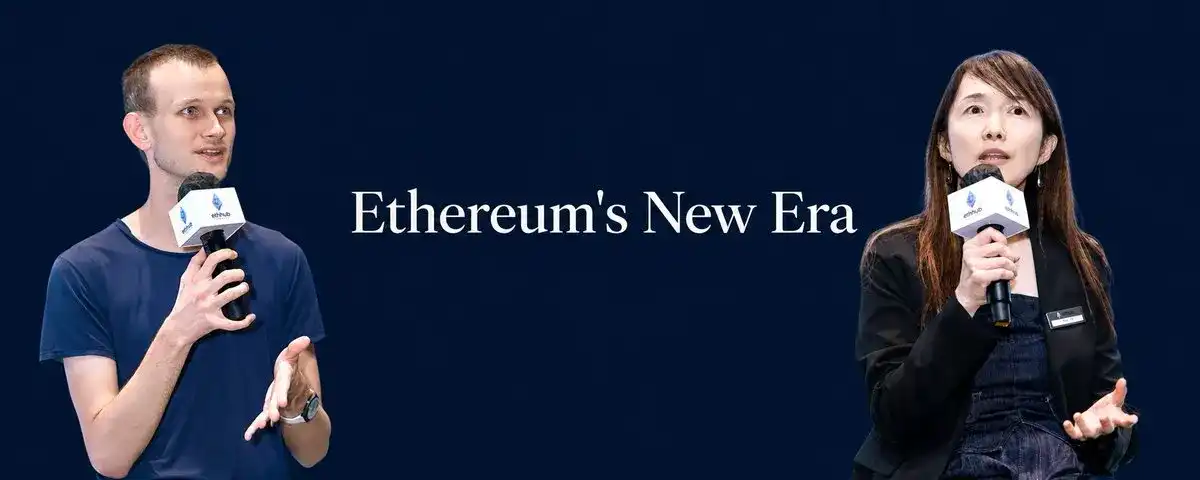
On April 21, 2026, the ETH HK Hub officially opened in Hong Kong, hosting two significant conversations. One was a Chinese-language dialogue between Vitalik Buterin and Hong Kong Legislative Council Member Duncan Chiu. They discussed the development of the Chinese-speaking community over the past twelve years, touching on Layer 2, core protocol development, the anti-quantum roadmap, Layer 1 scaling, and the directions truly worthy of builders' investment in Ethereum. The other was an English-language roundtable between EF Chairperson Aya Miyaguchi, Council Member Duncan Chiu, and QZ, Partner at an ecosystem fund. This conversation focused on the role of EF, the philosophy of subtraction, the Walk-away Test, and Hong Kong's position within the Ethereum ecosystem.

Looking back from over two months later, how can we more deeply understand the changes occurring across the entire Ethereum community? The two conversations with Vitalik and Aya provide important context and reference points, making it easier to grasp that Ethereum is entering a new stage of development, a future of community multi-nodes and the possible continued evolution of its direction.

What Happened to Ethereum Over the Past Two Months?

On May 24, Vitalik Buterin posted a lengthy thread on his X account, publicly sharing his personal views on EF's future direction. He emphasized that EF will pursue "longevity over breadth", reduce ETH sales and the Foundation's financial expenditures, and focus more on the core values of CROPS (Censorship-Resistance/Opposition-resistance, Open Source, Privacy, Security). He also pointed out that EF is not the center of Ethereum, but rather "one node, with a defined purpose", and advocated for an ecosystem structure of pluralism where multiple focused nodes collaborate.

On June 23, EF officially announced a new organizational structure on its official blog. The new structure includes layers for Protocol, Access, Users, Community, and Institutions, along with supporting structures for operations and management. Through this restructuring, EF aims to align its organizational form more closely with long-term strategic goals, ensuring Ethereum's sustainable development in the future.

Almost simultaneously, the independent non-profit R&D organization Ethlabs announced its establishment, co-founded by five former senior EF researchers: Ansgar Dietrichs, Barnabé Monnot, Caspar Schwarz-Schilling, Josh Rudolf, and Julian Ma, with funding support from Bitmine, Sharplink, Joe Lubin, SNZ, and others. Its goal is to prepare Ethereum for the next phase's needs, such as institutional adoption, agentic finance, DeFi, stablecoins, and RWAs, and to coordinate with EF in advancing Ethereum protocol development across different domains, jointly building a multi-node ecosystem.

On July 1, EF's Global Policy & Strategy team released a guide for governments and institutions: "Ethereum for Governments & Institutions: Why Neutral Infrastructure Is Crucial Now." This report actively helps policymakers and large institutions worldwide better understand Ethereum. Its core premise is: the world today needs "shared, neutral digital public infrastructure not controlled by any single centralized entity," and Ethereum is a public, programmable network designed precisely for this purpose.

On the same day, Ethereum Institutional officially launched as an independent non-profit organization, positioning itself as the "dedicated institutional front door" to the Ethereum ecosystem. It has taken over the institution-facing work conducted by the Ethereum Foundation's go-to-market team over the past year, operating with a clearer mission, broader geographic coverage, and long-term financial independence. Key focus areas include institutional education and outreach, institutional insights, ETH and ecosystem marketing, standards and best practices, and institutional events.

Concurrently, Etherealize continues to drive connections between Ethereum and traditional finance. Its website positions itself as "Rewiring Wall Street with Ethereum", building financial infrastructure for tokenization, Ethereum-native settlement, and institutional-grade privacy protection aimed at multi-trillion dollar markets. Wall Street's interest in Ethereum is shifting from proof-of-concepts and pilot projects to viewing public chains as production infrastructure; discussions have also expanded beyond stablecoins to include tokenized stocks, bonds, real estate, and investment funds.

Viewed together, these events point to a larger shift: Ethereum is transitioning from a phase where the Ethereum Foundation (EF) primarily undertook significant coordination and public narrative-building, to a new phase where multiple specialized organizations collectively assume different capabilities. EF is becoming more focused on protocol governance, credible neutrality, self-sovereignty, and long-term resilience. Ethlabs is taking on R&D for next-stage adoption and infrastructure capability building. Ethereum Institutional is handling institutional education, standards development, market awareness promotion, and serving as an entry point for global financial institutions. Etherealize continues to advance Ethereum's narrative in capital markets and traditional finance.

These organizations are not part of a single centralized plan, nor should they be simply understood as EF's outsourcing or replacements. Together, they reflect a clearer division of capabilities emerging within the Ethereum ecosystem: protocol neutrality, institutional adoption, capital market narrative, application-oriented R&D, and local community coordination are now being undertaken by different nodes.

More accurately, Ethereum is entering a new stage of development and ecosystem structure. And if we return to the scene of the ETH HK Hub on April 21st, we find that what Vitalik and Aya discussed that day were precisely the long-term principles underlying these changes.

EF Chairperson Aya on the Philosophy of Subtraction

During the roundtable at the ETH HK Hub, Aya Miyaguchi repeatedly mentioned a concept: the Walk-away Test.

Her point is that EF's long-term goal is not to become a larger, more controlling central organization, but to ensure that the entire system can continue to function even without EF.

She said: "Ethereum must pass the Walk-away Test—the whole system must still be able to function normally even without the Ethereum Foundation."

Aya recalled that when she joined EF, it was during the ICO boom. Many people suggested the Foundation expand rapidly, establish roles like CTO and CMO like a traditional tech company, and take on more centralized functions.

But EF did not do that.

She explained: "If the Foundation builds everything for the entire ecosystem, participants will become dependent. In the long run, this will weaken competition, and without competition, optimal solutions cannot emerge."

This is rooted in a fundamental belief of Ethereum: the health of the system does not come from the strength of a single organization, but from the ecosystem's own ability to continually generate new capabilities, new organizations, and new builders.

So when Aya says: "Success means the Foundation does less, and Ethereum becomes stronger."

This statement gains more specific context two months later.

From this perspective, the emergence of Ethlabs, Ethereum Institutional, Etherealize, and global Ethereum community Hubs is more like a manifestation of EF's philosophy of subtraction: as the foundational protocol matures, what the ecosystem needs is no longer an all-powerful command and dispatch center, but multiple independent organizations with shared beliefs, each assuming different responsibilities.

Vitalik on the Boundaries of Protocol Coordination

In his dialogue at the ETH HK Hub, Vitalik also made a crucial distinction that appears very relevant today.

He said, "Core protocol development and L2 development are completely different in terms of difficulty. L2 is more like a free market. If an outsider builds something better, they have a chance to win."

But the core protocol is different. Core protocol development requires long-term coordination with existing developers and must achieve consensus among client teams, researchers, the community, and upgrade roadmaps.

Therefore, the truly important question is: Do these efforts still serve Ethereum's long-term protocol goals? Do they still uphold credible neutrality, security, privacy, censorship-resistance, and the fundamental attributes of Ethereum as public infrastructure?

The most core work for Ethereum remains the continuous evolution of a decentralized protocol through long-term coordination.

Why Hong Kong?

In Aya's roundtable, she mentioned that "the community Hubs emerging in Hong Kong are themselves an embodiment of EF's philosophy of subtraction."

If Ethereum's future is not driven by a single center but built collectively by multiple independent nodes, then a local Hub is not just an event venue or a community event organizer. It is more like a new type of ecosystem infrastructure.

It connects not only developers, but also institutions, researchers, capital, policymakers, public goods builders, and new participants entering Ethereum from traditional finance, AI, hardware, stablecoins, RWAs, and payments.

Hong Kong happens to be at the intersection of these forces. It is an international financial center and a place where Eastern and Western capital, policy, and technological contexts converge; it connects Chinese-speaking builders with the global Ethereum community and is close to Shenzhen's hardware, AI, and manufacturing ecosystems.

Therefore, when Hong Kong and Singapore appear in Ethereum Institutional's global layout, when SNZ appears among Ethlabs' supporters, when ETH HK Hub becomes Asia's first physical Ethereum community center, they all point to a trend: Asia is becoming an important node for Ethereum's institutional adoption and builder coordination.

This is also the role that SNZ and ETH HK Hub hope to play. Our role is to establish a long-term coordination node in Hong Kong and Asia, where builders, researchers, institutions, capital, policymakers, and the global Ethereum community can meet, and extend the dialogues from each event into longer-term construction.

Two Months Later, What Has Really Changed?

Over the past two months, many have asked: What's happening with EF? Who left? Who started new organizations? Will Ethlabs replace EF? Does Ethereum Institutional mean Ethereum is actively vying for the institutional market?

If we start from the two conversations on April 21st, perhaps the answer becomes clearer.

EF is focusing more on what it should most protect: protocol neutrality, long-term security, openness, privacy, censorship-resistance, and self-sovereignty. At the same time, more specialized organizations have emerged within the ecosystem, taking on R&D, institutional adoption, capital market narrative, local community coordination, developer education, and policy communication respectively.

EF doing less does not mean Ethereum is doing less. On the contrary, it requires more people, more organizations, more regions, and more builders to step forward.

Perhaps the main theme of the past two months is that Ethereum continues to prove what it has always believed:

A resilient ecosystem relies on continually generating new nodes, new ways of collaboration, and new builders.

The existence of ETH HK Hub is precisely to participate in such a future.

ETH HK Hub is jointly operated by SNZ and ETHTAO, with support from the Ethereum Foundation.

Crypto di tendenza

Domande pertinenti

QAccording to the article, what is the 'Walk-away Test' that Ethereum Foundation Chair Aya Miyaguchi discussed?

AThe 'Walk-away Test' is the idea that the Ethereum ecosystem must be resilient enough to continue functioning and thriving even in the absence of the Ethereum Foundation. Success for EF is measured by it doing less while the Ethereum network becomes stronger and more independent.

QWhat significant shift in Ethereum's ecosystem structure does the article describe based on the events of the past two months?

AThe article describes a shift from a stage where the Ethereum Foundation (EF) bore significant coordination and public narrative responsibilities to a new 'multi-node' future. This involves multiple specialized, independent organizations (like Ethlabs, Ethereum Institutional, and Etherealize) taking on distinct roles such as R&D, institutional adoption, capital market narratives, and local community coordination, while the EF focuses more narrowly on core protocol values.

QWhat are the core long-term protocol goals for Ethereum that Vitalik Buterin emphasized should be maintained?

AVitalik Buterin emphasized that core development must continue to serve Ethereum's long-term protocol goals, which include maintaining credible neutrality, security, privacy, anti-censorship capabilities, and the fundamental properties of Ethereum as a public infrastructure.

QWhy is Hong Kong considered a significant node in Ethereum's evolving multi-node ecosystem according to the article?

AHong Kong is seen as a significant node because it is an international financial hub at the confluence of Eastern and Western capital, policy, and technology. It connects Chinese-speaking builders with the global Ethereum community and is near hardware, AI, and manufacturing ecosystems like Shenzhen, making it a crucial location for institutional adoption and builder coordination in Asia.

QWhat is the stated purpose of the newly formed independent non-profit organization 'Ethereum Institutional'?

AEthereum Institutional's purpose is to act as a dedicated institutional front door for the Ethereum ecosystem. It focuses on institutional education and对接, institutional insights, ETH and ecosystem marketing, standards and best practices, and institutional events, aiming to foster wider institutional adoption.

Letture associate

AI Token Factory Explosion: Tsinghua University Team Raises 10 Billion in Half a Year

Qijing Tech, a company founded by a Tsinghua University team of faculty and students, has rapidly become a significant player in China's AI infrastructure sector, focusing on high-quality AI token production. Over the past six months, the startup has secured over 1 billion RMB in funding. The company specializes in AI inference—the efficient use of AI models—positioning itself as a "high-quality AI token factory." Unlike many competitors initially focused on model training, Qijing Tech believes inference is where real economic value is generated. Its core technology optimizes the entire AI token production chain through innovations like "full-system heterogeneous collaboration," aiming for stable, efficient, and low-cost output suitable for enterprise use. This strategy has attracted significant investor interest. Major funding rounds have been led by institutions such as Henan Investment Group Huirong Fund, with continued backing from existing investors. The company's "less models, deeper optimization" approach, concentrating resources on key models and high-value scenarios, is resonating in a market where a few top models dominate token usage. The results are promising. Since early 2026, Qijing Tech reports a threefold increase in token production efficiency per unit of computing power and a thirtyfold increase in total high-quality token output. Monthly revenue for June 2026 alone surpassed its entire 2025 revenue. Operating on a "Token as a Service" (TaaS) model, Qijing Tech engages in both direct token sales and collaborative operations, helping partners like state-owned enterprises transition from traditional computing power leasing to high-value token production. As AI token usage in China surges, Qijing Tech aims to be a key enabler in the emerging AI token economy, building the essential infrastructure for the AI era.

marsbit17 min fa

AI Token Factory Explosion: Tsinghua University Team Raises 10 Billion in Half a Year

marsbit17 min fa

Financing Weekly Report | SBI Makes Consecutive Moves, Bets $125 Million on Gauntlet; Crypto Capital Continues to Flow to Trading and Infrastructure

Weekly crypto financing highlights show capital continues to flow into trading, compliance, and digital asset infrastructure, with traditional financial institutions like Japan's SBI Holdings playing a larger role. SBI made two major investments: a $125M exclusive investment in DeFi risk management and asset allocation platform Gauntlet, and leading a $76M Series C round for crypto exchange EDX Markets. Other notable crypto deals included: QIZ Security ($17M seed) for post-quantum cryptography management; TrueDAO ($10M strategic) for AI-powered DeFi infrastructure; KOR Protocol ($7.5M Series A) for an on-chain creative asset clearing platform; Tether's $20M strategic investment in Brazil's Mercado Bitcoin; and M1X Global ($5.5M seed) for sovereign financial infrastructure. The AI sector saw larger individual rounds. Prime Intellect raised $130M Series A for its decentralized AI protocol stack. AI legal services firm Norm raised $120M, reaching a $1.2B valuation. Voice AI company Gradium's total funding surpassed $100M. The report also notes a shift towards business models focused on specific enterprise-level AI infrastructure and application scenarios. Overall, the crypto primary market remains subdued, with nine deals totaling over $261M last week, centered on centralized finance, DeFi, and infrastructure.

marsbit17 min fa

Financing Weekly Report | SBI Makes Consecutive Moves, Bets $125 Million on Gauntlet; Crypto Capital Continues to Flow to Trading and Infrastructure

marsbit17 min fa

Valuation $1 Billion, Nvidia Doubles Down! Is Prime Intellect Washing Off Its Web3 Label?

Prime Intellect, a decentralized AI infrastructure company founded in 2024, recently announced a $130 million Series A funding round at a $1 billion valuation, with investments from NVIDIA, Intel, and Dell's venture arms. The company claims its annualized recurring revenue (ARR) has exceeded $100 million within a year, serving over 6,000 enterprise clients. Initially rooted in Web3 and decentralized science (DeSci), Prime Intellect has evolved into a full-stack AI training and deployment platform. Its core technology enables distributed training of large language models across globally dispersed, heterogeneous GPU clusters. Key milestones include releasing open-source models like INTELLECT-1 and INTELLECT-3, and launching Prime Intellect Lab, a platform allowing users to train and optimize agentic models without managing their own GPU infrastructure. The company's deep collaboration with hardware giants, particularly NVIDIA, extends beyond investment to joint optimization of software (e.g., integrating NVIDIA Dynamo) and hardware systems. A notable commercial case involves fintech company Ramp using Prime Lab to train a specialized agent, demonstrating the platform's applied value. While achieving rapid commercial growth, Prime Intellect has systematically downplayed its earlier Web3 and token-based incentives from its official documentation, repositioning itself as a mainstream AI infrastructure provider focused on enterprise adoption and potential IPO.

Foresight News1 h fa

Valuation $1 Billion, Nvidia Doubles Down! Is Prime Intellect Washing Off Its Web3 Label?

Foresight News1 h fa

Trading

Spot

Articoli Popolari

Cosa è ETH 3.0

ETH3.0 e $eth 3.0: Un'Analisi Approfondita del Futuro di Ethereum Introduzione Nel panorama in rapida evoluzione delle criptovalute e della tecnologia blockchain, ETH3.0, spesso indicato come $eth 3.0, è emerso come un argomento di considerevole interesse e speculazione. Il termine comprende due concetti principali che warrantono chiarimenti: Ethereum 3.0: Questo rappresenta un potenziale futuro aggiornamento volto ad aumentare le capacità dell'attuale blockchain di Ethereum, concentrandosi principalmente sul miglioramento della scalabilità e delle prestazioni. ETH3.0 Meme Token: Questo progetto di criptovaluta distinto cerca di sfruttare la blockchain di Ethereum per creare un ecosistema incentrato sui meme, promuovendo il coinvolgimento all'interno della comunità delle criptovalute. Comprendere questi aspetti di ETH3.0 è essenziale non solo per gli appassionati di criptovalute, ma anche per coloro che osservano tendenze tecnologiche più ampie nello spazio digitale. Che cos'è ETH3.0? Ethereum 3.0 Ethereum 3.0 è pubblicizzato come un aggiornamento proposto per la rete Ethereum già stabilita, che è stata la spina dorsale di molte applicazioni decentralizzate (dApps) e contratti smart sin dalla sua nascita. I miglioramenti previsti si concentrano principalmente sulla scalabilità, integrando tecnologie avanzate come lo sharding e le prove a conoscenza zero (zk-proofs). Queste innovazioni tecnologiche mirano a facilitare un numero senza precedenti di transazioni al secondo (TPS), potenzialmente raggiungendo milioni, affrontando così una delle limitazioni più significative della tecnologia blockchain attuale. Il miglioramento non è meramente tecnico, ma anche strategico; è volto a preparare la rete Ethereum per un'adozione e un'utilità diffuse in un futuro contrassegnato da un aumento della domanda di soluzioni decentralizzate. ETH3.0 Meme Token Al contrario di Ethereum 3.0, l'ETH3.0 Meme Token si avventura in un dominio più leggero e giocoso, combinando la cultura dei meme di internet con la dinamica delle criptovalute. Questo progetto consente agli utenti di acquistare, vendere e scambiare meme sulla blockchain di Ethereum, fornendo una piattaforma che promuove il coinvolgimento della comunità attraverso la creatività e interessi condivisi. L'ETH3.0 Meme Token mira a dimostrare come la tecnologia blockchain possa intersecarsi con la cultura digitale, creando casi d'uso che siano sia divertenti che finanziariamente praticabili. Chi è il Creatore di ETH3.0? Ethereum 3.0 L'iniziativa verso Ethereum 3.0 è principalmente propulsa da un consorzio di sviluppatori e ricercatori all'interno della comunità di Ethereum, tra cui Justin Drake. Conosciuto per le sue intuizioni e contributi all'evoluzione di Ethereum, Drake è stato una figura di spicco nelle discussioni riguardanti la transizione di Ethereum verso un nuovo livello di consenso, chiamato “Beam Chain.” Questo approccio collaborativo allo sviluppo significa che Ethereum 3.0 non è il prodotto di un creatore singolo, ma piuttosto una manifestazione di ingegno collettivo focalizzato sul progresso della tecnologia blockchain. ETH3.0 Meme Token I dettagli riguardanti il creatore dell'ETH3.0 Meme Token sono attualmente non rintracciabili. La natura dei token meme conduce spesso a una struttura più decentralizzata e guidata dalla comunità, il che potrebbe spiegare la mancanza di attribuzione specifica. Questo si allinea con l'etica della comunità crypto più ampia, dove l'innovazione spesso nasce da sforzi collaborativi piuttosto che individuali. Chi sono gli Investitori di ETH3.0? Ethereum 3.0 Il supporto per Ethereum 3.0 proviene principalmente dalla Ethereum Foundation insieme a una comunità entusiasta di sviluppatori e investitori. Questa associazione fondamentale fornisce un considerevole grado di legittimità e migliora le prospettive di implementazione di successo poiché sfrutta la fiducia e la credibilità costruite nel corso degli anni di operazioni della rete. Nel clima in rapida evoluzione delle criptovalute, il supporto della comunità gioca un ruolo cruciale nello sviluppo e nell'adozione, posizionando Ethereum 3.0 come un serio contenditore per i futuri progressi della blockchain. ETH3.0 Meme Token Sebbene le fonti attualmente disponibili non forniscano informazioni esplicite riguardo ai fondamenti o alle organizzazioni di investimento che sostengono l'ETH3.0 Meme Token, ciò è indicativo del modello di finanziamento tipico per i token meme, che spesso si basa sul supporto di base e sul coinvolgimento della comunità. Gli investitori in tali progetti sono tipicamente individui motivati dal potenziale per innovazioni guidate dalla comunità e dallo spirito di cooperazione trovato all'interno della comunità crypto. Come Funziona ETH3.0? Ethereum 3.0 Le caratteristiche distintive dell'Ethereum 3.0 risiedono nella sua proposta di implementazione della tecnologia di sharding e zk-proof. Lo sharding è un metodo di partizionamento della blockchain in pezzi più piccoli e gestibili o “shard,” che possono elaborare transazioni in modo concorrente piuttosto che sequenziale. Questa decentralizzazione dell'elaborazione aiuta a prevenire la congestione e garantisce che la rete rimanga reattiva anche sotto un carico pesante. La tecnologia delle prove a conoscenza zero (zk-proof) contribuisce con un ulteriore livello di sofisticazione consentendo la validazione delle transazioni senza rivelare i dati sottostanti coinvolti. Questo aspetto non solo migliora la privacy, ma aumenta anche l'efficienza complessiva della rete. Si parla anche di incorporare una macchina virtuale Ethereum a conoscenza zero (zkEVM) in questo aggiornamento, amplificando ulteriormente le capacità e l'utilità della rete. ETH3.0 Meme Token L'ETH3.0 Meme Token si distingue capitalizzando sulla popolarità della cultura dei meme. Stabilisce un mercato per gli utenti che desiderano partecipare al trading di meme, non solo per divertimento, ma anche per potenziale guadagno economico. Integrando funzioni come lo staking, la fornitura di liquidità e meccanismi di governance, il progetto promuove un ambiente che incentiva l'interazione e la partecipazione della comunità. Offrendo una miscela unica di intrattenimento e opportunità economica, l'ETH3.0 Meme Token mira ad attrarre un pubblico variegato, che va dagli appassionati di crypto ai semplici intenditori di meme. Timeline di ETH3.0 Ethereum 3.0 11 Novembre 2024: Justin Drake accenna al prossimo aggiornamento ETH 3.0, incentrato sui miglioramenti della scalabilità. Questo annuncio segna l'inizio delle discussioni formali riguardo l'architettura futura di Ethereum. 12 Novembre 2024: La proposta attesa per Ethereum 3.0 dovrebbe essere svelata a Devcon a Bangkok, preparando il terreno per un feedback più ampio della comunità e potenziali passi successivi nello sviluppo. ETH3.0 Meme Token 21 Marzo 2024: L'ETH3.0 Meme Token viene ufficialmente elencato su CoinMarketCap, segnando il suo ingresso nel dominio pubblico delle criptovalute e aumentando la visibilità per il suo ecosistema basato sui meme. Punti Chiave In conclusione, Ethereum 3.0 rappresenta una significativa evoluzione all'interno della rete Ethereum, concentrandosi sul superamento delle limitazioni riguardanti scalabilità e prestazioni attraverso tecnologie avanzate. I suoi aggiornamenti proposti riflettono un approccio proattivo alle future esigenze e usabilità. D'altra parte, l'ETH3.0 Meme Token incarna l'essenza della cultura guidata dalla comunità nello spazio delle criptovalute, sfruttando la cultura dei meme per creare piattaforme coinvolgenti che incoraggiano la creatività e la partecipazione degli utenti. Comprendere gli scopi e le funzionalità distinte di ETH3.0 e $eth 3.0 è fondamentale per chiunque sia interessato ai continui sviluppi nello spazio crypto. Con entrambe le iniziative che tracciano percorsi unici, esse sottolineano collettivamente la natura dinamica e multifacetica dell'innovazione blockchain.

205 Totale visualizzazioniPubblicato il 2024.04.04Aggiornato il 2024.12.03

Cosa è ETH 3.0

Cosa è ETHEREUM

HarryPotterTrumpHomerSimpson777Inu: Panoramica di un Progetto Crypto Web3 Introduzione Nel mondo in rapida evoluzione delle criptovalute e della finanza decentralizzata, progetti innovativi emergono frequentemente, catturando l'interesse della comunità degli investitori e degli appassionati di crypto. Uno di questi progetti è HarryPotterTrumpHomerSimpson777Inu, una criptovaluta che si trova all'incrocio tra cultura popolare e tecnologia blockchain. Questo token guidato dalla comunità mescola personaggi e figure politiche ben noti, con l'obiettivo di creare una piattaforma coinvolgente e promuovere un'adozione diffusa. Che cos'è HarryPotterTrumpHomerSimpson777Inu? HarryPotterTrumpHomerSimpson777Inu è un token costruito sulla blockchain di Ethereum, progettato per essere accessibile e divertente per un pubblico diversificato. L'unicità di questo progetto deriva dal suo approccio tematico, che intreccia elementi di fantasia, politica e intrattenimento. Sfruttando il fascino nostalgico di personaggi amati, il progetto cerca di creare un'esperienza di criptovaluta coinvolgente, incoraggiando il coinvolgimento e la partecipazione della comunità. L'obiettivo principale di HarryPotterTrumpHomerSimpson777Inu è stabilire un token che risuoni con gli utenti a livello personale, promuovendo sia il divertimento che il coinvolgimento nell'ambito crypto. Questo branding distintivo mira ad attrarre individui che in precedenza potrebbero non essersi interessati alle criptovalute, facilitando un nuovo punto di ingresso per utenti potenziali. Creatore di HarryPotterTrumpHomerSimpson777Inu L'identità del creatore dietro HarryPotterTrumpHomerSimpson777Inu rimane sconosciuta. Questa non è una pratica rara nel dominio delle criptovalute, dove l'anonimato è spesso preferito dai fondatori come mezzo di protezione della privacy e promozione di un ethos decentralizzato. Questa oscurità non diminuisce il valore del progetto; al contrario, riflette una tendenza più ampia all'interno del settore, dove molti progetti di successo sono emersi da origini anonime. Investitori di HarryPotterTrumpHomerSimpson777Inu Le informazioni pubbliche riguardo agli investitori di HarryPotterTrumpHomerSimpson777Inu sono limitate. La natura del progetto, incentrata sul coinvolgimento della comunità, suggerisce una dipendenza da investimenti di piccole dimensioni da parte di singoli appassionati piuttosto che da sostegni sostanziali da fondazioni di investimento consolidate o corporation. Questo livello di trasparenza nel finanziamento è tipico di molti progetti di criptovaluta guidati dalla comunità, dove il supporto spesso proviene da movimenti di base piuttosto che da investitori istituzionali. Come Funziona HarryPotterTrumpHomerSimpson777Inu? Operando sulla blockchain di Ethereum, HarryPotterTrumpHomerSimpson777Inu sfrutta la sua solida infrastruttura per facilitare transazioni e promuovere interazioni tra gli utenti all'interno della comunità. Ciò che distingue questo progetto è il suo posizionamento tematico: canalizzando il carisma di personaggi iconici provenienti da diversi ambiti culturali, crea un'identità di marca distintiva. Questo approccio non solo attrae gli utenti, ma coltiva anche una comunità fedele attorno al token. Le meccaniche operative del progetto si concentrano sul coinvolgimento della comunità. Adotta un modello decentralizzato che incoraggia la partecipazione, consentendo agli utenti di interagire attraverso vari canali mentre promuovono lo scambio di idee e esperienze. Inoltre, il progetto abbraccia i principi del Web3, privilegiando la sovranità degli utenti e la decentralizzazione, che sono i pilastri del futuro di Internet. Timeline di HarryPotterTrumpHomerSimpson777Inu La storia di HarryPotterTrumpHomerSimpson777Inu è segnata da diversi eventi decisivi: 12 agosto 2023: L'inizio di HarryPotterTrumpHomerSimpson777Inu, segnando il suo ingresso nell'ecosistema delle criptovalute. Fase di Sviluppo: Un periodo focalizzato sulla costruzione di una strategia completa per stimolare la crescita guidata dalla comunità e il coinvolgimento degli utenti. Listing sugli Scambi: Sebbene i dettagli specifici di listing non siano stati divulgati, il progetto è stato reso accessibile su vari scambi di criptovalute, migliorando la sua visibilità nel mercato. Coinvolgimento della Comunità: Sforzi continui per coinvolgere attivamente la comunità, stabilendo canali di dialogo e promuovendo la partecipazione attraverso varie attività, tra cui concorsi, discussioni e votazioni comunitarie. Aspetti Chiave di HarryPotterTrumpHomerSimpson777Inu Focus sulla Comunità Un tratto distintivo di HarryPotterTrumpHomerSimpson777Inu è la sua forte enfasi sul coinvolgimento della comunità. Il progetto incoraggia attivamente gli utenti a partecipare a discussioni, condividere idee e contribuire all'evoluzione del progetto. Questa interazione coltiva un senso di appartenenza e di ownership tra i membri della comunità, essenziale per la sostenibilità a lungo termine del token. Utilizzo della Blockchain di Ethereum La scelta di costruire sulla blockchain di Ethereum consente a HarryPotterTrumpHomerSimpson777Inu di sfruttare le sue caratteristiche di sicurezza ben consolidate e architettura decentralizzata. Questa base garantisce affidabilità per le transazioni e fornisce un framework affidabile su cui sviluppare varie funzionalità. Approccio Tematico Unico Fusione di elementi della cultura pop nella sua identità, HarryPotterTrumpHomerSimpson777Inu crea una narrazione coinvolgente che lo differenzia da altre criptovalute. L'amalgama di personaggi e temi genera riconoscimento e intrigo immediati, rendendo il token relazionabile a un'ampia gamma di utenti potenziali. Anonimato nello Sviluppo Il creatore anonimo del progetto rimane una caratteristica ricorrente in molte iniziative di criptovaluta. Questo aspetto evidenzia un ethos di decentralizzazione, introducendo anche un livello di mistero che potrebbe affascinare un segmento della comunità crypto, attirando l'attenzione sul progetto e invitando l'impegno da parte di utenti che supportano l'idea di un'iniziativa decentralizzata e gestita dalla comunità. Conclusione HarryPotterTrumpHomerSimpson777Inu si presenta come un'aggiunta distintiva al panorama delle criptovalute, combinando il fascino della cultura popolare con le meccaniche innovative della tecnologia blockchain. Sebbene i dettagli riguardanti il creatore e gli investitori specifici rimangano non divulgati, il focus del progetto sulla comunità e il suo approccio tematico lo contraddistinguono come un potenziale attore influente nel contesto del Web3 e delle criptovalute. Man mano che l'ecosistema delle criptovalute continua ad espandersi, iniziative come HarryPotterTrumpHomerSimpson777Inu ci ricordano le molteplici modalità in cui la blockchain può connettere le comunità globali attraverso narrazioni e valori condivisi.

1.0k Totale visualizzazioniPubblicato il 2024.04.06Aggiornato il 2024.12.03

Cosa è ETHEREUM

Come comprare ETH

Benvenuto in HTX.com! Abbiamo reso l'acquisto di Ethereum (ETH) semplice e conveniente. Segui la nostra guida passo passo per intraprendere il tuo viaggio nel mondo delle criptovalute.Step 1: Crea il tuo Account HTXUsa la tua email o numero di telefono per registrarti il tuo account gratuito su HTX. Vivi un'esperienza facile e sblocca tutte le funzionalità,Crea il mio accountStep 2: Vai in Acquista crypto e seleziona il tuo metodo di pagamentoCarta di credito/debito: utilizza la tua Visa o Mastercard per acquistare immediatamente EthereumETH.Bilancio: Usa i fondi dal bilancio del tuo account HTX per fare trading senza problemi.Terze parti: abbiamo aggiunto metodi di pagamento molto utilizzati come Google Pay e Apple Pay per maggiore comodità.P2P: Fai trading direttamente con altri utenti HTX.Over-the-Counter (OTC): Offriamo servizi su misura e tassi di cambio competitivi per i trader.Step 3: Conserva Ethereum (ETH)Dopo aver acquistato Ethereum (ETH), conserva nel tuo account HTX. In alternativa, puoi inviare tramite trasferimento blockchain o scambiare per altre criptovalute.Step 4: Scambia Ethereum (ETH)Scambia facilmente Ethereum (ETH) nel mercato spot di HTX. Accedi al tuo account, seleziona la tua coppia di trading, esegui le tue operazioni e monitora in tempo reale. Offriamo un'esperienza user-friendly sia per chi ha appena iniziato che per i trader più esperti.

3.0k Totale visualizzazioniPubblicato il 2024.12.10Aggiornato il 2026.06.02

Come comprare ETH

Discussioni

Benvenuto nella Community HTX. Qui puoi rimanere informato sugli ultimi sviluppi della piattaforma e accedere ad approfondimenti esperti sul mercato. Le opinioni degli utenti sul prezzo di ETH ETH sono presentate come di seguito.

活动图片