USDT usage at 35% in 2026 – What’s the key factor driving investors to stablecoins?

ambcryptoPubblicato 2026-07-13Pubblicato ultima volta 2026-07-13

Introduzione

Investor preference for stability over risk is driving increased usage of stablecoins, with Tether [USDT] projected to reach 35.1% usage by July 2026, up from 29.0% in 2021. This growth is fueled by their expanding real-world utility, particularly in cross-border payments and corporate treasury operations. Major payment firms like Visa, Mastercard, PayPal, and Stripe are integrating stablecoins into their infrastructure, supporting a surge in daily active addresses and a total market value nearing $312 billion. While institutional investors continue to favor stablecoins for efficient transactions over speculative assets like Bitcoin or Ethereum, the growing corporate adoption for practical settlement and payment use cases is strengthening blockchain's long-term foundation beyond mere cost savings.

Despite crypto adoption rising rapidly, investor sentiment is currently favoring stability over risk. The desire for a safe investment choice is increasingly evident, as evidenced by the increase in Tether [USDT] usage as the dominant form of currency throughout the entire market.

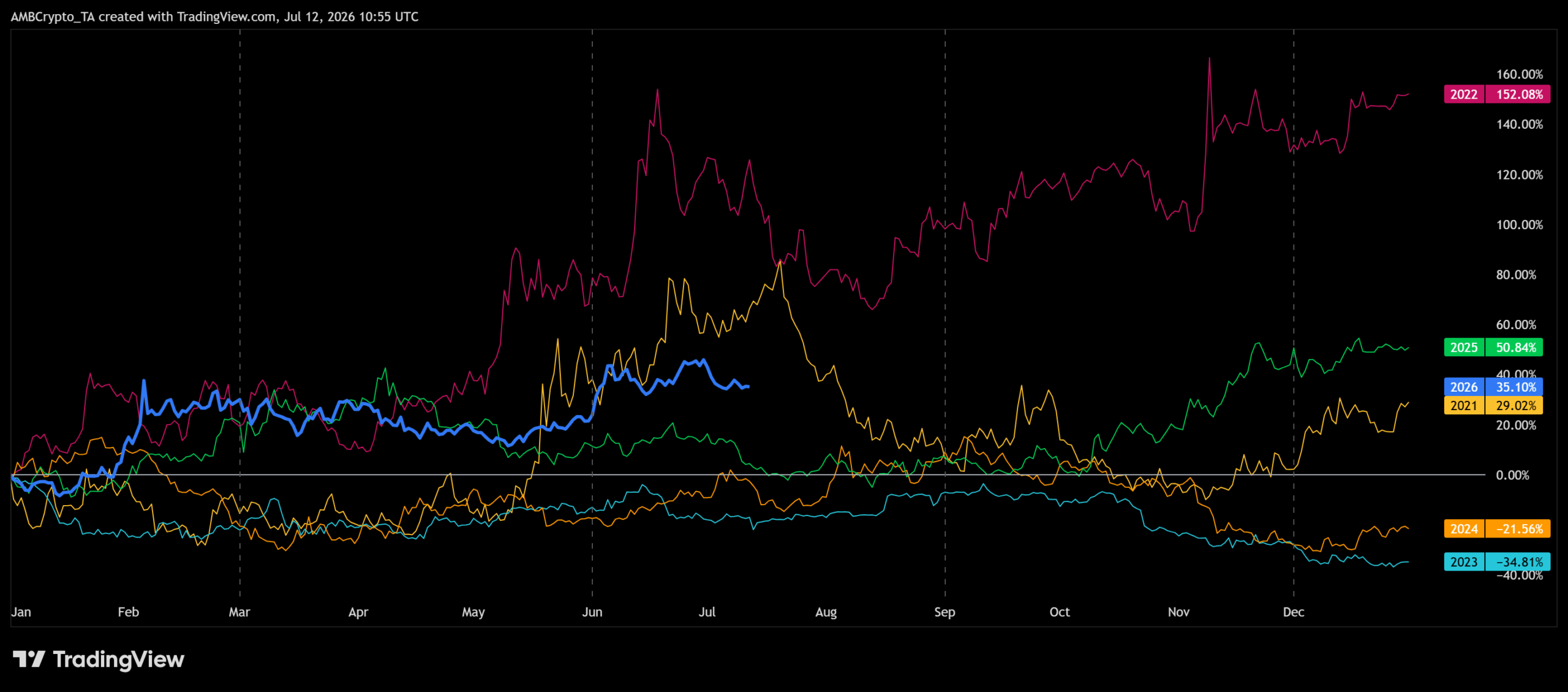
Seasonal data shows USDT usage at 35.1% by July 2026, outperforming 2021’s 29.0% in the same period.
Source: TradingView

It also stands well above 2024, during which usage remained in negative territory.

Cross-border payments drive stablecoin utility

That growing stablecoin preference is no longer reflecting caution alone. It is increasingly supporting real economic activity across blockchain networks.

As global payment firms expand stablecoin settlement, users are interacting with these assets far more frequently than in previous cycles.

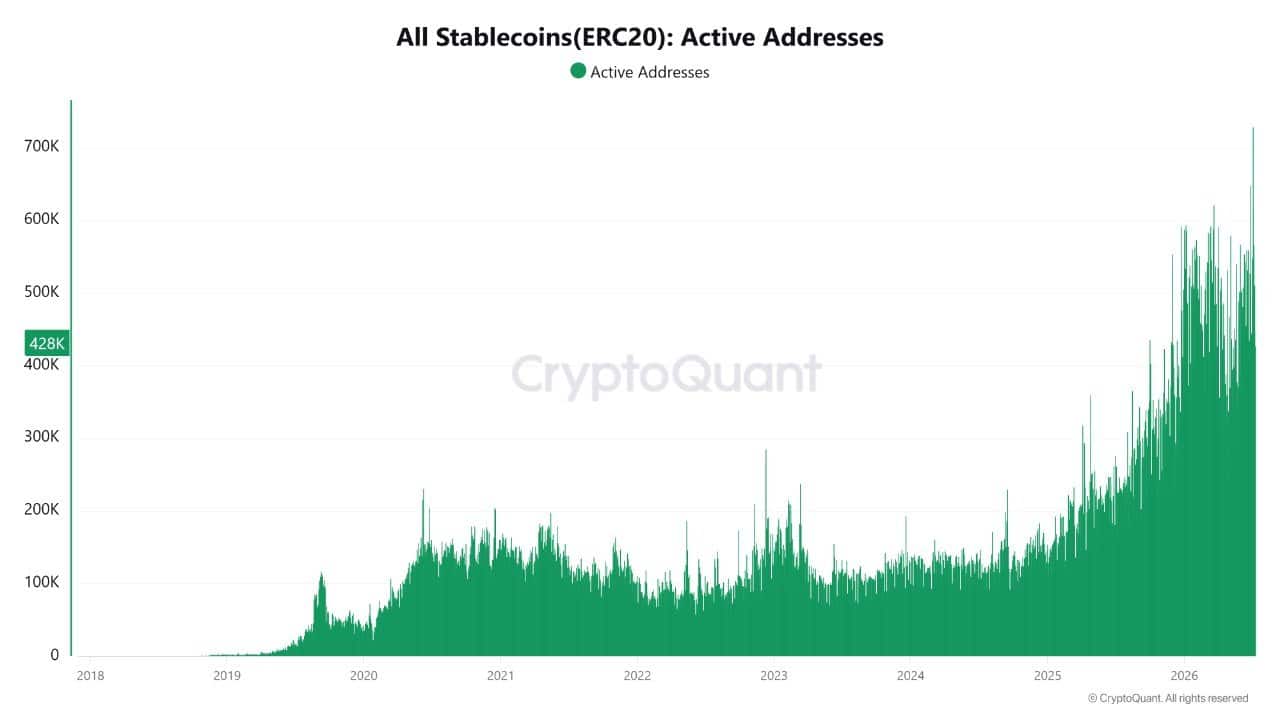
That shift is clear in the amount of ERC-20 stablecoin activity, which has increased significantly. Active addresses have surged, hovering between 400,000 and 700,000 daily since 2025.
Source: CryptoQuant

Stablecoins are being increasingly utilized by enterprises to support their cross-border settlement processes and treasury operations. This expansion coincides with Visa, Mastercard, PayPal, and Stripe integrating stablecoins into cross-border payment infrastructure.

Meanwhile, the market has expanded to nearly $312 billion, reinforcing that demand now extends beyond crypto-native participants. If payment adoption accelerates, transaction utility could emerge as a primary growth driver.

As stablecoins gain wider acceptance in global payments, corporate adoption is beginning to strengthen blockchain’s long-term foundation.

The primary motivation for corporations to develop financial products utilizing stablecoins is no longer solely the cost savings associated with reducing settlement costs.

However, institutional investors have yet to rotate their investment into Bitcoin [BTC] or Ethereum [ETH]. This indicates continued preference by institutional investors for cost-efficient transactional outcomes versus speculative returns.

If sustained, corporates will play an increasingly pivotal role in blockchain adoption. This will be through delivering stability through real-world utility rather than cycle-driven speculation.


Final Summary

  • USDT’s demand increasingly reflects payment utility alongside defensive investor positioning.
  • Stablecoin adoption continues expanding as corporate integration strengthens blockchain’s long-term utility.


Domande pertinenti

QAccording to the article, what percentage of the market is USDT usage projected to reach by July 2026, and how does this compare to 2021?

AUSDT usage is projected to reach 35.1% by July 2026. This outperforms the 29.0% usage in the same period in 2021.

QWhat is identified as a major real-world factor driving the increased utility and demand for stablecoins like USDT?

AThe major factor is their use in cross-border payments and settlements by enterprises, facilitated by integration from major payment firms like Visa, Mastercard, PayPal, and Stripe.

QWhat does the significant rise in daily active addresses for ERC-20 stablecoins (between 400,000 and 700,000 since 2025) indicate?

AIt indicates that users are interacting with stablecoin assets far more frequently than in previous cycles, reflecting growing real economic activity and utility on blockchain networks.

QWhat shift in corporate motivation for using stablecoins does the article describe?

AThe primary motivation is no longer solely cost savings from reduced settlement costs. It is increasingly about gaining stability through real-world utility and supporting treasury operations and payment infrastructure.

QBased on the article's 'Final Summary', what two key points summarize the current state and future of stablecoin adoption?

A1) USDT's demand increasingly reflects payment utility alongside defensive investor positioning. 2) Stablecoin adoption continues expanding as corporate integration strengthens blockchain's long-term utility.

Letture associate

Bitcoin Withdrawals Continue: 8 Years of Storage in a Coldcard Cold Wallet Ended in Zero

Coldcard Hardware Wallet Hacked: Losses Mount Due to Vulnerable Seed Generation A critical vulnerability in Coldcard hardware wallets has led to a continued wave of fund thefts. According to Galaxy Research, the total stolen has reached 1,367.05 BTC (approx. $88.6 million) from 4,585 addresses, a significant increase from the initial 594.5 BTC reported on July 30, 2026. Most of the stolen funds remain on the attackers' addresses. The issue is not with the current firmware, which Coinkite has updated, but with seed phrases generated on vulnerable devices between March 2021 and the release of fixed firmware versions. Due to a programmer error, devices switched from using a hardware random number generator to the software-based Yasmarang generator, which was initialized with publicly accessible data like the chip's serial number. This made the seed phrases predictable through offline brute-force attacks, meaning wallets remain at risk until funds are moved to a new wallet generated with the patched firmware. Affected devices include Mk2/Mk3 with firmware 4.0.1–4.1.9 (and up to 5.0.3), Mk4/Mk5 up to version 5.6.0, and Q models up to 1.5.0Q. The only exceptions are seeds created with a high-entropy method like at least 50 independent dice rolls or a strong unique BIP-39 passphrase. All other owners must generate a new seed on the fixed firmware and transfer their assets. A case highlighting the human impact involves a 39-year-old long-term investor who lost 2 BTC (approx. $130,000) in minutes. He had accumulated the Bitcoin over eight years through physical labor, viewing it as a financial lifeline and a retirement plan in a country suffering from hyperinflation. His story underscores that even conservative "buy and hold in cold storage" strategies can be compromised by such underlying technical flaws. From a technical perspective, this incident echoes historical failures where weak random number generators undermined cryptographic security, challenging the assumption that offline storage is automatically foolproof.

cryptonews.ru4 h fa

Bitcoin Withdrawals Continue: 8 Years of Storage in a Coldcard Cold Wallet Ended in Zero

cryptonews.ru4 h fa

Trading

Spot
活动图片




