USDT Rating Controversy: S&P's 'Stability Scale', Tether's 'Market Debate', and the 'Shadow Central Bank' Transformation

marsbitPubblicato 2025-12-12Pubblicato ultima volta 2025-12-12

Introduzione

The recent S&P Global downgrade of USDT's stability rating from "constrained" to "weak" has ignited a significant debate between traditional finance (TradFi) and the crypto ecosystem. S&P's decision was primarily based on concerns over Tether's reserve composition—now comprising ~24% in higher-volatility assets like Bitcoin and gold—and a perceived lack of governance transparency, fearing these assets could not be liquidated quickly in a mass redemption scenario. Tether countered by emphasizing its proven market resilience, having maintained its peg through multiple past crises, and its real-time reserve reporting. The core of the article identifies a fundamental clash in risk assessment frameworks: TradFi prioritizes redeemability and capital adequacy in extreme stress, while the crypto market's stability is underpinned by 24/7 on-chain liquidity and automated清算 mechanisms. The report further analyzes Tether's strategic shift from a simple stablecoin issuer to a "shadow central bank," diversifying its reserves into assets like BTC and gold for inflation hedging, yield generation, and de-dollarization. This strategy, while profitable in a bull market (e.g., $10B profit in 2025), introduces cyclical risks if asset prices fall. Looking forward, the article suggests the need for a dual-rating system: a traditional stability rating for redeemability and a new investment risk rating for收益 sustainability and exposure management, reflecting the evolving and divergent needs of the...

Article Authors: May P, Janus R

Article Source: CoinFound

About CoinFound: CoinFound is a TradFi Crypto data technology company for institutional and professional investors, providing RWA asset data terminals, RWA asset ratings, Web3 risk relationship graphs, AI analysis tools, and customized data services. From data integration and risk identification to decision support, it helps institutions obtain critical intelligence and convert it into actionable insights at lower costs and higher efficiency, building the global RWA infrastructure.

Takeaway

  • USDT Rating Downgrade and Controversy: The proportion of non-pegged assets (BTC, gold, etc.) in USDT's reserves has reached about 24%, coupled with insufficient governance and transparency, making it perceived as higher risk under the traditional financial framework, leading to the rating downgrade. The downgrade of USDT's rating has sparked controversy.
  • Tether Significantly Increases Gold and Bitcoin Proportion: For purposes such as inflation hedging, asset diversification, reducing single exposure to the US dollar, and enhancing returns, Tether has been continuously increasing the proportion of gold and Bitcoin reserves in recent years.
  • The Essence of the S&P and Tether Disagreement: Traditional financial risk perception prioritizes 'solvency,' focusing on 'the ability to liquidate reserves under extreme redemption pressure'; whereas Tether focuses on 'market liquidity priority' and long-term value preservation and risk resistance (especially inflation risk). Their dimensions for measuring risk are completely different.
  • Strategic Intent Behind Tether's Reserve Transformation: Tether's reserve model is shifting from a '1:1' cash-equivalent reserve to a hybrid model of 'hard assets (gold) + digital assets (BTC) + low-risk assets (US Treasuries)'. Essentially, this is a transformation from a 'stablecoin issuer' to a 'global liquidity provider + digital asset reserve institution,' driven by core factors including inflation hedging needs, pro-cyclical yield enhancement (e.g., the predicted BTC/gold bull market in 2025), and de-dollarization strategy. In fact, Tether is becoming more like a 'shadow central bank' rather than a simple stablecoin issuer.
  • Limitations of the Current Rating System: S&P's 'stability rating' covers 'redemption risk' but cannot address investor demands for Tether's 'asset appreciation capability' and 'cyclical resilience.' The market may require more multi-dimensional risk rating information in the future. Additionally, a dual-framework model of 'Stability Rating (Regulatory + Solvency) + Investment Risk Rating (Return + Cycle)' might be needed to bridge the risk perceptions of traditional and crypto finance.
  • USDT's Short-Term Risks and Long-Term Trends: USDT's peg stability is still supported by on-chain liquidity. However, in the short term, the 24% high-volatility assets (BTC/gold/loans) in the reserves may expose risks during the 2026 interest rate cut cycle and a potential crypto bear market (Tether's books showed huge unrealized gains in 2025 from holding gold and Bitcoin reserves; however, the situation may change in 2026). In the long term, the 'central bank-ization' trend of stablecoins (anti-inflation assets + global network + energy) will drive the industry towards 'transparency + standardization'.

1. Event Recap: The Controversy and Essence of S&P Downgrading USDT's Rating

1.1 Event Timeline and Core Contradiction

In November 2025, S&P Global downgraded USDT's 'Asset/Stability Assessment' from 'constrained' to 'weak', with two core reasons:

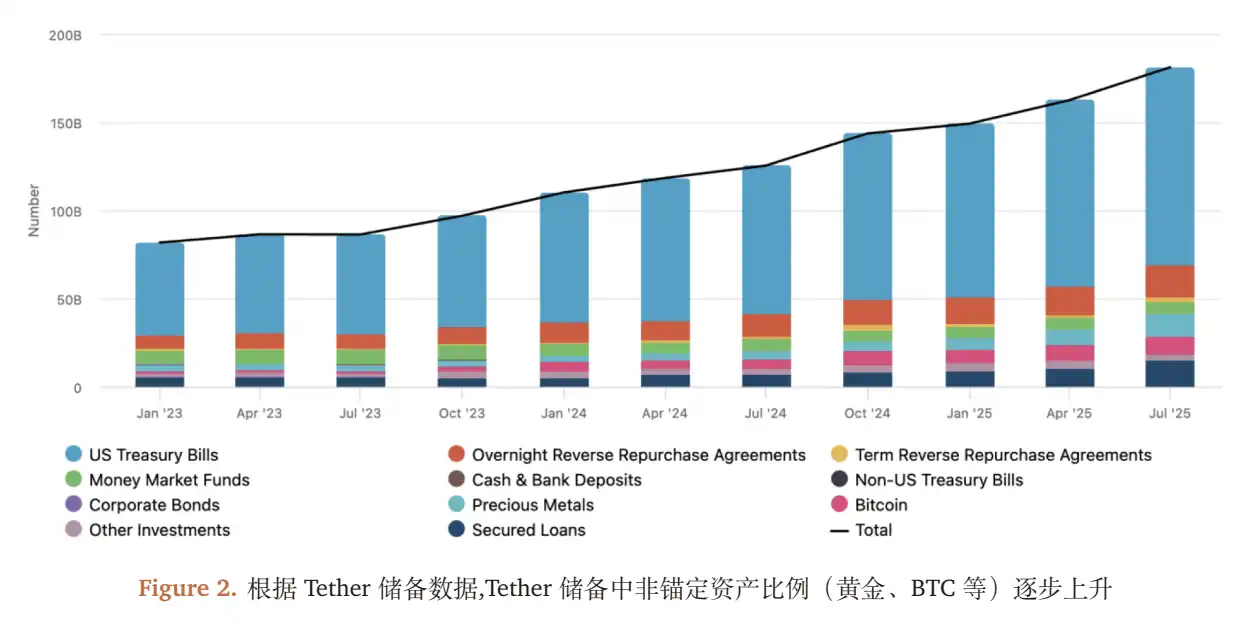
  • Reserve Structure Risk: High-volatility assets (BTC, gold, loans, etc.) in Tether's reserves have reached 24% (only 12% in 2023). Such assets cannot be liquidated quickly in a 'panic redemption' scenario.
  • Insufficient Governance Transparency: Failure to disclose major custodians, details of on-chain collateral segregation mechanisms, and providing only 'quarterly Assurance Reports' instead of full independent audits.

Tether's counterattack focused on 'actual market performance' and questioned the rating methodology from the traditional financial system:

  • Historical Resilience: USDT maintained its peg through 8 extreme events including the 2022 FTX collapse, the 2023 Silicon Valley Bank crisis, and the 2024 crypto regulatory tightening.
  • Leading Transparency: Since 2021, providing 'real-time reserve data' (verifiable via on-chain addresses), with Quarterly Assurance Reports covering over 95% of assets, superior to some traditional money market funds.
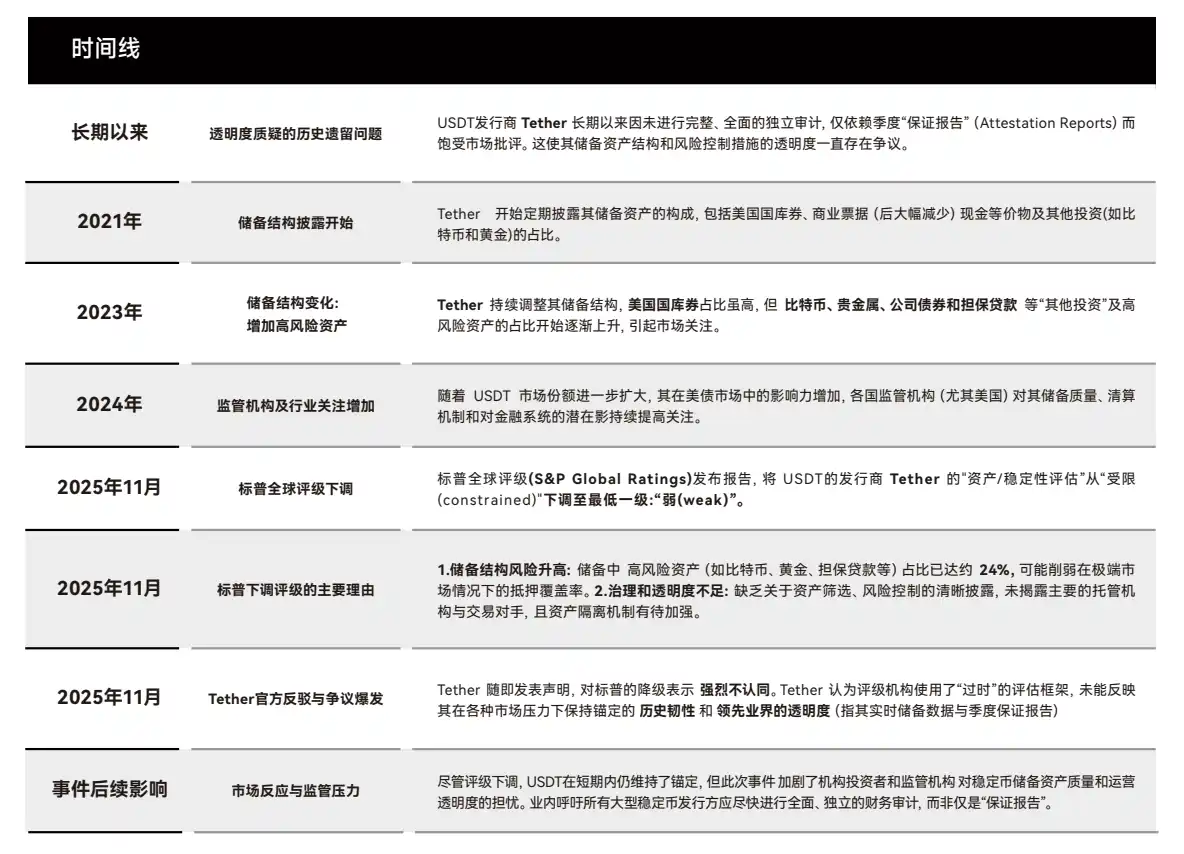
(Chart 1: USDT Rating Downgrade Event Recap)

1.2 The Essence of the Disagreement: Clash of Two Risk Measurement Systems

In November 2025, S&P Global Ratings downgraded USDT's stability assessment to the lowest level, 'weak'. Tether publicly countered, accusing S&P of 'using an old-world framework' and ignoring the multiple extreme stress tests USDT has withstood over the past decade. This debate is not just a rating controversy but a head-on collision of two financial civilizations.

  • S&P represents: The 'Regulation - Capital Adequacy - Solvency' system.
  • Tether represents: The 'Market Liquidity - Global Trading Demand - On-chain Instant Settlement' system.
  • These two measure risk in fundamentally different ways, thus destined to fail to reach consensus. The argument between S&P and Tether,表面上 is a war of words over a 'stability rating,' but本质上 reflects completely different understandings of risk from two different worlds.
  • S&P and Tether: one from 100 years of traditional finance, one from 10 years of on-chain high-frequency markets. S&P uses the logic of 'central bank — bank — money market fund'; Tether relies on the logic of 'on-chain liquidity — perpetual leverage — insurance fund — automatic liquidation.'

And the logic represented by Tether is currently unavailable to traditional financial markets.

1.3 What S&P Sees: The Redemption Logic of Traditional Finance

In the cognitive framework of traditional finance, all 'instruments promising 1:1 redemption' (money market funds, commercial banks, stablecoins) must meet two hard conditions:

1. Reserve assets must be highly safe and immediately liquidatable: S&P noted in its report: Tether's reserves in BTC, gold, and loan-type assets exceed 20%. These assets are volatile and have long liquidation cycles, potentially impossible to sell quickly at face value in a 'panic redemption' scenario.

2. Governance structure must be transparent, custody arrangements must be penetrable: S&P believes Tether's custodian information, on-chain collateral segregation, and risk disclosure are still insufficient.

That is, in S&P's world: The key risk of a 'stablecoin' lies in whether it can withstand the moment when everyone comes to redeem at once? This is the redeemability stability of the traditional system.

1.4 What Tether Insists On: The Liquidity Logic of the Crypto World

If TradFi's stability comes from 'are the reserves enough, fast enough, safe enough?', then Tether's stability comes from 'can I maintain huge liquidity on-chain, can perpetual market risks be absorbed, can the secondary market maintain the price peg?' In other words:

  • TradFi measures stability as redemption ability, while Crypto measures stability as market liquidity + settlement stability.
  • And Tether's ten-year record (including multiple panic markets) indeed shows: USDT's de-pegging is often not due to 'insufficient reserves,' but due to 'temporary imbalance in secondary market liquidity,' which has been quickly repaired each time.

Why does Tether strongly counterattack? Because it adheres to another 'market logic.' Tether's response emphasizes three points:

1. USDT has maintained a 1:1 peg under all extreme sentiments: Including multiple crypto exchange collapses, the Fed's rapid rate hike cycle, regulatory tightening, bank run events, etc. From Tether's perspective, 'I am not theoretically stable, but practically stable after ten years of operation without de-pegging. The real rating of a stablecoin is given by the market daily, not by models.'

2. Real-time reserve data + Quarterly attestation reports are sufficiently transparent: Tether believes it is already superior to some shadow banks or MMFs in TradFi. But S&P does not recognize the form of 'real-time web disclosure' because S&P's methodology distinguishes between 'unaudited transparency and credible transparency.'

3. BTC/Gold are 'anti-inflation assets + strategic reserves', not high-risk exposure: The surge in BTC and gold prices in 2025 gave Tether huge paper profits (over $10 billion). This has effectively made Tether adopt a hybrid central bank-style model of 'hard assets + US Treasuries + loans + digital assets.' Tether's worldview is 'I am like a national central bank's reserves, my structure is not the traditional dollar system, but a new global asset basket.' But S&P's worldview is 'You are not a central bank, you are just a token issuer promising 1:1 redemption.'

1.5 Why Do the Two Sides Have Completely Conflicting Understandings of 'Risk'?

It reveals a key fact: The logic of risk-bearing is completely different between the crypto market and TradFi.

  • Arthur Hayes published an article on perpetual contracts on November 27th. Perpetual contracts are a typical example that fully illustrates the current inability of traditional finance and crypto finance to merge. In traditional finance (TradFi), the risk of forward contracts comes from 'unlimited margin call liability.' In TradFi, untimely liquidation, position bankruptcy, investors losing more than their margin (negative equity) require additional funds (Margin Call), even potentially using all personal assets to repay debts. Therefore, TradFi must require reserves of 'extremely high-quality assets,' tolerating no volatility.
  • But in crypto finance (Crypto), risk is borne by 'insurance funds + automatic liquidation + ADL (Auto-Deleveraging).' This is because in crypto perpetual contracts, losses are not the trader's unlimited liability. In the crypto finance system, liquidation surpluses replenish the insurance fund, liquidation fees inject into the insurance fund, ADL acts as a backstop, and exchange自有 funds supplement. The final result is that crypto users at most lose their margin but do not owe debt. Therefore, the crypto market can accept high-volatility assets more easily because the market structure provides a backstop.

This is the essence of the S&P and Tether分歧: S&P measures TradFi risk, i.e., 'If everyone comes to redeem, can you pay out?' Tether deals with Crypto risk, i.e., in a 7x24 high-volatility market, can I guarantee trading, liquidity, and global high-frequency usage? They are not measuring the same dimension.

2. Tether's Reserve Transformation: The Strategic Logic from 'Stablecoin' to 'Shadow Central Bank'

2.1 Time Series Changes in Reserve Structure (2023-2025)
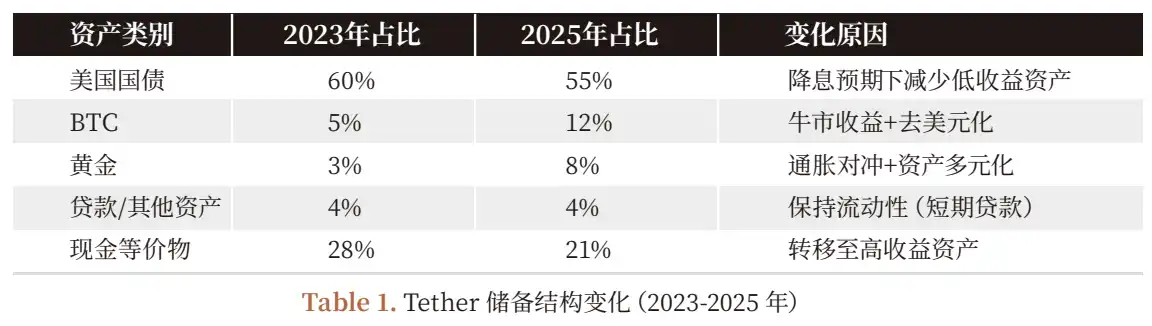
2.2 Why Increase BTC and Gold Proportion? Balancing Pro-Cyclical Returns and Long-Term Strategy

Tether's reserve structure transformation (2023-2025) is not random but a triple consideration of 'return - risk - strategy':

1. Inflation Hedging Demand: Fed rate hikes from 2022-2024 led to a decline in the US dollar's purchasing power (US CPI rose from 2% to 8%), making gold (traditional inflation hedge) and BTC (digital gold) core assets for hedging inflation;

2. Pro-Cyclical Yield Enhancement: In 2025, BTC price rose from $40k to $65k (up 62.5%), gold rose from $1900/oz to $2500/oz (up 31.6%). Tether'sunrealized gains accounted for 70% of the net profit in the first nine months of 2025 ($10 billion) (Treasury interest contributed only $3 billion);

3. De-Dollarization Strategy: The proportion of US dollar reserves in Tether dropped from 75% in 2023 to 55% in 2025. By increasing the proportion of gold and BTC, it reduces exposure to the single asset of the US dollar (responding to the US debt ceiling crisis, global de-dollarization trend).

2.3 The 'Sweetness and Hidden Danger' of the Profit Structure: Risks Under the Pro-Cyclical Trend

Tether's 2025 performance (net profit exceeding $10B in the first nine months) seems brilliant, but its profit structure highly depends on the 'bull market cycle':

  • Stable Income: Interest income from approximately $135 billion in US Treasuries (1-year Treasury yield about 2.2% in 2025), contributing about $3 billion;
  • Floating Income: Unrealized gains from BTC (approx. 100k coins) and gold (approx. 10 million ounces), contributing about $7 billion (corresponding to a BTC rise of $25k/coin, gold rise of $600/oz).

Risk Transmission Mechanism:

  • If the Fed cuts rates by 25bp in 2026 (market consensus), Tether's Treasury interest income willdecrease by $337.5 million per year ($135B * 0.25%);
  • If BTC price falls 20% (back to $52k), gold falls 10% (back to $2250/oz), Tether's unrealized gains willshrink by approximately $2.5 billion (BTC impairment ~$2.5B? Calculation based on provided numbers might differ: 100k BTC * $13k drop = $1.3B? 10M oz Gold * $250 drop = $2.5B. Total ~$3.8B? The original text says 25亿美元缩水. Assuming original numbers are estimates.);
  • If the crypto market enters a bear market (like 2022), stablecoin issuance contracts (USDT issuance dropped from $80B to $60B in 2022), Tether's Treasury holdings规模 will decrease, further compressing interest income.

2.4 The Ultimate Goal of Strategic Transformation: From 'Stablecoin' to 'Shadow Central Bank'

By tracking Tether's on-chain addresses and business布局, we find it has surpassed the定位 of a 'stablecoin issuer' and is building a 'shadow central bank' system of 'anti-inflation asset reserves + global stablecoin issuance + on-chain distribution network + energy':

  • Anti-Inflation Asset Reserves: BTC, gold占比 24%, corresponding to 'central bank's foreign exchange reserves';
  • Global Stablecoin Issuance: USDT's on-chain trading volume in 150 countries accounts for 70% of the total stablecoin trading volume, corresponding to 'central bank's currency issuance';
  • On-Chain Distribution Network: Cooperating with 200+ exchanges/DeFi protocols like Binance, Uniswap, enabling global instant transfers of USDT;
  • Energy Layout: Investing $1 billion in Bitcoin mining farms (accounting for 5% of global算力 in 2025), hedging the energy costs of BTC mining.
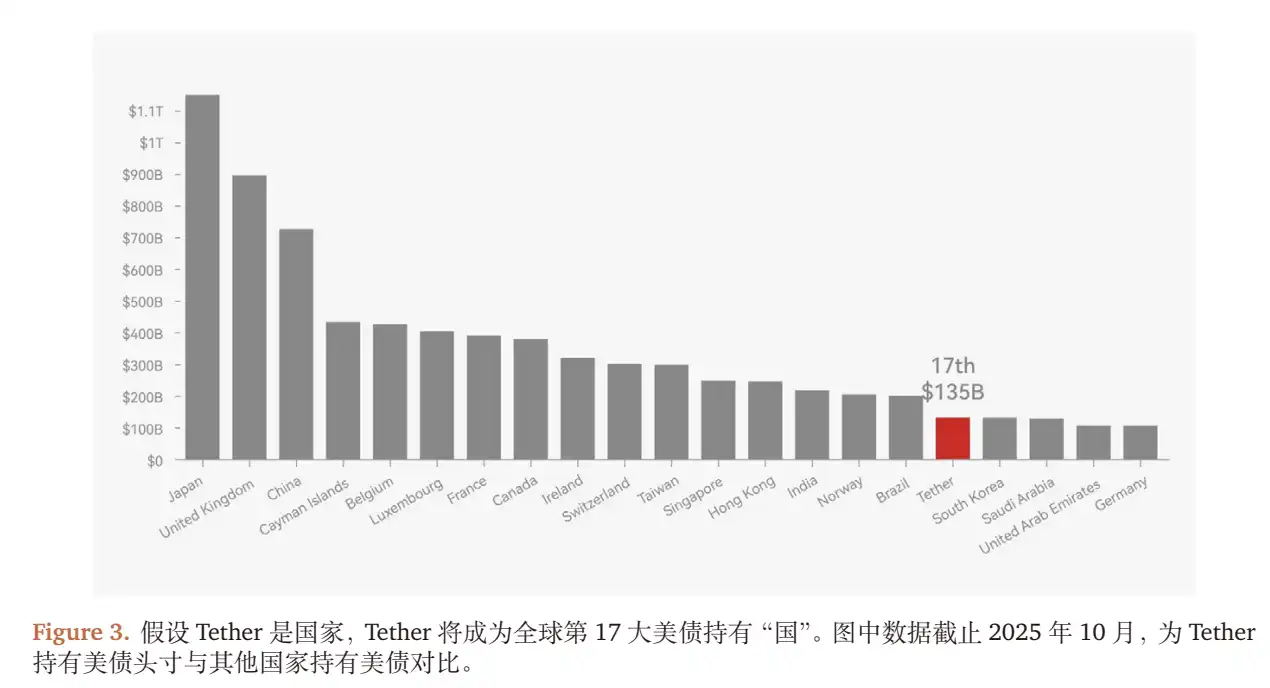
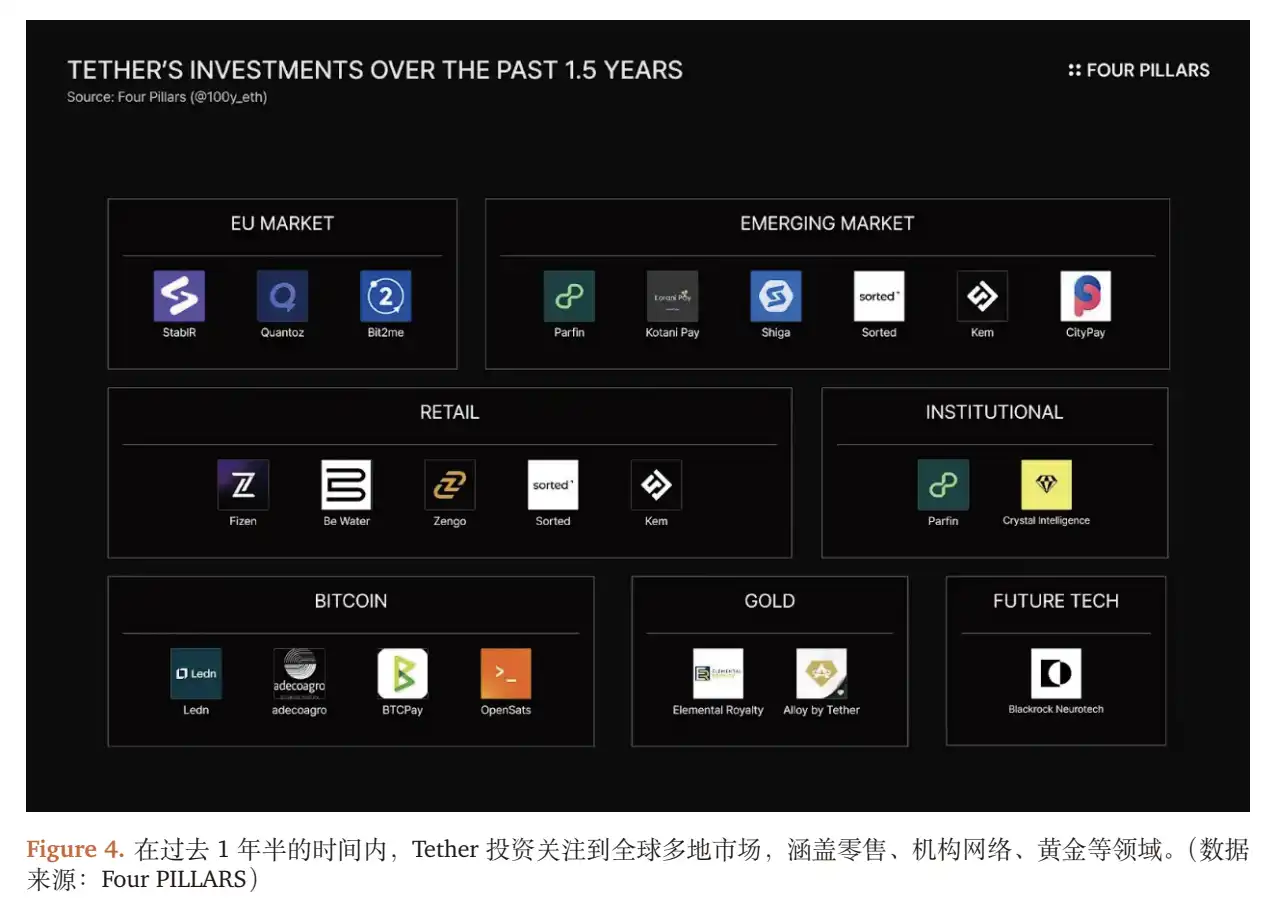
2.5 Market Performance: USDT's Peg Stability and Liquidity

  • Peg Deviation: From 2023-2025, USDT's price deviation (spread against the US dollar) averaged only 0.02%, far lower than USDC (0.05%) and DAI (0.1%);
  • On-Chain Liquidity: The liquidity pool size of USDT on Uniswap V3 reached $5 billion? (Original text says 50$ 亿美元, likely $5B or $50B? 2023 was only $1B), market maker quote spread (Spread) stabilized within 0.01%;
  • Institutional Holdings: The proportion of institutions holding USDT increased from 15% in 2023 to 30% in 2025, indicating that institutions already regard USDT as a 'portfolio tool combining liquidity and asset appreciation (rather than a pure stablecoin).

3. Future Outlook: The Evolution Direction of Stablecoin Rating Systems

3.1 Limitations of the Current Rating System: Only Covers Redemption Risk

S&P's stability rating addresses the question ofwhether the stablecoin can be redeemed, but cannot respond to the core needs of institutional investors:

  • Quality of Earnings: Is Tether's profit sustainable? (e.g., declining收益 after Treasury rate cuts)
  • Exposure Risk: Is the proportion of BTC and gold too high? (e.g., impact of a 20% drop in BTC on reserves)
  • Operational Risk: Is Tether's governance transparent? (e.g., security of custodied assets)
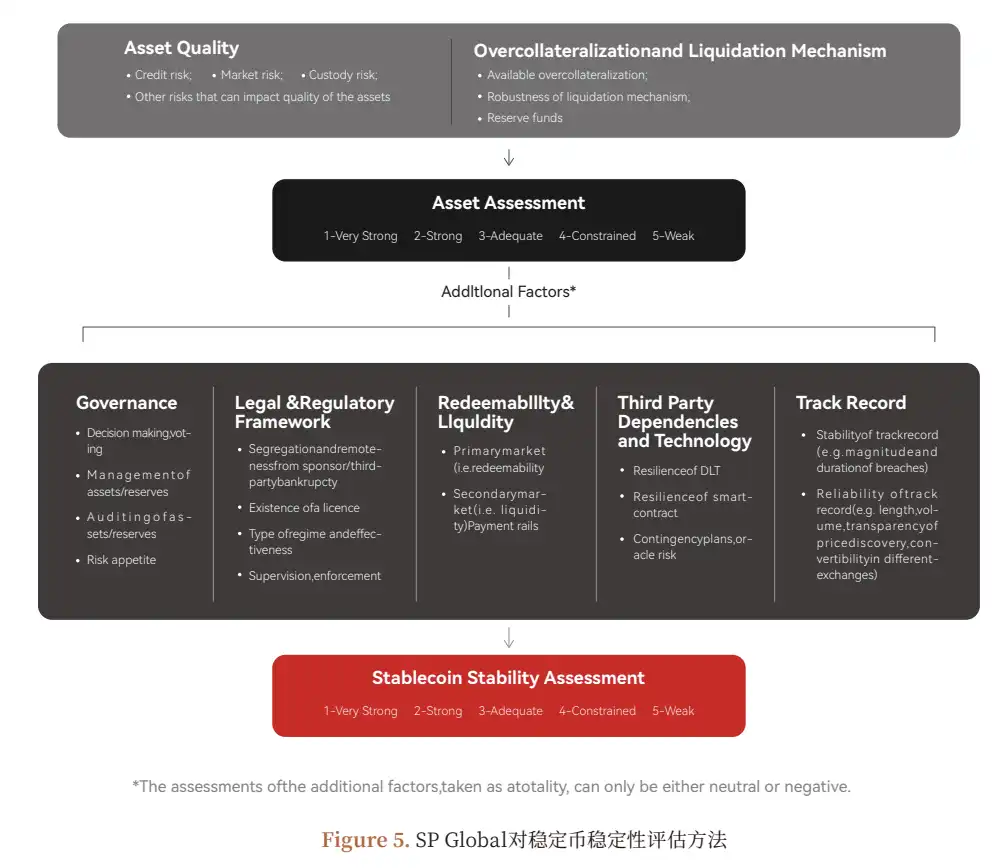
3.2 Beyond the Current Rating System

In the future, the crypto market may need a more comprehensive rating system, not just focusing on redemption and stability. The future rating design might be as follows:

Stability Rating (Upgrade of existing framework)

  • Core Metrics: Reserve assets' 'Safety Coefficient' (cash equivalent ratio), 'Liquidity Coefficient' (liquidation cycle of high-volatility assets), 'Transparency Coefficient' (independent audit coverage, custody information disclosure);
  • Goal: Answer the question 'Can the stablecoin maintain redemption under extreme挤兑?'

Investment Risk Rating (New framework)

Core Metrics:

  • Earnings Quality: Proportion of stable income (Treasury interest) (>=50% is 'low risk');
  • Exposure Management: Proportion of high-volatility assets (<=10% is 'low risk');
  • Operational Risk: Profit growth rate of the issuer (>=10% is 'stable'), regulatory compliance (e.g., US MSB license, EU MiCA certification);
  • Goal: Answer the question 'Can the stablecoin issuer operate sustainably, and can its reserve assets appreciate?'

3.3 Industry Trend: From 'Controversy' to 'Standard'

This controversy between S&P and Tether is essentially the 'rule export' from traditional finance to the crypto market. We judge:

  • Short Term: Regulation will promote 'mandatory transparency requirements' for stablecoins (e.g., the US Stablecoin Bill requiring 100% cash-equivalent reserves, EU MiCA requiring full audits);
  • Medium Term: The rating system will develop further, and ratings will not be limited to the 'regulation - capital adequacy - solvency' system. Institutional investors will choose stablecoins based on 'Stability Rating + Investment Risk Rating' for different scenarios;
  • Long Term: Stablecoins may further differentiate into 'pure stability tools' (e.g., USDC, 100% cash equivalents) and 'stability tools with appreciation' (e.g., USDT, hybrid reserves), meeting the needs of different investors.

Risk Warning

1. Reserve Asset Price Volatility Risk: A drop in BTC and gold prices will lead to impairment of Tether's reserves, affecting redemption confidence;

2. Regulatory Policy Risk: If the US and EU require stablecoins to hold 100% cash equivalents, Tether will need to sell BTC and gold, causing profits to plummet;

3. Market Liquidity Risk: In extreme market conditions (e.g., 2022 FTX collapse), on-chain liquidity drying up may cause USDT to de-peg;

4. Operational Management Risk: Tether's lack of governance transparency may trigger internal operational risks (e.g., custodied assets being stolen).

《USDT Rating Controversy》Research Report Download Link:https://app.coinfound.org/research/1

Analyst Statement: This report is based on public information and reasonable assumptions and does not constitute investment advice. The analyst does not hold positions in Tether or USDT.

Copyright Statement: The copyright of this report belongs to Coinfound.

Domande pertinenti

QWhat were the main reasons cited by S&P Global for downgrading USDT's stability rating in November 2025?

AS&P Global downgraded USDT's stability rating due to two main reasons: 1) Reserve structure risk, with high-volatility assets (BTC, gold, loans) making up 24% of Tether's reserves, which could not be quickly liquidated in a panic-driven bank run scenario. 2) Insufficient governance transparency, including a lack of disclosure on key custodians, details of on-chain collateral isolation mechanisms, and the provision of only quarterly assurance reports instead of full, independent audits.

QHow does the fundamental understanding of 'risk' differ between S&P's traditional finance (TradFi) framework and Tether's crypto market perspective?

AS&P's TradFi framework measures risk based on 'redeemability,' focusing on whether the stablecoin can withstand a mass redemption event by holding highly secure, immediately liquidatable assets. In contrast, Tether's crypto market perspective measures risk based on 'market liquidity and settlement stability,' emphasizing its ability to maintain massive on-chain liquidity, absorb perpetual market risks, and ensure price stability through a 24/7 high-frequency trading environment, as proven by its historical performance during extreme events.

QWhat are the three strategic reasons behind Tether's decision to significantly increase its BTC and gold reserves from 2023 to 2025?

ATether increased its BTC and gold reserves for three strategic reasons: 1) Inflation hedging needs, as rising U.S. CPI eroded dollar purchasing power, making gold and BTC core hedges. 2) Pro-cyclical yield enhancement, as the price surges in BTC (up 62.5%) and gold (up 31.6%) in 2025 generated massive unrealized gains, contributing 70% of Tether's $10 billion net profit. 3) De-dollarization strategy, reducing exposure to the U.S. dollar from 75% to 55% to mitigate risks from U.S. debt ceiling crises and global de-dollarization trends.

QWhat is Tether's strategic transformation goal, and what four key elements define its new 'shadow central bank' model?

ATether's strategic goal is to transform from a simple stablecoin issuer into a 'shadow central bank.' This new model is defined by four key elements: 1) Anti-inflation asset reserves (BTC, gold acting like a central bank's forex reserves). 2) Global stablecoin issuance (USDT's dominant 70% transaction share across 150 countries, akin to a central bank's currency issuance). 3) On-chain distribution network (partnerships with 200+ exchanges/DeFi protocols for instant global transfers). 4) Energy sector布局 (a $1 billion investment in Bitcoin mining, hedging BTC's energy costs and securing 5% of global hash rate).

QWhat are the proposed two frameworks for a more comprehensive stablecoin rating system that could bridge TradFi and Crypto risk perceptions?

AThe proposed two-framework system includes: 1) A Stability Rating (an upgraded existing framework) with core metrics like the 'safety coefficient' (cash-equivalent ratio), 'liquidity coefficient' (liquidation period of volatile assets), and 'transparency coefficient' (independent audit coverage, custodian disclosure), answering if a stablecoin can redeem during extreme runs. 2) An Investment Risk Rating (a new framework) with core metrics like 'yield quality' (ratio of stable income like treasury interest), 'exposure management' (ratio of high-volatility assets), and 'operational risk' (profit growth, regulatory compliance), answering if the issuer can sustain operations and grow its reserve assets.

Letture associate

Three Frameworks for Ordinary People to Achieve AI Capability Leap: Say Goodbye to the Dilemma of 'Repeating Inputs Every Day'

Summary: This article outlines three frameworks for maximizing AI efficiency, moving beyond basic prompt usage. 1. **Three-Layer Evolution**: Users progress from (1) **Prompt** (one-off instructions, reset each session), to (2) **Project** (context-aware within a specific project), to (3) **Skill** (permanent, auto-applied knowledge). Most users stagnate at the first layer, repeating the same instructions daily with no cumulative improvement. Skills transform the AI from a chat tool into a personalized work system. 2. **Transaction vs. Compound Interest Mindset**: Using prompts is a linear transaction—effort and output are 1:1, and stopping resets progress. Investing time in building Skills is compound interest; a small initial time investment pays continuous dividends, as each Skill permanently elevates the AI's baseline performance. 3. **Thin Harness, Fat Skills**: The system architecture should prioritize thick, well-defined Skills (90% of the value—containing processes, standards, and domain knowledge) and a thin "harness" (the minimal technical environment). Avoid over-engineering the toolchain while neglecting the AI's actual knowledge. Skills are permanent assets that automatically improve with model updates. The key takeaway: Identify tasks you repeat, encode them into Skills (using tools like Claude's Skill Creator), and shift focus from daily prompting to building a compounding, self-improving AI system.

marsbit15 min fa

Three Frameworks for Ordinary People to Achieve AI Capability Leap: Say Goodbye to the Dilemma of 'Repeating Inputs Every Day'

marsbit15 min fa

Trading

Spot
Futures

Articoli Popolari

Cosa è $S$

Comprendere SPERO: Una Panoramica Completa Introduzione a SPERO Mentre il panorama dell'innovazione continua a evolversi, l'emergere delle tecnologie web3 e dei progetti di criptovaluta gioca un ruolo fondamentale nel plasmare il futuro digitale. Un progetto che ha attirato l'attenzione in questo campo dinamico è SPERO, denotato come SPERO,$$s$. Questo articolo mira a raccogliere e presentare informazioni dettagliate su SPERO, per aiutare gli appassionati e gli investitori a comprendere le sue basi, obiettivi e innovazioni nei domini web3 e crypto. Che cos'è SPERO,$$s$? SPERO,$$s$ è un progetto unico all'interno dello spazio crypto che cerca di sfruttare i principi della decentralizzazione e della tecnologia blockchain per creare un ecosistema che promuove l'impegno, l'utilità e l'inclusione finanziaria. Il progetto è progettato per facilitare interazioni peer-to-peer in modi nuovi, fornendo agli utenti soluzioni e servizi finanziari innovativi. Al suo interno, SPERO,$$s$ mira a responsabilizzare gli individui fornendo strumenti e piattaforme che migliorano l'esperienza dell'utente nello spazio delle criptovalute. Questo include la possibilità di metodi di transazione più flessibili, la promozione di iniziative guidate dalla comunità e la creazione di percorsi per opportunità finanziarie attraverso applicazioni decentralizzate (dApps). La visione sottostante di SPERO,$$s$ ruota attorno all'inclusività, cercando di colmare le lacune all'interno della finanza tradizionale mentre sfrutta i vantaggi della tecnologia blockchain. Chi è il Creatore di SPERO,$$s$? L'identità del creatore di SPERO,$$s$ rimane piuttosto oscura, poiché ci sono risorse pubblicamente disponibili limitate che forniscono informazioni dettagliate sul suo fondatore o fondatori. Questa mancanza di trasparenza può derivare dall'impegno del progetto per la decentralizzazione—un ethos che molti progetti web3 condividono, dando priorità ai contributi collettivi rispetto al riconoscimento individuale. Centrando le discussioni attorno alla comunità e ai suoi obiettivi collettivi, SPERO,$$s$ incarna l'essenza dell'empowerment senza mettere in evidenza individui specifici. Pertanto, comprendere l'etica e la missione di SPERO rimane più importante che identificare un creatore singolo. Chi sono gli Investitori di SPERO,$$s$? SPERO,$$s$ è supportato da una varietà di investitori che vanno dai capitalisti di rischio agli investitori angelici dedicati a promuovere l'innovazione nel settore crypto. Il focus di questi investitori generalmente si allinea con la missione di SPERO—dando priorità a progetti che promettono avanzamenti tecnologici sociali, inclusività finanziaria e governance decentralizzata. Queste fondazioni di investitori sono tipicamente interessate a progetti che non solo offrono prodotti innovativi, ma contribuiscono anche positivamente alla comunità blockchain e ai suoi ecosistemi. Il supporto di questi investitori rafforza SPERO,$$s$ come un concorrente degno di nota nel dominio in rapida evoluzione dei progetti crypto. Come Funziona SPERO,$$s$? SPERO,$$s$ impiega un framework multifunzionale che lo distingue dai progetti di criptovaluta convenzionali. Ecco alcune delle caratteristiche chiave che sottolineano la sua unicità e innovazione: Governance Decentralizzata: SPERO,$$s$ integra modelli di governance decentralizzati, responsabilizzando gli utenti a partecipare attivamente ai processi decisionali riguardanti il futuro del progetto. Questo approccio favorisce un senso di proprietà e responsabilità tra i membri della comunità. Utilità del Token: SPERO,$$s$ utilizza il proprio token di criptovaluta, progettato per servire varie funzioni all'interno dell'ecosistema. Questi token abilitano transazioni, premi e la facilitazione dei servizi offerti sulla piattaforma, migliorando l'impegno e l'utilità complessivi. Architettura Stratificata: L'architettura tecnica di SPERO,$$s$ supporta la modularità e la scalabilità, consentendo un'integrazione fluida di funzionalità e applicazioni aggiuntive man mano che il progetto evolve. Questa adattabilità è fondamentale per mantenere la rilevanza nel panorama crypto in continua evoluzione. Coinvolgimento della Comunità: Il progetto enfatizza iniziative guidate dalla comunità, impiegando meccanismi che incentivano la collaborazione e il feedback. Nutrendo una comunità forte, SPERO,$$s$ può affrontare meglio le esigenze degli utenti e adattarsi alle tendenze di mercato. Focus sull'Inclusione: Offrendo basse commissioni di transazione e interfacce user-friendly, SPERO,$$s$ mira ad attrarre una base utenti diversificata, inclusi individui che potrebbero non aver precedentemente interagito nello spazio crypto. Questo impegno per l'inclusione si allinea con la sua missione generale di empowerment attraverso l'accessibilità. Cronologia di SPERO,$$s$ Comprendere la storia di un progetto fornisce preziose intuizioni sulla sua traiettoria di sviluppo e sui traguardi. Di seguito è riportata una cronologia suggerita che mappa eventi significativi nell'evoluzione di SPERO,$$s$: Fase di Concettualizzazione e Ideazione: Le idee iniziali che formano la base di SPERO,$$s$ sono state concepite, allineandosi strettamente con i principi di decentralizzazione e focus sulla comunità all'interno dell'industria blockchain. Lancio del Whitepaper del Progetto: Dopo la fase concettuale, è stato rilasciato un whitepaper completo che dettaglia la visione, gli obiettivi e l'infrastruttura tecnologica di SPERO,$$s$ per suscitare interesse e feedback dalla comunità. Costruzione della Comunità e Prime Interazioni: Sono stati effettuati sforzi attivi di outreach per costruire una comunità di early adopters e potenziali investitori, facilitando discussioni attorno agli obiettivi del progetto e ottenendo supporto. Evento di Generazione del Token: SPERO,$$s$ ha condotto un evento di generazione del token (TGE) per distribuire i propri token nativi ai primi sostenitori e stabilire una liquidità iniziale all'interno dell'ecosistema. Lancio della Prima dApp: La prima applicazione decentralizzata (dApp) associata a SPERO,$$s$ è stata attivata, consentendo agli utenti di interagire con le funzionalità principali della piattaforma. Sviluppo Continuo e Partnership: Aggiornamenti e miglioramenti continui alle offerte del progetto, inclusi partnership strategiche con altri attori nello spazio blockchain, hanno plasmato SPERO,$$s$ in un concorrente competitivo e in evoluzione nel mercato crypto. Conclusione SPERO,$$s$ rappresenta una testimonianza del potenziale del web3 e delle criptovalute di rivoluzionare i sistemi finanziari e responsabilizzare gli individui. Con un impegno per la governance decentralizzata, il coinvolgimento della comunità e funzionalità progettate in modo innovativo, apre la strada verso un panorama finanziario più inclusivo. Come per qualsiasi investimento nello spazio crypto in rapida evoluzione, si incoraggiano potenziali investitori e utenti a ricercare approfonditamente e a impegnarsi in modo riflessivo con gli sviluppi in corso all'interno di SPERO,$$s$. Il progetto mostra lo spirito innovativo dell'industria crypto, invitando a ulteriori esplorazioni delle sue innumerevoli possibilità. Mentre il percorso di SPERO,$$s$ è ancora in fase di sviluppo, i suoi principi fondamentali potrebbero effettivamente influenzare il futuro di come interagiamo con la tecnologia, la finanza e tra di noi in ecosistemi digitali interconnessi.

75 Totale visualizzazioniPubblicato il 2024.12.17Aggiornato il 2024.12.17

Cosa è $S$

Cosa è AGENT S

Agent S: Il Futuro dell'Interazione Autonoma in Web3 Introduzione Nel panorama in continua evoluzione di Web3 e criptovalute, le innovazioni stanno costantemente ridefinendo il modo in cui gli individui interagiscono con le piattaforme digitali. Uno di questi progetti pionieristici, Agent S, promette di rivoluzionare l'interazione uomo-computer attraverso il suo framework agentico aperto. Aprendo la strada a interazioni autonome, Agent S mira a semplificare compiti complessi, offrendo applicazioni trasformative nell'intelligenza artificiale (AI). Questa esplorazione dettagliata approfondirà le complessità del progetto, le sue caratteristiche uniche e le implicazioni per il dominio delle criptovalute. Cos'è Agent S? Agent S si presenta come un innovativo framework agentico aperto, progettato specificamente per affrontare tre sfide fondamentali nell'automazione dei compiti informatici: Acquisizione di Conoscenze Specifiche del Dominio: Il framework apprende in modo intelligente da varie fonti di conoscenza esterne ed esperienze interne. Questo approccio duale gli consente di costruire un ricco repository di conoscenze specifiche del dominio, migliorando le sue prestazioni nell'esecuzione dei compiti. Pianificazione su Lungo Orizzonte di Compiti: Agent S impiega una pianificazione gerarchica potenziata dall'esperienza, un approccio strategico che facilita la suddivisione e l'esecuzione efficiente di compiti complessi. Questa caratteristica migliora significativamente la sua capacità di gestire più sottocompiti in modo efficiente ed efficace. Gestione di Interfacce Dinamiche e Non Uniformi: Il progetto introduce l'Interfaccia Agente-Computer (ACI), una soluzione innovativa che migliora l'interazione tra agenti e utenti. Utilizzando Modelli Linguistici Multimodali di Grandi Dimensioni (MLLM), Agent S può navigare e manipolare senza sforzo diverse interfacce grafiche utente. Attraverso queste caratteristiche pionieristiche, Agent S fornisce un framework robusto che affronta le complessità coinvolte nell'automazione dell'interazione umana con le macchine, preparando il terreno per innumerevoli applicazioni nell'AI e oltre. Chi è il Creatore di Agent S? Sebbene il concetto di Agent S sia fondamentalmente innovativo, informazioni specifiche sul suo creatore rimangono elusive. Il creatore è attualmente sconosciuto, il che evidenzia sia la fase embrionale del progetto sia la scelta strategica di mantenere i membri fondatori sotto anonimato. Indipendentemente dall'anonimato, l'attenzione rimane sulle capacità e sul potenziale del framework. Chi sono gli Investitori di Agent S? Poiché Agent S è relativamente nuovo nell'ecosistema crittografico, informazioni dettagliate riguardanti i suoi investitori e sostenitori finanziari non sono documentate esplicitamente. La mancanza di approfondimenti pubblicamente disponibili sulle fondazioni di investimento o sulle organizzazioni che supportano il progetto solleva interrogativi sulla sua struttura di finanziamento e sulla roadmap di sviluppo. Comprendere il supporto è cruciale per valutare la sostenibilità del progetto e il suo potenziale impatto sul mercato. Come Funziona Agent S? Al centro di Agent S si trova una tecnologia all'avanguardia che gli consente di funzionare efficacemente in contesti diversi. Il suo modello operativo è costruito attorno a diverse caratteristiche chiave: Interazione Uomo-Computer Simile a Quella Umana: Il framework offre una pianificazione AI avanzata, cercando di rendere le interazioni con i computer più intuitive. Mimando il comportamento umano nell'esecuzione dei compiti, promette di elevare le esperienze degli utenti. Memoria Narrativa: Utilizzata per sfruttare esperienze di alto livello, Agent S utilizza la memoria narrativa per tenere traccia delle storie dei compiti, migliorando così i suoi processi decisionali. Memoria Episodica: Questa caratteristica fornisce agli utenti una guida passo-passo, consentendo al framework di offrire supporto contestuale mentre i compiti si sviluppano. Supporto per OpenACI: Con la capacità di funzionare localmente, Agent S consente agli utenti di mantenere il controllo sulle proprie interazioni e flussi di lavoro, allineandosi con l'etica decentralizzata di Web3. Facile Integrazione con API Esterne: La sua versatilità e compatibilità con varie piattaforme AI garantiscono che Agent S possa adattarsi senza problemi agli ecosistemi tecnologici esistenti, rendendolo una scelta attraente per sviluppatori e organizzazioni. Queste funzionalità contribuiscono collettivamente alla posizione unica di Agent S all'interno dello spazio crittografico, poiché automatizza compiti complessi e multi-fase con un intervento umano minimo. Man mano che il progetto evolve, le sue potenziali applicazioni in Web3 potrebbero ridefinire il modo in cui si svolgono le interazioni digitali. Cronologia di Agent S Lo sviluppo e le tappe di Agent S possono essere riassunti in una cronologia che evidenzia i suoi eventi significativi: 27 Settembre 2024: Il concetto di Agent S è stato lanciato in un documento di ricerca completo intitolato “Un Framework Agentico Aperto che Usa i Computer Come un Umano”, mostrando le basi per il progetto. 10 Ottobre 2024: Il documento di ricerca è stato reso pubblicamente disponibile su arXiv, offrendo un'esplorazione approfondita del framework e della sua valutazione delle prestazioni basata sul benchmark OSWorld. 12 Ottobre 2024: È stata rilasciata una presentazione video, fornendo un'idea visiva delle capacità e delle caratteristiche di Agent S, coinvolgendo ulteriormente potenziali utenti e investitori. Questi indicatori nella cronologia non solo illustrano i progressi di Agent S, ma indicano anche il suo impegno per la trasparenza e il coinvolgimento della comunità. Punti Chiave su Agent S Man mano che il framework Agent S continua a evolversi, diversi attributi chiave si distinguono, sottolineando la sua natura innovativa e il potenziale: Framework Innovativo: Progettato per fornire un uso intuitivo dei computer simile all'interazione umana, Agent S porta un approccio nuovo all'automazione dei compiti. Interazione Autonoma: La capacità di interagire autonomamente con i computer attraverso GUI segna un passo avanti verso soluzioni informatiche più intelligenti ed efficienti. Automazione di Compiti Complessi: Con la sua metodologia robusta, può automatizzare compiti complessi e multi-fase, rendendo i processi più veloci e meno soggetti a errori. Miglioramento Continuo: I meccanismi di apprendimento consentono ad Agent S di migliorare dalle esperienze passate, migliorando continuamente le sue prestazioni e la sua efficacia. Versatilità: La sua adattabilità attraverso diversi ambienti operativi come OSWorld e WindowsAgentArena garantisce che possa servire un'ampia gamma di applicazioni. Man mano che Agent S si posiziona nel panorama di Web3 e delle criptovalute, il suo potenziale per migliorare le capacità di interazione e automatizzare i processi segna un significativo avanzamento nelle tecnologie AI. Attraverso il suo framework innovativo, Agent S esemplifica il futuro delle interazioni digitali, promettendo un'esperienza più fluida ed efficiente per gli utenti in vari settori. Conclusione Agent S rappresenta un audace passo avanti nell'unione tra AI e Web3, con la capacità di ridefinire il modo in cui interagiamo con la tecnologia. Sebbene sia ancora nelle sue fasi iniziali, le possibilità per la sua applicazione sono vaste e coinvolgenti. Attraverso il suo framework completo che affronta sfide critiche, Agent S mira a portare le interazioni autonome al centro dell'esperienza digitale. Man mano che ci addentriamo nei regni delle criptovalute e della decentralizzazione, progetti come Agent S giocheranno senza dubbio un ruolo cruciale nel plasmare il futuro della tecnologia e della collaborazione uomo-computer.

402 Totale visualizzazioniPubblicato il 2025.01.14Aggiornato il 2025.01.14

Cosa è AGENT S

Come comprare S

Benvenuto in HTX.com! Abbiamo reso l'acquisto di Sonic (S) semplice e conveniente. Segui la nostra guida passo passo per intraprendere il tuo viaggio nel mondo delle criptovalute.Step 1: Crea il tuo Account HTXUsa la tua email o numero di telefono per registrarti il tuo account gratuito su HTX. Vivi un'esperienza facile e sblocca tutte le funzionalità,Crea il mio accountStep 2: Vai in Acquista crypto e seleziona il tuo metodo di pagamentoCarta di credito/debito: utilizza la tua Visa o Mastercard per acquistare immediatamente SonicS.Bilancio: Usa i fondi dal bilancio del tuo account HTX per fare trading senza problemi.Terze parti: abbiamo aggiunto metodi di pagamento molto utilizzati come Google Pay e Apple Pay per maggiore comodità.P2P: Fai trading direttamente con altri utenti HTX.Over-the-Counter (OTC): Offriamo servizi su misura e tassi di cambio competitivi per i trader.Step 3: Conserva Sonic (S)Dopo aver acquistato Sonic (S), conserva nel tuo account HTX. In alternativa, puoi inviare tramite trasferimento blockchain o scambiare per altre criptovalute.Step 4: Scambia Sonic (S)Scambia facilmente Sonic (S) nel mercato spot di HTX. Accedi al tuo account, seleziona la tua coppia di trading, esegui le tue operazioni e monitora in tempo reale. Offriamo un'esperienza user-friendly sia per chi ha appena iniziato che per i trader più esperti.

827 Totale visualizzazioniPubblicato il 2025.01.15Aggiornato il 2025.03.21

Come comprare S

Discussioni

Benvenuto nella Community HTX. Qui puoi rimanere informato sugli ultimi sviluppi della piattaforma e accedere ad approfondimenti esperti sul mercato. Le opinioni degli utenti sul prezzo di S S sono presentate come di seguito.

活动图片