US Treasury Sec To Wall Street: If You Hate Crypto Rules, El Salvador Is Waiting

bitcoinistPubblicato 2026-02-07Pubblicato ultima volta 2026-02-07

Introduzione

U.S. Treasury Secretary Scott Bessent warned crypto firms resistant to clear regulations to “move to El Salvador” during a Senate Banking Committee hearing. His comments highlighted a deepening divide between regulators and parts of the crypto industry, particularly as lawmakers debated the Digital Asset Market Clarity Act. Bessent criticized what he called a “nihilist” segment of crypto that opposes regulatory compromise. The hearing grew heated, with senators raising concerns about stablecoins threatening bank deposits, while crypto advocates warned that strict rules could hinder innovation. Bessent’s remark underscores a choice: operate under U.S. regulations or seek looser oversight elsewhere. Although El Salvador adopted Bitcoin as legal tender, it has since made its use voluntary and maintains a regulated approach, contradicting the idea of a “no rules” environment. Market participants are closely watching the debate, as regulatory clarity could reduce volatility and shape the future of crypto services in the U.S.

Treasury Secretary Scott Bessent put a spotlight on the growing rift between regulators and parts of the crypto industry this week, telling lawmakers that those who resist clear rules “should move to El Salvador.”

The line landed hard during a Senate Banking Committee hearing and was repeated across multiple news outlets as a sign the administration is pushing for firm oversight rather than tolerance for gray areas in markets.

Bessent’s Warning To Industry

Based on reports, Bessent called out what he described as a “nihilist” wing of crypto that would rather scuttle compromise than accept a legal framework.

His remarks came as senators debated the Digital Asset Market Clarity Act, a bill meant to spell out how digital assets fit into existing banking and securities rules.

The episode followed recent moves by major players — including a high-profile platform stepping back from support for the bill — which lawmakers say complicates chances for a quick fix.
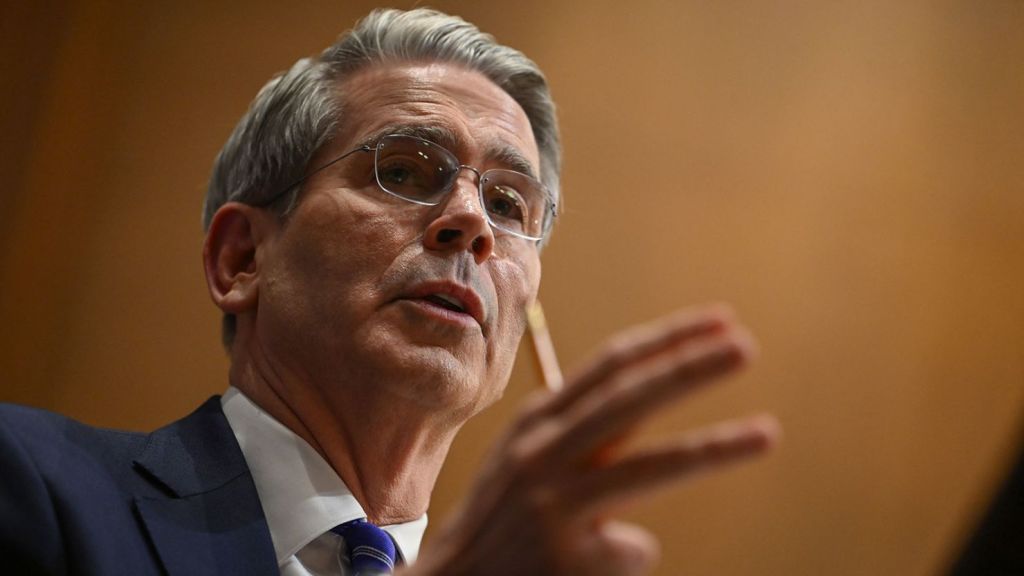
US Treasury Secretary Scott Bessent. Image: Andrew Caballero-Reynolds/AFP/Getty Images

Lawmakers And Lobbyists Take Sides

The hearing did not stay polite for long. Voices rose. Accusations flew. Some senators warned that unchecked stablecoin products could pull deposits out of banks, while crypto advocates argued that heavy-handed rules would stifle innovation.

Bessent suggested that if firms prefer places with looser oversight they can seek them out, naming El Salvador as an example. That rhetorical nudge is more than a talking point — it’s a signal about market access: do business under US guardrails, or accept limits on participation.

BTCUSD currently trading at $65,930. Chart: TradingView

What El Salvador Actually Offers

Reports note that El Salvador’s crypto stance has shifted since it became the first country to make bitcoin legal tender. Lawmakers there approved changes to make Bitcoin acceptance voluntary as part of an IMF-backed deal last year.

The move reduced the mandatory use of Bitcoin while the government said it would still hold and, on occasion, add to its reserves. Those choices mean El Salvador is not a simple “no rules” refuge, even if it appears friendlier to some crypto actors than the US.

Markets And Messaging

Traders watch words like these. Markets respond to certainty, and clarity tends to calm them. When policymakers argue publicly, volatility can spike.

At the same time, a clear path for regulation would let banks plan products and let crypto firms design services that can be sold widely, not just in select jurisdictions.

Some industry executives are lobbying for carve-outs; others want full regulatory recognition. The tension is real and it will shape who stays and who sails elsewhere.

Featured image from Unsplash, chart from TradingView

Domande pertinenti

QWhat did US Treasury Secretary Scott Bessent suggest to crypto firms that resist clear regulations?

AHe suggested that those who resist clear rules should move to El Salvador.

QDuring which congressional hearing did Secretary Bessent make his remarks about crypto regulations?

AHe made the remarks during a Senate Banking Committee hearing.

QWhat is the name of the bill that aims to clarify how digital assets fit into existing financial rules?

AThe bill is called the Digital Asset Market Clarity Act.

QHow has El Salvador's stance on Bitcoin changed since initially making it as legal tender?

AEl Salvador approved changes to make Bitcoin acceptance voluntary as part of an IMF-backed deal, reducing its mandatory use.

QAccording to the article, what is a potential market effect of public arguments among policymakers on crypto regulation?

APublic arguments among policymakers can cause market volatility to spike.

Letture associate

The Niche Consensus Among Elites: Has College Become an Expensive Waste?

**Summary:** A growing "anti-college" movement is gaining traction among elite circles in Silicon Valley, challenging the traditional value of a four-year university degree. Proponents argue that college has become an expensive, slow, and increasingly irrelevant waste of time, especially in the fast-paced tech world where opportunities pass by quickly. The movement is led by figures like billionaire Peter Thiel, who criticizes universities for high costs, ideological indoctrination, and stifling true innovation. His "Thiel Fellowship" pays young people to drop out and pursue ventures. Companies like Palantir Technologies (co-founded by Thiel) fuel this trend with programs like the "Meritocracy Fellowship," which offers high school graduates paid internships as an alternative to immediate college enrollment, promising a practical "Palantir Degree." Key drivers include: 1. **Economics:** Skyrocketing student debt versus the allure of immediate, high-paying tech jobs or startup funding. 2. **Technology:** AI and online tools lowering barriers to self-education and product development, making formal instruction seem inefficient. 3. **Culture:** A backlash against perceived "woke" ideology and DEI policies in universities, coupled with a belief that these institutions suppress meritocracy and masculine drive. The movement is notably male-dominated. Critics, like economist David Deming, warn against overgeneralizing from dropout success stories (survivorship bias). He emphasizes that genuine autodidacts are rare, corporate training is narrowly focused, and the "college wage premium" remains high for most people. University liberal arts education, he argues, builds adaptable problem-solving skills and broad perspectives. The debate highlights a deeper crisis in education. The core model of the modern university appears increasingly mismatched with the speed of the information age. The movement signals a shift in the locus of learning from institutional "education" to personal, active "learning" powered by the internet and AI. Ultimately, this may not mean the end of university, but rather a painful evolution. The future likely holds more hybrid, personalized, and lifelong learning pathways. The central question becomes: in a world changing faster than any curriculum, how do we best learn?

marsbit1 min fa

The Niche Consensus Among Elites: Has College Become an Expensive Waste?

marsbit1 min fa

From Subsidies to Token-Based Pricing to Price Cuts: Is OpenAI Sparking a Price War? Is the Inflection Point for Token Economics Nearing?

The commercialization of generative AI is facing a critical inflection point as a potential price war looms. According to The Wall Street Journal, OpenAI is considering a significant cut to its token fees to compete with rival Anthropic, signaling a shift from a growth-at-all-costs model focused on token consumption. This move comes as both companies, reportedly losing billions on compute, prepare for IPOs, and as enterprise customers face "bill shock" from switching to usage-based token billing. Reports indicate poor ROI, with one analysis finding only 18 cents of every dollar spent on AI tokens generates user-facing value. The industry's initial phases—from flat-rate subscriptions to aggressive subsidies—have given way to a reckoning with real costs. Analysts debate the future: some predict a bifurcation between premium, high-cost models for complex tasks and cheaper alternatives for routine work, while others believe overall spending will still rise as agentic AI increases tokens per task. Notably, Chinese model DeepSeek's low-cost API is gaining traction with U.S. enterprises, adding competitive pressure. The core challenge is redefining value beyond token volume ("tokenmaxxing") toward measurable productivity ("valuemaxxing"), as the entire AI value chain, from cloud providers to chipmakers, feels the ripple effects of unsustainable pricing.

marsbit5 min fa

From Subsidies to Token-Based Pricing to Price Cuts: Is OpenAI Sparking a Price War? Is the Inflection Point for Token Economics Nearing?

marsbit5 min fa

Trading

Spot
Futures
活动图片