U.S. Treasury moves forward with GENIUS Act – New rules protect stablecoin issuers

ambcryptoPubblicato 2026-04-09Pubblicato ultima volta 2026-04-09

Introduzione

The U.S. Treasury, through FinCEN and OFAC, has proposed a new rule under the GENIUS Act (signed into law in July 2025) that treats permitted payment stablecoin issuers similarly to banks under the Bank Secrecy Act. This aims to combat money laundering, terrorist financing, and sanctions evasion by imposing anti-money laundering obligations on issuers. The rule is designed to protect national security without hindering innovation in the payment system. This action follows multiple cases of illicit stablecoin use, including seizures of millions of dollars linked to scams and criminal activities. Treasury Secretary Scott Bessent stated the proposal strengthens U.S. leadership in digital finance while safeguarding the financial system.

As the crypto market braces for the passage of the CLARITY Act, a new rule under the GENIUS Act has come to the limelight.

In a joint proposal, the U.S. Department of the Treasury’s Financial Crimes Enforcement Network (FinCEN) and the Office of Foreign Assets Control (OFAC) brought a rule that treats payment stablecoin issuers similarly to banks.
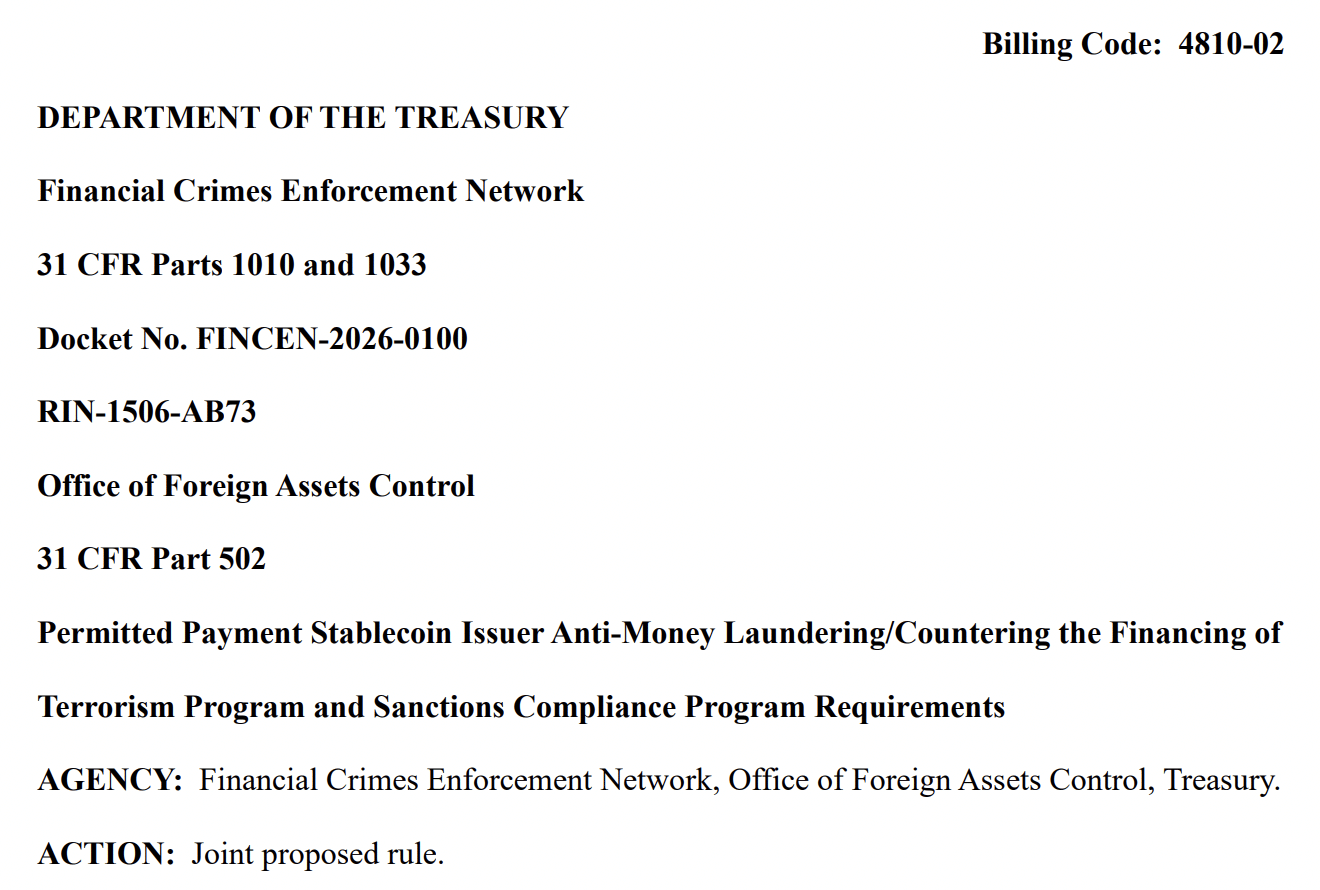
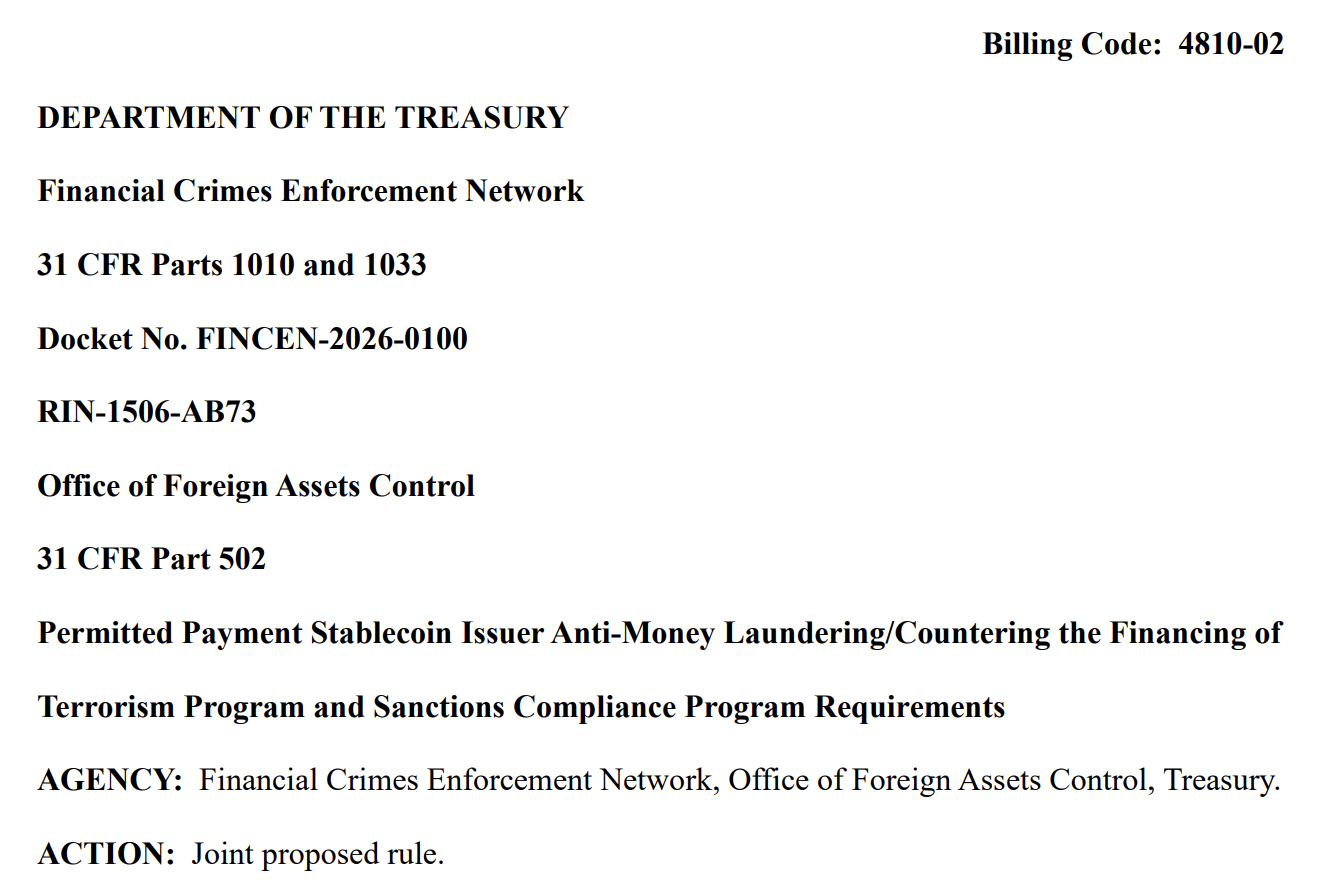
Source: www.fincen.gov

This was in the context of money laundering, terrorist financing, and sanction evasion.

For perspective, this proposed rule is part of the GENIUS Act, which was signed into law by U.S. President Donald Trump in July 2025.

What prompted the Treasury to come up with such a proposal?

Regulators believe payment stablecoin issuers can evolve the payment system in the U.S. However, given the scale and size of the financial system of the country, illicit actors find it easy to “jeopardize U.S. national security.”

Therefore, to combat such illicit financial risks, the rule ensures that permitted payment stablecoin issuers (PPSIs) are treated like financial institutions for purposes of the Bank Secrecy Act (BSA).

Needless to say, this would automatically impose the anti-money laundering (AML) obligations, which were earlier just for BSA.

Additionally, the proposal is also designed to be “fit for purpose, assist law enforcement, and minimize unnecessary burden.” That being said, all this is a part of the broader plan to “modernize BSA requirements” with consistent efforts from FinCEN.

Treasury Scott Bessent weighs in

Applauding such changes made under the U.S. President Donald Trump’s administration, Treasury Secretary Scott Bessent noted,

President Trump is strengthening American leadership in digital financial technology.

He further added,

This proposal will protect the U.S. financial system from national security threats without hindering American companies’ ability to forge ahead in the payment stablecoin ecosystem.

Illicit activities that targeted stablecoin in 2025 and before

This comes as the stablecoins had already been a center of target for many years. For instance, in June 2025, U.S. federal authorities seized $225.3 million worth of Tether’s USDT linked to the aforementioned scams.

Additionally, in July 2025, approximately $2 million worth of digital assets was unsealed by the DOJ, linked to a Palestine-based money exchange business. In November 2024, too, $5.5 million in stablecoins were seized from a drug trafficking operation.

Chainalysis’s recent report further confirmed these metrics, highlighting how in 2025 stablecoins accounted for “84% of all illicit transaction volume.”
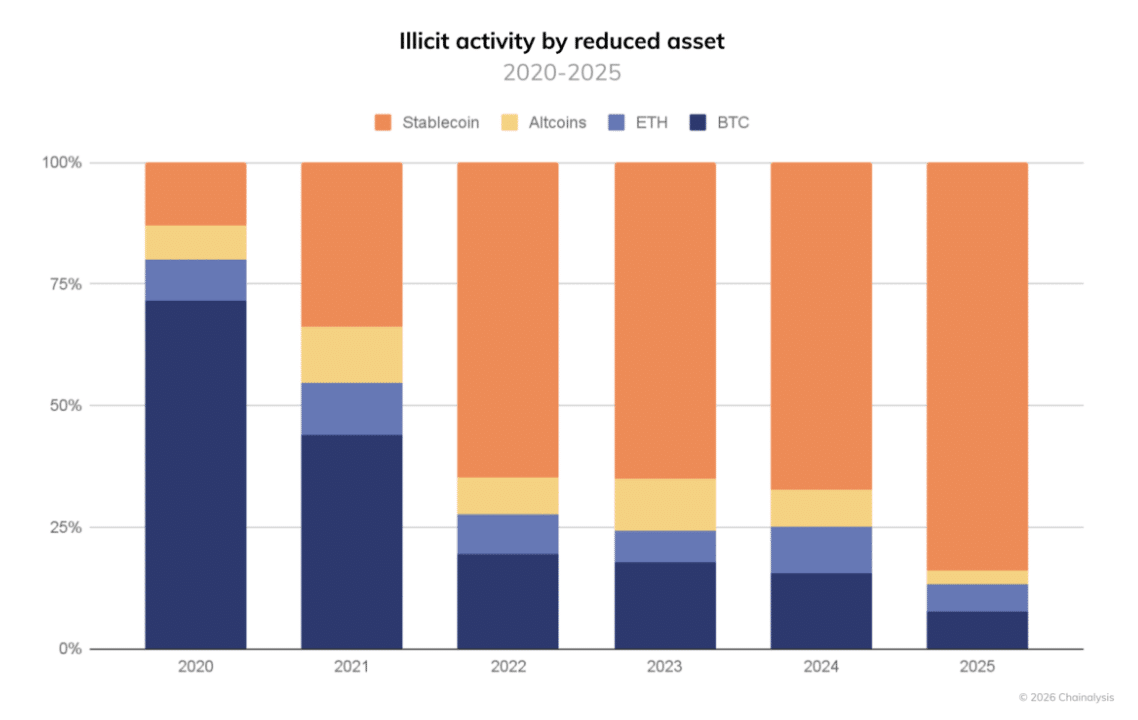
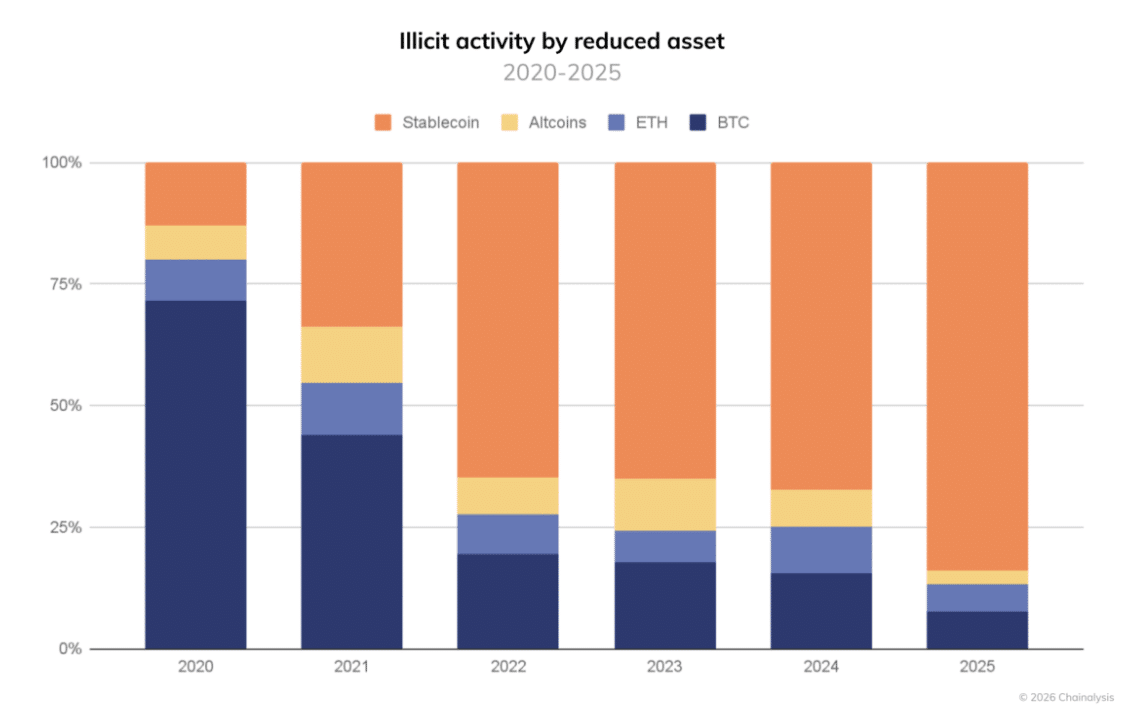
Source: Chainalysis

Final Summary

  • The joint efforts to bring in a proposed rule to address illicit activities in the stablecoin market underline the importance of the GENIUS Act passed in July 2025.
  • With millions being seized and confiscated by the DOJ, this was an alarming rule that should be passed for better crypto innovation in the U.S.


Domande pertinenti

QWhat is the main purpose of the new rule proposed under the GENIUS Act?

AThe new rule treats payment stablecoin issuers similarly to banks for purposes of the Bank Secrecy Act, imposing anti-money laundering obligations to combat illicit financial risks like money laundering, terrorist financing, and sanction evasion.

QWhich U.S. government agencies jointly proposed the new rule for stablecoin issuers?

AThe Financial Crimes Enforcement Network (FinCEN) and the Office of Foreign Assets Control (OFAC) jointly proposed the rule.

QAccording to Treasury Secretary Scott Bessent, how will this proposal benefit the U.S. financial system?

AScott Bessent stated that the proposal will protect the U.S. financial system from national security threats without hindering American companies' ability to innovate in the payment stablecoin ecosystem.

QWhat percentage of illicit transaction volume did stablecoins account for in 2025 according to Chainalysis?

AStablecoins accounted for 84% of all illicit transaction volume in 2025 according to Chainalysis's report.

QWhen was the GENIUS Act signed into law and by whom?

AThe GENIUS Act was signed into law by U.S. President Donald Trump in July 2025.

Letture associate

Within Strategy's Framework, STRC's Dividend Yield Remains at 12% as Share Price Stays Below Par Value

Michael Saylor, Executive Chairman of Strategy (MSTR), confirmed that the dividend rate for its STRC perpetual preferred shares will remain at 12.00% through August 2026. The rate has increased from 9% at its July 2025 launch to the current high via a "ratchet" mechanism, which permanently raises the rate by 0.5% whenever the share price falls below $95. This mechanism is intended to push the price back toward its $100 par value and support Strategy's "at-the-market" (ATM) program for issuing new shares to fund Bitcoin purchases. However, the mechanism has not worked as intended. STRC shares closed at $89.46 on July 31, remaining about 10-11% below par value despite the record-high dividend. Competition from rival Strive's higher-yielding SATA securities has pressured demand. The persistent discount has forced Strategy to suspend new STRC issuances via its ATM program, limiting this funding channel for Bitcoin acquisitions. STRC's struggles reflect Bitcoin's own volatility, as the preferred shares historically move in tandem. Analysts have warned the ratchet structure carries long-term, one-way risk. A law firm is investigating Strategy's ability to maintain dividend payments if Bitcoin's price stays low. Retail investors own roughly 83% of outstanding STRC shares, a group seen as prone to panic selling during downturns. In response, Strategy has established financial reserves, including a liquidity cushion covering about 26 months of dividend/interest obligations, and a $2 billion share buyback program alongside a Bitcoin monetization framework, though the company emphasized it is not obligated to sell any Bitcoin.

cryptonews.ru19 min fa

Within Strategy's Framework, STRC's Dividend Yield Remains at 12% as Share Price Stays Below Par Value

cryptonews.ru19 min fa

Analyst: Bitcoin's Price Will Drop to $60k in August, Then Rebound to $70k

Financial analyst Andrey Poroshin has provided a new forecast for Bitcoin's price dynamics in August. Poroshin, an analyst at the Bitbanker exchange, expects the cryptocurrency market to experience a downturn this month, with prices retesting the $60,000 level due to a lack of supportive macroeconomic catalysts. He noted that the recent US Federal Reserve decision to hold interest rates did not significantly impact the market, while inflation remains above the 2% target. Poroshin stated that Bitcoin is ending July under pressure from moderate volatility and a lack of new macroeconomic stimuli, leading to continued market caution. According to his base scenario, Bitcoin will drop to a range of $60,000 to $62,000 before recovering to $70,000. He pointed out that even $70,000 remains below the cost of mining in the US, which has prompted some miners to shift towards AI data center operations. Poroshin cited the winding down of BitMEX's operations as a potential catalyst for a price rebound, suggesting the exit of weaker players often coincides with market reversals and reduced short-term selling pressure. He believes Bitcoin is currently less susceptible to geopolitical shocks, such as the Iran-US conflict, and does not expect significant market changes in August related to the pending CLARITY Act. Looking ahead, Poroshin forecasts that September will bring more active price fluctuations driven by potential Fed rate decisions and possible discussions or approval of the CLARITY Act.

cryptonews.ru19 min fa

Analyst: Bitcoin's Price Will Drop to $60k in August, Then Rebound to $70k

cryptonews.ru19 min fa

Trading

Spot
活动图片




