U.S. Treasury moves forward with GENIUS Act – New rules protect stablecoin issuers

ambcryptoPubblicato 2026-04-09Pubblicato ultima volta 2026-04-09

Introduzione

The U.S. Treasury, through FinCEN and OFAC, has proposed a new rule under the GENIUS Act (signed into law in July 2025) that treats permitted payment stablecoin issuers similarly to banks under the Bank Secrecy Act. This aims to combat money laundering, terrorist financing, and sanctions evasion by imposing anti-money laundering obligations on issuers. The rule is designed to protect national security without hindering innovation in the payment system. This action follows multiple cases of illicit stablecoin use, including seizures of millions of dollars linked to scams and criminal activities. Treasury Secretary Scott Bessent stated the proposal strengthens U.S. leadership in digital finance while safeguarding the financial system.

As the crypto market braces for the passage of the CLARITY Act, a new rule under the GENIUS Act has come to the limelight.

In a joint proposal, the U.S. Department of the Treasury’s Financial Crimes Enforcement Network (FinCEN) and the Office of Foreign Assets Control (OFAC) brought a rule that treats payment stablecoin issuers similarly to banks.
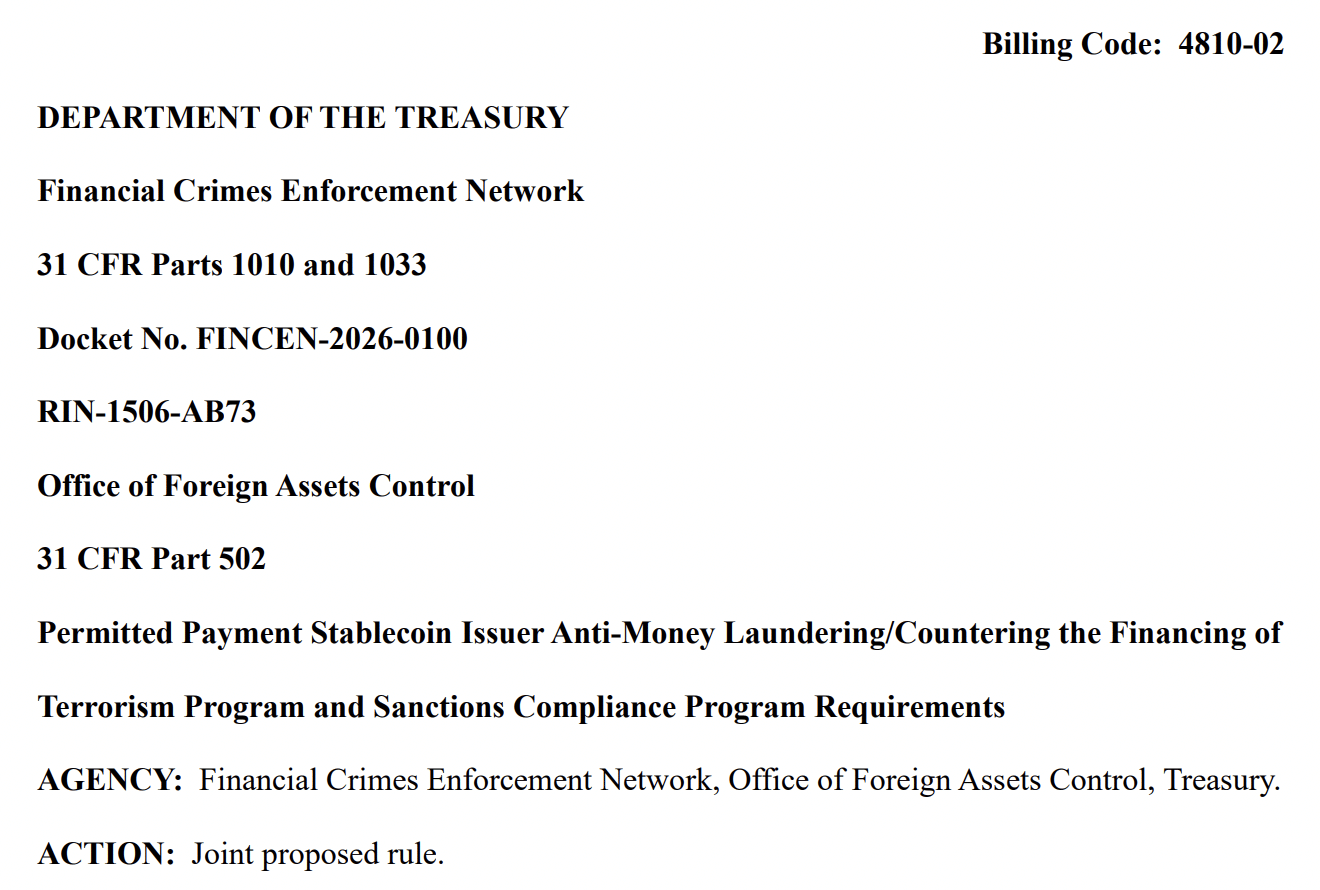
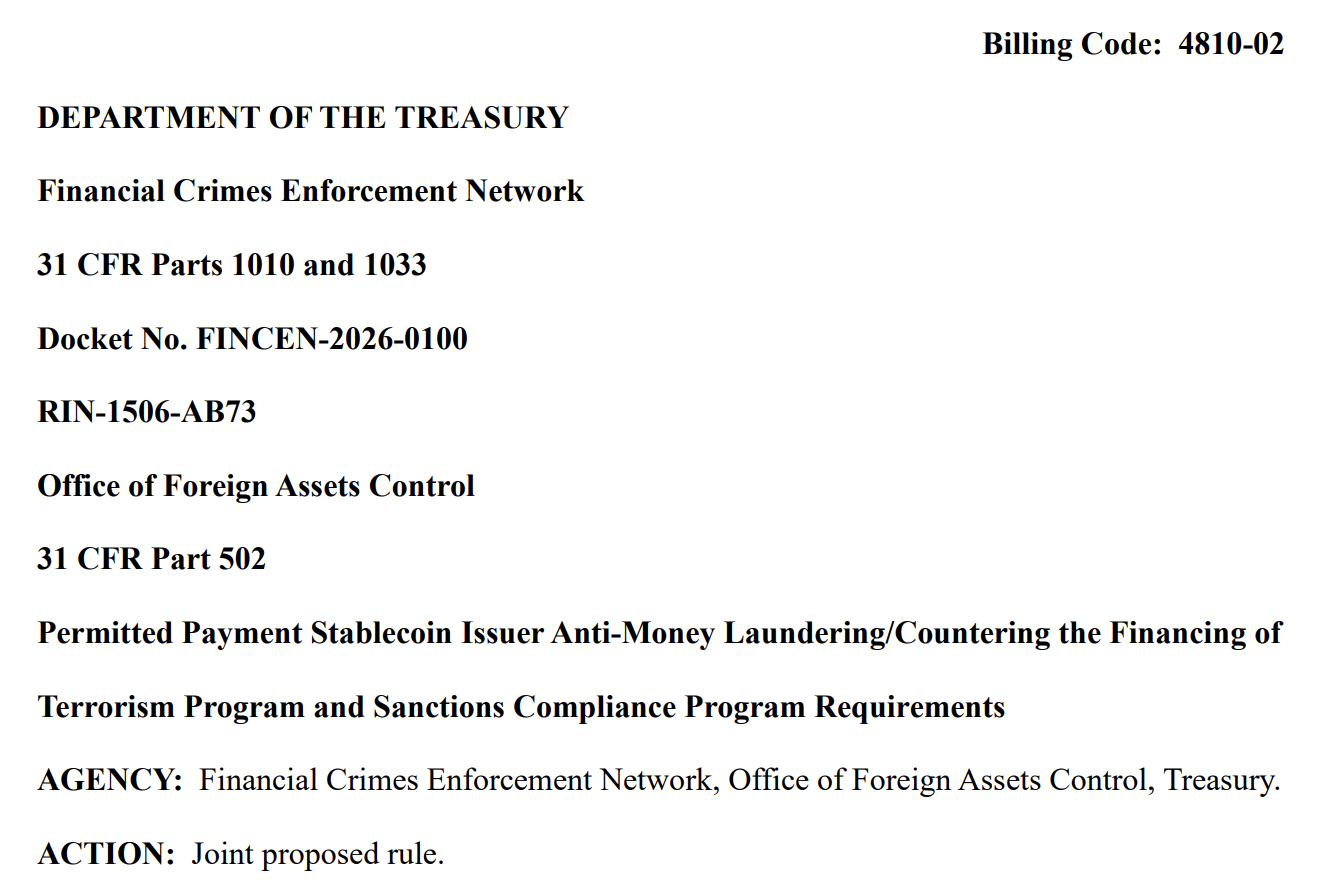
Source: www.fincen.gov

This was in the context of money laundering, terrorist financing, and sanction evasion.

For perspective, this proposed rule is part of the GENIUS Act, which was signed into law by U.S. President Donald Trump in July 2025.

What prompted the Treasury to come up with such a proposal?

Regulators believe payment stablecoin issuers can evolve the payment system in the U.S. However, given the scale and size of the financial system of the country, illicit actors find it easy to “jeopardize U.S. national security.”

Therefore, to combat such illicit financial risks, the rule ensures that permitted payment stablecoin issuers (PPSIs) are treated like financial institutions for purposes of the Bank Secrecy Act (BSA).

Needless to say, this would automatically impose the anti-money laundering (AML) obligations, which were earlier just for BSA.

Additionally, the proposal is also designed to be “fit for purpose, assist law enforcement, and minimize unnecessary burden.” That being said, all this is a part of the broader plan to “modernize BSA requirements” with consistent efforts from FinCEN.

Treasury Scott Bessent weighs in

Applauding such changes made under the U.S. President Donald Trump’s administration, Treasury Secretary Scott Bessent noted,

President Trump is strengthening American leadership in digital financial technology.

He further added,

This proposal will protect the U.S. financial system from national security threats without hindering American companies’ ability to forge ahead in the payment stablecoin ecosystem.

Illicit activities that targeted stablecoin in 2025 and before

This comes as the stablecoins had already been a center of target for many years. For instance, in June 2025, U.S. federal authorities seized $225.3 million worth of Tether’s USDT linked to the aforementioned scams.

Additionally, in July 2025, approximately $2 million worth of digital assets was unsealed by the DOJ, linked to a Palestine-based money exchange business. In November 2024, too, $5.5 million in stablecoins were seized from a drug trafficking operation.

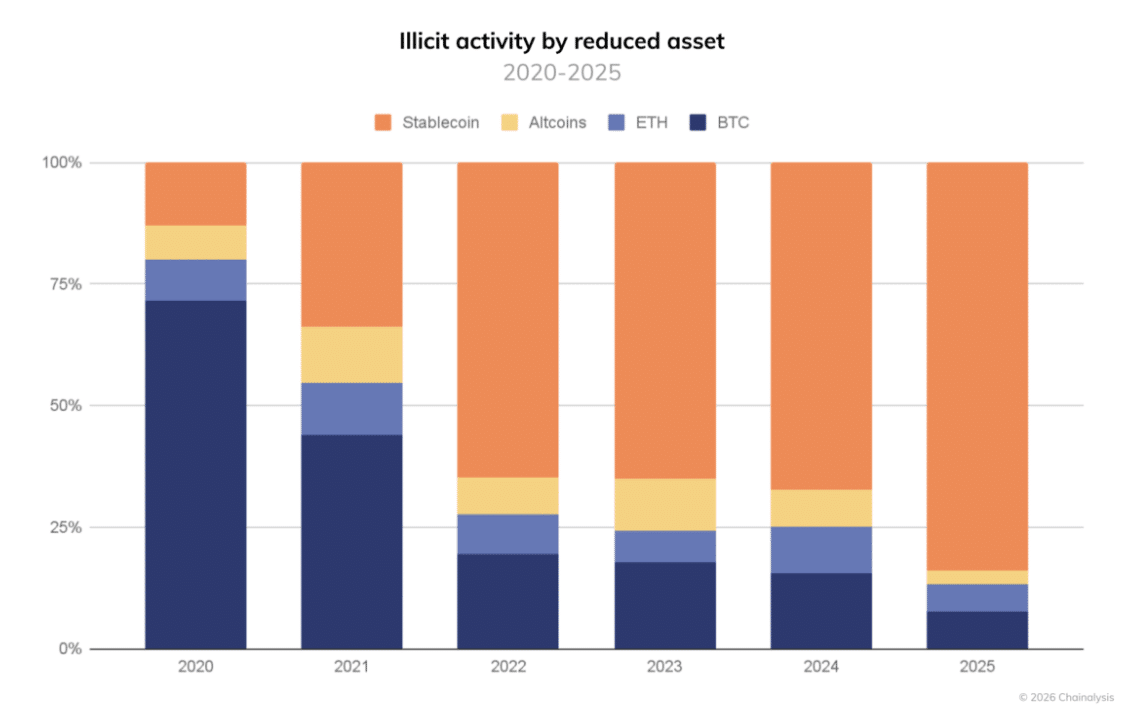
Chainalysis’s recent report further confirmed these metrics, highlighting how in 2025 stablecoins accounted for “84% of all illicit transaction volume.”
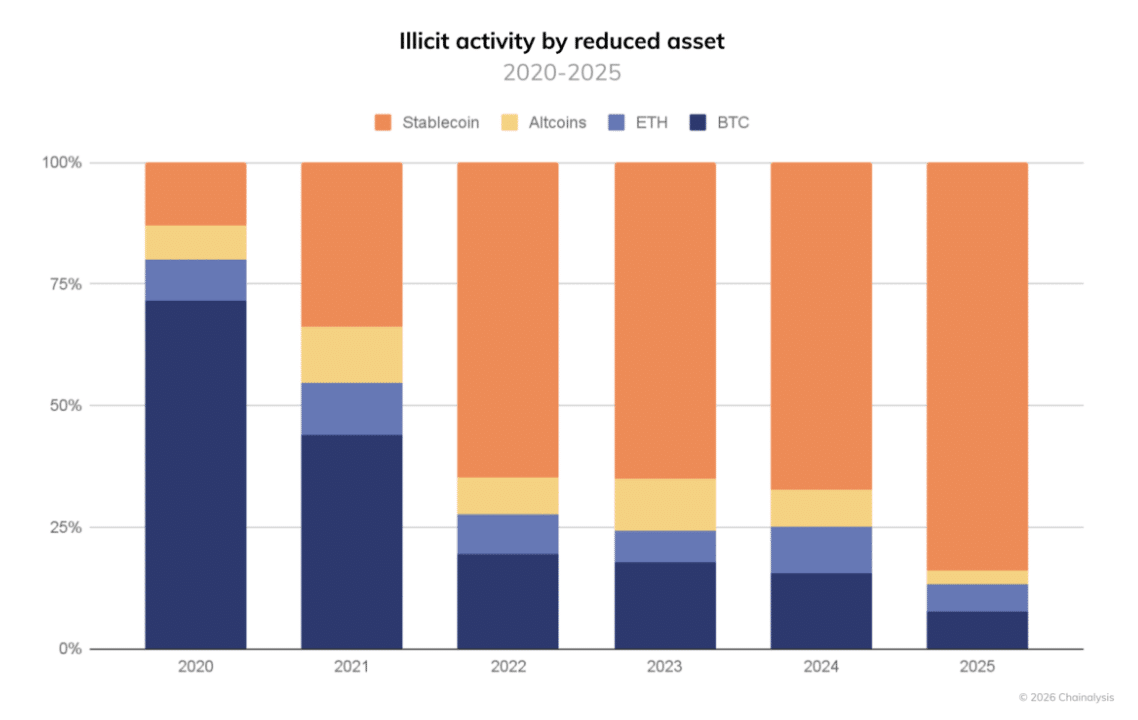
Source: Chainalysis

Final Summary

  • The joint efforts to bring in a proposed rule to address illicit activities in the stablecoin market underline the importance of the GENIUS Act passed in July 2025.
  • With millions being seized and confiscated by the DOJ, this was an alarming rule that should be passed for better crypto innovation in the U.S.


Domande pertinenti

QWhat is the main purpose of the new rule proposed under the GENIUS Act?

AThe new rule treats payment stablecoin issuers similarly to banks for purposes of the Bank Secrecy Act, imposing anti-money laundering obligations to combat illicit financial risks like money laundering, terrorist financing, and sanction evasion.

QWhich U.S. government agencies jointly proposed the new rule for stablecoin issuers?

AThe Financial Crimes Enforcement Network (FinCEN) and the Office of Foreign Assets Control (OFAC) jointly proposed the rule.

QAccording to Treasury Secretary Scott Bessent, how will this proposal benefit the U.S. financial system?

AScott Bessent stated that the proposal will protect the U.S. financial system from national security threats without hindering American companies' ability to innovate in the payment stablecoin ecosystem.

QWhat percentage of illicit transaction volume did stablecoins account for in 2025 according to Chainalysis?

AStablecoins accounted for 84% of all illicit transaction volume in 2025 according to Chainalysis's report.

QWhen was the GENIUS Act signed into law and by whom?

AThe GENIUS Act was signed into law by U.S. President Donald Trump in July 2025.

Letture associate

The Merger of Codex and ChatGPT Marks the Beginning of a Major Reshuffle in Programming Tools

OpenAI is shifting its strategic focus from ChatGPT to Codex, merging them along with the browser tool Atlas into a unified desktop super-app. This move signals an internal belief that Codex, originally a programming tool, represents the next evolution of AI more than conversational models like ChatGPT. Over the past year, Codex's weekly active users have surged past 5 million. The key distinction is that while ChatGPT answers questions, Codex executes tasks. Enterprises increasingly value this ability to get work done over simply receiving advice. Consequently, Codex is attracting professionals beyond developers, including analysts, bankers, marketers, and product managers. OpenAI's reorganization and increased investment in Codex stem from recognizing that the future of AI competition lies in execution capabilities, not just conversation. The company is launching role-specific plugins (e.g., for data analysis, sales, design) to transform Codex into a broad knowledge work platform that automates and redefines white-collar workflows. Beyond being a tool, Codex reflects OpenAI's ambition to redefine software. New features like "Sites"—which generates interactive websites from documents—and collaborative "Annotations" aim to create a paradigm where the AI understands the goal and handles the tools and steps, functioning more like a digital colleague than traditional software. The ultimate goal is a unified experience where the user cares only about the completed task.

marsbit9 min fa

The Merger of Codex and ChatGPT Marks the Beginning of a Major Reshuffle in Programming Tools

marsbit9 min fa

Interpreting Investment Opportunities in the Age of Great Navigation, Invesco Great Wall Fund Releases '2026 Report on Chinese Enterprises Going Global'

Invesco Great Wall Fund has released its "2026 China Corporate Globalization Report," titled "The 'Great Navigation Era' of Chinese Enterprises." The report analyzes the new trends and investment opportunities as Chinese companies expand globally, moving from simple product exports to comprehensive overseas operations involving services, branding, and local production. Driven by factors like trade friction, the pursuit of higher profit margins abroad, and policy support, globalization is becoming essential for Chinese companies. The report outlines an evolution: from early product export ("Globalization 1.0") to the current "Globalization 2.0," characterized by overseas capacity, capital goods investment, consumer brand expansion, and service exports. Chinese firms' competitive advantages are highlighted, including a vast engineer talent pool, low-cost and robust infrastructure, and complete industrial clusters. Specific sectors with significant出海 potential are identified: * **Capital Goods** (e.g., engineering machinery, power equipment): Benefiting from global demand, especially in Belt & Road markets and the AI-driven power grid upgrade cycle. * **Consumer Brands**: Transitioning from cost to brand advantage, leveraging供应链 efficiency. * **Technology & Innovation**: Including AI applications, optical modules within global tech supply chains, and new energy vehicles focusing on local production. * **Pharmaceuticals**: Chinese biotech firms are becoming preferred partners for global pharma, with potential for breakthrough drugs in areas like oncology and weight loss. The report concludes that corporate globalization represents a sustained, core theme for China's capital markets, though companies must navigate challenges like geopolitics and localization.

marsbit21 min fa

Interpreting Investment Opportunities in the Age of Great Navigation, Invesco Great Wall Fund Releases '2026 Report on Chinese Enterprises Going Global'

marsbit21 min fa

GitHub, Transfixed by AI

On the night of February 9th, GitHub suffered a major outage caused by a simple configuration change—reducing a cache refresh interval from 12 to 2 hours—that triggered a cascade of failures. This was not an isolated event, but part of a broader pattern. In early 2026, GitHub experienced at least 8 major incidents, failing to meet its promised 99.9% availability. These outages stemmed from structural issues: explosive growth in load, tight service coupling, and insufficient protection against abnormal traffic. This unprecedented load is driven by AI Agents. In 2025, GitHub handled ~1 billion commits. By 2026, weekly commits reached 275 million, projecting to ~14 billion for the year—a 14x increase. AI tools like Claude Code now contribute 4.5% of all public repository commits, with weekly submissions surging 25x in just three months. AI-generated pull requests jumped from 4 million to 17 million per month in half a year. Unlike human developers, AI Agents work continuously, generating commits at a scale that overwhelms infrastructure designed for human rhythms. The surge also shattered GitHub's business model. Copilot's flat-rate pricing, based on assisting human developers, became unsustainable as Agentic AI sessions consumed resources worth hundreds of dollars for a few dollars in fees. In response, GitHub imposed usage limits and, by June 1st, shifted to a pay-per-use "AI Credits" system. Facing this new reality, GitHub realized a 10x scaling plan was insufficient. It announced a need to *redesign* its architecture for 30x current scale—decoupling services, adding fault isolation, and improving change management to prevent cascading failures. Other platforms like Stripe and AWS are facing similar challenges with AI Agents. Fundamentally, GitHub is transitioning from a human collaboration platform to an "exhaust pipe" for automated AI workflows. Its detailed post-mortem reports aim to maintain trust during this turbulent rebuild. The February outage was not just a technical glitch, but a signal of the software industry's entry into a new, AI-driven era.

marsbit1 h fa

GitHub, Transfixed by AI

marsbit1 h fa

Trading

Spot
Futures
活动图片