US Senate Tucks CBDC Ban Into Housing Bill, Sets 2030 Deadline

bitcoinistPubblicato 2026-03-03Pubblicato ultima volta 2026-03-03

Introduzione

The US Senate has included a ban on the Federal Reserve issuing a central bank digital currency (CBDC) in a housing affordability bill. The amendment, part of the 21st Century ROAD to Housing Act, prohibits the Fed from directly or indirectly offering a retail digital dollar to the public. The ban is broad, covering any digital asset functioning as a CBDC, regardless of its name. However, it includes an exception for open, permissionless, and private digital currencies that offer cash-like privacy. The prohibition is set to expire on December 31, 2030, unless Congress renews it. This move reinforces the Fed's existing position that it would not issue a digital currency without explicit congressional approval.

The US Senate has moved to block the Federal Reserve from ever putting a government-issued digital dollar (CBDC) into Americans’ hands — at least for now. The ban is part of a sweeping housing affordability package and comes with an expiration date attached.

A Housing Bill With A Hidden Twist

The 21st Century ROAD to Housing Act is mostly about making homes more affordable. But buried in Title X of the bill is a standalone amendment to the Federal Reserve Act that has nothing to do with mortgages or rent.

It targets central bank digital currency — a government-issued, digital form of the US dollar. According to reports, Banking Committee Chairman Tim Scott and Ranking Member Elizabeth Warren released the bill text together ahead of a Senate vote, an unusual pairing given how differently the two lawmakers have historically approached financial regulation.
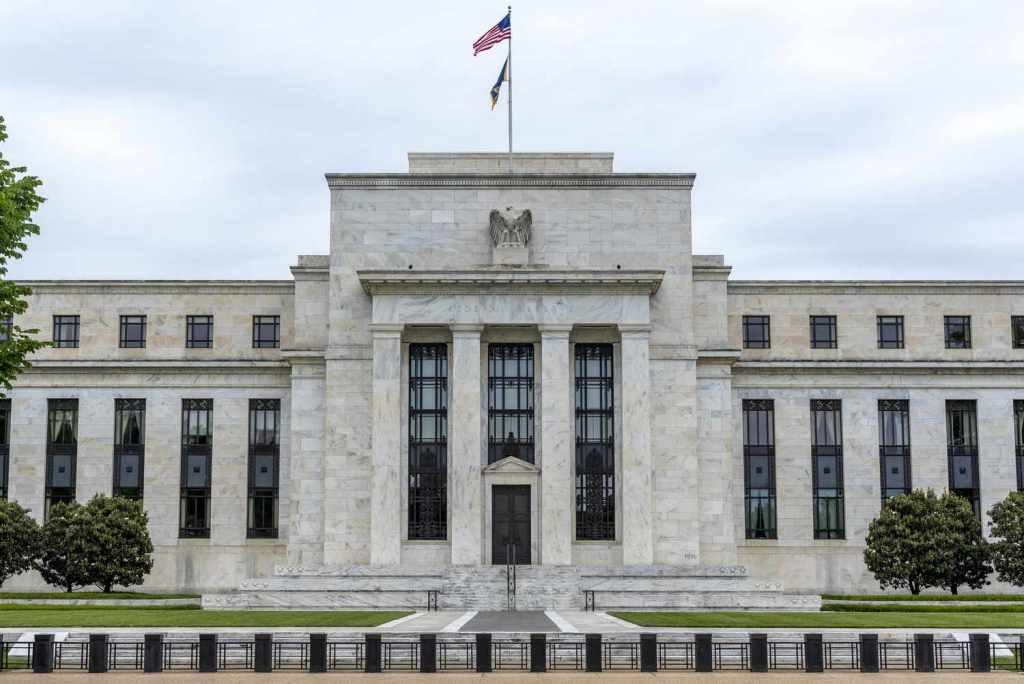
The US Federal Reserve. Image: Richard Sharrocks/Getty Images

The prohibition is sweeping in scope. It bars the Fed from issuing a retail digital dollar not just on its own, but also through banks and other financial middlemen.

Reports say the bill even covers any digital asset that functions like a central bank digital currency under a different name — closing off potential workarounds before they can be tried.

What Counts As A CBDC

The bill spells out exactly what it is targeting. A central bank digital currency, or commonly known as CBDC, under the proposed law, is a dollar-denominated digital asset that is a direct liability of the Federal Reserve and is broadly available to regular consumers.

That definition draws a firm line between a government-issued digital dollar and private-sector options like stablecoins or crypto assets.

BTCUSD trading at $66,673 on the 24-hour chart: TradingView

There is, however, one carved-out exception. Any digital currency that is open, permissionless, and private — and that offers the same privacy protections as physical cash — would not be blocked by the ban.

Reports note this exception appears designed to ensure that private innovation in digital payments is not accidentally swept up in legislation aimed solely at the government.

CBDC: The Clock Is Already Running

The CBDC ban is not meant to last forever. Under the bill’s own terms, the prohibition expires on December 31, 2030. Unless Congress acts again before then, the door to a retail digital dollar reopens automatically.

This sunset clause signals that lawmakers are not permanently opposed to the idea — they just want more time before anything moves forward.

The Federal Reserve has already said publicly that it would not issue a digital dollar without clear authorization from Congress.

So in practical terms, the bill reinforces a position the central bank has already taken. Still, getting that stance written into law carries real weight.

Featured image from The Daily Economy, chart from TradingView

Domande pertinenti

QWhat is the main purpose of the 21st Century ROAD to Housing Act, and what unrelated amendment does it contain?

AThe main purpose of the 21st Century ROAD to Housing Act is to make homes more affordable. Buried within it is an unrelated standalone amendment to the Federal Reserve Act that bans the issuance of a retail central bank digital currency (CBDC).

QWho were the two key lawmakers from opposing sides that released the bill text together, and why is this pairing considered unusual?

ABanking Committee Chairman Tim Scott and Ranking Member Elizabeth Warren released the bill text together. This is an unusual pairing because the two lawmakers have historically approached financial regulation very differently.

QAccording to the bill's definition, what specific characteristics make a digital asset a CBDC that would be banned?

AAccording to the bill, a CBDC is a dollar-denominated digital asset that is a direct liability of the Federal Reserve and is broadly available to regular consumers.

QWhat is the one type of digital currency that is explicitly exempted from the ban and why?

AThe ban exempts any digital currency that is open, permissionless, and private, and that offers the same privacy protections as physical cash. This exception is designed to ensure private innovation in digital payments is not accidentally restricted by legislation aimed solely at the government.

QWhen does the CBDC ban expire, and what does this sunset clause indicate about lawmakers' stance?

AThe CBDC ban expires on December 31, 2030. This sunset clause indicates that lawmakers are not permanently opposed to the idea of a digital dollar but want more time before anything moves forward.

Letture associate

Huang Renxun Dramatically 'Saves' South Korean Stock Market

In early June, South Korea's stock market experienced a sharp decline, with the KOSPI index dropping over 5% and triggering a trading halt. Amid this volatility, NVIDIA CEO Jensen Huang's visit to Seoul provided a dramatic boost to market sentiment. During his trip, Huang held a dinner meeting with SK Group Chairman Chey Tae-won and SK Hynix CEO Kwak Noh-Jung. He announced that NVIDIA's new Vera CPU would utilize SK Hynix DRAM and confirmed a multi-year technical collaboration between the two companies. This partnership aims to co-develop next-generation memory for NVIDIA's AI infrastructure roadmap, covering products from data center supercomputers to personal AI devices. Huang also publicly commented that AI company stocks were attractively priced. A key announcement was that NVIDIA's upcoming Vera Rubin AI supercomputer systems will use HBM4 memory, with supply qualifications granted to all three major suppliers: SK Hynix, Samsung Electronics, and Micron Technology. Despite this multi-sourcing strategy, Huang warned that the industry-wide chip shortage, affecting everything from wafers to packaging, is expected to persist for several years due to relentless demand from global AI factory construction. The collaboration extends beyond memory supply. SK Hynix will employ NVIDIA's AI platforms and Omniverse digital twin technology to enhance its own semiconductor design, simulation, and manufacturing processes, aiming for more autonomous factory operations. This visit builds upon a prior October 2025 agreement for SK Group to build a large-scale AI data center using over 50,000 NVIDIA GPUs. Huang's itinerary also included meetings with other Korean giants like Hyundai, LG, and Samsung, indicating NVIDIA's broader strategy to deepen ties with South Korea's tech industry.

链捕手4 h fa

Huang Renxun Dramatically 'Saves' South Korean Stock Market

链捕手4 h fa

When Inference Becomes a Scarce Resource, Who Captures the Value?

When Inference Becomes the Scarce Resource, Who Captures the Value? The core AI bottleneck has shifted from model training to inference (runtime execution). While concerns persisted about an "AI compute gap"—initially a $200B, now a $600B problem—the market is now recognizing that the solution and value lie in the inference layer. Nvidia's financial restructuring around "serving tokens" and Cerebras's successful IPO highlight this shift. Inference is a recurring, usage-based cost, estimated to be 10-50x larger than the one-time training market, especially with the rise of agentic AI. The inference stack spans six layers: silicon (e.g., Nvidia), bare metal (e.g., CoreWeave), GPU rental/aggregation, deployment/optimization, model APIs, and end applications. Most companies operate in one layer. However, Hyperbolic uniquely spans three layers (GPU rental, deployment, and model APIs) without owning any hardware. It aggregates fragmented GPU supply from multiple cloud providers into a standardized pool, offering developers the cheapest available compute through intelligent routing. Its multi-cloud aggregation creates a data moat and a flywheel: more supply leads to better pricing data and liquidity, attracting more developers and providers. In contrast, applications like Venice operate at the top of the stack, reselling privacy-wrapped inference but remaining dependent on and constrained by the underlying compute costs they purchase. As inference demand explodes, value accrues not just to consumer applications but increasingly to the aggregation and routing layer that captures their cost of revenue. The coming potential GPU oversupply reinforces this dynamic. While hardware owners may suffer from depreciation, asset-light aggregators like Hyperbolic benefit from price arbitrage, routing workloads to the cheapest available capacity. The ultimate winner in the inference economy may not be the entity with the most GPUs, but the one that can most efficiently discover, aggregate, and route the world's fragmented compute.

链捕手4 h fa

When Inference Becomes a Scarce Resource, Who Captures the Value?

链捕手4 h fa

Trading

Spot
Futures

Articoli Popolari

Come comprare BAN

Benvenuto in HTX.com! Abbiamo reso l'acquisto di Comedian (BAN) semplice e conveniente. Segui la nostra guida passo passo per intraprendere il tuo viaggio nel mondo delle criptovalute.Step 1: Crea il tuo Account HTXUsa la tua email o numero di telefono per registrarti il tuo account gratuito su HTX. Vivi un'esperienza facile e sblocca tutte le funzionalità,Crea il mio accountStep 2: Vai in Acquista crypto e seleziona il tuo metodo di pagamentoCarta di credito/debito: utilizza la tua Visa o Mastercard per acquistare immediatamente ComedianBAN.Bilancio: Usa i fondi dal bilancio del tuo account HTX per fare trading senza problemi.Terze parti: abbiamo aggiunto metodi di pagamento molto utilizzati come Google Pay e Apple Pay per maggiore comodità.P2P: Fai trading direttamente con altri utenti HTX.Over-the-Counter (OTC): Offriamo servizi su misura e tassi di cambio competitivi per i trader.Step 3: Conserva Comedian (BAN)Dopo aver acquistato Comedian (BAN), conserva nel tuo account HTX. In alternativa, puoi inviare tramite trasferimento blockchain o scambiare per altre criptovalute.Step 4: Scambia Comedian (BAN)Scambia facilmente Comedian (BAN) nel mercato spot di HTX. Accedi al tuo account, seleziona la tua coppia di trading, esegui le tue operazioni e monitora in tempo reale. Offriamo un'esperienza user-friendly sia per chi ha appena iniziato che per i trader più esperti.

501 Totale visualizzazioniPubblicato il 2024.12.11Aggiornato il 2026.06.02

Come comprare BAN

Discussioni

Benvenuto nella Community HTX. Qui puoi rimanere informato sugli ultimi sviluppi della piattaforma e accedere ad approfondimenti esperti sul mercato. Le opinioni degli utenti sul prezzo di BAN BAN sono presentate come di seguito.

活动图片













