US President Donald Trump Imposes 25% Tariff on Iran-Linked Trade, Will Crypto Market Feel the Pinch?

TheNewsCryptoPubblicato 2026-01-13Pubblicato ultima volta 2026-01-13

Introduzione

US President Donald Trump has announced an immediate 25% tariff on all trade with countries doing business with Iran, calling the order final. This follows his recent approval of a bipartisan sanctions bill imposing a 500% tariff on nations purchasing Russian energy products. The move may hinder international trade, with China, India, Germany, the UAE, and the EU likely impacted. China has already opposed the measure as coercive. For the crypto market, the tariffs could increase trade costs and inflation, potentially preventing the Federal Reserve from cutting rates and sustaining market volatility. The global crypto market cap has dipped slightly to $3.13 trillion, with tokens like ETH and SOL seeing declines, while BTC posted minor gains. Investors are advised to remain cautious amid ongoing uncertainty.

US President Donald Trump has introduced a new tariff rate of 25%. Effective immediately, it comes days after he green-signaled a bipartisan sanctions bill. It remains to be seen if the move affects the global crypto market as investors stay on the lookout for volatility.

US President Donald Trump and New Tariff Rate

US President Donald Trump, via a post, announced a 25% tariff for countries doing business with Iran. He underlined that the tariff is effective immediately, adding that it applies to any and all business being done with the US. Trump’s post, which has drawn attention from different sectors, called this order final and conclusive.

The move comes days after Trump announced a one year cap on credit card interest rate to 10%. The proposal is scheduled to go into effect on January 20, 2026. If so, then it is estimated to lower interest rates significantly from 20-30%.

Impact of New Tariff Rate

The new tariff rate could hinder international trade with several countries, like China, India, and Germany. China, for now, has expressed its opposition to the application of a 25% tariff by calling it a coercive and ineffective move. Other countries that are likely to be impacted are the UAE and the European Union.

For the crypto market, investors could become more cautious before making any investment. The imposition of tariffs is often associated with making international trade expensive – thereby triggering inflation within the country. If so, then the US Federal Reserve may not cut rates, and the crypto market may remain highly volatile.

Crypto Market at the Moment

A 25% tariff comes days after US President Donald Trump approved a bipartisan sanctions bill. It essentially imposes a 500% tariff on countries that buy Russian energy products like oil. The crypto market has been on edge since then, with effects being evident while the article is being drafted.

The global crypto market cap has plunged by 0.02% to $3.13 trillion, with many top tokens seeing a drop in their respective values. For instance, ETH is down by 0.55% over the last 24 hours, and so is SOL by 1.23%. While BTC has gained 0.43% during this timeline, it remains down by 1.48% in the last 7 days.

Highlighted Crypto News Today:

Red Candles Stack Up for OFFICIAL TRUMP (TRUMP): Will Sellers Tighten Their Grip?

TagsCrypto MarketTARIFFTRUMP

Domande pertinenti

QWhat is the new tariff rate imposed by US President Donald Trump and who does it target?

AUS President Donald Trump has imposed a new 25% tariff on countries doing business with Iran, effective immediately. It applies to any and all business being done with the US.

QWhat potential impact could this tariff have on the crypto market according to the article?

AThe article suggests the tariff could make investors more cautious, as tariffs often make international trade expensive and trigger inflation. This could lead the US Federal Reserve to not cut rates, resulting in high volatility in the crypto market.

QHow did the global crypto market cap and specific major cryptocurrencies perform at the time the article was written?

AThe global crypto market cap had plunged by 0.02% to $3.13 trillion. ETH was down 0.55%, SOL was down 1.23%, and while BTC had gained 0.43% in 24 hours, it was still down 1.48% over the previous 7 days.

QWhat other recent policy action did Trump take that is mentioned in the article, and when is it set to go into effect?

ADays before the tariff announcement, Trump announced a one-year cap on credit card interest rates to 10%. This proposal is scheduled to go into effect on January 20, 2026.

QWhich countries are mentioned as being potentially hindered by the new 25% tariff rate?

AThe article states that the new tariff could hinder international trade with several nations, specifically naming China, India, Germany, the UAE, and the European Union.

Letture associate

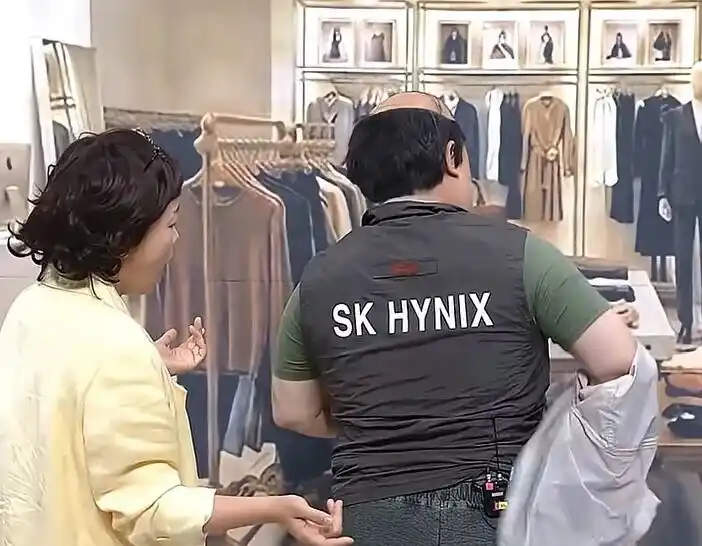
The King of Blind Date Attire in Korea: How SK Hynix Made a Comeback Against Samsung?

In South Korea's dating scene, SK Hynix employees are now highly sought after, a status shift fueled by the company's astronomical profits and employee bonuses, projected to reach up to 6.1 million RMB per person by 2027. This marks a dramatic reversal for the long-time second-place player in memory semiconductors, which has now surpassed its rival Samsung in annual operating profit. The turnaround story began in 2008 when a struggling Hynix, emerging from bankruptcy restructuring, took a risky bet by agreeing to develop High Bandwidth Memory (HBM) with AMD. At the time, HBM had no clear market beyond high-end graphics cards and was a costly, complex technology. Major players like Samsung, pursuing its own HMC technology, declined. For Hynix, with only memory as its core business, it was a gamble born of necessity. The pivotal moment came in 2012 when SK Group Chairman Chey Tae-won acquired Hynix. Defying industry downturns, he invested heavily in R&D and fabrication, sustaining the HBM project through over a decade of commercial uncertainty and internal challenges. A key break occurred around 2016-2017 when Samsung faced production issues supplying HBM2 for Google's TPU, allowing SK Hynix to gain a crucial foothold in the data center market. The AI explosion post-ChatGPT in 2022 was the catalyst, turning HBM into a critical bottleneck for AI accelerators like NVIDIA's GPUs. By 2025, SK Hynix captured 62% of the global HBM market, leaving Samsung at 17%. For the first time, its annual operating profit exceeded Samsung's. Analysts point to the "innovator's dilemma" to explain Samsung's miss: its vast, successful business portfolio made it risk-averse, preventing an all-in bet on the initially niche HBM technology. In contrast, SK Hynix, as a challenger with its back against the wall, had no choice but to commit fully. The story highlights how Korea's chaebol system allows for ultra-long-term bets beyond quarterly pressures. However, SK Hynix's lead isn't guaranteed. Samsung is aggressively catching up on HBM4, and challenges like customer concentration (heavy reliance on NVIDIA) and technical hurdles in advanced packaging remain. The narrative underscores a market truth: the greatest alpha often comes from betting on uncertain, long-term directions others dismiss, much like HBM in 2008.

marsbit9 min fa

The King of Blind Date Attire in Korea: How SK Hynix Made a Comeback Against Samsung?

marsbit9 min fa

Understanding Hash in One Article: The "Browser Miner" on Ethereum

Hash is an Ethereum-based ERC-20 token described as a "browser-minable post-quantum token." Its key features include enabling browser-based GPU mining without specialized hardware, a fixed supply cap of 21 million tokens, immutable and permissionless smart contracts with no team allocation or pre-mining, and an emphasis on post-quantum security using Keccak256 hashing. The mining mechanism is a simplified on-chain proof-of-work where miners solve unique challenges tied to their wallet address. Key design elements prevent answer theft, with epochs resetting every 100 blocks (~20 minutes) and a per-block minting limit. Emission follows a Bitcoin-like halving schedule every 100,000 mints, starting at 100 tokens per mint. Projections suggest all tokens could be mined within approximately 294 days if a target rate of one mint per minute is sustained. Hash emphasizes "post-quantum" security by leveraging hash-based primitives like Keccak256, which are considered more resistant to quantum attacks compared to elliptic-curve cryptography. While not a fully post-quantum asset, it aligns with Ethereum's broader post-quantum research narrative. The project completed its Genesis sale at $0.03 and began trading on Uniswap, with its price reaching around $0.19. The initial circulating supply is small, with 5% sold in Genesis and 5% allocated to liquidity. The majority (47.6% of total supply) is allocated to early-stage mining, leading to a front-loaded emission schedule. This structure, combined with low initial liquidity, makes Hash a high-volatility, high-risk project dependent on sustained miner participation and market demand to absorb new supply.

marsbit22 min fa

Understanding Hash in One Article: The "Browser Miner" on Ethereum

marsbit22 min fa

OpenAI's Largest Internal Wealth Creation: 600 People Cash Out a Total of $6.6 Billion, 75 Take Home the Maximum $30 Million Each

A Wall Street Journal report reveals OpenAI's unprecedented pre-IPO wealth creation. In a single employee stock sale last October, over 600 current and former employees sold shares, collectively cashing out approximately $6.6 billion. Due to high investor demand, the company tripled the individual sale cap to $30 million, with about 75 employees selling the maximum amount. This event represents the largest such transaction in tech industry history for a private company. OpenAI's valuation was $500 billion for this tender offer. Employees with over two years of tenure were eligible, allowing many post-ChatGPT hires their first liquidity event. The company's stock has reportedly grown over 100-fold in seven years. Following a restructuring, employees collectively hold about 26% of OpenAI. The scale of executive wealth is also staggering. In court testimony related to Elon Musk's lawsuit, President and co-founder Greg Brockman confirmed his OpenAI stake is worth around $30 billion. Analysis indicates about 165 current and former employees hold a combined ~$164.9 billion in equity, averaging nearly $1 billion per person in paper wealth. OpenAI's per-employee stock-based compensation is estimated to be 34 times the average of major tech firms before their IPOs. OpenAI continues its rapid ascent, closing a $122 billion funding round at an $852 billion valuation in March. With monthly revenue hitting $2 billion, over 900 million weekly ChatGPT users, and plans for a potential trillion-dollar IPO in late 2026, this wealth-creation engine shows no signs of stopping.

链捕手45 min fa

OpenAI's Largest Internal Wealth Creation: 600 People Cash Out a Total of $6.6 Billion, 75 Take Home the Maximum $30 Million Each

链捕手45 min fa

Trading

Spot
Futures
活动图片