US Government Shutdown Again? Why the Somali Immigration Fraud Case Ends with the Crypto Market Footing the Bill

marsbitPubblicato 2026-01-26Pubblicato ultima volta 2026-01-26

Introduzione

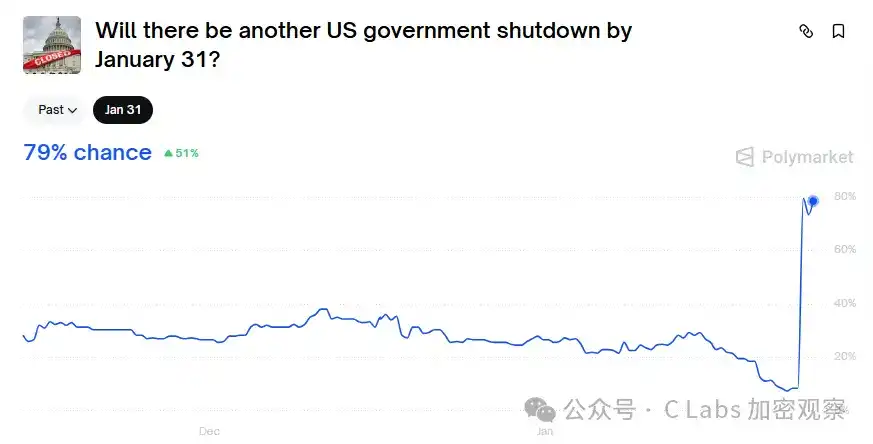
U.S. Government Shutdown Risk Surges to 79%, Triggering Crypto Market Sell-off According to Polymarket, the probability of a U.S. government shutdown by the end of January has dramatically increased from 9% to 79%. This sudden spike, occurring over a weekend, caused an immediate negative reaction in the cryptocurrency market, leading to a sharp price decline. The potential shutdown stems from a political impasse over funding for the Department of Homeland Security (DHS). The current funding, a temporary "Continuing Resolution" from a compromise bill passed in November, is set to expire on January 30th. The deadlock is directly linked to recent aggressive immigration enforcement actions. Following a massive welfare fraud case involving Somali immigrants in Minnesota (with confirmed losses of $240 million and potential losses up to $9 billion), former President Trump called for a crackdown. This led to the deployment of approximately 2,000 ICE agents to Minneapolis. During these operations, ICE agents shot and killed two U.S. citizens, sparking major public controversy. Senate Democrats are now opposing the House's funding bill for DHS, demanding accountability and reform for ICE's conduct. Republicans, however, are pushing for their border security agenda. This funding stalemate is the direct cause of the heightened shutdown risk. The crypto market absorbed the initial shock of this political news over the weekend, acting as the first "payer" for the crisis. The sell-off r...

Author: Demir, C Labs Crypto Observer

According to data from Polymarket, the probability of a US government shutdown by the end of the month has suddenly surged from 9% to 79%!
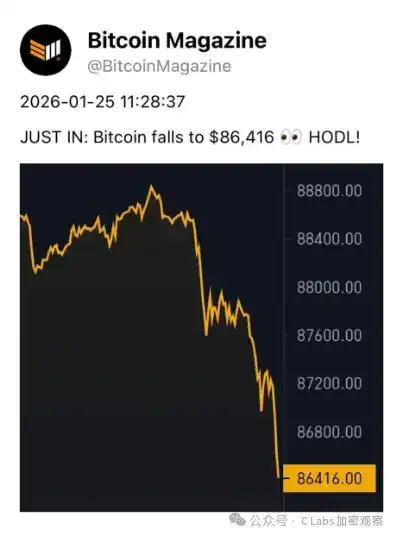
Due to the sudden nature of the event and it being a weekend, the crypto market has already taken a hit:
It's important to remember that the US government had already experienced a record 43-day shutdown starting on October 1st of last year, which ultimately ended on November 12, 2025, with the passage of a compromise bill (While the Binance community was celebrating, the US government had already been shut down for two weeks...).

Now, barely over two months have passed since that compromise bill, so why is there another potential shutdown?

01. Why is the government shutting down again?

The reason for this potential US government shutdown is that the bill passed last year was only a "Continuing Resolution" (CR), which temporarily extended funding authorization for most government agencies until January 30, 2026.
Only a few departments (such as the Department of Agriculture, Veterans Affairs, and Congressional operations themselves) received full-year funding.

Congress must pass a new, longer-term bill before January 30th; otherwise, agencies without full-year funding will face another lapse.
The reason for this shutdown threat is that Democrats disagree with the funding allocation plan for the Department of Homeland Security (DHS), citing recent shootings involving Immigration and Customs Enforcement (ICE) agents.

02. Originating from Somali Immigrant Fraud

Trump has recently been heavily focused on the Somali immigrant fraud case in Minnesota, using it as a pretext to intensify crackdowns on illegal immigration in the area.

However, ICE agents conducted two enforcement operations in Minneapolis, resulting in the fatal shootings of two US citizens, which has caused significant controversy in US public opinion.

The relief fund fraud case involving Somalis has confirmed losses of over $240 million, with other reports suggesting total losses could be as high as $9 billion.

Trump consequently made strong public statements, saying Somalis should "get out of the US," and accused officials of "inciting rebellion."

Using this as a pretext, the Department of Homeland Security (DHS) escalated its enforcement actions against illegal immigration, deploying approximately 2,000 additional ICE agents to Minneapolis, the capital of Minnesota. The initial targets of the operation were Somalis with final orders of removal.
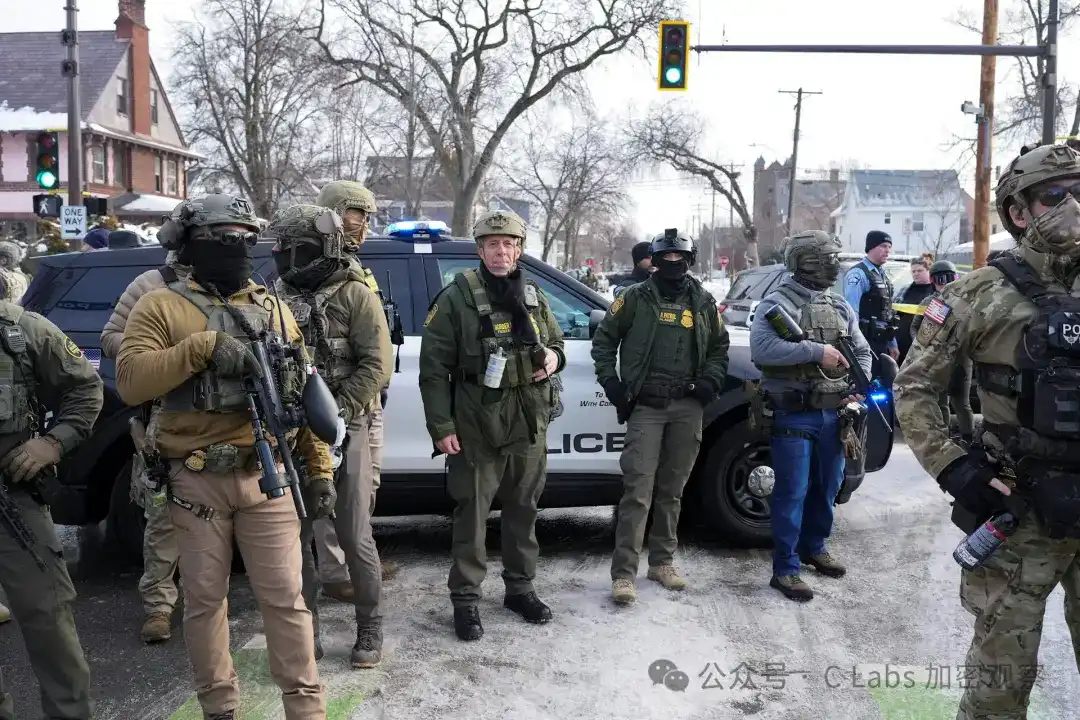
But it was these aggressive enforcement actions and the subsequent shootings of US citizens by ICE agents that have now led Senate Democrats to oppose the House appropriations bill containing DHS funding.

Democrats are demanding accountability and reform for ICE's actions, while Republicans want to continue pushing their border security agenda.

This deadlock directly leads to the current risk of a government shutdown.

03. Crypto Market Becomes the "Payer"

The Somali fraud case appears massive, with confirmed losses of $240 million and potential total involvement up to $9 billion.
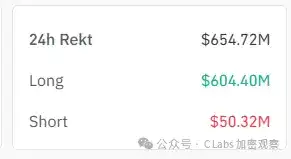
Because Democrats suddenly raised objections over the weekend to the funding for DHS, it is once again the crypto market that is bearing the brunt of this shock.

Today's crash in the crypto market, caused by the risk of a US government shutdown, has already resulted in over $600 million in long positions being liquidated in a single day, and the crypto market capitalization has evaporated by more than $30 billion in one day...

So, the money defrauded from US government welfare by Somalis in Minnesota has finally been paid for by the crypto market today.

As for how the US stock market will react, we'll have to wait until it opens tomorrow to find out~


Domande pertinenti

QWhy is the U.S. government facing another potential shutdown at the end of January?

AThe U.S. government is facing a potential shutdown because the previous continuing resolution (CR) that funded most government agencies expires on January 30, 2026. A new, longer-term funding bill must be passed by Congress before this date to avoid a shutdown for agencies that did not receive full-year funding.

QWhat specific event triggered the Democratic Party's opposition to the Department of Homeland Security (DHS) funding bill?

AThe Democratic Party's opposition was triggered by recent U.S. Immigration and Customs Enforcement (ICE) agent shootings that resulted in the deaths of two American citizens during enforcement actions in Minneapolis, leading to demands for ICE accountability and reform.

QWhat was the connection between the Somali immigrant fraud case and the increased ICE enforcement actions?

AFormer President Trump used the massive Somali immigrant relief fund fraud case (involving up to $9 billion) as a reason to intensify crackdowns on illegal immigration, leading to the deployment of approximately 2,000 additional ICE agents to Minneapolis and the subsequent controversial enforcement actions.

QHow did the cryptocurrency market react to the increased probability of a U.S. government shutdown?

AThe cryptocurrency market reacted negatively, experiencing a sharp decline over the weekend. This led to over $6 billion in long positions being liquidated in a single day and a loss of more than $30 billion in market value.

QWhich government agencies were already funded for the full year and thus not affected by the potential shutdown?

AA few departments, including the Department of Agriculture, the Department of Veterans Affairs, and the operations of Congress itself, had already received full-year funding and would not be affected by the potential shutdown.

Letture associate

La Liga Team Bets $1 Million Against Themselves Before Match: Does Using Prediction Markets for Insurance Comply with Sports Regulations?

A Spanish La Liga club, reportedly Osasuna, purchased insurance against relegation and was linked to a transaction of over $1 million on the prediction market platform Kalshi, betting against its own victory in a crucial season-ending match. While Osasuna confirmed buying €1.2 million insurance for a potential €6 million payout in case of relegation through broker Howden, it did not confirm involvement with Kalshi. The reported trade involved intermediaries like Game Point Capital and Greenlight Commodities, with quant firm Susquehanna as the counterparty. This incident highlights the blurring line between financial hedging and gambling in prediction markets. Such markets allow trading on future event outcomes, like sports results. In the US, Kalshi operates as a regulated event contract market under the CFTC. However, Spanish authorities recently initiated penalties against Kalshi and Polymarket, considering their activities unlicensed gambling. The case raises core questions about prediction markets: who can trade, how insider information is handled, and whether participants can influence outcomes, especially in sports where results are human-driven. While leagues like La Liga and Serie A have partnered with Polymarket in North America, the regulatory clash and potential for conflicts of interest, as seen in this club's alleged transaction, present significant challenges as prediction markets evolve toward institutional risk management.

Foresight News7 min fa

La Liga Team Bets $1 Million Against Themselves Before Match: Does Using Prediction Markets for Insurance Comply with Sports Regulations?

Foresight News7 min fa

From Shouting 150 Dollars to Liquidating HYPE in Just Three Days, How Much Credibility Does Arthur Hayes Have Left?

How much of Arthur Hayes's market credibility remains? Recently, the "godfather of crypto perpetual swaps" and BitMEX co-founder has faced public criticism, including accusations from on-chain investigator ZachXBT about creating exit liquidity for his followers. Starting last week, Hayes executed multiple sudden sell-offs. He had repeatedly publicly predicted the HYPE token would reach $150. After a $100,000 bet defending Hyperliquid on June 1st, he announced just three days later that he had completely sold his HYPE and NEAR holdings, successfully exiting near the peak. He also sold ZEC and WLD. His sale of WLD appeared to be a classic "pump and dump" maneuver. On June 3rd, he publicly set a $10 target for WLD, causing its price to surge over 35%. By June 6th, he announced he had sold his WLD, citing "anomalous" SpaceX pre-IPO price action, which triggered a sharp price drop. On June 9th, Hayes published a lengthy article explaining his actions, citing factors like rising energy costs and a potential AI bubble burst. Consequently, his family office, Maelstrom, now holds positions in US energy producers and only core crypto assets BTC and ETH, having sold AI-related stocks and non-core cryptocurrencies. This pattern is not new. In 2025, he similarly touted HYPE before selling it at what turned out to be a cycle peak, only to repurchase it at the next cycle's low. Similar scenarios played out with tokens like ETHFI and ENA. Long-term observers have developed a strategy: ignore Hayes's public statements but closely monitor his on-chain actions—be cautious following his buys, but decisively follow his sells. If he continues these tactics, especially as seen with the WLD case, his market credibility risks being permanently damaged. As Hayes himself admitted in his latest article, "I remain an unapologetic gambler."

marsbit25 min fa

From Shouting 150 Dollars to Liquidating HYPE in Just Three Days, How Much Credibility Does Arthur Hayes Have Left?

marsbit25 min fa

Fundraising is Like a Strange Dance: The 'Absurd Drama' of Silicon Valley Founders' Capital Raises

The article details a series of absurd and revealing anecdotes shared by Silicon Valley founders about their venture capital fundraising experiences, sparked by Greg Isenberg's story of pitching to a sleeping a16z partner. Founders describe surreal pitch meetings: one faced a barefoot, peanut-eating investor who offered triple the requested amount after 30 seconds; another performed a pitch in a VC's parked car; a founder discovered his audience understood no English beyond "yes." These stories highlight the often irrational and performative nature of fundraising. Beyond the absurdity, darker power imbalances are exposed. Stories include investors suggesting founders fire co-founders for their equity, blatant market misjudgments, disrespectful behavior from LPs, and discriminatory remarks. A debate also emerges around "Sequoia's" practice of splitting a round into two valuations. However, the thread isn't solely critical. Positive counter-narratives celebrate supportive VCs who offered crucial advice during crises, respected founders' timelines, and showed simple gestures of respect—like a partner personally fetching coffee before a major pitch. Ultimately, the collective sharing acts as a pressure release, illustrating that fundraising is a complex dance of power, trust, and sometimes sheer theater. It underscores that beyond capital, mutual respect and integrity remain the most enduring foundations of the founder-investor relationship.

marsbit39 min fa

Fundraising is Like a Strange Dance: The 'Absurd Drama' of Silicon Valley Founders' Capital Raises

marsbit39 min fa

Trading

Spot
Futures
活动图片




