US Debt Spiral Eyes $39T: Why Bitcoin Hyper ($HYPER) Is The Hedge to Watch

bitcoinistPubblicato 2026-02-10Pubblicato ultima volta 2026-02-10

Introduzione

The US national debt is projected to hit $39 trillion, accelerating concerns about currency debasement and driving investors toward Bitcoin as a hedge. However, the market is shifting from simply holding Bitcoin to seeking utility through Bitcoin Layer 2 solutions that unlock its dormant $1.7 trillion economy. Bitcoin Hyper ($HYPER) emerges as a key player by integrating the Solana Virtual Machine (SVM) with Bitcoin’s blockchain, enabling sub-second transaction speeds, smart contracts, and DeFi applications without sacrificing Bitcoin’s security. The project has raised over $31 million in its presale, attracting significant whale activity, including a $500,000 single transaction. This reflects growing smart money interest in Bitcoin-based infrastructure that offers both inflation protection and yield potential.

Trusted Editorial content, reviewed by leading industry experts and seasoned editors. Ad Disclosure

Quick Facts:

  • ➡️ With US national debt projected to hit $3T, the case for Bitcoin as a hedge against currency debasement is stronger than ever.
  • ➡️ The market is rotating from pure holding to ‘Bitcoin DeFi,’ seeking Layer 2s that unlock the $2T dormant $BTC economy.
  • ➡️ Bitcoin Hyper uses the Solana Virtual Machine (SVM) to bring sub-second transaction speeds and smart contracts to the Bitcoin network.
  • ➡️ Smart money is active, with over $31M raised in presale and significant whale buys, including a $500K single-transaction entry in mid-January.

The US national debt isn’t just growing. It’s accelerating at a pace that frankly defies logic.

With the ticker currently near the $39T milestone, the macro ground is shifting beneath investors’ feet.
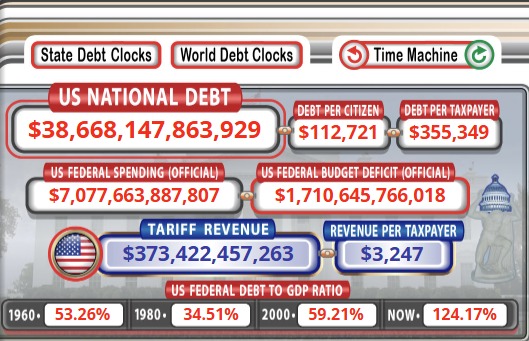
Source: US Debt Clock

Debt servicing costs are now consuming a terrifying slice of federal revenue, forcing the Federal Reserve into a corner where currency debasement looks like the only exit strategy.

For savvy market participants, the ‘debasement trade’ is no longer just a theory. Bitcoin ($BTC) hovering near $70,000 isn’t speculative frenzy, it’s a structural flight to safety.

But holding Bitcoin is only step one.

Smart money is looking beyond simple store-of-value plays to the infrastructure that unlocks Bitcoin’s dormant capital. If Bitcoin is the digital gold vault, the market is desperately seeking the high-speed rails to actually move that value.

This demand for utility on the world’s most secure blockchain is driving capital into Layer 2 solutions. While established players like Stacks laid the groundwork, a new contender, Bitcoin Hyper ($HYPER), is turning heads (and wallets) by integrating the Solana Virtual Machine (SVM) directly with Bitcoin’s settlement layer.

The premise is punchy: combine Bitcoin’s security with Solana’s speed to create a hedge that works as both a shield against inflation and a sword for yield.

Read more about $HYPER here.

Bitcoin Hyper Brings SVM Velocity to the $1.7t Bitcoin Economy

Here’s the friction in the current crypto ecosystem: usually, you have to choose. You get Bitcoin’s security or Solana’s speed, but rarely both.
Bitcoin Hyper ($HYPER) attacks this trade-off by operating as the first-ever Bitcoin Layer 2 with SVM integration.

That technical architecture matters. It allows developers to write smart contracts in Rust, the same language powering Solana’s high-performance dApps, while anchoring final settlement on the Bitcoin blockchain.

For the average user, this means transaction finality that feels instant (we’re talking sub-second) rather than the sluggish 10-minute block times of the Bitcoin mainnet. By using a decentralized canonical bridge, Bitcoin Hyper enables users to move $BTC into a high-speed execution environment.
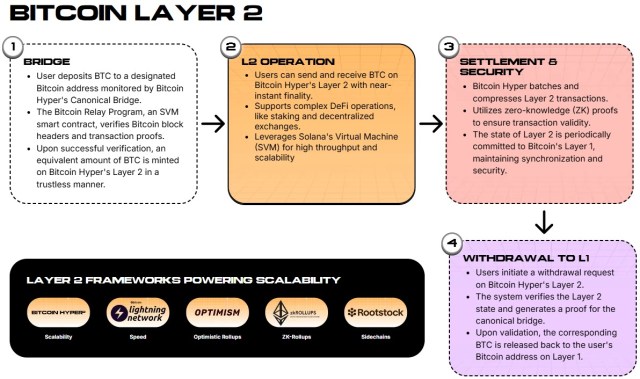
Suddenly, Bitcoin is usable for DeFi, gaming, and payments without the prohibitive fees associated with Ordinals or BRC-20 tokens.
The modular design, separating execution (SVM) from settlement (Bitcoin L1), mirrors the successful roadmap of Ethereum rollups. But there’s a key difference: it applies that logic to a market cap three times larger.

By solving the lack of programmability on Bitcoin, $HYPER positions itself not just as a token, but as essential infrastructure for the next cycle of institutional adoption.

You can buy $HYPER here.

Smart Money Rotation: Whales Target $31M Presale Milestone

Retail investors often chase green candles. Smart money? They front-run infrastructure shifts.

On-chain data surrounding the Bitcoin Hyper presale suggests a decisive move by high-net-worth wallets to secure early positions.

According to the official presale page, the project has already raised an impressive $31.3M. That figure underscores a significant market appetite for Bitcoin-native DeFi solutions.

What stands out is the scale of individual allocations. Etherscan records reveal that three whale wallets have accumulated $1M+ in $HYPER tokens in recent transactions ($500K, $379.9K, $274K).

When sophisticated actors accumulate heavily during a presale phase, where the token is priced at a modest $0.0136754, it often signals a bet on a high multiple repricing once the token lists on major exchanges.

Investors are also drawn to the immediate utility of their capital. Unlike many ICOs that leave funds idle, Bitcoin Hyper offers immediate staking with high APY for presale participants. Coupled with a 7-day vesting period for stakers, the tokenomics reward conviction over speculation.

As the US debt clock ticks louder, the rotation into assets that offer both hard-money properties and high-growth potential is accelerating.

Buy your $HYPER today.

This article is for informational purposes only and does not constitute financial advice. Cryptocurrency investments, including presales and initial coin offerings, carry inherent risks and are subject to market volatility. Always conduct your own due diligence before investing.

Editorial Process for bitcoinist is centered on delivering thoroughly researched, accurate, and unbiased content. We uphold strict sourcing standards, and each page undergoes diligent review by our team of top technology experts and seasoned editors. This process ensures the integrity, relevance, and value of our content for our readers.

patrubogdan

Follow

Full Profile

Related Posts

Dogecoin Tries to Hold $0.09370 – Is 2026 the Doge Year or Will $MAXI Take Over?

Crypto Exchange Backpack Targets Token Launch Soon, as BMIC Fires Up Quantum Defense

Ethereum Foundation Backs SEAL Initiative as LiquidChain L3 Protocol Gains Traction

Vitalik Buterin Outlines Ethereum’s AI Future, While SUBBD Token Targets the Creator Economy

Binance Dominates Trump’s USD1 Supply as Bitcoin Hyper Breaks Records

Cathie Wood’s Ark Invest Buys More Bullish Assets Just Days After Last Purchase, While LiquidChain Turns Heads

Domande pertinenti

QWhat is the main argument presented in the article for investing in Bitcoin and related technologies like Bitcoin Hyper?

AThe main argument is that the rapidly accelerating US national debt, projected to hit $39 trillion, is forcing the Federal Reserve into currency debasement. This makes it a structural flight to safety, and while holding Bitcoin is a hedge, smart money is now moving into Bitcoin Layer 2 infrastructure like Bitcoin Hyper to unlock the dormant value of the $1.7T Bitcoin economy for yield and utility.

QWhat specific technological solution does Bitcoin Hyper ($HYPER) provide to the Bitcoin ecosystem?

ABitcoin Hyper is the first Bitcoin Layer 2 that integrates the Solana Virtual Machine (SVM). This allows it to bring sub-second transaction speeds and smart contract functionality (written in Rust) to the Bitcoin network, solving its lack of programmability and high fees while still using Bitcoin's blockchain for secure settlement.

QWhat evidence does the article provide to show 'smart money' or whale interest in the Bitcoin Hyper project?

AThe article cites that the project's presale has raised over $31 million. It also references on-chain data from Etherscan showing significant whale purchases, including specific single transactions of $500K, $379.9K, and $274K, indicating high-net-worth investors are accumulating the token early.

QAccording to the article, what is the current presale price of the $HYPER token and what benefit do presale participants get?

AThe current presale price of the $HYPER token is $0.0136754. Presale participants receive the immediate benefit of being able to stake their tokens for a high Annual Percentage Yield (APY).

QHow does the article characterize the current state of the US national debt and its implications?

AThe article characterizes the US national debt as accelerating at a pace that 'defies logic,' nearing $39 trillion. It states that debt servicing costs are consuming a 'terrifying slice of federal revenue,' which corners the Federal Reserve and makes currency debasement appear to be the only viable exit strategy.

Letture associate

Has the 'Digital Gold' Narrative for BTC Failed?

**Title: Has the "Digital Gold" Narrative for Bitcoin Failed?** The article argues that Bitcoin's "digital gold" narrative remains valid despite a recent sharp price decline (from a peak near $126k in Oct 2025 to briefly under $61k in Feb 2026). It presents a long-term investment framework based on three core points: **1. Viewing Bitcoin as an Asset:** Bitcoin is presented as a superior potential store of value compared to gold. Key arguments are its absolute scarcity (21 million cap), superior portability, and transparent auditability via its public ledger. While acknowledging its current use in early, volatile stages (~3-4% global adoption), the author draws parallels to the early, disruptive phases of the internet and e-commerce. **2. Understanding the Recent Downturn:** The current ~50% correction is framed as a predictable, consensus-driven cycle following its post-halving peak (the 2024 halving preceded the Oct 2025 high). A crucial factor is a historic "changing of hands": the influx of new institutional buyers via ETFs allowed early, low-cost holders (miners, OG believers) to take profits. The author notes that while severe, Bitcoin's historical drawdowns (e.g., 93% in 2011, 77% in 2021-22) have been progressively smaller, suggesting maturing holder structure and decreasing volatility over time. **3. The Long-Term Perspective:** The long-term thesis hinges on Bitcoin capturing a portion of gold's market value. With Bitcoin's market cap at ~$1.4 trillion (at $70k) versus gold's ~$20 trillion, significant upside potential exists if the "digital gold" narrative is partially realized. However, the author strongly cautions that short-term risks remain, the bottom is unpredictable, and high volatility is inherent. The real risk is not Bitcoin failing but poor personal position management (over-leverage, wrong capital) and a lack of deep understanding, which can force investors out during severe downturns. The conclusion uses Amazon's 95% crash post-2000 dot-com bubble and subsequent 42x recovery as an analogy. The ultimate question is not if Bitcoin's price will rise, but if an investor's strategy and conviction can withstand the volatility to see the long-term play out. The recent divergence (gold up, Bitcoin down) is posed not as a narrative failure, but as potential evidence of this ongoing, painful transition from a speculative asset to a mainstream allocation.

marsbit7 h fa

Has the 'Digital Gold' Narrative for BTC Failed?

marsbit7 h fa

Has BTC's 'Digital Gold' Narrative Failed?

The article discusses Bitcoin's "digital gold" narrative, its recent price drop, and long-term outlook through the perspective of "Jason". It argues the narrative is not a failure but that Bitcoin represents a superior, new asset class due to its fixed supply (21 million), portability, and auditability. The piece compares its current ~3-4% global adoption rate to early internet/e-commerce, suggesting significant growth potential. Regarding the 2025-2026 price decline (from ~$126k to briefly under $61k), the author views it as a predictable, consensus-driven sell-off within Bitcoin's ~4-year cycle post-halving, exacerbated by a major "handover" from early, low-cost holders to new institutional buyers via ETFs. A key observation is that historical peak-to-trough drawdowns have lessened over time (e.g., 93% in 2011 to ~50% in 2026), indicating maturing volatility as holder structure changes. For the long term, the author uses a simple framework: Bitcoin's total market cap (~$1.4T at $70k) is only about 7% of gold's (~$20T). Even capturing 30-50% of gold's value would imply substantial upside. However, the article strongly cautions against viewing this as investment advice, emphasizing extreme volatility and the critical importance of risk management, position sizing, and deep fundamental understanding to survive severe drawdowns. It concludes by drawing a parallel to Amazon's 95% crash in 2000 and subsequent 42x recovery, stressing that the key is surviving market cycles to realize long-term potential.

链捕手7 h fa

Has BTC's 'Digital Gold' Narrative Failed?

链捕手7 h fa

From Code to Cognition: A Ten-Thousand-Word Guide to the Evolution of the Robot Brain

"From Code to Cognition: The Evolution of Robot Brains" The journey of robotic intelligence has shifted dramatically from manually coded systems to AI-driven brains. For decades, robots relied on layered software stacks—perception, state estimation, planning, control—each handcrafted. While predictable, they lacked adaptability. The 2010s saw deep learning revolutionize perception (e.g., object detection) and control (via reinforcement learning), but learned skills remained narrow. The arrival of Large Language Models (LLMs) marked a turning point. LLMs acted as high-level planners, interpreting natural language instructions and generating sequences of actions for traditional robotic systems to execute. However, true integration came with Visual-Language-Action (VLA) models, which fused vision, language, and motion prediction into a single network. Pioneered by models like RT-2 and open-source projects like OpenVLA, VLAs enable robots to reason and act directly from visual input and commands. The most advanced humanoid robots now employ a "dual-brain" architecture: a slow-thinking, large VLA (System 2) for reasoning and planning, and a fast-reacting, small network (System 1) for high-frequency motion control, sometimes with an even lower-level System 0 for balance. This split balances cognition with the physics of real-time movement. Computation is split between onboard hardware (e.g., NVIDIA Jetson) for safety-critical control loops and cloud/edge servers for non-critical tasks like learning and interfaces. A crucial driver is the open-source ecosystem—models like GR00T and OpenVLA allow startups to build upon pre-trained brains and fine-tune them with their own data, accelerating development. Despite progress, current systems struggle with recovery from errors, sample inefficiency, and long-horizon tasks. This has spurred the rise of **World Models**—neural networks that predict the consequences of actions. By simulating possible futures before acting (like NVIDIA Cosmos or Meta V-JEPA), robots can plan, recover, and generalize better. This represents the next frontier: shifting intelligence from learned reactions to an internal model of physics and cause-and-effect. The field is rapidly evolving. While not yet at its "ChatGPT moment," the convergence of cheaper hardware, scalable simulation, and world models points toward robots that are increasingly capable, adaptive, and useful. The question is shifting from "what can robots do?" to "what *should* they do?"

marsbit8 h fa

From Code to Cognition: A Ten-Thousand-Word Guide to the Evolution of the Robot Brain

marsbit8 h fa

Trading

Spot
Futures
活动图片