US Banks’ Push To Ban Stablecoin Rewards Could Hand Global Advantage To China, Execs Warn

bitcoinistPubblicato 2026-01-01Pubblicato ultima volta 2026-01-01

Introduzione

Crypto industry leaders warn that U.S. banks' efforts to ban interest payments on stablecoins could undermine the competitiveness of the U.S. dollar and hand a strategic advantage to global rivals like China. This follows China's announcement that it will pay interest on its Digital Yuan (e-CNY) starting in 2026, granting it similar status to bank deposits. Coinbase’s Chief Policy Officer, Faryar Shirzad, cautioned that such a prohibition could weaken the impact of the recently passed GENIUS Act, which aims to solidify the dominance of U.S. dollar stablecoins. Other executives, including Coinbase CEO Brian Armstrong and Variant CLO Jake Chervinsky, echoed that this is not just a regulatory issue but a matter of national security, arguing that limiting stablecoin rewards could diminish the global role of the dollar and strengthen China's position in the digital currency landscape.

After China’s latest move with its Digital Yuan, multiple crypto industry executives have cautioned that the US banks’ push to prohibit all interest payments on stablecoins could give a major advantage to their global rivals.

US Risks Giving China A Major Global Advantage

On Tuesday, Coinbase’s Chief Policy Officer (CPO), Faryar Shirzad, warned the US Congress that banning interest payments on the digital assets could risk diminishing the legislative efforts and victories obtained this year with the Guiding and Establishing National Innovation for U.S. Stablecoins (GENIUS) Act.

In an X post, Shirzad affirmed that “tokenization is the future and the GENIUS Act was a visionary move by POTUS and Congress to ensure US dollar stablecoins issued under US rules would be the primary settlement instrument of the future.”

However, Shirzad noted that the “sobering and timely” announcement by the People’s Bank of China of its plan to pay interest on the Digital Yuan could pose a bigger problem to the US than investors think.

As reported by Bitcoinist, China is about to start paying interest on its Digital Yuan (e-CNY). Deputy Governor at the People’s Bank of China, Lu Lei, recently shared a new framework that will redefine the rules of virtual currency, giving it the same legal status as deposits held at banks.

Under the new framework, commercial banks that manage Digital Yuan wallets will be able to pay interest to clients based on the amount of e-CNY they hold, starting from January 1, 2026.

Based on this, Shirzad cautioned that “If this issue is mishandled in Senate negotiations on the market structure bill, it could hand our global rivals a big assist in giving non-US stablecoins and CBDCs a critical competitive advantage at the worst possible time.”

Stablecoin Rewards: A ‘Matter Of National Security’

Coinbase’s CPO added that although “lobbyists for entrenched incumbents will always fight change,” it’s crucial for Congress to “protect the primacy of the US dollar and the US financial system, “not just incumbent interests.”

Similarly, other crypto executives agreed with Shirzad’s statement, including Coinbase’s Chief Executive Officer (CEO) Brian Armstrong and Variant’s Chief Legal Officer (CLO) Jake Chervinsky.

Armstrong emphasized that US “stablecoins must remain competitive on a global stage. Meanwhile, Chervinsky asserted that banks’ push to ban stablecoin rewards “isn’t just a matter of incumbents seeking a regulatory moat. It’s a matter of national security.”

To the lawyer, revisiting the issue of interest payments on USD-pegged tokens would weaken the victory that the GENIUS Act gave to US dollar dominance worldwide and “hand that win to China.”

Notably, the banking sector has criticized the US’s landmark stablecoin legislation over the past few months, arguing that it has loopholes that could pose risks to the financial system.

The crypto framework, which was signed into law by President Trump in July, prohibits interest payments on the holding or use of payment-purpose stablecoins. Nonetheless, the prohibition only addresses issuers, meaning that it could be “easily circumvented” by exchanges or affiliates providing rewards.

Earlier this year, multiple banking associations across the US sent a joint letter to the Senate Banking Committee urging Congress to amend the law. The banking groups claimed that interest payments would distort market dynamics and could affect credit creation. Therefore, they suggested extending the prohibition to include digital asset exchanges, brokers, dealers, and related entities.

Shirzad, alongside multiple crypto industry players, has rejected these concerns over the past several months, stating that the banking sector’s proposals could threaten to create an uncompetitive environment for USD-denominated tokens.

In October, Coinbase’s CPO slammed the financial institution’s narrative that stablecoins would destroy bank lending, concluding that it “ignores reality” and misreads the crucial moment.
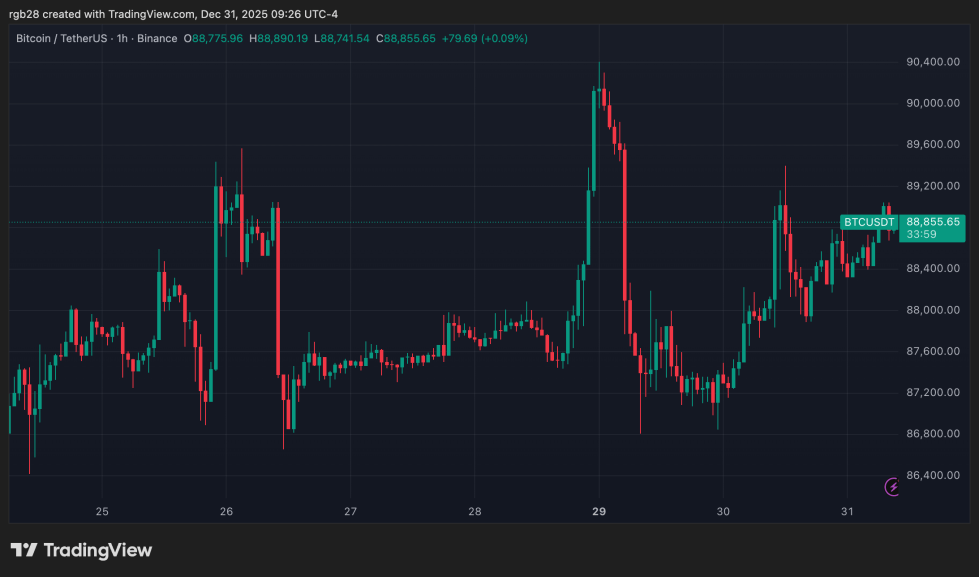
Bitcoin (BTC) trades at $88,855 in the one-week chart. Source: BTCUSDT on TradingView.


Domande pertinenti

QWhat is the main concern raised by crypto industry executives regarding the US banks' push to ban stablecoin interest payments?

ACrypto industry executives warn that the US banks' push to ban all interest payments on stablecoins could hand a major global advantage to rivals like China, potentially undermining the US dollar's primacy and the competitiveness of US financial systems.

QWhat specific action did the People's Bank of China announce that is seen as a competitive threat?

AThe People's Bank of China announced a plan to pay interest on the Digital Yuan (e-CNY), giving it the same legal status as bank deposits and allowing commercial banks to pay interest based on the amount held, starting from January 1, 2026.

QWhy do banking associations in the US want to extend the prohibition on interest payments to include exchanges and related entities?

ABanking associations argue that interest payments on stablecoins could distort market dynamics, affect credit creation, and pose risks to the financial system, so they want to extend the ban to digital asset exchanges, brokers, dealers, and related entities to prevent circumvention.

QHow does Coinbase's CPO, Faryar Shirzad, view the GENIUS Act and its relation to US dollar stablecoins?

AFaryar Shirzad views the GENIUS Act as a visionary move to ensure that US dollar stablecoins issued under US rules become the primary settlement instrument of the future, reinforcing the dominance of the US dollar globally.

QWhat is Jake Chervinsky's perspective on the push to ban stablecoin rewards?

AJake Chervinsky, Variant's Chief Legal Officer, asserts that the push to ban stablecoin rewards is not just about incumbents seeking a regulatory advantage but is a matter of national security, as it could weaken US dollar dominance and benefit rivals like China.

Letture associate

Trading

Spot
Futures

Articoli Popolari

Come comprare PUSH

Benvenuto in HTX.com! Abbiamo reso l'acquisto di Push Protocol (PUSH) semplice e conveniente. Segui la nostra guida passo passo per intraprendere il tuo viaggio nel mondo delle criptovalute.Step 1: Crea il tuo Account HTXUsa la tua email o numero di telefono per registrarti il tuo account gratuito su HTX. Vivi un'esperienza facile e sblocca tutte le funzionalità,Crea il mio accountStep 2: Vai in Acquista crypto e seleziona il tuo metodo di pagamentoCarta di credito/debito: utilizza la tua Visa o Mastercard per acquistare immediatamente Push ProtocolPUSH.Bilancio: Usa i fondi dal bilancio del tuo account HTX per fare trading senza problemi.Terze parti: abbiamo aggiunto metodi di pagamento molto utilizzati come Google Pay e Apple Pay per maggiore comodità.P2P: Fai trading direttamente con altri utenti HTX.Over-the-Counter (OTC): Offriamo servizi su misura e tassi di cambio competitivi per i trader.Step 3: Conserva Push Protocol (PUSH)Dopo aver acquistato Push Protocol (PUSH), conserva nel tuo account HTX. In alternativa, puoi inviare tramite trasferimento blockchain o scambiare per altre criptovalute.Step 4: Scambia Push Protocol (PUSH)Scambia facilmente Push Protocol (PUSH) nel mercato spot di HTX. Accedi al tuo account, seleziona la tua coppia di trading, esegui le tue operazioni e monitora in tempo reale. Offriamo un'esperienza user-friendly sia per chi ha appena iniziato che per i trader più esperti.

524 Totale visualizzazioniPubblicato il 2024.12.13Aggiornato il 2025.03.21

Come comprare PUSH

Discussioni

Benvenuto nella Community HTX. Qui puoi rimanere informato sugli ultimi sviluppi della piattaforma e accedere ad approfondimenti esperti sul mercato. Le opinioni degli utenti sul prezzo di PUSH PUSH sono presentate come di seguito.

活动图片