On August 19, 2026, Unitree Tech went public on the STAR Market. The IPO price was 150.80 yuan, corresponding to a post-issue market capitalization of approximately 61 billion yuan. On its first trading day, the stock price surged to 1,100 yuan at one point, corresponding to a market cap of about 444.9 billion yuan, closing at a market cap of 341.8 billion yuan. Subsequently, the stock price experienced continuous declines: closing at 687 yuan on August 20, 672.41 yuan on August 21, and further dropping to 603.08 yuan on August 24, resulting in a total market capitalization of approximately 243.9 billion yuan.
Within just four trading days, Unitree's stock price fell by over 45% from its intraday high on the first trading day, wiping out more than 200 billion yuan in market value. However, it remained about 300% higher than the IPO price. While short-term stock prices are clearly influenced by factors such as scarcity of shares, market sentiment, and the float, behind the valuation lies a more difficult question: Why is a robotics company with revenues of about 1.7 billion yuan in 2025 and about 1.15 billion yuan in the first half of 2026, after a rapid correction, still valued at approximately 240 billion yuan?
Professor Zhang Feida, an Associate Professor of Accounting at CEIBS, applies the Ohlson Residual Income Model to analyze Unitree Tech from four valuation dimensions—ROE (Return on Equity), Sustainability, Growth, and Risk Assessment—in an attempt to answer this question.
In the article "Is SpaceX Worth $2.5 Trillion?", I have already introduced the Ohlson Residual Income Model: a company's value depends not only on its current book assets (physical value) but more importantly on its future ability to consistently generate residual income (spiritual value) above its cost of capital. Readers interested in the model can refer to the previous article. This article will not repeat the formula.
Comparing these two newly listed companies, SpaceX needs to prove when massive capital expenditures and current losses can turn into sustainable cash flow. Unitree Tech faces a different question: It is already profitable, but its scale remains small; after going public, it has gained more capital. Can it transform its current high returns into sustained high returns over the long term?
Technological leadership is an industry judgment; corporate excellence is an operational judgment; and stock cheapness is a price judgment. Sometimes these three can hold true simultaneously, and other times they may diverge.
01
What Has Unitree Proven, and What Has the Market Already Paid For?
Unitree Tech is not a robotics company that relies solely on viral videos for attention without revenue.
In 2025, the company achieved operating revenue of approximately 1.699 billion yuan, a year-on-year increase of 332.6%; net profit attributable to shareholders was about 278 million yuan, while non-GAAP net profit attributable to shareholders was about 591 million yuan, and net cash flow from operating activities was about 670 million yuan. The higher non-GAAP net profit compared to GAAP net profit in 2025 was mainly due to one-time share-based compensation expenses being classified as non-recurring items.
For a general-purpose robotics company still in a phase of rapid technological iteration, the simultaneous appearance of scale growth, profitability, and positive cash flow is uncommon.
More notably, data disclosed in the listing prospectus for the first half of 2026 shows company revenue of 1.152 billion yuan, a year-on-year increase of 48.54%; GAAP net profit attributable to shareholders was 274 million yuan, but non-GAAP net profit was 244 million yuan, a year-on-year decrease of 19.34%. Net cash flow from operating activities was 232 million yuan, a year-on-year decrease of 32.53%. Growth persists, but profit quality and cash conversion have begun to bear the pressure of increased R&D and sales investments.
Unitree's revenue growth is not entirely reliant on high-priced research prototypes. Through in-house development of core components, motion control, and supply chain integration, the company has gradually turned quadrupedal and humanoid robots into products that can be sold in batches.
In 2025, the company's shipment volume of humanoid robots exceeded 5,500 units. It has already completed the most difficult step for many robotics startups: transitioning from 'able to make' to 'able to sell.'
However, the price given by the capital market is not merely a reward for the 2025 report card.
The IPO price implied a company valuation of about 61 billion yuan. Calculated based on the 2025 non-GAAP net profit, the P/E ratio was roughly 103x① and the P/S ratio about 36x. By the close on August 24, with a market cap of about 243.9 billion yuan, calculated on the same basis, the P/E ratio is approximately 413x and the P/S ratio about 144x.
This means the market is not just buying Unitree's achieved non-GAAP profit of about 600 million yuan today, but rather expectations of larger-scale commercialization: robots entering factories, warehouses, commercial services, and even homes; Unitree evolving from a hardware manufacturer to an embodied intelligence platform; today's shipments of a few thousand units eventually scaling to hundreds of thousands, or even millions of deployments.
This article aims to answer: At a price of approximately 240 billion yuan, how much reasonable expectation has the market priced in, and how much expectation requires the company's long-term, high-quality execution to fulfill?
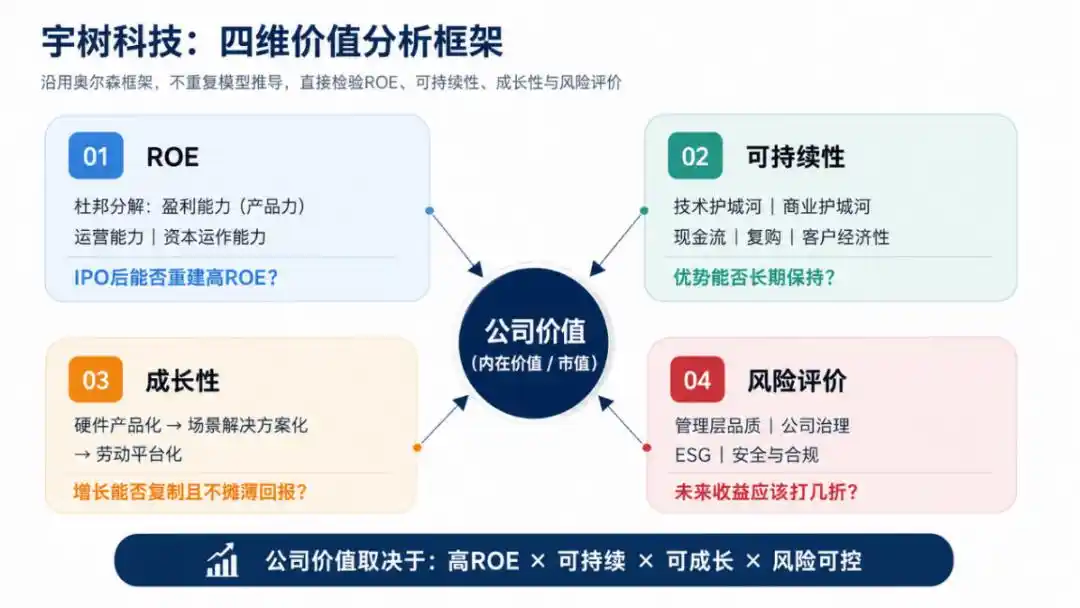
Figure 1. Unitree Tech's Four-Dimensional Value Analysis Framework
02
Four Dimensions to Examine Unitree Tech's Future Value
I
ROE: Can the High Returns Before IPO Be Rebuilt Post-IPO?
The Ohlson model places ROE at the core of value creation because only when ROE consistently exceeds the required return on equity can a company continuously generate residual income. Furthermore, growth only truly adds value if new investments can yield returns above the cost of capital. For Unitree Tech, ROE shouldn't be viewed merely as a favorable ratio; it's more appropriate to use DuPont analysis to break it down into three aspects: profitability (product power), operational efficiency, and capital deployment capability.
ROE = Net Profit Margin × Asset Turnover × Equity Multiplier
Applying these three components to a robotics company can be understood as: whether the product can generate sufficient profit, whether assets can be turned over efficiently, and whether management can effectively use leverage, corresponding respectively to profitability (product power), operational efficiency, and capital deployment capability.
➊Profitability (Product Power): Can Technological Leadership Continuously Translate into Profits?
Unitree's profitability primarily stems from product power. In 2025, revenue was about 1.699 billion yuan, non-GAAP net profit attributable to shareholders was about 591 million yuan, and net operating cash flow was about 670 million yuan. More importantly, through in-house R&D of core components, motion control, whole-machine design, and cost engineering, the company has gradually transformed robots from expensive research prototypes into products that can be sold in batches.
For robotics companies, product power doesn't necessarily mean selling at higher prices, but rather whether performance improvement and cost reduction can occur simultaneously. Price reductions help expand installation volume, but to avoid gross margin pressure, unit costs must decrease even faster, or income from software, services, and solutions must gradually compensate for the gross profit pressure from hardware price cuts.
Going forward, key metrics to track include gross margin, unit manufacturing cost, R&D conversion efficiency, and whether new products can maintain a competitive performance-price ratio.
The actual data for the first half of 2026 further puts this stress test in the spotlight: revenue still grew 48.54% year-on-year, but compared to the high growth rate of 332.6% in 2025, it has clearly decelerated; meanwhile, non-GAAP net profit fell 19.34% year-on-year, and net operating cash flow dropped 32.53% year-on-year. The company explains this was mainly due to R&D team expansion, new product development, and increased sales investments. For a high-growth company that just went public, the next critical step is not just continued growth, but proving that the new R&D and sales investments can be converted back into profit margins and cash flow.
➋Operational Efficiency: From R&D, Production to Collection—Can Assets Turn Over Faster?
One of Unitree's pre-IPO advantages was its relatively light asset structure, rapid product iteration, and relatively good operating cash flow. The robotics industry changes quickly. Operational efficiency is not only reflected in factory production efficiency but also in whether the entire cycle—from R&D initiation, product finalization, supply chain procurement, production delivery, to customer payment collection—can remain sufficiently short.
After the IPO, this advantage will face new tests. Raised funds will be used for robot models, core R&D, new product development, and manufacturing base construction. Fixed assets, inventory, and R&D investments are all likely to increase.
If capacity construction outpaces real demand growth, or if deploying new scenarios relies heavily on manual customization, asset turnover may decline. Key areas to watch in the future include inventory turnover, accounts receivable, operating cash flow conversion, capacity utilization, and deployment cycles for individual scenarios.
➌Capital Deployment Capability: Post-IPO, the Biggest Challenge Isn't Financing, It's Capital Allocation.
Unitree's high pre-IPO returns were not primarily amplified by high financial leverage. The company previously had a low asset-liability ratio and minimal short-term borrowing; as of June 30, 2026, shareholders' equity attributable to the parent company was about 2.88 billion yuan, while the net IPO proceeds were about 5.917 billion yuan, approximately 2.05 times the equity at that time. In other words, the new capital will significantly increase the shareholder equity "denominator" at once, without simultaneously increasing net profit by the same magnitude. Therefore, a temporary decline in post-IPO ROE is not only unsurprising but almost mathematically inevitable.
This itself is not a bad thing. The key lies in what returns the new capital can ultimately achieve.
Capital deployment capability is not just about whether to add leverage, but more importantly, about how to prioritize R&D, manufacturing bases, new products, and ecosystem investments, which projects to double down on, and which to cut losses on promptly.
Only when the marginal return on new capital consistently exceeds the cost of capital does financing create value, rather than merely inflating the balance sheet.
Financial Conclusion
Unitree's ROE in the next stage needs to be rebuilt more through product profitability, asset turnover, and capital allocation discipline, rather than relying on leverage. The IPO is not the end of high ROE, but a reset of the capital denominator.

II
Sustainability: Can the Moat Evolve from 'Performing' to 'Laboring'?
A high ROE for just one year cannot support a high valuation. The Ohlson model is more concerned with how long this excess return can be sustained. Sustainability, in operational terms, boils down to the moat question: can today's technological advantage continue to translate into profits and cash flow amid competition, price reductions, and industry evolution?
Unitree's most intuitive moat is its motion control and full-stack engineering capabilities. From quadrupedal to humanoid robots, the company has developed strong synergistic capabilities in motors, reducers, joints, motion control, reinforcement learning, whole-machine design, and cost engineering. The value of these capabilities is not only reflected in impressive video demonstrations but also in the ability to rapidly and cost-effectively turn new movements, new models, and core components into products.
Investors need to distinguish between two types of value. The first is demonstration value: running, jumping, flipping, shadowboxing—used to prove motion control and engineering capabilities. The second is production value: working continuously for hours or even thousands of hours in unfamiliar environments, with stable task success rates, controllable maintenance costs, quick recovery after failures, and total customer cost lower than manual labor or traditional automation solutions. The former is more likely to bring traffic and early orders; the latter is more likely to bring repeat purchases, long-term contracts, and scaled capital expenditures.
Two pieces of recent information on August 20th aptly juxtaposed the difference between "demonstration value" and "production value." On one hand, Unitree launched the R1 Bionic 7-Axis Dexterous Arm the day after listing, with a starting price of 9,900 yuan, targeting R&D, education, material handling/assembly, and service robot exploration, indicating the company's hardware productization and cost reduction continue to advance rapidly.
On the other hand, Wang Xingxing candidly stated at the 2026 World Robot Conference that the biggest bottlenecks for robots truly entering factories and homes at scale are still efficiency and the generalization ability of embodied intelligence, with new tasks often requiring retraining. The former shows the capability of "making it and selling it cheaper" continues to strengthen; the latter reminds investors that "reliably replacing human labor" remains an un-crossed threshold.
Commercial moats require one more step beyond technological moats. Factory customers care more about whether robots can work stably for eight consecutive hours, whether deployment takes weeks or months, who maintains them after failures, whether changing a scenario requires re-customization, and ultimately how much cost can be saved for the customer.
When reliability, delivery, after-sales service, data, and customer economics collectively form barriers, technological leadership is more likely to translate into sustainable ROE.
Technological barriers themselves also require continuous maintenance. The prospectus notes that the company's relatively low patent count may, to some extent, increase the difficulty of protecting core technologies and preventing imitation.
For a rapidly iterating industry like robotics, the moat is more likely to be a dynamic capability formed by continuous R&D and iteration, cost engineering, supply chain, real-world scenario data, and organizational learning, rather than a single static patent.
Financial Conclusion
On the first day of listing, what's most easily priced is the performance; over the next decade, what's hardest to deliver is labor. Unitree's sustainability depends on whether it can transform its motion control advantage into stable labor capability, leading to repeat purchases and sustained cash flow.

III
Growth: Is Future Growth About Selling More Robots, or Selling More Productivity?
▲ Scroll to view ▲
In the residual income framework, growth itself does not inherently create value. Growth only amplifies the aforementioned "spiritual value" when new investments can still yield returns above the cost of capital. For Unitree, the important thing is not how large the robotics industry will ultimately be, but whether it can maintain high returns during its expansion.
Unitree's current revenue core is still hardware. Hardware businesses can become very large, but the valuation ceiling for hardware companies is usually constrained by price declines, manufacturing costs, inventory, after-sales service, and competition. How high the long-term valuation can go depends more on whether Unitree can complete a three-stage upgrade.
Stage 1: Hardware Productization. Transforming robots from research prototypes into standardized products, expanding the market through volume, cost reduction, and rapid iteration. Unitree has already crossed this stage relatively well.
Stage 2: Scenario Solutionization. What customers purchase is no longer just a robot, but a combination of the robot body, end effectors, model training, on-site deployment, software updates, and maintenance services. The revenue structure also gradually shifts from one-time delivery to a mix of hardware, projects, and services.
Stage 3: Labor Platformization. Different developers and industry customers can develop tasks on the same set of bodies, interfaces, models, and data ecosystems; adding new scenarios doesn't require starting from scratch each time; more deployments bring more real-world data, which in turn is used to improve model generalization and task success rates.
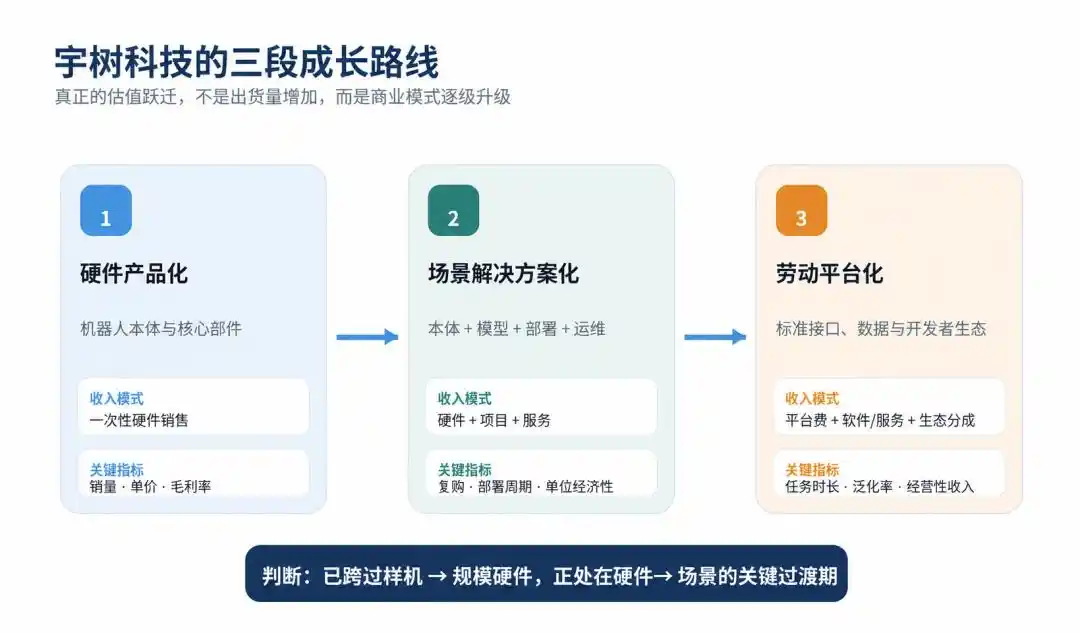
Figure 2. Unitree Tech's Three-Stage Growth Path: From Hardware to Productivity Platform
If this virtuous cycle forms, Unitree's growth isn't just about how many units are sold this year, but evolves into:
More Deployments → More Data → Stronger Models → Higher Success Rates → More Scenarios & Repeat Purchases
If entering each new scenario requires substantial custom development, on-site engineers, and after-sales personnel, then larger scale may actually increase complexity. Revenue can grow under this model, but profit margins, asset turnover, and cash flow may not improve correspondingly. This type of growth can push up revenue but may not necessarily create more residual income.
Future metrics to watch may no longer just be shipment volume, but also whether the same customer repurchases, whether the proportion of software and service revenue increases, whether deployment cycles for single scenarios shorten, whether actual robot operating hours increase, and how much total robot cost a customer bears to save one unit of labor cost.
Financial Conclusion
What determines the quality of Unitree's growth is not how many robots are sold, but whether each robot delivered can form repeatable, scalable, and sustainably billable productivity, without diluting capital returns.
IV
Risk Assessment: Why Should Some People Discount Future Earnings by 20%, While Others Can Only Discount by 50%?
▲ Scroll to view ▲
Risk in the Ohlson model ultimately enters the required rate of return for shareholders, i.e., the discount rate. The more uncertain the future earnings, the higher the return investors require (i.e., risk premium), and thus the lower the valuation they are willing to give today.
For a founder-led hard-tech company like Unitree, risk assessment can be examined at least from three aspects: management quality, corporate governance, and ESG.
➊Management Quality: Can an Excellent Engineer Evolve into an Excellent Capital Allocator?
The prospectus shows that Wang Xingxing concurrently serves as Chairman, General Manager, and Chief Technology Officer. He is also the company's core technical personnel with over 15 years of robotics R&D experience. The unity of founder, technical leader, and operational leader is an important organizational asset for Unitree's past rapid decision-making and continuous iteration.
However, after listing, the tasks facing management will change. The company no longer only needs to make and sell robots, but also manage billions in new capital, manufacturing bases, talent teams, investor expectations, and more complex global operational risks.
For investors, management quality should be judged more by long-term investment commitment, capital allocation discipline, ability to cut losses on failing projects, transparency in information disclosure, and the ability to build a second tier not reliant solely on the founder.
➋Corporate Governance: Concentrated Control Can Enhance Efficiency, but Also Requires Stronger Checks and Balances.
Unitree has a special voting rights arrangement: Class A shares held by Wang Xingxing carry 10 votes per share, while ordinary Class B shares carry 1 vote per share. Meanwhile, he also holds the positions of Chairman, GM, and CTO. The advantage of this structure is shorter decision chains, allowing the founder to adhere to long-term technical roadmaps, less susceptible to short-term capital market sentiment.
However, this also means that independent board supervision, constraints on related-party transactions, major capital allocation, minority shareholder protection, and succession mechanisms become more important. The company has already established mid-to-long-term incentives through an employee持股 platform, which helps retain key talent.
In the future, it will be worth observing whether, as the organization scales, decision-making power can increasingly rely on systems, and whether major decisions can have sufficient professional checks and balances.
➌ESG: Once Robots Enter Society, Externalities Will Evolve from Soft Issues to Hard Costs.
From a traditional environmental risk perspective, Unitree currently primarily uses assembly production and does not belong to a heavily polluting industry. The prospectus discloses no violations of ecological and environmental laws and regulations during the reporting period and no production safety accidents. This indicates that environmental and safety risks in the traditional manufacturing环节 are currently relatively controllable.
However, for general-purpose robots, the more important future ESG issues may not lie in smokestacks, but in real-world usage scenarios: physical safety in human-robot collaboration, data security and privacy concerns from cameras and sensors, cybersecurity, supply chain and overseas compliance, and the impact of automation on employment and liability boundaries. Once robots enter factories, commercial spaces, and even homes, these issues may translate into recalls, insurance, litigation, compliance, reputation, as well as adoption barriers and costs for customers.
Overseas compliance risks have already evolved from abstract "future possibilities" to real policy variables. In July 2026, the U.S. FCC included certain newly developed advanced humanoid and quadrupedal robots produced overseas under stricter equipment certification restrictions.
Unitree disclosed that its currently sold main models with FCC certification are temporarily unaffected, but future new models may face risks of being unsaleable in the U.S. The company's overseas revenue exceeded 40% of total revenue in each of the past three years, with U.S. market revenue accounting for about 13.30% in 2025.
Therefore, overseas regulation and geopolitical risks can now directly impact the growth path and ultimately enter the risk premium required by valuation.
Financial Conclusion
Wang Xingxing could be Unitree's most important organizational asset, but also constitutes key-person risk that needs to be factored into the discount rate; concentrated control can enhance execution efficiency but also requires stronger institutional checks and balances. Risk assessment isn't about labeling the company, but determining how much future earnings should be discounted.
03
How Much Future Has the ~240 Billion Yuan Already Priced In?
The previous four dimensions address the company's intrinsic quality. Price testing addresses whether this stock is cheap now, if it has sufficient margin of safety. These two need to be considered separately.
A good company can be overpriced; a bad company can be very cheap. But value investing is more concerned with: how much future has the current price already paid for?
Based on the market cap of approximately 243.9 billion yuan as of August 24th, Unitree trades at about 413 times its 2025 non-GAAP net profit and about 144 times its 2025 revenue. Compared to the 277.9 billion yuan valuation on August 20th, the market has already dialed back some expectations. However, such a valuation still implies that the company must not only sustain high growth but also needs ROE to recover post-IPO dilution, maintain its moat, achieve scalable and replicable growth, while avoiding major errors in management and governance.
We can perform a scenario calculation, solely for understanding how high market expectations are. Assuming investors require an annualized return of 12%, and that the market is still willing to assign Unitree a P/E of 30x ten years from now:
At the IPO market cap of ~61 billion yuan, the required net profit ten years later would need to reach ~6.3 billion yuan. This implies an average annual growth rate of ~26.7% starting from the ~591 million yuan non-GAAP net profit in 2025.
At the ~243.9 billion yuan market cap as of August 24th, the required net profit ten years later would need to reach ~25.3 billion yuan. This implies an average annual growth rate of ~45.6% over the next decade.
This is not a forecast of Unitree's profits, nor a target price. It simply translates the price into operational tasks: the IPO price corresponds to the requirement of maintaining strong operational performance over the long term. While the August 24th market price has corrected significantly from its first-day high, it still demands that Unitree sustain high ROE, maintain its moat, achieve rapid growth, and keep risks at a low level for a very long time.
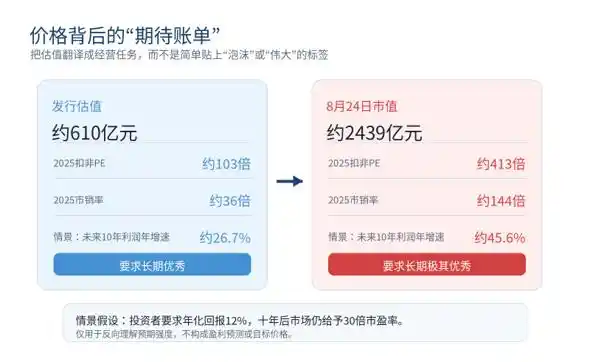
Figure 3. The Bill of Expectations Behind the Price: IPO Valuation vs. August 24th Valuation
Also note that in the initial post-IPO period, the unrestricted tradable shares constitute only about 7.44% of the total shares outstanding post-issue. Amid high market attention and limited tradable supply, the price in the first few trading days is influenced by fundamentals, scarcity, and trading sentiment simultaneously.
The short-term market cap can serve as an observation of market fervor, but should not be directly viewed as a stabilized long-term fair value.
A high valuation risk does not negate that Unitree is an excellent company. It means the higher the price, the fewer mistakes investors can tolerate. A one-year product delay, a few percentage points lower gross margin, a decline in asset turnover, a capital allocation mistake, or an increase in governance risk—the impact on long-term value will be amplified.
Financial Conclusion
The four-dimensional analysis helps judge how far the company can go; the price determines how much margin of safety remains for investors. The question with a ~240 billion yuan market cap is not whether Unitree is excellent enough, but whether the market has already priced too much of its future excellence into today's price.
04
My Judgment:
A Good Company and a Good Price Require Separate Answers
Is Unitree Tech a good company?
From ROE perspective, Unitree has demonstrated preliminary capability in productization and capital efficiency, but needs to re-establish high returns post-IPO.
From Sustainability perspective, motion control advantage is already strong, but the commercial moat still needs validation through stable operation, repeat purchases, and cash flow.
From Growth perspective, the long-term ceiling lies in evolving from hardware to scenarios, and then to a labor platform.
From Risk Assessment perspective, founder-led management is both a source of efficiency and requires more mature governance and ESG systems to lower the discount rate.
Is Unitree in a good industry?
Most likely, yes. Demographic shifts, rising labor costs, replacement of dangerous jobs, advancements in AI models, and decreasing hardware costs for robots collectively support long-term demand.
Reuters cited industry data stating that China's humanoid robot deliveries exceeded 40,000 units in the first half of 2026, accounting for the vast majority globally. However, at the same World Robot Conference, Wang Xingxing also clearly pointed out that the efficiency and generalization ability of robots in real scenarios are still below the level required for mass adoption. This means industry scale high growth and commercial immaturity can coexist. A large industry doesn't guarantee every company's success, nor does it mean the commercialization path will be as linear as the market imagines.
Is Unitree currently at a good price?
This cannot be answered solely by industry enthusiasm. A ~240 billion yuan market cap is not just a reward for what Unitree did right in the past, but also an advance payment for what it might achieve in the next decade. Compared to the extreme highs of the first trading day, the price has clearly cooled down, but the current valuation still shows high recognition of the company, leaving a very thin margin of safety for execution errors.
I am more inclined to view Unitree as an excellent hard-tech company with genuine technology, products, revenue, and cash flow. It is at a critical stage of transforming product power into high-quality capital returns, but the current market price places very high demands on its future.

The previous SpaceX article discussed how to ground dreams in cash flow. This article on Unitree focuses on how to ground product power in ROE, turn motion advantage into a sustainable moat, transform shipment volume into replicable growth, and gradually convert founder-driven speed into risk-controlled listed company governance capabilities.
In the future, rather than tracking daily stock price fluctuations, it's more worthwhile to follow these five things:
ROE: Post-IPO, can gross margin, asset turnover, and capital allocation collectively drive ROE to recover after dilution?
Sustainability: Can humanoid robots steadily move from research, demonstration, and data collection into industrial and commercial production scenarios, forming stable operation and repeat purchases?
Growth: Can software, services, solutions, and developer ecosystems increase revenue repeatability, shifting growth from selling hardware to selling productivity?
Risk Assessment: Will management's capital allocation, governance checks and balances under special voting rights, product safety, and ESG risks increase the discount rate for future earnings?
Valuation: Can profit growth catch up quickly enough with the high expectations already embedded in the current market cap?
Understanding these dimensions and then putting them back into the price provides a more complete picture of Unitree Tech.
Investing in Unitree isn't buying a backflip, nor just the concept of embodied intelligence. It's buying the company's ability to consistently generate high ROE through product power, solidify technological advantage into a sustainable moat, translate scenario expansion into high-quality growth, and ultimately deliver future residual income to shareholders' accounts, all while keeping management, governance, and ESG risks under control.
This article is from the WeChat public account "CEIBS" (ID: CEIBS6688), author: Zhang Feida.