Author: Stacy Muur
Compiled by: CryptoLeo
Original title: What Are the Characteristics and Commonalities of Tokens That Performed Well After TGE in 2025?
Last week, I compiled a research post by Solus Group titled "Over 80% of New Tokens Peak at TGE: The Root Cause and Cure for Web3's False Prosperity," which analyzed the post-TGE performance of 113 tokens in 2025. The vast majority of these tokens peaked at TGE, with their prices starting to decline the day after launch, despite having conditions such as high financing, community support, and exchange listings.
Today's shared article is from crypto researcher Stacy Muur, who compiled several tokens from 2025 that showed significant price increases compared to their TGE prices and analyzed what advantages/conditions these projects possessed. In contrast, the previous article presented a statistical result based on data, while this article focuses more on the projects themselves. In summary: In today's overly homogeneous and expanding crypto market, project tokens need to meet multiple conditions to survive/succeed in the market. Odaily Planet Daily has compiled it as follows:
If you've been keen on trading tokens that TGE'd in 2025, the results so far are clear: tokens are hot in the first week after launch, then gradually cool down, and finally, it's tacitly accepted that "the issuance price is the peak." Most newly launched tokens perform poorly, or even plummet, as the market always treats tokenomics and liquidity as fundamentals.
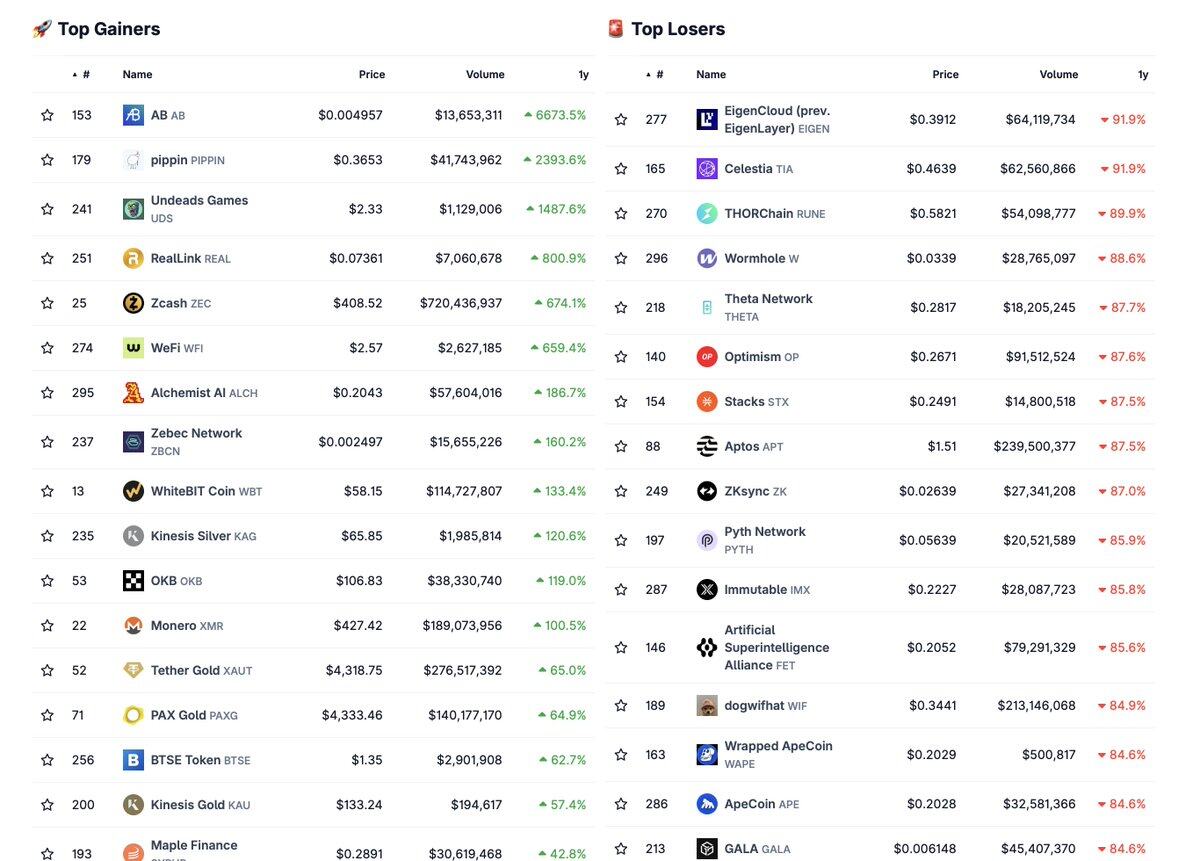
Despite this, a few tokens in 2025 maintained price increases relative to their TGE, not in the sense of "rebounding after a price crash" or "buying at the market bottom," but in a way that indicates genuine buying support.
Here are the truly rising tokens from 2025 TGE that I've compiled: ASTER, FOLKS, AVICI, and SENTIS (there are also some "barely passing" tokens like IRYS/FHE/CORN). They don't look exactly the same, but they all share certain characteristics.
The Best Rising Tokens from 2025 TGE
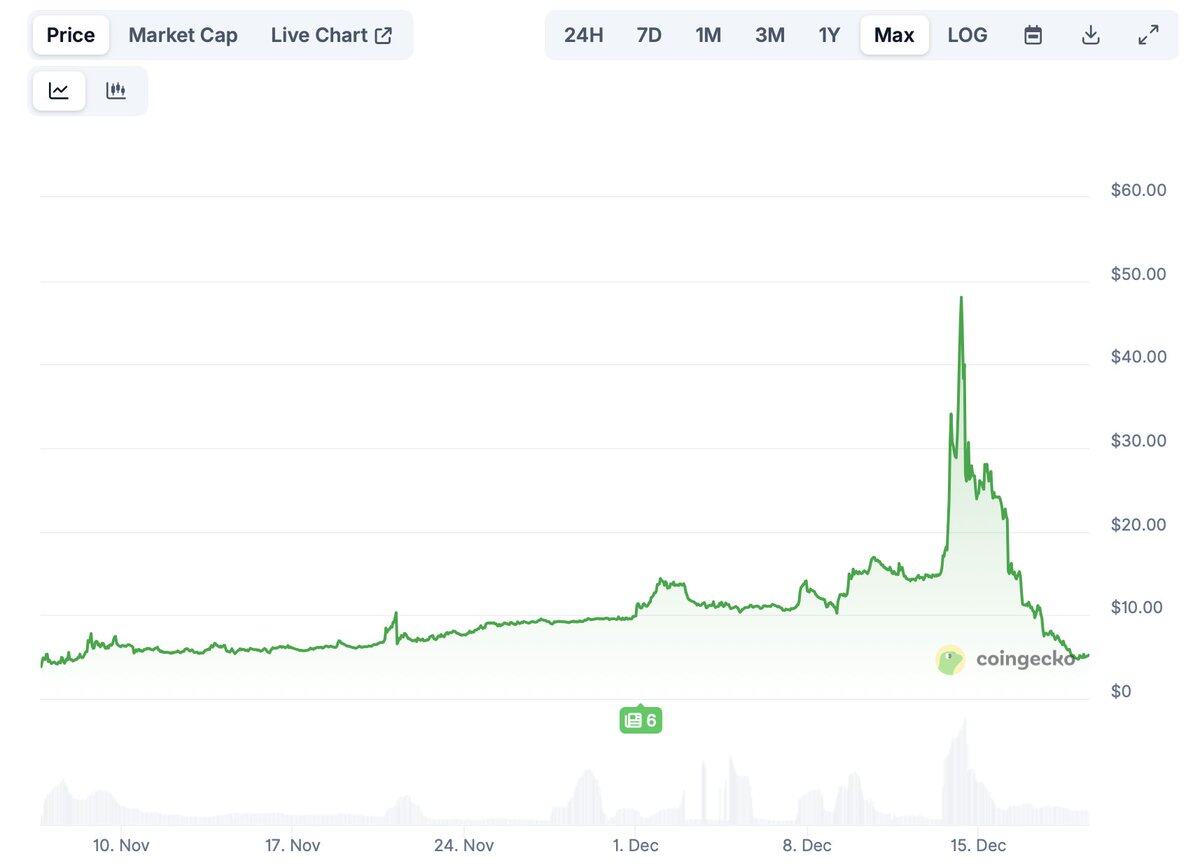
Aster is a typical example. ASTER got everything the project needed on its first day: major exchange listing, deep liquidity, and the widely accepted "Perp DEX" narrative. The story circulating throughout the year was basically: "Binance-backed Perp DEX with privacy features."
ASTER's price action was controversial (you could call it ZK-related, CZ shadow gaming, or simply better execution strategy). But nonetheless, it was one of the few projects that didn't experience an "immediate sell-off" at TGE.
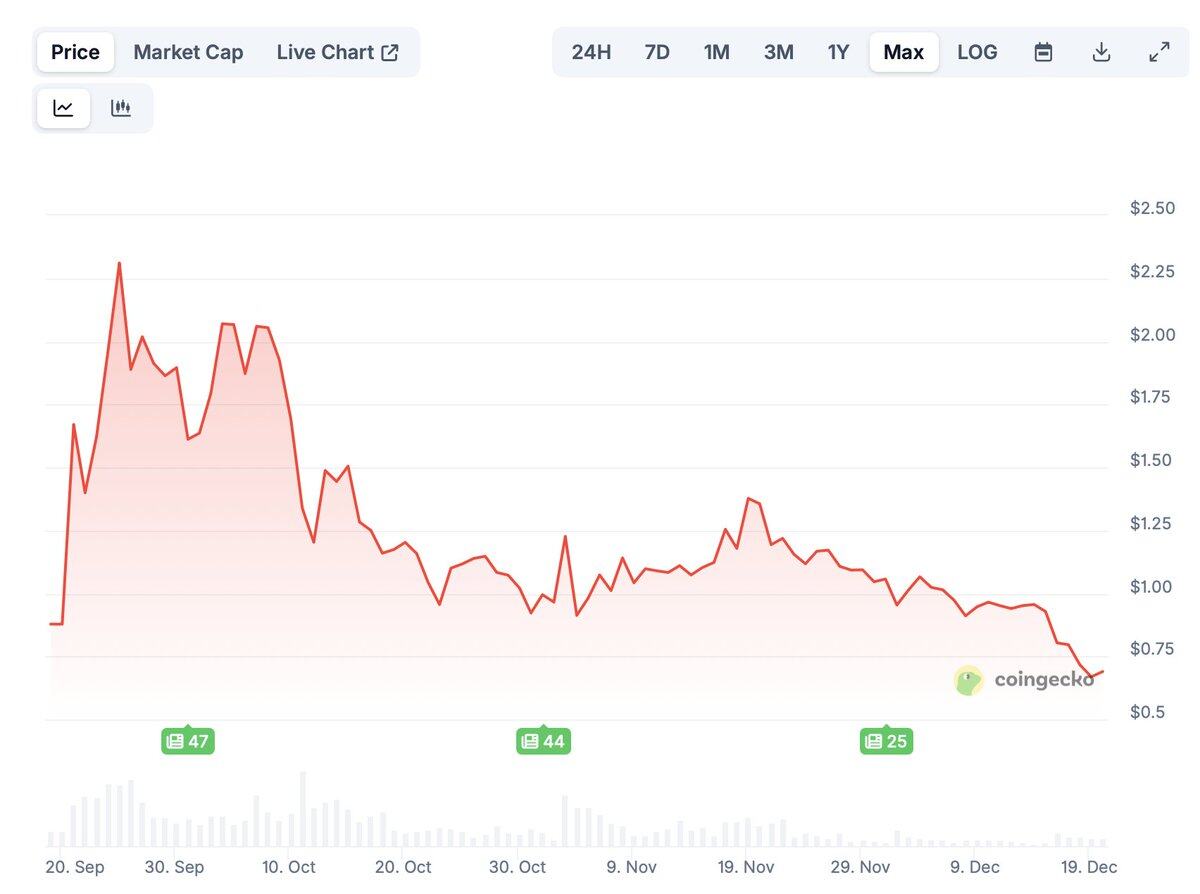
FOLKS is different: it's a lending token, seen as Alpha in "such a garbage year." The formula: "Binance and Kraken showed support from day one, cross-chain pools kept growing, no obvious massive unlock." The last point is very important. It performed well until the token unlock on December 15th.
AVICI is different from the first two. AVICI is on this list not because it has the most cutting-edge technology, but because it provided the clearest narrative for CT: "Fair launch, truly usable product." It emphasized not tokenomics but usage: "decent neobank app, Visa card, real spending." In a market flooded with endogenous "utility," AVICI was refreshing, both thinking outside the box and being practical. AVICI might be one of the best TGE tokens of the year.
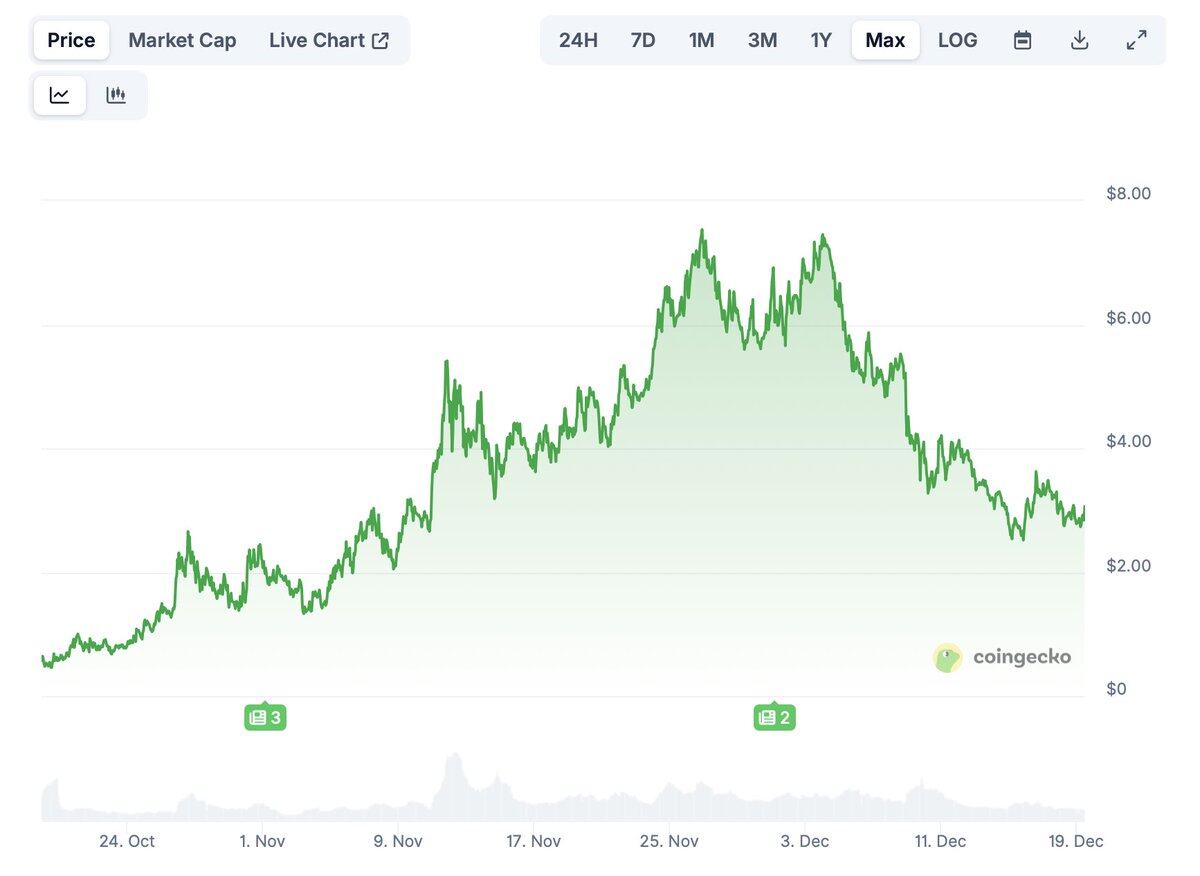
When Tokens Rise for a Reason, Their Prices Tend to Be More Stable
Looking now, the token with the strongest performance post-TGE is SENTIS. Its support points are simple and clear: AI Agent narrative + continuous incentive distribution + exchange listing. In CT, the dominant framework remains consistent: "AI Agent is the next DeFi automation layer," providing traders with a simple mental model as an anchor.
Mechanically, SENTIS doesn't rely on a one-time listing pump. The token's continuous distribution mechanism (tasks/retrodrop/participation rewards) maintains a steady level of user participation, which often translates into sustained spot demand as participants prepare for future distributions and ecosystem milestones. This dynamic can support the price even before more meaningful on-chain adoption appears.
"Barely Passing" Tokens
IRYS and FHE belong to the "AI infrastructure and private transactions" field: both benefited from the AI boom, stayed above their initial ranges, and both maintained sufficient liquidity to avoid a price crash. If these projects can translate their narratives into on-chain usage, they can survive. Relying solely on narrative support is not enough.
Then there's CORN. CORN isn't very volatile and is relatively stable compared to its peers, but CORN is more of a "structured product." In 2025, that's not a bad thing. When the market "punishes" overdevelopment, survivability becomes important.
What Characteristics Do the Well-Performing Tokens of 2025 Share?
Stripping away the narratives and vibes, some clear structural patterns emerge:
1. Token distribution is more important than hype
The strongest performing projects avoided large internal liquidity at TGE. AVICI (0% team allocation), SENTIS (activity-based emissions).
Lesson: At project launch, who holds the tokens is more important than who invested privately.
2. Reasonable launch valuation beats perfect token launch timing
Many of the best-performing tokens didn't launch at the peak of market hype, but at reasonable valuations, allowing the market to re-rate them upwards.
AVICI launched a working product with an FDV of around $3.5 million, offering asymmetric upside relative to FDV.
Lesson: Tokens that "grow into" their valuation perform better than those that start overvalued.
3. Project usage (or credible near-term usage) is reflected in the price
Aster's Perp trading volume, Folks' lending scale, Avici's credit card spending—these aren't just whitepaper promises but observable signals.
Sentis started early but also linked token emissions to on-chain activity, creating a feedback loop between usage and price.
Lesson: The market is now impatient. Utility > Vision.
4. Unlock structure > Unlock size
Linear and transparent token unlocks matter, as their dilution effect is digested by the market. For example, SENTIS releases tokens gradually through participation mechanisms.
Elsewhere, what destroys user confidence isn't dilution itself, but risky cliff unlocks.
Lesson: Predictable token unlocks are bearable; unexpected ones are not.
5. Exchange listing is necessary, but not sufficient
Almost every token had decent exchange access, but this alone doesn't determine anything. Listings amplify results: they help strong tokens accelerate upward, while weak tokens get sold off faster. AVICI's token performance wasn't that bad even without a Binance listing.
Lesson: Exchange liquidity is an accelerator, not a foundation.
Key Takeaways
Overall, the situation for 2025 TGE tokens marks a shift.
The market no longer rewards "potential" but instead rewards "structure":
- Healthy circulating supply
>- Fair token distribution >- Reliable adoption >- Controlled unlock mechanismsThe "rising tokens" of 2025 aren't perfect projects; they were just built to survive their launch. If 2024 was about narrative, then 2025 is about token design under pressure. And this is a lesson most projects haven't yet learned during their TGE.
Twitter:https://twitter.com/BitpushNewsCN
Bitpush TG Discussion Group:https://t.me/BitPushCommunity
Bitpush TG Subscription: https://t.me/bitpush






