Editor's Note: At the confirmation hearing of the Senate Banking Committee, Kevin Warsh systematically articulated his understanding of the Federal Reserve's role and independence for the first time.
This hearing, while seemingly focused on interest rates and inflation, essentially pointed to a more core question: against the backdrop of escalating political pressure, how exactly are the boundaries of central bank independence defined, and can they be consistently maintained?
This discussion occurs within a highly intertwined reality. On one hand, Trump has repeatedly publicly pressured the Fed to cut interest rates and criticized the incumbent Chairman Jerome Powell with strong language; on the other hand, the U.S. Department of Justice's investigation into the Fed headquarters' $2.5 billion renovation project is seen by Powell as an indirect form of pressure. At the congressional level, Republican Senator Thom Tillis directly linked this investigation to personnel appointments, explicitly stating that he would block the nomination from proceeding to a full Senate vote until the investigation is concluded. Monetary policy, regulatory investigations, and political appointments are converging and amplifying at this juncture.
The macroeconomic environment offers no buffer either. Post-pandemic inflation once rose above 7% and currently remains significantly higher than the 2% policy objective; coupled with the Iran conflict driving up energy prices, price pressures may continue to rise in the coming months. With inflation not yet effectively subdued, the divergence over "whether to cut rates" quickly transformed from a technical discussion into a political issue.
In this context, Warsh's statements present a more realistic framework: on one hand, he "cools down" the public interventions from the President and Congress, arguing that expressing views on interest rates itself does not constitute a substantive erosion of independence; on the other hand, he points to the real risk being the Federal Reserve itself—if it fails to fulfill its core duty of controlling inflation, public trust will be weakened, and independence will lose its foundation.
Thus, the meaning of "central bank independence" is undergoing a subtle shift: it is no longer just an abstract principle at the institutional design level, but closer to a results-oriented credibility mechanism. Independence does not exist naturally; rather, it is continuously tested and reshaped under the triple pressures of inflation, politics, and the market.
The following is the original text:
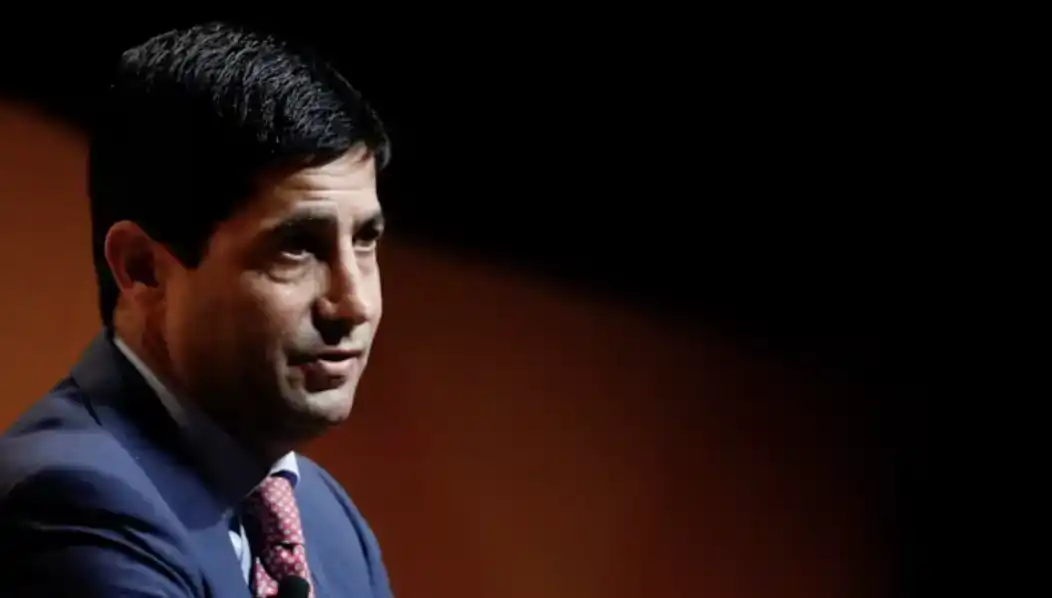
The candidate nominated by Trump for Federal Reserve Chair will tell Congress that the independence of the U.S. interest rate-setting body is "not particularly threatened" when politicians call for the central bank to adjust borrowing costs.
Kevin Warsh will state in his opening remarks to the powerful Senate Banking Committee on Tuesday: "I do not believe the operational independence of monetary policy is particularly threatened when elected officials — whether the president, senators or members of Congress — express their views on interest rates."
According to prepared remarks seen by the Financial Times, he will tell senators that "central bank officials must be strong enough to listen to diverse views from all sides," while also being "humble enough to be open to new ideas and new economic developments."
These comments come as Trump has repeatedly called for the Fed to cut interest rates. The U.S. President has called the incumbent Fed Chair Jerome Powell a "dope" and an "idiot," accusing him of failing to follow orders.
Powell has stated that the current U.S. Department of Justice investigation into a $2.5 billion renovation project at the Fed headquarters is a pretext to pressure the interest-rate setting body into lowering borrowing costs.
Republican Senator Thom Tillis of North Carolina, a member of the banking committee which reviews the Fed chair appointment, said he would block Warsh's nomination from proceeding to a full Senate vote until the investigation into Powell is concluded.
Warsh could succeed Powell as early as May 16th. He will make clear that the Fed's independence in setting interest rates is "vital" and key to controlling inflation.
However, the former Fed governor will also call for the Fed to "stick to its knitting," arguing that the central bank undermines its own independence when it "strays into fiscal and social policy realms for which it has neither mandate nor expertise."
"The Fed should not be a universal agency of the U.S. government, nor serve as the court of appeals for issues that should be debated and decided in other venues," he will say. The 56-year-old candidate will also spend considerable time outlining his qualifications for the role, telling lawmakers he would bring "the experience of an insider and the questioning spirit of an outsider," citing his education at Stanford University, his career on Wall Street, and his previous experience as a Fed governor.
Warsh also pointed out that "independence" is at its highest when conducting monetary policy, but this degree of independence does not apply to other functions the Fed undertakes under its congressional mandate. He told the committee: "In the management of public funds... or in bank regulation and prudential policy... and in matters involving international finance, Fed officials should not be accorded the same special deference."
The Fed plays a major role in bank regulation, but it already works with the U.S. Treasury and other regulators in setting regulatory rules and overseeing risks in the financial system.
Warsh also told senators that when the Fed fails in its duty to control inflation, it is actually undermining its own independence. He argued that this causes the public to "lose confidence in our system of economic governance, and thereby question whether monetary policy independence is as important as advertised."
After the COVID-19 pandemic, inflation rose to multi-decade highs, exceeding 7% in 2022. Inflation remains above the Fed's 2% target, and price pressures are expected to rise further in the coming months due to the Iran war driving up energy prices.
Warsh said: "The mission Congress has given the Fed is to ensure price stability — no excuses, no ambiguity, no arguing or obfuscating." He will also emphasize: "Inflation is a choice, and the Fed must be held accountable for it."






