Trump’s Dual Pressure: When the Iran Deal Meets the Midterm Elections

marsbitPubblicato 2026-05-25Pubblicato ultima volta 2026-05-25

Introduzione

U.S. President Donald Trump’s efforts to negotiate a deal with Iran are triggering a political backlash within his own Republican Party, as the approach of midterm elections intensifies internal divisions. Reports of a potential agreement—involving a temporary ceasefire, phased sanctions relief, and the unfreezing of Iranian assets in exchange for discussions on Tehran diluting or transferring its stockpile of highly enriched uranium—have drawn sharp criticism from GOP hawks. Key allies like Senators Lindsey Graham and Ted Cruz warned that such concessions could allow Iran to recuperate, undermine recent U.S. military gains, and ultimately strengthen a hostile regime. The dispute highlights a broader political struggle for Trump, who must reconcile his "America First" posture with diplomatic compromise while facing a tough electoral landscape. With Republicans fighting to maintain control of Congress and Trump’s approval ratings declining, the Iran deal has quickly become a test of party loyalty and perceived toughness. Public sparring between Trump aides and critics—including former Secretary of State Mike Pompeo—underscores the internal pressure. While Secretary of State Marco Rubio defended Trump’s historically hardline stance, skeptics like Senator Thom Tillis questioned the logic of any deal that leaves nuclear materials in Iran. The outcome now hinges on whether Trump can persuade his party’s hardliners to accept a negotiated exit.

Editor's Note: Trump is attempting to find an exit for the Iran conflict through negotiations, but it has first triggered a political backlash within the Republican Party.

Surrounding this yet-to-be-officially-announced deal, hawkish Republicans fear that a ceasefire, sanctions relief, and the unfreezing of assets would give Iran breathing room and even undermine the gains from previous U.S. military actions. For Trump, this is not only a diplomatic negotiation but also an intra-party struggle over policy direction: he must prove his toughness while avoiding further escalation of the war.

More notably, the divisions within the Republican Party over Iran are now intertwining with domestic U.S. electoral pressures. When war, energy, the economy, and Congressional election prospects all become political variables, any foreign agreement is no longer just a diplomatic decision. It is quickly transformed into a test of party loyalty, a show of strength, and voter sentiment. Whether Trump can persuade the hawks to accept diplomatic compromise under the 'America First' narrative will be key to whether this deal materializes.

The following is the original text:
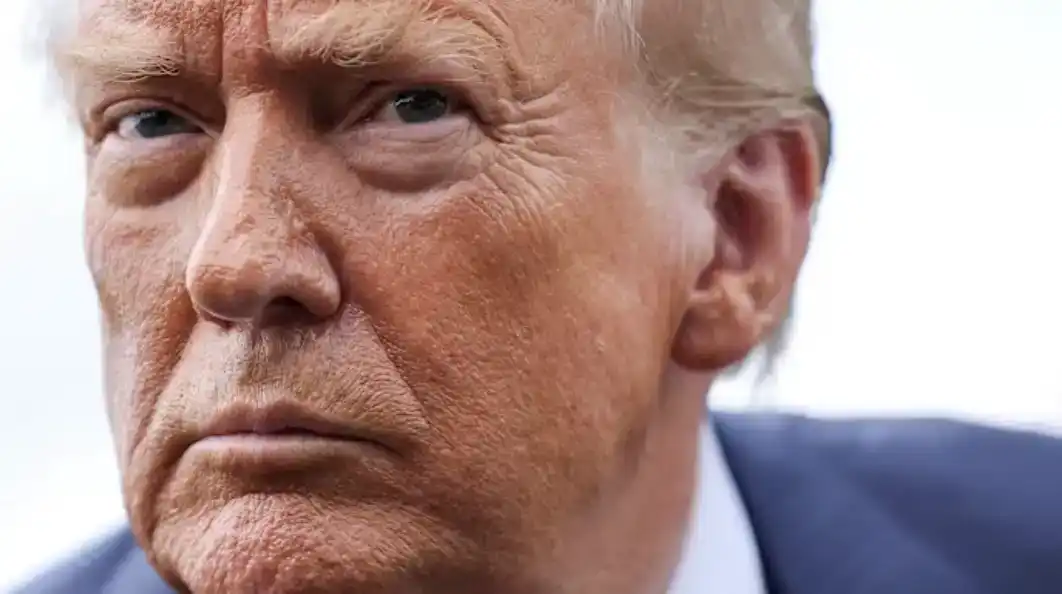
Donald Trump’s weekend attempt to push for a U.S.-Iran deal has sparked a backlash within the Republican Party. Several Republican lawmakers have warned that the president might concede too much in the negotiations.

U.S. negotiators are reportedly close to an agreement. The deal would offer Iran some concessions while extending the existing ceasefire, reopening the Strait of Hormuz, and paving the way for further negotiations on Iran’s nuclear program. Following the news, foreign policy hawks including Republican Senators Lindsey Graham and Ted Cruz have spoken out.

Over the past week, concerns have mounted that Trump might resume strikes against Iran, accelerating efforts to find a diplomatic solution.

According to people briefed on the proposals, the envisioned deal would include a commitment for Tehran to dilute or transfer its stockpile of highly enriched uranium. In exchange, the U.S. would relax sanctions in phases and unfreeze Iranian assets held abroad, depending on the progress of final agreement talks.

But even before the formal release of the deal’s details, several Republicans, including some of the president’s staunchest supporters, have begun questioning Trump’s negotiating strategy.

"If the region believes that a deal with Iran means allowing this regime to survive and become stronger over time, then we are pouring fuel on the conflicts in Lebanon and Iraq," Graham wrote on social media. Graham has long been a loyal Trump ally and frequently plays golf with the president.

He added: "I personally do not buy the argument that Iran cannot be denied the ability to threaten the Strait of Hormuz, or that the region cannot protect itself from Iranian military capabilities."

Another foreign policy hardliner, Cruz, said he was "deeply concerned" about the reported agreement. He called Trump’s earlier decision to strike Iran first the "most consequential decision" of his second term.

Cruz added: "If this ultimately results in an Iranian regime still controlled by Islamists chanting 'Death to America,' not only receiving billions of dollars but also continuing to enrich uranium, develop nuclear weapons, and effectively control the Strait of Hormuz, then it will be a disastrous mistake."

Senate Armed Services Committee Republican Chairman Roger Wicker posted on X on Saturday: "A rumored 60-day ceasefire deal — banking on Iran negotiating in good faith — would be a disaster. All the gains from Operation Epic Rage would be lost!"

Mike Pompeo, who served as Secretary of State during Trump’s first term, also criticized the plan, saying it is "anything but America First."

Pompeo wrote on X: "It's simple: Open the damn Strait. Cut off Iran's money. Destroy enough Iranian military capability that it can no longer threaten our allies in the region. This should have been done long ago. Get it done."

These criticisms quickly angered the White House.

White House Communications Director Steven Cheung responded sharply to Pompeo’s post, telling the former Secretary of State he "should shut his stupid mouth and leave the real work to the professionals."

Trump campaign adviser Alex Bruesewitz accused Cruz of "trying to sabotage the work of the president and his administration." Cruz later retorted that "young political opportunists pushing appeasement of Iran are not helping the president."

This public clash also exposes the political pressure Trump faces as he tries to unite the Republican Party. The current electoral environment is not easy, with Republicans trying to maintain control of both chambers of Congress while combating unfavorable polls. Multiple polls show Trump’s approval rating has fallen to historic lows, with public dissatisfaction over his handling of the war and the U.S. economy persisting.

North Carolina Republican Senator Thom Tillis has become one of the party's sharpest critics of Trump. On Sunday, he also questioned the deal's rationale in a CNN interview, saying the framework reported in the media "doesn’t make sense."

Tillis said: "About 11 weeks ago, Defense Secretary Hagseath and the Pentagon told us they had destroyed Iran’s defense system and it was just a matter of time before we secured the nuclear materials. Now we are discussing a plan that might accept leaving nuclear materials inside Iran? Where exactly does that make sense?"

U.S. Secretary of State Marco Rubio dismissed the criticism, insisting Trump has taken an unprecedentedly tough stance against Tehran.

Speaking at a joint press conference with India’s foreign minister in New Delhi, Rubio said: "On Iran’s nuclear ambitions, I don’t think anyone has been tougher than President Trump. No one has been more resolute on this issue than President Trump."

He added: "Given what this president has proven he is willing to do, it’s absurd that anyone thinks he would agree to a deal that ultimately leaves Iran in a better position on the nuclear issue."


Domande pertinenti

QWhat are the main points of the reported agreement between the U.S. and Iran as described in the article?

AThe reported agreement includes a commitment for Iran to dilute or transfer its stockpile of high-enriched uranium. In exchange, the U.S. would phase in sanctions relief and unfreeze Iranian assets held abroad, contingent on progress in final negotiations. It also aims to extend the existing ceasefire and reopen the Strait of Hormuz, paving the way for further talks on its nuclear program.

QWhy are some Republican lawmakers, like Senators Graham and Cruz, critical of the potential Iran deal?

ARepublican hawks like Senators Lindsey Graham and Ted Cruz fear the deal would allow the Iranian regime to survive, grow stronger over time, and continue its threatening activities. They argue it could undermine the gains from previous military actions ('Operation Epic Fury'), leave Iran with funds and nuclear capabilities, and potentially destabilize the region further by emboldening Iranian influence in places like Lebanon and Iraq.

QHow does the article connect the Iran negotiations to Donald Trump's domestic political challenges?

AThe article connects the Iran negotiations to Trump's domestic political challenges by highlighting that Republican dissent over the deal is intertwined with election pressures. With midterm elections approaching and Trump's poll numbers low, any foreign policy agreement is quickly tested as a measure of party loyalty, toughness, and voter sentiment. Trump must navigate convincing the hawkish wing of his party to accept a diplomatic compromise within his 'America First' narrative, which is crucial for the deal's success and his political standing.

QWhat was the reaction from former Secretary of State Mike Pompeo and the White House to the reported deal?

AFormer Secretary of State Mike Pompeo criticized the reported plan on social media, calling it 'anything but America First' and advocating for more aggressive actions like opening the Strait of Hormuz, cutting off Iran's funding, and destroying its military capabilities. In response, White House Communications Director Steven Cheung attacked Pompeo personally, telling him to 'shut the hell up' and leave the work to professionals.

QAccording to the article, what justification does Secretary of State Marco Rubio offer in defense of President Trump's approach to Iran?

ASecretary of State Marco Rubio defended President Trump by asserting that no one has been tougher or more determined than Trump on Iran's nuclear ambitions. He argued it was absurd to think Trump would agree to a deal that ultimately leaves Iran in a better position on nuclear issues, given the president's proven willingness to take decisive action.

Letture associate

A Nation Blocks Chips, a Giant Buys a Nuclear Power Plant: Why It's Time to Seriously Consider DeAI

**Title: Great Powers Blockade Chips, Giants Buy Nuclear Plants: Why It's Time to Seriously Consider DeAI** In May 2026, the US closed loopholes for Chinese firms to acquire advanced NVIDIA chips via overseas subsidiaries. That same month, Kenya halted a $1B geothermal data center project involving Microsoft, fearing its immense energy consumption. Meanwhile, Huawei announced mass production of its Ascend AI chip. These disparate events underscore a new reality: the competition for computing power ("compute") has escalated beyond the tech industry, becoming a geopolitical and infrastructural battleground. A new era of oligopoly is forming, with control over the AI stack—from GPU chips (NVIDIA) and cloud platforms (AWS, Azure, Google Cloud) to foundational models (OpenAI, Anthropic)—concentrating in a few Western "AI Octopus" corporations. This centralization creates systemic risks: pricing power and platform lock-in for users, infrastructure fragility, and a widening "compute divide" that threatens to marginalize nations without independent AI capacity. An "AI Iron Curtain" is deepening through export controls. In response, some nations like Saudi Arabia and the UAE are investing heavily to buy compute power, aiming to transition from oil to AI economies. The EU seeks to triple its compute capacity by 2030 to reduce dependency. However, the spending gap is vast, with four US tech giants alone planning ~$750B in AI capex for 2026. The race is increasingly constrained by energy, with AI tasks consuming up to 1000x more power than web searches, pushing firms to even acquire nuclear plants. This landscape is fueling interest in Decentralized AI (DeAI). It proposes a third way: using open protocols to coordinate a global network of idle GPUs, independent developers, and data centers, creating an AI infrastructure without a single controlling entity. Leveraging blockchain and cryptographic verification, DeAI aims to break market concentration, disperse energy demands, reduce geopolitical dependencies, and enhance transparency. While still nascent in performance and stability, DeAI's core promise is not immediate superiority but providing a crucial alternative architecture to resist monopoly, censorship, and centralized power. As specialized AI hardware costs fall and open-source models flourish, the window to build this foundation is open. The very existence of such competition serves as a vital check against the inevitable abuse of concentrated power.

marsbit50 min fa

A Nation Blocks Chips, a Giant Buys a Nuclear Power Plant: Why It's Time to Seriously Consider DeAI

marsbit50 min fa

Outpoll Review: A Prediction Market Platform Built for Active Traders

Outpoll Review: A Prediction Market Platform Built for Active Traders In recent years, prediction markets have grown from a niche sector to a mainstream arena, attracting billions in trading volume and institutional capital. However, the user experience and tools for traders have not kept pace. Outpoll, a new global prediction market platform, aims to fill this gap by providing enhanced trading infrastructure for active and professional traders. Built on standard prediction market principles, Outpoll allows users to trade on the outcome of specific events. It uses fully collateralized contracts with USDC settlement, charges a competitive 0.1% fee per trade, and provides clear settlement rules upfront to minimize disputes. A key focus for Outpoll is its professional-grade trading tools. The platform supports limit and market orders, as well as take-profit and stop-loss orders for open positions—features uncommon in prediction markets. For automated trading, Outpoll offers comprehensive REST and WebSocket APIs, enabling portfolio management, price arbitrage, and integration with existing tools. The platform also features a creator-led market model, where approved experts and community leaders can create and manage markets for niche topics under platform supervision. Its integrated interface combines news feeds directly with trading functions, allowing users to monitor events and manage positions seamlessly. Outpoll launched with a native Android app (available on Google Play) and plans an iOS version later this year. In summary, Outpoll distinguishes itself with trader-focused tools, practical APIs, transparent and collateralized markets, integrated news, and an expanding creator program. For active traders, its advanced order types and API access alone make it a platform worth watching. Outpoll is now globally accessible via outpoll.com and Google Play.

marsbit58 min fa

Outpoll Review: A Prediction Market Platform Built for Active Traders

marsbit58 min fa

Bitwise: Crypto Becomes a Contrarian Investment, Three Logics to Understand the Current Market

**Summary** Matt Hougan, Bitwise's CIO, analyzes the current crypto market through three key lenses, arguing it has shifted from a momentum-driven to a contrarian investment. **1) Crypto Becomes a Contrarian Play:** The market is weak, with major assets like Bitcoin and Ethereum down significantly. Capital has moved to hot sectors like AI, leaving crypto as an "unloved" asset class. This transforms crypto investing from trend-following to a test of patience and fundamental analysis. Investors now favor projects with solid fundamentals (e.g., Hyperliquid) over speculative ones. **2) Regulatory Overhang:** The uncertain fate of the U.S. CLARITY Act, a major crypto regulatory framework, is a key headwind. With its passage in 2024 seen as far from guaranteed (estimates range from 30-55%), institutional capital remains on the sidelines, choosing less risky alternatives like AI stocks. The market needs clarity—whether the bill passes or fails—more than any specific outcome to move decisively. **3) Capital Rotates to New Fundamentals:** This cycle differs from past bear markets where money fled to Bitcoin. Now, capital seeks smaller assets with strong use cases. While major cryptos fell in May 2024, tokens like Hyperliquid (+72%), Zcash (+50%), and XLM (+44%) rallied on their specific fundamentals. This rotation confirms the new contrarian, fundamentals-driven logic and signals the bear market may be in its later stages. **Conclusion:** Short-term pressure persists due to regulatory uncertainty and competition from AI narratives. Investing in crypto now requires a contrarian mindset—acting against the crowd and focusing on fundamental value. Patience and targeting high-quality projects based on their merits are essential for capturing long-term gains.

marsbit1 h fa

Bitwise: Crypto Becomes a Contrarian Investment, Three Logics to Understand the Current Market

marsbit1 h fa

Trading

Spot
Futures
活动图片




