Trump pushes for legislative ‘compromise’ on crypto bill: Here’s how

ambcryptoPubblicato 2026-01-29Pubblicato ultima volta 2026-01-29

Introduzione

President Trump is pushing for a compromise between crypto firms and banks to advance the stalled crypto market structure bill, the CLARITY Act. A key sticking point is stablecoin yields, which led Coinbase to withdraw support and caused a Senate Banking Committee vote to be postponed. The White House has called a meeting on February 2nd to bring both sides back to the negotiating table. Industry groups express optimism, while the crypto super PAC Fairshake has amassed $193 million to support pro-crypto candidates in the upcoming midterm elections.

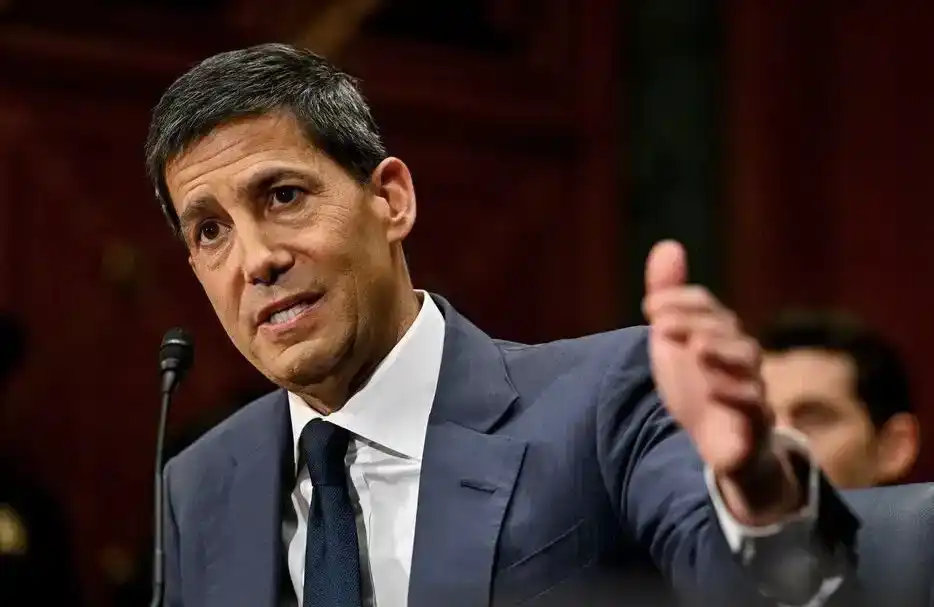
U.S President Donald Trump appears keen on advancing the stalled crypto market structure bill to the finish line.

According to Reuters, the White House will meet the crypto firms and banks on the 2nd of February to seek a ‘compromise’ on the crypto bill. The main issue will be stablecoin yields, which have pitted the two sectors and stalled the bill’s momentum.

The bill, also known as the CLARITY Act, faced a setback in mid-January after Coinbase withdrew its support. The exchange cited ‘too many issues’, including a direct ban on stablecoin rewards and tokenized securities.

This forced the previously planned Senate Banking Committee vote on the draft bill to be postponed. And the two sectors have been clashing ever since.

In fact, even the White House was reportedly unhappy with the turn of events and called on Coinbase to come back to the negotiating table.

Trump to revive crypto bill?

The Senate Banking group was further instructed to double down on affordable housing policy, putting the crypto bill on the back burner.

With a winter storm underway, a possible government shutdown looming, and the November midterms approaching, many feared the bill would stall.

However, the latest update brings renewed optimism. It signals progress toward what could become the sector’s most significant regulatory effort since the stablecoin framework, the GENIUS Act.

Commenting on the same, Summer Mersinger, CEO of the Blockchain Association, an umbrella group invited to the White House meeting, which represents Coinbase, Kraken, Ripple, and others, said,

“We look forward to continuing to work with policymakers across the aisle so Congress can advance lasting market structure legislation and ensure the United States remains the crypto capital of the world.”

Similarly, Cody Carbone, CEO of another crypto trade group, The Digital Chamber, hailed the White House for ‘pulling all sides to the negotiation table.’

During his 2024 campaign trail, Trump was heavily supported by crypto firms and promised regulatory clarity for the industry.

Whatever the bill’s outcome, the industry isn’t taking any chances. Crypto’s super PAC Fairshake has unveiled a $193 million war chest ahead of the November midterms. Josh Vlasto, a spokesperson for Fairshake, said,

“With the midterms approaching, we are united behind our mission with Fairshake continuing to oppose anti-crypto politicians and support pro-crypto leaders.”

Since last July, it has received $74 million in extra cash, with $25 million each from Coinbase and Ripple and $24 million from VC firm a16z.

According to analysts, Fairshake is now the second-largest Super PAC by funding, underscoring crypto’s clout in U.S. lobbying and elections.


Final Thoughts

  • Trump is reportedly pushing for a ‘compromise’ on stablecoin yield between crypto firms and banks to advance the CLARITY Act.
  • Crypto super PAC Fairshake now has $193 million for pro-crypto candidates ahead in the November U.S. elections.


Domande pertinenti

QWhat is the main issue that has stalled the crypto market structure bill and pitted crypto firms against banks?

AThe main issue is stablecoin yields, which have caused disagreement between the two sectors and stalled the bill's momentum.

QWhy did Coinbase withdraw its support for the CLARITY Act in mid-January?

ACoinbase cited 'too many issues', including a direct ban on stablecoin rewards and tokenized securities.

QWhat is the name of the crypto super PAC and how much funding does it have for the November midterms?

AThe crypto super PAC is called Fairshake, and it has a war chest of $193 million for the November midterms.

QWhich major companies and organizations are represented by the Blockchain Association, which was invited to the White House meeting?

AThe Blockchain Association represents Coinbase, Kraken, Ripple, and others.

QWhat significant promise did Donald Trump make to the crypto industry during his 2024 campaign trail?

ADuring his 2024 campaign trail, Donald Trump promised regulatory clarity for the crypto industry.

Letture associate

Stuck Polymarket: The Real Test After Riding the Traffic Boom Has Arrived

Polymarket, a leading prediction market platform, is facing significant technical challenges as its growth outpaces its current infrastructure on Polygon. Users are experiencing laggy transactions, unresponsive orders, and delayed confirmations, severely impacting the trading experience. In response, DeFi Engineering VP Josh Stevens outlined a comprehensive engineering overhaul. The plan includes reducing on-chain data delays, fixing order cancellation issues, rebuilding the central limit order book (CLOB), improving website performance, and developing a unified SDK and API. A major revelation was the ongoing "chain migration," indicating a potential move away from Polygon. The core issue is that Polymarket has evolved from a simple prediction market into a high-frequency trading platform, making Polygon's limitations—such as block space, gas fees, and block time—a ceiling for further growth. The migration is not just a simple chain switch but a fundamental rebuild of its trading system to support more complex products like perpetual contracts (Perps). This announcement has sparked competition among chains like Solana, Sui, and Algorand, all vying to host Polymarket. For Polygon, losing this key application, which contributes significantly to its gas fee revenue, would be a major setback. The real test for Polymarket is no longer attracting users but proving it can provide a stable, reliable trading environment that retains them.

Odaily星球日报8 min fa

Stuck Polymarket: The Real Test After Riding the Traffic Boom Has Arrived

Odaily星球日报8 min fa

Lowering Expectations for BTC's Next Bull Market

The author, Alex Xu, explains his decision to significantly reduce his Bitcoin holdings (from full to ~30% of his portfolio) during the current bull cycle, citing a lowered long-term outlook for BTC's price appreciation in the next cycle. He outlines six key reasons for this reduced expectation: 1. **Diminished Growth Drivers:** The narrative of exponential user adoption has largely played out with institutional ETF adoption. The next major growth phase—adoption by sovereign national reserves or central banks—seems unlikely in the near future. 2. **Personal Opportunity Cost:** More attractive investment opportunities have emerged in other assets, such as undervalued companies. 3. **Industry-Wide Contraction:** The broader crypto industry is struggling, with most Web3 business models (SocialFi, GameFi, DePIN) failing. This overall萧条 (depression) reduces the fundamental demand and consensus for Bitcoin. 4. **Strain on Major Buyer:** MicroStrategy, a major corporate buyer of BTC, faces rising financing expenses for its debt, which could slow its purchasing rate and create significant marginal pressure on the market. 5. **Increased Competition from Gold:** The emergence of "tokenized gold" has closed the functional gap (portability, divisibility) between physical gold and Bitcoin, offering a strong competitor in the non-sovereign store-of-value space. 6. **Security Budget Concerns:** The block reward halving continues to exacerbate the long-standing issue of funding Bitcoin's network security, with new fee source explorations like Ordinals and L2s largely failing. The author's decision to hold a significant (though reduced) position reflects a cautious, not bearish, outlook. He remains open to increasing his exposure if the fundamental reasons for his skepticism change or if new positive catalysts emerge.

marsbit46 min fa

Lowering Expectations for BTC's Next Bull Market

marsbit46 min fa

Can Iran 'Control' the Strait of Hormuz?

Iran has announced a comprehensive plan to assert control over the strategic Strait of Hormuz, a critical global oil shipping chokepoint. The proposed measures include requiring all vessels to obtain Iranian permission for passage, imposing fees for security, environmental protection, and navigation management—preferably paid in Iranian rials—and absolutely banning Israeli ships. Vessels from countries deemed hostile by Iran’s top security bodies may also be barred. Analysts suggest Iran’s motives are multifaceted: increasing pressure on the U.S. and Israel by leveraging control over oil transit to influence global prices and inflation; creating a new revenue stream, potentially exceeding $7.7 billion annually, to counter Western sanctions and support postwar reconstruction; and using transit permissions as bargaining chips in future negotiations, notably with the U.S. However, the plan faces significant practical and diplomatic challenges. Enforcing comprehensive interception and fee collection in the busy waterway, patrolled by international military forces, would be difficult. The U.S. has already countering with a blockade of Iranian ports and threats to intercept any ship paying fees, potentially strangling Iran’s oil exports and fee revenue. Broad international opposition, led by European and Gulf states, and legal controversies further complicate implementation. The proposal may ultimately serve more as a negotiating tactic than a feasible policy, with its execution remaining highly uncertain.

marsbit1 h fa

Can Iran 'Control' the Strait of Hormuz?

marsbit1 h fa

Trading

Spot
Futures
活动图片