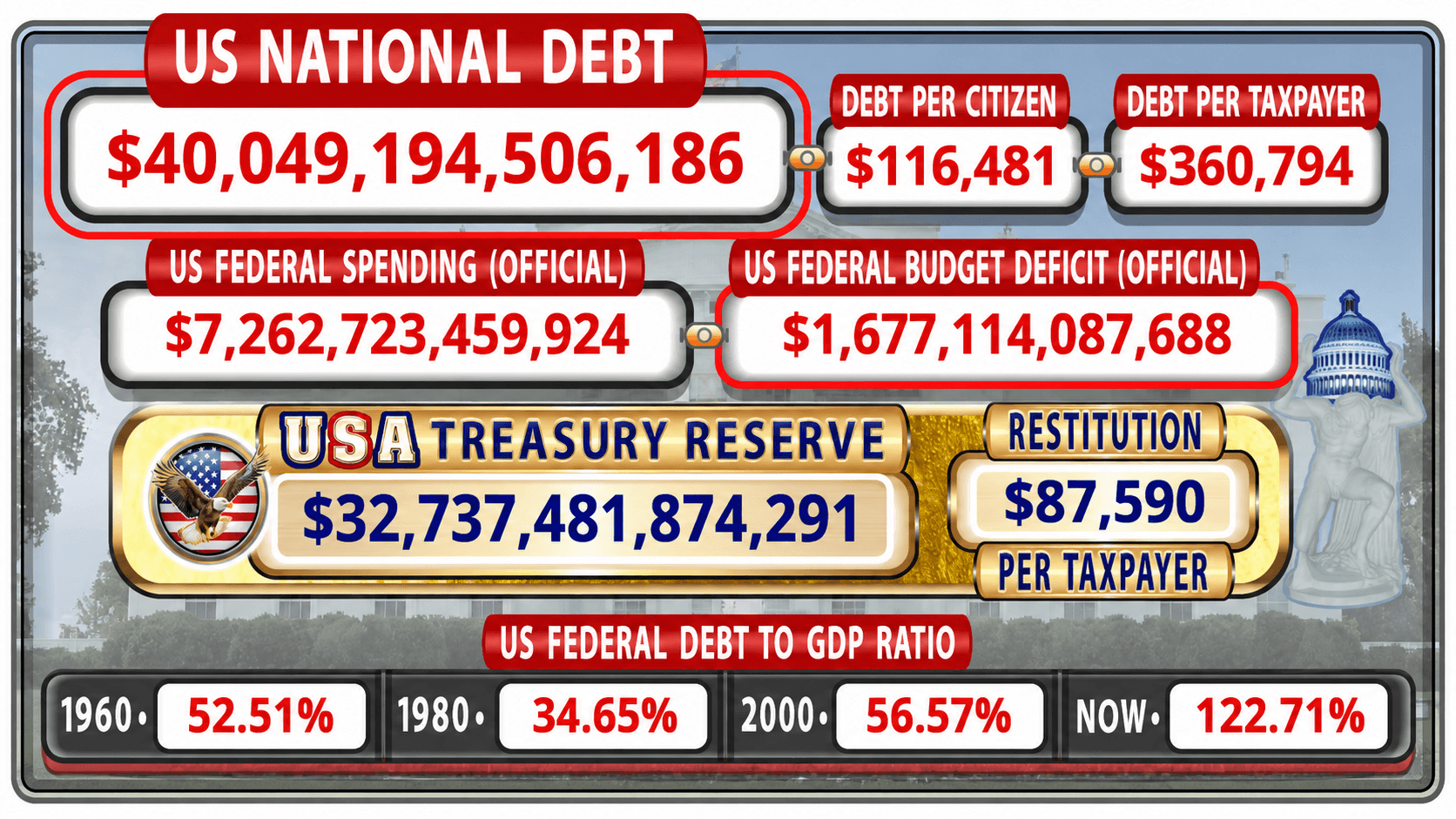
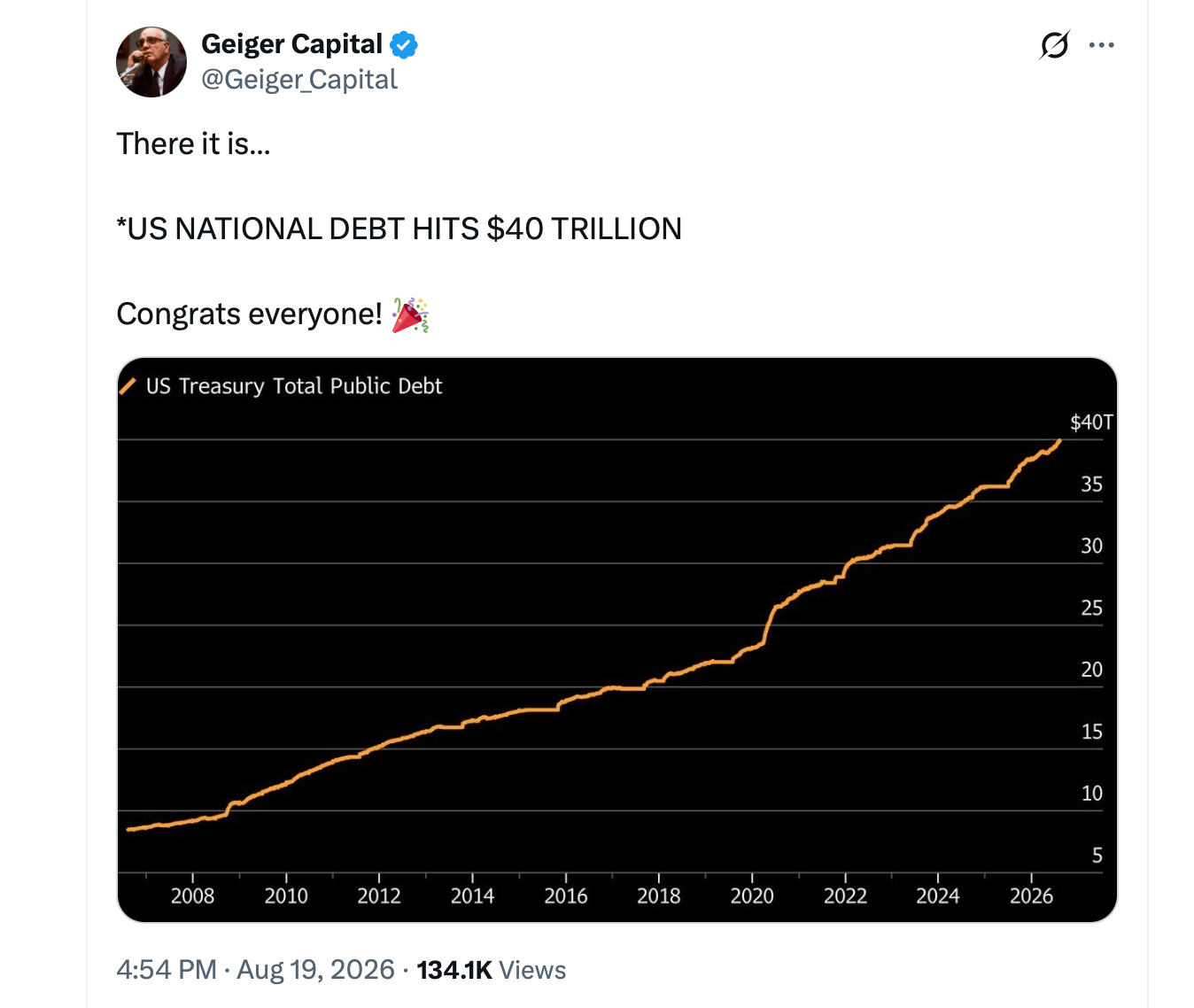
The debt has more than doubled from approximately $19.95 trillion when U.S. President Donald Trump took office in January 2017. Even more tellingly, Washington accumulated the last $1 trillion in just over five months after the federal debt exceeded the $39 trillion mark in March.
The blame for this can be shared among many. Pandemic-era spending under Trump and former President Joe Biden sharply accelerated borrowing, while the Social Security system, Medicare, tax policies, huge defense spending, and chronic federal deficits have kept this machine running. Rising interest rates have now made the cost of hiding this bill significantly more difficult.
Interest Expense Turns Debt into a Vicious Cycle
Net federal interest expense is hovering around or exceeding $1 trillion per year. The Congressional Budget Office forecasts roughly $1 trillion in fiscal year 2026, with interest costs potentially rising to $2.1 trillion by 2036 under current law.
And here's where the numbers become truly terrifying. Washington must refinance maturing debt while also issuing more debt to finance new deficits. Higher rates make rolling over old obligations more expensive, which increases interest expense, worsens the deficit, and forces the Treasury Department to go back to the market for yet more borrowing.
The problems are not confined to Washington. Treasury yields set the baseline cost of borrowing across the entire economy, so the rising cost of government funding impacts mortgages, auto loans, and business lending. The ratio of public debt to gross domestic product is already hovering around 100%.
Bitcoin Advocates See a $40 Trillion Advertisement
For Bitcoin advocates, the $40 trillion figure is practically an advertisement in itself. Bitcoin's maximum supply is fixed at 21 million coins, while governments have no comparable limit on issuing debt or expanding the volume of dollars ultimately needed to finance that debt.
It is this distinction that explains why each new debt milestone reaffirms the arguments for Bitcoin as a scarce, non-sovereign currency. The deeper bet is that chronic deficits, rising interest payments, and shrinking fiscal flexibility are gradually making currency debasement a more visible phenomenon that investors find increasingly difficult to ignore.
On Wednesday, Bitcoin provided the perfect backdrop, surging from the mid-$64,000 range to the $69,000-$70,000 level. The immediate trigger was the U.S. Treasury Department's decision to expand its buyback of long-term securities to at least $4 billion per operation, easing pressure on long-term bond yields and helping flush out overextended cryptocurrency short sellers.
Trump Leaves Door Open for Bitcoin
Then Trump gave Bitcoin advocates another headline opportunity. Responding to a question about accumulating significant Bitcoin holdings, he acknowledged the idea had been discussed and stated he would listen to recommendations from advisors, including former Securities and Exchange Commission (SEC) Chairman Paul Atkins and his team.
"Of course, it's been discussed," Trump noted. "It takes a lot of pressure off the dollar. It's very, very good for the dollar." On Wednesday, Trump also remarked that the U.S. would remain the leader in cryptocurrency, prediction markets, and artificial intelligence (AI).
This was not a promise to begin buying Bitcoin on the open market. The existing Bitcoin Strategic Reserve is primarily filled with government-confiscated Bitcoin seized in criminal cases, while officials have already been tasked with exploring ways to replenish the reserve without impacting the budget. Members of Congress have also introduced bills aimed at advancing this BTC reserve idea.
The real test will be whether Trump's rhetoric translates into real policy. Market watchers will look for concrete Bitcoin reserve proposals, while Treasury yields, monthly deficits, and looming debt ceiling negotiations will reveal whether the $40 trillion milestone was just another blinking number for America or the beginning of a harsher financial reckoning.