Treasury Buyback Boost Fades, Long-Term Bonds Extend Declines, Nasdaq Futures Fall, Spot Gold Down 1%, Oil Prices Rise

marsbitPubblicato 2026-08-20Pubblicato ultima volta 2026-08-20

Introduzione

U.S. Treasury's plan to double long-term bond buybacks provided only a brief market lift before its effects faded. Concerns over inflation, fueled by rising oil prices, resurfaced, leading to declines in Nasdaq futures and renewed selling in long-dated Treasuries. The yield on the 30-year bond rose 6 basis points to 5.25%. Spot gold fell 1%, while WTI crude oil gained 3%. Asian equity markets, particularly in South Korea and Japan, saw strong gains driven by major shareholder return plans from chipmakers like SK Hynix and Samsung. However, the core drivers of the bond sell-off—persistent inflation risks, high government debt levels, and heavy corporate AI-related issuance—remain unresolved. Analysts compared the Treasury's operation to a form of "Operation Twist" but expressed skepticism about its lasting impact, noting it signals official concern over borrowing costs rather than a fundamental solution. In currency markets, the U.S. dollar weakened slightly, providing room for Asian currencies to strengthen. Geopolitical tensions supported oil prices, while Bitcoin rose following supportive comments from U.S. political figures.

Author: Long Yue, Zhang Yaqi, Wall Street News

The U.S. Treasury's announcement of an incremental long-term Treasury buyback plan provided a brief boost to market sentiment, but the effect quickly faded. Rising oil prices brought inflation risks back into investors' focus, with U.S. stock futures falling and long-term bond yields climbing again.

On Thursday, before the U.S. market opened, Nasdaq 100 index futures extended losses to 0.5%. Earlier, memory chip stocks rose broadly, with SK Hynix up about 5%, SanDisk up about 3%, Western Digital up about 2%, Micron Technology up about 2%, and Seagate Technology up about 2%. SK Hynix and Samsung Electronics announced large-scale shareholder return plans, totaling a massive 140 trillion won, directly igniting the South Korean stock market. The Nikkei 225 closed up 1.4% at 66,216.79 points; the KOSPI index closed up 5.9% at 6,852.58 points.

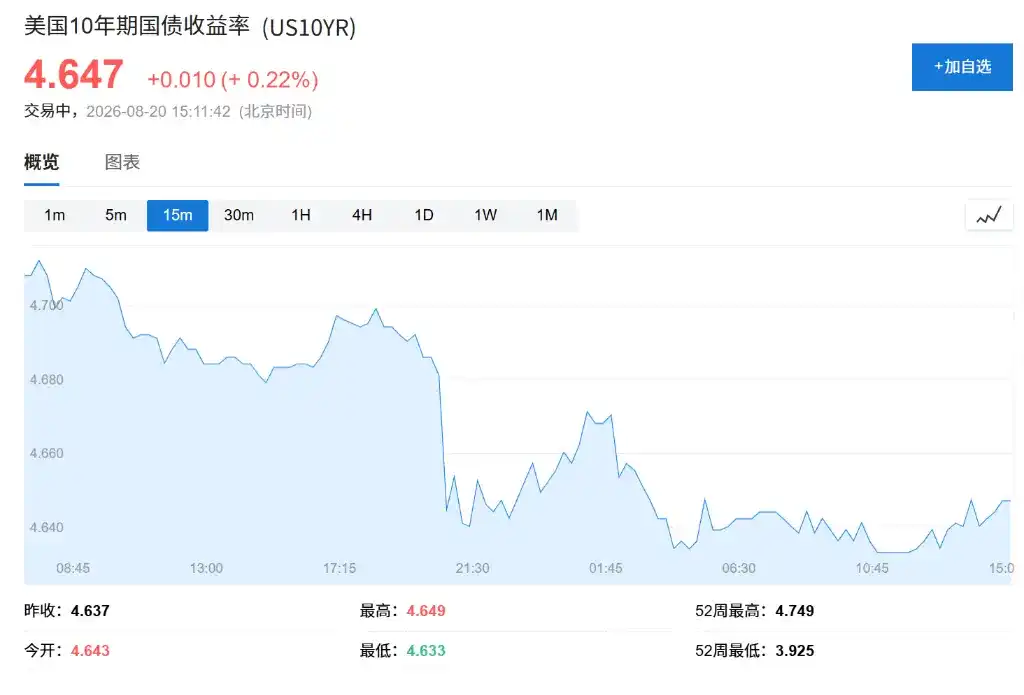
U.S. long-term bonds extended their decline, with the 30-year Treasury yield rising 6 basis points to 5.25%. The Bloomberg index tracking U.S. Treasuries with maturities of 20 years and above surged 1.7% on Wednesday, marking its biggest single-day gain since February 2025. Driven by this, Japanese, Australian, and New Zealand government bond prices also rose. Spot gold fell by 1.0% intraday to $4,477.33 per ounce.

Jack McIntyre, portfolio manager at Brandywine Global Investment Management, said: "This administration needs a win, perhaps by artificially suppressing long-term Treasury rates." "The sentiment in the global long-end market is as pessimistic as I've seen in a long time; they have to do something."

  • Before the U.S. market opened, memory chip stocks rose broadly, with SK Hynix up about 5%, SanDisk up about 3%, Western Digital up about 2%, Micron Technology up about 2%, Seagate Technology up about 2%.
  • U.S. long-term bonds extended their decline, with the 30-year Treasury yield rising 6 basis points to 5.25%.
  • The U.S. Dollar Index rose slightly by 0.1% during Asian trading hours, having fallen 0.8% the previous day, hitting its lowest level since May.
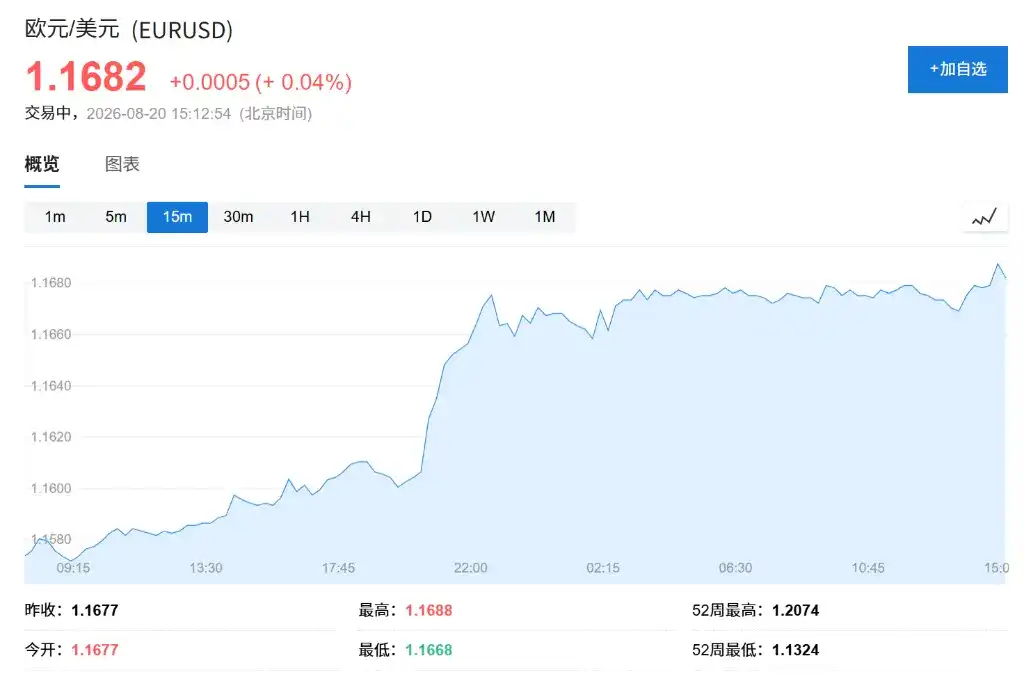
  • Euro/USD rose 0.1% to 1.1687, its highest level since May 14th.
  • WTI crude oil rose 3% intraday to $86.94 per barrel. Brent crude oil rose 2.6% intraday to $94.10 per barrel.
  • Spot gold fell by 1.0% intraday to $4,477.33 per ounce.
  • Spot silver fell by 1.0% intraday to $66.3 per ounce.
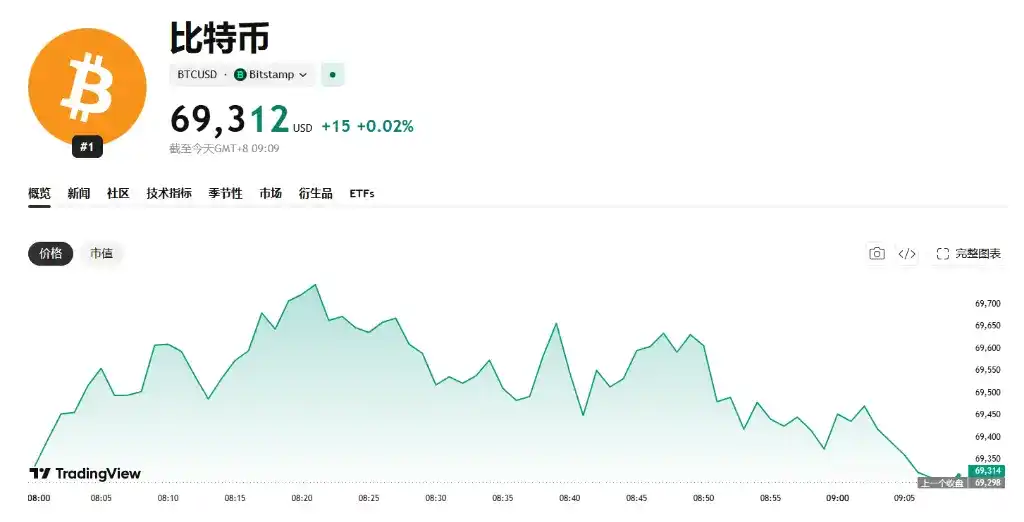
  • Bitcoin rose above $69,300.

The U.S. Treasury announced that it will at least double the size of its long-term Treasury buyback program. This move aims to suppress long-term Treasury yields, which have recently climbed to multi-decade highs.

Earlier this week, long-term U.S. Treasury yields surged significantly. Among them, the 30-year yield touched its highest level since 2007; last week's 10-year Treasury auction was completed at the highest funding cost since 2007, and the yield on the 30-year auction even reached its highest level since 2001.
Market participants compared this buyback operation to the Federal Reserve's "Operation Twist." The Treasury has not specified the exact source of the buyback funds, but it typically relies on short-term Treasury bills to meet floating funding needs. If the authorities essentially replace long-term bonds with short-term bonds, this operation is mechanistically similar to "Operation Twist."

Jack McIntyre, portfolio manager at Brandywine Global Investment Management, said: "This administration needs a win, perhaps by artificially suppressing long-term Treasury rates." "The sentiment in the global long-end market is as pessimistic as I've seen in a long time; they have to do something."

Although short-term market sentiment improved noticeably, several analysts remain skeptical about the lasting effect of the buyback policy.

Gerald Gan, Chief Investment Officer at Reed Capital, stated: "The buyback plan convinces me that the U.S. Treasury is extremely concerned about long-term borrowing costs. But just like intervening in the yen exchange rate, this effect is temporary; the buybacks cannot last very long."

In the foreign exchange market, the Bloomberg Dollar Index rose slightly by 0.1% during Asian trading hours, having fallen 0.8% the previous day, hitting its lowest level since May. Euro/USD rose 0.1% to 1.1687, its highest level since May 14th.
Lloyd Chan, FX strategist at MUFG Bank in Singapore, wrote in a research note: "The buyback alone is unlikely to alter the longer-term fundamentals, but it does signal that policymakers are inclined to resist further yield increases. This suggests that the relative rate logic previously supporting the U.S. dollar is fading."

Bloomberg market strategist Mark Cranfield also pointed out: "For investors weighing Treasury buybacks against the ongoing expansion of the U.S. fiscal deficit, the dollar is becoming the weakest link, providing further room for Asian currencies to strengthen."

The underlying drivers of this bond market turmoil have not dissipated. Recent pressure on global bond markets stems from investors demanding higher compensation for inflation risks and rising government debt levels, with Middle East tensions further exacerbating price pressures; meanwhile, companies issuing debt in a concentrated manner to fund the AI boom have also intensified the severity of this sell-off.

In the commodity markets, Brent crude oil rose 0.4% to around $92 per barrel. Trump had previously stated he would launch an "unprecedented economic war" against Iran and accused Iran of missing the opportunity to make a deal with him, with geopolitical risk premiums supporting oil prices.
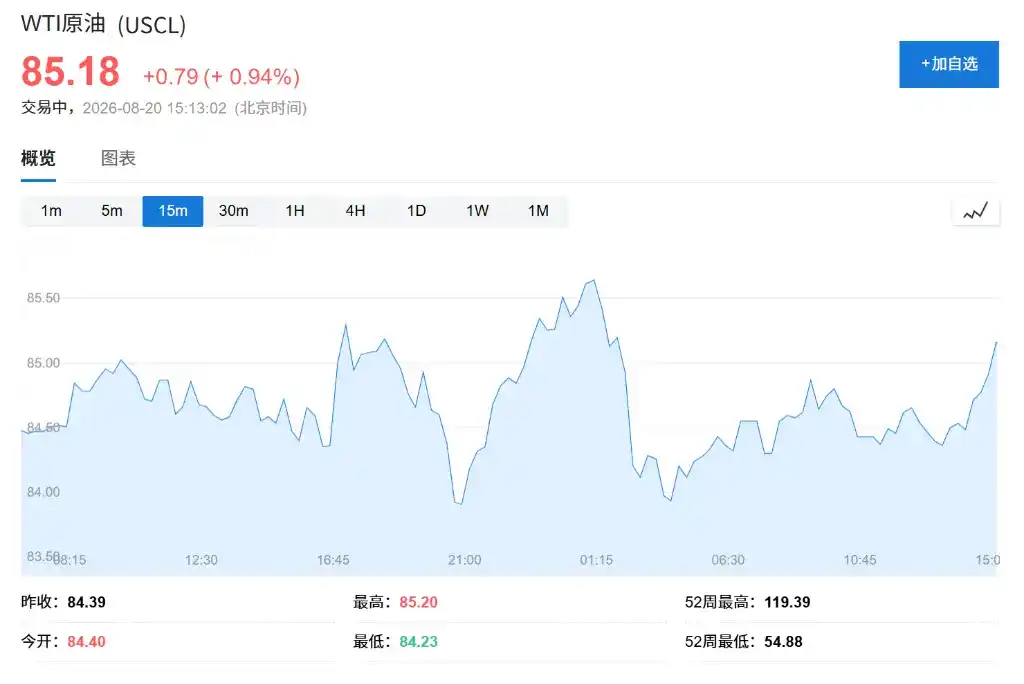
Gold, after rising to its highest level since early June, retreated slightly, falling 0.8% to around $4,480 per ounce. Bitcoin rose above $69,300, following Trump's meeting with cryptocurrency industry executives at the White House, where he urged Congress to push related legislation forward.
Domande pertinenti

QWhat was the immediate market reaction to the US Treasury's announcement of increasing its long-term Treasury bond buyback size, and why did this effect prove short-lived?

AThe immediate market reaction was a brief improvement in sentiment, notably seen in a 1.7% gain for the Bloomberg index tracking 20+ year US Treasuries on Wednesday. However, the effect quickly faded as the underlying drivers of bond market stress, such as inflation concerns from rising oil prices and persistent investor pessimism about government debt levels, reasserted themselves, leading to renewed declines in long-term bond prices.

QAccording to analysts cited in the article, why is the US Treasury's increased buyback plan unlikely to have a lasting impact on long-term yields?

AAnalysts, such as Gerald Gan of Reed Capital, believe the buyback plan is a sign of the Treasury's deep concern over long-term borrowing costs but view its effects as temporary, similar to currency interventions. They argue it cannot last long and does not address the fundamental issues of persistent fiscal deficits and inflation risks that are driving yields higher.

QWhat were the key factors cited as the deeper causes behind the recent turmoil in global bond markets?

AThe deeper causes cited are investors demanding higher compensation for inflation risks and rising government debt levels, heightened geopolitical tensions (particularly in the Middle East) adding to price pressures, and a surge in corporate bond issuance to finance the AI boom, which intensified the sell-off in the bond market.

QHow did the announcement of major shareholder return plans by SK Hynix and Samsung Electronics affect Asian stock markets?

AThe announcements of major shareholder return plans by SK Hynix and Samsung Electronics, totaling a combined 140 trillion won, ignited a rally in the Korean stock market. This contributed to a 5.9% surge in South Korea's KOSPI index. Japanese stocks also rose, with the Nikkei 225 gaining 1.4%.

QWhat impact did the US Treasury's buyback announcement have on the foreign exchange market, particularly regarding the US dollar and Asian currencies, according to strategists?

AThe buyback announcement signaled that policymakers are inclined to resist further yield rises, which undermined the relative interest rate logic that had been supporting the US dollar. This led to a slight dollar weakness and created room for further strength in Asian currencies, as noted by strategists from MUFG Bank and Bloomberg.

Letture associate

Gold Diggers in Prediction Markets: From Competing for Trading Entrances to Competing for Outcome Definition Rights

The report identifies a shift in prediction market competition from front-end user acquisition to back-end infrastructure, specifically the "outcome layer." This layer encompasses the standardized services for rule comparison, evidence verification, outcome confirmation, and payment triggering. Analysis shows that while a tiny fraction (0.487%) of markets face disputes, they account for a significant share (8.64%) of traded volume. This highlights the financial impact of rule uncertainty, which creates trading alpha but limits strategy capacity due to shallow order books. The larger opportunity lies in productizing these backend functions. Services like automated settlement (e.g., HIP-4), AI-assisted evidence processing, and external data oracles (e.g., Pyth, Chainlink) are becoming reusable, cross-platform infrastructure. This is creating a "second profit pool" separate from trading fees. Current observable revenue for this outcome layer is estimated at $15-37 million annually. If applied to the entire existing market, this could expand to $64-161 million. In a mature state, modeled after existing commercial models like Azuro's, annual revenue potential could reach approximately $456 million. While the industry logic is forming, pure-play investment assets are still early. Platform equities (e.g., Kalshi, Polymarket) price in broad growth, not just the outcome layer. Tokens like HYPE have minimal fee contribution from related products, and ICE's exposure is too small relative to its total business. The key is to track early projects that achieve cross-platform adoption and convert usage into attributable, recurring revenue. The most significant alpha may emerge before the ideal investment target is fully established.

marsbit24 min fa

Gold Diggers in Prediction Markets: From Competing for Trading Entrances to Competing for Outcome Definition Rights

marsbit24 min fa

Bitcoin Surpasses $72k. What Happens Next?

Bitcoin exceeded $72,000, reaching its highest level since early summer after a $8,000 surge. The broader crypto market followed, with total market capitalization rising 10%. Analysts attribute the rally to a combination of factors: the U.S. Treasury's decision to increase purchases of long-term government bonds, which lowers yields and makes riskier assets like crypto more attractive, and positive remarks about cryptocurrency from former President Donald Trump. Experts note that while Trump's comments provided an emotional boost, the Treasury's action was a more fundamental driver. However, they caution that significant sustained growth is not assured. High U.S. inflation limits the Federal Reserve's ability to ease policy, and network activity within crypto ecosystems remains low. Competition for capital from sectors like semiconductors and AI also persists. Analysts present mixed short-term forecasts. Some see resistance around $72,000; a breakout could target $76,000-$80,000, but a moderate, localized rise within a longer-term downward trend is deemed more likely. Others identify $69,000-$70,000 as a key support zone. A sustained move above $72,000 could open a path toward $75,000-$78,000, or even $80,000-$82,000 under a strong bullish scenario, with support expected around $66,000-$67,000 on any pullback. The overall outlook is cautiously optimistic, with the recent surge signaling improved sentiment, but a confirmed upward trend requires prices to solidify above current levels.

cryptonews.ru27 min fa

Bitcoin Surpasses $72k. What Happens Next?

cryptonews.ru27 min fa

Optimism Developers' Vote Deprives Users of $49 Million Airdrop

On August 19th, the Optimism community approved a proposal to reallocate 546.9 million OP tokens (worth ~$49.7 million) from a reserve for future user airdrops into a new Strategic Ecosystem Fund for development. The vote passed with 17.97 million OP for and 10.93 million against, with a decisive last-minute vote from developer group Test in Prod securing the majority. The funds will now be managed by the Optimism Foundation to foster ecosystem growth, targeting partnerships with blockchains, protocols, and financial firms, and attracting major brands. This marks a strategic shift from broad user acquisition via airdrops to focusing on corporate clients and enterprise solutions (OP Enterprise). The decision does not affect past airdrops, which distributed 269.1 million OP over five rounds. The proposal faced criticism. L2BEAT and delegate cp0x argued the Foundation gains overly broad discretion without sufficient detail on fund use, results measurement, or benefit to OP holders. Critics also noted these tokens were publicly reserved for future user distributions, and their reallocation removes the need for separate community votes on individual Foundation deals. Test in Prod defended its support, stating the reserve is needed for competitive corporate deals where premature disclosure could be detrimental, while urging the Foundation to later disclose aggregate spending and outcomes.

cryptonews.ru27 min fa

Optimism Developers' Vote Deprives Users of $49 Million Airdrop

cryptonews.ru27 min fa

Trading

Spot
活动图片