Trading Reflection: Why Does Trading Cryptocurrencies Become More Miserable the Longer You Do It? In Fact, Your Brain Has Been 'Damaged' by Stress.

marsbitPubblicato 2026-06-02Pubblicato ultima volta 2026-06-02

Introduzione

Trading Reflection: Why Does Trading Cryptocurrency Become More Miserable Over Time? Your Brain Might Be Damaged by Stress This article explores the often-overlooked yet crucial psychological aspect of trading. It argues that long-term success depends less on intellect and more on the survival capacity of one's nervous system. The core issue is that sustained trading pressure disrupts normal brain chemistry. While initial hope and occasional wins provide dopamine-driven pleasure, repeated losses and constant market exposure trigger chronic cortisol release. This stress hormone, meant for short-term survival, keeps the trader in a perpetual "fight-or-flight" mode. Over time, this erodes sleep quality, depletes patience, and fuels emotional, impulsive decision-making. The author describes a dangerous cycle: fear of missing out leads to overtrading and lowered standards. As losses mount (30%, 50%), trading shifts from a pursuit of profit to a psychological battle for survival. The brain begins to associate prolonged stress with the occasional reward, trapping the trader in an addictive loop. Anxiety becomes a baseline state, and trading turns into a compulsive need to feel something—where green candles offer relief and red ones spark self-loathing. The most powerful move a trader can make, the article concludes, is sometimes to stop entirely—to avoid revenge trading, chasing losses, or seeking dopamine fixes. The key is to step back long enough to ask: is this still about pa...

Author: ferb

Compilation: Yuliya, PANews

Editor's Note: In the end, trading is not a competition of intelligence, but of the survival capacity of the nervous system. This article delves into the often-overlooked yet critically important realm of trading psychology. Behind the pursuit of profits lies the crucial task of protecting your mental health and trading rhythm, which is the key to long-term survival in this brutal market. Below is the translated original text:

Your decisions, your trades, your life.

You can listen to the opinions of a hundred people, but in the end, your cognitive boundaries determine your execution. Blindly following the decisions of those you trust might work occasionally, but if you never truly believe in the process deep down, you will ultimately either sell too early or panic and exit at the first sign of loss.

You as a person, your life, your experiences—all of this reflects in your trading. Someone burdened with debt cannot possibly maintain the conviction of someone who is financially free. Your upbringing alters your risk tolerance, your emotions, your patience, even your ability to endure drawdown periods.

I've come to realize that trading psychology is one of the least discussed topics in the entire industry.

Everyone cheers for the winners.

But no one talks about what happens to them when they lose.

No one speaks of the sleepless nights, the complete emotional breakdowns, the deep despair, and just how bad things got before the tide finally turned.

Because this game is far more than just numbers flashing on a screen.

It can lift you to the clouds, and it can drag you into the depths.

I know this because I've been through it all myself.

I cried for ten nights straight. Even after making $50k the next day, the tears wouldn't stop.

That's when I realized a dangerous sign:

When your trading gets bad enough, it stops being about making money.

It becomes a battle for psychological survival.

Every trader enters with hope.

Frankly, hope is likely why most of us are here. That feeling is: maybe one trade, one cycle, one opportunity could change everything for us.

At first, hope is beautiful.

It drives you forward.

It makes you dare to dream bigger.

It fills you with endless energy.

But eventually, the cycle begins.

Small wins.

Small losses.

The first mistake.

The first big rally missed.

You start noticing how quickly this market moves, and suddenly, your entire perception of risk is flipped. You become afraid of missing out, terrified of being left behind while others are making life-changing money.

That fear slowly morphs into impulsivity.

Trading more often.

Changing positions more frantically.

Patience diminishing.

Thinking becoming shallower.

Eventually, you enter the losing phase.

Losing streaks grow longer.

Your account is down 30%, then 50%, then more.

You start lowering your trading standards just to feel like you're still in the game.

And this is the moment trading becomes psychologically dangerous.

Because after enough consecutive losses, your nervous system changes.

Most people think trading is a game of intellect.

It's not.

This game is largely a battle of biological chemistry.

Dopamine gives you the high.

Cortisol keeps you hooked.

Humans were not built for chronic high-stress environments. Cortisol exists to help us survive short-term dangers. Thousands of years ago, it helped humans escape predators, survive disasters, stay alert at critical moments.

Trading breaks this entire mechanism.

The modern trader wakes up stressed, goes to sleep stressed, eats with stress, and even scrolls their phone with stress.

Even when the charts are out of sight, the nervous system never truly relaxes.

Your brain begins living in a constant state of "survival mode."

And cortisol changes you slowly.

Your sleep gets worse.

Your decisions become emotional.

Your patience evaporates.

Even a small loss feels like the end of the world.

You stop responding with logic. You start reacting with impulse.

The scariest part? You barely notice these changes happening.

Because dopamine gives you just enough of a sweet taste here and there to keep you addicted to the cycle.

After weeks of agony, one winning trade suddenly makes you feel alive again.

And so, your brain starts linking pain to reward.

This is why many traders cannot stop, even when they're mentally exhausted.

Not because they're stupid.

Not because they're weak.

But because they are physiologically and emotionally trapped.

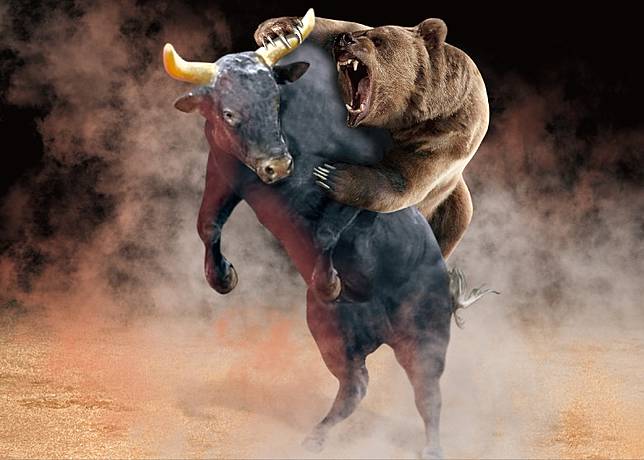
The market becomes that bear you're chasing in the woods, but unlike our ancestors, your body never gets to return to safety after the chase ends.

Eventually, something terrible happens:

You get used to losing.

A 30% drawdown no longer shocks you.

Sleep deprivation becomes normal.

Anxiety becomes your personality.

You're no longer trading to win. You start trading just to feel something.

A green candlestick becomes your emotional comfort.

A red candlestick triggers self-loathing.

Your P&L starts determining whether you deserve inner peace today.

And in that moment, trading quietly becomes an addiction.

Perhaps the harshest truth about trading is this:

Sometimes, the most powerful move a trader can make is to do nothing.

Not revenge trading.

Not adding more capital to chase back this month's losses.

Not forcing trades for the dopamine hit.

Not staring at charts for 16 hours straight, hoping for a miracle.

Just stopping.

Stopping long enough to ask yourself the one question that matters:

Do you still love the game?

Or are you just trapped in a cage built from stress, dopamine, cortisol, and survival instinct?

Because the market will always be there.

New narratives will emerge.

New opportunities will arise.

New cycles will begin.

But if you destroy yourself mentally chasing every single one of them blindly, then when the real opportunity finally arrives, you won't even have the capital left to participate.

I genuinely believe the best traders in the market aren't necessarily the smartest.

They are simply the ones who managed to stay mentally intact long enough to keep a seat at the table.

And perhaps the most terrifying realization of all is this:

"You were never really chasing money.

You were chasing relief."

Domande pertinenti

QAccording to the article, what does the author believe trading ultimately tests, beyond just intelligence?

AThe author believes that trading ultimately tests the survival capability of the nervous system and one's mental and emotional resilience, more than just intelligence.

QWhat hormone, mentioned in the article, is responsible for keeping traders trapped in a cycle of pressure and stress?

AThe hormone is cortisol. The article explains that prolonged stress from trading keeps cortisol levels elevated, putting the brain in a constant 'survival mode' that impairs decision-making.

QWhat dangerous psychological shift occurs when a trader's situation becomes bad enough, according to the author's personal experience?

AThe shift is that trading stops being about making money and instead becomes a psychological battle for survival. The trader starts trading just to feel something or for temporary relief.

QWhat does the author describe as 'perhaps the most powerful move a trader can make' in certain situations?

AThe most powerful move is to do nothing: to stop trading, avoid revenge trading, not add more capital to recover losses, and simply pause long enough to regain perspective.

QWhat is the 'most brutal truth about trading' and the 'chilling realization' the author presents at the end of the article?

AThe brutal truth is that sometimes the best action is inaction. The chilling realization is that traders are not truly chasing money; they are chasing a sense of relief or escape from their psychological state.

Letture associate

Senior Trader's Confession: How to Trade Market's False Expectations?

Veteran trader's case study: trading the market's "wrong expectations". This trade centered on a textbook "expectation error" after a weak CPI report. While the market initially priced in broad monetary easing (sending Nasdaq to 30,060), the crucial 30-year real yield hit a 20-year high. This signaled a fractured transmission mechanism: short-term rates eased, but long-term funding costs (vital for tech valuations) refused to fall. The trader executed five short positions on the Nasdaq (NQ) as it fell from 30,060 to 28,768. The core methodology: don't just trade the data, but analyze the market's implied causal chain and identify where it breaks. In this case, the chain was: Weak CPI → Policy Easing → Lower Long-Term Funding Costs → NQ Valuation Expansion. The break occurred between policy easing and long-term rates. The "veto variable" – long-term real yields – refused to confirm the bullish narrative. Trades were structured around "fast variables" (price) temporarily repairing while "slow variables" (funding conditions) remained broken. The article outlines a repeatable framework: 1) Map the market's implied causal chain. 2) Identify the veto variable. 3) Observe if it rejects the narrative. 4) Enter when price still follows the old script. 5) Choose the cleanest asset expression (e.g., short NQ, not broad S&P). 6) Define both invalidation and fulfillment exit conditions. The key insight: Alpha often comes not from an information edge, but from a "reaction function edge" – recognizing when the market is applying an outdated causal logic to new data. The critical question: What causal chain is the market's first reaction relying on, and is that chain still valid today?

marsbit21 min fa

Senior Trader's Confession: How to Trade Market's False Expectations?

marsbit21 min fa

Opinion: The Hedging Relationship Between U.S. Treasuries and Stocks Has Broken Down, and BTC, as a Risk Asset, Is Under Dual Pressure

For the past 20 years, U.S. investors relied on a free insurance policy: when stocks fell, bonds rose, cushioning portfolio losses. This reliable inverse correlation underpinned entire financial strategies. However, this mechanism broke down around 2020 and has not recovered. Currently, the two-month rolling correlation between the S&P 500 and 10-year Treasury yields is at -0.69, its lowest level since 1996, indicating stocks and bonds are moving in sync to an unprecedented degree, eliminating the traditional portfolio shock absorber. The失效 of this hedge is not simply due to lost confidence in U.S. debt. The key driver is the shift from growth-dominated to inflation-dominated market narratives. When growth fears prevail, stocks and bonds move inversely. Since 2022, persistent inflation volatility has been the dominant factor, causing both asset classes to suffer simultaneously from higher inflation expectations. Investors now seek safety without duration risk, favoring cash, dollars, and short-term Treasuries while selling long-duration bonds. Record U.S. deficits, rising net interest payments, and waning foreign demand (e.g., from Japan) are pressuring long-term yields, with the 30-year yield surpassing 5%. This environment places Bitcoin, as a risk asset on the far end of the risk curve, under dual pressure. Higher risk-free rates increase the opportunity cost of holding non-yielding assets like Bitcoin, while falling equities reduce overall risk appetite. Bitcoin's performance has become highly sensitive to macro conditions such as real yields, dollar strength, and financial conditions. While its long-term thesis as a fixed-supply asset outside the sovereign credit system is strengthened by these fiscal trends, the same conditions hurt it in the short term. The return of bonds as a effective hedge requires inflation volatility to subside, growth risks to retake dominance, and the Fed to have room to ease policy. Until then, Bitcoin trades in a market where the deepest asset class no longer absorbs shocks, removing the safety floor for all risk assets, especially those that pay nothing to wait.

marsbit21 min fa

Opinion: The Hedging Relationship Between U.S. Treasuries and Stocks Has Broken Down, and BTC, as a Risk Asset, Is Under Dual Pressure

marsbit21 min fa

Funding Weekly | Crypto.com Secures $400M Investment, CeFi and Stablecoin Sectors Continue to Attract Capital

Crypto Weekly Investment Recap: Funds Converge on CeFi, Stablecoins, and AI Last week's crypto and AI investment landscape saw significant capital concentration, with a few large deals dominating. **Crypto/Web3 Highlights (July 13-19):** Total investment exceeded **$812 million** across 17 deals. Key trends: * **Centralized Finance (CeFi) & Stablecoins** remained a major magnet, led by **Crypto.com**'s massive **$400 million** raise from Citadel Securities, valuing the exchange at $20B. * **Infrastructure & Tools** saw 7 deals, including **Cyclops** ($20M for stablecoin payments) and **ADI Chain** ($50M for stablecoin settlement infrastructure). * **DeFi** had 2 deals, such as AI-native DEX **Quote Trade** ($4M). * Other notable raises: API broker **Alpaca** ($135M), cross-border platform **Flex** ($70M), treasury firm **ORANGE JUICE** ($40M), and prediction market **Pascal** ($9M). * **Acquisitions:** Keyrock bought BlockFills' trading unit, SBI Holdings acquired Singapore exchange Coinhako, and MoonPay bought startup Glide. **AI & Robotics Highlights:** Investment momentum in AI remained very strong. * Nvidia-backed AI cloud service **Fireworks** raised a massive **$1.5 billion** at a $17.5B valuation. * In robotics, **Walden Robotics** (spun out from Toyota) secured **$300 million**, and Chinese humanoid firm ****逐际动力** **(Climax Dynamics) raised nearly **$200 million** in a Pre-IPO round. * Other significant AI raises included Indian programming platform **Emergent** ($130M) and drone company **Brinc** ($125M), backed by Sam Altman. Overall, the trend shows capital flowing heavily into established crypto financial services, stablecoin infrastructure, and large-scale AI/robotics commercialization.

marsbit1 h fa

Funding Weekly | Crypto.com Secures $400M Investment, CeFi and Stablecoin Sectors Continue to Attract Capital

marsbit1 h fa

The Gentlest Bear Market? BTC Bears Exit, ARK and Bitwise Collectively Bullish

**Title: The Mildest Bear Market? BTC Shorts Exit, ARK and Bitwise Collectively Bullish** Bitcoin continues to consolidate around $75,000 while Ethereum struggles near $1,900. Market data shows $116 million in liquidations over 24 hours, with $62.7 million from short positions, and the Fear & Greed Index remains at 35 (Fear). According to Polymarket, there's a 33% probability BTC falls below $50,000 this year. ARK Invest's Q2 2026 Bitcoin report notes technical weakness but identifies potential bottoming signals, including a record high in long-term holder supply, suggesting selling exhaustion. Bitwise's Juan Leon calls this the "structurally mildest bear market" on record, with a ~50% drawdown from highs, less severe than past cycles. He highlights institutional accumulation and a shift in investor dialogue from survival to entry points. Technical analysis from Bit suggests a potential C-wave low may have formed, with an ideal bottoming range between $50,000-$55,000. However, glassnode's CryptoVizArt warns that failure to break $66,000 could signal a local top, as new buyer accumulation is concentrated there. Analyst Darkfost identifies a critical support band between $59,000-$70,000, where 50% of BTC's circulating supply has changed hands. Notably, trader Doctor Profit announced closing all crypto short positions—including BTC shorts from $115k-$125k and over 100 altcoin shorts—for significant profit. He has begun a phased accumulation of Bitcoin spot starting at $64,000, reversing his previous $40k-$50k target, citing structural positives like regulatory clarity and institutional adoption. He argues the anticipated September/October bottom may arrive earlier than the herd expects.

Foresight News2 h fa

The Gentlest Bear Market? BTC Bears Exit, ARK and Bitwise Collectively Bullish

Foresight News2 h fa

Trading

Spot
活动图片