
Trading Moment: Tech Stock Pullback Drags Down Major Indices, BTC Fails to Reclaim $70,000 Mark

marsbitPubblicato 2026-02-27Pubblicato ultima volta 2026-02-27

Introduzione

Tech stocks dragged down major indices, with the S&P 500 falling 0.54% and the Nasdaq dropping 1.18%, while the Dow edged up slightly. The 10-year Treasury yield fell below 4%, hitting a new low since late last year. Geopolitical tensions and dovish signals from the Fed fueled risk-off sentiment. In AI, Nvidia fell 5.49% despite strong earnings, reflecting concerns over AI spending sustainability. DeepSeek's new model, seen as a potential threat to Nvidia, added to sector worries. Block surged 24% after announcing a major shift to AI-driven operations and cutting nearly half its workforce. Bitcoin failed to reclaim $70K, falling below $68K amid cautious sentiment. Analysts are divided: bears warn of further declines, while bulls see accumulation signs. Over $7.8B in BTC options expire Friday. Ethereum hovered near $2K, with key options expiry also on Friday. Bearish views highlight resistance and liquidation risks, while bulls note potential bullish divergence and shifting market structure. Key data: Crypto ETFs saw net inflows for three straight days. Fear and Greed Index rose slightly to 13 (Extreme Fear). Nearly 95K traders were liquidated, totaling $196M.

Daily market key data review and trend analysis, produced by PANews.

Macro Market
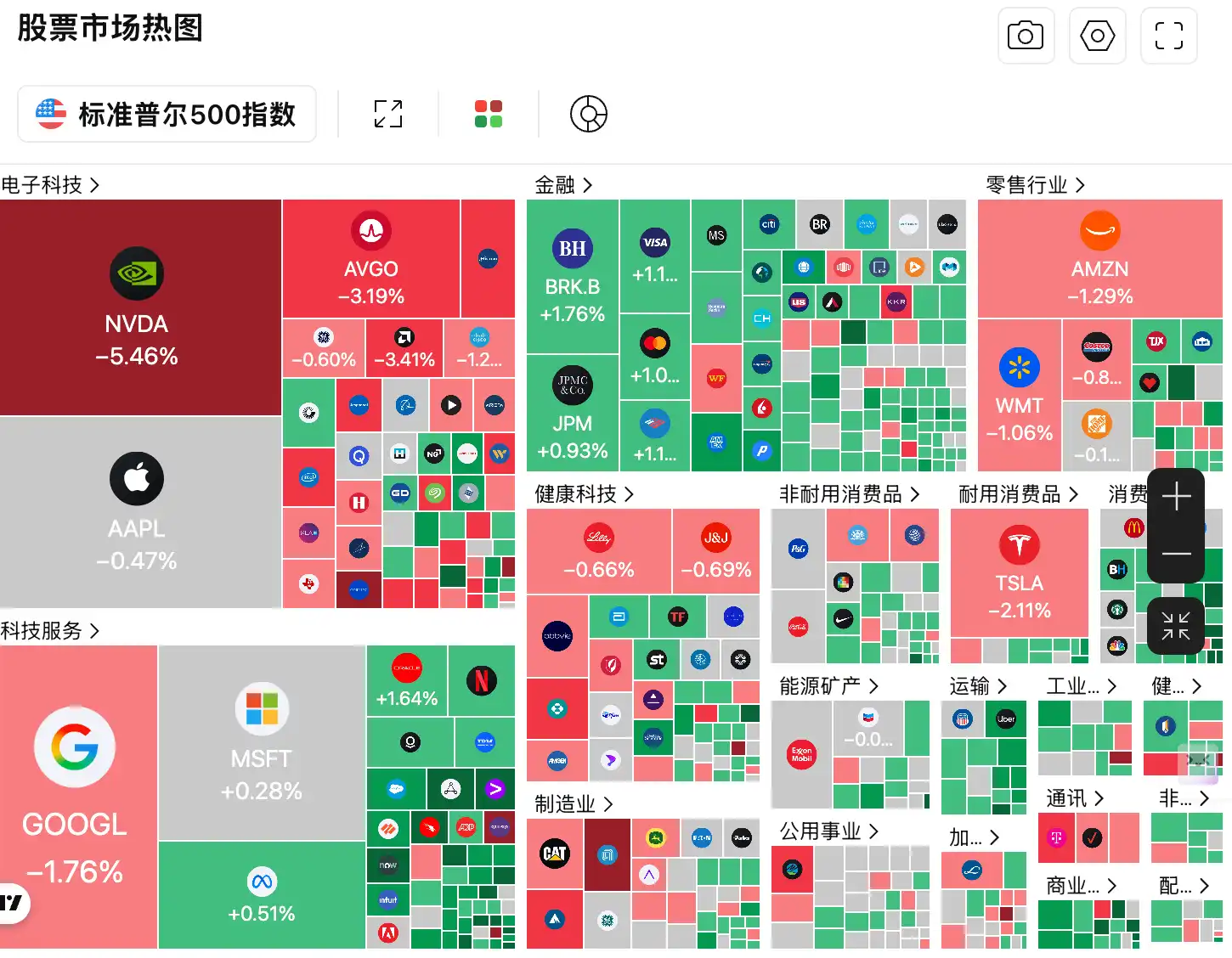
U.S. stocks fell on Thursday, dragged down by weakness in tech stocks. The S&P 500 closed down 0.54% at 6,908.85 points, while the Nasdaq Composite plunged 1.18% to 22,878.38 points, nearly erasing Wednesday's gains. In contrast, the Dow Jones Industrial Average edged up 0.03% to 49,499.20 points. U.S. Treasury yields across maturities generally declined, with the 10-year Treasury yield falling below 4%, hitting a new low since late November last year.

Amid rising risk-off sentiment, the Fed rate cut博弈 (game) reignited, with former Governor Stephen Milan sending strong dovish signals. He publicly called for a full 100 basis points of rate cuts in 2026, emphasizing that high compliance costs are inhibiting bank lending, and weak inflationary pressures are supporting the dovish stance of incoming Fed Chair nominee Kevin Warsh.

Simultaneously, geopolitical clouds further fueled market risk aversion, with WTI crude oil fluctuating widely before closing slightly down 0.15%. Vance entered the U.S.-Iran negotiations and will meet with the Omani Foreign Minister on Friday, aiming to advance U.S.-Iran nuclear talks and avoid war. Meanwhile, Pakistan launched heavy airstrikes against the Afghan Taliban, declaring "patience exhausted" and initiating open warfare. Border clashes between the two sides have resulted in over 70 deaths since October last year.

AI Sector Dynamics

The AI sector is at a critical stage of narrative restructuring, with capital gradually shifting from the "picks and shovels" logic to the application layer. According to Goldman Sachs data, short positions in the software industry have reached a seven-year high, while long positions have hit rock bottom. In this narrative shift, a deep dive report from Deutsche Bank sparked deep thought on Wall Street. The report extrapolated two extreme endgames for AI development: either, as predicted by Marx and envisioned by Musk, AI completely replaces labor, leading to a restructuring of capitalism; or history repeats itself, with AI merely serving as a technology empowering humans.

Furthermore, despite reporting a 73% year-on-year surge in revenue, giant NVIDIA's stock plummeted 5.7% intraday and closed down 5.49% due to market concerns about the sustainability of AI spending. Meanwhile, net retail buying of NVIDIA stock hit a record high since 2012. The market also传出 (circulated) that the DeepSeek V4 model offered early access to domestic suppliers. Its new model, codenamed Sealion-lite, features a million-level context window and is natively multimodal, seen as a potential signal to bypass the NVIDIA ecosystem, intensifying panic selling in the chip sector. Baidu, also pushing into the application layer, delivered its transformation report card. Its AI cloud business annual revenue surpassed 30 billion yuan for the first time, with core AI business accounting for 43% of total general business revenue, successfully offsetting the gloom of traditional business contraction.

Facing the efficiency revolution of the AI era, enterprises have begun drastic measures for survival. Fintech giant Block announced layoffs of 4,000 employees, cutting nearly half its workforce. CEO Jack Dorsey clearly stated a full bet on AI-driven operational efficiency. This decisive organizational restructuring won疯狂追捧 (crazy追捧 - fervent pursuit) from the capital market, with the stock soaring over 24% after hours.

Bitcoin Market

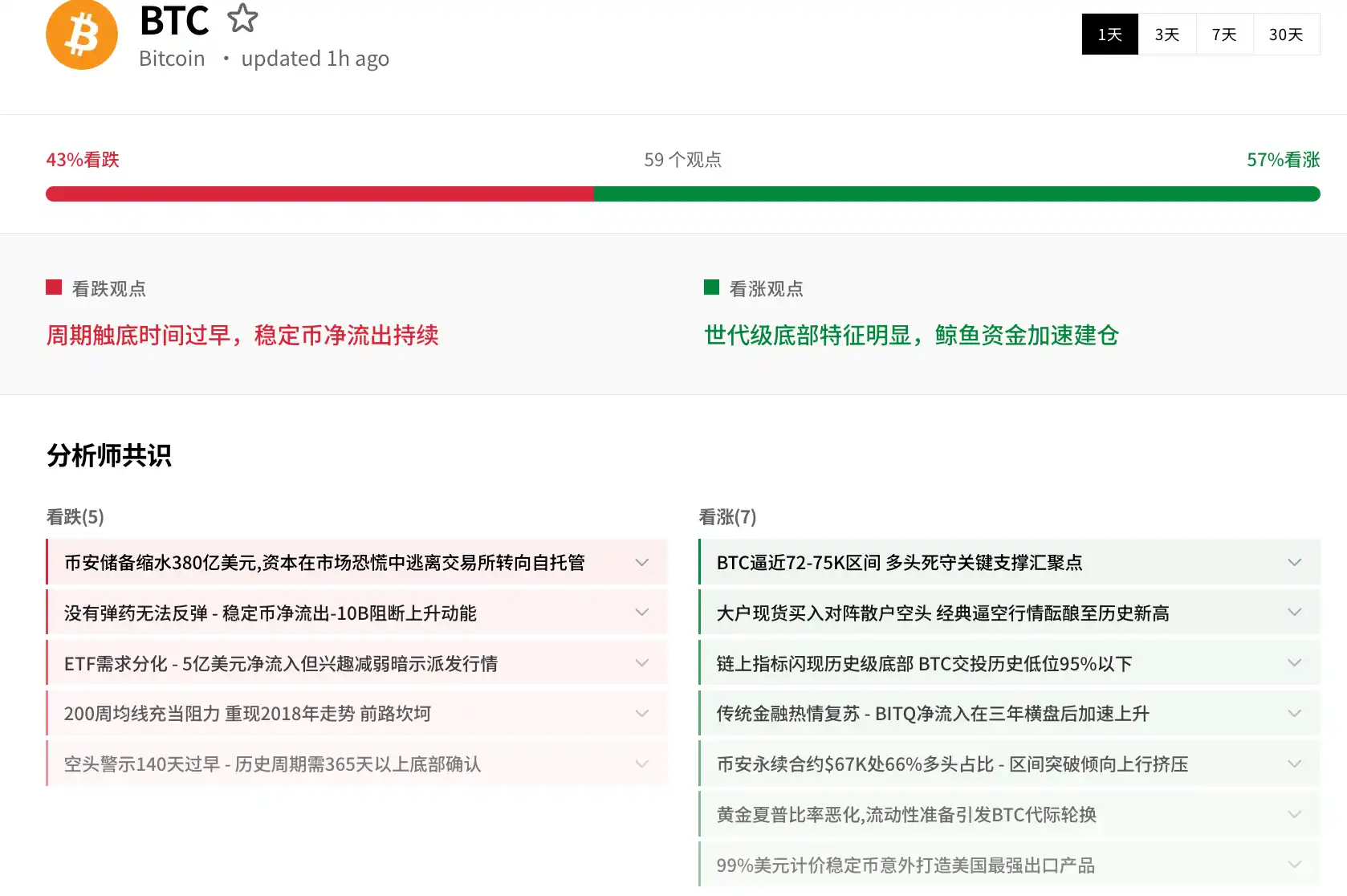
The crypto market was overall shrouded in risk-off sentiment. The Fear & Greed Index rose slightly to 13 but remained in extreme fear. Affected by the pullback in U.S. tech stocks and rising macro risk-off sentiment, Bitcoin failed to reclaim the $70,000 mark and lost the $68,000 trendline. Although U.S. spot ETFs have seen net inflows for 3 consecutive days, panic sentiment remains strong in the derivatives market. $7.8 billion in Bitcoin options are set to expire this Friday, with the max pain point at $75,000. Current market sentiment is relatively cautious. According to unbias data, 57% of analysts are short-term bullish.
Bearish Views

The core logic of the bearish camp lies in the uncertainty of macro liquidity and the suppression of historical cycle patterns. They believe the current rebound is just a bull trap in a bear market, and the real bottom is far from reached.

  • Trader Roman pointed out that previous bear market cycles saw declines close to 80%, while the current pullback from the high is only about 53%, with no reversal signs on monthly or weekly charts.

  • Analyst Rekt Capital emphasized that the shortest Bitcoin bear market in history lasted 365 days, while the current bear market is only about 140 days. It is too early to talk about the end of the bear market, and the 200-week moving average is constituting strong downward pressure.

  • Analyst Willy Woo warned that if the global macro environment weakens significantly, $30,000 or even $16,000 would be the last line of defense to maintain the long-term bull market structure.

Bullish Views

The bullish camp finds support from on-chain data, institutional fund flows, and structural cycle perspectives. They firmly believe selling pressure has dried up, and the market is on the eve of a reversal buildup.

  • Binance Research believes Bitcoin is near a structural bottom. The current divergence between BTC and global M2 money supply stems from structural distortions. Once software stocks bottom out, the mechanical linkage between tech stocks and Bitcoin will fade.

  • Analyst Willy Woo stated that selling pressure from investors in this round seems to have temporarily ceased, and the market may consolidate sideways. The fourth quarter would be a good time to end the bear market trend.

  • Santiment pointed out that the number of wallets holding more than 100 BTC continues to grow, indicating wealth is concentrating among "whales." Historically, such increases in whale wallets often occur during accumulation stages that support price recovery.

Ethereum Market

Ethereum's movement is highly correlated with the broader market, oscillating slightly around $2,000. On-chain data shows ETH's MVRV Z-Score has fallen into the historical accumulation zone, and the realized volatility of Ethereum on Binance has surged to a 12-month high, suggesting the market is undergoing strong repricing. $961 million in Ethereum options will expire this Friday, with a put/call ratio of 0.77 and a max pain point at $2,200. Current market sentiment is in a repair period after extreme pessimism, with bottom-fishing funds eager to act.

Bearish Views

The bearish camp mainly worries about the dense resistance from above (套牢盘 - bagholders) and liquidation risks in the derivatives market. They believe a rebound is difficult to sustain without strong fundamental catalysts.

  • Market analyst IncomeSharks pointed out that Ethereum faces repeated rejections at the super trendline on the daily chart. There is strong channel resistance near $2,250 above, and sellers still control the situation.

  • Analyst Dom reminded that if Ethereum cannot effectively stabilize above the Volume Weighted Average Price (VWAP) of $2,140, the price will remain trapped within the established oscillation range.

  • Near $1,800, Ethereum still harbors $2.66 billion in long liquidation额度 (quotas/levels).

Bullish Views

The bullish camp sees strong signals for a bottom rebound from valuation repair, funding rate reversal, and divergence from U.S. stocks.

  • Prominent economist Krugman clearly stated that Ethereum is beginning to show early signs of bottoming. This is the first bullish divergence of cryptocurrencies relative to U.S. stocks since last year. The crypto market might bottom out before U.S. stocks peak.

  • Analyst Trader Tardigrade believes Ethereum is currently testing the multi-year support trendline around $1,800-$1,900. Historical experience suggests that once this level is held, the price will迎来 (usher in) a parabolic explosive rise.

  • Analyst Pelin Ay pointed out that the funding rate for ETH on Binance has sharply turned positive from negative, indicating that previously aggressive shorts have been squeezed out, and market structure is shifting in favor of bulls.

Key Data (As of 13:00 HKT, Feb 27)

(Data Source: CoinAnk, Upbit, SoSoValue, CryptoBubbles)

  • Bitcoin ETF:+ $254 million, net inflows for 3 consecutive days

  • Ethereum ETF:+ $6.5742 million, net inflows for 3 consecutive days

  • SOL ETF: + $507.8 thousand

  • XRP ETF: + $1.2163 million

  • Fear & Greed Index: 13 (Extreme Fear)

  • Upbit 24h Trading Volume Ranking: XRP, BTC, ETH, ENSO, CFG

  • Sector Gains/Losses: GameFi sector up 6.21%, AI sector down 2%

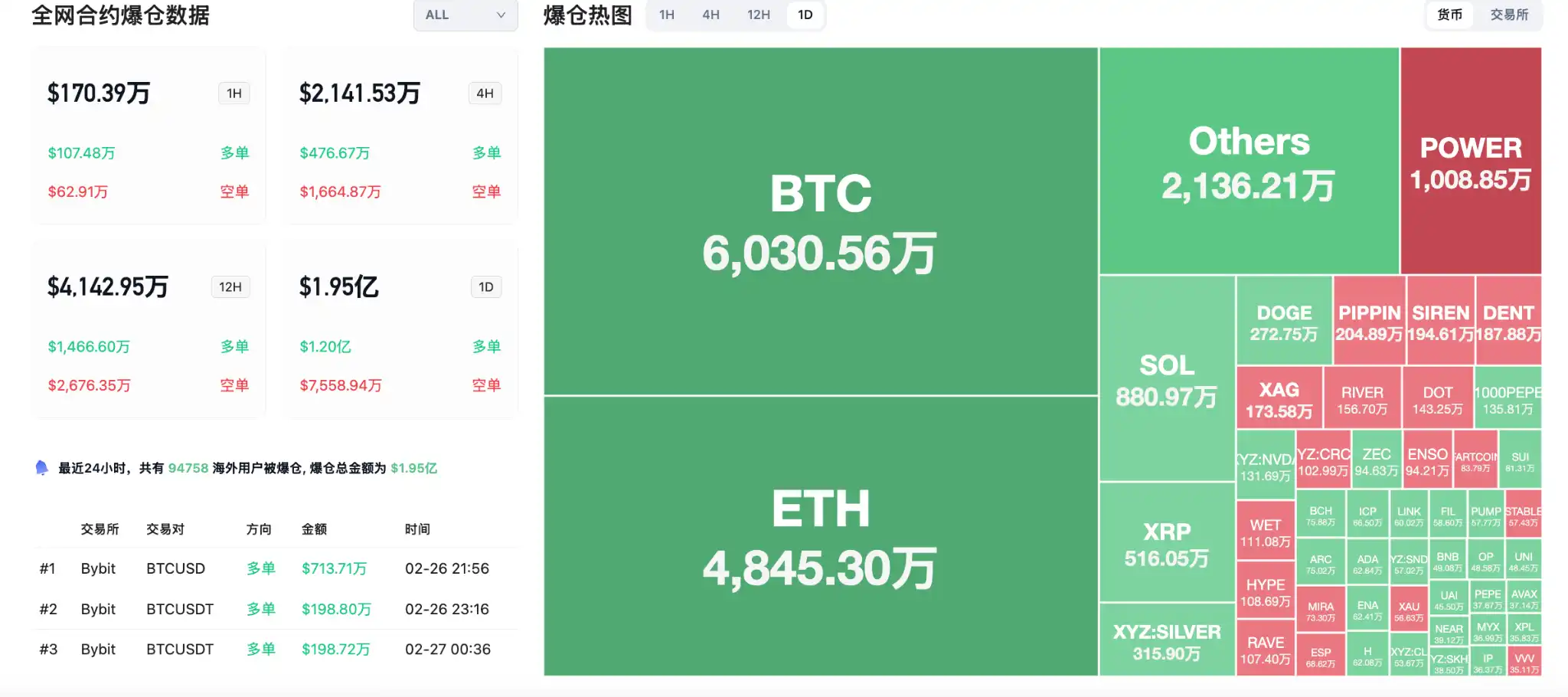
24-Hour Liquidation Data: 94,779 people were liquidated globally, with a total liquidation amount of $196 million. BTC liquidations were $60.3056 million, ETH $48.453 million, SOL $8.8097 million.
Today's Outlook

  • Binance Alpha will list Fabric Protocol (ROBO) on February 27

  • Binance will delist spot trading pairs including DOT/BRL, GRT/ETH on February 27

  • Jupiter (JUP) will unlock approximately 253 million tokens worth about $49.4 million on February 28

  • Grass (GRASS) will unlock approximately 55 million tokens worth about $13.48 million on February 28

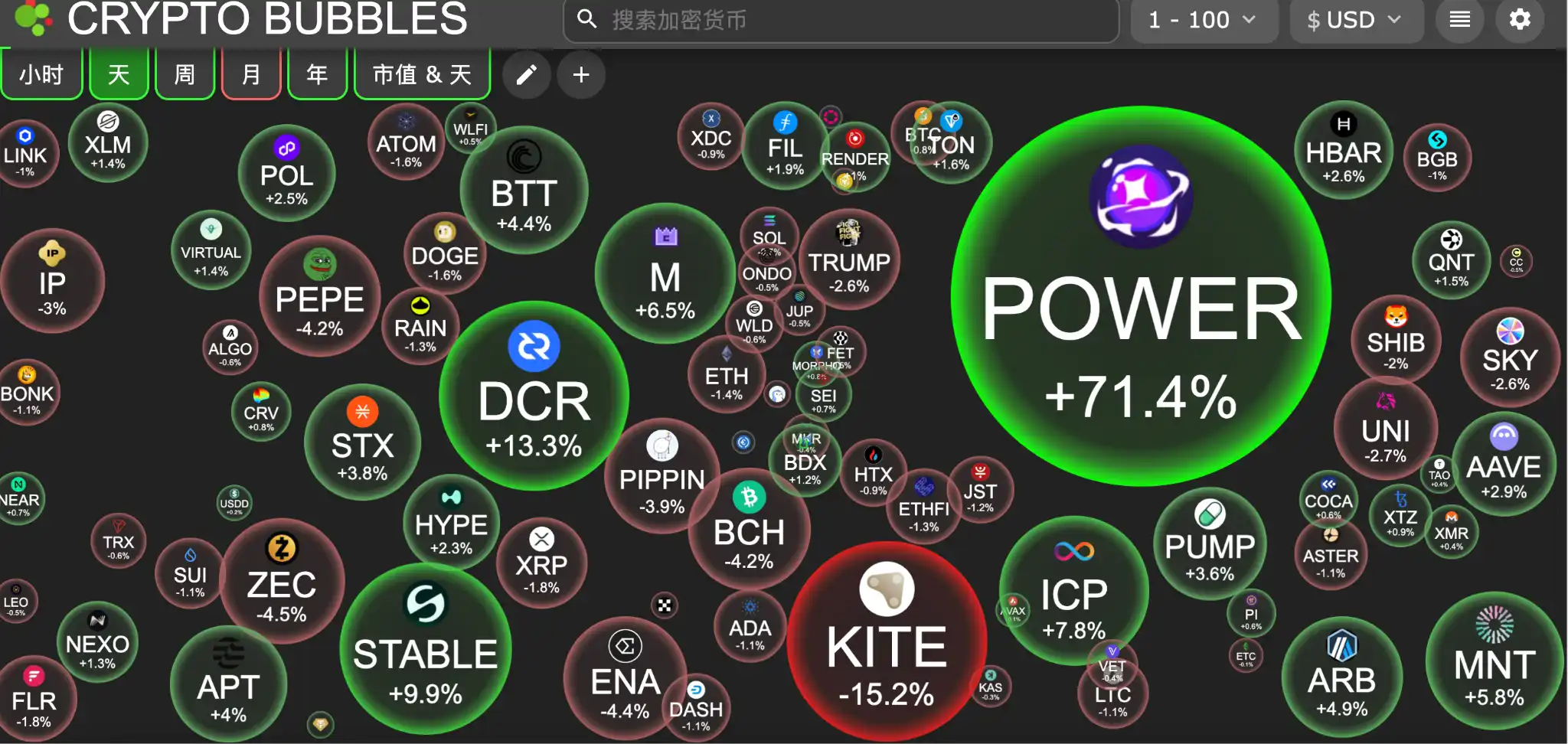
Top 100 Coins by Market Cap - Biggest Gainers Today: Power Protocol up 71.4%, Decred up 13.3%, Stable up 9.9%, Internet Computer up 7.8%, MemeCore up 6.5%.
Hot News

  • LayerZero DAO burns all remaining STG, STG officially renamed to ZRO

  • SBI launches Japan's first trust-based yen stablecoin JPYSC, planned for Q2 launch

  • Polymarket bets on Axiom insider addresses may point to Pump.fun partner, ZachXBT denies connection

  • Avalanche ecosystem accelerator Colony announces it will cease operations by the end of the quarter

  • Report: Over half of top 25 US banks piloting crypto业务 (crypto business), ~716 million global coin holders

  • US OCC stablecoin proposed rule: Stablecoin redemption within 2 business days max, can extend to 7 days if daily redemptions exceed 10% of circulating supply

  • Magic Eden plans to shut down Bitcoin and EVM markets and terminate multi-chain wallet

  • Cardone Capital preparing to tokenize ~$5 billion in real estate assets

  • Anthropic says it rejected the Pentagon's "final proposal"

  • Foreign media: Paypal and Stripe are not currently in talks, Paypal currently has no plan to sell itself

  • Block is cutting 4,000 jobs, nearly half its workforce

  • Deribit: ~$8.8 billion in Bitcoin and Ethereum options expiring this Friday

  • <极="1" p dir="ltr" role="presentation">Vitalik has累计 (cumulatively) sold 16,420 ETH, cashing out ~$32.84 million

Domande pertinenti

QWhat was the main reason for the decline in the US stock market on Thursday, and how did the major indices perform?

AThe decline in the US stock market was primarily due to weakness in technology stocks. The S&P 500 fell 0.54% to 6,908.85 points, and the Nasdaq Composite dropped 1.18% to 22,878.38 points, nearly erasing its gains from the previous day. In contrast, the Dow Jones Industrial Average edged up 0.03% to 49,499.20 points.

QWhat significant signal did former Fed Governor Stephen Milan release regarding interest rates, and what was his reasoning?

AFormer Fed Governor Stephen Milan released a strong dovish signal, publicly calling for a full 100 basis point interest rate cut in 2026. He argued that excessively high compliance costs are inhibiting bank lending, and weak inflationary pressures are providing support for a future dovish stance from new Fed Chair nominee Kevin Warsh.

QWhy did Nvidia's stock price fall significantly after reporting a 73% year-on-year revenue increase?

ANvidia's stock price fell 5.49% despite strong earnings due to market concerns about the sustainability of AI-related expenditures. This sell-off was also exacerbated by news that DeepSeek's V4 model, which might bypass the Nvidia ecosystem, was being offered to domestic suppliers for early access.

QWhat are the key arguments from the bearish and bullish camps regarding Bitcoin's price outlook?

ABearish analysts argue that the current rebound is a bull trap in a bear market, citing historical cycle patterns where corrections were deeper (near 80%) and lasted longer. They point to a lack of reversal signals on monthly and weekly charts and strong resistance from the 200-week moving average. Bullish analysts believe selling pressure has exhausted, pointing to on-chain data like growing whale wallets, institutional ETF inflows, and a structural divergence from global M2 money supply that they are near a structural bottom and poised for a reversal, potentially in Q4.

QWhat major event is expected in the derivatives market on Friday, and what is its potential impact?

AApproximately $8.8 billion worth of Bitcoin and Ethereum options are set to expire on Friday. For Bitcoin, the notional value is $7.8 billion with a max pain point at $75,000. For Ethereum, the notional value is $961 million with a max pain point at $2,200. This large expiry can lead to increased volatility as market makers hedge their positions around these key price levels.

Letture associate

AI "Transfer Station" Earning Millions Monthly? Five Questions Uncover the Truth of Token Arbitrage

The article "AI 'Transfer Station' Earns Millions Monthly? Five Questions Uncover the Truth of Token Arbitrage" explores the emerging business of API token transfer stations, which profit from global AI service price disparities and access barriers. These intermediaries purchase low-cost tokens from overseas AI providers (e.g., OpenAI, Claude) through grey-market methods—such as exploiting enterprise credits, bulk accounts, or subscription benefits—and resell them to Chinese users at a markup. Key drivers include the high cost of using top AI models (e.g., Claude Code costs ~$5 per million tokens), the performance gap between domestic and foreign models, and mismatches between subscription and API pricing. However, the practice carries significant risks: upstream token sources may be unstable or illegal; user data passing through intermediaries can be harvested or injected with hidden prompts; and models might be downgraded without disclosure. The market is evolving, with some operators now exporting cheaper Chinese models (e.g., Qwen3.5 at ~$0.11 per million tokens) to overseas users, leveraging price gaps. Yet, sustainability is low due to compliance crackdowns, instability, and reputational risks. Users are advised to employ detection methods (e.g., prompt adherence tests) and avoid sensitive data usage. The authors caution that while transfer stations offer short-term arbitrage, they lack long-term reliability and security compared to official APIs.

marsbit5 min fa

AI "Transfer Station" Earning Millions Monthly? Five Questions Uncover the Truth of Token Arbitrage

marsbit5 min fa

The Cost of an 11.5% Annualized Return: Will MicroStrategy's STRC Face a Moment of Reckoning?

This article analyzes the potential risks associated with MicroStrategy's (MSTR) use of structured financial products like STRC to leverage its BTC exposure. While these tools have enabled impressive returns (e.g., 11.5% annualized) and fueled significant capital inflows ($13.5B outstanding), they also create substantial annual dividend obligations (~$400M). The author argues that this structure, while effective in a bull market, could become a liability if BTC price stagnates or declines. The core risk is a potential negative feedback loop: the growing dividend burden from continued STRC issuance may eventually outweigh the benefits of increased BTC holdings. To meet these obligations, MicroStrategy might need to use new issuance proceeds for dividends instead of buying more BTC, which could disappoint equity investors. If the market capitalization (mNAV) falls below the value of its BTC holdings, the company could be forced to sell BTC instead of issuing new shares, potentially triggering a panic. The author estimates a potential inflection point in 6 months, where annual dividend costs reach $3-4B. At that stage, CEO Michael Saylor might face a difficult choice: sell BTC to meet obligations or sacrifice the credibility of the preferred shares by halting dividends. The article concludes that this financial engineering, while powerful, could ultimately "backfire" on MicroStrategy if market conditions turn.

marsbit1 h fa

The Cost of an 11.5% Annualized Return: Will MicroStrategy's STRC Face a Moment of Reckoning?

marsbit1 h fa

Trading

Spot
Futures

Articoli Popolari

Cosa è BITCOIN

Comprendere HarryPotterObamaSonic10Inu (ERC-20) e la sua posizione nel mondo delle criptovalute Negli ultimi anni, il mercato delle criptovalute ha assistito a un aumento della popolarità delle meme coin, catturando l'interesse non solo dei trader, ma anche di coloro che cercano coinvolgimento comunitario e valore di intrattenimento. Tra questi token unici c'è HarryPotterObamaSonic10Inu (ERC-20), un progetto intrigante che mescola riferimenti culturali nel tessuto delle criptovalute. Questo articolo esplora gli aspetti chiave di HarryPotterObamaSonic10Inu, analizzando i suoi meccanismi, l'etica guidata dalla comunità e il suo coinvolgimento con il panorama crittografico più ampio. Che cos'è HarryPotterObamaSonic10Inu (ERC-20)? Come suggerisce il suo nome, HarryPotterObamaSonic10Inu è una meme coin costruita sulla blockchain di Ethereum, classificata secondo lo standard ERC-20. A differenza delle criptovalute tradizionali che possono enfatizzare l'utilità pratica o il potenziale investimento, questo token prospera grazie al valore di intrattenimento e alla forza della sua comunità. Il progetto mira a creare un ambiente in cui gli utenti coinvolti possono riunirsi, condividere idee e partecipare ad attività ispirate a diversi fenomeni culturali. Una caratteristica notevole di HarryPotterObamaSonic10Inu è la zero tassa sulle transazioni. Questo elemento allettante tende a incoraggiare il trading e il coinvolgimento della comunità, privo di costi aggiuntivi che possono scoraggiare i trader di piccole dimensioni. L'offerta totale della moneta è fissata a un miliardo di token, un numero che segna la sua intenzione di mantenere una circolazione sostanziale all'interno della comunità. Creatore di HarryPotterObamaSonic10Inu (ERC-20) Le origini di HarryPotterObamaSonic10Inu sono avvolte in un certo mistero; i dettagli sul creatore rimangono sconosciuti. Lo sviluppo di questo token non presenta un team identificabile o un piano esplicito, cosa non rara nel settore delle meme coin. Invece, il progetto è emerso organicamente, con il suo progresso fortemente dipendente dall'entusiasmo e dalla partecipazione della sua comunità. Investitori di HarryPotterObamaSonic10Inu (ERC-20) Per quanto riguarda investimenti esterni e finanziamenti, HarryPotterObamaSonic10Inu rimane ambiguo. Il token non elenca alcuna fondazione di investimento conosciuta o un sostegno organizzativo significativo. Invece, la linfa vitale del progetto è la sua comunità di base, che informa la sua crescita e sostenibilità attraverso azioni collettive e coinvolgimento nello spazio crittografico. Come funziona HarryPotterObamaSonic10Inu (ERC-20)? In quanto meme coin, HarryPotterObamaSonic10Inu opera principalmente al di fuori delle strutture tradizionali che governano spesso il valore degli asset. Ci sono diversi aspetti distintivi che definiscono il funzionamento del progetto: Transazioni senza tasse: Senza costi fiscali sulle transazioni, gli utenti possono comprare e vendere liberamente il token senza preoccuparsi di costi nascosti. Coinvolgimento della comunità: Il progetto prospera sull'interazione della comunità, sfruttando le piattaforme social per creare entusiasmo e facilitare il coinvolgimento. Discussioni, condivisione di contenuti e coinvolgimento sono elementi cruciali che aiutano ad espandere la sua portata e a favorire la lealtà tra i sostenitori. Nessuna utilità pratica: Va notato che HarryPotterObamaSonic10Inu non offre un'utilità concreta all'interno dell'ecosistema finanziario. Piuttosto, è classificato come un token principalmente per attività di intrattenimento e comunitarie. Riferimento culturale: Il token incorpora astutamente elementi della cultura pop per attirare interesse, collegandosi a appassionati di meme e seguaci delle criptovalute. HarryPotterObamaSonic10Inu esemplifica come le meme coin operino in modo diverso rispetto ai progetti di criptovalute più tradizionali, entrando nel mercato come costrutti sociali innovativi piuttosto che come asset utilitari. Cronologia di HarryPotterObamaSonic10Inu (ERC-20) La storia di HarryPotterObamaSonic10Inu è segnata da diversi traguardi notevoli: Creazione: Il token è emerso da un meme virale, catturando l'immaginazione di molti appassionati di criptovalute. Le date di creazione specifiche non sono disponibili, sottolineando la sua crescita organica. Inserimento negli scambi: HarryPotterObamaSonic10Inu ha fatto il suo ingresso in vari scambi, consentendo un accesso e un trading più facili da parte della comunità. Iniziative di coinvolgimento della comunità: Attività in corso volte a migliorare l'interazione della comunità, comprese gare, campagne sui social media e generazione di contenuti da parte di fan e sostenitori. Piani di espansione futura: La tabella di marcia del progetto include il lancio di una collezione NFT, merchandising e un sito di eCommerce relativo ai suoi temi culturali, coinvolgendo ulteriormente la comunità e cercando di aggiungere più dimensioni al suo ecosistema. Punti chiave su HarryPotterObamaSonic10Inu (ERC-20) Natura guidata dalla comunità: Il progetto dà priorità al contributo collettivo e alla creatività, garantendo che il coinvolgimento degli utenti sia al centro del suo sviluppo. Classificazione come meme coin: Rappresenta l'epitome delle criptovalute basate sull'intrattenimento, distinguendosi dai veicoli d'investimento tradizionali. Nessuna affiliazione diretta con Bitcoin: Nonostante la somiglianza nel nome del ticker, HarryPotterObamaSonic10Inu è distintivo e non ha alcuna relazione con Bitcoin o altre criptovalute consolidate. Focus sulla collaborazione: HarryPotterObamaSonic10Inu è progettato per creare uno spazio per la collaborazione e la condivisione di storie tra i suoi detentori, fornendo un canale per la creatività e il legame comunitario. Prospettive future: L'ambizione di espandersi oltre il suo presupposto iniziale verso NFT e merchandising delinea un percorso per il progetto per potenzialmente entrare in strade più mainstream all'interno della cultura digitale. Poiché le meme coin continuano a catturare l'immaginazione della comunità crittografica, HarryPotterObamaSonic10Inu (ERC-20) si distingue per i suoi legami culturali e il suo approccio centrato sulla comunità. Anche se potrebbe non adattarsi al modello tipico di un token orientato all'utilità, la sua essenza risiede nella gioia e nella camaraderia coltivate tra i suoi sostenitori, evidenziando la natura in evoluzione delle criptovalute in un'epoca sempre più digitale. Con la continuazione dello sviluppo del progetto, sarà importante osservare come le dinamiche della comunità influenzano la sua traiettoria nel panorama in continuo cambiamento della tecnologia blockchain.

1.2k Totale visualizzazioniPubblicato il 2024.04.01Aggiornato il 2024.12.03

Cosa è BITCOIN

Come comprare BTC

Benvenuto in HTX.com! Abbiamo reso l'acquisto di Bitcoin (BTC) semplice e conveniente. Segui la nostra guida passo passo per intraprendere il tuo viaggio nel mondo delle criptovalute.Step 1: Crea il tuo Account HTXUsa la tua email o numero di telefono per registrarti il tuo account gratuito su HTX. Vivi un'esperienza facile e sblocca tutte le funzionalità,Crea il mio accountStep 2: Vai in Acquista crypto e seleziona il tuo metodo di pagamentoCarta di credito/debito: utilizza la tua Visa o Mastercard per acquistare immediatamente BitcoinBTC.Bilancio: Usa i fondi dal bilancio del tuo account HTX per fare trading senza problemi.Terze parti: abbiamo aggiunto metodi di pagamento molto utilizzati come Google Pay e Apple Pay per maggiore comodità.P2P: Fai trading direttamente con altri utenti HTX.Over-the-Counter (OTC): Offriamo servizi su misura e tassi di cambio competitivi per i trader.Step 3: Conserva Bitcoin (BTC)Dopo aver acquistato Bitcoin (BTC), conserva nel tuo account HTX. In alternativa, puoi inviare tramite trasferimento blockchain o scambiare per altre criptovalute.Step 4: Scambia Bitcoin (BTC)Scambia facilmente Bitcoin (BTC) nel mercato spot di HTX. Accedi al tuo account, seleziona la tua coppia di trading, esegui le tue operazioni e monitora in tempo reale. Offriamo un'esperienza user-friendly sia per chi ha appena iniziato che per i trader più esperti.

3.6k Totale visualizzazioniPubblicato il 2024.12.12Aggiornato il 2025.03.21

Come comprare BTC

Cosa è $BITCOIN

ORO DIGITALE ($BITCOIN): Un'Analisi Completa Introduzione all'ORO DIGITALE ($BITCOIN) L'ORO DIGITALE ($BITCOIN) è un progetto basato su blockchain che opera sulla rete Solana, con l'obiettivo di combinare le caratteristiche dei metalli preziosi tradizionali con l'innovazione delle tecnologie decentralizzate. Sebbene condivida un nome con Bitcoin, spesso definito “oro digitale” a causa della sua percezione come riserva di valore, l'ORO DIGITALE è un token separato progettato per creare un ecosistema unico all'interno del panorama Web3. Il suo obiettivo è posizionarsi come un asset digitale alternativo valido, anche se i dettagli riguardanti le sue applicazioni e funzionalità sono ancora in fase di sviluppo. Cos'è l'ORO DIGITALE ($BITCOIN)? L'ORO DIGITALE ($BITCOIN) è un token di criptovaluta esplicitamente progettato per l'uso sulla blockchain di Solana. A differenza di Bitcoin, che fornisce un ruolo di stoccaggio di valore ampiamente riconosciuto, questo token sembra concentrarsi su applicazioni e caratteristiche più ampie. Aspetti notevoli includono: Infrastruttura Blockchain: Il token è costruito sulla blockchain di Solana, nota per la sua capacità di gestire transazioni ad alta velocità e a basso costo. Dinamiche di Offerta: L'ORO DIGITALE ha un'offerta massima fissata a 100 quadrilioni di token (100P $BITCOIN), sebbene i dettagli riguardanti la sua offerta circolante siano attualmente non divulgati. Utilità: Sebbene le funzionalità precise non siano esplicitamente delineate, ci sono indicazioni che il token potrebbe essere utilizzato per varie applicazioni, potenzialmente coinvolgendo applicazioni decentralizzate (dApp) o strategie di tokenizzazione degli asset. Chi è il Creatore dell'ORO DIGITALE ($BITCOIN)? Attualmente, l'identità dei creatori e del team di sviluppo dietro l'ORO DIGITALE ($BITCOIN) rimane sconosciuta. Questa situazione è tipica tra molti progetti innovativi nel settore blockchain, in particolare quelli allineati con la finanza decentralizzata e i fenomeni delle meme coin. Sebbene tale anonimato possa favorire una cultura guidata dalla comunità, intensifica le preoccupazioni riguardo alla governance e alla responsabilità. Chi sono gli Investitori dell'ORO DIGITALE ($BITCOIN)? Le informazioni disponibili indicano che l'ORO DIGITALE ($BITCOIN) non ha alcun sostenitore istituzionale noto o investimenti di venture capital prominenti. Il progetto sembra operare su un modello peer-to-peer incentrato sul supporto e sull'adozione della comunità piuttosto che su percorsi di finanziamento tradizionali. La sua attività e liquidità si trovano principalmente su exchange decentralizzati (DEX), come PumpSwap, piuttosto che su piattaforme di trading centralizzate consolidate, evidenziando ulteriormente il suo approccio di base. Come Funziona l'ORO DIGITALE ($BITCOIN) Le meccaniche operative dell'ORO DIGITALE ($BITCOIN) possono essere elaborate in base al suo design blockchain e alle caratteristiche della rete: Meccanismo di Consenso: Sfruttando il proof-of-history (PoH) unico di Solana combinato con un modello di proof-of-stake (PoS), il progetto garantisce una validazione efficiente delle transazioni contribuendo all'alta performance della rete. Tokenomics: Sebbene meccanismi deflazionistici specifici non siano stati dettagliati ampiamente, l'ampia offerta massima di token implica che potrebbe soddisfare microtransazioni o casi d'uso di nicchia che devono ancora essere definiti. Interoperabilità: Esiste il potenziale per l'integrazione con l'ecosistema più ampio di Solana, inclusi vari piattaforme di finanza decentralizzata (DeFi). Tuttavia, i dettagli riguardanti integrazioni specifiche rimangono non specificati. Cronologia degli Eventi Chiave Ecco una cronologia che evidenzia traguardi significativi riguardanti l'ORO DIGITALE ($BITCOIN): 2023: Il dispiegamento iniziale del token avviene sulla blockchain di Solana, contrassegnato dal suo indirizzo di contratto. 2024: L'ORO DIGITALE guadagna visibilità poiché diventa disponibile per il trading su exchange decentralizzati come PumpSwap, consentendo agli utenti di scambiarlo contro SOL. 2025: Il progetto assiste a un'attività di trading sporadica e a un potenziale interesse per impegni guidati dalla comunità, sebbene non siano state documentate partnership significative o avanzamenti tecnici fino ad ora. Analisi Critica Punti di Forza Scalabilità: L'infrastruttura sottostante di Solana supporta alti volumi di transazioni, il che potrebbe migliorare l'utilità di $BITCOIN in vari scenari di transazione. Accessibilità: Il potenziale basso prezzo di trading per token potrebbe attrarre investitori al dettaglio, facilitando una partecipazione più ampia grazie a opportunità di proprietà frazionata. Rischi Mancanza di Trasparenza: L'assenza di sostenitori, sviluppatori o di un processo di audit pubblicamente noti potrebbe generare scetticismo riguardo alla sostenibilità e all'affidabilità del progetto. Volatilità del Mercato: L'attività di trading è fortemente dipendente dal comportamento speculativo, il che può comportare una significativa volatilità dei prezzi e incertezze per gli investitori. Conclusione L'ORO DIGITALE ($BITCOIN) emerge come un progetto intrigante ma ambiguo all'interno dell'evolvente ecosistema di Solana. Sebbene tenti di sfruttare la narrativa dell'“oro digitale”, la sua partenza dal ruolo consolidato di Bitcoin come riserva di valore sottolinea la necessità di una chiara differenziazione della sua utilità e struttura di governance. L'accettazione e l'adozione future dipenderanno probabilmente dall'affrontare l'attuale opacità e dalla definizione più esplicita delle sue strategie operative ed economiche. Nota: Questo rapporto comprende informazioni sintetizzate disponibili a ottobre 2023, e potrebbero essersi verificati sviluppi oltre il periodo di ricerca.

99 Totale visualizzazioniPubblicato il 2025.05.13Aggiornato il 2025.05.13

Cosa è $BITCOIN

Discussioni

Benvenuto nella Community HTX. Qui puoi rimanere informato sugli ultimi sviluppi della piattaforma e accedere ad approfondimenti esperti sul mercato. Le opinioni degli utenti sul prezzo di BTC BTC sono presentate come di seguito.

活动图片














