Tokenization will disrupt finance faster than digital disrupted media: Crypto exec

cointelegraphPubblicato 2025-12-21Pubblicato ultima volta 2025-12-21

Introduzione

Tokenization will transform finance faster than digital technology disrupted media, according to MoonPay president Keith Grossman. He argues that real-world asset (RWA) tokenization will force traditional financial firms to adapt, citing examples like BlackRock and Franklin Templeton already offering tokenized funds. Major banks are also exploring onchain settlements. Grossman believes institutions that embrace this shift will succeed, while those resisting will fall behind. Benefits include 24/7 market access, global scalability, lower costs, and near-instant settlements. Regulatory progress, such as the SEC and CFTC working on round-the-clock market frameworks and the DTCC’s approval to launch tokenized U.S. Treasuries by 2026, signals accelerating adoption.

Tokenization will transform the financial industry faster than digital technology disrupted legacy media, such as print newspapers, physical copies of music and other analog formats, according to Keith Grossman, president of crypto payments company MoonPay.

“While many feared digitization would destroy media, what it actually did was force its evolution,” Grossman said, adding that real-world asset (RWA) tokenization, the process of representing traditional assets onchain, will force traditional institutions to adapt. He added:

“This is no longer hypothetical. BlackRock is offering tokenized funds. Franklin Templeton is running tokenized money market funds on public blockchains. Major global banks are piloting onchain settlement, tokenized deposits and real-time asset movement.”
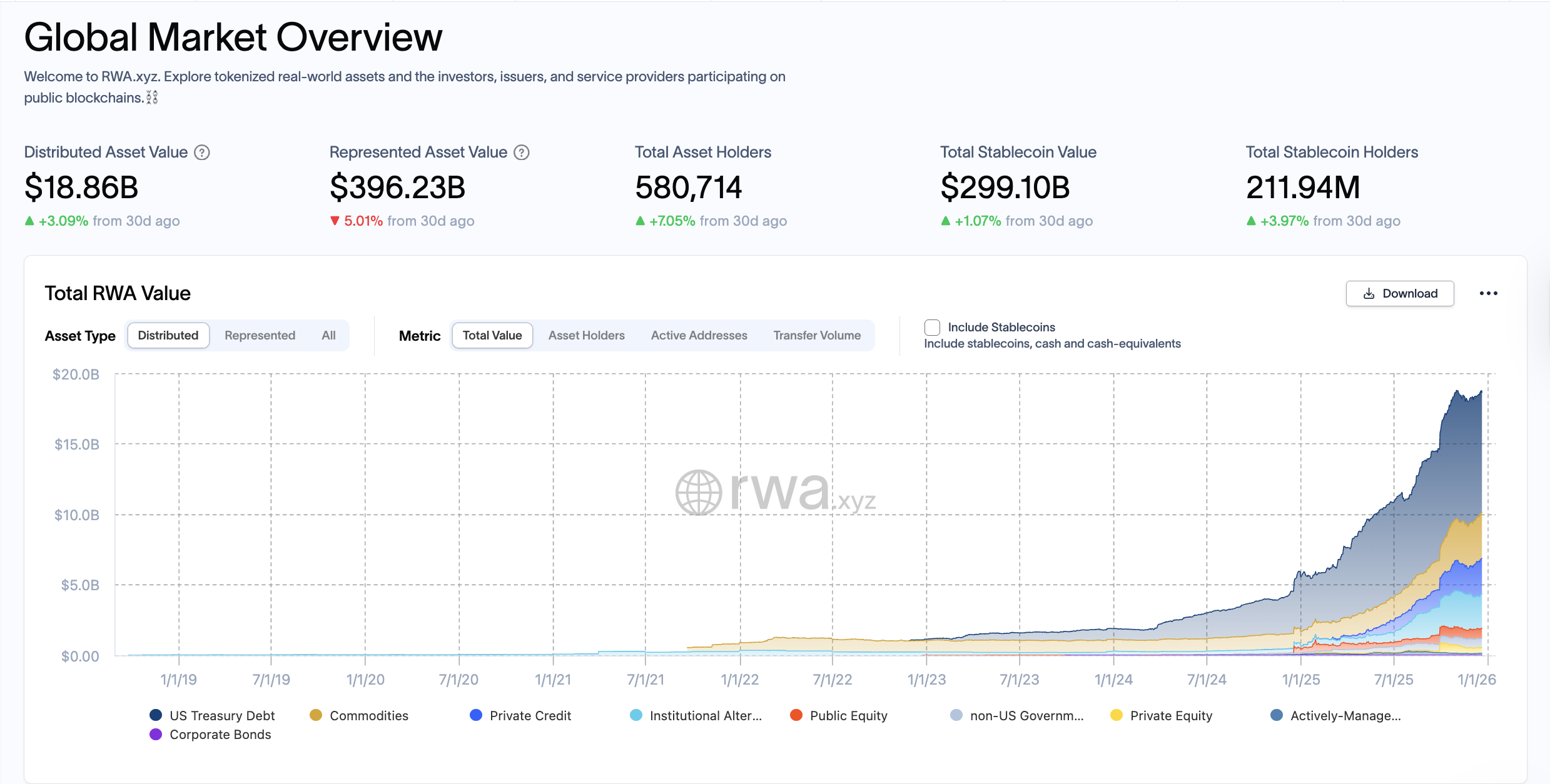
The market capitalization of the RWA sector, excluding stablecoins, is nearly $19 billion at the time of this writing. Source: RWA.XYZ

Financial incumbents like Citi, Bank of America, JPMorgan Chase and others will continue to exist in a different form, Grossman said, much like media companies continued to exist after the shift to digital distribution in the late 1990s and early 2000s, which disrupted business models that worked for decades.

Ultimately, the survivors and winners of the ongoing shift toward tokenized finance will be those companies that get ahead of the change and not those that attempt to stop the inevitable shift to a global financial system powered through blockchain rails, he said.

Related: Wall Street’s $4 quadrillion backbone to roll out tokenized US Treasurys

Why tokenized assets can change the game

Tokenizing real-world assets carries several benefits, including enabling 24/7 access to markets, making asset classes global in scale, cheaper transaction costs through disintermediation, and lowering settlement times to minutes, instead of days.

In September, the United States Securities and Exchange Commission (SEC) and the Commodity Futures Trading Commission (CFTC) issued a joint statement on creating a regulatory framework to enable 24/7 capital markets.
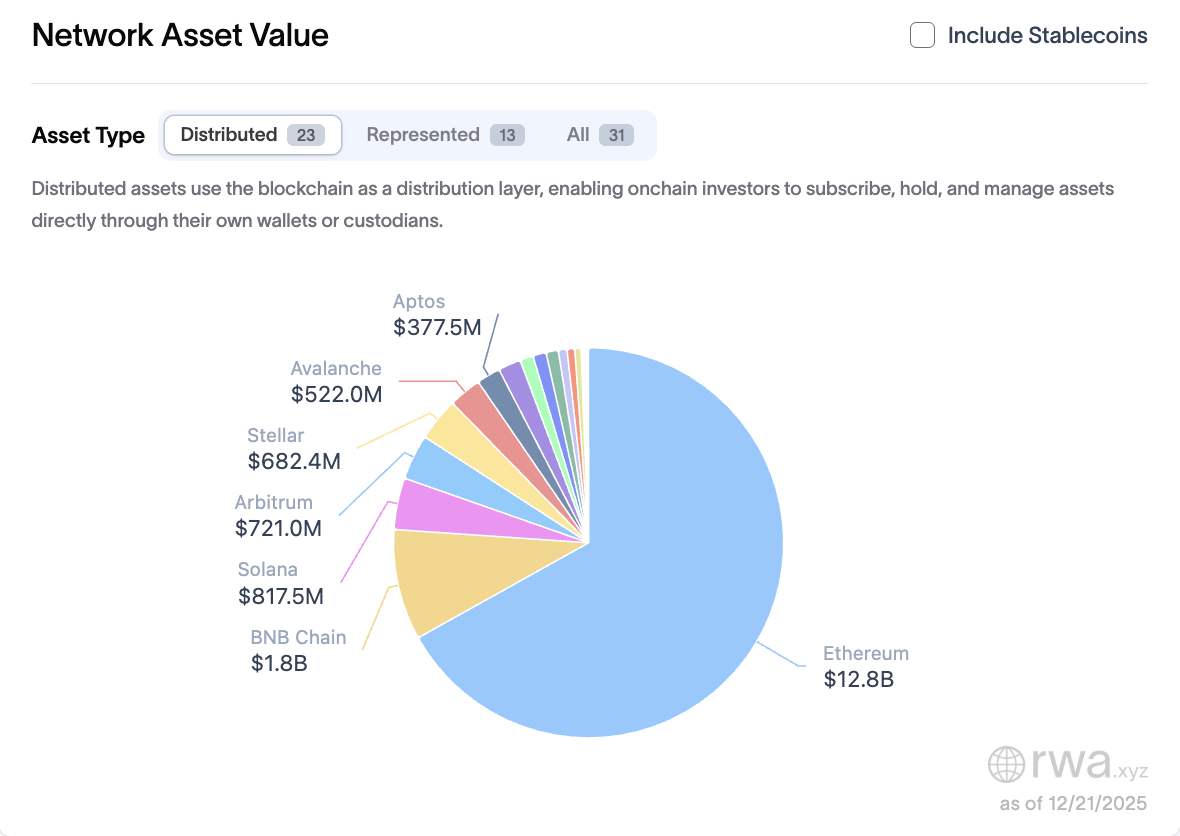
The overwhelming majority of tokenized RWA value has found its home on the Ethereum network. Source: RWA.XYZ

The financial system shifting to 24/7 trading represents a major departure from how traditional markets, which close on nights, weekends and holidays, currently operate.

In December, the Depository Trust and Clearing Corporation (DTCC), a settlement and clearing company that processed about $3.7 quadrillion in settlement volume in 2024, received approval from the SEC to start offering tokenized financial instruments.

The DTCC plans to roll out tokenized assets in the second half of 2026, starting with US Treasuries and stock indexes.

Magazine: Unstablecoins: Depegging, bank runs and other risks loom

Domande pertinenti

QAccording to Keith Grossman, how will tokenization impact the financial industry compared to digital technology's effect on media?

AKeith Grossman believes that tokenization will transform the financial industry faster than digital technology disrupted legacy media, such as print newspapers and physical music copies.

QWhat are some examples of major financial institutions already involved in tokenization, as mentioned in the article?

ABlackRock is offering tokenized funds, Franklin Templeton is running tokenized money market funds on public blockchains, and major global banks are piloting onchain settlement, tokenized deposits, and real-time asset movement.

QWhat key benefits does tokenizing real-world assets provide, according to the article?

ATokenizing real-world assets enables 24/7 access to markets, makes asset classes global, reduces transaction costs through disintermediation, and lowers settlement times to minutes instead of days.

QWhich organization, responsible for processing about $3.7 quadrillion in settlement volume in 2024, received SEC approval to offer tokenized financial instruments?

AThe Depository Trust and Clearing Corporation (DTCC) received approval from the SEC to start offering tokenized financial instruments.

QOn which blockchain network is the overwhelming majority of tokenized RWA value located, as per the article?

AThe overwhelming majority of tokenized RWA value is on the Ethereum network.

Letture associate

Vietnam Crypto Payments Field Report: From Street Stalls to Coffee Shops

Vietnam, a top-ranked country in global crypto adoption, presents a fascinating case study in real-world use of digital currencies. This on-the-ground exploration reveals a complex ecosystem where crypto payment adoption is both emerging and encountering hurdles. The author's experience began when a spa owner in Nha Trang offered a discount for cash over credit card payments, citing high fees and tax implications. This preference for cash hinted at a potential openness to dollar-denominated stablecoins like USDT. Subsequent testing showed that using a crypto wallet (Bitget Wallet) for everyday purchases—from ride-hailing and street food to massages—was often seamless, thanks to widespread acceptance of the VietQR system. The experience was described as nearly equivalent to using Alipay. However, a failed payment at a seafood restaurant exposed a critical vulnerability. A transaction from the crypto wallet showed as completed on-chain but failed to register on the merchant’s older, non-standard QR system, highlighting compatibility issues and the "last mile" problem for crypto payments. Public perception also varies greatly. In northern cities like Hanoi, crypto is often viewed negatively, associated with money laundering and gambling. This contrasts sharply with the vibrant, tech-savvy crypto culture observed in the south, particularly in Ho Chi Minh City, where young people in cafes are seen trading on Binance or even writing Solidity code. This creates a "Vietnamese crypto fold": a dichotomy between a surface-level skepticism and a deep, grassroots penetration of digital assets, driven by a young population eager for financial advancement. The author concludes that Vietnam’s demographic trends and open attitude position it as a key economy to watch for Web3 growth in the next decade.

比推50 min fa

Vietnam Crypto Payments Field Report: From Street Stalls to Coffee Shops

比推50 min fa

Trading

Spot
Futures
活动图片