Tokenization benefits ‘light at first,’ but will expand if democratized: NYDIG

cointelegraphPubblicato 2025-12-12Pubblicato ultima volta 2025-12-12

Introduzione

NYDIG's Global Head Greg Cipolaro states that while tokenizing real-world assets (RWAs) like stocks offers limited initial benefits to crypto networks, its advantages could grow significantly with greater democratization and integration. Initially, blockchains like Ethereum would gain from transaction fees and network effects. However, broader benefits—such as composability in DeFi for lending, borrowing, or trading—depend on improved technology, infrastructure, and favorable regulations. Tokenized assets vary widely in design and are hosted on both public and private networks, with significant value already on platforms like the Canton Network and Ethereum. Despite relying on traditional financial structures, blockchain offers near-instant settlement and operational efficiency. Cipolaro advises investors to monitor the space, as regulatory progress could expand the reach and utility of tokenized RWAs.

The tokenization of stocks won’t immediately be of immense benefit to the crypto market, but the benefits could increase if such assets are allowed to better integrate on blockchains, says NYDIG.

“The benefits to networks these assets reside on, such as Ethereum, are light at first, but increase as their access and interoperability and composability increase,” NYDIG global head of research Greg Cipolaro said in a note on Friday.

The initial benefits will be the transaction fees charged for using tokenized assets, and the blockchain hosting them will “enjoy increasing network effects” for storing them, Cipolaro added.

Tokenizing real-world assets, or RWAs, such as US stocks, has become a hot topic in the crypto industry, with major exchanges, including Coinbase and Kraken, wanting to launch tokenized stock platforms in the US after their success overseas.

Securities and Exchange Commission chair Paul Atkins said earlier this month that the US financial system could embrace tokenization in a “couple of years,” which Cipolaro said shows that “tokenization is likely going to be a big trend.”
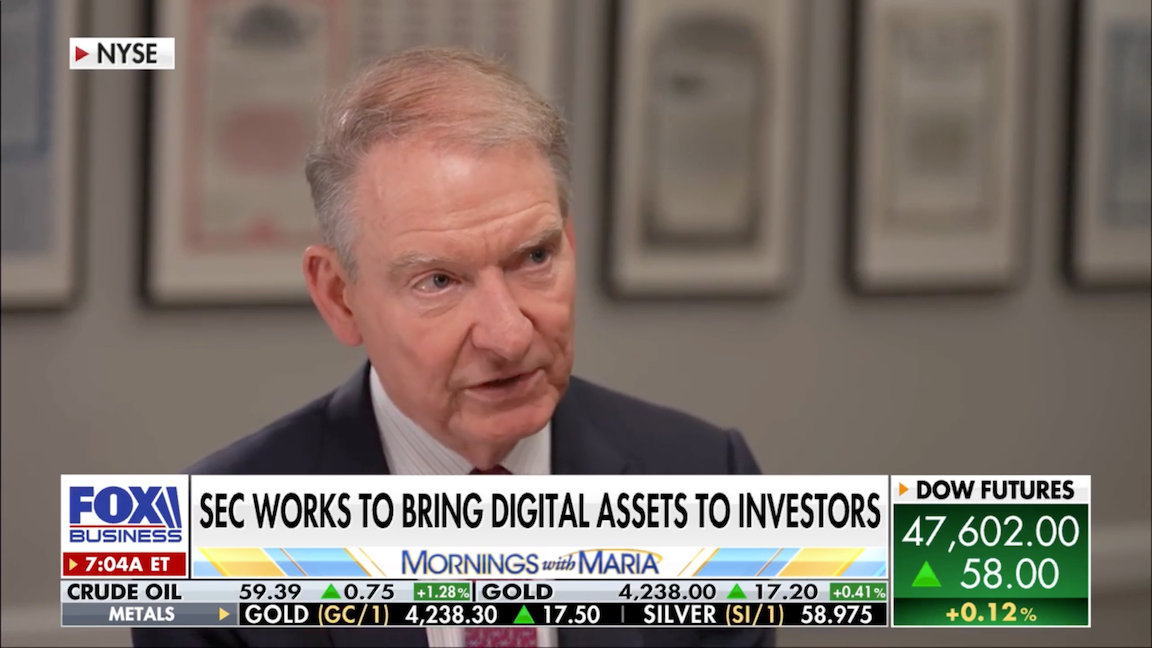
Paul Atkins speaking to Fox Business earlier in December on tokenized US stocks. Source: Fox Business

“In the future, one could see these RWAs being part of DeFi (composability), either as collateral for borrowing, an asset to be lent out, or for trading,” he added. “This will take time as technology develops, infrastructure is built out, and rules and regulations evolve.”

Tokenized assets can “differ greatly”

Cipolaro noted that making composable and interoperable tokenized assets isn’t straightforward, as “their form and function differ greatly” and are hosted on public and non-public networks.

The Canton Network, a non-public blockchain created by the company Digital Asset Holdings, is currently the largest blockchain for tokenized assets with $380 billion, or “91% of the total ‘represented value’ of all RWAs,” Cipolaro explained.

Ethereum, meanwhile, is “by far and away” the most popular public blockchain for tokenized assets, with $12.1 billion of RWAs deployed on it, he added.

Related: US financial markets ‘poised to move onchain’ amid DTCC tokenization greenlight

“But even on an open, permissionless network such as Ethereum, the design of the specific tokenized asset can vary greatly,” Cipolaro said. “These RWAs are often securities, broker-dealers, KYC/investor accreditation, whitelisted wallets, transfer agents, and other structures from traditional finance are required.”

He added that even though tokenized assets still need traditional financial structures, companies are using blockchain technology for the benefit of “near instant settlement, 24/7 operations, programmatic ownership, transparency, auditability, and collateral efficiency.”

“In the future, if things become more open and regulations become more favorable, as Chairman Atkins suggests, access to these assets should become more democratized, and thus these RWAs would enjoy expanded reach,” Cipolaro said.

“Investors should pay attention,” he added, “even if the economic impacts to traditional cryptocurrencies are minimal today.”

Magazine: Can Robinhood or Kraken’s tokenized stocks ever be truly decentralized?

Letture associate

The Second Half of Macro Influencer Fu Peng's Career

Fu Peng, a prominent Chinese macroeconomist and former chief economist of Northeast Securities, has joined Hong Kong-based digital asset management firm Bitfire Group (formerly New Huo Group) as its chief economist. This move, announced in April 2026, triggered an 11% surge in Bitfire's stock price. Fu, known for his accessible macroeconomic commentary and large social media following, will focus on integrating digital assets into global asset allocation frameworks, particularly combining FICC (fixed income, currencies, and commodities) with cryptocurrencies for institutional clients. His career includes roles at Lehman Brothers and Solomon International, with significant influence gained through public communication. However, in late 2024, Fu faced temporary social media bans after a controversial private speech at HSBC on China's economic challenges, though he denied regulatory sanctions. He later left Northeast Securities citing health reasons. Bitfire, a licensed virtual asset manager serving high-net-worth clients, seeks to build trust and attract traditional capital through Fu’s expertise and credibility. The partnership represents a strategic shift for both: Fu enters the crypto sector after a traditional finance peak, while Bitfire aims to leverage his macro framework for institutional adoption. Outcomes remain uncertain regarding capital inflows and compatibility within corporate structure.

marsbit1 h fa

The Second Half of Macro Influencer Fu Peng's Career

marsbit1 h fa

Trading

Spot
Futures

Articoli Popolari

Come comprare T

Benvenuto in HTX.com! Abbiamo reso l'acquisto di Threshold Network Token (T) semplice e conveniente. Segui la nostra guida passo passo per intraprendere il tuo viaggio nel mondo delle criptovalute.Step 1: Crea il tuo Account HTXUsa la tua email o numero di telefono per registrarti il tuo account gratuito su HTX. Vivi un'esperienza facile e sblocca tutte le funzionalità,Crea il mio accountStep 2: Vai in Acquista crypto e seleziona il tuo metodo di pagamentoCarta di credito/debito: utilizza la tua Visa o Mastercard per acquistare immediatamente Threshold Network TokenT.Bilancio: Usa i fondi dal bilancio del tuo account HTX per fare trading senza problemi.Terze parti: abbiamo aggiunto metodi di pagamento molto utilizzati come Google Pay e Apple Pay per maggiore comodità.P2P: Fai trading direttamente con altri utenti HTX.Over-the-Counter (OTC): Offriamo servizi su misura e tassi di cambio competitivi per i trader.Step 3: Conserva Threshold Network Token (T)Dopo aver acquistato Threshold Network Token (T), conserva nel tuo account HTX. In alternativa, puoi inviare tramite trasferimento blockchain o scambiare per altre criptovalute.Step 4: Scambia Threshold Network Token (T)Scambia facilmente Threshold Network Token (T) nel mercato spot di HTX. Accedi al tuo account, seleziona la tua coppia di trading, esegui le tue operazioni e monitora in tempo reale. Offriamo un'esperienza user-friendly sia per chi ha appena iniziato che per i trader più esperti.

306 Totale visualizzazioniPubblicato il 2024.12.10Aggiornato il 2025.03.21

Come comprare T

Discussioni

Benvenuto nella Community HTX. Qui puoi rimanere informato sugli ultimi sviluppi della piattaforma e accedere ad approfondimenti esperti sul mercato. Le opinioni degli utenti sul prezzo di T T sono presentate come di seguito.

活动图片













