To All Crypto Holders Questioning Life: Navigating the Darkest Hour, Crypto Is Still at the Chaotic Beginning

marsbitPubblicato 2026-02-10Pubblicato ultima volta 2026-02-10

Introduzione

An 8-year crypto veteran reflects on the extreme optimism at the start of 2025 following Trump’s pro-crypto election win, which quickly soured after Trump family meme coin launches damaged credibility. Despite institutional adoption through Bitcoin ETFs and stablecoin integration by major firms, the market crash began with Trump's 100% China tariffs and an MSCI proposal to exclude crypto-heavy companies from indices. A massive Binance outage triggered historic liquidations, decoupling crypto from rising traditional markets. By 2026, crypto fell further as traditional markets sold off, demonstrating deep entanglement with Wall Street—a double-edged sword of institutional adoption. Critics declared crypto dead, but the author argues the market is still immature and intertwined with equities. Macro conditions like potential rate cuts and a weaker dollar could fuel a recovery. The larger narrative remains intact: stablecoins are modernizing finance, blockchain infrastructure is expanding, and regulatory clarity is advancing. The convergence with AI remains an unexplored frontier. Despite risks, the author believes we are still at the "chaotic beginning" of an internet-native financial system.

Author:Connor Dempsey

Compiled by: Deep Tide TechFlow

Deep Tide Introduction: This article reviews the extreme optimism following Trump's victory in early 2025, the subsequent epic crash triggered by the "First Family" issuing tokens, tariff policies, Binance's unexpected downtime, and the stock market stampede. From the perspective of an 8-year industry insider, the author provides a profound analysis of how the crypto market shifted from "independent trends" to a "double-edged sword" scenario deeply intertwined with Wall Street. Despite the current devastation, the author believes that, given the macroeconomic expectations of interest rate cuts and a weak dollar, along with the trend of financial infrastructure moving on-chain, we are still at the "chaotic beginning" of this internet financial revolution.

Full Text Below:

I've been navigating the crypto market for 8 years, and every so often, I encounter days that feel like these past few.

February 5th was one of those days. But this didn't happen overnight. Here's our journey.

Looking Back

Entering 2025, expectations for cryptocurrency were incredibly high. The moment Trump's victory was confirmed in late 2024, Bitcoin (BTC) began breaking new highs. We were transitioning from a Biden administration that actively tried to stifle the U.S. crypto industry to a Trump administration that vowed to make America the "crypto capital of the world." Clear regulations were imminent, Bitcoin had a new institutional narrative, and ETFs were ready, allowing big money easy access.

The Screeching Halt

The world's largest economy was finally embracing the technology we had all been building for 16 years. The vibes were sky-high. Then, the dumbest thing I've seen in my 8 years in crypto happened. The President of the United States—Donald J. Trump—launched his own shitcoin. Then, his wife launched one too.

Public opinion overnight shifted from "cryptocurrency will modernize financial markets" to "the President is running a pump and dump." A massive wave of retail investors rushed into $TRUMP. Most got rekt. Just like that, those who had always hated the industry had another reason to call the whole thing a scam.
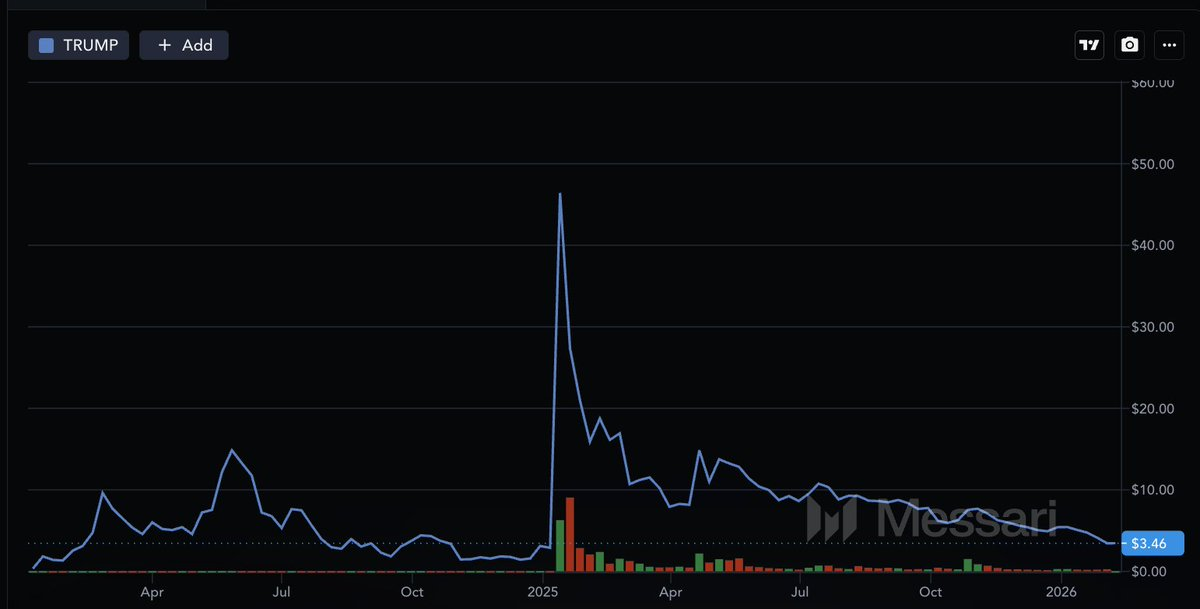
Source:@messaricrypto

Staying Positive

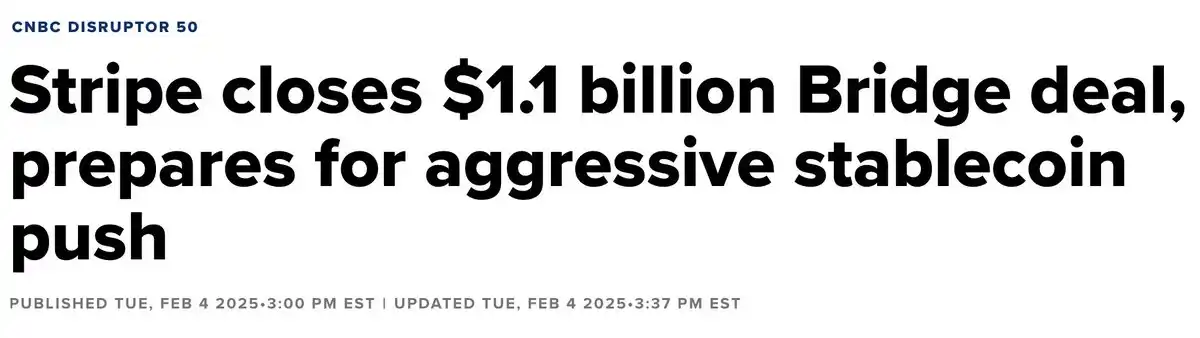
Crypto had shaken off awkward situations before, and there was still plenty to be optimistic about. Billions were flowing into Blackrock's Bitcoin ETF. Stripe, Visa, even century-old companies like MoneyGram were going all-in on stablecoins. The Trump administration enacted federal stablecoin regulations, with a market structure bill (Clarity) aimed at providing clear rules for the entire industry close behind. The game was still on.
October 10th (10/10)

Most market participants (including myself) expected the year to end at all-time highs (ATHs). The Fed was cutting rates, Bitcoin was rechallenging its $125k ATH, experts predicted Bitcoin would hit $250k, Ethereum (ETH) would hit $12k, while stocks and gold would also hit new highs.

Then on October 10th, Trump announced 100% tariffs on China, and MSCI proposed excluding companies with high crypto exposure from indices tracked by pension funds and ETFs. The latter threatened to cut off one of Bitcoin's biggest sources of demand.

The market started selling off, and then the real crypto carnage began. Crypto investors were over-leveraged (as always), and then the world's largest exchange—Binance—experienced a technical glitch, triggering the single largest liquidation event in crypto history. $30-40 billion in forced selling occurred, some altcoins dropped 70% in a day.

The consensus was that this event broke the crypto market, at least temporarily, and we've been decoupled from the rallying stock and commodity markets ever since.
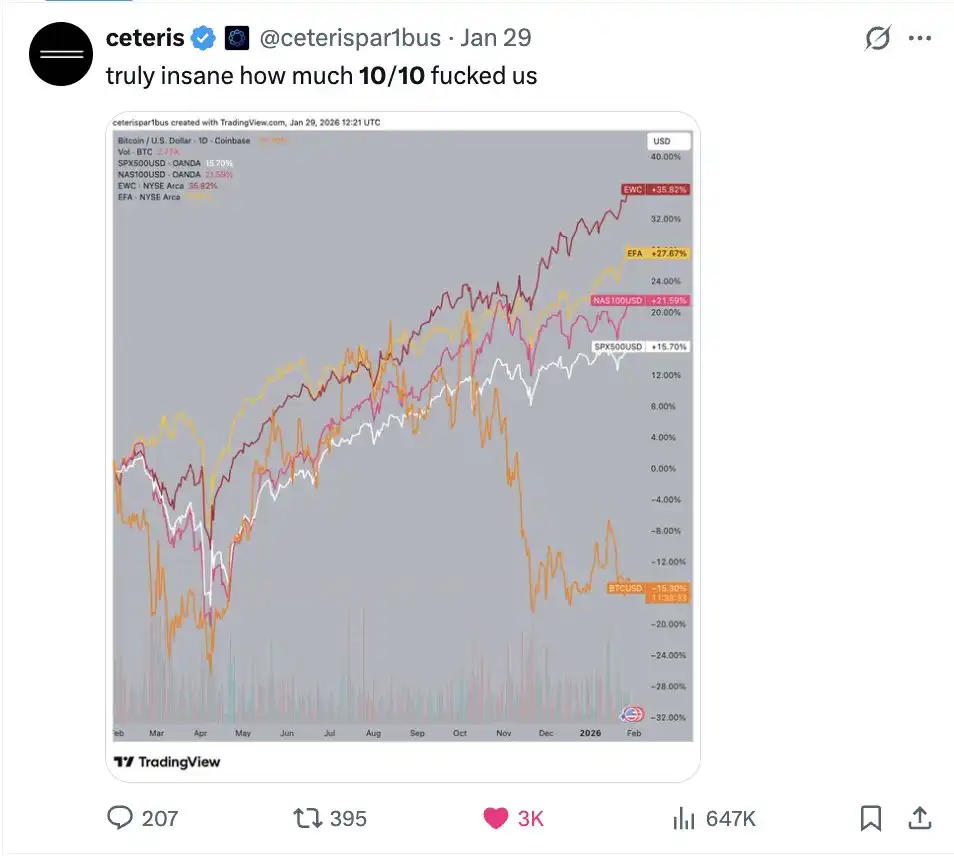
Caption: Thanks to @ceterispar1bus for the great chart

The Grind Lower

Then came the real pain. While other assets were ripping, crypto was grinding lower. The ATH setup predicted by Fundstrat to take us to "Valhalla" was all there: rate cuts, a weak dollar, global risk-on. The S&P 500 closed the year at new all-time highs. Gold and silver embarked on an epic run. Peter Schiff was dancing on our graves. And crypto just sat there bleeding out.

Re-Coupling

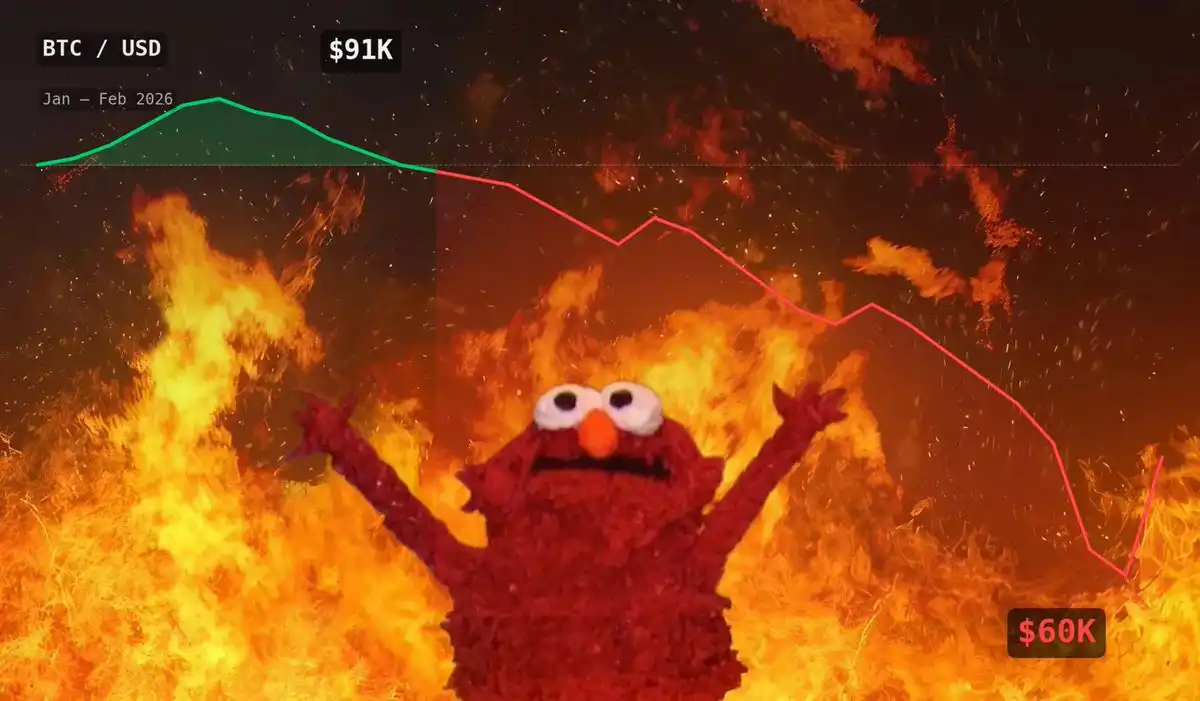
By 2026, the rest of the market started selling off too, and crypto went with it. The S&P began giving back trillions in gains, gold and silver experienced their worst selloff in 40+ years. On February 4th, hedge funds got crushed. Many blamed it on a tech selloff due to fears AI would make software companies obsolete. Regardless, risk managers had to step in and cut positions, including the ones they now held heavily in Bitcoin via ETFs, options, etc. The selling pushed Bitcoin lower, which triggered more mechanical selling, which then spread to crypto-native funds. Trend Research reportedly got liquidated on a $2B Ethereum position on Aave, adding fuel to the fire.

Trad-fi selling triggered crypto selling. Not the other way around. The institutional adoption everyone fought for ultimately became a double-edged sword. Which brings us to now.
Crypto Is Dead

As expected. Those who have been wrong about crypto for over a decade are crawling out of their holes again, dancing on our graves.
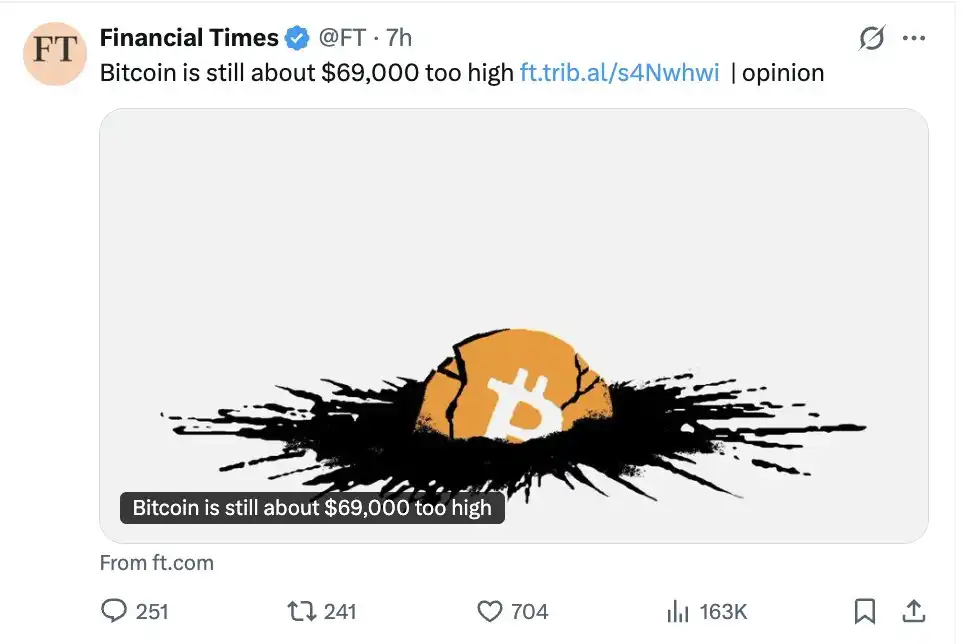
"The digital gold thesis is broken. Crypto is not a hedge against currency debasement. Worse, a miner death spiral is coming and it's going to zero. It was a scam all along." Elizabeth Warren's tweet about how Bitcoin causes cancer is probably coming any day now.

Long Live Crypto

The critics are right, Bitcoin and the rest of the market were a disappointment in 2025. The reality is this is still an immature market, just 17 years old. It largely still trades like a tech stock, and last week showed it's more intertwined with Wall Street than ever. The bright side? The same Wall Street that dragged crypto down last week can ultimately pull it back up.

And the setup is there. The Trump administration and incoming Fed Chair have signaled they plan to run the economy hot with low rates and a weak dollar to address the debt crisis. That's the macro cocktail for pushing risk assets higher, crypto included.

Furthermore, don't forget the bigger narrative. Even our longest critics no longer deny what we've built is real. Stablecoins are upgrading how global money moves. The market structure bill will pass, paving the way for all financial business to be blockchain-backed. The entire financial system is being upgraded, we're just working out the details right now.

Are we out of the woods forever? No. Macro risks could still drag us down. Quantum computing is a real threat to Bitcoin. Trump's antics give Democrats a reason to crack down on the industry again if they regain power.

But a hundred years from now, this will all be noise, and an internet-based financial system will look inevitable. This period will be seen as the chaotic beginning. And there's a real wildcard: the merging of crypto and AI is inevitable. We just don't know what it looks like yet. In short, we are still actually early.

AI-slop free guarantee This article is guaranteed to be free of AI-slop. That is to say, every word was typed by a human. That said, I did use Claude Opus 4.6 as an editing and research partner, which was fed content written by people much smarter than me.


Crypto di tendenza

Domande pertinenti

QWhat were the main factors that led to the crypto market crash described in the article?

AThe main factors included the launch of Trump's and his family's meme coins, which damaged credibility; Trump's announcement of 100% tariffs on China; MSCI's proposal to exclude crypto-heavy companies from indices; a major technical failure at Binance causing massive liquidations; and the subsequent decoupling from rising traditional markets followed by a re-coupling during a broader market sell-off.

QHow did institutional adoption become a 'double-edged sword' for the crypto market according to the author?

AInstitutional adoption became a double-edged sword because while it brought massive capital and legitimacy, it also deeply intertwined crypto with traditional finance (TradFi). This meant that when Wall Street faced a sell-off (e.g., in tech stocks), risk managers liquidated positions across assets, including crypto ETFs and derivatives, triggering a cascading sell-off in the crypto market itself.

QWhat macroeconomic conditions does the author believe could help crypto recover?

AThe author points to expected low interest rates and a weak dollar under the Trump administration and the incoming Fed chair, which are seen as a recipe for overheating the economy and boosting risk assets, including cryptocurrencies.

QWhat long-term trend does the author identify that supports the future of crypto, despite short-term volatility?

AThe author identifies the broader narrative of financial infrastructure moving on-chain. This includes the adoption of stablecoins for global money movement, the eventual passing of market structure legislation, and the inevitable upgrade of the entire financial system to be blockchain-based.

QWhat external threat does the author mention that could pose a risk to Bitcoin in the future?

AThe author mentions quantum computing as a realistic future threat to Bitcoin's security.

Letture associate

Within Strategy's Framework, STRC's Dividend Yield Remains at 12% as Share Price Stays Below Par Value

Michael Saylor, Executive Chairman of Strategy (MSTR), confirmed that the dividend rate for its STRC perpetual preferred shares will remain at 12.00% through August 2026. The rate has increased from 9% at its July 2025 launch to the current high via a "ratchet" mechanism, which permanently raises the rate by 0.5% whenever the share price falls below $95. This mechanism is intended to push the price back toward its $100 par value and support Strategy's "at-the-market" (ATM) program for issuing new shares to fund Bitcoin purchases. However, the mechanism has not worked as intended. STRC shares closed at $89.46 on July 31, remaining about 10-11% below par value despite the record-high dividend. Competition from rival Strive's higher-yielding SATA securities has pressured demand. The persistent discount has forced Strategy to suspend new STRC issuances via its ATM program, limiting this funding channel for Bitcoin acquisitions. STRC's struggles reflect Bitcoin's own volatility, as the preferred shares historically move in tandem. Analysts have warned the ratchet structure carries long-term, one-way risk. A law firm is investigating Strategy's ability to maintain dividend payments if Bitcoin's price stays low. Retail investors own roughly 83% of outstanding STRC shares, a group seen as prone to panic selling during downturns. In response, Strategy has established financial reserves, including a liquidity cushion covering about 26 months of dividend/interest obligations, and a $2 billion share buyback program alongside a Bitcoin monetization framework, though the company emphasized it is not obligated to sell any Bitcoin.

cryptonews.ru3 min fa

Within Strategy's Framework, STRC's Dividend Yield Remains at 12% as Share Price Stays Below Par Value

cryptonews.ru3 min fa

Analyst: Bitcoin's Price Will Drop to $60k in August, Then Rebound to $70k

Financial analyst Andrey Poroshin has provided a new forecast for Bitcoin's price dynamics in August. Poroshin, an analyst at the Bitbanker exchange, expects the cryptocurrency market to experience a downturn this month, with prices retesting the $60,000 level due to a lack of supportive macroeconomic catalysts. He noted that the recent US Federal Reserve decision to hold interest rates did not significantly impact the market, while inflation remains above the 2% target. Poroshin stated that Bitcoin is ending July under pressure from moderate volatility and a lack of new macroeconomic stimuli, leading to continued market caution. According to his base scenario, Bitcoin will drop to a range of $60,000 to $62,000 before recovering to $70,000. He pointed out that even $70,000 remains below the cost of mining in the US, which has prompted some miners to shift towards AI data center operations. Poroshin cited the winding down of BitMEX's operations as a potential catalyst for a price rebound, suggesting the exit of weaker players often coincides with market reversals and reduced short-term selling pressure. He believes Bitcoin is currently less susceptible to geopolitical shocks, such as the Iran-US conflict, and does not expect significant market changes in August related to the pending CLARITY Act. Looking ahead, Poroshin forecasts that September will bring more active price fluctuations driven by potential Fed rate decisions and possible discussions or approval of the CLARITY Act.

cryptonews.ru3 min fa

Analyst: Bitcoin's Price Will Drop to $60k in August, Then Rebound to $70k

cryptonews.ru3 min fa

In Jinjiang, Fujian, a Storage Super Unicorn Lies Quiet

In Fujian's Jinjiang, a city known for sportswear, lies a quiet semiconductor giant: Fujian Jinhua Integrated Circuit Co. (JHICC). Once a promising domestic DRAM manufacturer alongside Yangtze Memory and ChangXin Memory Technologies (CXMT), its journey was derailed in 2018 when the U.S. placed it on an Entity List and filed criminal charges for alleged trade secret theft. This halted production for years. A turning point came in February 2024 when a U.S. federal court found JHICC not guilty. However, it had lost crucial time. While CXMT soared to become a top-valued A-share company in 2024, JHICC, with an estimated valuation of 80 billion RMB, was just restarting. Its current output is primarily customized DDR4 chips, not the advanced DDR5/HBM demanded for AI, but it still benefits from the broader memory chip upcycle. JHICC's story is tied to Chen Zhengkun, a veteran engineer who left Micron to lead the venture. Founded in 2016 with state-backed funding, JHICC partnered with Taiwan's UMC to develop DRAM technology. Rapid progress was cut short by the U.S. actions, which Micron initiated, partly due to its heavy reliance on the Chinese market. Post-sanctions, Chen's team worked to rebuild the production line with reduced reliance on U.S. technology. According to its records, JHICC achieved small-scale production and revenue growth under immense pressure. It now focuses on the stable "niche" DRAM market (e.g., TVs, routers) with a monthly capacity of ~40,000 wafers, aiming for 60,000 by 2026. It holds over 1,000 patents but remains on the Entity List. For Jinjiang, investing in JHICC was a bold industrial leap. The local government provided unwavering financial and logistical support during the crisis, helping the company survive. JHICC has become the anchor for a growing local semiconductor cluster. Though its scale lags behind domestic peers, JHICC's persistence symbolizes a hard-won foothold in a global market long dominated by Samsung, SK Hynix, and Micron. Having missed one boom, it seeks a place in the new AI-driven memory supercycle.

marsbit2 h fa

In Jinjiang, Fujian, a Storage Super Unicorn Lies Quiet

marsbit2 h fa

Trading

Spot

Articoli Popolari

Come comprare T

Benvenuto in HTX.com! Abbiamo reso l'acquisto di Threshold Network Token (T) semplice e conveniente. Segui la nostra guida passo passo per intraprendere il tuo viaggio nel mondo delle criptovalute.Step 1: Crea il tuo Account HTXUsa la tua email o numero di telefono per registrarti il tuo account gratuito su HTX. Vivi un'esperienza facile e sblocca tutte le funzionalità,Crea il mio accountStep 2: Vai in Acquista crypto e seleziona il tuo metodo di pagamentoCarta di credito/debito: utilizza la tua Visa o Mastercard per acquistare immediatamente Threshold Network TokenT.Bilancio: Usa i fondi dal bilancio del tuo account HTX per fare trading senza problemi.Terze parti: abbiamo aggiunto metodi di pagamento molto utilizzati come Google Pay e Apple Pay per maggiore comodità.P2P: Fai trading direttamente con altri utenti HTX.Over-the-Counter (OTC): Offriamo servizi su misura e tassi di cambio competitivi per i trader.Step 3: Conserva Threshold Network Token (T)Dopo aver acquistato Threshold Network Token (T), conserva nel tuo account HTX. In alternativa, puoi inviare tramite trasferimento blockchain o scambiare per altre criptovalute.Step 4: Scambia Threshold Network Token (T)Scambia facilmente Threshold Network Token (T) nel mercato spot di HTX. Accedi al tuo account, seleziona la tua coppia di trading, esegui le tue operazioni e monitora in tempo reale. Offriamo un'esperienza user-friendly sia per chi ha appena iniziato che per i trader più esperti.

471 Totale visualizzazioniPubblicato il 2024.12.10Aggiornato il 2026.06.02

Come comprare T

Discussioni

Benvenuto nella Community HTX. Qui puoi rimanere informato sugli ultimi sviluppi della piattaforma e accedere ad approfondimenti esperti sul mercato. Le opinioni degli utenti sul prezzo di T T sono presentate come di seguito.

活动图片












