This Week, Everyone Is Helping AI Open Bank Accounts

marsbitPubblicato 2026-03-19Pubblicato ultima volta 2026-03-19

Introduzione

This week, major players in finance and tech are racing to build payment infrastructure for AI agents. Stripe and Paradigm-backed blockchain Tempo launched its mainnet with a valuation of $5 billion, introducing the Machine Payments Protocol (MPP) to enable autonomous machine-to-machine transactions. Simultaneously, Visa unveiled a command-line tool for AI payments, Mastercard acquired stablecoin firm BVNK for $1.8 billion, Coinbase upgraded its crypto payment protocol x402, and Sam Altman’s World released an AI identity verification toolkit. The core problem: AI agents increasingly need to spend money autonomously—on APIs, compute, data, and services—but traditional payment systems (bank accounts, credit cards) require human authentication, creating a bottleneck. Both traditional finance giants and crypto-native companies are converging on solutions, leveraging existing card networks or blockchain-based systems to reduce friction for AI-driven transactions. Despite the flurry of high-value investments and infrastructure launches, current transaction volumes remain minimal (e.g., x402 processed just $65.4K in 24 hours). The market is nascent, resembling early internet infrastructure build-outs where demand eventually caught up with supply. The race is on to capture what could become a foundational layer for AI commerce—whether through traditional rails or crypto pipelines.

Author: David, Shenchao TechFlow

On March 18th, another blockchain mainnet went live.

It's called Tempo, backed by Stripe and Paradigm. Stripe is one of the world's largest online payment companies, processing $1.9 trillion in transactions last year; Paradigm is one of the largest venture capital firms in the crypto industry. The two jointly invested $500 million in Tempo last year, valuing the project at:

5 billion.

A $5 billion blockchain, not speculating on cryptocurrencies, not doing DeFi, not issuing memes. On the day of the mainnet launch, Tempo's most high-profile product was:

Enabling machines to pay machines.

This might sound abstract, but you can think of it as AI now having to pay for every step. Calling an API costs money, buying computing power costs money, pulling a batch of data from a database costs money...

But the existing payment systems are all designed for humans. Bank accounts require ID cards, credit cards require facial recognition, Alipay requires SMS verification codes.

AI can't pass any of these.

It can help you complete an entire workflow, but when it comes to the payment step, it has to stop and wait for a human to press "confirm."

So, launched alongside the mainnet is an open protocol called MPP (Machine Payments Protocol), co-developed by Stripe.

Simply put, it sets rules for transactions between machines, including how to request payments, how to authorize, how to settle, etc.

The envisioned scenario is that AI can autonomously spend money within preset limits without needing human approval for every transaction. On launch day, over 100 service providers had already integrated, including OpenAI, Anthropic, and Shopify.

But Tempo isn't the only one doing this this week.

Within five days, Visa established a new department and launched an AI payment tool, Coinbase's payment protocol underwent a major upgrade, Mastercard acquired a stablecoin company for $1.8 billion, and Sam Altman's World released a toolkit specifically for AI identity verification.

Five giants rushed through the same door in one week, eager to open bank accounts for AI.

Two Paths, One Door

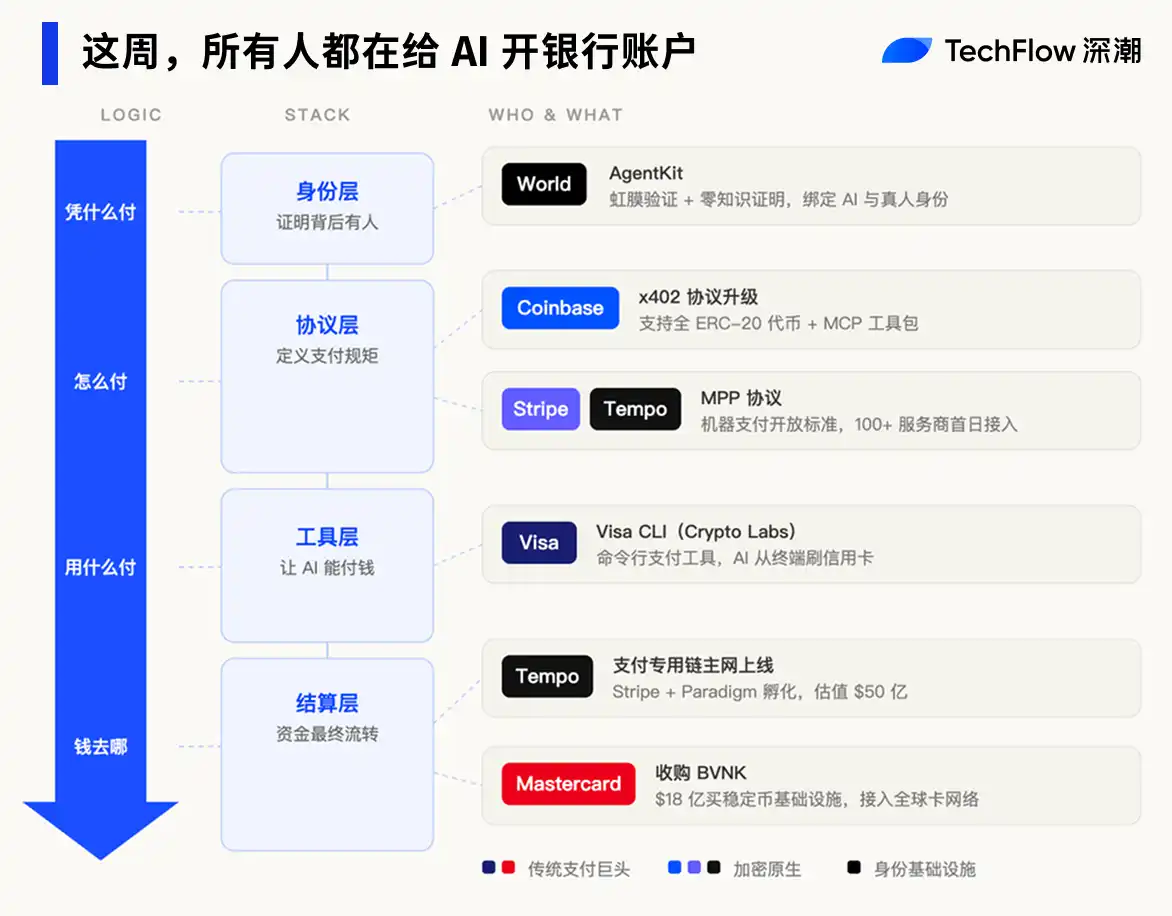
Tempo is helping AI with settlements. But settlement is just one part of the payment system. For an AI Agent to truly spend money autonomously, it also needs payment tools, funding channels, and identity verification.

Here, traditional payment companies and crypto companies are competing for the cake using their respective strengths.
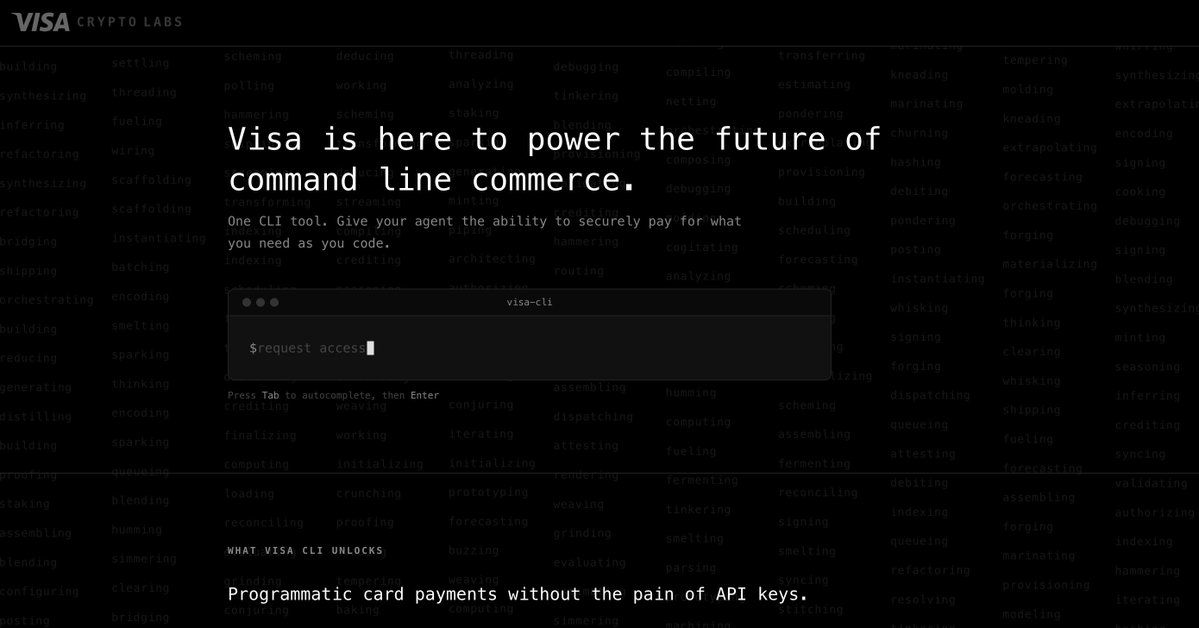
On March 18th, the same day Tempo's mainnet launched, payment giant Visa also moved. Its newly established Crypto Labs department released its first product: Visa CLI, a tool that allows AI Agents to initiate credit card payments directly from the terminal.

No API key needed, no pre-registration required. If an AI needs to buy some service while running a task, it can pay with one line of command. Visa calls this "command-line commerce."
Visa's global card network connects billions of cards and tens of millions of merchants. If AI payments can run on this existing network, it doesn't need to wait for any new infrastructure to mature.

Visa is extending the old path. Its competitor Mastercard chose another way: buying the path outright.

On March 17th, Mastercard announced the acquisition of London-based stablecoin infrastructure company BVNK for $1.8 billion. This is the largest stablecoin acquisition in the history of the crypto industry.

The purpose of this acquisition is straightforward: if AI payments are going to use stablecoins, then let those stablecoins flow through my pipes.

On the crypto-native side, the moves are equally密集 (dense).

Coinbase's x402 protocol completed a major upgrade, expanding its payment scope from a few stablecoins to all ERC-20 tokens, while also releasing the MCP toolkit, allowing developers to integrate AI tools into the payment network with one click.

The two sides seem to start from different points, but their actions point in the same direction: Traditional payment companies are embracing crypto, crypto companies are embracing AI. Ultimately, crypto infrastructure is becoming the underlying pipeline for AI payments.

One环节 (link) remains. AI can spend money, but how does the merchant know if there's a human responsible for the AI spending the money?

On March 17th, World, co-founded by Sam Altman, released AgentKit, integrated with Coinbase's x402. It does only one thing: allow the AI to prove, while paying, that there is a verified real person behind it. The merchant can confirm that someone is responsible for the transaction but cannot see who that person is.

Five days, five companies. Settlement, channels, tools, protocols, identity. Every环节 (link) has been卡位 (staked out).

AI Cake Divided, Only the Cashier Left

Over the past three years, most positions on the AI industry chain have been taken.

The model layer is the table for OpenAI, Anthropic, Google, and a number of Chinese companies. Computing power is locked down tightly by Nvidia. The application layer is a bloody red ocean from programming assistants to search engines...

Every layer is crowded, and the competitive barriers in each layer are getting higher.

But the payment layer is still relatively vacant.

It's not that no one thought of it, the timing just wasn't right. AI Agent payment has a prerequisite: AI must first have the ability to independently complete an entire task chain. If it can only chat, doesn't need to call APIs, doesn't need to buy computing power, doesn't need to hire other Agents to work, then payment is not a rigid demand.

Over the past year, this prerequisite has slowly been established.

OpenClaw allows AI to directly operate computers, the MCP protocol allows AI to access external services, and the Agent capabilities of various large models saw concentrated breakthroughs in the second half of 2025. AI changed from a "conversation tool" to a "tool that gets work done," and getting work done costs money...

The demand for spending money has arrived, but the infrastructure for spending money does not yet exist.

This is why Stripe, Visa, Mastercard, and Coinbase acted simultaneously. For traditional payment companies, this is the first time they have gained a home-field advantage in the entire AI wave. They can't make models, they can't make chips, but payment is what they've been doing for decades.

Visa's global card network connects billions of cards and tens of millions of merchants, Mastercard covers over 200 countries, Stripe processed $1.9 trillion in transactions last year. If every AI expenditure flows through these pipes, the more capable AI is, the more money they make.

For crypto companies, the logic is somewhat different.

Coinbase CEO Brian Armstrong once said something very direct: "AI can own a crypto wallet, but it can't open a bank account."

Every step of the traditional financial system confirms "who you are." Opening a bank account requires an ID card, applying for a credit card requires facial recognition, every transaction requires an SMS verification code. AI is software, not a person; it can't pass any of these checkpoints.

But crypto wallets don't need these. A private key is an account. For an AI Agent, on-chain payment is the path of least resistance.

Crypto or not, AI payment will be a new infrastructure-level market. The difference is only whose pipeline is more suitable for machines.

Road Built, Cars Not Here

The story seems all set here, five giants are in place.

But there's a number worth looking at.

Coinbase's x402 protocol is currently the earliest landed and widest-reaching AI payment protocol. According to x402scan data, the total transaction volume of the entire ecosystem in the past 24 hours is $65,400. 150,000 transactions, averaging less than 50 cents per transaction.

What infrastructure is paired with this number? Tempo is valued at $5 billion, Mastercard spent $1.8 billion to acquire BVNK, Visa specifically established a new department, Stripe personally wrote the protocol.
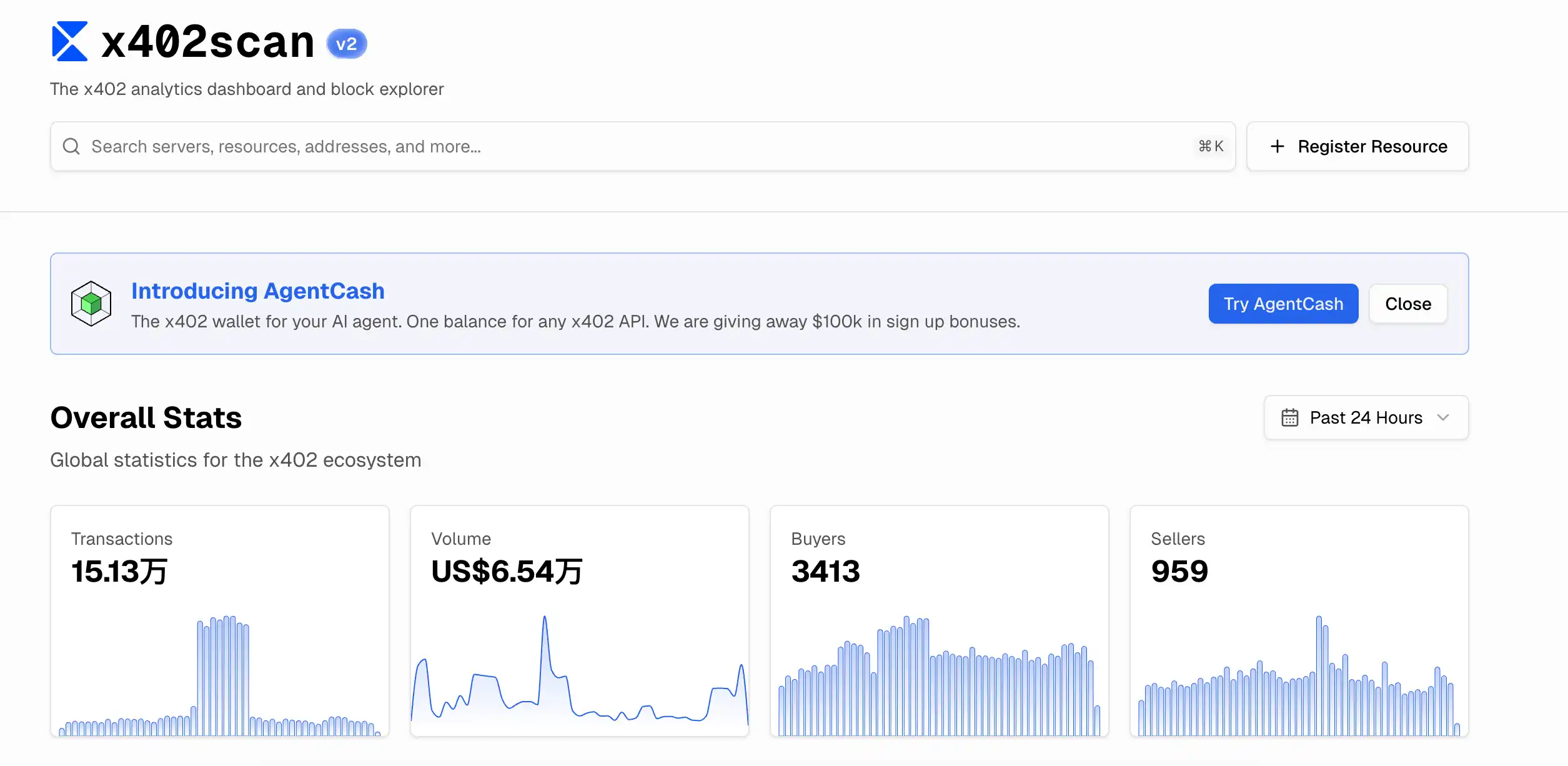
Billions in valuation infrastructure, serving a daily transaction volume akin to a roadside bubble tea shop.

All infrastructure businesses seem to have this常态 (normal state).

On the eve of the 2000 internet bubble, telecom companies laid millions of kilometers of fiber optic cables under the sea. After laying them, they found that global internet traffic only used 5% of it. Most of those companies went bankrupt, but the cables remained.

A decade later, video streaming and mobile internet filled those pipes. The road pavers didn't make money, but the road was real.

AI payment is at this stage now. The demand logic is sound: AI Agents are indeed becoming more capable, they indeed need to spend money autonomously, they indeed need a new financial infrastructure.

Everyone is on the starting line, but after the starting gun fires, they find that, for now, they are the only ones on the track.

As for whose road ultimately succeeds, and when the first truly autonomous AI transaction happens in your life, it might be faster than everyone expects, or it might be slower than everyone expects.

The only certainty is that this battle has already begun, and your wallet and mine might be the last to know.


Domande pertinenti

QWhat is Tempo and what is its primary purpose as described in the article?

ATempo is a new blockchain mainnet launched by Stripe and Paradigm, with a valuation of $5 billion. Its primary purpose is not to trade cryptocurrencies or engage in DeFi, but to enable 'machine-to-machine payments'—allowing AI systems to autonomously pay for services like API calls, computing power, or data without human intervention for each transaction.

QWhich major payment companies made significant moves in the AI payment space during the week mentioned in the article?

AVisa, Mastercard, and Stripe all made significant moves. Visa launched a new tool called Visa CLI for AI agents to initiate credit card payments, Mastercard acquired stablecoin infrastructure company BVNK for $1.8 billion, and Stripe co-developed the Machine Payments Protocol (MPP) for Tempo.

QWhat problem does the current payment system pose for AI agents according to the article?

AThe current payment system is designed for humans and requires identity verification steps like ID cards, facial recognition, or SMS codes—all of which AI agents cannot pass. This forces AI workflows to pause at the payment step, waiting for human approval, hindering full autonomy.

QWhat role does encryption infrastructure play in AI payments as per the article?

AEncryption infrastructure, such as blockchain and crypto wallets, provides a low-friction path for AI payments because it doesn't require human identity verification. AI agents can use private keys to hold and spend funds autonomously, making it easier for machines to transact compared to traditional banking systems.

QWhat is the current scale of AI payment transactions on Coinbase's x402 protocol, and what does this indicate about the market?

AAccording to x402scan data, the daily transaction volume on Coinbase's x402 protocol is $65,400, with 150,000 transactions averaging less than $0.50 each. This indicates that despite massive infrastructure investments and high expectations, the actual market for AI payments is still in its very early stages, similar to historical infrastructure booms where demand lags behind supply initially.

Letture associate

Trading

Spot
Futures

Articoli Popolari

Cosa è $BANK

Banca AI: Un Passo Rivoluzionario nel Futuro della Banca Introduzione In un'era caratterizzata da rapidi progressi tecnologici, Banca AI si trova all'incrocio tra intelligenza artificiale (AI) e servizi bancari. Questo progetto innovativo mira a ridefinire il panorama finanziario, migliorando l'efficienza operativa, le misure di sicurezza e le esperienze dei clienti attraverso il potere dell'AI. Mentre ci impegniamo in questa esplorazione di Banca AI, esamineremo cosa comporta il progetto, le sue dinamiche operative, il suo contesto storico e i traguardi significativi. Cos'è Banca AI? Alla sua essenza, Banca AI rappresenta un'iniziativa trasformativa volta a integrare l'intelligenza artificiale in varie operazioni bancarie. Questo progetto sfrutta le capacità dell'AI per automatizzare processi, migliorare i protocolli di gestione del rischio e potenziare l'interazione con i clienti attraverso servizi personalizzati. Gli obiettivi principali di Banca AI includono: Automazione delle Funzioni Bancarie: Sfruttando le tecnologie AI, Banca AI mira ad automatizzare compiti di routine, riducendo il carico sulle risorse umane e aumentando l'efficienza. Miglioramento della Gestione del Rischio: Il progetto utilizza algoritmi AI per prevedere e identificare i rischi, rafforzando così le misure di sicurezza contro le frodi e altre minacce. Personalizzazione dei Servizi Bancari: Banca AI si concentra sull'offrire prodotti e servizi finanziari su misura analizzando i dati e i comportamenti dei clienti. Miglioramento dell'Esperienza del Cliente: L'implementazione di soluzioni guidate dall'AI, come chatbot e assistenti virtuali, mira a fornire agli utenti interazioni più umane, rivoluzionando il modo in cui i clienti si relazionano con le banche. Con questi obiettivi, Banca AI si posiziona come un attore cruciale nel rendere la banca più efficiente, sicura e centrata sull'utente. Chi è il Creatore di Banca AI? I dettagli riguardanti il creatore di Banca AI rimangono sconosciuti. Pertanto, non è stata identificata alcuna persona o organizzazione specifica nelle informazioni disponibili. L'anonimato che circonda la nascita del progetto solleva domande, ma non sminuisce la sua ambiziosa visione e obiettivi. Chi sono gli Investitori di Banca AI? Simile al creatore del progetto, informazioni specifiche riguardo gli investitori o le organizzazioni di supporto di Banca AI non sono state divulgate. Senza queste informazioni, è difficile delineare il sostegno finanziario e istituzionale che potrebbe spingere il progetto in avanti. Tuttavia, l'importanza di avere una solida base di investimento è fondamentale per sostenere lo sviluppo in un campo così innovativo. Come Funziona Banca AI? Banca AI opera su più fronti innovativi, concentrandosi su fattori unici che la differenziano dai framework bancari tradizionali. Di seguito sono riportate le caratteristiche operative chiave: Automazione: Applicando algoritmi di machine learning, Banca AI automatizza vari processi manuali all'interno delle banche. Ciò si traduce in una riduzione dei costi operativi e consente ai lavoratori umani di reindirizzare i propri sforzi verso attività più strategiche. Gestione Avanzata del Rischio: L'integrazione dell'AI nelle pratiche di gestione del rischio fornisce alle banche strumenti per prevedere con precisione potenziali minacce come le frodi, garantendo che le informazioni e i beni dei clienti rimangano al sicuro. Raccomandazioni Finanziarie Personalizzate: Attraverso l'apprendimento continuo dalle interazioni con i clienti, i sistemi AI sviluppano una comprensione sfumata delle esigenze degli utenti, consentendo loro di offrire consigli su misura per le decisioni finanziarie. Interazioni Migliorate con i Clienti: Utilizzando chatbot e assistenti virtuali alimentati dall'AI, Banca AI consente un'esperienza cliente più coinvolgente, permettendo agli utenti di risolvere rapidamente le loro richieste, riducendo così i tempi di attesa e migliorando i livelli di soddisfazione. Tutte queste caratteristiche operative posizionano Banca AI come un pioniere nel settore bancario, stabilendo nuovi standard per la fornitura di servizi e l'eccellenza operativa. Timeline di Banca AI Comprendere la traiettoria di Banca AI richiede uno sguardo al suo contesto storico. Di seguito è riportata una timeline che evidenzia traguardi e sviluppi importanti: Inizio 2010: La concettualizzazione dell'integrazione dell'AI nei servizi bancari ha cominciato a guadagnare attenzione mentre le istituzioni bancarie riconoscevano i potenziali benefici. 2018: Si è verificato un aumento significativo nell'implementazione delle tecnologie AI quando le banche hanno iniziato a utilizzare strumenti AI come i chatbot per servizi clienti di base e sistemi di gestione del rischio per migliorare la sicurezza. 2023: La sofisticazione dell'AI ha continuato ad avanzare, con l'introduzione dell'AI generativa per compiti più complessi come l'elaborazione di documenti e l'analisi degli investimenti in tempo reale. Quest'anno ha segnato un significativo salto nelle capacità offerte alle banche dalla tecnologia AI. 2024-Stato Attuale: A partire da quest'anno, Banca AI è su una traiettoria ascendente, con ricerche e sviluppi in corso pronti a migliorare ulteriormente le capacità nelle operazioni bancarie. L'esplorazione continua delle applicazioni AI suggerisce sviluppi entusiasmanti in arrivo. Punti Chiave su Banca AI Integrazione dell'AI nella Banca: Banca AI si concentra sull'adozione dell'intelligenza artificiale per snellire i processi bancari e migliorare le esperienze degli utenti. Focus su Automazione e Gestione del Rischio: Il progetto enfatizza fortemente queste aree, mirando a spostare il carico di compiti di routine mentre migliora le strutture di sicurezza attraverso analisi predittive. Soluzioni Bancarie Personalizzate: Sfruttando i dati dei clienti, Banca AI consente servizi bancari su misura che si adattano alle esigenze individuali degli utenti. Impegno per lo Sviluppo: Banca AI rimane impegnata in sforzi di ricerca e sviluppo continuativi, garantendo la sua adattabilità e rilevanza continua man mano che la tecnologia continua a evolversi. Conclusione In sintesi, Banca AI rappresenta un passo cruciale in avanti nell'industria bancaria, sfruttando l'intelligenza artificiale per rimodellare i paradigmi operativi, migliorare la sicurezza e promuovere la soddisfazione del cliente. Nonostante le lacune nelle informazioni riguardo il creatore e gli investitori, gli obiettivi chiari e i meccanismi funzionali di Banca AI forniscono una solida base per la sua continua evoluzione. Mentre la tecnologia AI continua ad avanzare e fondersi con il settore bancario, Banca AI è ben posizionata per avere un impatto significativo sul futuro dei servizi finanziari, migliorando il modo in cui comprendiamo e interagiamo con la banca.

107 Totale visualizzazioniPubblicato il 2024.04.06Aggiornato il 2024.12.03

Cosa è $BANK

Come comprare BANK

Benvenuto in HTX.com! Abbiamo reso l'acquisto di Lorenzo Protocol (BANK) semplice e conveniente. Segui la nostra guida passo passo per intraprendere il tuo viaggio nel mondo delle criptovalute.Step 1: Crea il tuo Account HTXUsa la tua email o numero di telefono per registrarti il tuo account gratuito su HTX. Vivi un'esperienza facile e sblocca tutte le funzionalità,Crea il mio accountStep 2: Vai in Acquista crypto e seleziona il tuo metodo di pagamentoCarta di credito/debito: utilizza la tua Visa o Mastercard per acquistare immediatamente Lorenzo ProtocolBANK.Bilancio: Usa i fondi dal bilancio del tuo account HTX per fare trading senza problemi.Terze parti: abbiamo aggiunto metodi di pagamento molto utilizzati come Google Pay e Apple Pay per maggiore comodità.P2P: Fai trading direttamente con altri utenti HTX.Over-the-Counter (OTC): Offriamo servizi su misura e tassi di cambio competitivi per i trader.Step 3: Conserva Lorenzo Protocol (BANK)Dopo aver acquistato Lorenzo Protocol (BANK), conserva nel tuo account HTX. In alternativa, puoi inviare tramite trasferimento blockchain o scambiare per altre criptovalute.Step 4: Scambia Lorenzo Protocol (BANK)Scambia facilmente Lorenzo Protocol (BANK) nel mercato spot di HTX. Accedi al tuo account, seleziona la tua coppia di trading, esegui le tue operazioni e monitora in tempo reale. Offriamo un'esperienza user-friendly sia per chi ha appena iniziato che per i trader più esperti.

669 Totale visualizzazioniPubblicato il 2025.05.09Aggiornato il 2025.05.09

Come comprare BANK

Discussioni

Benvenuto nella Community HTX. Qui puoi rimanere informato sugli ultimi sviluppi della piattaforma e accedere ad approfondimenti esperti sul mercato. Le opinioni degli utenti sul prezzo di BANK BANK sono presentate come di seguito.

活动图片