There is no new boss YET

比推Pubblicato 2026-03-05Pubblicato ultima volta 2026-03-05

Introduzione

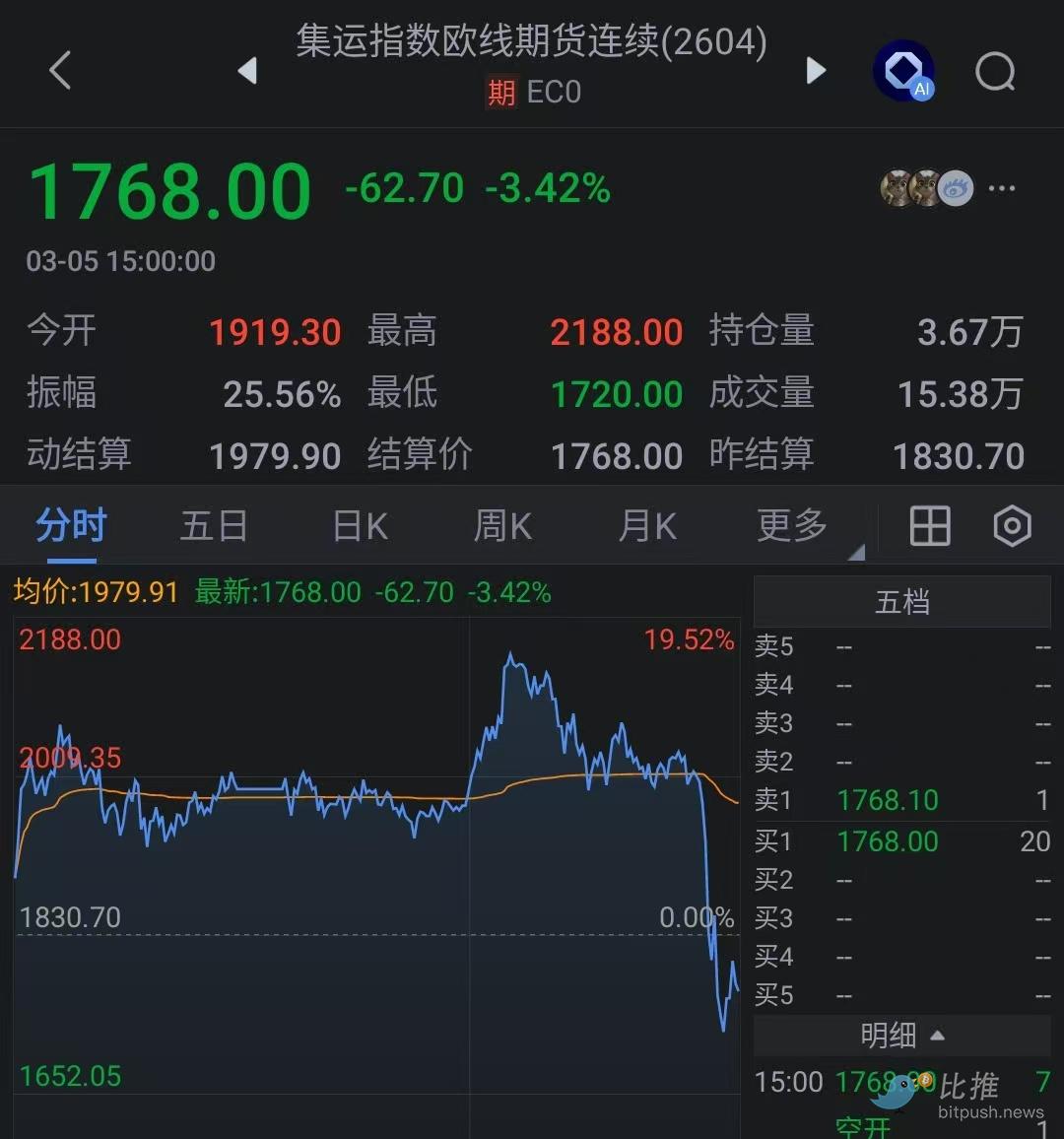
An Iranian deputy military commander from a southern district stated that the Strait of Hormuz has not been blockaded, but only vessels from the U.S. and Israel are prohibited from passing through. This caused a sharp, temporary drop in market prices for oil, gas, and container shipping routes (except European shipping, which remained down). The statement contrasts with Spain's recent refusal to allow the U.S. to use its bases for operations against Iran, where a spokesperson grimly warned of rising energy prices. Around the same time, a U.S. oil tanker sank in the Strait of Hormuz after reportedly “hitting a reef”—a claim viewed by some as corroboration of Iran’s military reports suggesting it was struck by a missile. The information landscape is filled with conflicting narratives, and all claims may be considered both true and false depending on perspective, as psychological and media operations are integral to modern warfare. There is no single authoritative voice in this conflict; even figures like Trump have contributed to the confusion with performative statements. Amid the chaos, all sides are maneuvering for strategic advantage, while humanitarian concerns are overshadowed by geopolitical games. The situation reflects a self-destructive struggle on a global scale.

Just now, uh, a deputy commander of a military district in southern Iran said something: 'We have not blocked the Strait of Hormuz,' only prohibiting ships from the US and Israel from passing. This instantly scared the market into a slide, things like European shipping, oil, gas. Scared the hell out of them, a complete mess, but at this moment, most have deeply V-recovered [except for European shipping].

This is in stark contrast to the Spanish spokesperson who, with a grave expression [at a press conference announcing Spain's refusal to negotiate with the US and allow the use of Spanish bases to attack Iran], repeatedly stated that oil and gas prices are bound to rise.

At the moment of speaking, a US oil tanker 'ran aground' and sank in the Strait of Hormuz. Think about it, 'running aground' in the world's busiest energy transport artery. This actually verifies the Iranian military's combat report. It was sunk by a missile.

Some might say, with so many messages and news, which one is true? Who is fooling whom? Actually, all can be considered true (truth mixed with falsehood, falsehood mixed with truth, remember all is fair in war.), because there is no leading figure or authority now [even if there is, like Trump giving himself a 15 out of 10 (evaluating US-Iran actions at a press conference, scoring himself, full marks 10.), it would be full of drama, and the war of public opinion has always been synchronized with the overall war and runs through it from beginning to end.]. The information released by all parties at any given moment can be considered true, but viewed from the overall situation or different standpoints, it can also be considered false. 'Everyone' is searching for the kind of 'ladder' Littlefinger talked about in the chaos, collecting as many chips as possible.

As for humanity, as for compassion. Amidst the complex and numerous coercions, there is temporarily no place for them to stand. This is the self-inflicted disaster of a group of microorganisms on this planet.

Whatever, bro.

#KingOfWar#King of War
Original article link:https://www.bitpush.news/articles/7617058

Domande pertinenti

QWhat was the immediate market reaction to the Iranian commander's statement about not blocking the Strait of Hormuz?

AThe market was instantly frightened, causing a sharp decline in prices for routes like European container shipping, oil, and gas. However, these prices mostly experienced a deep V-shaped recovery shortly after, except for European container shipping.

QHow did the Spanish spokesperson's statement contrast with the Iranian commander's?

AThe Spanish spokesperson, with a grave expression, repeatedly stated that oil and gas prices would inevitably rise during a press conference where Spain refused to negotiate with the U.S. on using its bases to attack Iran. This formed a sharp contrast to the Iranian commander's statement that they were not blocking the strait but only banning U.S. and Israeli ships.

QWhat incident is reported to have occurred in the Strait of Hormuz that seemingly confirmed Iran's military report?

AA U.S. oil tanker was reported to have 'run aground' and sunk in the Strait of Hormuz. The article suggests this was a cover story and that the tanker was actually sunk by a missile, validating Iran's military claims.

QAccording to the article, why is it difficult to determine the truth from the various news and messages circulating?

AThe article states that all information released by various parties can be considered true at the moment it is given, but when viewed from an overall perspective or different standpoints, it can also be considered false. There is no single authoritative source, and information warfare is full of deception and drama, making it hard to discern the absolute truth.

QWhat is the overall tone of the article towards the geopolitical situation described?

AThe tone is cynical and pessimistic, describing the situation as a chaotic melee where parties are fighting for leverage, with humanity and compassion having no place. It concludes with a resigned 'so be it' attitude, referring to the conflict as the自作孽 (self-inflicted disaster) of the planet's microbes.

Letture associate

Goldman Sachs: July Smashes Through Crowded Trades, U.S. Stock Bull Market Not Broken but Harder to Navigate

Goldman Sachs: July Sees Crowded Trades Unwound, U.S. Bull Market Intact but Getting Tougher. The U.S. stock market in July did not see an index-level crash, but rather a significant unwinding of speculative positions. While the S&P 500 remained stable—trading within a narrow 3.5% range and staying within 2% of its high—underlying market dynamics were volatile. Heavily crowded trades, particularly in high-momentum tech, AI-linked stocks, and Asian strategies, faced severe pressure and forced deleveraging. Data indicates this was a meaningful cleanse, not a minor adjustment. Global tech exposure saw its largest sell-off in over five years, leverage in Korean equity ETFs plummeted, and Goldman's prime brokerage recorded the largest gross exposure reduction since late 2022. Leverage on momentum factors among fundamental long/short clients fell to the 28th percentile of its one-year range. The AI trade narrative shifted from pure potential to a focus on tangible returns. While Meta failed to show clear AI monetization, Microsoft and Amazon provided evidence that massive capital expenditure is translating into scalable revenue and product growth, preventing a blanket sell-off of the AI sector. The Federal Reserve's more opaque communication style and volatility in long-end Treasury yields have introduced new friction, particularly for rate-sensitive growth and tech stocks. The broader outlook for U.S. equities remains favorable, supported by a strong economy, robust earnings, and substantial AI capital expenditure. However, risk/reward is no longer cheap, and the market's upward elasticity has weakened. The Nasdaq 100's trajectory—up 12% year-to-date despite significant pullbacks—illustrates that the bull trend persists but the path is becoming more difficult. The key lesson from July is that the market no longer rewards crowded, highly leveraged trades, requiring more disciplined and liquid portfolio approaches.

marsbit1 h fa

Goldman Sachs: July Smashes Through Crowded Trades, U.S. Stock Bull Market Not Broken but Harder to Navigate

marsbit1 h fa

Interview with Robinhood Executive: Meme + Tokenized US Stocks as "Barbell" Customer Acquisition Strategy, All Business Lines Achieve Hundreds of Millions in Revenue

Interview with Robinhood executive Johann Kerbrat reveals the company's "barbell" customer acquisition strategy for its new Robinhood Chain, combining meme tokens with tokenized stocks. Three weeks after mainnet launch, the chain has seen over $3B in weekly DEX volume and 105M transactions. Kerbrat explains the logic behind the permissionless chain: meme tokens attract DeFi users, while tokenized real-world assets (RWA), currently over 90 US stocks and ETFs accessible in 120+ countries, serve global users. The goal is to bring Robinhood's 27 million funded accounts on-chain by simplifying DeFi with a user-friendly interface, exemplified by features like Robinhood Earn which offers yield without requiring wallet management. Built on Arbitrum's technology stack for its speed, low cost, and Ethereum's security, the chain focuses on financial products like Earn, spot trading, and perpetuals. Kerbrat downplays direct competition with platforms like Base, emphasizing the goal of expanding the overall market for on-chain assets. He details selective partnerships (e.g., Morpho, Lighter) based on compliance, unique UX, and differentiation. While regulatory clarity is pending for US perpetuals, the expansion continues via Bitstamp in Europe. Finally, Kerbrat positions Robinhood as a "super app" integrating stocks, options, crypto, banking, and AI trading, with all major business lines generating hundreds of millions in revenue. For the chain, current priority is driving adoption over maximizing gas fee revenue.

marsbit3 h fa

Interview with Robinhood Executive: Meme + Tokenized US Stocks as "Barbell" Customer Acquisition Strategy, All Business Lines Achieve Hundreds of Millions in Revenue

marsbit3 h fa

Trading

Spot
活动图片