
The Wall Street Maverick, Vance's Aide, and a Century-Old Bank: Lead Bank

marsbitPubblicato 2026-01-14Pubblicato ultima volta 2026-01-14

Introduzione

Lead Bank, a century-old community bank from Missouri, has transformed into a fintech and crypto-friendly banking leader under the leadership of Wall Street veteran Jackie Reses. After acquiring the bank in 2022, Reses and her team rebuilt its core systems in-house, avoiding reliance on third-party middleware—a key vulnerability that caused industry-wide disruptions following the collapse of firms like Synapse. Lead Bank serves major fintech clients like Revolut and Ramp and is one of the first banks to support Visa’s USDC settlement on Solana. Its strategy focuses on low-cost transactional deposits from fintech and crypto firms, generating revenue primarily through fees rather than interest margins. With strong regulatory connections, including ties to the White House via Reses’s brother, the bank has navigated compliance challenges while positioning itself at the intersection of traditional banking and digital asset innovation. As of 2025, Lead Bank’s assets have doubled to $1.97 billion, driven by its tech-native approach and emphasis on real-time API-based banking services.

At the end of last year, JPMorgan Chase froze the accounts of two YC-backed stablecoin payment startups, BlindPay and Kontigo, which focused on the Latin American market. Their operations touched high-risk jurisdictions like Venezuela, triggering the bank's sanctions and compliance red lines.

Similarly, Lead Bank, another bank long considered crypto-friendly, recently tightened its cooperative services with some stablecoin payment companies, adding new customer identity verifications. Transaction settlement times and account opening processes have both been extended.

With compliance becoming mandatory, many entrepreneurs in the payment industry and stablecoin sector have realized that they are often not dealing with the banking system as a whole, but rather with a very small number of banks willing to open their doors—and capable of keeping them open.

But Lead Bank and JPMorgan Chase are fundamentally different. As one of the first two banks to participate in Visa's USDC settlement on the Solana blockchain, Lead Bank did not choose to categorically cut off banking services for startups. Instead, this bank aims to achieve a breakthrough by providing native support for crypto businesses.

The Century-Long Vicissitudes of Garden City Bank

To understand Lead Bank's present, one must first return to its past.

In 1928, before the gloom of the Great Depression enveloped the United States, a small institution named Garden City Bank was established in Cass County, Missouri.

It was an era reliant on handshake deals and credit as collateral. As a typical community bank, its fate was closely tied to the surrounding farmland, livestock, and small family businesses. Over the subsequent decades, it witnessed the prosperity and decline of the American agricultural economy and survived the Great Depression of the 1930s. This was a significant achievement, as thousands of similar institutions across the nation closed during that time.

For the next 77 years, this bank, like the small town of Garden City it was named after, quietly made its living there.

In 2005, Garden City Bank迎来了 its first turning point.

Landon H. Rowland, a business legend from Kansas City 80 kilometers away, and his wife Sarah, decided to buy Garden City Bank after retirement. Landon Rowland was no ordinary banker; he was the former Chairman and CEO of Kansas City Southern Industries. During his tenure, he expanded the railroad company into Mexico and oversaw the spin-offs of two financial giants, Janus Capital and DST Systems.

Landon bought this dormant rural bank out of a old-school business idealism. He deeply understood the power of infrastructure; whether railroad tracks or capital channels, they were essentially for connection and circulation.

In 2010, the Rowland family renamed the bank Lead Bank. The name itself hinted at ambition—no longer limited geographically to Garden City, but aiming to be a leader in the industry.

Subsequently, Landon's son, Josh Rowland, took over as CEO. Josh was a banker with a legal background, deeply influenced by humanism. He was tired of the cold, counter-style design of traditional banks, wondering why banks couldn't be like Starbucks or public libraries, serving as a community's third space.

To achieve this vision, Josh realized the bank had to leave its comfortable rural setting and enter the heart of economic activity. In 2015, Lead Bank made a bold decision to move its headquarters to the Crossroads Arts District in downtown Kansas City.

The Crossroads Arts District was once a dilapidated industrial warehouse area but was revitalized in the early 2000s by artists, galleries, and tech startups, becoming the innovative heart of Kansas City. Lead Bank created an unconventional space in this avant-garde neighborhood.
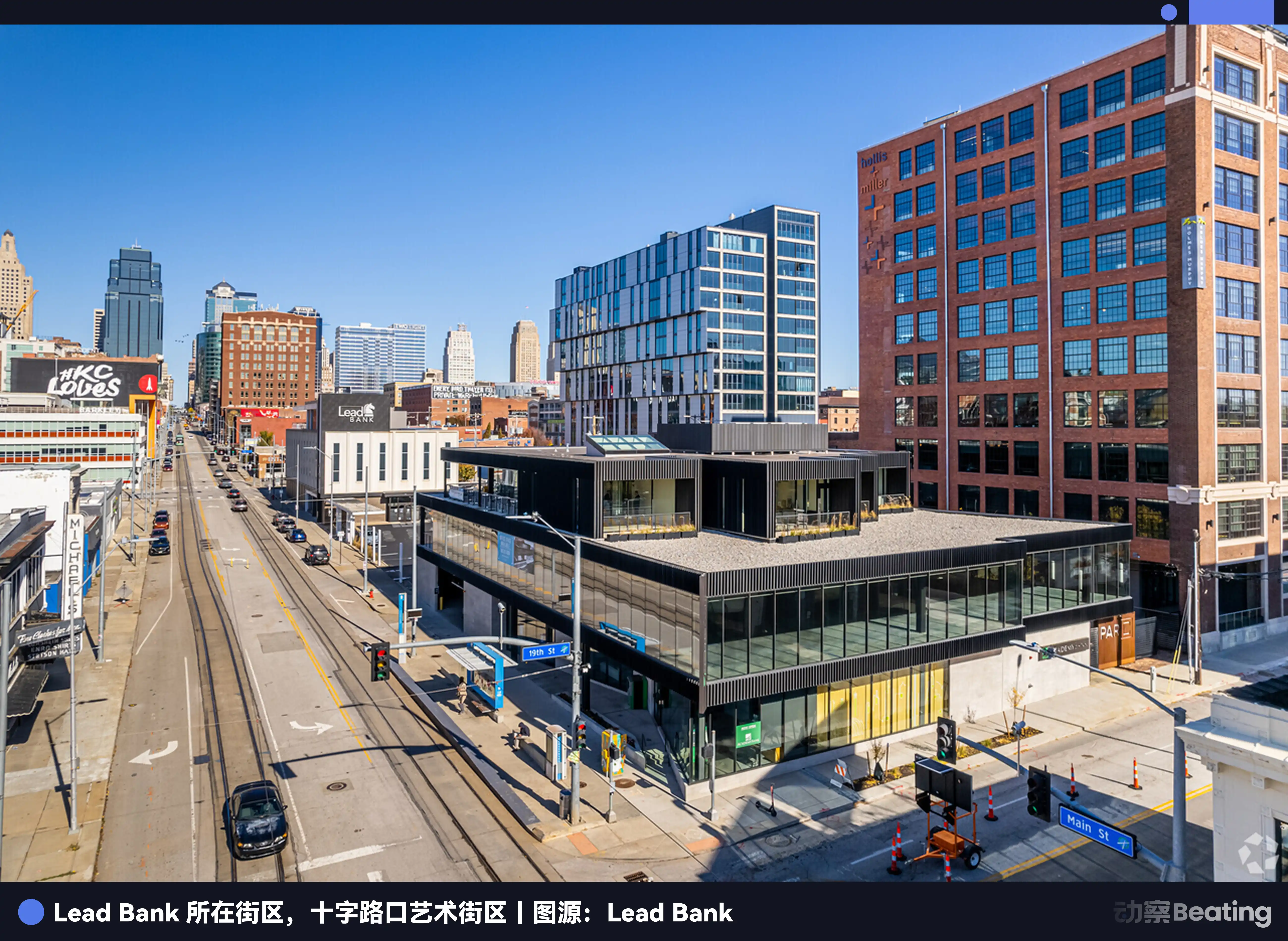
No bulletproof glass, no queue ropes. Josh even commissioned students from the Kansas City Art Institute to hold painting exhibitions in the bank lobby and designed a rooftop terrace for yoga classes and cocktail parties.

During this period, Lead Bank, though fashionable in appearance, remained a traditional community bank at its core. It served local small business owners, surviving on a network of warm, local relationships.

The Woman from Silicon Valley

While the Rowland family was reshaping Lead Bank's physical form, a powerful woman in finance named Jackie Reses was experiencing deep frustration.

Jackie Reses's career was a textbook on capital efficiency. She spent seven years at Goldman Sachs, deeply involved in mergers and acquisitions and private equity investments, honing a top-tier deal sense.

Reses then joined Yahoo, leading the management of its most important and complex asset—Yahoo's stake in Alibaba. Through extremely complex negotiations and structural design, Reses ultimately unlocked over $50 billion in value for Yahoo, a campaign that established her as a top dealmaker.

In 2015, Twitter founder Jack Dorsey recruited her to the payment processing company Square to lead Square Capital, a small business lending division that was only 18 months old. This division aimed to use merchant transaction data to provide loans to millions of small and micro enterprises. It should have been a perfect business闭环, but the U.S. regulatory system firmly blocked tech companies from the banking industry.

Thus, to comply with lending regulations, Square had to adopt a license-renting model, partnering with industrial banks like Celtic Bank in Utah, where the bank名义上 issued loans, which Square then purchased.

In an interview, Reses said working with traditional banks was very difficult. For example, traditional banks often had almost no software engineers, only a rigid, patched-together legacy system, making it hard for Fintech companies, known for user experience, to customize how they transact with customers as needed. Every new product launch involved a lengthy tug-of-war between the bank's compliance and technology departments.
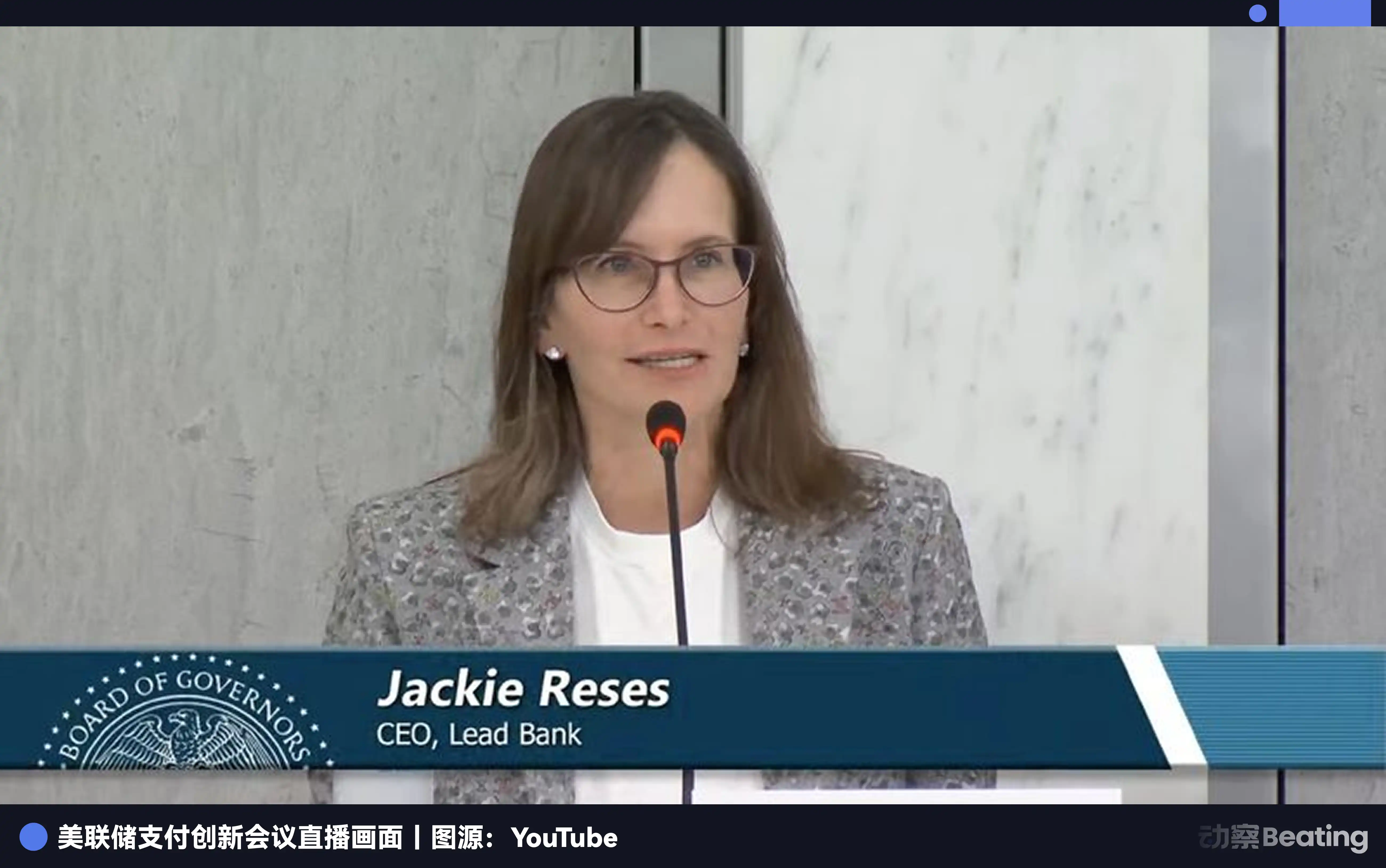
This life under someone else's roof was extremely painful. After leaving Square in 2020, Jackie Reses was determined to own her own bank. When choosing an acquisition target, her gaze avoided crowded California and New York and fell upon Lead Bank in Kansas City.

Thanks to the Rowland family's steady management, Lead Bank had a clean balance sheet and an innovative management team. More importantly, she didn't want to spend all day mixing with CEOs; she wanted to be close to real small and medium-sized business owners, which was Lead Bank's core clientele.

On August 1, 2022, the acquisition was officially completed. It was a rare transaction that received rapid approval from regulators including the Federal Reserve and the Missouri Division of Finance, largely due to Reses's good regulatory relationships.

It is also worth noting that Reses's younger brother, Jacob Reses, a rising political star, served as Chief of Staff to JD Vance in the Senate. With JD Vance assuming the role of U.S. Vice President in early 2025, Jacob Reses continued to serve as a key aide, becoming a crucial figure in White House policy formulation.

This隐秘 pipeline to the center of power in Washington, while not a get-out-of-jail-free card, provided Lead Bank with extremely low misunderstanding costs and smooth communication mechanisms under the high regulatory pressure of Chokepoint 2.0, enabling it to dare to touch innovative areas other banks avoided.

Reses's vision for Lead Bank was to overlay a fintech layer on top of the existing community bank in Kansas City—a set of banking infrastructure that could be sold to other fintech companies.

At that time, Lead Bank attracted well-known Fintech clients like Affirm and also began engaging with crypto industry clients. Despite the fintech industry still being in a winter, Lead Bank's growth began to accelerate. In the third quarter of 2023, revenue increased by 9% compared to the second quarter, reaching $37 million; net profit jumped 50% to $5 million. Total assets reached $951 million, an increase of over $100 million from a year earlier.

After the BaaS Industry Earthquake

Jackie Reses brought more to Lead Bank than just Wall Street capital and Washington's attention; she almost directly brought over a core team from Square.

This included CTO Ronak Vyas, Chief Legal Officer Erica Khalili, and Chief Product Officer Homam Maalouf, plus former Meta Design Director Albert Song. This team covered the complete闭环 from underlying code development and compliance risk management to front-end user experience design, giving Lead Bank the core capability to build financial products independently without relying on external suppliers.

When Vyas first examined the core systems of traditional banks, he felt a sense of震撼 from a bygone era. Most U.S. banks still run on mainframes from the 1970s based on the COBOL language. These systems use batch processing; the card you swipe today, the bank only knows the balance change tomorrow after running a program overnight. For Fintech companies追求毫秒级响应, this was practically prehistoric.

After taking office, Vyas made an extremely hardcore decision: don't buy off-the-shelf, build everything in-house. This self-developed system was built directly on AWS cloud services and Snowflake database, serving as a parallel ledger and risk control orchestration layer, reducing reliance on traditional middle-layer black boxes and achieving true real-time accounting.

While other banks were still buying middleware software to patch their old systems, Lead Bank had transformed itself into a tech company disguised as a bank. Although this heavy model was once嘲笑ed as inefficient, time quickly proved the foresight of Reses and Vyas.

In 2024, the famous middleware service provider Synapse declared bankruptcy, triggering a chain collapse in the BaaS industry.

As mentioned earlier, many Fintech companies neither have banking licenses nor the ability to interface with the bank's aging mainframe systems. Synapse acted as an intermediary, providing Fintech with easy-to-use interfaces on one end and managing the complex underlying accounting for the banks on the other. Before the暴雷, Synapse supported over 100 Fintech companies, indirectly managing accounts for 18 million end users, with an annual transaction volume of $76 billion.

Its collapse revealed a terrifying black box: the sub-ledgers recorded by the middleware often did not match the general ledger of funds actually held by the bank. Tens of millions of dollars vanished into thin air, and成千上万的储户 were unable to withdraw their money. Subsequently, BaaS banks like Evolve Bank and Blue Ridge Bank, which had expanded aggressively, received severe consent orders from regulators and were forced to suspend new business.

The entire industry was thrown into panic. Fintech founders were horrified to discover that their seemingly rock-solid banking partners were actually founded on quicksand.

This was the moment Reses had been waiting for. Because it insisted on not using middleware and building its own core, Lead Bank emerged unscathed from this storm.

Those panicked unicorn companies began looking for a safe haven. Revolut, one of the world's largest digital banks, fully migrated its U.S. business to Lead Bank. The corporate spending management giant Ramp also abandoned its old partners and embraced Lead Bank.

More importantly, this hardcore technology plus full-license model received狂热追捧 from the capital markets. In September 2025, Lead Bank completed a $70 million Series B funding round led by ICONIQ and Greycroft, with follow-on investments from top venture capital firms like a16z and Ribbit Capital. At this point, Lead Bank's valuation had soared to $1.47 billion, becoming a rare banking unicorn.

The Crypto-Friendly Bank of the New Cycle

If one only sees Lead Bank as a partner for Fintech, that underestimates Jackie Reses's ambition. This bank is quietly becoming a key valve between the crypto economy and the fiat world.

After the collapse of Silvergate and Signature Bank, the crypto industry lost two major pillars for dollar settlement. Lead Bank敏锐地 filled this vacuum, but its approach is smarter and more discreet than its predecessors.

At the end of 2025, Visa announced the launch of USDC stablecoin settlement functionality on the Solana blockchain, and one of the two首发 banks supporting this function behind the scenes was Lead Bank. This means that when you use your Visa card somewhere in the world, the underlying fund flow may no longer go through the slow SWIFT system but could be settled in seconds via USDC through a Lead Bank account.

Lead Bank doesn't just help crypto companies store money; it also maps fiat accounts to on-chain addresses. Through its API, compliant crypto businesses can achieve 7x24 real-time fiat currency inflows and outflows.

Looking at Lead Bank's financial statements, one finds its growth logic is completely different from that of traditional community banks.

As of the third quarter of 2025, Lead Bank's total assets had soared to $1.97 billion, more than double pre-acquisition levels. The key here lies in the reshaping of its deposit structure. Traditional banks beg individuals for time deposits, paying 4%-5% interest.

By serving Fintech and crypto clients, Lead Bank obtains a large amount of commercial demand deposits. This money typically stays in accounts for payment settlement purposes, is insensitive to interest rates, meaning Lead Bank has extremely low funding costs on the liability side.

On the asset side, this is where Lead Bank is most restrained. It did not, like Silicon Valley Bank, use customers' short-term deposits to buy long-term government bonds, nor did it extensively issue high-risk commercial loans. Instead, it allocated大量资金 to highly liquid short-term assets or, through its Fintech partners, engaged in very fast-turnaround short-term credit投放.

2024 data showed that its main non-interest revenue—coming from payment processing fees, API call fees, card issuance commissions, etc.—grew by 39%, far exceeding the growth rate of traditional interest income.

This creates a flywheel: low-cost settlement funds come in, earning risk-free手续费, funds流转 quickly. This is more like a transaction-based revenue model than a traditional bank's interest spread model.

Reading this, you understand that in the current turbulent transition period for the金融 and crypto industries, the language of regulation, the language of banks, and the language of tech companies have never been consistent. And every inconsistency can one day turn into a rectification order.

Lead Bank has proven that in the age of AI and blockchain, the most radical innovation may not come from destroying the old world, but from the old world's own awakening. By融合百年银行信誉、硅谷工程能力和现代艺术的人文关怀于一炉, Lead Bank has not only survived but has defined what a 21st-century bank is.


Domande pertinenti

QWhat is Lead Bank and how does it positioning itself in the financial industry?

ALead Bank is a century-old community bank originally known as Garden City Bank, which has been transformed into a modern financial institution that combines traditional banking credibility with Silicon Valley engineering capabilities. It positions itself as a key enabler for fintech and crypto companies by providing native banking support, real-time API-driven services, and infrastructure without relying on middleware. It aims to be a leader in connecting traditional finance with innovative sectors like stablecoin payments and blockchain settlement.

QWho is Jackie Reses and what role did she play in Lead Bank's transformation?

AJackie Reses is a Wall Street veteran with a background at Goldman Sachs, Yahoo, and Square. She acquired Lead Bank in 2022 and led its transformation by bringing in a tech-focused team, self-building modern core banking systems on AWS, and shifting the bank's focus to serving fintech and crypto clients. Her vision was to overlay a fintech layer on top of the traditional community bank, making it a technology company in banking clothing.

QHow did Lead Bank avoid the BaaS (Banking-as-a-Service) industry collapse in 2024?

ALead Bank avoided the BaaS industry collapse by insisting on self-building its core banking systems without relying on third-party middleware. When middleware provider Synapse went bankrupt in 2024, exposing mismanagement and financial discrepancies at other banks, Lead Bank's in-house, real-time accounting system remained secure and reliable. This allowed it to attract major fintech clients like Revolut and Ramp seeking stability.

QWhat is Lead Bank's role in the crypto and stablecoin ecosystem?

ALead Bank serves as a critical bridge between the crypto economy and traditional fiat systems. It was one of the two launch banks supporting Visa's USDC stablecoin settlement on the Solana blockchain, enabling faster, cheaper cross-border transactions. It also provides API-driven services for compliant crypto businesses, allowing 24/7 real-time fiat-to-crypto transactions and serving as a secure banking partner in the post-Silvergate/Signature Bank landscape.

QHow does Lead Bank's business model differ from traditional banks in terms of revenue and growth?

ALead Bank's business model relies heavily on low-cost commercial demand deposits from fintech and crypto clients, which are less interest-sensitive, reducing funding costs. Instead of depending on traditional interest income, it generates significant revenue from non-interest sources like payment processing fees, API call charges, and card issuance fees. This creates a high-velocity, transaction-based revenue flywheel, contrasting with the slower, interest-dependent models of conventional banks.

Letture associate

How Many Tokens Away Is Yang Zhilin from the 'Moon Chasing the Light'?

The article explores the intense competition between two leading Chinese AI companies, DeepSeek and Kimi (Moon Dark Side), and the mounting pressure on Yang Zhilin, the founder of Kimi. While DeepSeek re-emerged after 15 months of silence with its powerful V4 model—boasting 1.6 trillion parameters and low-cost, long-context capabilities—Kimi has been focusing on long-context processing and multi-agent systems with its K2.6 model. Yang faces a threefold challenge: technological rivalry, commercialization pressure, and investor expectations. Despite Kimi’s high valuation (reaching $18 billion), its revenue heavily relies on a single product with low paid conversion rates, while DeepSeek’s strategic silence and open-source influence have strengthened its market position and valuation prospects, now targeting over $20 billion. Both companies reflect broader trends in China’s AI ecosystem: Kimi aims for global influence through open-source contributions and agent-based advancements, while DeepSeek prioritizes foundational innovation and hardware independence, notably shifting to Huawei’s chips. Their competition is seen as vital for China’s AI progress, with the gap between top Chinese and U.S. models narrowing to just 2.7% on the Elo rating scale. Ultimately, the article argues that this rivalry, though anxiety-inducing for leaders like Zhilin, is essential for driving innovation and solidifying China’s role in the global AI landscape.

marsbit12 h fa

How Many Tokens Away Is Yang Zhilin from the 'Moon Chasing the Light'?

marsbit12 h fa

Trading

Spot
Futures

Articoli Popolari

Cosa è $S$

Comprendere SPERO: Una Panoramica Completa Introduzione a SPERO Mentre il panorama dell'innovazione continua a evolversi, l'emergere delle tecnologie web3 e dei progetti di criptovaluta gioca un ruolo fondamentale nel plasmare il futuro digitale. Un progetto che ha attirato l'attenzione in questo campo dinamico è SPERO, denotato come SPERO,$$s$. Questo articolo mira a raccogliere e presentare informazioni dettagliate su SPERO, per aiutare gli appassionati e gli investitori a comprendere le sue basi, obiettivi e innovazioni nei domini web3 e crypto. Che cos'è SPERO,$$s$? SPERO,$$s$ è un progetto unico all'interno dello spazio crypto che cerca di sfruttare i principi della decentralizzazione e della tecnologia blockchain per creare un ecosistema che promuove l'impegno, l'utilità e l'inclusione finanziaria. Il progetto è progettato per facilitare interazioni peer-to-peer in modi nuovi, fornendo agli utenti soluzioni e servizi finanziari innovativi. Al suo interno, SPERO,$$s$ mira a responsabilizzare gli individui fornendo strumenti e piattaforme che migliorano l'esperienza dell'utente nello spazio delle criptovalute. Questo include la possibilità di metodi di transazione più flessibili, la promozione di iniziative guidate dalla comunità e la creazione di percorsi per opportunità finanziarie attraverso applicazioni decentralizzate (dApps). La visione sottostante di SPERO,$$s$ ruota attorno all'inclusività, cercando di colmare le lacune all'interno della finanza tradizionale mentre sfrutta i vantaggi della tecnologia blockchain. Chi è il Creatore di SPERO,$$s$? L'identità del creatore di SPERO,$$s$ rimane piuttosto oscura, poiché ci sono risorse pubblicamente disponibili limitate che forniscono informazioni dettagliate sul suo fondatore o fondatori. Questa mancanza di trasparenza può derivare dall'impegno del progetto per la decentralizzazione—un ethos che molti progetti web3 condividono, dando priorità ai contributi collettivi rispetto al riconoscimento individuale. Centrando le discussioni attorno alla comunità e ai suoi obiettivi collettivi, SPERO,$$s$ incarna l'essenza dell'empowerment senza mettere in evidenza individui specifici. Pertanto, comprendere l'etica e la missione di SPERO rimane più importante che identificare un creatore singolo. Chi sono gli Investitori di SPERO,$$s$? SPERO,$$s$ è supportato da una varietà di investitori che vanno dai capitalisti di rischio agli investitori angelici dedicati a promuovere l'innovazione nel settore crypto. Il focus di questi investitori generalmente si allinea con la missione di SPERO—dando priorità a progetti che promettono avanzamenti tecnologici sociali, inclusività finanziaria e governance decentralizzata. Queste fondazioni di investitori sono tipicamente interessate a progetti che non solo offrono prodotti innovativi, ma contribuiscono anche positivamente alla comunità blockchain e ai suoi ecosistemi. Il supporto di questi investitori rafforza SPERO,$$s$ come un concorrente degno di nota nel dominio in rapida evoluzione dei progetti crypto. Come Funziona SPERO,$$s$? SPERO,$$s$ impiega un framework multifunzionale che lo distingue dai progetti di criptovaluta convenzionali. Ecco alcune delle caratteristiche chiave che sottolineano la sua unicità e innovazione: Governance Decentralizzata: SPERO,$$s$ integra modelli di governance decentralizzati, responsabilizzando gli utenti a partecipare attivamente ai processi decisionali riguardanti il futuro del progetto. Questo approccio favorisce un senso di proprietà e responsabilità tra i membri della comunità. Utilità del Token: SPERO,$$s$ utilizza il proprio token di criptovaluta, progettato per servire varie funzioni all'interno dell'ecosistema. Questi token abilitano transazioni, premi e la facilitazione dei servizi offerti sulla piattaforma, migliorando l'impegno e l'utilità complessivi. Architettura Stratificata: L'architettura tecnica di SPERO,$$s$ supporta la modularità e la scalabilità, consentendo un'integrazione fluida di funzionalità e applicazioni aggiuntive man mano che il progetto evolve. Questa adattabilità è fondamentale per mantenere la rilevanza nel panorama crypto in continua evoluzione. Coinvolgimento della Comunità: Il progetto enfatizza iniziative guidate dalla comunità, impiegando meccanismi che incentivano la collaborazione e il feedback. Nutrendo una comunità forte, SPERO,$$s$ può affrontare meglio le esigenze degli utenti e adattarsi alle tendenze di mercato. Focus sull'Inclusione: Offrendo basse commissioni di transazione e interfacce user-friendly, SPERO,$$s$ mira ad attrarre una base utenti diversificata, inclusi individui che potrebbero non aver precedentemente interagito nello spazio crypto. Questo impegno per l'inclusione si allinea con la sua missione generale di empowerment attraverso l'accessibilità. Cronologia di SPERO,$$s$ Comprendere la storia di un progetto fornisce preziose intuizioni sulla sua traiettoria di sviluppo e sui traguardi. Di seguito è riportata una cronologia suggerita che mappa eventi significativi nell'evoluzione di SPERO,$$s$: Fase di Concettualizzazione e Ideazione: Le idee iniziali che formano la base di SPERO,$$s$ sono state concepite, allineandosi strettamente con i principi di decentralizzazione e focus sulla comunità all'interno dell'industria blockchain. Lancio del Whitepaper del Progetto: Dopo la fase concettuale, è stato rilasciato un whitepaper completo che dettaglia la visione, gli obiettivi e l'infrastruttura tecnologica di SPERO,$$s$ per suscitare interesse e feedback dalla comunità. Costruzione della Comunità e Prime Interazioni: Sono stati effettuati sforzi attivi di outreach per costruire una comunità di early adopters e potenziali investitori, facilitando discussioni attorno agli obiettivi del progetto e ottenendo supporto. Evento di Generazione del Token: SPERO,$$s$ ha condotto un evento di generazione del token (TGE) per distribuire i propri token nativi ai primi sostenitori e stabilire una liquidità iniziale all'interno dell'ecosistema. Lancio della Prima dApp: La prima applicazione decentralizzata (dApp) associata a SPERO,$$s$ è stata attivata, consentendo agli utenti di interagire con le funzionalità principali della piattaforma. Sviluppo Continuo e Partnership: Aggiornamenti e miglioramenti continui alle offerte del progetto, inclusi partnership strategiche con altri attori nello spazio blockchain, hanno plasmato SPERO,$$s$ in un concorrente competitivo e in evoluzione nel mercato crypto. Conclusione SPERO,$$s$ rappresenta una testimonianza del potenziale del web3 e delle criptovalute di rivoluzionare i sistemi finanziari e responsabilizzare gli individui. Con un impegno per la governance decentralizzata, il coinvolgimento della comunità e funzionalità progettate in modo innovativo, apre la strada verso un panorama finanziario più inclusivo. Come per qualsiasi investimento nello spazio crypto in rapida evoluzione, si incoraggiano potenziali investitori e utenti a ricercare approfonditamente e a impegnarsi in modo riflessivo con gli sviluppi in corso all'interno di SPERO,$$s$. Il progetto mostra lo spirito innovativo dell'industria crypto, invitando a ulteriori esplorazioni delle sue innumerevoli possibilità. Mentre il percorso di SPERO,$$s$ è ancora in fase di sviluppo, i suoi principi fondamentali potrebbero effettivamente influenzare il futuro di come interagiamo con la tecnologia, la finanza e tra di noi in ecosistemi digitali interconnessi.

75 Totale visualizzazioniPubblicato il 2024.12.17Aggiornato il 2024.12.17

Cosa è $S$

Cosa è AGENT S

Agent S: Il Futuro dell'Interazione Autonoma in Web3 Introduzione Nel panorama in continua evoluzione di Web3 e criptovalute, le innovazioni stanno costantemente ridefinendo il modo in cui gli individui interagiscono con le piattaforme digitali. Uno di questi progetti pionieristici, Agent S, promette di rivoluzionare l'interazione uomo-computer attraverso il suo framework agentico aperto. Aprendo la strada a interazioni autonome, Agent S mira a semplificare compiti complessi, offrendo applicazioni trasformative nell'intelligenza artificiale (AI). Questa esplorazione dettagliata approfondirà le complessità del progetto, le sue caratteristiche uniche e le implicazioni per il dominio delle criptovalute. Cos'è Agent S? Agent S si presenta come un innovativo framework agentico aperto, progettato specificamente per affrontare tre sfide fondamentali nell'automazione dei compiti informatici: Acquisizione di Conoscenze Specifiche del Dominio: Il framework apprende in modo intelligente da varie fonti di conoscenza esterne ed esperienze interne. Questo approccio duale gli consente di costruire un ricco repository di conoscenze specifiche del dominio, migliorando le sue prestazioni nell'esecuzione dei compiti. Pianificazione su Lungo Orizzonte di Compiti: Agent S impiega una pianificazione gerarchica potenziata dall'esperienza, un approccio strategico che facilita la suddivisione e l'esecuzione efficiente di compiti complessi. Questa caratteristica migliora significativamente la sua capacità di gestire più sottocompiti in modo efficiente ed efficace. Gestione di Interfacce Dinamiche e Non Uniformi: Il progetto introduce l'Interfaccia Agente-Computer (ACI), una soluzione innovativa che migliora l'interazione tra agenti e utenti. Utilizzando Modelli Linguistici Multimodali di Grandi Dimensioni (MLLM), Agent S può navigare e manipolare senza sforzo diverse interfacce grafiche utente. Attraverso queste caratteristiche pionieristiche, Agent S fornisce un framework robusto che affronta le complessità coinvolte nell'automazione dell'interazione umana con le macchine, preparando il terreno per innumerevoli applicazioni nell'AI e oltre. Chi è il Creatore di Agent S? Sebbene il concetto di Agent S sia fondamentalmente innovativo, informazioni specifiche sul suo creatore rimangono elusive. Il creatore è attualmente sconosciuto, il che evidenzia sia la fase embrionale del progetto sia la scelta strategica di mantenere i membri fondatori sotto anonimato. Indipendentemente dall'anonimato, l'attenzione rimane sulle capacità e sul potenziale del framework. Chi sono gli Investitori di Agent S? Poiché Agent S è relativamente nuovo nell'ecosistema crittografico, informazioni dettagliate riguardanti i suoi investitori e sostenitori finanziari non sono documentate esplicitamente. La mancanza di approfondimenti pubblicamente disponibili sulle fondazioni di investimento o sulle organizzazioni che supportano il progetto solleva interrogativi sulla sua struttura di finanziamento e sulla roadmap di sviluppo. Comprendere il supporto è cruciale per valutare la sostenibilità del progetto e il suo potenziale impatto sul mercato. Come Funziona Agent S? Al centro di Agent S si trova una tecnologia all'avanguardia che gli consente di funzionare efficacemente in contesti diversi. Il suo modello operativo è costruito attorno a diverse caratteristiche chiave: Interazione Uomo-Computer Simile a Quella Umana: Il framework offre una pianificazione AI avanzata, cercando di rendere le interazioni con i computer più intuitive. Mimando il comportamento umano nell'esecuzione dei compiti, promette di elevare le esperienze degli utenti. Memoria Narrativa: Utilizzata per sfruttare esperienze di alto livello, Agent S utilizza la memoria narrativa per tenere traccia delle storie dei compiti, migliorando così i suoi processi decisionali. Memoria Episodica: Questa caratteristica fornisce agli utenti una guida passo-passo, consentendo al framework di offrire supporto contestuale mentre i compiti si sviluppano. Supporto per OpenACI: Con la capacità di funzionare localmente, Agent S consente agli utenti di mantenere il controllo sulle proprie interazioni e flussi di lavoro, allineandosi con l'etica decentralizzata di Web3. Facile Integrazione con API Esterne: La sua versatilità e compatibilità con varie piattaforme AI garantiscono che Agent S possa adattarsi senza problemi agli ecosistemi tecnologici esistenti, rendendolo una scelta attraente per sviluppatori e organizzazioni. Queste funzionalità contribuiscono collettivamente alla posizione unica di Agent S all'interno dello spazio crittografico, poiché automatizza compiti complessi e multi-fase con un intervento umano minimo. Man mano che il progetto evolve, le sue potenziali applicazioni in Web3 potrebbero ridefinire il modo in cui si svolgono le interazioni digitali. Cronologia di Agent S Lo sviluppo e le tappe di Agent S possono essere riassunti in una cronologia che evidenzia i suoi eventi significativi: 27 Settembre 2024: Il concetto di Agent S è stato lanciato in un documento di ricerca completo intitolato “Un Framework Agentico Aperto che Usa i Computer Come un Umano”, mostrando le basi per il progetto. 10 Ottobre 2024: Il documento di ricerca è stato reso pubblicamente disponibile su arXiv, offrendo un'esplorazione approfondita del framework e della sua valutazione delle prestazioni basata sul benchmark OSWorld. 12 Ottobre 2024: È stata rilasciata una presentazione video, fornendo un'idea visiva delle capacità e delle caratteristiche di Agent S, coinvolgendo ulteriormente potenziali utenti e investitori. Questi indicatori nella cronologia non solo illustrano i progressi di Agent S, ma indicano anche il suo impegno per la trasparenza e il coinvolgimento della comunità. Punti Chiave su Agent S Man mano che il framework Agent S continua a evolversi, diversi attributi chiave si distinguono, sottolineando la sua natura innovativa e il potenziale: Framework Innovativo: Progettato per fornire un uso intuitivo dei computer simile all'interazione umana, Agent S porta un approccio nuovo all'automazione dei compiti. Interazione Autonoma: La capacità di interagire autonomamente con i computer attraverso GUI segna un passo avanti verso soluzioni informatiche più intelligenti ed efficienti. Automazione di Compiti Complessi: Con la sua metodologia robusta, può automatizzare compiti complessi e multi-fase, rendendo i processi più veloci e meno soggetti a errori. Miglioramento Continuo: I meccanismi di apprendimento consentono ad Agent S di migliorare dalle esperienze passate, migliorando continuamente le sue prestazioni e la sua efficacia. Versatilità: La sua adattabilità attraverso diversi ambienti operativi come OSWorld e WindowsAgentArena garantisce che possa servire un'ampia gamma di applicazioni. Man mano che Agent S si posiziona nel panorama di Web3 e delle criptovalute, il suo potenziale per migliorare le capacità di interazione e automatizzare i processi segna un significativo avanzamento nelle tecnologie AI. Attraverso il suo framework innovativo, Agent S esemplifica il futuro delle interazioni digitali, promettendo un'esperienza più fluida ed efficiente per gli utenti in vari settori. Conclusione Agent S rappresenta un audace passo avanti nell'unione tra AI e Web3, con la capacità di ridefinire il modo in cui interagiamo con la tecnologia. Sebbene sia ancora nelle sue fasi iniziali, le possibilità per la sua applicazione sono vaste e coinvolgenti. Attraverso il suo framework completo che affronta sfide critiche, Agent S mira a portare le interazioni autonome al centro dell'esperienza digitale. Man mano che ci addentriamo nei regni delle criptovalute e della decentralizzazione, progetti come Agent S giocheranno senza dubbio un ruolo cruciale nel plasmare il futuro della tecnologia e della collaborazione uomo-computer.

422 Totale visualizzazioniPubblicato il 2025.01.14Aggiornato il 2025.01.14

Cosa è AGENT S

Come comprare S

Benvenuto in HTX.com! Abbiamo reso l'acquisto di Sonic (S) semplice e conveniente. Segui la nostra guida passo passo per intraprendere il tuo viaggio nel mondo delle criptovalute.Step 1: Crea il tuo Account HTXUsa la tua email o numero di telefono per registrarti il tuo account gratuito su HTX. Vivi un'esperienza facile e sblocca tutte le funzionalità,Crea il mio accountStep 2: Vai in Acquista crypto e seleziona il tuo metodo di pagamentoCarta di credito/debito: utilizza la tua Visa o Mastercard per acquistare immediatamente SonicS.Bilancio: Usa i fondi dal bilancio del tuo account HTX per fare trading senza problemi.Terze parti: abbiamo aggiunto metodi di pagamento molto utilizzati come Google Pay e Apple Pay per maggiore comodità.P2P: Fai trading direttamente con altri utenti HTX.Over-the-Counter (OTC): Offriamo servizi su misura e tassi di cambio competitivi per i trader.Step 3: Conserva Sonic (S)Dopo aver acquistato Sonic (S), conserva nel tuo account HTX. In alternativa, puoi inviare tramite trasferimento blockchain o scambiare per altre criptovalute.Step 4: Scambia Sonic (S)Scambia facilmente Sonic (S) nel mercato spot di HTX. Accedi al tuo account, seleziona la tua coppia di trading, esegui le tue operazioni e monitora in tempo reale. Offriamo un'esperienza user-friendly sia per chi ha appena iniziato che per i trader più esperti.

838 Totale visualizzazioniPubblicato il 2025.01.15Aggiornato il 2025.03.21

Come comprare S

Discussioni

Benvenuto nella Community HTX. Qui puoi rimanere informato sugli ultimi sviluppi della piattaforma e accedere ad approfondimenti esperti sul mercato. Le opinioni degli utenti sul prezzo di S S sono presentate come di seguito.

活动图片













