The Traffic Secret Overlooked by 99% of Web3 Creators

marsbitPubblicato 2025-12-29Pubblicato ultima volta 2025-12-29

Introduzione

Summary: Most Web3 content creators struggle with storytelling not due to a lack of creativity, but because their content lacks contrast—the element of change or transformation that makes narratives compelling. Contrast can be as simple as shifting from "before" to "after," "expectation" to "reality," or "belief" to "realization." Without it, content remains flat and forgettable, even if informative. Web3 is filled with straightforward explanations of features, data, and benefits, but the human brain engages more deeply with unexpected or relatable shifts. For instance, instead of stating "Solana is fast and cheap," a personal moment like "I clicked send, switched tabs, and realized the transaction was already complete" creates impact through contrast. Embracing contrast often requires vulnerability—admitting mistakes, doubts, or surprises—which fosters authenticity and connection. To incorporate contrast, ask: "What changed here?" and include elements like past assumptions, moments of hesitation, or unexpected outcomes. In Web3’s noisy landscape, contrast helps content stand out by being genuinely relatable, not needing exaggeration.

Original Author:Noir

Original Compilation: Deep Tide TechFlow

Most Web3 content creators think they are not good at storytelling because they feel they 'lack creativity'.

But friend, that is usually not the real root of the problem.

Actually, the real problem is:

—Your content lacks contrast.

Hey, either the content:

sounds the same,

feels flat,

or has no variation.

And when nothing changes, there is no story to tell.

What is Contrast?
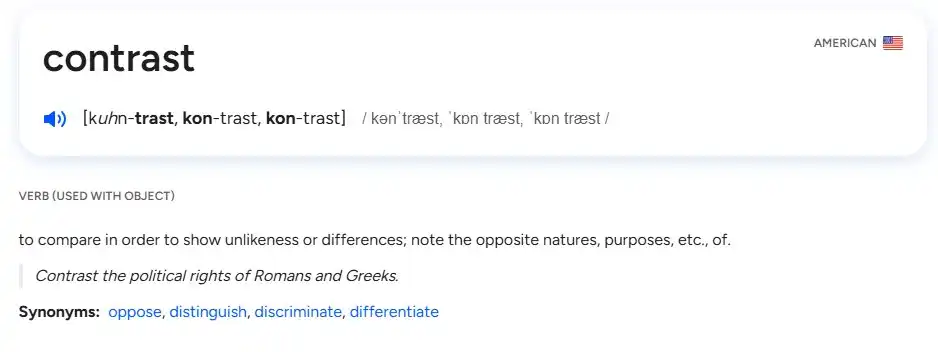
Contrast actually means that something is different from what came before.

Yes, it's that simple.

It doesn't require:

flowery language,

surprising plot twists,

or background music.

Essentially, contrast is a transformation, such as:

From "before" to "after"

From "expectation" to "reality"

From "belief" to "realization"

Without this transformation, your content is just information.

Yes, maybe it's useful, but memorable? Hmm... unlikely.

Why does a lack of contrast make content weak?

The Web3 world is full of:

features, data, promises, roadmaps......

But most content is presented too straightforwardly:

"This is what it does."

"These are its benefits."

"This is why you should care about it."

However, the brain isn't interested in this linear information.

It gets activated when something unexpected happens.

Why Content Loses Appeal Without Contrast

The Web3 world is flooded with:

features, data, promises, roadmaps......

But most content is presented too directly:

"This is its function."

"Why it's good."

"Why you need to care about it."

However, the brain isn't activated by this straight-line information.

It only wakes up when something unexpected occurs.

A Simple Example of "Contrast"

(You must have seen it countless times)

Expression without contrast:

Solana has fast transactions and low costs.

Your brain responds: Okay... and then?

Expression with contrast:

I clicked send, switched tabs, and then realized the transaction was already complete.

The same idea, but with a completely different impact.

The second expression creates a "moment." Get it?

Why Does "Contrast" Feel Uncomfortable?

(And why this is important)

Contrast often requires you to admit:

You were wrong, you were confused, you underestimated something.

That's why most people avoid it.

But this discomfort is precisely what makes content feel authentic.

People don't like flawless things.

They connect more easily with resonance and vulnerability.

When someone thinks: "Wait... I've felt that way too."

Congratulations, you've succeeded.

How to Add "Contrast" to Your Content?

Before publishing, ask yourself one question:

"What changed here?"

If you can't answer, try adding one of the following:

  • A mistaken assumption you once had
  • A moment of hesitation
  • An unexpected result
  • A 'small decision' you almost didn't make

It really doesn't need to be dramatic.

You just need a bit of relatable change.

Geek's Summary

Don't get me wrong, creativity does play an important role in storytelling.

But not everyone is naturally creative. This article is specifically for those who truly want to learn storytelling techniques.

Its core is: being sincere enough to show "transformation."

In the complex and noisy world of Web3,

"Contrast" is how you stand out without having to shout :)


Domande pertinenti

QWhat is the main reason most Web3 content creators struggle with storytelling according to the article?

AThe main reason is that their content lacks contrast, not a lack of creativity.

QHow does the article define 'contrast' in the context of storytelling?

AContrast is defined as something that differs from what came before, representing a transformation such as from 'before' to 'after' or from 'expectation' to 'reality'.

QWhy does the absence of contrast make content less engaging?

AWithout contrast, content becomes mere information presented in a straightforward way, which fails to activate the brain as it only wakes up to unexpected changes.

QWhat example does the article use to illustrate content with and without contrast?

AWithout contrast: 'Solana's transactions are fast and cheap.' With contrast: 'I clicked send, switched pages, and then realized the transaction was already complete.'

QWhy is the discomfort of using contrast important for effective storytelling?

AThe discomfort, such as admitting being wrong or confused, makes the content feel authentic and relatable, as people connect more with vulnerability and shared experiences than with perfection.

Letture associate

Can a Hair Dryer Earn $34,000? Deciphering the Reflexivity Paradox in Prediction Markets

An individual manipulated a weather sensor at Paris Charles de Gaulle Airport with a portable heat source, causing a Polymarket weather market to settle at 22°C and earning $34,000. This incident highlights a fundamental issue in prediction markets: when a market aims to reflect reality, it also incentivizes participants to influence that reality. Prediction markets operate on two layers: platform rules (what outcome counts as a win) and data sources (what actually happened). While most focus on rules, the real vulnerability lies in the data source. If reality is recorded through a specific source, influencing that source directly affects market settlement. The article categorizes markets by their vulnerability: 1. **Single-point physical data sources** (e.g., weather stations): Easily manipulated through physical interference. 2. **Insider information markets** (e.g., MrBeast video details): Insiders like team members use non-public information to trade. Kalshi fined a剪辑师 $20,000 for insider trading. 3. **Actor-manipulated markets** (e.g., Andrew Tate’s tweet counts): The subject of the market can control the outcome. Evidence suggests Tate’sociated accounts coordinated to profit. 4. **Individual-action markets** (e.g., WNBA disruptions): A single person can execute an event to profit from their pre-placed bets. Kalshi and Polymarket handle these issues differently. Kalshi enforces strict KYC, publicly penalizes insider trading, and reports to regulators. Polymarket, with its anonymous wallet-based system, has historically been more permissive, arguing that insider information improves market accuracy. However, it cooperated with authorities in the "Van Dyke case," where a user traded on classified government information. The core paradox is reflexivity: prediction markets are designed to discover truth, but their financial incentives can distort reality. The more valuable a prediction becomes, the more likely participants are to influence the event itself. The market ceases to be a mirror of reality and instead shapes it.

marsbit16 min fa

Can a Hair Dryer Earn $34,000? Deciphering the Reflexivity Paradox in Prediction Markets

marsbit16 min fa

First Day Review of "Musk's WeChat" XChat: Even Worse Than Expected

Elon Musk's much-anticipated "WeChat-like" app, XChat, has officially launched after multiple delays. The initial review reveals a product that falls short of expectations, offering an experience largely similar to X Platform's (formerly Twitter) direct messages, despite being marketed as an encrypted communication tool. Key observations from the first-day test include: 1. The app's promoted "end-to-end encryption" and its claimed relation to Bitcoin's architecture were criticized by experts as a superficial attempt to capitalize on crypto buzz, with no real technical connection. 2. Musk's vision of an ad-free "secure communication system" is technically met, but only because the app is currently extremely basic, featuring only a single chat interface. 3. A promised anti-screenshot feature appears inconsistent; it works in X Platform group chats but fails within the XChat app itself, where screenshots still capture avatars. 4. The app supports 45 languages and has a 16+ age rating, indicating a broader tolerance for content compared to WeChat's 13+ rating. 5. A puzzling login process requires users to verify the email associated with their X account. 6. The touted encryption" feels minimal in practice, with its presence only indicated by a simple "Encrypted - Yes" label on messages. 7. Disappearing message timers for groups can be set from 5 minutes to 4 weeks, with the timer starting upon being read by a user. 8. Group invite links are shared with X Platform groups. 9. Group size limits are planned to be increased, aiming for 1000 members, a move that has drawn user criticism. 10. The app offers 8 different colored icons, and its chat bubbles are notably similar to WeChat's. Message deletion options mimic Telegram's. Crucially, many pre-announced features like importing X contacts, integrating Grok AI, X Money payments, and Cashtags are not yet available. The initial release is seen as a bare-bones and underwhelming first step.

Odaily星球日报1 h fa

First Day Review of "Musk's WeChat" XChat: Even Worse Than Expected

Odaily星球日报1 h fa

Trading

Spot
Futures
活动图片