The Structural Reversal of TGE: Is It a 'Liability' to Be Liquidated or an 'Asset' to Be Left Behind?

marsbitPubblicato 2025-12-25Pubblicato ultima volta 2025-12-25

Introduzione

The crypto industry is experiencing a structural shift in the role and perception of Token Generation Events (TGEs). Once seen as a finish line, TGEs are now becoming a complex "coming-of-age" ritual, marking a broader market move from "valuation discovery" to "value discovery." Driven by regulatory clarity (like MiCA in the EU) and institutional participation, 2026 is predicted to be a peak year for TGEs, with an estimated 15-30% increase in events. However, this surge in supply—from old project unlocks, delayed TGEs, and new launches—will occur alongside intense competition for scarce liquidity, lowering market tolerance for new tokens. The classic "token first, product later" model is failing. Without achieving Product-Market Fit (PMF), a token acts as a costly liability, draining team resources and morale. Narrative alone is no longer sufficient; liquidity now demands genuine utility. For projects to survive the intense competition of 2026, the focus must shift: - Building consensus around a strong narrative and solving real problems, not just technical specs. - Cultivating a seed community of genuine users for feedback, rather than just token holders. - Planning for sustainability post-TGE with continued marketing, grants, and deep liquidity. - Designing token economies that dynamically balance unlocks and use real revenue for buybacks. In conclusion, a successful TGE is no longer measured by listing price volatility, but by a team's ability to have achieved PMF *bef...

For a long time, TGE (Token Generation Event) has been regarded as the "finish line" of Crypto. However, after a series of narrative collapses and liquidity droughts, this logic is undergoing a structural reversal.

With regulatory clarity and the participation of institutional forces, we may usher in an even larger wave of TGEs.

As 2026 approaches, we are in a critical transition period for the Crypto market.

Against this market backdrop, TGE has become a highly anticipated yet painfully challenging "rite of passage" for every project.

In this cycle, when we observe and discuss the significance, quantity, frequency, and changes of TGE (Token Generation Event) events, we find that Crypto is comprehensively shifting from "valuation discovery" to "value discovery".

2025 - 2026: The Year of TGE and Structural Predictions

Driven by factors such as regulatory clarity (e.g., U.S. SEC, EU MiCA) and predictions of capital market cycles, 2026 is highly likely to become a "breakout year" for TGEs.

From a macro perspective, increased regulatory clarity and the maturity of institutional products like ETFs and futures mean that the "macro rhythm" of TGE events broadly indicates suitable timeframes for "when is the right time for a TGE?".

By the end of 2025, we see many projects focusing on token structure compliance and locking in investors early; several projects have also proactively postponed their TGE to 2026, hinting at anticipation for that year's market window. This suggests that 2026 might be a peak issuance period, becoming a window for TGEs and liquidity release, with the number of TGEs expected to increase by 15%–30% compared to 2025.

However, a surge in the number of TGEs does not mean opportunities are abundant.

2026 is the "year of great supply". At that time, we will simultaneously face: massive unlocks from older projects, Delayed TGEs accumulated from 2024–2025, and potential TGEs from new narrative projects. In this scenario, the market's tolerance for "new TGEs" is declining.

On one hand, more compliant, institutionally-narrated projects are entering; on the other, extreme liquidity scarcity due to the concentration of new project TGEs.

From a more meso perspective, 2026 might see a dual improvement in the quantity and quality of TGEs, an "improvement" accompanied by剧烈 volatility.

At the micro level, the nature of TGE has changed. In past cycles, TGE could be defined as a marketing行为 where "revenue outweighed cost":

  • Costs: Airdrop pressure, liquidity first being skimmed off by CEXs, predictable huge selling pressure in a short time.

  • Benefits: Market attention, brand reputation, early users.

Currently, market attention is fragmented, the cost and difficulty of branding are increasing, and "early users" care less about the product and more about token monetization, heavily reliant on incentives. This means the costs and benefits of TGE have undergone a structural reversal.

The "Token First, Product Later" Path is Gradually Failing

Compared to previous cycles, where公链relied on tokens and grand narratives to build distribution advantages, then channeled traffic to the ecosystem, and finally filled in the applications.

This path is failing:

  • Narratives require PMF (Product-Market Fit): Liquidity no longer blindly follows narratives; it needs to "separate the wheat from the chaff". If TGE is conducted before achieving PMF, the token at this point更像是一笔需要偿付的、昂贵的债务 (more like a debt that needs to be repaid, an expensive liability); for the team's energy and morale, it might be exhausted in internal friction around the TGE.

  • Cold starts in the same赛道are gradually being diluted: In the future, token-based cold starts might only work for the first mover in a赛道(refer to the top公链that have weathered cycles and Perp DEX赛道's Hyperliquid). For the numerous imitators that follow, attention will be quickly diluted, and liquidity will not multiply.

  • Misalignment with exchange goals: The core of an exchange is trading fees, aiming for "the more assets, the better"; if a project pursues long-term building, the two goals are not aligned. The essence of a TGE is not just a marketing event but also a stress test for the entire team.

If 2026 is a year of残酷 competition, how should projects view TGE?

  • Narrative is consensus, not technical parameters: Don't be overly obsessed with TPS or ZK-rollup technical parameters. Need to answer: What is the community's "consensus", or rather, "religion"? And how does the product solve specific pain points?

  • Seed community: The first 100 real users are more important than the first 100 token holders, as seen in many tech communities: these people often provide the most genuine feedback and suggestions for the product and allow for low-cost PMF trial and error.

  • Sustainable strategy post-TGE: When most projects die from the "news is out" effect after listing, projects need sustainable planning. For example, reserve "marketing" ammunition, transform "expectation-driven" growth into "event-driven"; build a real ecosystem through Grants programs; provide good long-term depth, etc.;

  • Dynamic balance of the economic model: Reasonable unlocking mechanisms to reduce initial selling pressure; emulate excellent secondary market projects by using real revenue generated from the product to buy back tokens, so value support does not rely on sentiment.

Future projects need careful planning in product delivery, Token Economy design, market timing, community building, differentiated narratives, and compliance transparency to stand out in the future密集TGE period.

Conclusion: The 2026 Survival Rulebook

The failure of some TGEs is not rooted in product quality or team qualifications, but in the team's lack of resilience to withstand market scrutiny, peer competition, and narrative shifts. It stems from rushing to launch unprepared for公开market competition and narrative changes.

In 2026, the market is极可能 (highly likely) to fall into a cycle of "密集TGE issuance, value volatility and collapse, market rest and reshuffle". Those who blindly chase highs will ultimately face the dilemma of liquidity drought.

It must be seen that: Token is no longer a synonym for growth, and narratives cannot凭空 (out of thin air)催生 (generate) value.

The measure of a successful TGE is绝对不是 (absolutely not) the listing and price volatility, but whether the team already possesses the ability to repay the "liability" before the TGE—that is, whether it has already found a PMF that can generate sustained cash flow or real users.

This brutal transition towards value回归 (return to value) is essentially the market's self-purification, also opening up more fertile ground for long-termists.


Domande pertinenti

QWhat major shift is the TGE (Token Generation Event) logic undergoing according to the article?

AThe logic of TGE is undergoing a structural reversal, shifting from 'valuation discovery' to 'value discovery' due to narrative collapses and liquidity drying up.

QWhy is 2026 predicted to be a 'big year' for TGEs?

A2026 is predicted to be a big year for TGEs due to factors like regulatory clarity (e.g., from the U.S. SEC and EU MiCA), the maturity of institutional products such as ETFs and futures, and many projects locking in investors in late 2025 or delaying their TGE to 2026 in anticipation of a favorable market window.

QWhy is the 'Token first, product later' path becoming ineffective?

AThe 'Token first, product later' path is becoming ineffective because liquidity no longer blindly follows narratives and requires genuine Product-Market Fit (PMF). A TGE before achieving PMF turns the token into an expensive liability, and the cold-start advantage for projects in the same赛道 is being diluted, making it effective mostly for first movers.

QWhat should a project focus on to succeed in the competitive TGE landscape of 2026?

ATo succeed, a project should focus on narrative and consensus rather than just technical parameters, build a seed community of real users for feedback, have a sustainable post-TGE strategy (e.g., event-driven marketing, grants programs), and design a token economic model with a dynamic balance to reduce initial selling pressure and provide value support through real revenue.

QWhat is the new measure of a successful TGE, as stated in the article's conclusion?

AThe new measure of a successful TGE is not the listing or price volatility, but whether the team has acquired the ability to pay off the 'debt' before the TGE by finding a Product-Market Fit (PMF) that generates sustainable cash flow or real users.

Letture associate

This Week's Key Events Preview | U.S. to Release April CPI Data; U.S. Senate Banking Committee to Review "Digital Asset Market Structure Act of 2025"

Weekly News Preview: Key events for May 12-16 include major economic and crypto industry developments. On Tuesday, May 12, the U.S. will release its April CPI data. Additionally, the gaming blockchain Ronin will begin a 10-hour migration to an Ethereum Layer 2, built on OP Stack with EigenDA for data availability. This aims to leverage Ethereum's security and settle RON's annual inflation below 1%. Base's first independent network upgrade, "Base Azul," is scheduled for mainnet activation on Wednesday, May 13, focusing on security, performance, and developer experience enhancements. Thursday, May 14, sees the U.S. Senate Banking Committee voting on the "Digital Asset Market Structure Act of 2025." In other news, Solana DeFi protocol Carrot will shut down, setting a final withdrawal deadline due to impacts from the Drift exploit. The Moscow Exchange will launch futures trading for Solana, Ripple, and Tron indices (RUB-settled) for qualified investors. Multiple service closures are scheduled for Friday, May 15. Dmail Network will begin winding down due to unsustainable infrastructure costs and failed commercialization. Users must export data before this date. Separately, the Cosmos-based lending blockchain UX Chain will fully shut down. Finally, on Saturday, May 16, gaming infrastructure provider Lattice will wind down operations, with its Redstone Layer 2 network ceasing. Users are urged to withdraw assets, especially from contracts like Uniswap pools, before the shutdown.

链捕手54 min fa

This Week's Key Events Preview | U.S. to Release April CPI Data; U.S. Senate Banking Committee to Review "Digital Asset Market Structure Act of 2025"

链捕手54 min fa

Morning Post | Trump Media Group Releases Q1 Financial Report; Top Three DeFi Applications Return Nearly $100 Million in Revenue to Token Holders in 30 Days; Michael Saylor Shares Bitcoin Tracker Info Again

**Title: Daily Briefing | Trump Media Group Releases Q1 Report; Top 3 DeFi Apps Return Nearly $100M to Token Holders; Michael Saylor Signals Potential Bitcoin Buy** **Summary:** Key developments in the past 24 hours include: * **Economic Outlook:** Goldman Sachs has pushed back its forecast for the next two Federal Reserve interest rate cuts to December 2026 and March 2027, citing persistent inflationary pressures from energy costs. This delayed timeline is expected to tighten liquidity flow into risk assets, including cryptocurrencies. * **DeFi & Revenue:** Data from DefiLlama shows that three leading DeFi applications—Hyperliquid, Pump.fun, and EdgeX—collectively distributed $96.3 million in revenue to their token holders over the last 30 days. This trend highlights a shift in the crypto community's focus towards real protocol earnings and sustainable economic models. * **Corporate Bitcoin Moves:** Michael Saylor, founder of MicroStrategy (note: referred to as 'Strategy' in the text, likely a typographical error), has signaled potential upcoming Bitcoin purchases by posting a "Bitcoin Tracker" update, following a pattern that typically precedes the company's official disclosure of new acquisitions. * **Market Integrity:** Prediction market platform Polymarket announced updates to address platform issues, including identifying and banning clusters of accounts involved in "ghost-fill" activities and implementing measures to prevent bulk account creation. * **Regulation:** The Bank of England Governor warned that stablecoin regulation could lead to tensions between US and international regulators. In South Korea, the National Tax Service has launched a pilot program to entrust seized virtual assets to private custody firms for management. * **Meme Token Trends:** GMGN data lists the top trending meme tokens on Ethereum (e.g., HEX, SHIB), Solana (e.g., FWOG, TROLL), and Base (e.g., SKITTEN, PEPE) over the past day. **Financial Note:** Trump Media & Technology Group reported a Q1 loss of approximately $4 billion, primarily attributed to unrealized losses on its Bitcoin and other digital asset holdings.

链捕手1 h fa

Morning Post | Trump Media Group Releases Q1 Financial Report; Top Three DeFi Applications Return Nearly $100 Million in Revenue to Token Holders in 30 Days; Michael Saylor Shares Bitcoin Tracker Info Again

链捕手1 h fa

Telegram Takes Direct Control of TON, Social Traffic Rewrites the Public Chain Narrative

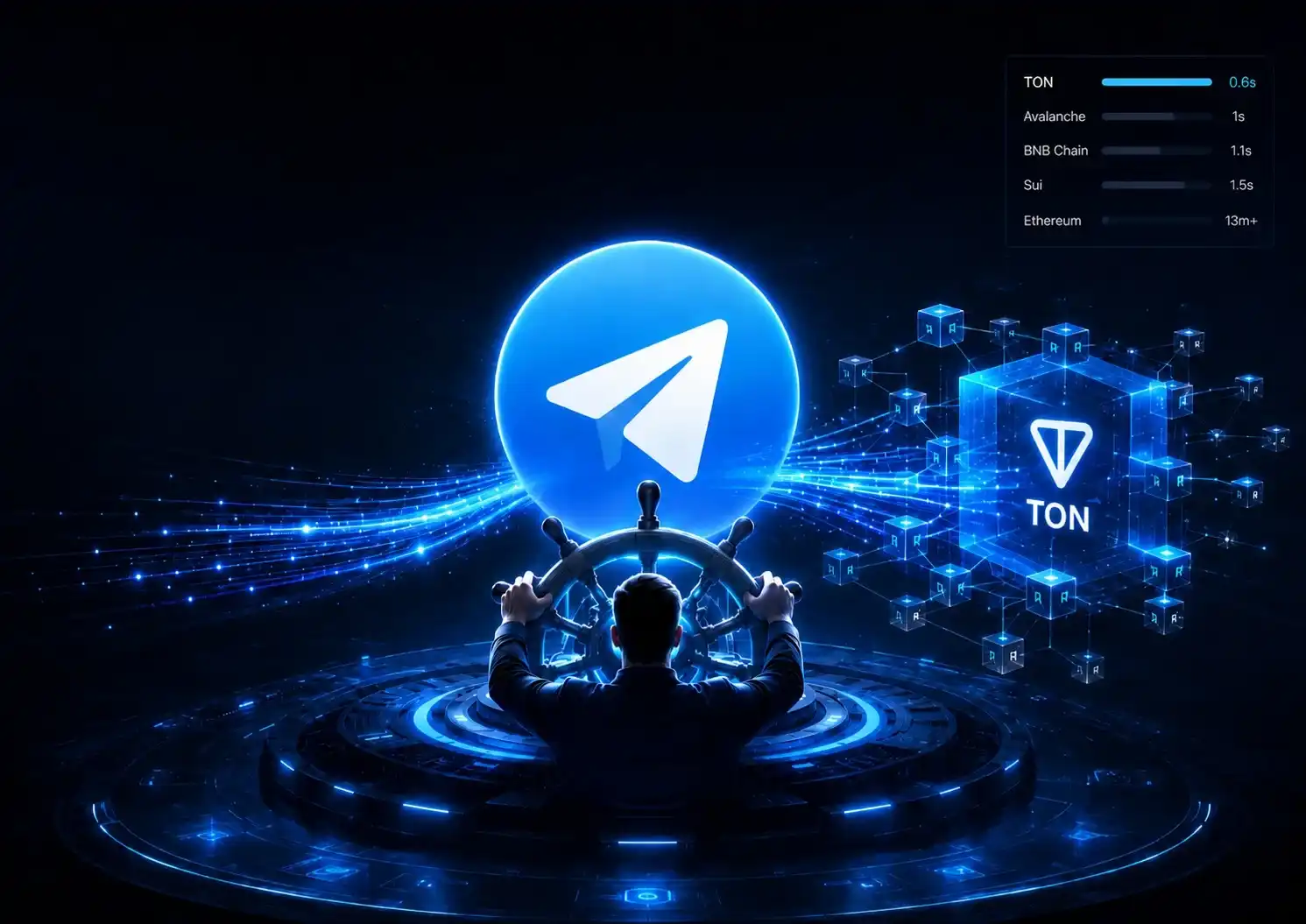
Telegram founder Pavel Durov announced that Telegram will replace the TON Foundation as the core driver and largest validator of The Open Network (TON). Key initiatives include a sixfold reduction in transaction fees, performance upgrades, and improved developer tools within the next few weeks. This marks a strategic shift from Telegram merely providing user access to deeply integrating TON into its platform's core infrastructure. The goal is to transform Telegram's massive social traffic into sustainable on-chain activity. While viral mini-apps like Notcoin have demonstrated Telegram's ability to drive user adoption, TON aims to support frequent, low-value transactions inherent to social platforms—such as tipping, in-app payments, and game rewards. Ultra-low fees and sub-second finality (0.6 seconds) are crucial to making blockchain interactions seamless and nearly invisible within the Telegram user experience. However, Telegram's increased central role raises questions about network decentralization. Durov argues that Telegram's participation will attract more large validators, thereby enhancing decentralization. TON also offers high annual staking rewards (18.8%), aiming to retain capital within its ecosystem. The fundamental challenge for TON is no longer leveraging Telegram's user base, but becoming an indispensable, seamless infrastructure layer for Telegram's everyday applications—moving from an adjacent chain to an embedded utility.

marsbit1 h fa

Telegram Takes Direct Control of TON, Social Traffic Rewrites the Public Chain Narrative

marsbit1 h fa

Trading

Spot
Futures

Articoli Popolari

Come comprare CC

Benvenuto in HTX.com! Abbiamo reso l'acquisto di CC(Canton) (CC) semplice e conveniente. Segui la nostra guida passo passo per intraprendere il tuo viaggio nel mondo delle criptovalute.Step 1: Crea il tuo Account HTXUsa la tua email o numero di telefono per registrarti il tuo account gratuito su HTX. Vivi un'esperienza facile e sblocca tutte le funzionalità,Crea il mio accountStep 2: Vai in Acquista crypto e seleziona il tuo metodo di pagamentoCarta di credito/debito: utilizza la tua Visa o Mastercard per acquistare immediatamente CC(Canton)CC.Bilancio: Usa i fondi dal bilancio del tuo account HTX per fare trading senza problemi.Terze parti: abbiamo aggiunto metodi di pagamento molto utilizzati come Google Pay e Apple Pay per maggiore comodità.P2P: Fai trading direttamente con altri utenti HTX.Over-the-Counter (OTC): Offriamo servizi su misura e tassi di cambio competitivi per i trader.Step 3: Conserva CC(Canton) (CC)Dopo aver acquistato CC(Canton) (CC), conserva nel tuo account HTX. In alternativa, puoi inviare tramite trasferimento blockchain o scambiare per altre criptovalute.Step 4: Scambia CC(Canton) (CC)Scambia facilmente CC(Canton) (CC) nel mercato spot di HTX. Accedi al tuo account, seleziona la tua coppia di trading, esegui le tue operazioni e monitora in tempo reale. Offriamo un'esperienza user-friendly sia per chi ha appena iniziato che per i trader più esperti.

273 Totale visualizzazioniPubblicato il 2026.04.21Aggiornato il 2026.04.21

Come comprare CC

Come comprare BLEND

Benvenuto in HTX.com! Abbiamo reso l'acquisto di Fluent (BLEND) semplice e conveniente. Segui la nostra guida passo passo per intraprendere il tuo viaggio nel mondo delle criptovalute.Step 1: Crea il tuo Account HTXUsa la tua email o numero di telefono per registrarti il tuo account gratuito su HTX. Vivi un'esperienza facile e sblocca tutte le funzionalità,Crea il mio accountStep 2: Vai in Acquista crypto e seleziona il tuo metodo di pagamentoCarta di credito/debito: utilizza la tua Visa o Mastercard per acquistare immediatamente FluentBLEND.Bilancio: Usa i fondi dal bilancio del tuo account HTX per fare trading senza problemi.Terze parti: abbiamo aggiunto metodi di pagamento molto utilizzati come Google Pay e Apple Pay per maggiore comodità.P2P: Fai trading direttamente con altri utenti HTX.Over-the-Counter (OTC): Offriamo servizi su misura e tassi di cambio competitivi per i trader.Step 3: Conserva Fluent (BLEND)Dopo aver acquistato Fluent (BLEND), conserva nel tuo account HTX. In alternativa, puoi inviare tramite trasferimento blockchain o scambiare per altre criptovalute.Step 4: Scambia Fluent (BLEND)Scambia facilmente Fluent (BLEND) nel mercato spot di HTX. Accedi al tuo account, seleziona la tua coppia di trading, esegui le tue operazioni e monitora in tempo reale. Offriamo un'esperienza user-friendly sia per chi ha appena iniziato che per i trader più esperti.

185 Totale visualizzazioniPubblicato il 2026.04.24Aggiornato il 2026.04.24

Come comprare BLEND

Come comprare ACN

Benvenuto in HTX.com! Abbiamo reso l'acquisto di AITECH CLOUD NETWORK (ACN) semplice e conveniente. Segui la nostra guida passo passo per intraprendere il tuo viaggio nel mondo delle criptovalute.Step 1: Crea il tuo Account HTXUsa la tua email o numero di telefono per registrarti il tuo account gratuito su HTX. Vivi un'esperienza facile e sblocca tutte le funzionalità,Crea il mio accountStep 2: Vai in Acquista crypto e seleziona il tuo metodo di pagamentoCarta di credito/debito: utilizza la tua Visa o Mastercard per acquistare immediatamente AITECH CLOUD NETWORKACN.Bilancio: Usa i fondi dal bilancio del tuo account HTX per fare trading senza problemi.Terze parti: abbiamo aggiunto metodi di pagamento molto utilizzati come Google Pay e Apple Pay per maggiore comodità.P2P: Fai trading direttamente con altri utenti HTX.Over-the-Counter (OTC): Offriamo servizi su misura e tassi di cambio competitivi per i trader.Step 3: Conserva AITECH CLOUD NETWORK (ACN)Dopo aver acquistato AITECH CLOUD NETWORK (ACN), conserva nel tuo account HTX. In alternativa, puoi inviare tramite trasferimento blockchain o scambiare per altre criptovalute.Step 4: Scambia AITECH CLOUD NETWORK (ACN)Scambia facilmente AITECH CLOUD NETWORK (ACN) nel mercato spot di HTX. Accedi al tuo account, seleziona la tua coppia di trading, esegui le tue operazioni e monitora in tempo reale. Offriamo un'esperienza user-friendly sia per chi ha appena iniziato che per i trader più esperti.

97 Totale visualizzazioniPubblicato il 2026.04.28Aggiornato il 2026.04.28

Come comprare ACN

Discussioni

Benvenuto nella Community HTX. Qui puoi rimanere informato sugli ultimi sviluppi della piattaforma e accedere ad approfondimenti esperti sul mercato. Le opinioni degli utenti sul prezzo di A A sono presentate come di seguito.

活动图片