The Second Half of Macro Influencer Fu Peng's Career

marsbitPubblicato 2026-04-21Pubblicato ultima volta 2026-04-21

Introduzione

Fu Peng, a prominent Chinese macroeconomist and former chief economist of Northeast Securities, has joined Hong Kong-based digital asset management firm Bitfire Group (formerly New Huo Group) as its chief economist. This move, announced in April 2026, triggered an 11% surge in Bitfire's stock price. Fu, known for his accessible macroeconomic commentary and large social media following, will focus on integrating digital assets into global asset allocation frameworks, particularly combining FICC (fixed income, currencies, and commodities) with cryptocurrencies for institutional clients. His career includes roles at Lehman Brothers and Solomon International, with significant influence gained through public communication. However, in late 2024, Fu faced temporary social media bans after a controversial private speech at HSBC on China's economic challenges, though he denied regulatory sanctions. He later left Northeast Securities citing health reasons. Bitfire, a licensed virtual asset manager serving high-net-worth clients, seeks to build trust and attract traditional capital through Fu’s expertise and credibility. The partnership represents a strategic shift for both: Fu enters the crypto sector after a traditional finance peak, while Bitfire aims to leverage his macro framework for institutional adoption. Outcomes remain uncertain regarding capital inflows and compatibility within corporate structure.

Author: BitalkNews

On the morning of April 20, 2026, the stock price of New Huo Group suddenly surged, rising more than 11% during the session.

What triggered this market movement was a piece of news that simultaneously ignited the financial and crypto circles: Fu Peng, former chief economist of Northeast Securities, officially joined New Huo Group as chief economist.

The news was first disclosed by Tencent News' "First Line," and New Huo Group subsequently confirmed it. Fu Peng himself also stated to the media: "It is mainly about combining FICC and C businesses."

Among them, FICC refers to fixed income, foreign exchange, and commodities, while C refers to cryptocurrency. His main work after joining will be to incorporate digital assets into the global asset allocation framework, providing macro research and asset allocation support for New Huo's institutional clients.

This is the first time he has reappeared in the public eye with an official position nearly a year after leaving Northeast Securities. For him, this is not just a change of employer but more like a restart of his career narrative.

The first half reached the pinnacle in the traditional financial system but was interrupted by controversy and illness; the second half is chosen in Hong Kong, in the crypto track, at the intersection where traditional finance and digital assets are slowly merging.

The Path of an Atypical Chief

In 2004, Fu Peng joined Lehman Brothers and later served as the head of global macro hedge strategy design at Solomon International Investment Group, responsible for currency, commodity, and major asset linkage analysis, for nearly four years.

He returned to China at the end of 2008 and worked at institutions such as Shandong High-Tech Investment, CIFCO, Galaxy Futures, Galaxy Securities, and Essence Securities.

In February 2020, he joined Northeast Securities as chief economist. His approach in this role differed from most of his peers: he made self-media his main battlefield.

He often used analogies and metaphors to explain economic logic, with a performance-style flair. His Weibo account, "Fu Peng's Financial World," has accumulated over 4 million followers, while his Douyin (TikTok) followers have reached 1.485 million. On Xiaohongshu and Bilibili, he has 355,000 and 773,000 followers, respectively.

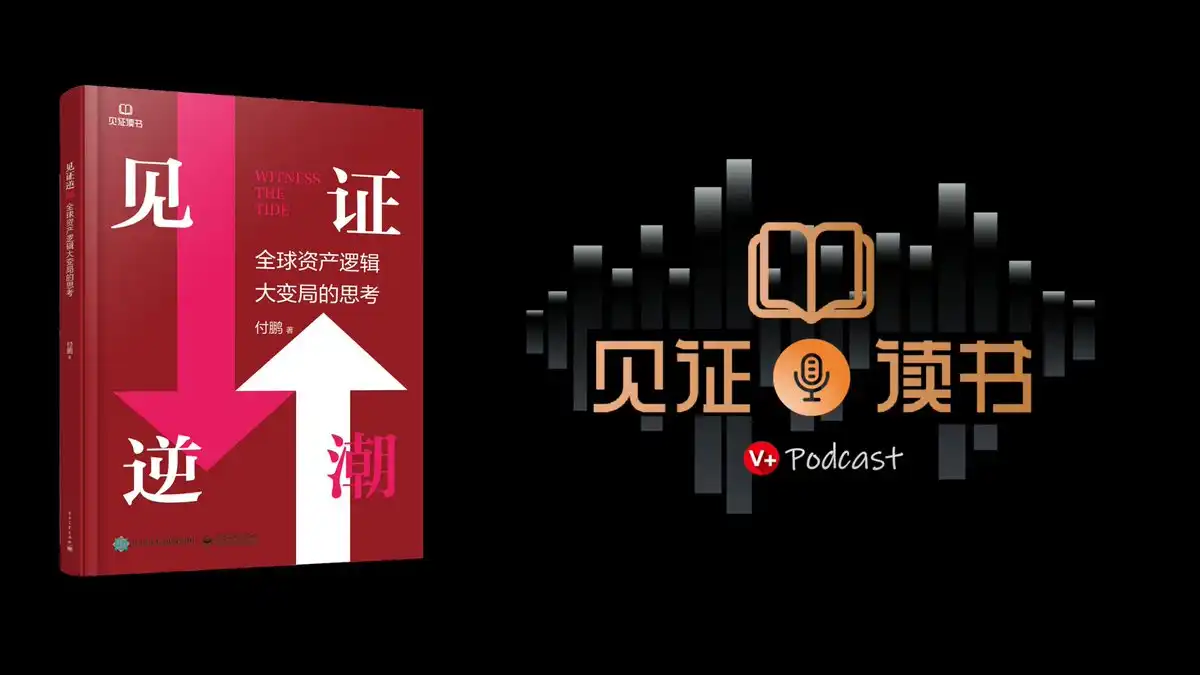
In 2024, he published "Witnessing the Countercurrent," using a three-layer framework of "politics/distribution—macro—assets" to explain changes in global asset logic after 2016.

This approach gave him high recognition in the financial circle, making him an analyst who could present complex macro logic in an accessible way to ordinary investors.

The Consequences of a Speech

In late November 2024, Fu Peng was invited to give a year-end speech at an internal HSBC Private Wealth Planning event in Shanghai. The content covered China's declining demand, shrinking middle-class income,加剧的消费分化, and his judgment that current stimulus policies could not replicate the effects of the 2008 measures.

The recording and transcript were widely circulated online, removed from multiple platforms, and his WeChat and short video accounts were banned for nearly half a year.

Rumors emerged that he was canceled due to regulatory talks. Fu Peng publicly responded, directly criticizing HSBC, sharing chat records, and stating, "A lawyer's letter is already on the way, waiting for your apology."
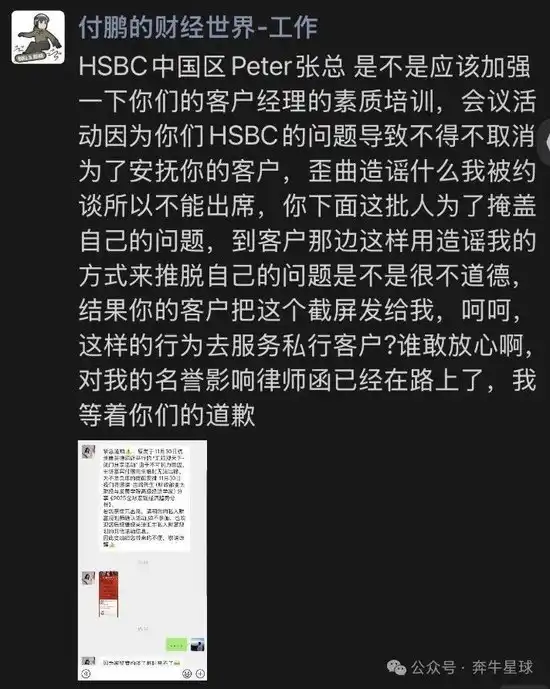
Northeast Securities also stated: There has been no recent regulatory discussion. HSBC responded that it was "looking into the relevant situation." After that, the matter quietly faded from public discussion, with no further progress, eventually ending without resolution.

During the account ban, Fu Peng's channels for public expression were significantly reduced.

On April 30, 2025, he officially resigned from Northeast Securities, explaining externally: He had just undergone two major surgeries and needed to rest for more than half a year.

Predictive Ability and Boundaries

Among Fu Peng's fan base, there are many stories about his accurate predictions, covering the 2008 financial crisis, the recovery of the Japanese stock market, and the turning point of China's real estate cycle. Since 2016, he has consistently emphasized de-globalization and changes in interest rate trends, with parts of his framework later validated to some extent.

However, his prediction record is not consistent. There have been clear deviations in short-term exchange rates and specific policy windows, with some judgments criticized as overly pessimistic or significantly inaccurate due to policy interventions. He himself admits that macro research focuses on structural variables, not next quarter's data. This is both a methodological explanation and a preventive clarification for short-term inaccuracies.

What he provides is a framework for interpreting the world, not a stable, reproducible prediction tool. Describing him as a prophet who gets everything right is a misinterpretation.
One of his major advantages is his ability to express complex macro logic in an accessible manner while maintaining relatively independent judgment. This allows his influence to reach a broader audience, and this characteristic is precisely what New Huo Group needs most.

Why Choose New Huo

Theoretically, Fu Peng had more than one option for his comeback. Traditional securities firms would welcome him back, and the role of chief economist is familiar to him, but he chose New Huo.

The space in traditional finance is narrowing. For someone who spoke so bluntly in the HSBC speech, returning to the system would mean something he likely understands better than anyone.

His skill set was never limited to traditional assets; FICC has always been his forte. After institutionalization, the connection between crypto assets and macro logic has become increasingly evident. Interest rate cycles, dollar liquidity, geopolitical risk premiums—these variables affect both traditional and digital assets.

There is also a more practical factor: a comeback requires a suitable stage.

New Huo Group is licensed in Hong Kong, listed on the Hong Kong stock exchange, and operates within a compliance framework. At the same time, its size and stage provide enough flexibility to allow a strong-minded individual to build a new research system. This is a completely different situation from playing a fixed role in a mature large institution.

Why New Huo Needs Him

New Huo Group currently positions itself as a digital asset management institution for high-net-worth clients. It holds Hong Kong SFC Type 1, 4, and 9 licenses and a TCSP trust license, making it one of the较早实现全牌照虚拟资产管理的机构 in Hong Kong.

In 2025, Weng Xiaoqi became CEO, launched the Bitfire Premium service, acquired a majority stake in the Japanese licensed exchange BitTrade, exited the retail market, and focused on family offices, listed companies, and institutional clients. At the end of March 2026, the company was renamed New Huo Group Holdings Limited, with the English name Bitfire Group.

Financially, total revenue for the 2025 fiscal year was HKD 8.661 billion, a year-on-year increase of over 450%, but growth was mainly driven by low-margin crypto OTC trading volume. The company整体依然亏损. Management has designated 2026 as the year for profitability, with significant pressure.

The compliance framework is in place, and growth numbers are impressive, but what New Huo truly lacks at this stage is not流量, but trust.

The clients it serves—family office partners, financial executives of listed companies, private investors with substantial wealth—do not lack information or data. What they lack is a narrative framework that can make them comfortable with digital assets and a professional image from the traditional financial world.

Weng Xiaoqi stated this logic quite bluntly: "Fu Peng's profound global macro research capabilities and precise market liquidity insights will become the company's top strategic brain... helping clients accurately grasp certainty in the era of 'FICC+C.'"

Fu Peng's background in international investment banking and hedge funds, his independent public persona, and his million-level influence constitute a recognizable professional signal for traditional wealthy individuals evaluating whether to allocate more funds to digital assets.

This is a transaction where both sides get what they need.

A Beginning Without a Conclusion

On one side is a person who emerged from the traditional financial system, experienced highs, controversies, and a forced interruption, now seeking a space to continue expressing and contributing. On the other side is a company striving to transition from a trading platform to an institutional service provider, attempting to establish a language more easily understood by traditional capital.

Can the appeal of macro narratives translate into real institutional capital inflows? How long can Fu Peng's independent style last within the framework of a listed company?

Will the trust of traditional wealthy clients in digital assets ultimately be built on framework认同, or will it still require further regulatory developments? These questions will take time to answer.


Domande pertinenti

QWhat is the immediate market reaction to Fu Peng joining Xinhua Group, and what was the stock performance?

AXinhua Group's stock price surged by over 11% during the morning session on April 20, 2026, following the announcement of Fu Peng's appointment as Chief Economist.

QWhat are Fu Peng's main responsibilities at Xinhua Group, particularly regarding FICC and C?

AFu Peng's primary role is to integrate digital assets into the global asset allocation framework, providing macro research and asset allocation support for institutional clients, with FICC referring to fixed income, currencies, and commodities, and C referring to cryptocurrencies.

QWhy did Fu Peng leave his previous position at Northeast Securities, and what was the public reason given?

AFu Peng left Northeast Securities in April 2025, with the public explanation being that he needed to recuperate for over six months after undergoing two major surgeries.

QWhat incident led to Fu Peng's social media accounts being suspended, and how did he respond?

AHis accounts were suspended after a speech at a HSBC private wealth event in late 2024, where he discussed sensitive economic issues. He publicly criticized HSBC, threatened legal action, and shared chat records demanding an apology.

QWhy does Xinhua Group need someone like Fu Peng, and what does his appointment signify for their business strategy?

AXinhua Group needs Fu Peng to build trust with high-net-worth and institutional clients by providing a credible macro narrative for digital assets, leveraging his traditional finance background and public influence to attract traditional capital into the crypto space.

Letture associate

The Shutdown of Claude Mythos Revealed the True Cost of Renting AI to Me

The sudden shutdown of Claude Mythos this week starkly highlights a critical, often overlooked risk for founders: when your core capability relies entirely on someone else's platform, your fate is not in your own hands. The key question becomes: who truly owns the intelligence your product depends on? For years, the debate around open-source models focused on cost. Now, the evidence is clear: fine-tuned open-source models can achieve frontier-level quality for specific, mission-critical tasks at a fraction of the cost. However, the deeper issue is control. Relying on a third-party API is like renting; it works until the landlord changes the rules, raises the rent, or asks you to leave—as Mythos experienced. The lesson is not to stop using frontier models—they are incredible infrastructure. The goal is ownership. Ownership means starting with a powerful open-source model and shaping it around what makes your company unique: your data, workflows, domain expertise, and definition of "good." Over time, the model becomes less generic and more reflective of your business, creating durable value. The optimistic conclusion is that AI's future doesn't hinge on one superior model. There is no single frontier. The frontier includes proprietary models, models fine-tuned on company-specific knowledge, specialized models for narrow problems, and intelligent routers orchestrating model ensembles. The most interesting development is not models getting smarter, but intelligence becoming increasingly customizable. The winning companies will be those that transform intelligence into a unique, owned asset. Looking ahead, the vision is not one model dominating all, but many teams owning the part of the frontier that matters most to them.

marsbit1 min fa

The Shutdown of Claude Mythos Revealed the True Cost of Renting AI to Me

marsbit1 min fa

Tiger Research: U.S. Strategic Bitcoin Reserve - Should the Market Be Happy or Disappointed?

Tiger Research analyzes the evolution of U.S. legislative efforts regarding a strategic Bitcoin reserve, concluding the market impact is limited in the short term but potentially positive long-term. The core event was a March 2025 executive order by former President Trump, which designated confiscated Bitcoin as a strategic reserve and promised not to sell existing holdings (approx. 190k BTC). As it contained no mandate to purchase new Bitcoin, the market reacted negatively, with prices dropping 5.7%. Legislative history shows a significant retreat from initial ambitions. The 2024 "BITCOIN Act" proposed mandatory purchases of 1 million BTC over five years. Reintroduced in 2025, it stalled due to high fiscal costs, concerns over dollar hegemony, and opposition from the Treasury Secretary. The current frontrunner, the 2026 "American Retirement and Monetary Advancement (ARMA) Act," is a compromise. It lacks any purchase requirement, instead focusing on consolidating existing government-held Bitcoin and legally prohibiting its sale for at least 20 years. While ARMA has higher passage odds due to bipartisan support and no purchase mandate, its immediate market effect is neutral. It eliminates potential government selling pressure but creates no new demand. The long-term significance is that formally establishing Bitcoin as a national reserve asset in law could later reignite debates on mandatory purchases. Therefore, the path to a government buyer is longer than initially priced by the market, but the directional narrative remains intact.

marsbit3 min fa

Tiger Research: U.S. Strategic Bitcoin Reserve - Should the Market Be Happy or Disappointed?

marsbit3 min fa

US Stock Market Trend (June 16): SpaceX Rises 42% in Two Days, New Fed Chairman Takes Office Today

**U.S. Stocks Trend (June 16): SpaceX Soars 42% in Two Days, New Fed Chair Takes Office Today** Markets surged on Monday following former President Trump's social media announcement of a completed U.S.-Iran deal to reopen the Strait of Hormuz, pending a June 19 signing. The news triggered a broad risk-on rally: oil prices crashed, tech stocks soared, bond yields fell, and defensive sectors lagged. **Market Performance:** The Nasdaq jumped 3.07%, led by semiconductor stocks like Micron (+9.2%). The S&P 500 gained 1.65%, and the Dow rose 0.92% to a record high. However, the Russell 2000 small-cap index underperformed (+0.72%). SpaceX continued its hot streak, rising another 5% pre-market after disclosures of large buys by an Australian billionaire and Cathie Wood's ARK. Boeing also rallied on the transportation optimism. Conversely, energy stocks like Chevron fell over 3% on the oil price plunge, with other defensive sectors also selling off. The day's action showed a clear rotation of funds from energy/defensive plays into AI and tech narratives. **Macro & Outlook:** The VIX fear index fell 8.37%. Treasury yields declined, and WTI crude dropped over 5%. Attention now shifts to a packed schedule: the Bank of Japan is widely expected to hike rates to 1.0% on Tuesday. The Fed's June meeting concludes Wednesday, marking new Chair Wash's debut. While rates are expected to hold, his tone on stubborn inflation and the "dot plot" will be crucial for gauging the 2024 rate path. The formal Iran deal signing is set for Friday. **Trend Perspective:** While the peace deal is a genuine positive, Monday's explosive rally may have gotten ahead of itself, pricing in a swift resolution to inflation concerns. The shortened trading week faces a triple test: BoJ tightening, the Fed's policy stance, and deal implementation details. Tech and semiconductors, which led the surge, remain vulnerable to any disappointment from these key events. The real price discovery begins with the central banks' communications this week.

marsbit25 min fa

US Stock Market Trend (June 16): SpaceX Rises 42% in Two Days, New Fed Chairman Takes Office Today

marsbit25 min fa

Xiaohongshu's Second Great Voyage, This Time Sailing Towards AI

Xiaohongshu's Second Voyage: Navigating Towards AI Since ChatGPT's emergence, Xiaohongshu's founder Mao Wenchao has been acutely aware of AI's potential threat, recognizing that the life advice people seek from chatbots overlaps directly with his platform's core business. Founded in 2013 as a PDF shopping guide for Chinese tourists, Xiaohongshu evolved into a massive community where millions share authentic, personal experiences—from product reviews to travel tips. This vast repository of "I've tried this" human judgment became its most valuable asset. However, the rise of AI, which delivers instant answers, challenges the very need for users to sift through numerous personal notes. Fearing its treasure trove of lived experience could become mere training data for others, Xiaohongshu is proactively adapting. In 2026, it established a dedicated AI division (Dots), launched RED Skill to turn user experiences into usable AI tools, and acquired the AI search product "Diandian." Its investments now extend to AI firms like MiniMax and hardware startups, moving upstream to address needs before they even become search queries. The platform's commercialization strategy is also evolving. With a newly acquired payment license and tools like the AIPS model to track consumer decision journeys, Xiaohongshu aims to seamlessly integrate recommendations with transactions, embedding commerce within AI-generated answers. Yet, a critical tension remains. While building smarter machines to organize and leverage its human experiences, Xiaohongshu must prevent AI from drowning out the authentic, flawed, and trustworthy "I've tried this" voices that built its community. Its core challenge is to harness AI's power without letting the map—the machine's perfect, synthesized answer—replace the territory of genuine human experience. This balance between technological advancement and preserving human trust defines its current journey and its future.

marsbit57 min fa

Xiaohongshu's Second Great Voyage, This Time Sailing Towards AI

marsbit57 min fa

Trading

Spot
Futures
活动图片