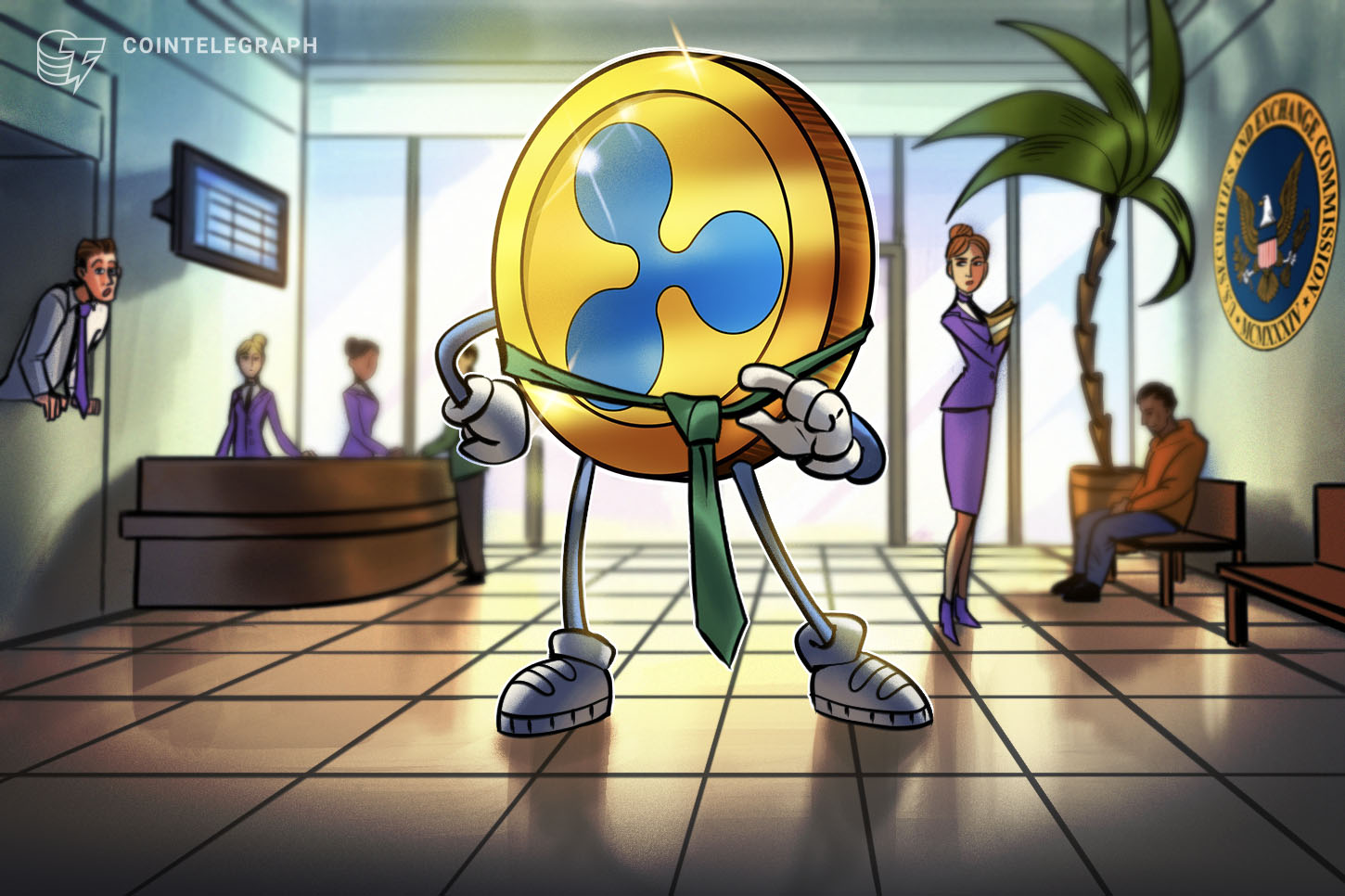
The cryptocurrency market in Russia should transition to official exchange trading of digital currencies and digital rights: the Bank of Russia has prepared and made publicly available the first drafts of regulatory acts for such a system.
How the Central Bank Proposes to Organize Digital Trading
The regulator has prepared a package of amendments to its regulation on organized trading. Their goal is to create clear conditions for working with digital currencies, including cryptocurrency, as well as with digital rights on official platforms.
One of the key elements of the new model is calculating the volume-weighted average price. This indicator is needed by the market to assess liquidity, analyze portfolios, and make investment decisions. According to the proposed logic, the price will be calculated as the sum of the products of transaction prices and the volume of the corresponding asset, including digital currency or rights.
Separately, the concept of the market price of digital currency and digital rights is introduced. It is planned to be calculated at the end of one trading day based on all transactions concluded during the main trading session.
Basic requirements already in force for other instruments will be extended to digital assets: regular currency, securities, commodities, and other assets. For example, trading organizers will be required to disclose data on the number of concluded contracts and their total monetary volume on their websites each month.
Why a Digital Depository is Needed
The Bank of Russia is also introducing a new market participant—the digital depository. It will be responsible for accounting for cryptocurrencies and digital rights. The regulator has prepared separate requirements for such organizations: minimum capital must range from 50 to 250 million rubles, and among the mandatory conditions are liquid property and assets with high credit quality.
Similar rules are provided for electronic platform operators, whose functions will be performed by operators of information systems. They will be able to conduct settlements for digital financial assets through a nominee account.
Furthermore, the regulator establishes the procedure for opening and maintaining digital and other accounts. In essence, the digital depository should become for digital instruments what an ordinary depository is for the securities market.
For transparent control, the Bank of Russia intends to independently maintain a unified registry of digital depositories. Such a database should help market participants understand which organizations operate within the legal framework.
Why Regulation is Important for Investors and Business
Anatoly Aksakov, Chairman of the State Duma Committee on the Financial Market, noted that digital rights and cryptocurrencies are attracting noticeable interest from Russians. At the same time, the lack of regulation has long left market participants in a vulnerable position.
Due to the lack of regulation, the risk of encountering fraudsters, speculators, and other unscrupulous participants persisted. Moreover, the market remained opaque in terms of taxes, transaction security, and the protection of its participants' rights. Now these gaps should be closed.
According to Anatoly Aksakov, cryptocurrency is already becoming a significant instrument for international settlements. Therefore, the ability to trade it within the exchange infrastructure is important not only for private investors but also for large companies.
In practice, the new rules should bring digital instruments closer to the familiar financial environment, where instruments like shares as a financial instrument, assets in accounting, and other categories understandable to businesses already exist. For investors, this means clearer rules for entry, accounting, and risk assessment.
For Russian investors, the main advantage of a regulated market is more understandable access to digital assets and transparent accounting of transactions. The main risk remains the same: high volatility, technical errors, regulatory changes, and fraudulent schemes can quickly lead to losses.
What Currently Affects the Cryptocurrency Market
The global cryptocurrency market remains sensitive to news, supply and demand, regulatory changes, and technological trends. In Russia, the key factor is the transition to clear rules: the clearer the order of trading, accounting, and information disclosure, the easier it is for investors and businesses to assess risks.
Short-term forecasts for Bitcoin and other digital currencies usually depend on liquidity, overall investor interest, news about regulation, and the extent to which digital assets are used in settlements and technological scenarios.
How to Earn Money from Cryptocurrency
Earnings from cryptocurrencies are possible through long-term investments, trading, mining, and staking. But each method requires an understanding of the market: an investor needs to understand volatility, asset storage, fees, tax issues, and the risk of encountering unscrupulous participants.
The prospects of a cryptocurrency are usually assessed by its liquidity, market capitalization, demand, real-world application, and the quality of the infrastructure surrounding the asset. Bitcoin remains the main benchmark for the market, while altcoins, stablecoins, and tokens attract attention depending on the problem they solve.
Types of Digital Assets and Where to Monitor the Market
Altcoins refer to cryptocurrencies other than Bitcoin. Stablecoins try to peg their value to a more stable asset, so they are often viewed as a settlement instrument. NFTs, or non-fungible tokens, are distinguished by the uniqueness of a specific digital object and do not function like a regular fungible coin.
Cryptocurrency exchange rates and charts in real time are typically tracked through websites and apps of crypto exchanges, market data aggregators, analytical terminals, and mobile apps with price alerts. Cryptocurrencies can be bought, sold, or exchanged through crypto exchanges, exchange services, and, as regulation emerges, through official organized platforms. In any case, it's important to verify the terms of the transaction, storage rules, and risk level.
The global context is also pushing for regulation. Bitcoin and other digital currencies have long been perceived not only as speculative instruments. The market capitalization of a cryptocurrency is the conditional total value of all its coins or tokens in circulation. It is important for assessing the scale of the asset, investor interest, and its place in the market. A token on a blockchain can be used in various financial and technological scenarios, including digital rights and non-fungible tokens.
On the global market, approaches to cryptocurrencies differ: the United States of America and China are building their own control models, and the development of artificial intelligence makes issues of data analysis, risk identification, and transaction monitoring even more important. In this context, the formation of Russian rules for digital assets appears to be a step towards a more transparent and manageable financial system.
end-content