The Richest Fed Chair in History? Three Challenges Kevin Warsh Is About to Face

marsbitPubblicato 2026-04-24Pubblicato ultima volta 2026-04-24

Introduzione

Kevin Warsh, nominated by Trump as the next Federal Reserve Chair, faces three major challenges as he prepares to take office. With a personal investment portfolio exceeding $130 million, including holdings in crypto protocols and public chains, he is set to become the wealthiest Fed chair in history. Warsh, known for his historically hawkish stance, has recently shifted his position, arguing that AI is a powerful deflationary force that could boost productivity. However, rising CPI and energy prices pose a risk to this outlook. He strongly defended Fed independence, stating that it is eroded not by political pressure but by the institution’s own missteps, such as blurring the lines between monetary and fiscal policy during the 2021-2022 inflation period. Additionally, Warsh advocates for significant balance sheet reduction while potentially cutting rates—a combination that markets find unsettling. He also proposes modernizing inflation measurement with real-time data, including stablecoins and on-chain pricing, to improve policy responsiveness. His confirmation is currently delayed due to a political investigation into current Chair Powell, adding uncertainty to his appointment.

Author: BiBi News

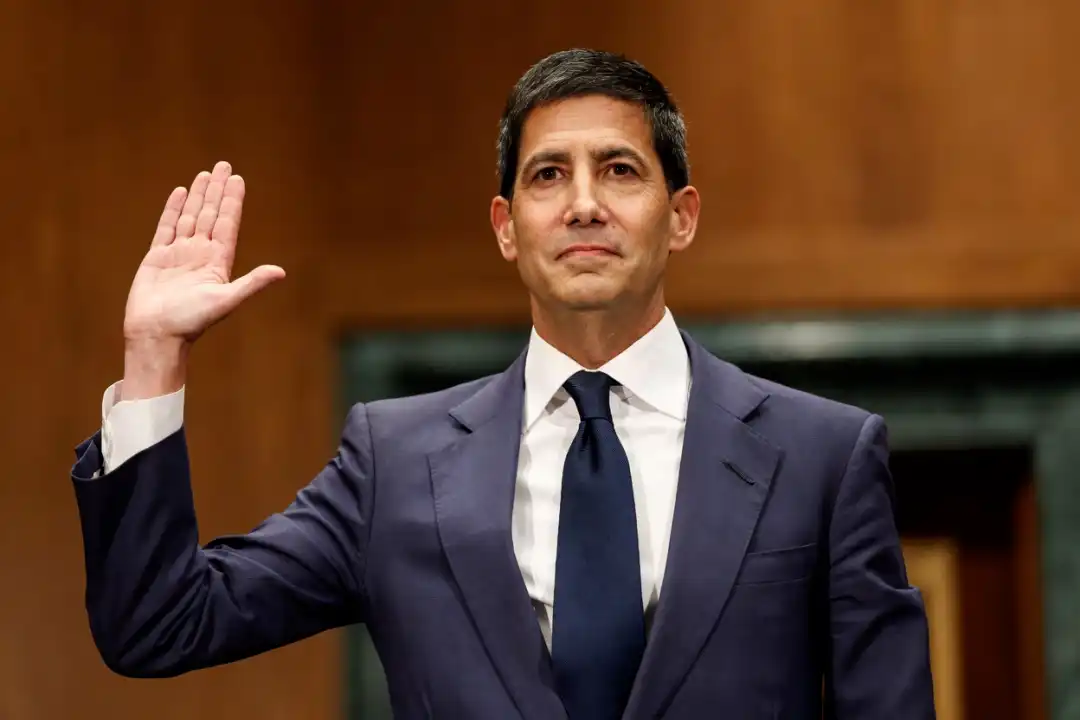
On April 21, 2026, Kevin Warsh's financial disclosure documents were released ahead of the start of his confirmation hearing.

His investment portfolio totals over $130 million. If confirmed, he would be the wealthiest Federal Reserve Chair in history. His current holdings include direct positions in the DeFi lending protocol Compound, derivatives platforms dYdX and Lighter, and the public blockchains Solana, Optimism, Blast, and Zero Gravity.

This marks the first public appearance of the candidate for Fed Chair nominated by Trump, returning to the center of policy after 15 years. Beyond his commitment to divest these holdings, the market is more concerned with how he will lead the Fed through the three major challenges he himself has outlined in his upcoming term.

Can the Premise for Rate Cuts Hold?

From 2006 to 2011, during his five years as a Fed Governor, Warsh was notoriously an inflation-first advocate.

Even at the height of the financial crisis, when unemployment exceeded 10%, he issued 13 public warnings about upside inflation risks during FOMC meetings.

In 2010, he was the most vocal opponent of the second round of quantitative easing (QE2). His resignation from the Fed in 2011 was in opposition to unlimited asset purchases.

But a shift began in May 2025. In a public interview, he stated: "We are at the frontier of AI use cases; everything touched by technology will become cheaper."

By November, in a Wall Street Journal column, he directly defined AI as a significant disinflationary force, capable of boosting productivity and enhancing U.S. competitiveness.

From late 2025 to early 2026, he repeatedly emphasized in various podcasts and interviews that AI is "the most productivity-enhancing wave of our lifetimes," and bluntly stated: if the Fed waits for official data to confirm the productivity gains before acting, it will be "too late."
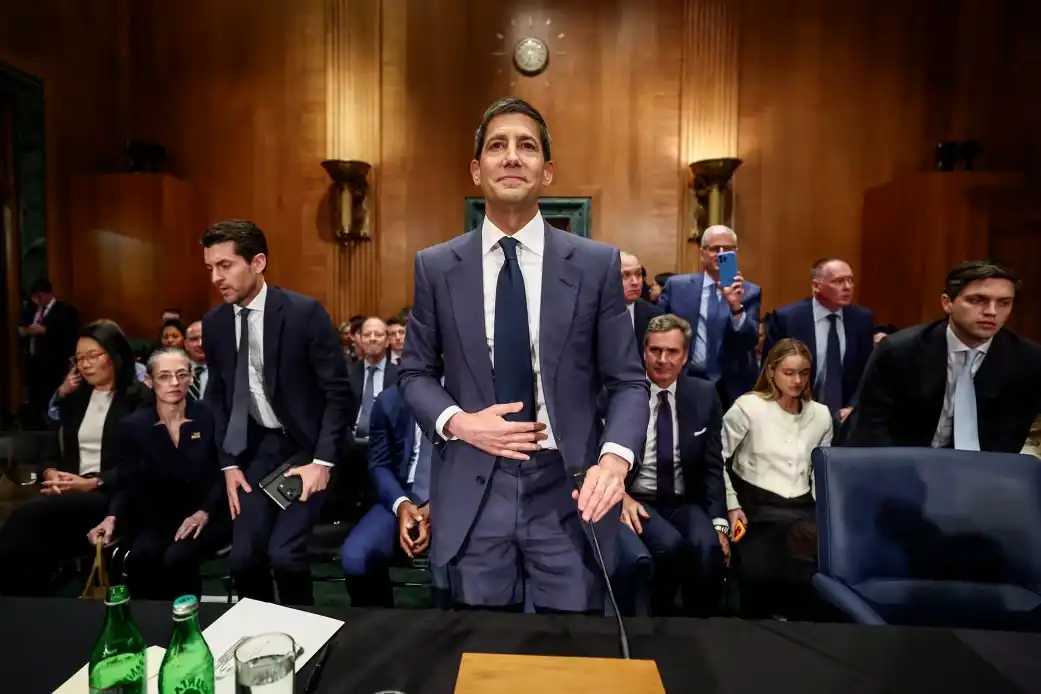
Democratic Senator Elizabeth Warren attacked him during the hearing using the term "flip-flop," suggesting he was迎合 (catering to) Trump.

Warsh countered by citing Alan Greenspan's case from the 1990s: from 1995 to 2000, U.S. nonfarm labor productivity grew at an average annual rate of 2.5%, nearly double the 1.4% of the previous eight years; output per hour in the nonfinancial business sector averaged growth of 3.5%.

At that time, the labor market was extremely tight, with unemployment hitting multi-decade lows, yet core inflation remained stable below 2%, not surging alongside economic growth. Greenspan chose not to tighten policy hastily, ultimately achieving both economic growth and price stability.

Warsh believes he is making the same judgment now—AI is the internet of this cycle.

However, this judgment is facing severe pressure from reality. The March 2026 CPI rose 3.3% year-on-year, higher than February's 2.4%, marking the highest level since May 2024; core CPI rose 2.6% year-on-year. The situation in Iran pushed up energy prices, with gasoline prices rising 18.9% month-on-month and fuel oil rising 44.2%, contributing directly to the largest single-month increase in overall inflation since June 2022.

He acknowledged during the hearing that current inflation data means "there is still work to be done," while refusing to provide any specific rate path or timeline.

The Eroded Independence

At the start of the hearing, Warren used the term "puppet" in her opening statement, citing Trump's social media post from the previous week that "rates will come down once Kevin is in," and repeatedly pressed: Have you promised the President a specific interest rate path? Can you resist pressure from the White House to cut rates if inflation rises again?

Warsh's response was: The President has never asked him to preset, promise, or fix any rate decision in any conversation, and he would not make such promises.

He stated that independence is not an automatic legal firewall but something the Fed earns by adhering to price stability and avoiding overreach. If the Fed persistently makes mistakes and constantly oversteps, the skepticism from the public and politicians is a justified cost; independence is eroded from within, and political pressure is merely an external factor.

The inflation of 2021-2022, in his characterization, was not a simple misjudgment but the result of the Fed using its credibility to endorse fiscal expansion and actively blurring the line between monetary and fiscal policy. This, he said, is the real crisis of independence—not caused by Trump, but by the Fed itself.
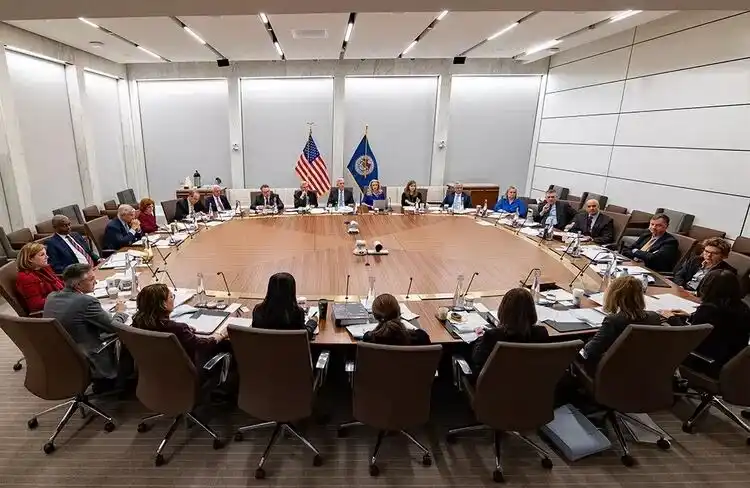
This logic was formed as early as 2010. He gave a speech titled "An Ode to Independence" that year, and it has reappeared in Hoover Institute interviews and Wall Street Journal columns since, centering on the same core judgment: the greatest threat to the Fed comes not from external political pressure, but from its own gradual ceding of institutional space.

The test of independence doesn't only come from Trump himself. Republican Senator Thom Tillis announced during the hearing that he would delay his support for Warsh's confirmation. The reason wasn't questioning Warsh personally, but rather that the Justice Department is currently conducting a criminal investigation into incumbent Chair Powell, nominally related to cost overruns in the Fed headquarters renovation.

Both Powell and a federal judge believe this is political pressure targeting monetary policy. Tillis's stance is that proceeding with confirmation under this shadow means the entire process is politically tainted. This implies Warsh's confirmation timeline is stalled, unrelated to his answers during the hearing.

Can Balance Sheet Reduction and Rate Cuts Be Advanced Simultaneously?

Warsh's views on the balance sheet were formed when he left the Fed in 2011 and have been his most stable position over the past fifteen years.

He used the word "bloated" to describe the Fed's current balance sheet of approximately $6.7 trillion. QE evolved from a temporary emergency measure during the 2008 financial crisis into a semi-permanent tool for the following decade-plus. This evolution brought two structural consequences:

The boundary between monetary and fiscal policy became blurred, with the Fed effectively assuming some fiscal functions; Large-scale asset purchases systematically inflated financial asset prices, benefiting those holding stocks and real estate, while ordinary households did not reap equivalent benefits.

Therefore, this balance sheet must be significantly reduced, while emphasizing that any reduction must be cautious, orderly, and fully communicated to avoid unnecessary market shocks.
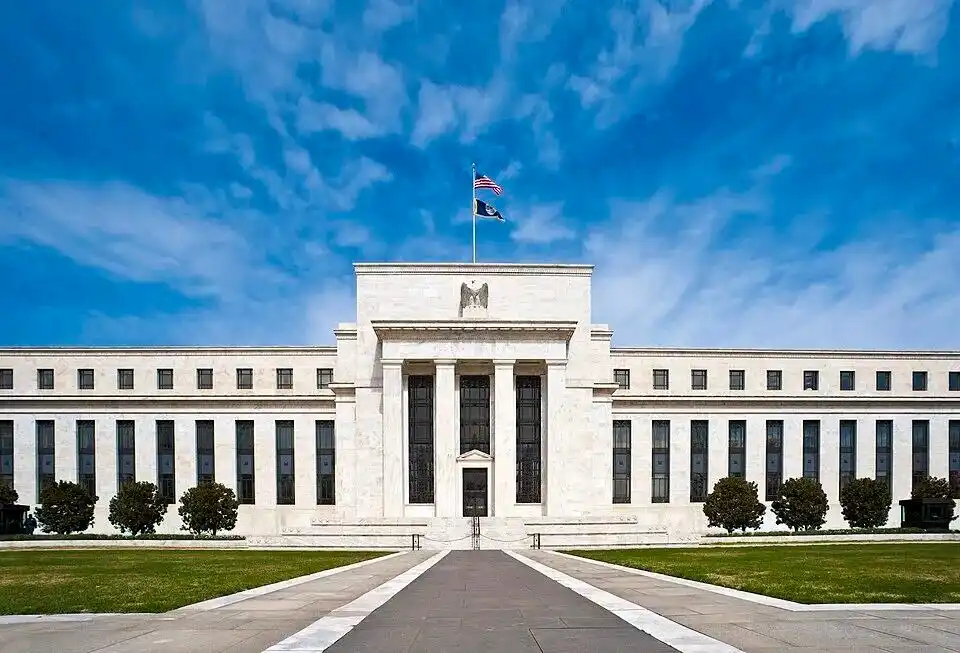
This presents a combination that makes the market uneasy: he might simultaneously advance balance sheet reduction (quantitative tightening, QT) and interest rate cuts, withdrawing liquidity from the balance sheet side while sending easing signals through rates, both acting on market pricing at the same time.

His explanation is that interest rates should once again become the primary tool of monetary policy, while asset purchases return to their temporary crisis-era role—to put the misused tool away and let the right tool function again.

Following the hearing, U.S. Treasury yields rose, with the market pricing in the uncertainty of this mixed message through actual trading.

He also mentioned another specific reform during the hearing: wanting to launch a data project tracking billions of real-time price points to replace parts of the existing CPI statistical framework that rely on lagging sampling.

Reduce the frequency of officials' public forecasts of the rate path, because once a forecast is made, officials often stick to it even after the situation changes to maintain credibility, which is a source of sluggish response. He described his desired state for the FOMC as healthy internal debate, not marching to a pre-scripted, expected conclusion.

He used "regime change" to summarize this direction—a change in the entire policy regime, not just tweaking a couple of parameters.

He also mentioned that stablecoins and on-chain price data could become more real-time supplementary indicators to compensate for defects in the existing statistical framework.

This also reveals his deeper logic regarding crypto: not just an asset class that needs regulation, but also an information infrastructure that can be used to improve the quality of policy judgment. His $130 million holdings might also be understood from this perspective.


Domande pertinenti

QWhat are the three major challenges Kevin Warsh faces as the potential Federal Reserve Chair?

AThe three major challenges are: 1) The premise for interest rate cuts, specifically whether AI-driven productivity gains will materialize to control inflation; 2) The erosion of the Fed's independence from political pressure and past policy mistakes; 3) The possibility of simultaneously implementing balance sheet reduction (quantitative tightening) and interest rate cuts, creating market uncertainty.

QWhy is Kevin Warsh's potential appointment considered a significant shift in his stance on inflation?

AWarsh was previously known as a staunch inflation hawk who opposed quantitative easing during the financial crisis. His recent shift involves championing AI as a major deflationary force that boosts productivity, a view critics see as a reversal to align with political interests.

QHow does Kevin Warsh view the relationship between the Federal Reserve's independence and its policy decisions?

AWarsh believes the Fed's independence is not automatically guaranteed by law but must be earned through sound policy. He argues that the Fed eroded its own independence by blurring the lines between monetary and fiscal policy during the 2021-2022 inflation period, making it vulnerable to external political pressure.

QWhat is the market's concern regarding Warsh's approach to balance sheet reduction and interest rates?

AThe market is concerned that Warsh may simultaneously pursue quantitative tightening (reducing the Fed's balance sheet) and interest rate cuts. This mixed approach could create uncertainty as it pulls liquidity from the market while signaling monetary easing, potentially leading to volatile asset pricing.

QHow does Kevin Warsh propose to modernize the Federal Reserve's data and policy framework?

AWarsh proposes creating a real-time price tracking system to replace parts of the lagging CPI framework, reducing the frequency of official rate path forecasts to avoid rigidity, and incorporating stablecoin and on-chain price data as supplementary indicators for more accurate and timely policy decisions.

Letture associate

Jensen Huang 'Saves' South Korean Stock Market: Locks In SK Hynix Memory, Chip Shortage to Continue

On June 5th, South Korea's stock market experienced a sharp decline, with major chipmakers like Samsung and SK Hynix dropping nearly 10%. Amidst the turmoil, NVIDIA CEO Jensen Huang's visit to Seoul played a dramatic role in boosting market sentiment. Following a dinner meeting with SK Group Chairman Chey Tae-won and SK Hynix CEO Kwak Noh-Jung, Huang confirmed that NVIDIA's new Vera CPU will utilize SK Hynix DRAM. The companies announced a multi-year technical partnership to co-develop next-generation memory for NVIDIA's AI infrastructure, covering products from data centers to personal AI and robotics. This collaboration extends beyond memory supply. SK Hynix is integrating NVIDIA's AI and Omniverse platform into its own semiconductor design and manufacturing processes, including computational lithography and creating digital twins of its fabrication plants for autonomous operation. While strengthening ties with SK Hynix, NVIDIA is diversifying its supply chain for the upcoming HBM4 memory, with Samsung, SK Hynix, and Micron all certified as suppliers for its Vera Rubin platform. Despite this, Huang warned that the global chip shortage, driven by relentless demand from AI factory construction, is expected to persist for several years across the entire supply chain. His visit underscores NVIDIA's systematic effort to deepen integration with South Korea's broader tech industry.

marsbit8 min fa

Jensen Huang 'Saves' South Korean Stock Market: Locks In SK Hynix Memory, Chip Shortage to Continue

marsbit8 min fa

Nasdaq Plunges 4.2% in a Single Day: Does "Black Friday" Burst the U.S. Stock Market Bubble?

The Nasdaq plunged 4.18% on June 5, 2026, its worst single-day drop in over a year, as a much stronger-than-expected US jobs report triggered fears of economic overheating and delayed Federal Reserve interest rate cuts. The selloff, centered on high-valuation tech and AI stocks like Nvidia and Broadcom, spread across major indices. The article examines whether this signals a market top. The strong May non-farm payrolls data, nearly double expectations, pushed bond yields higher, directly hurting rate-sensitive tech stocks. This exposed vulnerabilities in the crowded AI trade, where valuations had soared on narratives of infinite growth, despite emerging signs of slowing order momentum and corporate AI monetization challenges. Prior to the drop, market indicators flashed warning signs: historically high valuations (e.g., Shiller CAPE ratio near 39.5), extreme bullish sentiment, and high levels of leverage. Technical charts showed key support levels being breached. Wall Street is divided on the outlook. Bears, citing risks of "stagflation" and AI bubble comparisons to the dot-com era, warn of a potential significant correction. Bulls view the drop as a healthy correction within a bull market, underpinned by a strong economy and expected corporate earnings growth of around 7% in 2026. The immediate future hinges on upcoming key events: the May CPI inflation data and the mid-June FOMC meeting. Their outcomes will critically shape market expectations for the Fed's rate path. The article concludes that conditions for a major market top are aligning, marking a fragile transition from narrative-driven gains to a phase demanding validation from macroeconomic data and corporate fundamentals. Caution is advised.

marsbit12 min fa

Nasdaq Plunges 4.2% in a Single Day: Does "Black Friday" Burst the U.S. Stock Market Bubble?

marsbit12 min fa

Nasdaq Plunges 4.2% in a Single Day, Did 'Black Friday' Pop the U.S. Stock Bubble?

The Nasdaq Composite plummeted 4.18% on June 5, its biggest single-day drop since April 2025, triggering widespread debate over whether the U.S. stock market has peaked. The sell-off was sparked by a stronger-than-expected U.S. non-farm payrolls report, which fueled fears of economic overheating and pushed back market expectations for Federal Reserve rate cuts, leading to a sharp rise in Treasury yields. The AI sector, the primary driver of the recent bull market, suffered severe losses, with the Philadelphia Semiconductor Index crashing over 10%. Stocks like Nvidia, Broadcom, and Micron led the decline. Concerns are mounting about the sustainability of AI capital expenditures and high valuations, with signs of order cuts for next-generation chips emerging. Analyses point to several warning signs: historically high market valuations (e.g., elevated Shiller CAPE ratio, Buffett Indicator), extreme bullish sentiment indicators, and significant insider selling. The sell-off also caused a key technical breakdown, with the S&P 500 breaking below its short-term moving average and testing its 200-day moving average. Wall Street is divided on the outlook. Bears warn this could be the start of a bubble deflation or a "stagflation" scenario, while bulls view it as a healthy, overdue correction within a bull market driven by solid corporate earnings growth. A more moderate view suggests the easy liquidity-driven rally is over, and markets are entering a phase of fundamental stock-picking with potential for consolidation. The immediate future hinges on key upcoming events: the May CPI report and the mid-June FOMC meeting. Their outcomes will be critical in determining whether this is a temporary pullback or the beginning of a more significant trend reversal. The consensus is that the era of one-directional market gains may be ending, requiring increased investor caution.

Odaily星球日报18 min fa

Nasdaq Plunges 4.2% in a Single Day, Did 'Black Friday' Pop the U.S. Stock Bubble?

Odaily星球日报18 min fa

The First Case on AI Agents: What Was Adjudicated?

"The First 'Agent' Ruling: What Was Decided?" On April 30, the Guangzhou Internet Court issued a ruling—China's first behavior preservation order in the intelligent agent (AI agent) field. The defendant, an open-source AI agent software, was ordered to stop downloads, cease actions that bypassed a platform's technical protection measures, and delete related tutorials and data. The core issue: the software used the operating system's "accessibility service" permissions to automate user interactions within other apps without those platforms' authorization. This mirrors a recent US case where Amazon sued Perplexity for similar reasons—bypassing Amazon's API to directly scrape and interact with its pages—and won a preliminary injunction. Both rulings establish a crucial legal boundary for the AI agent era: agents cannot operate unchecked. The article argues the fundamental legal principle emerging is one of **dual authorization**. An AI agent requires both **user consent** AND **platform consent** to operate legitimately within that platform's ecosystem. Bypassing platform rules through system-level permissions, even with user permission, undermines platform responsibilities for content moderation, data security, and user privacy, creating liability issues. The piece uses the evolution of "Doubao Phone" (an AI-integrated smartphone) as a case study. Its initial, aggressive version that bypassed platform controls faced roadblocks. Its upcoming 2.0 version is reportedly pivoting to negotiate API access and authorization deals with major platforms (like Alibaba's ecosystem), seen as a strategic adaptation to the new regulatory reality. A global trend is identified: the era of unregulated, "wild west" growth for AI agents is ending, replaced by a **compliance race**. This raises barriers to entry, as securing platform authorizations becomes a new cost. Open-source status is also not a legal shield if the code facilitates bypassing technical protections. In conclusion, these first rulings target not the largest, but the most **aggressive and representative** cases. By setting precedent with them, regulators are efficiently steering the entire industry towards a new, more regulated operating paradigm defined by dual authorization and platform cooperation.

marsbit23 min fa

The First Case on AI Agents: What Was Adjudicated?

marsbit23 min fa

Fired by Google Over a 14-Page Paper, Over 4,000 Rallied for Her. 6 Years Later: She Almost Predicted the Entire AI Era Back Then.

In late 2020, Google AI researcher Timnit Gebru was effectively dismissed following a conflict over a 14-page, unpublished research paper she co-authored titled "On the Dangers of Stochastic Parrots." The paper, which has since been cited over 14,000 times, raised critical early warnings about the risks of large language models (LLMs). It argued that these models, trained on vast, biased internet data, are essentially "stochastic parrots" that mimic language without true understanding, potentially amplifying societal biases, generating plausible but false information (later termed "AI hallucination"), consuming massive energy, and obscuring their training data contents. Gebru's stance led to a clash with Google management, who requested the paper's withdrawal. Her subsequent internal criticism of the company's diversity efforts and handling of the matter culminated in her termination, which sparked protests from over 4,000 Google employees and researchers. Six years later, the paper's predictions have proven remarkably prescient. Issues like AI hallucination, embedded bias (evident in resume screening and healthcare algorithms), soaring energy consumption from AI data centers, unvetted training data containing harmful content, and the risk of "model collapse" from AI-generated internet content have become central industry challenges. The incident also highlighted concerns about AI development being driven primarily by commercial competition within a handful of powerful tech companies, often at the expense of ethical considerations. After leaving Google, Gebru founded the Distributed AI Research Institute (DAIR) to explore these issues independently. The controversy underscores how her early, critical insights into the fundamental limitations and societal impacts of LLMs anticipated many of the most pressing dilemmas in today's AI era.

marsbit24 min fa

Fired by Google Over a 14-Page Paper, Over 4,000 Rallied for Her. 6 Years Later: She Almost Predicted the Entire AI Era Back Then.

marsbit24 min fa

Trading

Spot
Futures
活动图片




