Author: Chen Xiaomeng
The era of DeFi that once championed financial empowerment has, in reality, come to an end.
A few years ago, we were complaining that the几十dollar Gas fees on the Ethereum mainnet were blocking retail investors. Now, Layer 2 has become a ghost chain, and even the mainnet's Gas fees have dropped to almost negligible levels after upgrades.
The barrier is gone. We expected a狂欢of retail investors, but instead, we got a silent mass exodus.
Why? Because everyone has finally come to their senses:
In this market, we take on the stress of selling cocaine, but only earn the profits of selling flour.
I. The Low Gas Trap: From Noble Chain to Electronic Factory
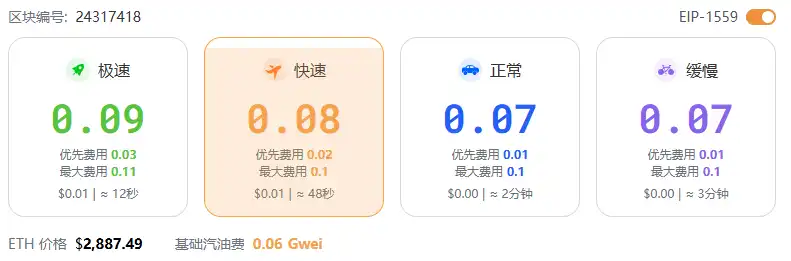
Because interaction costs are low, projects assume you should perform a massive number of interactions. So, for that tiny potential airdrop expectation, retail investors are forced to become skilled laborers on the chain: cross-chain, swap, stake, provide LP... mechanically repeating these actions hundreds of times a day.
But this doesn't lead to higher returns. Instead, low Gas has become a tool for projects to infinitely inflate their activity metrics.
This is on-chain manual labor.
II. The Capricious Dictator: Code is No Longer Law
"Code is Law" was once DeFi's most captivating narrative. But now, DeFi protocols not only have backdoors in their code, but the teams' words are also a sickle随时waiting to fall.
This is the most hated pain point for retail investors today—the uncertainty of the rules.
Project teams have long learned how to be ruthless. They invented impossible-to-fulfill "points systems," like carrots dangling in front of a donkey, luring you to constantly invest money and time. After you've diligently grinded for half a year, eagerly awaiting the payout, the team suddenly issues an announcement:
-
"For the fairness of the community, we will strictly crack down on Sybil attacks."
-
"Our VE model needs to be modified."
-
"For the development of the community, we have added a 45-day cooldown period."
Yesterday you were their early supporter; today, because your IP address changed slightly or your funds were held for one day less, you are labeled a Sybil. The right to interpret the rules belongs solely to the project team—they change them as they please.

In traditional business, this is called fraud; in DeFi, it's called DAO governance.
III. The Locked-In Prisoner: Capital Hunting Under High APY
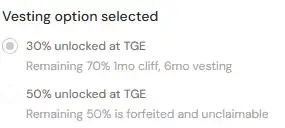
Projects lure you with extremely tempting APY. It looks like high returns, but the outcome is already written:
-
Liquidity dries up: Your principal is locked, unable to move.
-
Whales front-run: Project teams, early investors, and whales often have special vesting schedules or can hedge their profits off-chain.
-
Price tanks to zero: When you can finally unlock, you find that while you earned a 50% return in token terms, the price has already dropped by 90%.
The essence of locking is retail investors using their liquidity to help whales cash out. You covet the interest; they eye your principal.
IV. Extreme Mismatch of Risk and Reward
Let's do some realistic math.
Current DeFi protocols, excluding those shady projects that might rug pull at any moment, offer stablecoin yields of only around 5% - 10% for mainstream ones. This seems higher than banks, but what are the risks behind it?
-
Smart contract vulnerabilities: Hackers could drain the pool at any time.
-
Front-end hijacking: Phishing sites are everywhere.
-
Depegging risk: Algorithmic stablecoins or bridged assets can go to zero instantly.
-
Project Rug Pull: Even projects with billions in TVL can disappear overnight with the funds.
Earning a 5% return while bearing a 100% risk of losing your principal. This is a classic case of high risk for low reward. This yield doesn't even cover the mental distress fee from the constant anxiety during operations. In comparison, simply buying and holding Bitcoin, or even using centralized exchange理财products, offers far better value than折腾on-chain.
Conclusion: Refuse to Become On-Chain Fuel
DeFi's innovation has stalled, but its harvesting tactics have evolved.
At this stage, for most retail investors with less than $100,000, DeFi has lost its golden attribute. It is no longer a wilderness full of opportunities, but a playground carefully designed by whales and unscrupulous project teams.
Every button, every rule, every lock-up suggestion here is designed to诱you into handing over your chips.
So, the best strategy now might be just one: Admit that current DeFi truly isn't working. Stop those meaningless interactions. Stop locking up funds for meager returns. Protect your principal. Convert it into truly valuable core assets, and then watch coldly as the whales fight amongst themselves.
Stop being an on-chain laborer. Your time and capital deserve a better place.