The 'PayPal Mafia' of the AI Era: From Interns to Billionaires

marsbitPubblicato 2026-04-15Pubblicato ultima volta 2026-04-15

Introduzione

"The article profiles a group of exceptionally talented individuals, many of whom first connected through high school Olympiad competitions and later as interns at quantitative trading firm Hudson River Trading (HRT). This circle, once inspired by the "PayPal Mafia," has now emerged as a powerful force in the AI industry. Key figures include: - **Alexandr Wang**: Founder of Scale AI (acquired by Meta for $14.3B), now leads Meta's AI division and recently launched the Muse Spark model. - **Scott Wu**: CEO of Cognition, creator of the AI software engineer Devin; company valued at $10.2B. - **Johnny Ho**: Co-founder of Perplexity (valued at $20B), with a personal net worth of $2.1B. - **Jesse Zhang**: CEO of Decagon, an AI customer service automation company valued at $4.5B. - **Demi Guo**: Co-founder and CEO of Pika, a generative AI video startup. - **Steven Hao**: CTO of Cognition, with a net worth of $1.3B. The group is characterized by their shared background in elite academic competitions, a deep understanding of engineering efficiency, and a unified vision for an AI-driven future, drawing parallels to the influential "PayPal Mafia" of the previous era."

Author|Azuma(@azuma_eth)
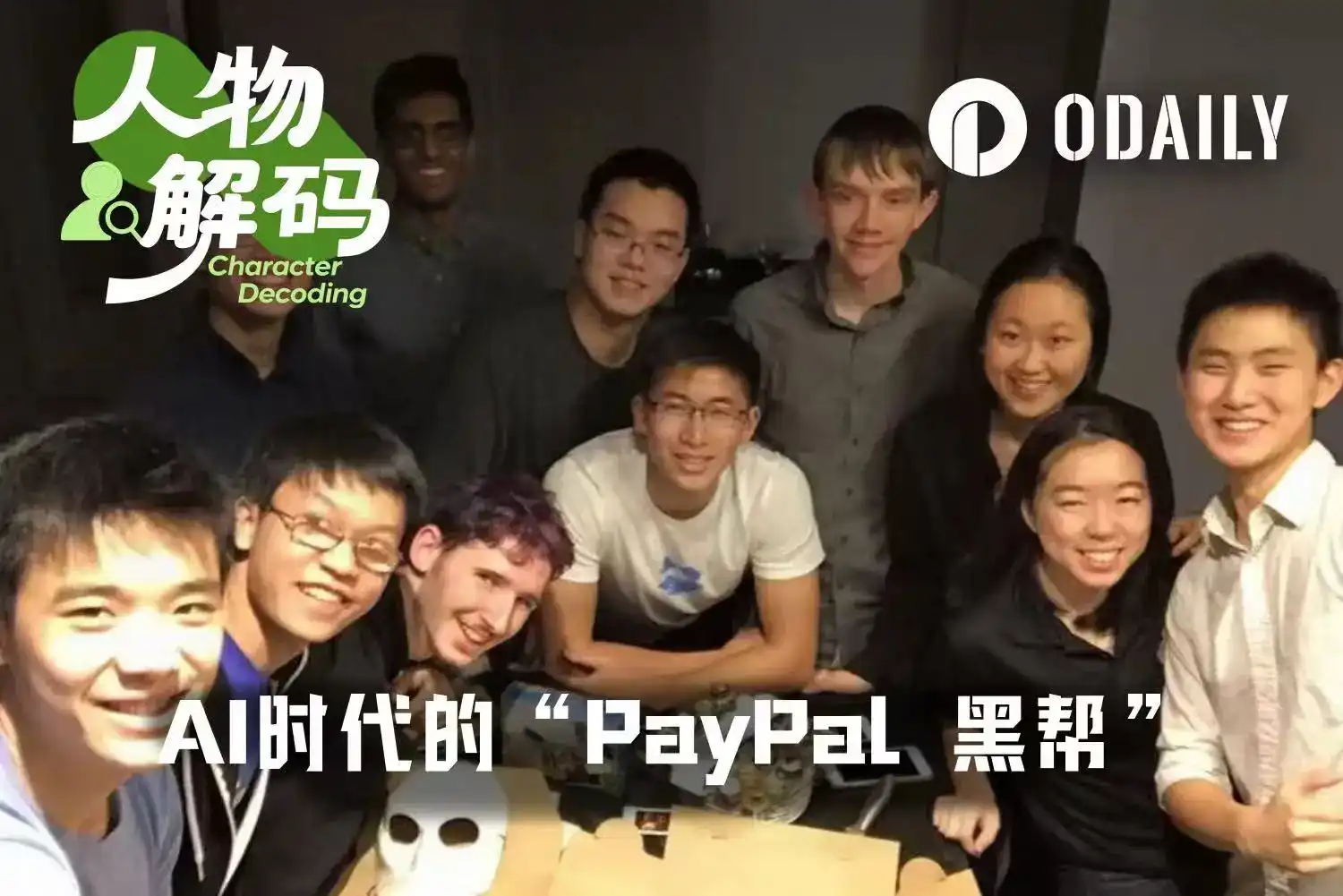
Yesterday, a feature interview with Hyperliquid founder Jeff Yan by "Colossos" magazine went viral across the internet (see "Jeff Yan's 'Hyper Life'").

In the interview, Jeff Yan revealed a little-known story — during his junior year at Harvard, he participated in the inaugural internship program of the quantitative trading giant "Hudson River Trading" (HRT). Ten interns were selected that year. Aside from Jeff Yan, who chose the cryptocurrency track, several others from the same intern cohort have now become prominent figures in the AI field, including Meta AI business line head Alexandr Wang, Decagon founder and CEO Jesse Zhang, and Cognition founder and CEO Scott Wu.
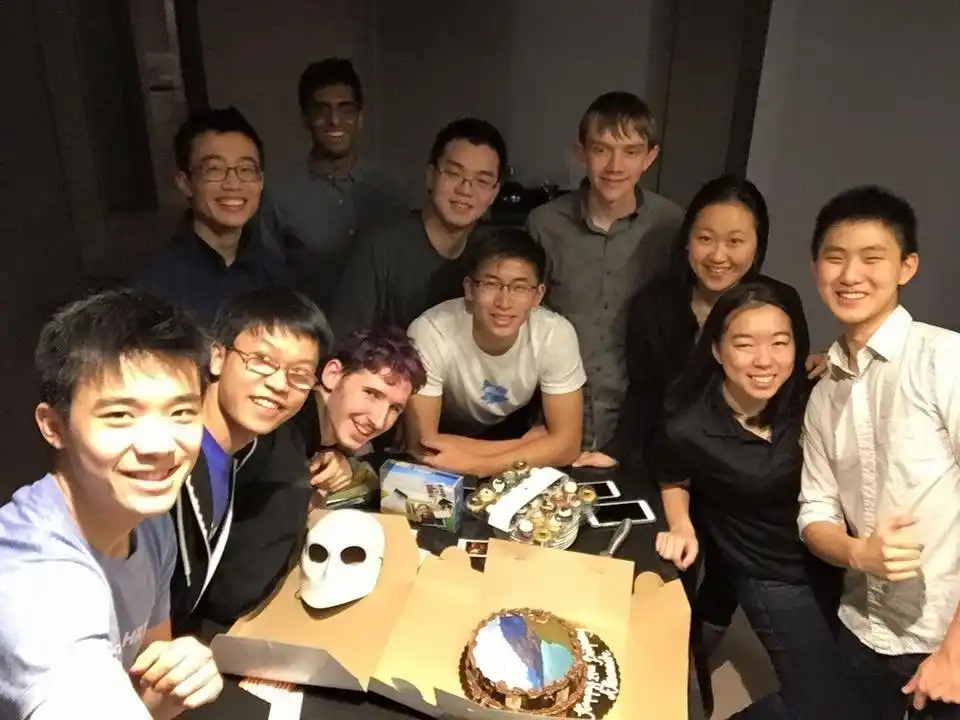
Odaily Note: A group photo of that year's interns shared by Jesse Zhang

According to additional disclosures by Scott Wu himself, the HRT internship program was not the starting point of their friendship. As early as high school, many of them had already met through Olympic competitions (Jeff Yan, Scott Wu, and several others had won gold medals). That small circle included many more notable names, including but not limited to Perplexity co-founder and CSO Johnny Ho, Pika co-founder and CEO Demi Guo, and Steven Hao, Alexandr Wang's former partner in founding Scale AI......

During the formative years of Jeff Yan, Scott Wu, and others, the "PayPal Mafia," represented by Elon Musk and Peter Thiel, was already dominating the business world. People began searching for the next similar special network. Jeff Yan's small circle had also discussed this topic. The 19-year-old Alexandr Wang once said to his friends: "Why can't it be us?"

Ten years later, Alexandr Wang's bold statement seems to be coming true. Leveraging AI, this group of young people from the Hudson River are stirring up the era in their own way.

Alexandr Wang: Zuckerberg's AI Brain
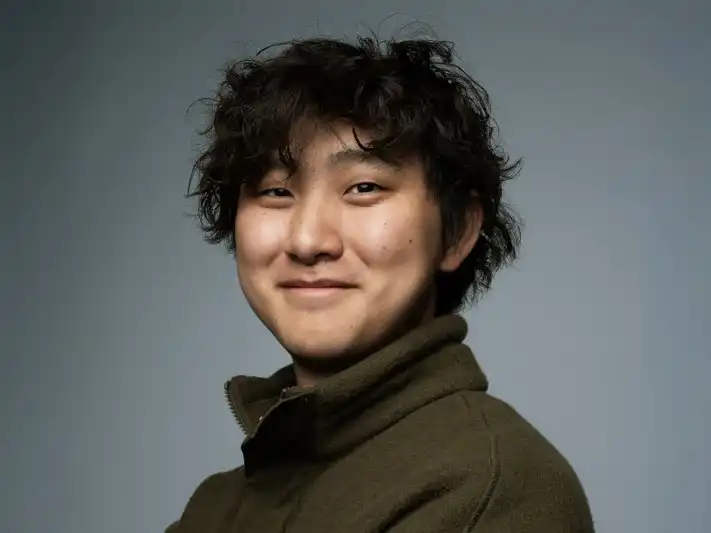
Alexandr Wang is perhaps the most well-known figure in this small circle. Born in 1997 in Los Alamos, New Mexico, Alexandr Wang is the descendant of Chinese immigrants. His parents were physicists at the Los Alamos National Laboratory — where the United States' first atomic bomb was secretly developed during World War II.

Alexandr Wang was passionate about mathematics and programming from a young age. He qualified for the Mathematical Olympiad Program in 2013, the USA Physics Team in 2014, and reached the finals of the USA Computing Olympiad in 2012 and 2013.

In 2015, Alexandr Wang dropped out of the Massachusetts Institute of Technology and founded Scale AI a year later, which annotates data used for training AI in computer vision and audio transcription. Riding the wave of the AI boom, Scale AI's valuation soared, reaching $7.3 billion by 2021. Alexandr Wang, owning 15% of the shares, saw his net worth surpass $1 billion.

In June 2025, Meta, which had clearly fallen behind in the AI race, acquired 49% of Scale AI for $14.3 billion. Zuckerberg's附加条件 was that — the soul of Scale AI, the then 28-year-old Alexandr Wang, must join Meta. Alexandr Wang subsequently joined Meta and began leading Meta's AI development team, the "Meta Superintelligence Labs" (MSL).

On the night of April 8th, Zuckerberg's big gamble paid off. MSL officially released its first self-developed AI model, Muse Spark. Muse Spark is a native multimodal reasoning model supporting tool use, visual chain-of-thought, and multi-Agent orchestration. It is the most powerful model Meta has released to date. During training, MSL observed predictable scaling improvements in the model during pre-training, reinforcement learning, and test-time reasoning phases.

Scott Wu: Olympiad Prodigy, Creator of a $10 Billion AI Unicorn
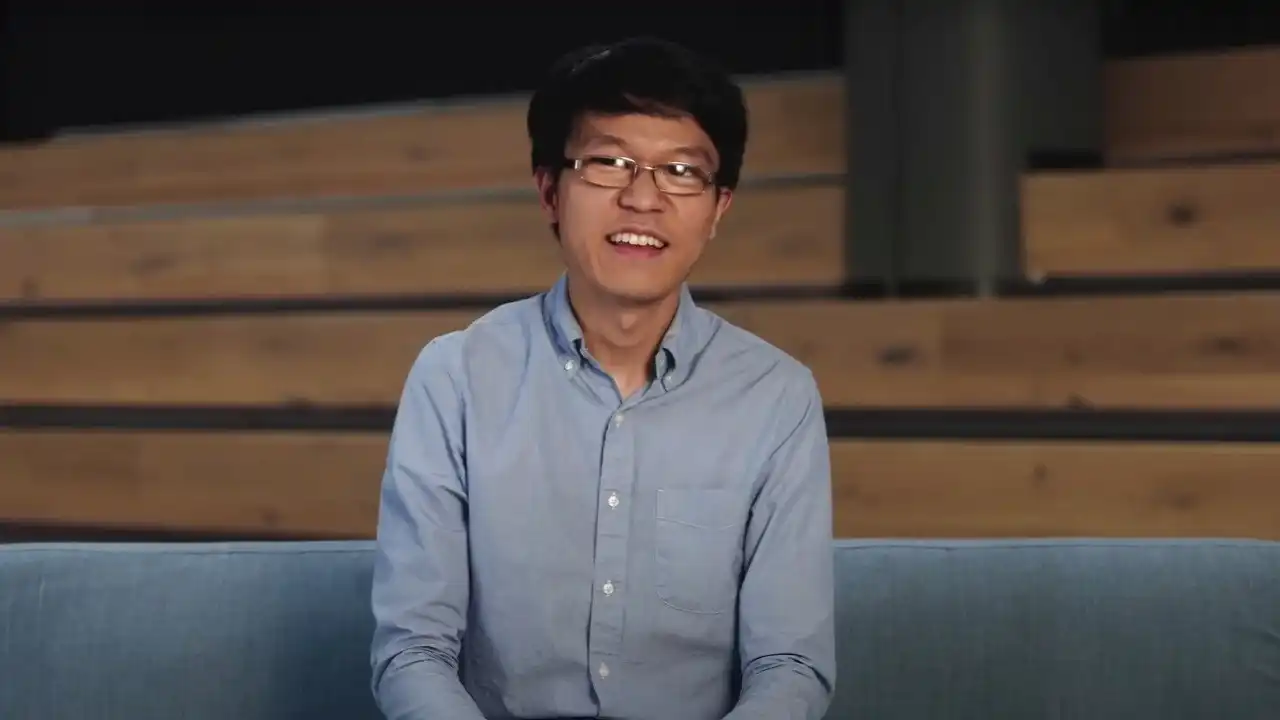
Scott Wu was born in 1997 in Louisiana to a family of Chinese immigrants. Growing up, Scott Wu actively participated in programming and mathematics competitions, winning three gold medals in the International Olympiad in Informatics, including first place in 2014.

After high school, Scott Wu attended Harvard University but dropped out after two years. While an undergraduate at Harvard College, he was a team member in the 2016 International Collegiate Programming Contest (ICPC), where his team won a gold medal and placed third overall.

In 2019, Scott Wu co-founded the social platform Lunchclub as its CTO. In 2023, Scott Wu, along with friends Steven Hao and Walden Yan (both Olympic gold medalists), co-founded Cognition, where he serves as CEO.

In 2024, the Cognition team launched the world's first autonomous AI software engineer, Devin. This product can independently complete code writing, testing, and deployment, and supports the decomposition and collaboration of complex tasks. It significantly outperformed GPT-4 in the SWE-bench benchmark test. In May of the same year, Cognition raised $175 million in a round led by Peter Thiel's Founders Fund, valuing the company at $2 billion post-money. In September 2025, Cognition raised another $400 million, skyrocketing its valuation to $10.2 billion.

By early 2026, Cognition's annualized revenue had reached $400 million.

Johnny Ho: Net Worth $2.1 Billion, Once Considered Acquiring TikTok and Chrome
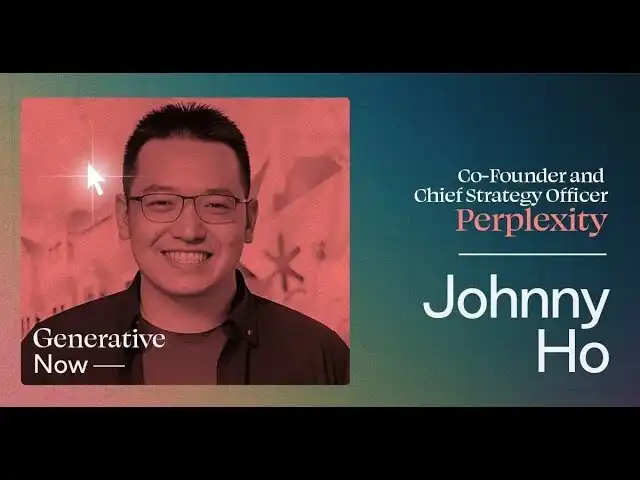
Like Scott Wu, Harvard graduate Johnny Ho won three gold medals in the International Olympiad in Informatics, achieving a perfect score and first place in 2012.

In August 2022, Johnny Ho co-founded Perplexity with Aravind Srinivas, Andy Konwinski, and Denis Yarats. Perplexity is positioned as an AI search engine company, offering a conversational search engine service that displays citation sources for answers and provides related question suggestions.

In 2023, Perplexity's monthly visits reached 10 million; by April 2024, its monthly active users reached approximately 15 million. That same year, Perplexity embarked on a疯狂融资 spree. In its fourth funding round at the end of the year, it raised $5 [Note: Likely a typo, probably meant $500 million or similar, but translating as written], reaching a valuation of $9 billion. In July 2025, Perplexity completed another $100 million in new funding, raising its valuation to $18 billion.

It is worth mentioning that Perplexity has initiated several bold "minnow-swallowing-whale" level acquisition proposals (with VCs willing to provide funds), including an offer to acquire TikTok in early 2025, proposing to merge Perplexity, TikTok's US operations, and new capital partners into a new entity, and in August 2025, proposing to Google to acquire its core product, the Chrome browser, for $34.5 billion.

According to the latest data from Forbes, Perplexity's current valuation has reached $20 billion, and Johnny Ho's personal wealth has reached $2.1 billion.

Jesse Zhang: AI Startup Valued at $4.5 Billion in Three Years
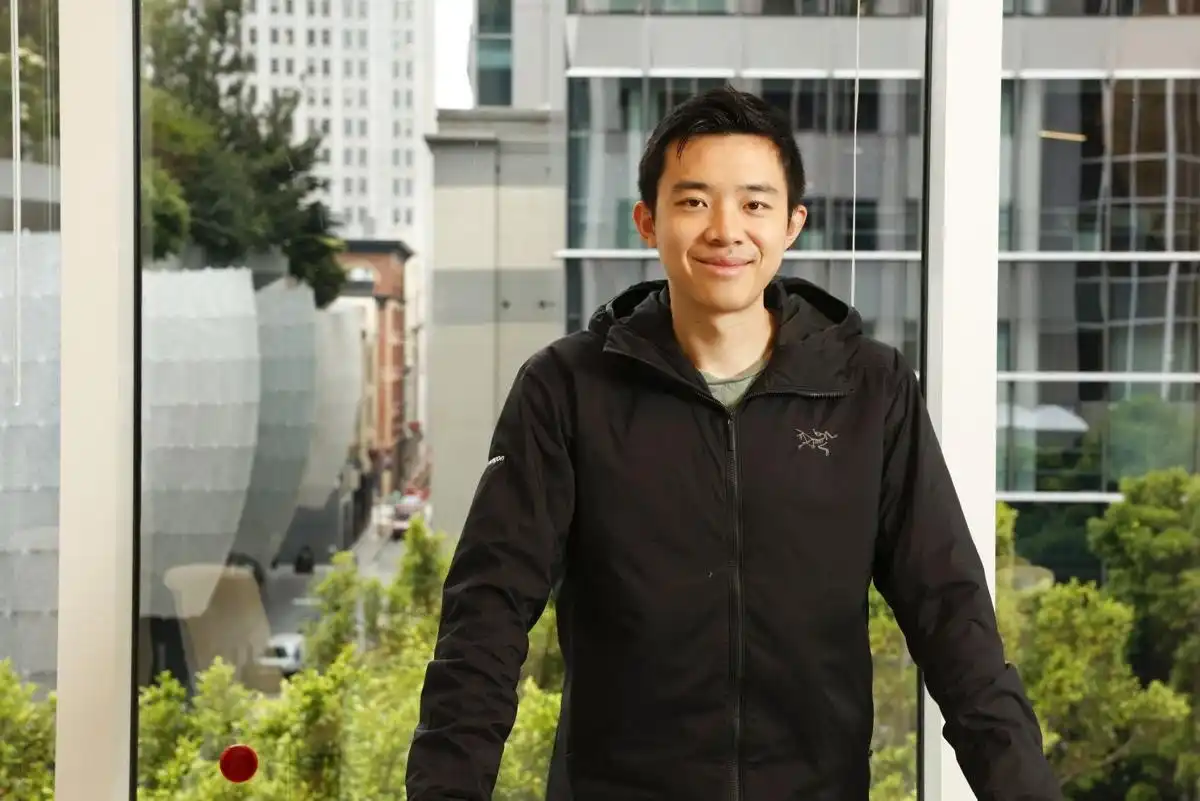
Jesse Zhang was also born in 1997 and grew up in the San Francisco Bay Area. From high school, Jesse Zhang was a typical "competition fanatic" — selected twice for the Mathematical Olympiad Program (MOP), a finalist in the Intel STS, and participated in MIT's RSI research program. After entering Harvard, Jesse Zhang completed the four-year university curriculum in just three years.

In 2018, Jesse Zhang and friends founded Lowkey, a platform for sharing gaming highlights. The project received seed funding from Y Combinator and Series A funding from a16z. In 2021, Lowkey was acquired by Pokémon GO developer Niantic for an undisclosed amount.

In 2023, Jesse Zhang co-founded Decagon with partner Ashwin Sreenivas, focusing on using AI Agents to automate enterprise customer service, solving the problems of high labor costs and low efficiency in call centers.

In June 2024, shortly after its founding, Decagon quickly raised $35 million, including a $5 million seed round led by a16z and a $30 million Series A led by Accel. Four months later, Decagon raised $65 million in a Series B round. In June 2025, a Series C round raised $131 million, pushing the valuation to $1.5 billion. In January 2026, a Series D round raised $250 million, skyrocketing the valuation to $4.5 billion... In tandem with the rising valuation was Decagon's revenue capability. By the end of 2025, the company's disclosed annual revenue had exceeded $30 million.

Demi Guo: Hangzhou '95er, Pioneer in AI Video Generation

Demi Guo was born in 1999 in Hangzhou, China, and moved to Silicon Valley, USA with her family during childhood.

Demi Guo won a silver medal at the 2015 International Olympiad in Informatics. She graduated from Harvard University with a bachelor's degree in mathematics and a master's degree in computer science, then dropped out of a PhD program at Stanford University to focus on entrepreneurship in generative AI video content creation.

In April 2023, Demi Guo co-founded Pika with Chenlin Meng, with Demi Guo serving as CEO. Pika focuses on the development of video generation AI technology. Its core products include the Pika 1.0 and Pika 2.0 models, which support 3D animation, anime, cartoon, and cinematic style generation, offering features like video extension, canvas expansion, and element replacement.

Regarding funding, Pika had already completed a $20 million seed round before its launch. It then completed a $35 million Series A round in November 2023, led by Lightspeed Venture Partners. In June 2024, Pika completed an $80 million Series B round at a valuation of $470 million, led by Spark Capital, with participation from Greycroft, Lightspeed Venture Partners, and actor Jared Leto, among others.

Steven Hao: AI Tech Guru with a Net Worth Over $1 Billion
Steven Hao, a graduate of MIT's mathematics department, also won a gold medal in the International Olympiad in Informatics (IOI). He was a partner of Alexandr Wang at Scale AI and has now joined Scott Wu's Cognition as CTO. Both companies have been详细介绍 in the previous sections, so they won't be elaborated on here.

According to Forbes data, the 30-year-old Steven Hao's personal wealth is estimated to have reached $1.3 billion.

Epilogue: We Might Be Witnessing a New Legend

I thought about giving this small circle a new name similar to the "PayPal Mafia," like calling them the "Hudson River Mafia," or the broader "Olympiad Mafia"... Although the era, background, and story trajectory are completely different, they seem to share the same core spirit as the previous generation's "PayPal Mafia" — behind the camaraderie of high-stakes competitions, what truly connects them is a shared pursuit of intellectual density, engineering efficiency, and system re-architecting capabilities, along with a profound judgment of where the future begins.

The new generation of entrepreneurs has stepped onto the stage. Before them lies the question, far more difficult than any Olympiad problem: "How will AI reshape the world?" This is their battlefield and their stage.


Domande pertinenti

QWho are the key members of the AI-era group compared to the 'PayPal Mafia', and what are their notable achievements?

AThe key members include Jeff Yan (founder of Hyperliquid), Alexandr Wang (head of Meta's AI division, founder of Scale AI), Scott Wu (CEO of Cognition, creator of Devin), Johnny Ho (co-founder of Perplexity), Jesse Zhang (CEO of Decagon), Demi Guo (CEO of Pika), and Steven Hao (CTO of Cognition). Their achievements include building billion-dollar AI companies, leading major AI innovations, and driving advancements in areas like AI search, autonomous coding, video generation, and customer service automation.

QWhat was the origin of the connection between these AI entrepreneurs?

ATheir connection began during high school through international Olympiad competitions (e.g., mathematics, informatics) where many won gold medals. Later, they reinforced their ties as interns in Hudson River Trading (HRT)'s first internship program during their college years at Harvard and MIT.

QHow did Alexandr Wang become involved with Meta, and what role does he play there?

AMeta acquired 49% of Scale AI for $14.3 billion in 2025, with the condition that Alexandr Wang join Meta. He now leads Meta's AI development team, the Meta Superintelligence Labs (MSL), which released the powerful multimodal AI model Muse Spark in April 2026.

QWhat is Cognition known for, and what milestones has it achieved under Scott Wu's leadership?

ACognition, co-founded by Scott Wu, is known for creating Devin, the first autonomous AI software engineer. The company reached a $10.2 billion valuation by September 2025, with annualized revenue of $400 million by early 2026, following funding rounds led by investors like Peter Thiel's Founders Fund.

QWhat bold acquisition proposals did Perplexity, co-founded by Johnny Ho, attempt?

APerplexity proposed acquiring TikTok's U.S. operations in early 2025, aiming to merge it with Perplexity and new capital partners. In August 2025, it also offered to buy Google's Chrome browser for $34.5 billion, though neither deal was completed. The company's valuation grew to $20 billion by 2026.

Letture associate

That Year, Elon Musk and I Talked About His "Space Dream"

"The Year I Talked to Musk About His 'Space Dream'" by Zhang Peng. On June 12, 2024, SpaceX, now incorporating X, xAI, and Starlink, completed a historic IPO, reaching a $2 trillion valuation. This piece reflects on a 2014 conversation between the author, founder of GeekPark, and Elon Musk during his first public appearance in China at the GeekPark Singularity Summit. Their discussion centered on Musk's motivations and unique mindset. Musk described himself not as a CEO but as an "engineer" driven to solve fundamental problems. He explained his work on Tesla aimed to shift the automotive industry's paradigm toward sustainable transport, while SpaceX was born from a desire to make humanity a multi-planetary species, drastically reducing space access costs through reusability. He emphasized persistence in the face of likely failure, noting that traditional entities like NASA, with abundant resources, often lacked the imperative for radical innovation that drives commercial ventures. Musk dismissed the idea of entering politics, believing change is best achieved through compelling products. The author sees the 2020 successful Crew Dragon launch as a pivotal moment, marking the maturation of commercial spaceflight and the true beginning of a scalable, industry-driven space age. He views Musk as a pioneer clearing the path for broader participation, expressing hope that affordable space travel will become a reality, fueled by commercial momentum.

marsbit6 min fa

That Year, Elon Musk and I Talked About His "Space Dream"

marsbit6 min fa

US Government Suddenly Halts Anthropic's Strongest Model, "Quasi-IPO Stock Price" Plunges 3.7% Overnight

U.S. Government Halts Anthropic's Top AI Models, 'Pre-IPO' Price Drops 3.7% On June 12, the U.S. government ordered Anthropic to shut down access to its two most powerful AI models, Claude Fable 5 and Claude Mythos 5, citing national security concerns. The directive, issued by the Department of Commerce, required Anthropic to block access for all foreign nationals, leading the company to disable the models globally for all users. Anthropic strongly opposed the move, arguing the government's basis was a "narrow jailbreak vulnerability" and warning that applying such a standard industry-wide would effectively halt all frontier model deployments. The news impacted Anthropic's implied valuation in speculative markets. The Anthropic perpetual contract on Hyperliquid fell approximately 3.7% to around $1,627, down from highs above $1,800 following the models' release. Unauthorized tokenized products linked to Anthropic on Solana also saw significant declines. The models, launched just days earlier on June 9, represented a major capability leap for Anthropic. Fable 5 was its first public release of a "Mythos"-tier model above its flagship Claude Opus. The shutdown creates an ironic situation for Anthropic, a company founded on "AI safety" principles, and adds uncertainty to its ongoing IPO preparations. The company is actively engaging with regulators to resolve what it calls a "misunderstanding" and restore service.

marsbit26 min fa

US Government Suddenly Halts Anthropic's Strongest Model, "Quasi-IPO Stock Price" Plunges 3.7% Overnight

marsbit26 min fa

SpaceX IPO Creates Trillion-Dollar Billionaire: Musk's Wealth Equals Half of Crypto Market

SpaceX's record-breaking IPO has propelled Elon Musk to become the first modern billionaire with a personal net worth exceeding $1 trillion, reaching $1.11 trillion according to Bloomberg. This staggering wealth surpasses the total market capitalization of all cryptocurrencies excluding Bitcoin and equals roughly half of the entire crypto market's value. The milestone highlights extreme wealth concentration and the significant devaluation of the altcoin market, whose total cap has nearly halved since late 2025 as capital flows into large tech stocks. SpaceX's Nasdaq debut saw its valuation hit $2.2 trillion, with shares soaring from a $135 offer price to close at $161. Its first-day trading volume of $85 billion set a new global IPO record. Musk owns 42% of the company. Despite his wealth dwarfing the altcoin sector, Musk maintains deep ties to digital assets. He personally holds Bitcoin, Ethereum, and Dogecoin, while his companies, SpaceX and Tesla, collectively hold over 30,000 Bitcoin, ranking among the top corporate BTC holders globally. His acquisition and integration of financial data tools into X (formerly Twitter) further connect his ecosystem to the markets. Ultimately, Musk's trillion-dollar status underscores the immense wealth controlled by tech founders, though this fortune remains largely tied to volatile stock prices rather than liquid assets.

Foresight News33 min fa

SpaceX IPO Creates Trillion-Dollar Billionaire: Musk's Wealth Equals Half of Crypto Market

Foresight News33 min fa

Hardcore First Look | Ocean Embodied Intelligence Company 'Shihang Intelligence' Secures Record-Breaking 1 Billion in Funding, Zhu Xiaohu, Temasek Place Bets

Breaking News | Ocean Embodied Intelligence company "Shihang Intelligent" secures a record-breaking 1 billion RMB (approximately 10 billion yuan) in Series A financing, with investment from Zhu Xiaohu and Temasek. Author: Qiu Xiaofen | Editor: Yuan Silai Ocean Embodied Intelligence company "Shihang Intelligent" has completed its Series A funding round, raising over 1 billion RMB. This marks the largest single funding round in the global marine robotics field to date. Investors include upstream momentum funds from chip companies "Moore Thread" and "Kunlunxin," Singapore's state-owned investment platform Vertex Growth, and listed company Dyneo, among others. Existing investors like GSR Ventures (whose founder Zhu Xiaohu has invested for the fifth time), Vertex Ventures China, Hua Ying Capital, and Long Capital also significantly increased their investments. Founder and CEO Chen Xiaobo, a 1989-born alumnus of Harbin Engineering University, is a long-time expert in underwater robotics. He received the National Defense Science and Technology Progress Award at age 28 (the youngest recipient) and led the development of China's first commercial underwater cleaning robot. The funds will be used for core technology R&D, global market expansion, and building the industry chain ecosystem to scale the application of marine robots in complex underwater scenarios. The ocean is considered one of the most challenging environments for robotics due to low light, high turbidity, complex currents, limited communication, high pressure, and corrosion. "Shihang Intelligent" focuses on developing core underlying technologies for marine robots, covering six key systems: power, control, sensing, navigation, sealing, and deployment. Its robots are capable of operating at depths from 0 to 10,000 meters with full degrees of freedom, performing complex maneuvers, autonomous navigation, and multi-robot collaboration. Applications include ship cleaning, underwater security, offshore wind power, marine ranching, and seabed inspection. The company's order value for the first half of 2026 alone has exceeded 1 billion RMB. Its "Orca Robot" is used by major shipping companies and has performed maintenance on over a thousand large vessels. In April of this year, the company launched its ocean embodied large model "Cangqiong CEORION." Unlike traditional remote-controlled or pre-programmed robots, this model integrates environmental perception, task understanding, and action generation into a single end-to-end architecture. Trained on millions of hours of commercial operation data and simulation data, it covers 12 major underwater operation scenarios. In simulations, it achieved over 90% task success rate and over 70% zero-shot adaptation capability to unseen environments. A built-in physics reasoning module reduces collision risk by 80%, enabling autonomous operation even with weak or no communication. Recently, "Shihang Intelligent" was selected as a core technology partner for Singapore's Maritime and Port Authority national hull inspection and cleaning program. These advancements indicate marine robotics is moving from pilot projects to scaled applications, with real-world operations generating valuable data to continuously improve robot capabilities. CEO Chen Xiaobo stated the company will continue investing in core marine robotics technology, the embodied intelligence model, and global application scenarios to expand into more high-risk, high-difficulty, and high-value underwater operations.

marsbit59 min fa

Hardcore First Look | Ocean Embodied Intelligence Company 'Shihang Intelligence' Secures Record-Breaking 1 Billion in Funding, Zhu Xiaohu, Temasek Place Bets

marsbit59 min fa

Three Months, 35 Billion Yuan: Investors Rush to Grab the OpenAI of the Physical World

Investors flock to a physical AI startup as the race for the "OpenAI of the physical world" heats up. Ji Jia Shi Jie (GigaWorld), a company dedicated to developing Artificial General Intelligence (AGI) for the physical world, has raised 3.5 billion RMB (approximately $490 million) in just three months, according to a report from investment media outlet Touzijie. The latest B2 funding round of 1 billion RMB attracted a wide range of top-tier investors, including sovereign wealth funds, industrial capital, and financial institutions. This brings the total funding for the young company, now valued over 10 billion RMB, to 3.5 billion RMB across three recent rounds. The company is led by Huang Guan, a post-90s Tsinghua University PhD with extensive experience in AI, autonomous driving, and entrepreneurship. Its core innovation is a "dual-pyramid" system comprising a five-layer data pyramid (from internet videos to real-world robot data) and a three-layer algorithm pyramid focused on world simulation, action alignment, and reinforcement learning. This system underpins its key models: the "World Action Model" (e.g., GigaBrain series for robot control) and the "World Generation Model" (e.g., GigaWorld series for simulating and understanding the physical world). Its models have reportedly achieved top rankings in global robotics benchmarks. Ji Jia Shi Jie argues that while current digital AGI excels in information processing, the next frontier is physical AGI—systems that can understand and interact with the real world. The company believes the field is approaching its "GPT-3 moment," a key inflection point in capability scaling. To achieve this, the company is pursuing a dual-market strategy. For the consumer (C) market, it launched the "SeeLight" brand and its S1 general-purpose humanoid robot, which has secured initial orders for deployment in real homes. For the business (B) market, it focuses on industrial automation with its Maker series robots, having signed agreements for large-scale deployment in factories, and its DriveDreamer world model for autonomous driving, which is already in use with over 30 automakers and tech companies. The report concludes that by bridging the gap between digital intelligence and physical action, Ji Jia Shi Jie aims to unlock a new wave of productivity, ultimately bringing physical AGI into everyday life.

marsbit1 h fa

Three Months, 35 Billion Yuan: Investors Rush to Grab the OpenAI of the Physical World

marsbit1 h fa

Trading

Spot
Futures

Articoli Popolari

Come comprare ERA

Benvenuto in HTX.com! Abbiamo reso l'acquisto di Caldera (ERA) semplice e conveniente. Segui la nostra guida passo passo per intraprendere il tuo viaggio nel mondo delle criptovalute.Step 1: Crea il tuo Account HTXUsa la tua email o numero di telefono per registrarti il tuo account gratuito su HTX. Vivi un'esperienza facile e sblocca tutte le funzionalità,Crea il mio accountStep 2: Vai in Acquista crypto e seleziona il tuo metodo di pagamentoCarta di credito/debito: utilizza la tua Visa o Mastercard per acquistare immediatamente CalderaERA.Bilancio: Usa i fondi dal bilancio del tuo account HTX per fare trading senza problemi.Terze parti: abbiamo aggiunto metodi di pagamento molto utilizzati come Google Pay e Apple Pay per maggiore comodità.P2P: Fai trading direttamente con altri utenti HTX.Over-the-Counter (OTC): Offriamo servizi su misura e tassi di cambio competitivi per i trader.Step 3: Conserva Caldera (ERA)Dopo aver acquistato Caldera (ERA), conserva nel tuo account HTX. In alternativa, puoi inviare tramite trasferimento blockchain o scambiare per altre criptovalute.Step 4: Scambia Caldera (ERA)Scambia facilmente Caldera (ERA) nel mercato spot di HTX. Accedi al tuo account, seleziona la tua coppia di trading, esegui le tue operazioni e monitora in tempo reale. Offriamo un'esperienza user-friendly sia per chi ha appena iniziato che per i trader più esperti.

350 Totale visualizzazioniPubblicato il 2025.07.17Aggiornato il 2026.06.02

Come comprare ERA

Discussioni

Benvenuto nella Community HTX. Qui puoi rimanere informato sugli ultimi sviluppi della piattaforma e accedere ad approfondimenti esperti sul mercato. Le opinioni degli utenti sul prezzo di ERA ERA sono presentate come di seguito.

活动图片












