The New York Times: Behind Trump's Embrace of Cryptocurrency, the Untold Story

深潮Pubblicato 2025-12-18Pubblicato ultima volta 2025-12-18

Introduzione

"Trump's Embrace of Crypto: The Unseen Consequences" A New York Times investigation reveals the hidden risks and rapid expansion of the cryptocurrency market fueled by former President Donald Trump's policies and public endorsements. Dubbed the "crypto treasury company summer," this boom saw a surge in publicly traded companies shifting their strategies to hoard cryptocurrencies, aiming to attract investors. Over 250 such companies emerged, many leveraging debt to buy digital assets. However, the market experienced a sharp crash in October, wiping out billions in value and exposing extreme volatility and high-risk leverage trading. Companies associated with Trump's inner circle, including his son Eric Trump's venture World Liberty Financial, faced significant losses and scandals. The article highlights concerns from financial experts and former regulators about the blurring lines between speculation and investment, the accumulation of dangerous leverage, and the potential for systemic risk to spread to the broader financial system. Despite these warnings, the Trump administration and crypto executives continue to promote the industry as a hub for innovation and economic opportunity, pushing for new products like tokenized stocks and expanded leverage options.

Written by: David Yaffe-Bellany and Eric Lipton, The New York Times

Compiled by: Chopper, Foresight News

This summer, a group of corporate executives pitched a business plan to Wall Street financier and former Trump presidential advisor Anthony Scaramucci. They hoped Scaramucci would join a publicly traded company with a unique strategy: boosting the company's appeal to investors by hoarding massive amounts of cryptocurrency assets.

"They really didn't have to say much," Scaramucci recalled. Soon after, he joined three little-known companies adopting this strategy as an advisor. "The entire negotiation process went very smoothly."

However, this boom did not last long. This fall, the cryptocurrency market crashed, and the stock prices of the three companies Scaramucci was involved with plummeted, with the worst performer dropping over 80%.

The rise and fall of these companies is a microcosm of the cryptocurrency frenzy ignited by Trump. The self-proclaimed "first cryptocurrency president" not only ended the regulatory crackdown on cryptocurrency companies but also publicly promoted cryptocurrency investment at the White House, signed bills supporting cryptocurrency development, and even issued a meme coin named TRUMP, thrusting this once-niche field into the spotlight of the global economy.

Now, the ripple effects of Trump's strong support for cryptocurrency are gradually becoming apparent.

Since the beginning of this year, a large number of new cryptocurrency companies pushing the boundaries of the industry have emerged, drawing more people into this highly volatile market. Currently, over 250 publicly traded companies have begun hoarding cryptocurrencies—digital assets whose price volatility characteristics are no different from traditional investments like stocks and bonds.
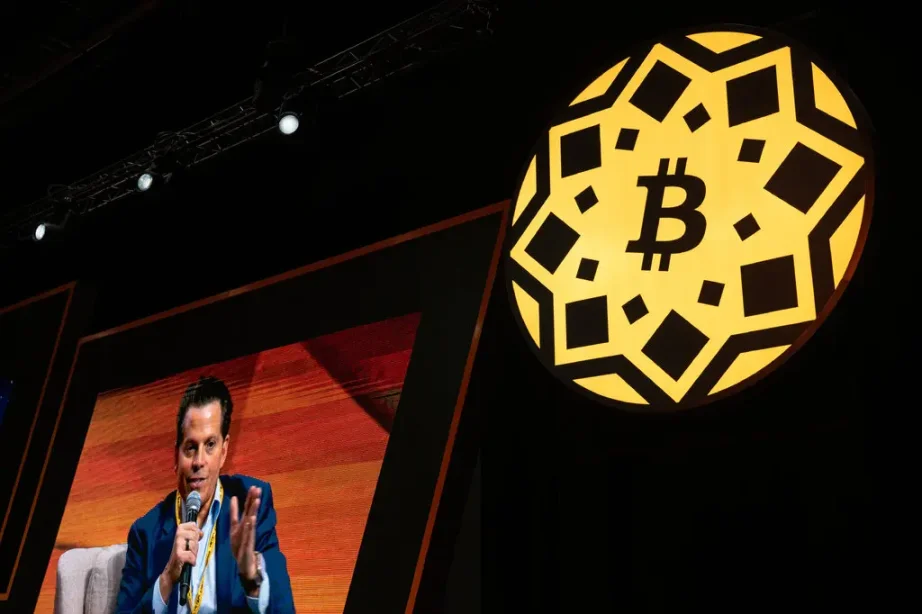
2024, Trump's former advisor Anthony Scaramucci attends the UAE Bitcoin Conference

A wave of companies has顺势 launched innovative products, lowering the barrier to including cryptocurrencies in brokerage accounts and retirement plans. Meanwhile, industry executives are lobbying regulators, planning to issue crypto tokens pegged to publicly traded company stocks, creating a stock trading market based on encryption technology.

This radical innovation wave has already exposed many problems. Over the past two months, the sharp plunge in mainstream cryptocurrency prices has pushed companies heavily invested in crypto assets into a crisis of collapse. Other emerging projects have also raised warnings from economists and regulators, indicating accumulating market risks.

The core concern triggering各方担忧 is the continuous expansion of borrowing. By this fall, publicly traded companies had borrowed heavily to purchase cryptocurrencies; investors' futures contract holdings for cryptocurrencies exceeded $200 billion, with most of these transactions relying on leveraged funds, which can bring huge profits but also hide the risk of liquidation.

More alarmingly, a series of new initiatives in the cryptocurrency industry have deeply tied the crypto market to the stock market and other financial sectors. Once a crisis erupts in the cryptocurrency market, the risk could spread to the entire financial system, causing a chain reaction.

"Now, the line between speculation, gambling, and investment has become blurred," said Timothy Massad, who served as Assistant Secretary of the Treasury for Financial Stability after the 2008 financial crisis. "This current situation worries me deeply."

White House press secretary Karoline Leavitt responded that Trump's policies are "helping the United States become a global cryptocurrency hub by promoting innovation and creating economic opportunities for people across America."

Cryptocurrency industry executives argue that these emerging projects demonstrate the potential of encryption technology to reshape the outdated financial system. In their view, market volatility is precisely an opportunity for profit.

"High risk often comes with high reward," said Duncan Moir, president of 21Shares, which issues cryptocurrency investment products. "Our mission is to bring these investment opportunities to more people."

The rise of this innovation wave is inseparable from a comprehensive relaxation of the regulatory environment, creating the most friendly regulatory window for cryptocurrency companies. For many years prior, the U.S. Securities and Exchange Commission (SEC) had been in court battles with the cryptocurrency industry; but in January of this year, the agency established a dedicated cryptocurrency task force and has held meetings with dozens of companies seeking new regulation support or product listing approvals.

An SEC spokesperson said the agency is committed to "ensuring investors have sufficient information to make rational investment decisions."

U.S. Securities and Exchange Commission headquarters building in Washington

Notably, many of these emerging companies are connected to the Trump family's expanding cryptocurrency business empire, a connection that has blurred the lines between business and government.

This summer, executives from Trump's cryptocurrency startup World Liberty Financial announced they would join the board of the publicly traded company ALT5 Sigma. This company originally focused on recycling but now plans to raise $1.5 billion to enter the cryptocurrency market.

Capital Frenzy: An Out-of-Control Crypto Gamble

Cryptocurrency enthusiasts have named the high-risk investment boom催生ed by the Trump administration the "Summer of Crypto Treasury Companies."

A crypto treasury company (DAT) refers to a publicly traded company whose core goal is to hoard cryptocurrencies. Data from cryptocurrency consulting firm Architect Partners shows that among these emerging companies, nearly half focus on hoarding Bitcoin, the most well-known cryptocurrency, while dozens of others have announced plans to purchase non-mainstream coins like Dogecoin.
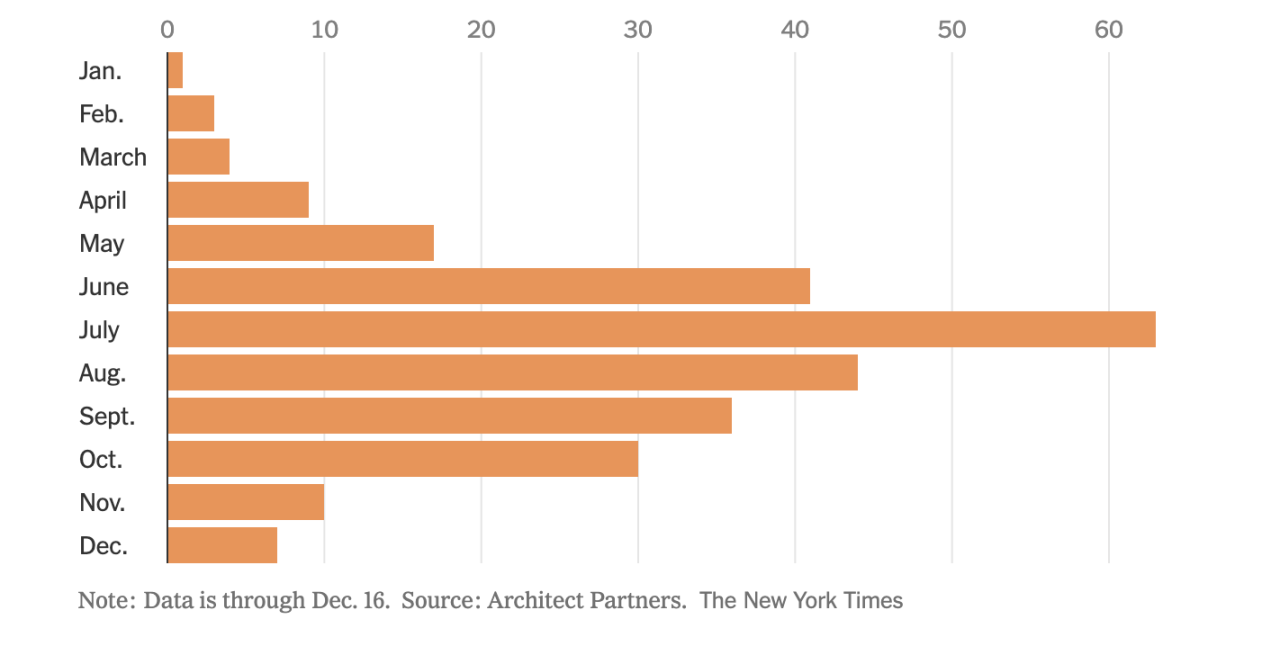
Number of crypto treasury companies established each month in 2025. Source: Architect Partners, statistics as of December 16

The operating model of these companies is often straightforward: a group of executives identifies a small company trading on the public market (e.g., a toy manufacturer), persuades it to转型 into a cryptocurrency hoarding business; then partners with the company to raise hundreds of millions of dollars from high-net-worth investors, ultimately using the funds to purchase cryptocurrencies.

The core purpose is to allow more people to participate in cryptocurrency investment by issuing traditional stocks tied to cryptocurrency prices. This strategy theoretically has considerable profit potential. Many investment funds and asset management institutions have been hesitant to invest directly in cryptocurrencies due to the complex and costly storage process and vulnerability to hacker attacks.

Investing in a crypto treasury company is equivalent to outsourcing the storage and other logistical work of cryptocurrencies. But these companies also隐藏 huge risks: many are established hastily, and their management lacks experience in operating public companies. Data from Architect Partners shows these companies have collectively announced plans to borrow over $20 billion to purchase cryptocurrencies.

"Leverage is the culprit behind financial crises," warned Corey Frayer, a former SEC cryptocurrency advisor. "And the current market is generating massive amounts of leverage."

Some crypto treasury companies have already陷入 operational difficulties or management crises, causing investors to suffer huge losses.

After the publicly traded company Forward Industries转型 into a crypto treasury company, it heavily invested in SOL. In September, the company raised over $1.6 billion from private investors, and its stock price一度 soared to nearly $40 per share.

Allan Teh from Miami, who manages assets for a family office, invested $2.5 million in Forward Industries this year. "At that time, everyone thought this strategy was foolproof, and crypto asset prices would keep rising," Allan Teh recalled.

However, as the cryptocurrency market crashed, Forward Industries' stock price fell to $7 per share this month. The company announced plans to spend $1 billion to repurchase shares over the next two years, but this move failed to stop the stock's decline.

"The music stopped, the game is over. Now I'm starting to panic. Can I get out unscathed?" Allan Teh has lost about $1.5 million. "How much will this investment ultimately lose?" Forward Industries declined to comment.

The proliferation of crypto treasury companies has alerted the SEC. "Clearly, we are very concerned about this," agency chairman Paul Atkins said in an interview last month at a cryptocurrency conference in Miami. "We are closely monitoring developments."

And behind this new cryptocurrency track lies the strong support of the Trump family.

World Liberty Financial's founders include Trump's son Eric Trump and Zach Witkoff

In August, World Liberty Financial announced that its founders (including the president's son Eric Trump) would join the board of ALT5 Sigma. This publicly traded company plans to hoard the crypto token WLFI issued by World Liberty Financial (Eric Trump's current title is Strategic Advisor and Board Observer).

This collaboration seemed poised to quickly profit the Trump family. According to the revenue-sharing agreement published on World Liberty Financial's website, commercial entities owned by the Trump family receive a cut whenever WLFI tokens are traded.

Subsequently, ALT5 Sigma's business took a turn for the worse. In August, the company disclosed that an executive of one of its subsidiaries had been convicted of money laundering in Rwanda, and the board was investigating other "undisclosed matters." Soon after, ALT5 Sigma announced the suspension of its CEO and terminated contracts with two other executives.

Since August, the company's stock price has plummeted 85%. An ALT5 Sigma spokesperson said the company "remains confident about its future development."

Flash Crash: A Trillion in Market Value Wiped Out Overnight

The recent turmoil in the cryptocurrency market can be traced back to one night in October.

Driven by Trump's policies, the cryptocurrency market rose for most of this year. But on October 10th, the prices of Bitcoin, Ethereum, and dozens of other cryptocurrencies collectively crashed in a flash crash.

The immediate trigger for the crash was Trump's announcement of new tariffs on China, a move that caused剧烈震荡 in the global economy. The reason the cryptocurrency market was hit so hard lies in the huge amount of leveraged funds that drove the market up.

On cryptocurrency trading platforms, traders can use their held crypto assets as collateral to borrow fiat currency or use leveraged funds to increase their cryptocurrency investment positions. Data from cryptocurrency data firm Galaxy Research shows that in the third quarter of this year, global cryptocurrency lending grew by $20 billion in a single quarter, reaching a historical peak of $74 billion.

Previously, the riskiest cryptocurrency leverage trading mostly occurred overseas. But in July, the largest U.S. cryptocurrency exchange, Coinbase, announced the launch of a new investment tool allowing traders to bet on Bitcoin and Ethereum futures prices with 10x leverage. Before this, U.S. federal regulators had revoked relevant guidelines restricting such leveraged trading, giving the green light to Coinbase's new product.
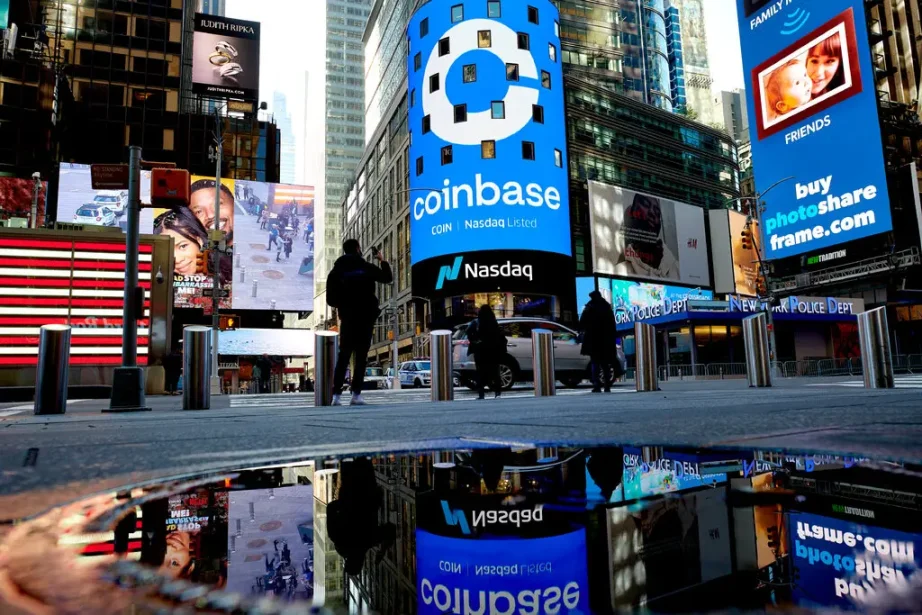
In July, Coinbase exchange launched a 10x leverage cryptocurrency trading tool

The flash crash in October, while not causing an industry catastrophe like the bankruptcy of several large cryptocurrency companies in 2022, served as a wake-up call for the market, signaling the potential systemic crisis hidden in the cryptocurrency field.

The nature of leveraged trading is that when the market falls, losses are magnified. Trading platforms force liquidate, selling clients' collateral assets, a process that often further exacerbates price declines.

Data from cryptocurrency data firm CoinGlass shows that on October 10th, at least $19 billion worth of cryptocurrency leveraged trades were liquidated globally, affecting 1.6 million traders. This wave of liquidations was concentrated on platforms like Binance, OKX, and Bybit.

The crash caused a surge in trading volume, and several major exchanges experienced technical failures, preventing traders from transferring funds promptly. Coinbase said it was aware that some users "experienced delays or degraded system performance when trading."

Derek Bartron, a software developer in Tennessee and also a cryptocurrency investor, said his Coinbase account was frozen during the flash crash. "I wanted to close my position and exit, but there was no way to operate," Derek Bartron said. "Coinbase effectively locked users' funds. We could only watch helplessly as asset values plummeted."

Derek Bartron said that in the days following the flash crash, his cryptocurrency assets lost about $50,000, partly because he couldn't close positions in time to stop losses.

A Coinbase spokesperson responded that the company provides automated risk management tools, "These tools functioned normally during this market volatility, and our exchange remained stable throughout the incident."

A Binance spokesperson admitted that the exchange "experienced technical issues due to a surge in trading volume" and said measures had been taken to compensate affected users.

Crazy Experiment: The Regulatory Dilemma of the Tokenization Wave

One night this summer, cryptocurrency entrepreneurs Chris Yin and Teddy Pornprinya, dressed in formal attire, appeared at the Kennedy Center in Washington, D.C., attending a grand black-tie dinner.

The dinner was star-studded. Chris Yin, in a tuxedo bought the night before, met U.S. Vice President JD Vance, who had previously been involved in Silicon Valley venture capital; he and Teddy Pornprinya also spoke with former hedge fund manager and current U.S. Treasury Secretary Scott Bessent; they even took a photo with Trump, who gave a thumbs up to the camera.

Chris Yin and Teddy Pornprinya were there to pave the way for their startup, Plume. The company is advancing an industry-disrupting innovation plan, attempting to expand the underlying technology of cryptocurrency to a broader financial field.

For months, Plume has been seeking permission from U.S. regulators to build an online trading platform to issue crypto tokens to clients pegged to real-world assets, covering everything from publicly traded company stocks to farms, oil wells, and other entities.

Plume founders Chris Yin and Teddy Pornprinya at the Empire State Building

Currently, Plume has launched such tokenized products overseas, where clients can buy and sell these asset tokens like cryptocurrencies. But this business, known as asset tokenization, exists in a legal gray area in the United States. Securities laws enacted decades ago impose strict regulatory rules on the issuance of equity in various assets, requiring issuers to disclose detailed information to protect investor rights.

This year, asset tokenization has become the hottest concept in the cryptocurrency industry. Industry executives claim that tokenized stocks can make stock trading more efficient and faster, creating a 24/7 global trading market. The major U.S. cryptocurrency exchange Kraken has already launched crypto-based stock trading services for clients overseas.

Cryptocurrency industry executives say that cryptocurrency trading, based on public ledger records, is more transparent than the traditional financial system. "All transactions are traceable and auditable," said Kraken CEO Arjun Sethi. "It's almost risk-free."

Representatives from Kraken and Coinbase have met with the SEC to discuss regulatory rules for tokenized assets; meanwhile, Plume is also seeking a legal path to expand its business in the United States.

But this race for tokenized products has raised concerns among current and former regulatory officials, as well as executives of traditional financial giants.

In September, Federal Reserve economists warned that asset tokenization could lead to the transmission of cryptocurrency market risks to the entire financial system, "weakening policymakers' ability to maintain the stability of the payment system during times of market stress."

SEC Chairman Paul Atkins has a positive attitude towards tokenized stocks, calling them a "major technological breakthrough." "Under the securities laws, the Commission has broad discretion to provide regulatory support for the cryptocurrency industry. I am determined to push this work forward," Atkins said at a roundtable meeting on asset tokenization in May.

To promote their company's compliance, Chris Yin and Teddy Pornprinya took a series of measures. In May, the two met with the SEC's dedicated cryptocurrency task force; they also provided chart support for the White House's cryptocurrency industry report; and set up Plume's U.S. headquarters on the 77th floor of the Empire State Building.

At that black-tie dinner in Washington this summer, Trump's team showed great interest in the two founders. "They knew about Plume," Teddy Pornprinya recalled. "Everyone had some understanding of our business."

A few weeks later, Plume announced a key partnership, establishing a business relationship with the Trump family's World Liberty Financial.


Domande pertinenti

QWhat is the main concern raised by the New York Times article regarding the cryptocurrency boom under Trump's policies?

AThe article highlights concerns about the high-risk investment frenzy, increased leverage, potential systemic risks to the financial system, and the blurring of lines between speculation, gambling, and investment due to the rapid expansion of cryptocurrency enterprises and their deep integration with traditional markets.

QHow did Anthony Scaramucci become involved with cryptocurrency companies, and what was the outcome?

AAnthony Scaramucci was quickly recruited as an advisor to three little-known companies that adopted a strategy of hoarding large amounts of cryptocurrency to attract investors. However, the cryptocurrency market crashed in the fall, causing the stock prices of these companies to plummet, with the worst-performing one dropping over 80%.

QWhat role does leverage play in the recent cryptocurrency market volatility, as described in the article?

ALeverage amplifies risks in the cryptocurrency market. When prices fall, losses are magnified, leading to forced liquidations where exchanges sell off collateral assets, exacerbating price declines. In October, a flash crash triggered $19 billion in forced liquidations, affecting 1.6 million traders and highlighting systemic vulnerabilities.

QWhat is asset tokenization, and why is it a focus for companies like Plume and Kraken?

AAsset tokenization involves issuing cryptocurrency tokens that represent real-world assets like stocks, farms, or oil wells, allowing them to be traded like cryptocurrencies. Companies like Plume and Kraken aim to create more efficient, 24/7 global markets for these assets, though the practice exists in a regulatory gray area in the U.S. due to securities laws.

QHow is the Trump family's business interests connected to the cryptocurrency industry, according to the article?

AThe Trump family, through World Liberty Financial (co-founded by Eric Trump), has ties to cryptocurrency enterprises. For example, World Liberty Financial executives joined the board of ALT5 Sigma, a company planning to hoard crypto tokens, and Plume partnered with World Liberty Financial. These connections blur the lines between business and government, with the family benefiting from fee structures linked to token transactions.

Letture associate

Trading

Spot
Futures

Articoli Popolari

Cosa è $S$

Comprendere SPERO: Una Panoramica Completa Introduzione a SPERO Mentre il panorama dell'innovazione continua a evolversi, l'emergere delle tecnologie web3 e dei progetti di criptovaluta gioca un ruolo fondamentale nel plasmare il futuro digitale. Un progetto che ha attirato l'attenzione in questo campo dinamico è SPERO, denotato come SPERO,$$s$. Questo articolo mira a raccogliere e presentare informazioni dettagliate su SPERO, per aiutare gli appassionati e gli investitori a comprendere le sue basi, obiettivi e innovazioni nei domini web3 e crypto. Che cos'è SPERO,$$s$? SPERO,$$s$ è un progetto unico all'interno dello spazio crypto che cerca di sfruttare i principi della decentralizzazione e della tecnologia blockchain per creare un ecosistema che promuove l'impegno, l'utilità e l'inclusione finanziaria. Il progetto è progettato per facilitare interazioni peer-to-peer in modi nuovi, fornendo agli utenti soluzioni e servizi finanziari innovativi. Al suo interno, SPERO,$$s$ mira a responsabilizzare gli individui fornendo strumenti e piattaforme che migliorano l'esperienza dell'utente nello spazio delle criptovalute. Questo include la possibilità di metodi di transazione più flessibili, la promozione di iniziative guidate dalla comunità e la creazione di percorsi per opportunità finanziarie attraverso applicazioni decentralizzate (dApps). La visione sottostante di SPERO,$$s$ ruota attorno all'inclusività, cercando di colmare le lacune all'interno della finanza tradizionale mentre sfrutta i vantaggi della tecnologia blockchain. Chi è il Creatore di SPERO,$$s$? L'identità del creatore di SPERO,$$s$ rimane piuttosto oscura, poiché ci sono risorse pubblicamente disponibili limitate che forniscono informazioni dettagliate sul suo fondatore o fondatori. Questa mancanza di trasparenza può derivare dall'impegno del progetto per la decentralizzazione—un ethos che molti progetti web3 condividono, dando priorità ai contributi collettivi rispetto al riconoscimento individuale. Centrando le discussioni attorno alla comunità e ai suoi obiettivi collettivi, SPERO,$$s$ incarna l'essenza dell'empowerment senza mettere in evidenza individui specifici. Pertanto, comprendere l'etica e la missione di SPERO rimane più importante che identificare un creatore singolo. Chi sono gli Investitori di SPERO,$$s$? SPERO,$$s$ è supportato da una varietà di investitori che vanno dai capitalisti di rischio agli investitori angelici dedicati a promuovere l'innovazione nel settore crypto. Il focus di questi investitori generalmente si allinea con la missione di SPERO—dando priorità a progetti che promettono avanzamenti tecnologici sociali, inclusività finanziaria e governance decentralizzata. Queste fondazioni di investitori sono tipicamente interessate a progetti che non solo offrono prodotti innovativi, ma contribuiscono anche positivamente alla comunità blockchain e ai suoi ecosistemi. Il supporto di questi investitori rafforza SPERO,$$s$ come un concorrente degno di nota nel dominio in rapida evoluzione dei progetti crypto. Come Funziona SPERO,$$s$? SPERO,$$s$ impiega un framework multifunzionale che lo distingue dai progetti di criptovaluta convenzionali. Ecco alcune delle caratteristiche chiave che sottolineano la sua unicità e innovazione: Governance Decentralizzata: SPERO,$$s$ integra modelli di governance decentralizzati, responsabilizzando gli utenti a partecipare attivamente ai processi decisionali riguardanti il futuro del progetto. Questo approccio favorisce un senso di proprietà e responsabilità tra i membri della comunità. Utilità del Token: SPERO,$$s$ utilizza il proprio token di criptovaluta, progettato per servire varie funzioni all'interno dell'ecosistema. Questi token abilitano transazioni, premi e la facilitazione dei servizi offerti sulla piattaforma, migliorando l'impegno e l'utilità complessivi. Architettura Stratificata: L'architettura tecnica di SPERO,$$s$ supporta la modularità e la scalabilità, consentendo un'integrazione fluida di funzionalità e applicazioni aggiuntive man mano che il progetto evolve. Questa adattabilità è fondamentale per mantenere la rilevanza nel panorama crypto in continua evoluzione. Coinvolgimento della Comunità: Il progetto enfatizza iniziative guidate dalla comunità, impiegando meccanismi che incentivano la collaborazione e il feedback. Nutrendo una comunità forte, SPERO,$$s$ può affrontare meglio le esigenze degli utenti e adattarsi alle tendenze di mercato. Focus sull'Inclusione: Offrendo basse commissioni di transazione e interfacce user-friendly, SPERO,$$s$ mira ad attrarre una base utenti diversificata, inclusi individui che potrebbero non aver precedentemente interagito nello spazio crypto. Questo impegno per l'inclusione si allinea con la sua missione generale di empowerment attraverso l'accessibilità. Cronologia di SPERO,$$s$ Comprendere la storia di un progetto fornisce preziose intuizioni sulla sua traiettoria di sviluppo e sui traguardi. Di seguito è riportata una cronologia suggerita che mappa eventi significativi nell'evoluzione di SPERO,$$s$: Fase di Concettualizzazione e Ideazione: Le idee iniziali che formano la base di SPERO,$$s$ sono state concepite, allineandosi strettamente con i principi di decentralizzazione e focus sulla comunità all'interno dell'industria blockchain. Lancio del Whitepaper del Progetto: Dopo la fase concettuale, è stato rilasciato un whitepaper completo che dettaglia la visione, gli obiettivi e l'infrastruttura tecnologica di SPERO,$$s$ per suscitare interesse e feedback dalla comunità. Costruzione della Comunità e Prime Interazioni: Sono stati effettuati sforzi attivi di outreach per costruire una comunità di early adopters e potenziali investitori, facilitando discussioni attorno agli obiettivi del progetto e ottenendo supporto. Evento di Generazione del Token: SPERO,$$s$ ha condotto un evento di generazione del token (TGE) per distribuire i propri token nativi ai primi sostenitori e stabilire una liquidità iniziale all'interno dell'ecosistema. Lancio della Prima dApp: La prima applicazione decentralizzata (dApp) associata a SPERO,$$s$ è stata attivata, consentendo agli utenti di interagire con le funzionalità principali della piattaforma. Sviluppo Continuo e Partnership: Aggiornamenti e miglioramenti continui alle offerte del progetto, inclusi partnership strategiche con altri attori nello spazio blockchain, hanno plasmato SPERO,$$s$ in un concorrente competitivo e in evoluzione nel mercato crypto. Conclusione SPERO,$$s$ rappresenta una testimonianza del potenziale del web3 e delle criptovalute di rivoluzionare i sistemi finanziari e responsabilizzare gli individui. Con un impegno per la governance decentralizzata, il coinvolgimento della comunità e funzionalità progettate in modo innovativo, apre la strada verso un panorama finanziario più inclusivo. Come per qualsiasi investimento nello spazio crypto in rapida evoluzione, si incoraggiano potenziali investitori e utenti a ricercare approfonditamente e a impegnarsi in modo riflessivo con gli sviluppi in corso all'interno di SPERO,$$s$. Il progetto mostra lo spirito innovativo dell'industria crypto, invitando a ulteriori esplorazioni delle sue innumerevoli possibilità. Mentre il percorso di SPERO,$$s$ è ancora in fase di sviluppo, i suoi principi fondamentali potrebbero effettivamente influenzare il futuro di come interagiamo con la tecnologia, la finanza e tra di noi in ecosistemi digitali interconnessi.

75 Totale visualizzazioniPubblicato il 2024.12.17Aggiornato il 2024.12.17

Cosa è $S$

Cosa è AGENT S

Agent S: Il Futuro dell'Interazione Autonoma in Web3 Introduzione Nel panorama in continua evoluzione di Web3 e criptovalute, le innovazioni stanno costantemente ridefinendo il modo in cui gli individui interagiscono con le piattaforme digitali. Uno di questi progetti pionieristici, Agent S, promette di rivoluzionare l'interazione uomo-computer attraverso il suo framework agentico aperto. Aprendo la strada a interazioni autonome, Agent S mira a semplificare compiti complessi, offrendo applicazioni trasformative nell'intelligenza artificiale (AI). Questa esplorazione dettagliata approfondirà le complessità del progetto, le sue caratteristiche uniche e le implicazioni per il dominio delle criptovalute. Cos'è Agent S? Agent S si presenta come un innovativo framework agentico aperto, progettato specificamente per affrontare tre sfide fondamentali nell'automazione dei compiti informatici: Acquisizione di Conoscenze Specifiche del Dominio: Il framework apprende in modo intelligente da varie fonti di conoscenza esterne ed esperienze interne. Questo approccio duale gli consente di costruire un ricco repository di conoscenze specifiche del dominio, migliorando le sue prestazioni nell'esecuzione dei compiti. Pianificazione su Lungo Orizzonte di Compiti: Agent S impiega una pianificazione gerarchica potenziata dall'esperienza, un approccio strategico che facilita la suddivisione e l'esecuzione efficiente di compiti complessi. Questa caratteristica migliora significativamente la sua capacità di gestire più sottocompiti in modo efficiente ed efficace. Gestione di Interfacce Dinamiche e Non Uniformi: Il progetto introduce l'Interfaccia Agente-Computer (ACI), una soluzione innovativa che migliora l'interazione tra agenti e utenti. Utilizzando Modelli Linguistici Multimodali di Grandi Dimensioni (MLLM), Agent S può navigare e manipolare senza sforzo diverse interfacce grafiche utente. Attraverso queste caratteristiche pionieristiche, Agent S fornisce un framework robusto che affronta le complessità coinvolte nell'automazione dell'interazione umana con le macchine, preparando il terreno per innumerevoli applicazioni nell'AI e oltre. Chi è il Creatore di Agent S? Sebbene il concetto di Agent S sia fondamentalmente innovativo, informazioni specifiche sul suo creatore rimangono elusive. Il creatore è attualmente sconosciuto, il che evidenzia sia la fase embrionale del progetto sia la scelta strategica di mantenere i membri fondatori sotto anonimato. Indipendentemente dall'anonimato, l'attenzione rimane sulle capacità e sul potenziale del framework. Chi sono gli Investitori di Agent S? Poiché Agent S è relativamente nuovo nell'ecosistema crittografico, informazioni dettagliate riguardanti i suoi investitori e sostenitori finanziari non sono documentate esplicitamente. La mancanza di approfondimenti pubblicamente disponibili sulle fondazioni di investimento o sulle organizzazioni che supportano il progetto solleva interrogativi sulla sua struttura di finanziamento e sulla roadmap di sviluppo. Comprendere il supporto è cruciale per valutare la sostenibilità del progetto e il suo potenziale impatto sul mercato. Come Funziona Agent S? Al centro di Agent S si trova una tecnologia all'avanguardia che gli consente di funzionare efficacemente in contesti diversi. Il suo modello operativo è costruito attorno a diverse caratteristiche chiave: Interazione Uomo-Computer Simile a Quella Umana: Il framework offre una pianificazione AI avanzata, cercando di rendere le interazioni con i computer più intuitive. Mimando il comportamento umano nell'esecuzione dei compiti, promette di elevare le esperienze degli utenti. Memoria Narrativa: Utilizzata per sfruttare esperienze di alto livello, Agent S utilizza la memoria narrativa per tenere traccia delle storie dei compiti, migliorando così i suoi processi decisionali. Memoria Episodica: Questa caratteristica fornisce agli utenti una guida passo-passo, consentendo al framework di offrire supporto contestuale mentre i compiti si sviluppano. Supporto per OpenACI: Con la capacità di funzionare localmente, Agent S consente agli utenti di mantenere il controllo sulle proprie interazioni e flussi di lavoro, allineandosi con l'etica decentralizzata di Web3. Facile Integrazione con API Esterne: La sua versatilità e compatibilità con varie piattaforme AI garantiscono che Agent S possa adattarsi senza problemi agli ecosistemi tecnologici esistenti, rendendolo una scelta attraente per sviluppatori e organizzazioni. Queste funzionalità contribuiscono collettivamente alla posizione unica di Agent S all'interno dello spazio crittografico, poiché automatizza compiti complessi e multi-fase con un intervento umano minimo. Man mano che il progetto evolve, le sue potenziali applicazioni in Web3 potrebbero ridefinire il modo in cui si svolgono le interazioni digitali. Cronologia di Agent S Lo sviluppo e le tappe di Agent S possono essere riassunti in una cronologia che evidenzia i suoi eventi significativi: 27 Settembre 2024: Il concetto di Agent S è stato lanciato in un documento di ricerca completo intitolato “Un Framework Agentico Aperto che Usa i Computer Come un Umano”, mostrando le basi per il progetto. 10 Ottobre 2024: Il documento di ricerca è stato reso pubblicamente disponibile su arXiv, offrendo un'esplorazione approfondita del framework e della sua valutazione delle prestazioni basata sul benchmark OSWorld. 12 Ottobre 2024: È stata rilasciata una presentazione video, fornendo un'idea visiva delle capacità e delle caratteristiche di Agent S, coinvolgendo ulteriormente potenziali utenti e investitori. Questi indicatori nella cronologia non solo illustrano i progressi di Agent S, ma indicano anche il suo impegno per la trasparenza e il coinvolgimento della comunità. Punti Chiave su Agent S Man mano che il framework Agent S continua a evolversi, diversi attributi chiave si distinguono, sottolineando la sua natura innovativa e il potenziale: Framework Innovativo: Progettato per fornire un uso intuitivo dei computer simile all'interazione umana, Agent S porta un approccio nuovo all'automazione dei compiti. Interazione Autonoma: La capacità di interagire autonomamente con i computer attraverso GUI segna un passo avanti verso soluzioni informatiche più intelligenti ed efficienti. Automazione di Compiti Complessi: Con la sua metodologia robusta, può automatizzare compiti complessi e multi-fase, rendendo i processi più veloci e meno soggetti a errori. Miglioramento Continuo: I meccanismi di apprendimento consentono ad Agent S di migliorare dalle esperienze passate, migliorando continuamente le sue prestazioni e la sua efficacia. Versatilità: La sua adattabilità attraverso diversi ambienti operativi come OSWorld e WindowsAgentArena garantisce che possa servire un'ampia gamma di applicazioni. Man mano che Agent S si posiziona nel panorama di Web3 e delle criptovalute, il suo potenziale per migliorare le capacità di interazione e automatizzare i processi segna un significativo avanzamento nelle tecnologie AI. Attraverso il suo framework innovativo, Agent S esemplifica il futuro delle interazioni digitali, promettendo un'esperienza più fluida ed efficiente per gli utenti in vari settori. Conclusione Agent S rappresenta un audace passo avanti nell'unione tra AI e Web3, con la capacità di ridefinire il modo in cui interagiamo con la tecnologia. Sebbene sia ancora nelle sue fasi iniziali, le possibilità per la sua applicazione sono vaste e coinvolgenti. Attraverso il suo framework completo che affronta sfide critiche, Agent S mira a portare le interazioni autonome al centro dell'esperienza digitale. Man mano che ci addentriamo nei regni delle criptovalute e della decentralizzazione, progetti come Agent S giocheranno senza dubbio un ruolo cruciale nel plasmare il futuro della tecnologia e della collaborazione uomo-computer.

435 Totale visualizzazioniPubblicato il 2025.01.14Aggiornato il 2025.01.14

Cosa è AGENT S

Come comprare S

Benvenuto in HTX.com! Abbiamo reso l'acquisto di Sonic (S) semplice e conveniente. Segui la nostra guida passo passo per intraprendere il tuo viaggio nel mondo delle criptovalute.Step 1: Crea il tuo Account HTXUsa la tua email o numero di telefono per registrarti il tuo account gratuito su HTX. Vivi un'esperienza facile e sblocca tutte le funzionalità,Crea il mio accountStep 2: Vai in Acquista crypto e seleziona il tuo metodo di pagamentoCarta di credito/debito: utilizza la tua Visa o Mastercard per acquistare immediatamente SonicS.Bilancio: Usa i fondi dal bilancio del tuo account HTX per fare trading senza problemi.Terze parti: abbiamo aggiunto metodi di pagamento molto utilizzati come Google Pay e Apple Pay per maggiore comodità.P2P: Fai trading direttamente con altri utenti HTX.Over-the-Counter (OTC): Offriamo servizi su misura e tassi di cambio competitivi per i trader.Step 3: Conserva Sonic (S)Dopo aver acquistato Sonic (S), conserva nel tuo account HTX. In alternativa, puoi inviare tramite trasferimento blockchain o scambiare per altre criptovalute.Step 4: Scambia Sonic (S)Scambia facilmente Sonic (S) nel mercato spot di HTX. Accedi al tuo account, seleziona la tua coppia di trading, esegui le tue operazioni e monitora in tempo reale. Offriamo un'esperienza user-friendly sia per chi ha appena iniziato che per i trader più esperti.

849 Totale visualizzazioniPubblicato il 2025.01.15Aggiornato il 2025.03.21

Come comprare S

Discussioni

Benvenuto nella Community HTX. Qui puoi rimanere informato sugli ultimi sviluppi della piattaforma e accedere ad approfondimenti esperti sul mercato. Le opinioni degli utenti sul prezzo di S S sono presentate come di seguito.

活动图片