The Most Rapidly Expanding Stablecoin Recently Is Actually a Trump Family Pawn

比推Pubblicato 2026-01-08Pubblicato ultima volta 2026-01-08

Introduzione

USD1, a rapidly expanding stablecoin issued by World Liberty Financial (WLFI), has seen its market capitalization surge to $3.37 billion, making it the sixth-largest stablecoin. Its recent growth is largely attributed to aggressive incentive strategies, including a 20% APY promotion on Binance and direct treasury-funded adoption incentives approved through governance. Despite being listed on major exchanges like Binance, Coinbase, and Upbit, USD1’s trading liquidity remains significantly behind established stablecoins like USDT and USDC. For instance, BTC/USD1 trading volumes are substantial but still trail leading pairs. The stablecoin also experienced high volatility and temporary price deviations due to thin liquidity in its early trading pairs. USD1 is primarily issued on BSC and Ethereum, with limited presence on Solana despite announced ecosystem partnerships. WLFI has applied to establish a federally regulated trust bank to enhance USD1’s compliance and institutional adoption. Backed by dollar-denominated reserves and custodied by BitGo, USD1 aims to serve cross-border payments and DeFi, though it carries risks including regulatory constraints and limited direct redemption access. The project has notable affiliations with the Trump family.

Author: Nicky, Foresight News

Original Title: The Most Rapidly Expanding Stablecoin Recently Is Actually a Trump Family Pawn


In the current relatively stable stablecoin market landscape, WLFI's USD1 stablecoin is attempting to break through by leveraging Trump family resources and aggressive ecosystem strategies.

Recently, WLFI used treasury funds to incentivize adoption and partnered with Binance to launch a high-yield savings product with an annualized return of 20%, driving USD1's circulation to exceed 3 billion, with a single-day peak growth of over 7.6%.
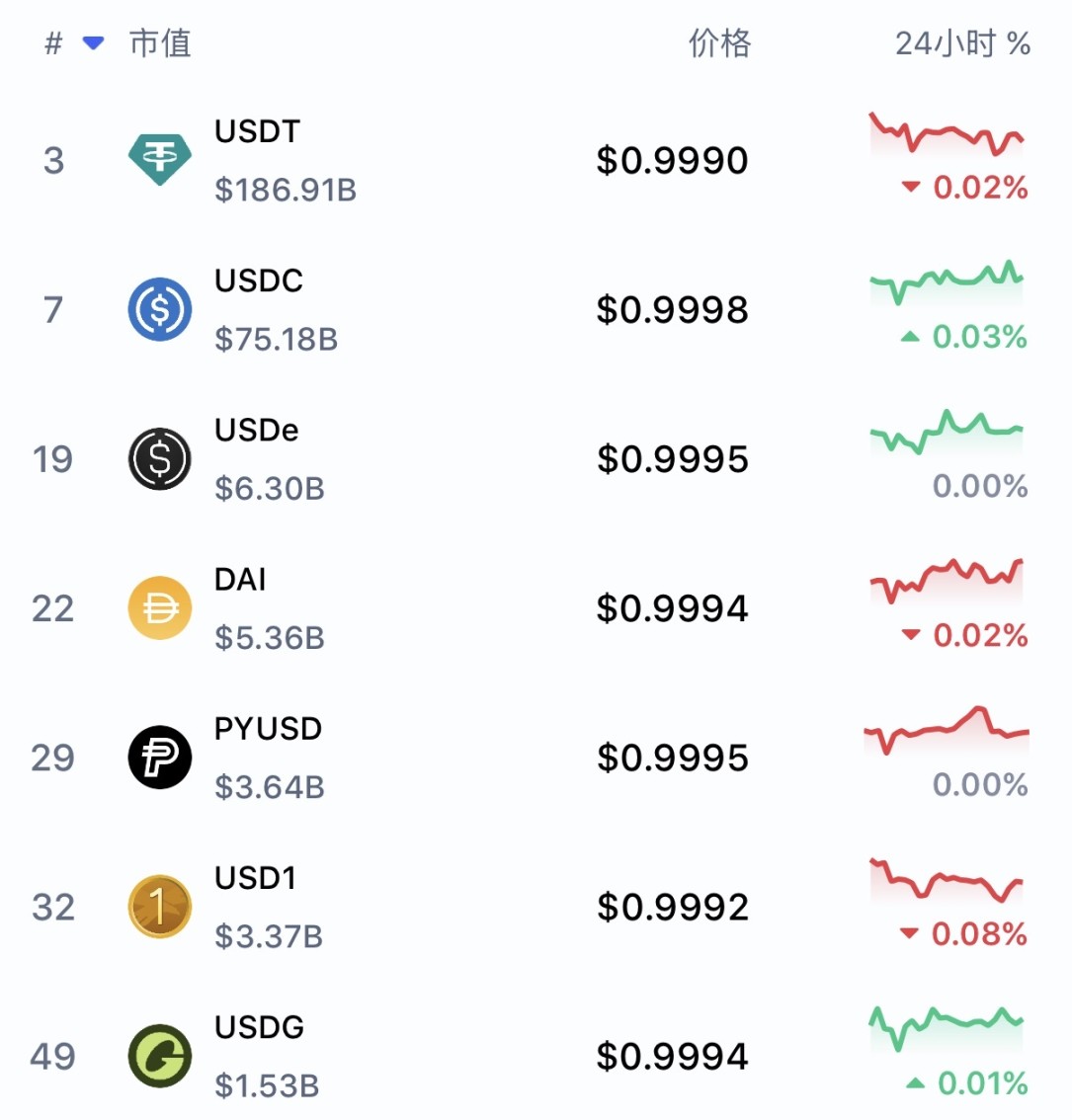
According to CoinMarketCap data, as of now, USD1's market capitalization is $3.37 billion, ranking sixth among stablecoins by market cap, approximately 1.8% of USDT's total market cap and 4.48% of USDC's total market cap.

On centralized exchanges, USD1 has gained relatively comprehensive trading support, being listed on exchanges such as Binance, Coinbase, and Upbit. Taking Binance as an example, USD1 currently has 14 trading pairs, covering assets like BTC, ETH, SOL, BNB, as well as XRP and ASTER.

Looking at the trading data from the past three days, the trading volume for the BTC/USD1 pair is approximately $5.13 billion, while the ETH/USD1 pair is about $38.9 million. For comparison, the BTC/USDT volume during the same period was around $5 billion, and ETH/USDT reached $3.59 billion; BTC/USDC volume was about $1.44 billion, and ETH/USDC was approximately $1.06 billion.

This comparison reflects a relatively clear reality: although USD1 is usable on exchanges, its liquidity scale for spot trading of mainstream assets still lags significantly behind USDT and is orders of magnitude behind USDC. At least at this stage, USD1 appears more like a stablecoin introduced to the market rather than a foundational settlement asset with established natural trading preference.

The recent rapid growth in USD1's issuance is closely related to incentive measures. On December 24, 2025, Binance launched a fixed annualized savings activity for USD1 with a maximum annualized yield of 20%. Before the activity began, USD1's circulation was approximately 2.7 billion tokens, which then quickly climbed and surpassed 3 billion tokens.

On January 5, 2026, WLFI officially announced that a governance proposal regarding 'using a portion of the unlocked treasury funds to incentivize USD1 adoption' had passed, with 77.75% approval votes. This proposal marks WLFI's intention to continue expanding USD1's use cases through more direct resource investment.
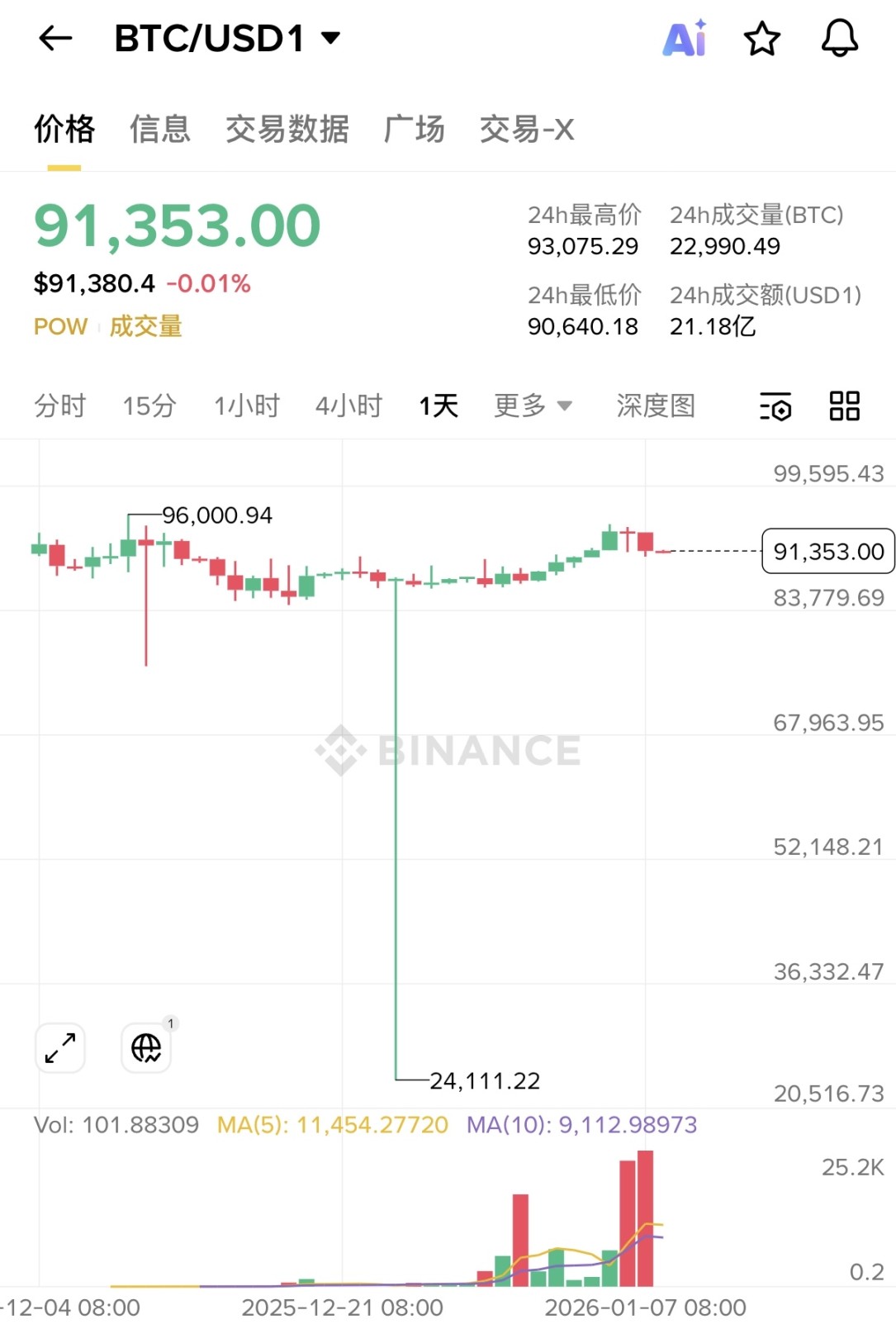
During this period, the market also experienced brief fluctuations related to liquidity structure. On December 24, 2025, a relatively large market order briefly drove down the BTC/USD1 quote, causing the price to rapidly spike down (or 'wick') to $24,111.22 near $87,000, with a daily amplitude of 73%.

On December 26, according to informed sources, due to Binance's savings activity attracting a large number of users to exchange USDT for USD1, USD1 once traded at a premium of about 0.39%. Some funds subsequently sourced USD1 through lending markets and gradually sold it on the spot market to meet demand. Because the BTC/USD1 trading pair had relatively thin initial liquidity, it caused a rapid wicking situation. CZ explained that the pair was not included in any index, thus it did not trigger liquidations, and the related volatility reflected more the fact that liquidity for the new trading pair had not yet been fully established.
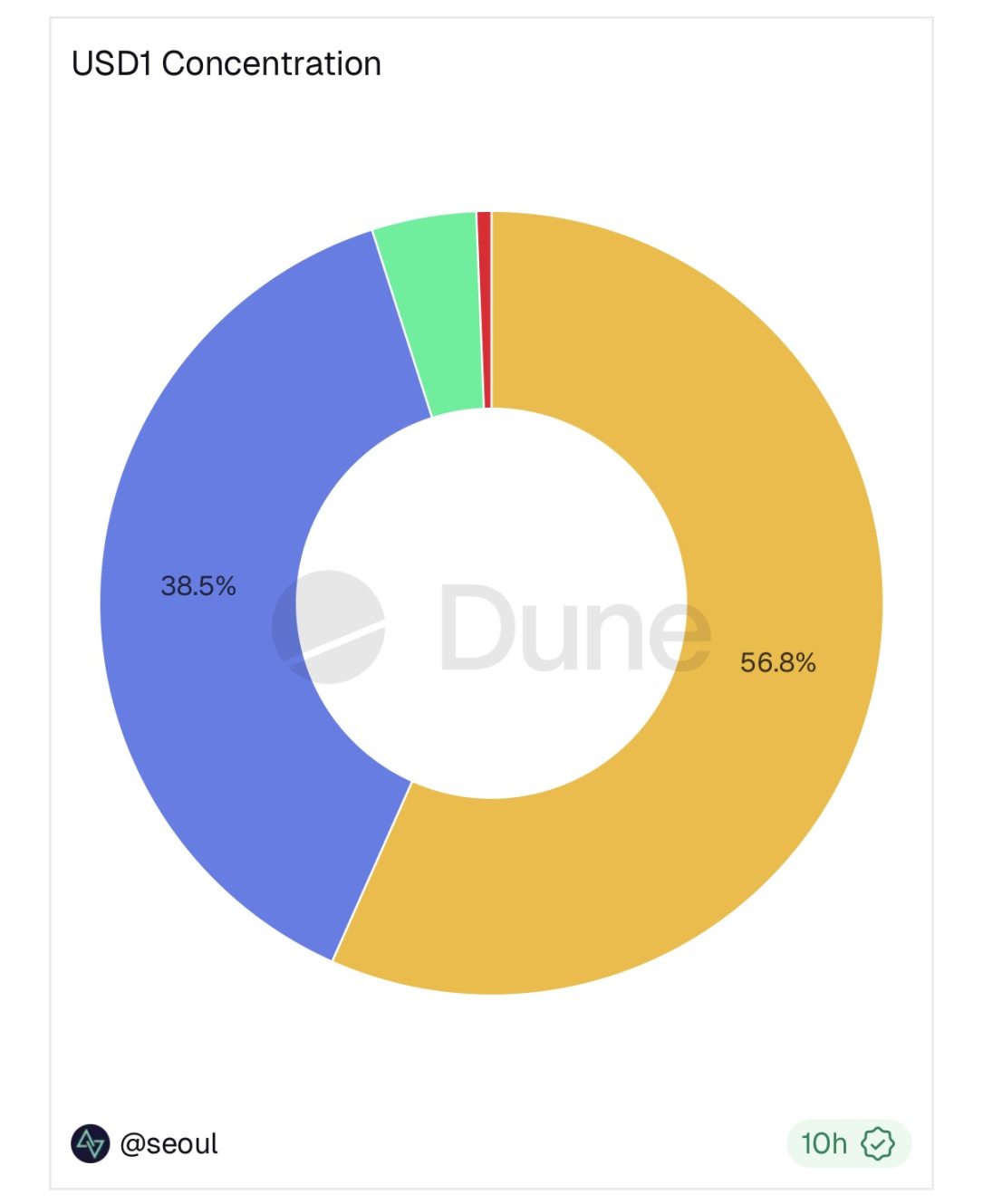
As of January 8, 2026, USD1's market capitalization is approximately $3.37 billion. From an on-chain distribution perspective, its issuance is primarily concentrated on BSC and Ethereum mainnet, at approximately $1.91 billion and $1.3 billion respectively, together accounting for the vast majority. In contrast, the scale of USD1 on the Solana network is about $143 million, a significantly lower proportion. Although WLFI continues to emphasize support for the Solana Meme ecosystem in its narrative and partnership directions, the actual on-chain volume indicates that USD1 currently still relies mainly on the liquidity structure of traditional EVM networks.

Compared to centralized exchanges, WLFI is also trying to promote the use of USD1 through on-chain scenarios. In September 2025, WLFI announced partnerships with Solana's Meme launch platform BONK.fun and the decentralized exchange Raydium to introduce USD1 as a trading pair into the related ecosystem.
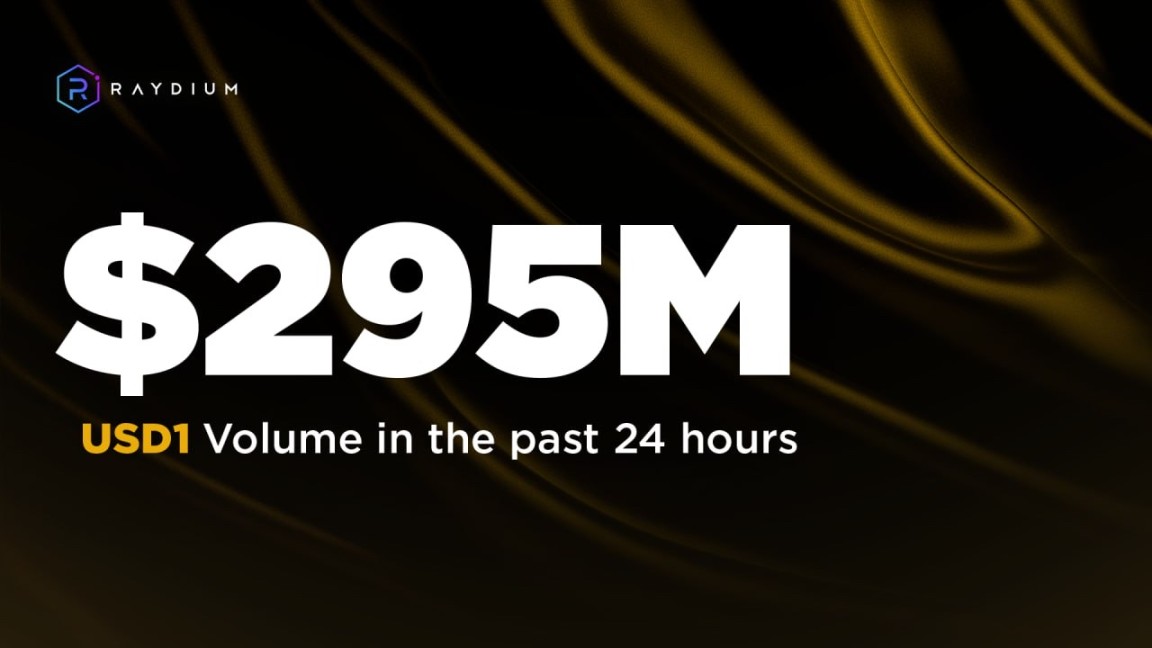
On January 6, Raydium released data showing that USD1's trading volume on the Solana network in the past 24 hours was approximately $295 million.

Additionally, WLFI disclosed purchases of Meme tokens like B and 1 to support community development. Such collaborations provide USD1 with scenarios closer to native on-chain use, but the related demand still largely depends on community activity and阶段性 market sentiment, and its sustainability remains to be seen.

Furthermore, on January 8, WLFI disclosed that its affiliated entity, WLTC Holdings LLC, has applied to the U.S. Office of the Comptroller of the Currency (OCC) to establish the World Liberty Trust Company, National Association (WLTC). This institution is positioned as a national trust bank specifically serving the issuance, custody, and related financial activities of the USD1 stablecoin.

According to WLFI's explanation, the core goal of establishing WLTC is to integrate the issuance, redemption, custody, and exchange functions between USD1 and the U.S. dollar within a single, highly regulated entity. WLFI stated that USD1's circulation scale exceeded $3.3 billion within one year of launch and has been used by some institutions for cross-border payments, settlement, and treasury management scenarios.

If the application is approved, WLTC plans to offer three core services to institutional clients under the federal regulatory framework: minting and redeeming USD1, providing on/off ramps between U.S. dollars and USD1, and custody and conversion services for USD1 and other stablecoins. These services are initially planned to be offered with no fees.

WLFI also emphasized that the proposed trust bank will comply with regulatory requirements including anti-money laundering, sanctions screening, and cybersecurity, and will adopt institutional arrangements such as customer asset segregation, independent reserve management, and regular audits. The institution will operate under a regulatory structure compliant with the GENIUS Act.

Regarding existing partnerships, BitGo will continue to be an important partner for USD1 after WLTC officially begins operations, supporting its subsequent development.
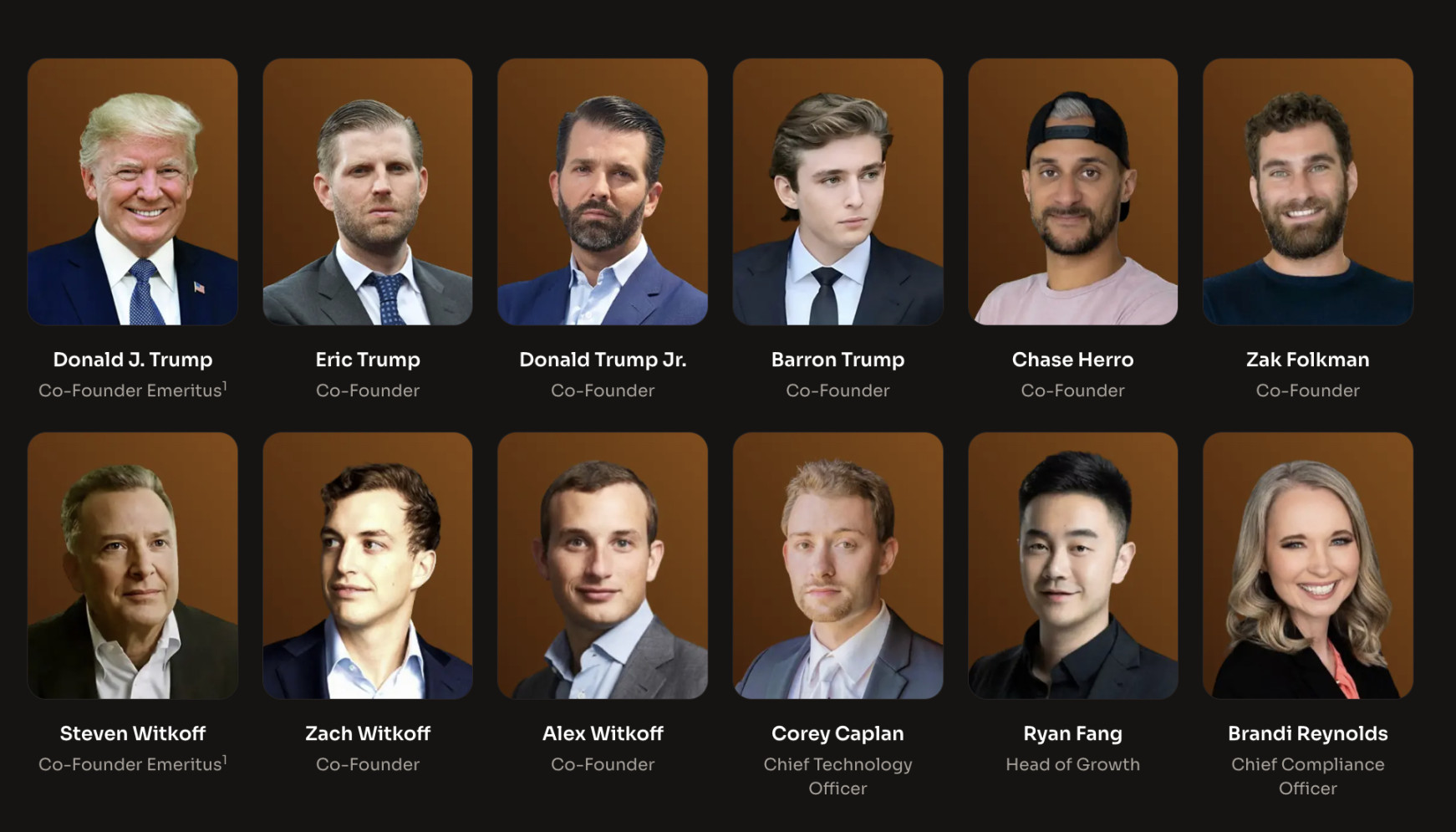
World Liberty Financial was established in 2024 as a project focused on decentralized finance. Public information shows that the project has close ties to the Trump family in terms of structural design and market promotion, with related members playing roles in project promotion and ecosystem dissemination. USD1 is a U.S. dollar-pegged stablecoin launched by WLFI in March 2025, aiming to provide a settlement asset on-chain that can be exchanged 1:1 with the U.S. dollar for use in cross-border payments, DeFi activities, and liquidity needs in digital asset markets.

According to information disclosed on WLFI's official website, each USD1 token is backed by an equivalent reserve of U.S. dollar assets, primarily consisting of U.S. dollar cash, short-term U.S. Treasury bills, and other cash equivalents. The related assets are custodied by BitGo Trust Company and its affiliated entities, with BitGo also handling the issuance and redemption functions for USD1. Eligible BitGo clients can directly redeem USD1 1:1 for U.S. dollars, while other holders need to complete redemption through trading platforms supporting USD1 or regulated custodians.

Similar to other centrally issued, compliance-oriented stablecoins, USD1's official disclosure also clearly lists multiple risks. Its core constraints mainly focus on several aspects: USD1 is not legal tender and does not enjoy deposit insurance; direct redemption is only available to eligible BitGo clients; although the reserve assets are primarily high-liquidity assets, they may still face liquidity pressure in extreme situations;同时, changes in regulatory policies, address freezing mechanisms, and risks associated with third-party platforms may all affect the use and circulation of USD1.


Twitter:https://twitter.com/BitpushNewsCN

Bitpush TG Discussion Group:https://t.me/BitPushCommunity

Bitpush TG Subscription: https://t.me/bitpush

Original article link:https://www.bitpush.news/articles/7601030

Domande pertinenti

QWhat is the current market capitalization of the USD1 stablecoin and how does it rank among other stablecoins?

AAs of the article, the market capitalization of USD1 is $3.37 billion, ranking it sixth among all stablecoins. It is approximately 1.8% of USDT's total market cap and 4.48% of USDC's.

QWhat major incentive was recently offered to drive the adoption and growth of USD1?

ABinance launched a fixed annual yield savings product for USD1 with a high annual percentage yield (APY) of 20%, which was a key factor in its rapid growth, pushing its circulation over 3 billion tokens.

QWhich blockchain networks host the majority of USD1's supply?

AThe majority of USD1's supply is hosted on the BSC (Binance Smart Chain) and Ethereum mainnet, with approximately $1.91 billion on BSC and $1.3 billion on Ethereum. A smaller portion, around $143 million, is on the Solana network.

QWhat regulatory step did the entity associated with WLFI take to support USD1?

AWLFI's associated entity, WLTC Holdings LLC, applied to the U.S. Office of the Comptroller of the Currency (OCC) to establish a national trust bank called World Liberty Trust Company. This bank would be dedicated to the issuance, custody, and related financial activities of the USD1 stablecoin under a federal regulatory framework.

QWhat is the primary entity responsible for the custody of USD1's reserve assets and direct redemptions?

ABitGo Trust Company and its affiliates are responsible for the custody of USD1's reserve assets, which consist of U.S. dollars, short-term U.S. Treasuries, and cash equivalents. They also handle the direct issuance and redemption of USD1 for eligible BitGo customers.

Letture associate

As Consensus Accelerates, What Are Young Investors Betting On?

Title: As Consensus Forms Faster, What Are Young Investors Betting On? In the rapid evolution of tech investment, a new generation of young investors is navigating a landscape where AI, robotics, commercial aerospace, and quantum computing are advancing simultaneously. Traditional investment logic based on financial models is giving way to a need for deep technical understanding and the ability to act before industry consensus forms. An analysis of trends from the "WAIC FUTURE TECH" list of young investment leaders reveals key shifts in focus. The first major trend is the movement of AI from the digital screen into the physical world. Investment is shifting from large language models and chatbots towards embodied AI, robotics, AI hardware, and edge computing. While demonstrations generate excitement, the real challenge lies in achieving scalable, reliable, and cost-effective delivery in complex real-world environments like factories and logistics. Success depends not just on algorithms but on the integration of sensors, actuators, and control systems. Second, the competitive focus for large models is moving beyond raw capability toward building an "intelligence flywheel." The goal is to create self-reinforcing systems where user interaction generates data, improving the model, which in turn enhances the user experience and attracts more engagement. Companies that successfully embed AI into workflows to create these closed-loop systems can build lasting value that isn't easily erased by the next model upgrade. Third, facing a potential bottleneck in high-quality human-generated data, investors are looking at new underlying technologies. Reinforcement learning and self-play, as demonstrated by AlphaGo Zero, offer paths for AI to generate its own experience. Scientific foundation models, which aim to build general AI capabilities for fields like life sciences and materials discovery, represent a non-consensus direction that could unlock new frontiers of knowledge and data. Finally, in deep-tech areas like quantum computing, commercial aerospace, and space-based infrastructure, patient capital is essential. These fields have long, uncertain development and validation cycles involving complex engineering, supply chains, and regulations. Investment here requires a long-term view, focusing on foundational team capabilities and the eventual emergence of market demand, even if commercial returns are distant. Collectively, these trends illustrate how young investors are adapting to a new era. They are learning to make earlier, technically-informed judgments, balance hype with real-world viability, and provide the patient capital needed to build the deep-tech foundations of the future.

marsbit23 min fa

As Consensus Accelerates, What Are Young Investors Betting On?

marsbit23 min fa

Can Japan Buy Growth with AI? Will the Bond Market Believe It?

Japan's cabinet has introduced the 2026 Basic Policy on Economic and Fiscal Management and Reform, shifting its primary fiscal target. The new framework moves away from the traditional annual primary balance goal and instead prioritizes a stable reduction of the debt-to-GDP ratio. This change is tied to a strategy of increased "responsible proactive fiscal" spending, aiming to boost long-term growth through investments in strategic sectors like AI, semiconductors, energy, and robotics. The government estimates total public and private investment in 62 key technologies could exceed 370 trillion yen by 2040. The market reaction has been mixed and cautious. While equity markets may respond to policy signals, bond markets are focused on fiscal credibility. Concerns center on whether the weakening of the clear primary balance anchor could lead to looser fiscal discipline. If investors doubt that these strategic investments will generate sufficient productivity gains, tax revenue, and nominal growth to outpace rising interest costs, they may demand higher yields on Japanese Government Bonds (JGBs). Recent volatility in the yen and JGB yields, with the 10-year yield briefly reaching 2.9%, reflects this skepticism. The success of this new framework hinges on two factors: whether Japan can achieve a nominal growth rate consistently higher than its long-term interest rates, and whether future budgets demonstrate disciplined control over bond issuance. The government's narrative is that strategic investment is essential to break Japan's cycle of low growth, aging, and labor shortages. However, the bond market will continuously assess the credibility of this plan, pricing the risk that it may represent fiscal expansion rather than a viable growth strategy.

marsbit1 h fa

Can Japan Buy Growth with AI? Will the Bond Market Believe It?

marsbit1 h fa

Misjudged A-Shares: Resilience, Expectations, and Confidence

China's A-share market recently faced selling pressure, especially in tech sectors, initially triggered by a global tech sell-off that began in South Korea. However, the article argues this is a case of "mistaken injury" and highlights the market's underlying resilience. This resilience stems from three main pillars: **1) Tech Sector Fundamentals:** Unlike Korea's market dominated by a few memory chip stocks, China's tech sector is diversified across computing, communications, electronics, and semiconductors, supported by dual narratives of global AI supply chains and domestic substitution. Core areas like optical modules and fiber optics continue to show strong earnings growth. **2) "National Team" Support:** State-backed institutions and large corporations have made significant market purchases and announced buybacks, providing liquidity and signaling confidence. This is seen as a stabilizing policy signal, often associated with market bottoms. **3) Broader Market Pillars:** Other major sectors are showing endogenous recovery momentum. Consumer stocks benefit from stabilizing CPI and signs of sector recovery (e.g., liquor price hikes). Cyclical sectors like aluminum have high earnings, potential price increases due to tight supply, and low valuations. The financial sector offers stable dividends and low valuations. The conclusion is that the sell-off was driven by external contagion, not a collapse in fundamentals. With strong policy support and recovering momentum across key sectors, the A-share market possesses the toughness to regain stability.

marsbit1 h fa

Misjudged A-Shares: Resilience, Expectations, and Confidence

marsbit1 h fa

Trading

Spot
活动图片





