The More It Rises, the More Dangerous? The Systemic Risks Behind SpaceX's Soaring Valuation

marsbitPubblicato 2026-06-17Pubblicato ultima volta 2026-06-17

Introduzione

Summary: The article raises concerns about the systemic risks posed by SpaceX's skyrocketing valuation, arguing that modern market mechanics, rather than fundamentals, are driving its price discovery. Following SpaceX's market capitalization surpassing $3 trillion in after-hours trading, the author contends that the market is no longer functioning properly. The core issue is not SpaceX's business prospects but the unhealthy market structure surrounding it. With limited float and the imminent launch of options trading, the stage is set for a potential "gamma squeeze"—a feedback loop where market makers hedging call options are forced to buy shares, pushing the price higher and attracting more speculative momentum traders. This mechanism, seen previously with Tesla and meme stocks, can decouple valuation from financial reality. The danger escalates as extreme valuations force passive funds, ETFs, pensions, and major indices to hold the stock. If SpaceX grows large enough—hypothetically reaching $5 or even $10 trillion—its performance would increasingly dictate broader market indices, embedding systemic risk. The author warns that when price appreciation itself becomes the primary bullish thesis, the market transforms from a capital allocation mechanism into a self-reinforcing speculative machine, endangering the retirement savings of ordinary investors tied to passive strategies. The piece questions whether such a system can still perform its fundamental role of price discove...

Editor's Note: After SpaceX's market cap surpassed $3 trillion in after-hours trading, this article raises a question more pointed than "What is it really worth?": When a company's market cap can increase by hundreds of billions of dollars in a single day due to a combination of limited float, options trading, and market sentiment, is the capital market still performing price discovery, or has it become a self-reinforcing speculative machine?

The author's core judgment is not about denying SpaceX's commercial prospects. SpaceX may still be one of the world's most important space infrastructure companies, and it may possess immense long-term potential. But this article is genuinely concerned with something else: If the stock price is primarily driven by call option buying, market maker hedging, momentum chasing, and passive fund allocation, then valuation is no longer merely "reflecting value"—it begins to "create value." Price appreciation itself becomes the new bullish thesis, while fundamentals are pushed to the sidelines.

The concept of a gamma squeeze (a feedback loop where market makers are forced to buy stock to hedge their positions, further driving up the price), repeatedly mentioned in the article, is key to understanding it. Over the past few years, similar mechanisms have repeatedly played out in Tesla, certain meme stocks, and high-momentum tech stocks. The author worries that if SpaceX replicates this path and continues to be pushed higher by its own narrative strength, limited float, and Elon Musk's personal influence, it could evolve from a highly valued stock into a systemic variable for the entire market.

The more dangerous part lies in indexation and passive investing. When a company becomes sufficiently large in market capitalization, it gets included in major indexes and is held passively by ETFs, pension funds, retirement accounts, sovereign wealth funds, and institutional portfolios. At that point, a bubble is no longer just the gamble of a few traders; it enters the long-term asset allocation of ordinary investors. The higher it climbs, the harder it becomes for the market to ignore it; and the harder it is to ignore, the more capital is likely to continue flowing into it.

Therefore, this article isn't really about whether SpaceX will become a $5 trillion or $10 trillion company. It's about a structural paradox of modern capital markets: When market mechanisms themselves can amplify narratives, leverage, and liquidity to a point where they overwhelm fundamentals, can "price discovery" still be said to exist? SpaceX is just an extreme case, but the problem it exposes might be more widespread—in today's U.S. stock market, systemic risk sometimes doesn't start with a bad company, but with the most popular, most unavoidable company.

The following is the original article:

"Things will just keep getting weirder and weirder and weirder, until finally, it gets so weird that people are obliged to start discussing how weird it is."
—Terence McKenna

For years, I've been asking: How ridiculous do things have to get before we admit that the stock market is fundamentally, utterly broken? Seeing SpaceX's after-hours surge today, I think the answer is clear: the market has been broken for a long time. The real question is just how absurd it has to get before others notice.

SpaceX's market cap broke through $3 trillion in after-hours trading. This means its valuation now exceeds that of Amazon and Microsoft. Microsoft generates hundreds of billions in annual revenue and over $100 billion in annual profit. Amazon has over $700 billion in annual revenue and profits in the tens of billions. And now, SpaceX is assigned a higher valuation than them.

SpaceX's relatively limited public float makes it an ideal candidate for a manipulative short squeeze. Near the end of after-hours trading, its share price approached $230. In a single day, a company still losing billions of dollars annually saw its market cap increase by about $650 billion.

$650 billion. Not in a year. Not in a decade. In one day. And tomorrow, SpaceX options will begin trading. As I predicted earlier, I'd wager it might get squeezed even further.

This is the truly unsettling part. Because I've written for years about what happens when options activity becomes a primary driver of price action.

We've seen this script before: call option buyers flood in, market makers are forced to hedge, the stock rises, momentum traders chase it, more call options are bought, and the cycle continues to reinforce itself.

The $380 strike call expiring in two days—the deepest out-of-the-money call available for purchase—was the second most popular strike among calls expiring this week and was, at one point in early trading, the most popular.

At a certain point, price stops measuring value and starts creating it. Valuation itself becomes the bullish logic. The company's industry and fundamentals become completely irrelevant. At that moment, the market formally begins doing what it's not supposed to do.

This is why tomorrow matters. Because a company that has already demonstrated powerful squeeze characteristics will have options start trading. And its "sister company" has seen similar situations before.

For years, I've written that modern markets are increasingly driven by mechanical forces, not fundamental analysis. Tomorrow could become one of the clearest examples of this yet.

My expectation is that the launch of SPCX options trading won't improve price discovery but will further distort it. If aggressive call buying emerges, the hedging activity of market makers could create a reflexive feedback loop similar to the mechanisms that drove the spectacular—yet completely illogical—runs in Tesla and other momentum stocks over the past decade.

At that point, price moves would have nothing to do with business fundamentals and everything to do with market structure. If SpaceX indeed experiences the kind of gamma squeeze many traders are openly anticipating, I believe it would serve as further proof that modern markets have become useless and extremely dangerous to ordinary retirement accounts.

Because markets are supposed to allocate capital. They are supposed to facilitate price discovery. They are supposed to connect valuations—however imperfectly—to economic reality. Markets are not supposed to become self-reinforcing feedback machines that, through purely mechanical flows, can add trillions of dollars of market cap to a single company.

The question is not whether SpaceX is a good company. The question is whether the market structure around it is healthy.

Because if a company can become more valuable than Microsoft and Amazon while having a fraction of their revenue and profits, and might surpass Nvidia tomorrow, then what is the limiting factor? What stops it from becoming a $5 trillion company? What stops it from becoming a $10 trillion company?
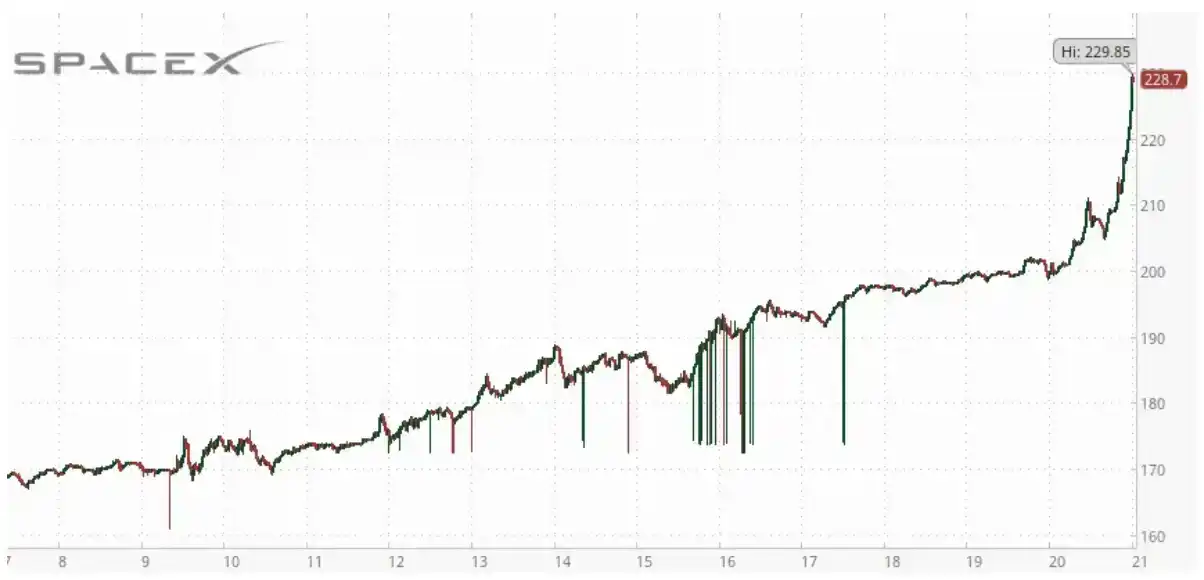
If the same kind of options-driven feedback loop that propelled Tesla after late 2019 materializes here, then these numbers no longer seem as unimaginable as they once did. And this is precisely where nobody wants to have the conversation.

Everyone wants to talk about how high SpaceX can go. Nobody wants to talk about what happens if it actually gets there.

If SpaceX reaches a $10 trillion market cap, that means one company is valued at roughly one-third of U.S. GDP. It would be large enough to dominate passive indexes, retirement accounts, ETFs, pension funds, and institutional portfolios. Its every move would increasingly dictate the performance of the entire market—all while it isn't even profitable. It would become the greatest, and most dangerous, speculative machine in human history.

Consider what this means for Elon Musk. If SpaceX is valued at $10 trillion, Musk's personal fortune would enter a realm unseen in modern history. His net worth is already equivalent to 40% of all currency in circulation.
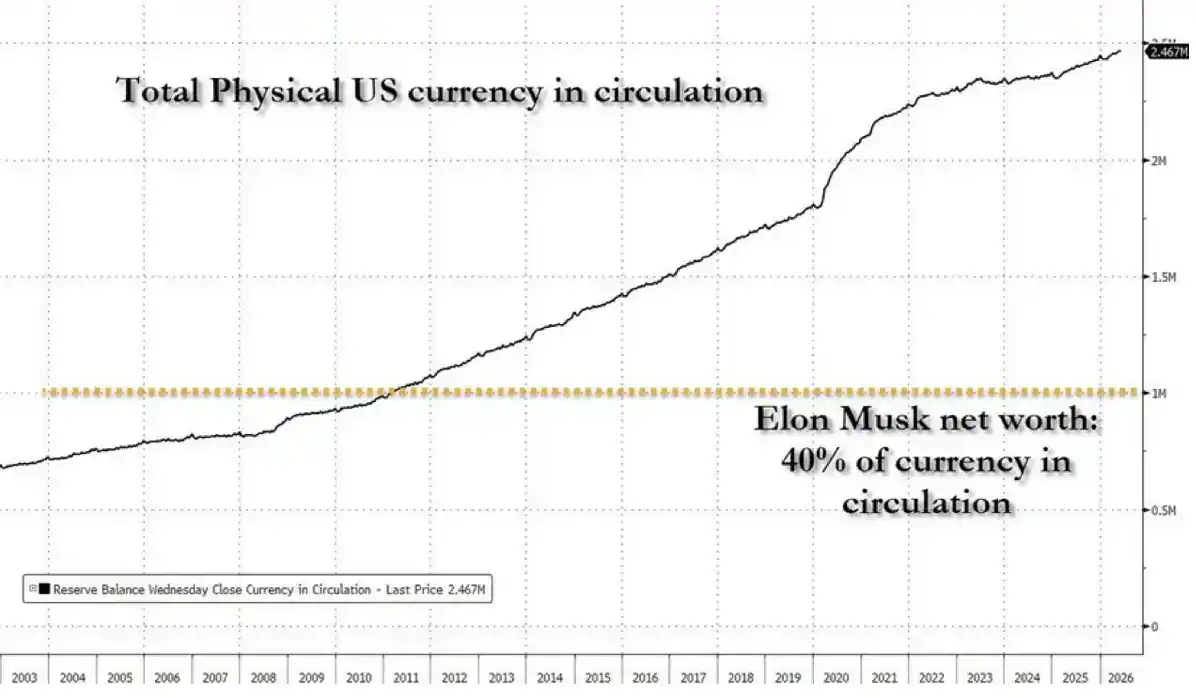
And he isn't just richer than the second-richest person. He could soon be about ten times richer.

The gap between Musk and other billionaires could exceed the total wealth of some developed nations. At that point, we are no longer discussing wealth creation in an ordinary sense.

What happens if SpaceX's market cap, due to some gamma squeeze malfunction, truly surges to $28 trillion? That's roughly equivalent to a year of U.S. economic output. Would people finally start questioning the market then? Or would they just find new reasons to rationalize it?

Because this is how every bubble in history has operated. Every new high is taken as proof the last high was too low. Every speculative mania is packaged as innovation—ask the so-called "innovation expert" Cathie Wood. Every squeeze is explained away as genius. Every warning is turned into evidence that "the skeptics don't understand the future."

The most astonishing thing about SpaceX breaking $3 trillion isn't the valuation itself.

It's that if it keeps rising, it will become too big to ignore. At some point, we must stop talking about SpaceX and start talking about the system that produced it: a speculative machine that has completely detached from its original function.

The danger is that once a company reaches sufficient scale, the distortion itself becomes a systemic risk. Every passive fund must hold it. Every major index becomes dependent on it. Pension funds, retirement accounts, sovereign wealth funds, insurance companies, and institutional portfolios become increasingly exposed to the same single trade. The higher it goes, the more unavoidable it becomes.

This is the part nobody truly understands.

If SpaceX ultimately reaches $10 trillion on a combination of hype, narrative, mechanical flows, and options-driven feedback loops, it ceases to be just a story about SpaceX. It becomes the market. Its performance will increasingly determine the performance of indexes, ETFs, and retirement accounts across the entire financial system. The market effectively becomes a referendum on a single stock.

This is how bubbles become systemic risks. Not when they're small enough to be laughed at, but when they're so big everyone is forced to participate. The same mechanisms driving the price up today will eventually create the conditions for instability tomorrow. When trillions in wealth are tied to a valuation that was never truly anchored to fundamentals, even a mild correction could have consequences far beyond that single stock.


Domande pertinenti

QWhat is the core concern of the author regarding SpaceX's valuation surge, beyond its business prospects?

AThe author's core concern is the health and functionality of the modern capital market structure itself. They argue that SpaceX's valuation is increasingly driven by mechanical market forces like gamma squeezes (from options trading), momentum chasing, and passive fund inflows, rather than fundamental price discovery. This creates a self-reinforcing feedback loop where price increases themselves become the justification for further buying, detaching valuation from economic reality and posing a systemic risk to the broader market and ordinary investors' portfolios.

QHow could the introduction of SpaceX options trading potentially worsen the situation, according to the article?

AThe author fears the introduction of SpaceX options trading could exacerbate price distortion through a 'gamma squeeze' feedback loop. Aggressive call option buying would force market makers to hedge by purchasing the underlying stock, pushing the stock price higher. This price rise would then attract more momentum traders and call option buyers, further reinforcing the cycle. This mechanism would make price movements almost entirely a function of market structure mechanics, not the company's business fundamentals.

QWhy does the author believe a highly inflated SpaceX could become a systemic risk rather than just a single-stock bubble?

AThe author explains that if SpaceX's market cap grows large enough, it becomes a systemic risk due to indexation and passive investment. At extreme valuations (e.g., $10 trillion), it would dominate major indices. Consequently, ETFs, pension funds, retirement accounts, and institutional portfolios would be forced to hold it in significant weightings. Its price movements would then disproportionately dictate the performance of the entire market. A correction or instability in SpaceX could therefore ripple through the financial system, impacting the savings of ordinary investors who are passively exposed.

QWhat historical market phenomenon does the author compare SpaceX's potential path to, and what is the dangerous pattern mentioned?

AThe author compares SpaceX's potential path to the gamma squeeze and feedback loop mechanisms observed in Tesla and certain 'meme stocks' in recent years. The dangerous pattern is that each new high in the stock price is used as evidence to justify the previous high, rationalizing the speculative frenzy as innovation or genius, while dismissing warnings as a lack of understanding of the future. This pattern repeats in historical bubbles.

QWhat is the 'structural paradox' of modern capital markets highlighted by the SpaceX case?

AThe structural paradox is that the very mechanisms of the modern market (options trading, passive funds, momentum algorithms) can amplify narratives, leverage, and liquidity to a point where they overwhelm fundamental analysis and price discovery. The market, meant to reflect value, instead begins to manufacture value. Systemic risk, therefore, may not start with bad companies, but with the most popular, narrative-rich companies that become too big for the market to ignore, embedding distortion at its core.

Letture associate

Conversation with Arthur Hayes: AI Has Drained Market Liquidity, BTC Will Be Below 100k by Year-End

In this June 2026 podcast interview, BitMEX co-founder Arthur Hayes explains his decision to sell his major crypto holdings (HYPE, NEAR, Worldcoin, Zcash). His rationale is based on a macro view linking oil prices, the Iran conflict, US politics, and an impending AI bubble burst. Hayes argues that high oil prices, driven by the ongoing war, will pressure domestic US inflation. To salvage the Republican Party's chances in the midterm elections, he believes Donald Trump may pivot to a populist, anti-AI stance—advocating for taxes and regulation—which would deflate the AI investment narrative. He sees the AI sector, particularly massive capital expenditure on data centers, as having absorbed nearly all excess market liquidity (around $1.5 trillion in debt issuance since 2025), starving other assets like Bitcoin. He highlights the upcoming SpaceX IPO at a ~$1.8 trillion valuation and 100x price-to-sales ratio as a potential tipping point. If these hyped IPOs underperform, it could shatter market confidence in AI. In such a scenario, all risk assets, including crypto, would fall together as correlations converge to 1 during a broad correction. Hayes has moved his portfolio into Treasuries and energy stocks (like ExxonMobil), predicting Bitcoin will be below $100k by year-end. He sees a potential crypto bull market only after the AI frenzy cools, liquidity stops flowing exclusively into AI, and possibly after a significant market downturn prompts new monetary stimulus.

marsbit3 min fa

Conversation with Arthur Hayes: AI Has Drained Market Liquidity, BTC Will Be Below 100k by Year-End

marsbit3 min fa

Fed's Internal Doves Flock to Hawkish Stance, Warsh's Debut "Between a Rock and a Hard Place"

U.S. Federal Reserve officials who previously advocated for rate cuts, including Governor Christopher Waller, have recently shifted their stance, with many now not ruling out the possibility of future rate hikes. This sets a challenging stage for new Fed Chair Kevin Warsh's first policy meeting. Appointed by President Trump based on his dovish views, Warsh now faces a committee where the debate has pivoted from "when to cut" to "whether to hike," driven by persistent inflation above 3%, a strong labor market, and supply-side pressures from AI infrastructure demands and geopolitical tensions. Key figures illustrate the shift. Governor Waller, once concerned about employment, now says data has pushed him toward considering rate increases. Even moderate voices like Governor Lisa Cook, while expecting inflation to ease, have indicated readiness to hike if it fails to do so. Long-time hawks such as regional Fed presidents Beth Hammack, Lorie Logan, and Neel Kashkari have grown more vocal, arguing that the real policy rate is effectively falling and that action may soon be needed. The upcoming Fed meeting is expected to keep rates steady but will likely remove the "easing bias" from its statement, signaling a neutral stance between cuts and hikes. The quarterly "dot plot" is anticipated to show most officials projecting no cuts this year, with some potentially indicating hikes. Chair Warsh, a critic of the Fed's reliance on forward guidance like the dot plot, must navigate communicating this pivot using tools he has questioned, all while steering policy in a direction counter to the preferences of the president who appointed him. The consensus suggests the Fed's next move could well be a rate increase.

marsbit1 h fa

Fed's Internal Doves Flock to Hawkish Stance, Warsh's Debut "Between a Rock and a Hard Place"

marsbit1 h fa

The Trillion-Yuan Market Cap 'Yi Zhong Tian': Who is the True Value King?

The article analyzes the three leading Chinese optical module companies, collectively nicknamed "Yi Zhong Tian": Xinyisheng, Zhongji Innolight, and TFC Optical Communication. It evaluates their "cost-performance" not by current stock price, but through three lenses: PEG ratio (growth vs. valuation), earnings quality, and premium/discount for certainty. Xinyisheng shows the most attractive PEG ratio and high profitability, but its valuation reflects discounts for risks like high customer concentration and reliance on overseas markets. Zhongji Innolight, the most expensive, commands a premium for its market leadership, dominant share in key products like 800G/1.6T modules, and higher earnings certainty, though it faces geopolitical risks. TFC Optical, as an upstream component supplier ("water seller"), has the highest gross margin and bets on the long-term CPO/NPO architecture trend, but trades at a high valuation with more stable, less explosive growth. The core argument is that while these companies dominate module assembly, the true profit pool and technological moat lie upstream in laser and switch chips, currently controlled by U.S. firms like Lumentum and Coherent. The long-term "cost-performance" for these Chinese leaders hinges on whether the domestic industry, exemplified by companies like Yuanjie Technology, can successfully move up the value chain into high-power laser chips. Otherwise, their high growth may remain confined to the lower-margin assembly segment.

marsbit1 h fa

The Trillion-Yuan Market Cap 'Yi Zhong Tian': Who is the True Value King?

marsbit1 h fa

Has the Crypto Market Bottomed? Here's What Institutions Think

The crypto market is in a period of significant debate, with leading institutions offering differing views on whether a bottom has been reached. Three prominent firms have published detailed analyses: * **Galaxy Digital** argues Bitcoin has **not yet bottomed**. Their analysis of 13 historical indicators across six dimensions (valuation, profit-taking, miner pressure, etc.) shows only four are fully met. They project a potential bottom range between $30k and $54k. * **NYDIG** states a bottom is **possible but not likely**. While metrics are close to historic bear market extremes, they note the absence of a classic panic-selling event. They also suggest increased institutional adoption may have structurally altered the market cycle, potentially leading to a shallower downturn. * **Standard Chartered Bank** asserts the **bottom has already occurred** at around $59k. They cite two key factors: potential US-Iran diplomatic progress and the anticipated SpaceX IPO, which they believe absorbed capital and caused ETF selling pressure that is now subsiding. They forecast a year-end price target of $100k. Despite the surface-level disagreement, the reports share critical common ground more valuable for long-term investors: 1. All three believe the market bottom will form **within this year**. 2. All agree the current price is **closer to the bottom than to previous highs**. 3. All maintain a **bullish long-term outlook** for Bitcoin and a new cycle. The core takeaway is that while the exact bottom price ($40k, $50k, or $60k) is debated, the consensus is that a bottom is imminent. For long-term holders, the primary focus should not be pinpointing the absolute low, but on the future potential for prices to reach $100k, $200k, or higher. The fundamental thesis for Bitcoin—sovereign debt accumulation, inflation, declining trust in centralized institutions, global digitization, and improved accessibility—remains intact and is arguably strengthening. The overall landscape is viewed as more favorable than in previous crypto winters.

marsbit1 h fa

Has the Crypto Market Bottomed? Here's What Institutions Think

marsbit1 h fa

Trading

Spot
Futures

Articoli Popolari

Cosa è $S$

Comprendere SPERO: Una Panoramica Completa Introduzione a SPERO Mentre il panorama dell'innovazione continua a evolversi, l'emergere delle tecnologie web3 e dei progetti di criptovaluta gioca un ruolo fondamentale nel plasmare il futuro digitale. Un progetto che ha attirato l'attenzione in questo campo dinamico è SPERO, denotato come SPERO,$$s$. Questo articolo mira a raccogliere e presentare informazioni dettagliate su SPERO, per aiutare gli appassionati e gli investitori a comprendere le sue basi, obiettivi e innovazioni nei domini web3 e crypto. Che cos'è SPERO,$$s$? SPERO,$$s$ è un progetto unico all'interno dello spazio crypto che cerca di sfruttare i principi della decentralizzazione e della tecnologia blockchain per creare un ecosistema che promuove l'impegno, l'utilità e l'inclusione finanziaria. Il progetto è progettato per facilitare interazioni peer-to-peer in modi nuovi, fornendo agli utenti soluzioni e servizi finanziari innovativi. Al suo interno, SPERO,$$s$ mira a responsabilizzare gli individui fornendo strumenti e piattaforme che migliorano l'esperienza dell'utente nello spazio delle criptovalute. Questo include la possibilità di metodi di transazione più flessibili, la promozione di iniziative guidate dalla comunità e la creazione di percorsi per opportunità finanziarie attraverso applicazioni decentralizzate (dApps). La visione sottostante di SPERO,$$s$ ruota attorno all'inclusività, cercando di colmare le lacune all'interno della finanza tradizionale mentre sfrutta i vantaggi della tecnologia blockchain. Chi è il Creatore di SPERO,$$s$? L'identità del creatore di SPERO,$$s$ rimane piuttosto oscura, poiché ci sono risorse pubblicamente disponibili limitate che forniscono informazioni dettagliate sul suo fondatore o fondatori. Questa mancanza di trasparenza può derivare dall'impegno del progetto per la decentralizzazione—un ethos che molti progetti web3 condividono, dando priorità ai contributi collettivi rispetto al riconoscimento individuale. Centrando le discussioni attorno alla comunità e ai suoi obiettivi collettivi, SPERO,$$s$ incarna l'essenza dell'empowerment senza mettere in evidenza individui specifici. Pertanto, comprendere l'etica e la missione di SPERO rimane più importante che identificare un creatore singolo. Chi sono gli Investitori di SPERO,$$s$? SPERO,$$s$ è supportato da una varietà di investitori che vanno dai capitalisti di rischio agli investitori angelici dedicati a promuovere l'innovazione nel settore crypto. Il focus di questi investitori generalmente si allinea con la missione di SPERO—dando priorità a progetti che promettono avanzamenti tecnologici sociali, inclusività finanziaria e governance decentralizzata. Queste fondazioni di investitori sono tipicamente interessate a progetti che non solo offrono prodotti innovativi, ma contribuiscono anche positivamente alla comunità blockchain e ai suoi ecosistemi. Il supporto di questi investitori rafforza SPERO,$$s$ come un concorrente degno di nota nel dominio in rapida evoluzione dei progetti crypto. Come Funziona SPERO,$$s$? SPERO,$$s$ impiega un framework multifunzionale che lo distingue dai progetti di criptovaluta convenzionali. Ecco alcune delle caratteristiche chiave che sottolineano la sua unicità e innovazione: Governance Decentralizzata: SPERO,$$s$ integra modelli di governance decentralizzati, responsabilizzando gli utenti a partecipare attivamente ai processi decisionali riguardanti il futuro del progetto. Questo approccio favorisce un senso di proprietà e responsabilità tra i membri della comunità. Utilità del Token: SPERO,$$s$ utilizza il proprio token di criptovaluta, progettato per servire varie funzioni all'interno dell'ecosistema. Questi token abilitano transazioni, premi e la facilitazione dei servizi offerti sulla piattaforma, migliorando l'impegno e l'utilità complessivi. Architettura Stratificata: L'architettura tecnica di SPERO,$$s$ supporta la modularità e la scalabilità, consentendo un'integrazione fluida di funzionalità e applicazioni aggiuntive man mano che il progetto evolve. Questa adattabilità è fondamentale per mantenere la rilevanza nel panorama crypto in continua evoluzione. Coinvolgimento della Comunità: Il progetto enfatizza iniziative guidate dalla comunità, impiegando meccanismi che incentivano la collaborazione e il feedback. Nutrendo una comunità forte, SPERO,$$s$ può affrontare meglio le esigenze degli utenti e adattarsi alle tendenze di mercato. Focus sull'Inclusione: Offrendo basse commissioni di transazione e interfacce user-friendly, SPERO,$$s$ mira ad attrarre una base utenti diversificata, inclusi individui che potrebbero non aver precedentemente interagito nello spazio crypto. Questo impegno per l'inclusione si allinea con la sua missione generale di empowerment attraverso l'accessibilità. Cronologia di SPERO,$$s$ Comprendere la storia di un progetto fornisce preziose intuizioni sulla sua traiettoria di sviluppo e sui traguardi. Di seguito è riportata una cronologia suggerita che mappa eventi significativi nell'evoluzione di SPERO,$$s$: Fase di Concettualizzazione e Ideazione: Le idee iniziali che formano la base di SPERO,$$s$ sono state concepite, allineandosi strettamente con i principi di decentralizzazione e focus sulla comunità all'interno dell'industria blockchain. Lancio del Whitepaper del Progetto: Dopo la fase concettuale, è stato rilasciato un whitepaper completo che dettaglia la visione, gli obiettivi e l'infrastruttura tecnologica di SPERO,$$s$ per suscitare interesse e feedback dalla comunità. Costruzione della Comunità e Prime Interazioni: Sono stati effettuati sforzi attivi di outreach per costruire una comunità di early adopters e potenziali investitori, facilitando discussioni attorno agli obiettivi del progetto e ottenendo supporto. Evento di Generazione del Token: SPERO,$$s$ ha condotto un evento di generazione del token (TGE) per distribuire i propri token nativi ai primi sostenitori e stabilire una liquidità iniziale all'interno dell'ecosistema. Lancio della Prima dApp: La prima applicazione decentralizzata (dApp) associata a SPERO,$$s$ è stata attivata, consentendo agli utenti di interagire con le funzionalità principali della piattaforma. Sviluppo Continuo e Partnership: Aggiornamenti e miglioramenti continui alle offerte del progetto, inclusi partnership strategiche con altri attori nello spazio blockchain, hanno plasmato SPERO,$$s$ in un concorrente competitivo e in evoluzione nel mercato crypto. Conclusione SPERO,$$s$ rappresenta una testimonianza del potenziale del web3 e delle criptovalute di rivoluzionare i sistemi finanziari e responsabilizzare gli individui. Con un impegno per la governance decentralizzata, il coinvolgimento della comunità e funzionalità progettate in modo innovativo, apre la strada verso un panorama finanziario più inclusivo. Come per qualsiasi investimento nello spazio crypto in rapida evoluzione, si incoraggiano potenziali investitori e utenti a ricercare approfonditamente e a impegnarsi in modo riflessivo con gli sviluppi in corso all'interno di SPERO,$$s$. Il progetto mostra lo spirito innovativo dell'industria crypto, invitando a ulteriori esplorazioni delle sue innumerevoli possibilità. Mentre il percorso di SPERO,$$s$ è ancora in fase di sviluppo, i suoi principi fondamentali potrebbero effettivamente influenzare il futuro di come interagiamo con la tecnologia, la finanza e tra di noi in ecosistemi digitali interconnessi.

75 Totale visualizzazioniPubblicato il 2024.12.17Aggiornato il 2024.12.17

Cosa è $S$

Cosa è AGENT S

Agent S: Il Futuro dell'Interazione Autonoma in Web3 Introduzione Nel panorama in continua evoluzione di Web3 e criptovalute, le innovazioni stanno costantemente ridefinendo il modo in cui gli individui interagiscono con le piattaforme digitali. Uno di questi progetti pionieristici, Agent S, promette di rivoluzionare l'interazione uomo-computer attraverso il suo framework agentico aperto. Aprendo la strada a interazioni autonome, Agent S mira a semplificare compiti complessi, offrendo applicazioni trasformative nell'intelligenza artificiale (AI). Questa esplorazione dettagliata approfondirà le complessità del progetto, le sue caratteristiche uniche e le implicazioni per il dominio delle criptovalute. Cos'è Agent S? Agent S si presenta come un innovativo framework agentico aperto, progettato specificamente per affrontare tre sfide fondamentali nell'automazione dei compiti informatici: Acquisizione di Conoscenze Specifiche del Dominio: Il framework apprende in modo intelligente da varie fonti di conoscenza esterne ed esperienze interne. Questo approccio duale gli consente di costruire un ricco repository di conoscenze specifiche del dominio, migliorando le sue prestazioni nell'esecuzione dei compiti. Pianificazione su Lungo Orizzonte di Compiti: Agent S impiega una pianificazione gerarchica potenziata dall'esperienza, un approccio strategico che facilita la suddivisione e l'esecuzione efficiente di compiti complessi. Questa caratteristica migliora significativamente la sua capacità di gestire più sottocompiti in modo efficiente ed efficace. Gestione di Interfacce Dinamiche e Non Uniformi: Il progetto introduce l'Interfaccia Agente-Computer (ACI), una soluzione innovativa che migliora l'interazione tra agenti e utenti. Utilizzando Modelli Linguistici Multimodali di Grandi Dimensioni (MLLM), Agent S può navigare e manipolare senza sforzo diverse interfacce grafiche utente. Attraverso queste caratteristiche pionieristiche, Agent S fornisce un framework robusto che affronta le complessità coinvolte nell'automazione dell'interazione umana con le macchine, preparando il terreno per innumerevoli applicazioni nell'AI e oltre. Chi è il Creatore di Agent S? Sebbene il concetto di Agent S sia fondamentalmente innovativo, informazioni specifiche sul suo creatore rimangono elusive. Il creatore è attualmente sconosciuto, il che evidenzia sia la fase embrionale del progetto sia la scelta strategica di mantenere i membri fondatori sotto anonimato. Indipendentemente dall'anonimato, l'attenzione rimane sulle capacità e sul potenziale del framework. Chi sono gli Investitori di Agent S? Poiché Agent S è relativamente nuovo nell'ecosistema crittografico, informazioni dettagliate riguardanti i suoi investitori e sostenitori finanziari non sono documentate esplicitamente. La mancanza di approfondimenti pubblicamente disponibili sulle fondazioni di investimento o sulle organizzazioni che supportano il progetto solleva interrogativi sulla sua struttura di finanziamento e sulla roadmap di sviluppo. Comprendere il supporto è cruciale per valutare la sostenibilità del progetto e il suo potenziale impatto sul mercato. Come Funziona Agent S? Al centro di Agent S si trova una tecnologia all'avanguardia che gli consente di funzionare efficacemente in contesti diversi. Il suo modello operativo è costruito attorno a diverse caratteristiche chiave: Interazione Uomo-Computer Simile a Quella Umana: Il framework offre una pianificazione AI avanzata, cercando di rendere le interazioni con i computer più intuitive. Mimando il comportamento umano nell'esecuzione dei compiti, promette di elevare le esperienze degli utenti. Memoria Narrativa: Utilizzata per sfruttare esperienze di alto livello, Agent S utilizza la memoria narrativa per tenere traccia delle storie dei compiti, migliorando così i suoi processi decisionali. Memoria Episodica: Questa caratteristica fornisce agli utenti una guida passo-passo, consentendo al framework di offrire supporto contestuale mentre i compiti si sviluppano. Supporto per OpenACI: Con la capacità di funzionare localmente, Agent S consente agli utenti di mantenere il controllo sulle proprie interazioni e flussi di lavoro, allineandosi con l'etica decentralizzata di Web3. Facile Integrazione con API Esterne: La sua versatilità e compatibilità con varie piattaforme AI garantiscono che Agent S possa adattarsi senza problemi agli ecosistemi tecnologici esistenti, rendendolo una scelta attraente per sviluppatori e organizzazioni. Queste funzionalità contribuiscono collettivamente alla posizione unica di Agent S all'interno dello spazio crittografico, poiché automatizza compiti complessi e multi-fase con un intervento umano minimo. Man mano che il progetto evolve, le sue potenziali applicazioni in Web3 potrebbero ridefinire il modo in cui si svolgono le interazioni digitali. Cronologia di Agent S Lo sviluppo e le tappe di Agent S possono essere riassunti in una cronologia che evidenzia i suoi eventi significativi: 27 Settembre 2024: Il concetto di Agent S è stato lanciato in un documento di ricerca completo intitolato “Un Framework Agentico Aperto che Usa i Computer Come un Umano”, mostrando le basi per il progetto. 10 Ottobre 2024: Il documento di ricerca è stato reso pubblicamente disponibile su arXiv, offrendo un'esplorazione approfondita del framework e della sua valutazione delle prestazioni basata sul benchmark OSWorld. 12 Ottobre 2024: È stata rilasciata una presentazione video, fornendo un'idea visiva delle capacità e delle caratteristiche di Agent S, coinvolgendo ulteriormente potenziali utenti e investitori. Questi indicatori nella cronologia non solo illustrano i progressi di Agent S, ma indicano anche il suo impegno per la trasparenza e il coinvolgimento della comunità. Punti Chiave su Agent S Man mano che il framework Agent S continua a evolversi, diversi attributi chiave si distinguono, sottolineando la sua natura innovativa e il potenziale: Framework Innovativo: Progettato per fornire un uso intuitivo dei computer simile all'interazione umana, Agent S porta un approccio nuovo all'automazione dei compiti. Interazione Autonoma: La capacità di interagire autonomamente con i computer attraverso GUI segna un passo avanti verso soluzioni informatiche più intelligenti ed efficienti. Automazione di Compiti Complessi: Con la sua metodologia robusta, può automatizzare compiti complessi e multi-fase, rendendo i processi più veloci e meno soggetti a errori. Miglioramento Continuo: I meccanismi di apprendimento consentono ad Agent S di migliorare dalle esperienze passate, migliorando continuamente le sue prestazioni e la sua efficacia. Versatilità: La sua adattabilità attraverso diversi ambienti operativi come OSWorld e WindowsAgentArena garantisce che possa servire un'ampia gamma di applicazioni. Man mano che Agent S si posiziona nel panorama di Web3 e delle criptovalute, il suo potenziale per migliorare le capacità di interazione e automatizzare i processi segna un significativo avanzamento nelle tecnologie AI. Attraverso il suo framework innovativo, Agent S esemplifica il futuro delle interazioni digitali, promettendo un'esperienza più fluida ed efficiente per gli utenti in vari settori. Conclusione Agent S rappresenta un audace passo avanti nell'unione tra AI e Web3, con la capacità di ridefinire il modo in cui interagiamo con la tecnologia. Sebbene sia ancora nelle sue fasi iniziali, le possibilità per la sua applicazione sono vaste e coinvolgenti. Attraverso il suo framework completo che affronta sfide critiche, Agent S mira a portare le interazioni autonome al centro dell'esperienza digitale. Man mano che ci addentriamo nei regni delle criptovalute e della decentralizzazione, progetti come Agent S giocheranno senza dubbio un ruolo cruciale nel plasmare il futuro della tecnologia e della collaborazione uomo-computer.

547 Totale visualizzazioniPubblicato il 2025.01.14Aggiornato il 2025.01.14

Cosa è AGENT S

Come comprare S

Benvenuto in HTX.com! Abbiamo reso l'acquisto di Sonic (S) semplice e conveniente. Segui la nostra guida passo passo per intraprendere il tuo viaggio nel mondo delle criptovalute.Step 1: Crea il tuo Account HTXUsa la tua email o numero di telefono per registrarti il tuo account gratuito su HTX. Vivi un'esperienza facile e sblocca tutte le funzionalità,Crea il mio accountStep 2: Vai in Acquista crypto e seleziona il tuo metodo di pagamentoCarta di credito/debito: utilizza la tua Visa o Mastercard per acquistare immediatamente SonicS.Bilancio: Usa i fondi dal bilancio del tuo account HTX per fare trading senza problemi.Terze parti: abbiamo aggiunto metodi di pagamento molto utilizzati come Google Pay e Apple Pay per maggiore comodità.P2P: Fai trading direttamente con altri utenti HTX.Over-the-Counter (OTC): Offriamo servizi su misura e tassi di cambio competitivi per i trader.Step 3: Conserva Sonic (S)Dopo aver acquistato Sonic (S), conserva nel tuo account HTX. In alternativa, puoi inviare tramite trasferimento blockchain o scambiare per altre criptovalute.Step 4: Scambia Sonic (S)Scambia facilmente Sonic (S) nel mercato spot di HTX. Accedi al tuo account, seleziona la tua coppia di trading, esegui le tue operazioni e monitora in tempo reale. Offriamo un'esperienza user-friendly sia per chi ha appena iniziato che per i trader più esperti.

1.1k Totale visualizzazioniPubblicato il 2025.01.15Aggiornato il 2026.06.02

Come comprare S

Discussioni

Benvenuto nella Community HTX. Qui puoi rimanere informato sugli ultimi sviluppi della piattaforma e accedere ad approfondimenti esperti sul mercato. Le opinioni degli utenti sul prezzo di S S sono presentate come di seguito.

活动图片