
The Hometown of 'Brokeback Mountain' Is Issuing a New American Dream

比推Pubblicato 2026-01-08Pubblicato ultima volta 2026-01-08

Introduzione

Wyoming, the iconic but sparsely populated American West known for Yellowstone National Park and as the setting of "Brokeback Mountain," is pioneering a new financial future. Facing a severe fiscal crisis as its coal industry collapses, the state is leveraging its libertarian business laws to become a crypto hub. In a landmark move, it launched $FRNT, the first U.S. state-backed dollar stablecoin, issued on Solana and EVM-compatible chains. Backed by 102% reserves in U.S. Treasuries and cash managed by Franklin Templeton, the profits are directed to the state's school fund. This initiative aims to replace lost coal revenue and position Wyoming at the forefront of digital finance. However, the benefits are not evenly distributed, highlighting a stark contrast between the wealthy elite in places like Jackson Hole and the struggling local workforce. The move signifies a shift for stablecoins from private ventures to public financial tools, testing whether digital innovation can heal deep economic and social divisions.

On the map of the United States, Wyoming is an easily overlooked "western asset."

Mention it, and most people's first thought is the erupting Old Faithful geyser in Yellowstone National Park, or the perpetually snow-capped peaks of the Grand Tetons.

This is the least populous state in the U.S. On nearly 260,000 square kilometers of land, fewer than 600,000 people live—a number even smaller than the population of a distant suburban town in Shanghai.

In literary and cinematic memory, this is the cruel wilderness that Annie Proulx described as "unfixable, only to be endured," the mountains that trapped the cowboys for a lifetime in "Brokeback Mountain," and the blood-stained frontier besieged by a blizzard in Quentin Tarantino's "The Hateful Eight."

It is contradictory and distinct: deeply conservative, it is the "deepest red" state in the U.S., where the Republican Party has held a monopoly for forty years. In the 2024 U.S. election, over 70% of voters cast their ballots for Trump. Yet it was also once at the forefront of its time; as early as 1869, it became the "Equality State," the first in the U.S. to grant women the right to vote.

But Wyoming is by no means a financial desert. Every summer, the world's "most powerful" people gather here: at the serene Jackson Hole resort in Wyoming, the Global Central Bankers' Symposium, hosted by the Federal Reserve Bank of Kansas City, is held. From Alan Greenspan (the 13th Chairman of the Federal Reserve) to Jerome Powell, nearly every key turning point in global monetary policy has been set amidst these snow-capped mountains and meadows.

It is this aloof and unique "western spirit" that once again brought Wyoming into the public eye in early 2026.
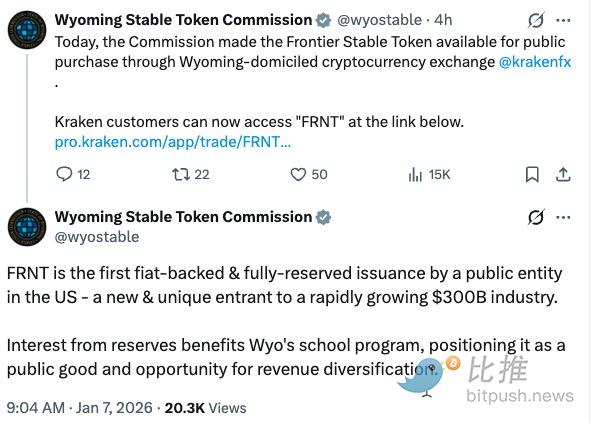
On January 7th local time, the state officially announced the launch of the $FRNT stablecoin, initially issued on the Solana blockchain and supporting six EVM-compatible chains. This is the world's first dollar stablecoin backed by "state government credit."

Finding Light in the Mining Ruins: The Path to Regeneration Through Energy Transition

Wyoming's radical move stems from a deep fiscal anxiety: the "underground wealth" that has supported this land for a century is drying up.

As the energy heartland supplying 40% of the U.S.'s coal, it once created the myth of a "tax-free heaven" through mineral resource taxes: residents pay no personal income tax, and businesses pay no corporate tax.

A key reason is that, thanks to the continuous resource exports from the Powder River Basin, this sparsely populated state created astonishing wealth: its per capita has long ranked among the top ten in the U.S., and in peak energy years, it could even rival New York and California.

This prosperity once gave Wyoming the confidence to refuse to levy personal income tax, corporate tax, and inheritance tax. However, this is a fragile prosperity built on heavy energy.
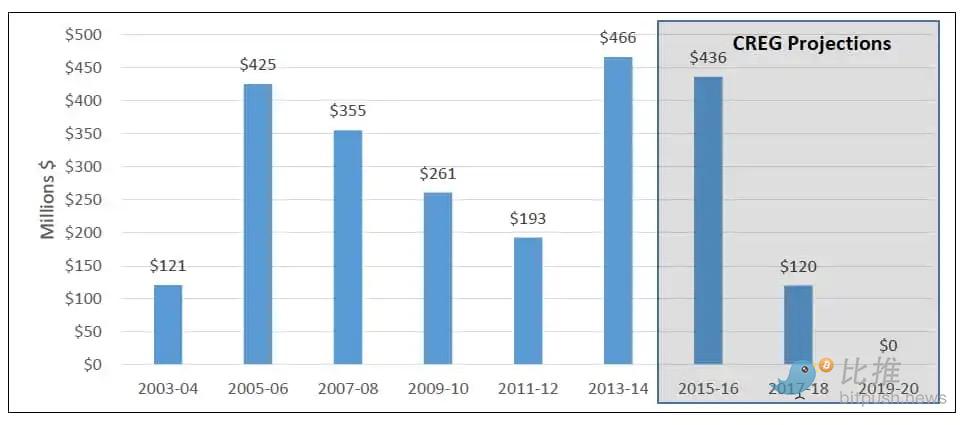
Source: University of Wyoming Center for Energy Economics and Public Policy

Since 2011, Wyoming's pillar industry began a decade-long "avalanche":

  • Ruthless market substitution: The rise of low-cost shale gas and renewable energy delivered a dimensional blow to coal in terms of power generation costs.

  • Tightening environmental constraints: The advancement of U.S. federal carbon emission regulations (such as the Clean Power Plan) led to the closure of coal-fired power plants across the country in batches.

  • A cliff-like fiscal gap: According to CREG official data cited by Wyoming Public Media, the state's coal resource tax plummeted from $290 million in 2011 to $170 million in 2022, with coal production in 2025 expected to fall to the second lowest point in history, only half of the 2008 peak. The "Coal Lease Bonuses," once a crucial source for school infrastructure, have even dropped to zero.
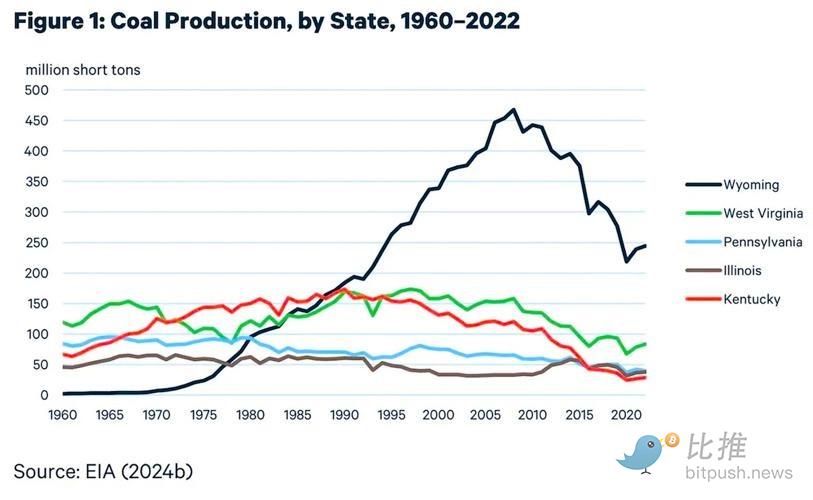
"If we don't stir things up, we'll be the next West Virginia (Note: a traditional mining region in the U.S. that became one of the poorest states after the coal industry declined)." – This visceral pain has created an urgent awareness among the most conservative cowboy politicians locally.

They realized that since they cannot change the trend of energy transition, they must leverage Wyoming's core asset—extremely liberal business legislation. In fact, Wyoming's innovative基因早有先例基因 has precedents. In 1977, it pioneered the LLC (Limited Liability Company), the most popular business entity to this day, nationwide.

Starting in 2018, to save itself, this most "red" conservative state was forced to embark on a long journey of institutional innovation in the crypto world.

In 2019, the Wyoming State Legislature passed House Bill 74 (HB 74), creating a new type of financial entity: the SPDI license (Special Purpose Depository Institution). This is not a traditional bank but an institution that "does not engage in lending业务, only handles custody and settlement." In September 2020, the crypto exchange Kraken obtained the first SPDI license in the U.S. here, establishing Kraken Bank, marking the first time crypto assets received "bank" status加持 under a state legal framework.

In 2021, the state率先 passed the "DAO Act," allowing code-controlled organizations to register as legal LLC entities.

As for the recently launched $FRNT, according to the规划 of the Wyoming Stable Token Commission (WST), the $FRNT stablecoin is over-collateralized by 102% in U.S. Treasury bonds and cash.

Reserve management is handled by investment giant Franklin Templeton, which manages approximately $1.6 trillion in assets, and custody is provided by its affiliate Fiduciary Trust Company International. Its core business logic lies in: the state government absorbs U.S. dollars, buys U.S. Treasury bonds, and the interest generated is directly allocated to the "School Foundation Fund" to support local public education.

Stablecoins: Who Are They Really Serving?

Wyoming's leap actually marks the entry of the stablecoin track into the second half: transitioning from a "credit game" of private companies to a "public good" at the government level.

In the past, discussions about stablecoins focused on the compliance risks of Tether or Circle; but in Wyoming's narrative, stablecoins return to their essence—an extremely efficient, low-cost payment rail (settlement fees are typically below $0.01). They are no longer speculative chips in the hands of geeks but begin to possess public fiscal attributes.

However, this "digital highway" has encountered invisible barriers in the real world.
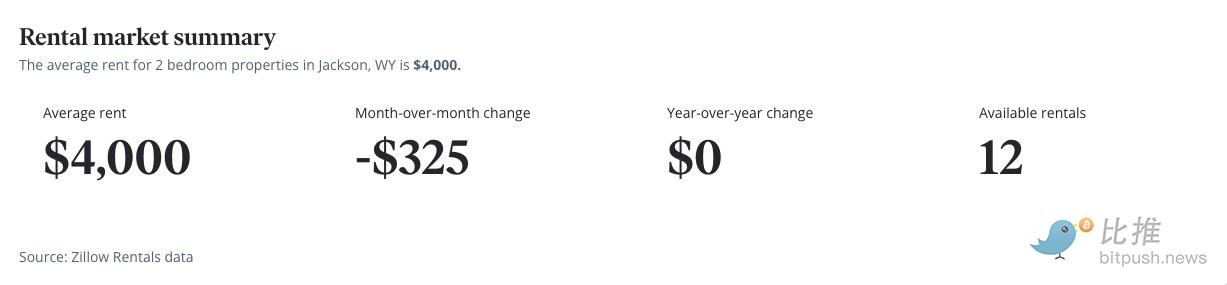
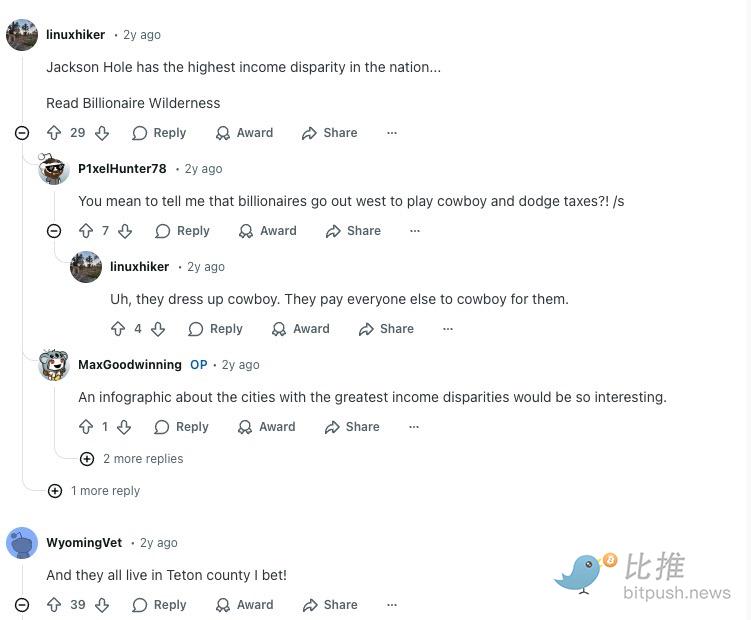
In Wyoming's Jackson Hole resort area, the monthly rent for an ordinary two-bedroom apartment has reached $4,000, 25% higher than in Los Angeles. Although the local per capita GDP ranks among the highest in the U.S., about 10% of residents still face food shortages. For blue-collar workers who catch the early morning commuter bus every day and rely on two or three jobs to make ends meet, "stablecoins" seem more like a distant technological concept.

This divide is somewhat maintained institutionally. A state treasury official told prospect.org that through land acquisition and price thresholds, this resort has been designed to be "invisible to slums." No matter how fast the settlement speed of stablecoins is, their benefits struggle to penetrate the already solidified social structure.

Writer Annie Proulx once described the harshness of the Wyoming land; today, this harshness is folded by technology and capital into two layers of reality that do not penetrate each other. On one side, the wealthy class creates tax havens and pastoral myths amidst the vast mountains and forests; on the other, ordinary Americans who支撑着这一切 but find it difficult to put down roots here—their lives, in both现实 and online narratives, have become the folded side.
It is against this backdrop that the state government is attempting to build fiscal autonomy for the digital age on the gradually沉寂的煤矿废墟, using law and stablecoin收益. Data shows that Wyoming has 348 limited liability companies per 1,000 adults, surpassing Delaware to become the new institutional洼地 in the United States.

But can this "digital rent" flowing into the "Cowboy State" truly bridge the fissures on that land?

References:

  • Consensus Revenue Estimating Group (2025.10)

  • CNBC: Wyoming is pushing crypto payments and trying to beat the Fed to a digital dollar

  • The American Prospect: Down and Out on the Crypto Frontier

  • wyofile: Clean Power Plan may cut Wyo coal revenue 31-63 percent

Author: Bootly


Twitter:https://twitter.com/BitpushNewsCN

<p style='margin-top: 0px; margin-bottom: 极推 TG 交流群:https://t.me/BitPushCommunity</p> <p style='margin-top: 0px; margin-bottom: 1.5rem; padding: 0px; border: 0px; font-variant-numeric: inherit; font-variant-east-asian: inherit; font-variant-alternates: inherit; font-variant-position: inherit; font-variant-emoji: inherit; font-stretch: inherit; line-height: 25.6px; font-family: -apple-system, system-ui, "system-ui", "SF Pro SC", "极推 TG 订阅: https://t.me/bitpush


Original article link:https://www.bitpush.news/articles/7600841

Domande pertinenti

QWhat is the name of the stablecoin launched by the state of Wyoming, and on which blockchain was it initially issued?

AThe stablecoin is named $FRNT, and it was initially issued on the Solana blockchain with support for six EVM-compatible chains.

QWhat major economic challenge is Wyoming facing that motivated it to launch a state-backed stablecoin?

AWyoming is facing a severe fiscal crisis due to the rapid decline of its coal industry, which has been the state's economic pillar, providing significant tax revenue that previously allowed it to avoid income and corporate taxes.

QHow are the reserves for the $FRNT stablecoin managed and what is their purpose?

AThe reserves for $FRNT are 102% over-collateralized with U.S. Treasuries and cash, managed by the investment giant Franklin Templeton. The interest income generated is directed into the state's 'School Foundation Fund' to support public education.

QWhat significant legal innovation did Wyoming introduce for the crypto industry in 2019?

AIn 2019, Wyoming passed House Bill 74 (HB 74), which created the SPDI (Special Purpose Depository Institution) license, a new type of financial entity for crypto asset custody and settlement, with Kraken becoming the first company to receive this license.

QDespite its economic innovations, what social issue does the article highlight as a challenge within Wyoming, particularly in areas like Jackson Hole?

AThe article highlights a severe wealth gap and social stratification. In places like Jackson Hole, high living costs and rent of $4000 for a two-bedroom apartment create a reality where about 10% of residents face food insecurity, making the benefits of technological innovations like stablecoins inaccessible to many blue-collar workers.

Letture associate

From South Korea to the United States: Blue-Collar Jobs Are Becoming Increasingly Popular, Thanks to AI

AI is reshaping the labor market's value proposition. The traditional four-year college degree is losing its appeal as a guaranteed career path, while skilled blue-collar trades like electricians, welders, and plumbers are experiencing historic demand and wage premiums. This shift is driven by dual pressures: AI's displacement of certain white-collar roles and a booming need for physical infrastructure and data center construction. Data confirms the trend. In the U.S., vocational school revenue surged, and a significant portion of recent layoffs are AI-related. Surveys show a majority of Gen Z adults plan to pursue blue-collar work, citing better job security against AI automation. Vocational education interest has exploded recently. Experts cite a psychological shift as younger generations seek tangible, AI-resistant careers and avoid high student debt. In many cases, salaries for skilled trades now match or exceed those requiring a bachelor's degree. In South Korea, semiconductor vocational high schools boast near-total employment, with graduates securing high-paying roles at companies like Samsung. The shortage is structural, exacerbated by a retiring baby boomer workforce and massive infrastructure projects. Companies like JPMorgan Chase, Meta, and Lowe's are investing heavily in training programs. However, overcoming historical stigma and a "perception gap" around trade careers remains a key challenge to closing the talent gap.

marsbit36 min fa

From South Korea to the United States: Blue-Collar Jobs Are Becoming Increasingly Popular, Thanks to AI

marsbit36 min fa

Qualcomm: AI Hype Subsides, When Will Smartphones Emerge from the Gloom?

Qualcomm reported its Q3 FY2026 results (ending June 2026), with revenue of $9.95B, down 4% YoY but above expectations. Gross margin declined to 53.1%, pressured by rising costs across manufacturing and memory. Key business segments showed mixed performance: Handset revenue fell 19.6% YoY to $5.09B, dragged by an 11% decline in non-Apple Android shipments and weaker high-end mix. Conversely, Automotive revenue surged 61% to $1.59B, and IoT grew 9% to $1.83B. Core operating profit dropped 41% YoY due to margin compression and higher expenses. Management's Q4 FY2026 guidance projects revenue of $9.7B-$10.5B, in line with consensus, but Non-GAAP EPS guidance of $2.05-$2.25 fell short of expectations. Amidst persistent weakness in its core handset market, Qualcomm is pursuing growth in AI, focusing on Edge AI (smartphones, PCs, automotive) and Data Center AI. Its data center strategy includes four pillars: AI accelerators (e.g., AI200), commercial CPUs (Dragonfly C1000), custom silicon, and connectivity solutions. While these initiatives initially boosted its stock, concerns over AI capital expenditure sustainability have since erased those gains. The company targets $5B in data center revenue for FY2027 and $15B for FY2029. The report concludes that with the traditional handset business still under pressure, the data center opportunity is currently viewed as a longer-term option, and a more conservative valuation based on core operations may be warranted until AI contributions materialize.

marsbit40 min fa

Qualcomm: AI Hype Subsides, When Will Smartphones Emerge from the Gloom?

marsbit40 min fa

From TPU to Self-Evolving Agents: How Jeff Dean Predicts the Next Step in AI

At the 2026 YC Startup School, Jeff Dean outlined his vision for AI's next phase, shifting focus from simply scaling models to building intelligent, autonomous systems. He believes AI's progress is no longer just about creating smarter models, but about integrating them into systems capable of long-term, iterative work, automated experimentation, and continuous learning. This evolution moves the competition from "who has the bigger model" to "who can best organize intelligence." Dean suggests AI capabilities are now comparable to a junior engineer, enabling the automation of complex workflows. However, the true challenge and opportunity lie in managing these AI "workers" at scale. He emphasizes the importance of **context engineering**—structuring tools, memory, and feedback loops—over raw model power. For startups, this means building deep expertise in niche domains where general models currently fail (near 0-1% success rates), leveraging proprietary data, specialized tools, and domain-specific evaluators. A recurring theme is re-examining fundamental constraints. Dean's past work, like moving Google's search index to memory or creating the TPU, stemmed from questioning outdated assumptions about hardware and cost. He sees similar inflection points today, particularly in **specialized inference hardware** to drastically reduce latency and energy consumption for real-time Agent operation. Notably, he points out that in modern AI systems, the dominant cost is often not computation but **data movement**. Reliable, long-running Agents require robust system design, borrowing concepts from distributed computing like checkpointing, state management, and parallel exploration to handle failures and maintain progress over days or weeks. As AI automates execution, the scarcest human skills will shift to **defining clear specifications**, **judging what problems are worth solving** (taste), and designing effective feedback loops. Ultimately, Dean's framework prioritizes understanding the problem deeply, identifying the true bottlenecks, and systematically building closed-loop systems where AI can not only perform tasks but also improve AI itself.

marsbit40 min fa

From TPU to Self-Evolving Agents: How Jeff Dean Predicts the Next Step in AI

marsbit40 min fa

Trading

Spot
活动图片



