The Hidden Costs and Structural Dilemmas of Tokenized Assets

marsbitPubblicato 2026-01-16Pubblicato ultima volta 2026-01-16

Introduzione

Tokenized assets face a critical structural challenge: a severe lack of deep, reliable on-chain liquidity. While tokenization promises to unlock trillions in traditional assets for DeFi, the reality is that markets for tokens like gold (PAXG, XAUT) and stocks (e.g., TSLAx, NVDAx) are extremely shallow compared to their traditional counterparts (e.g., CME). This results in exponentially higher slippage—often exceeding 100 basis points for trades over $4M—and makes large transactions costly or impossible. Fragile liquidity also leads to market instability, such as flash crashes on exchanges that trigger cascading liquidations across connected DeFi protocols. The root cause is a misalignment with market makers' incentives: high minting/redemption fees, slow settlement times, and capital lock-ups make providing liquidity for tokenized assets inefficient and risky. Without a new market structure that bridges on-chain access with off-chain liquidity depth, tokenization will remain stuck in a low-liquidity equilibrium, limiting its scalability and utility in DeFi.

Author:Yuki is short, so is life

Compiled by: Jiahuan, ChainCatcher

Liquidity is the source of confidence in assets. Only with sufficient depth can the market accommodate large transactions, whales can freely build positions, and assets can function as collateral, as lenders need to ensure they can be liquidated smoothly when necessary. Tokenized assets with insufficient depth struggle to attract users, which not only suppresses market participation but also creates a vicious cycle of liquidity drying up.

The original intention of tokenization was to maximize capital liquidity, unlock the utility of DeFi, and open up access to off-chain assets. Its promise is highly attractive: bringing trillions of dollars from traditional financial markets on-chain, allowing anyone to access, lend, and combine them in ways never permitted by traditional finance.

But beneath the surface, most tokenized assets trade in markets that are illiquid and fragile, unable to support sufficient transaction规模. As a prerequisite for composability and financial utility, true liquidity has not yet materialized. The resulting costs and risks may be imperceptible in small transactions, but once large funds attempt to enter or exit, these hidden dangers quickly become apparent.

The Current Liquidity Landscape

The first hidden cost of tokenized assets is reflected in slippage.

Taking tokenized gold as an example, the chart below compares the expected slippage for different transaction sizes between major centralized exchanges and the traditional gold market. The difference is staggering.
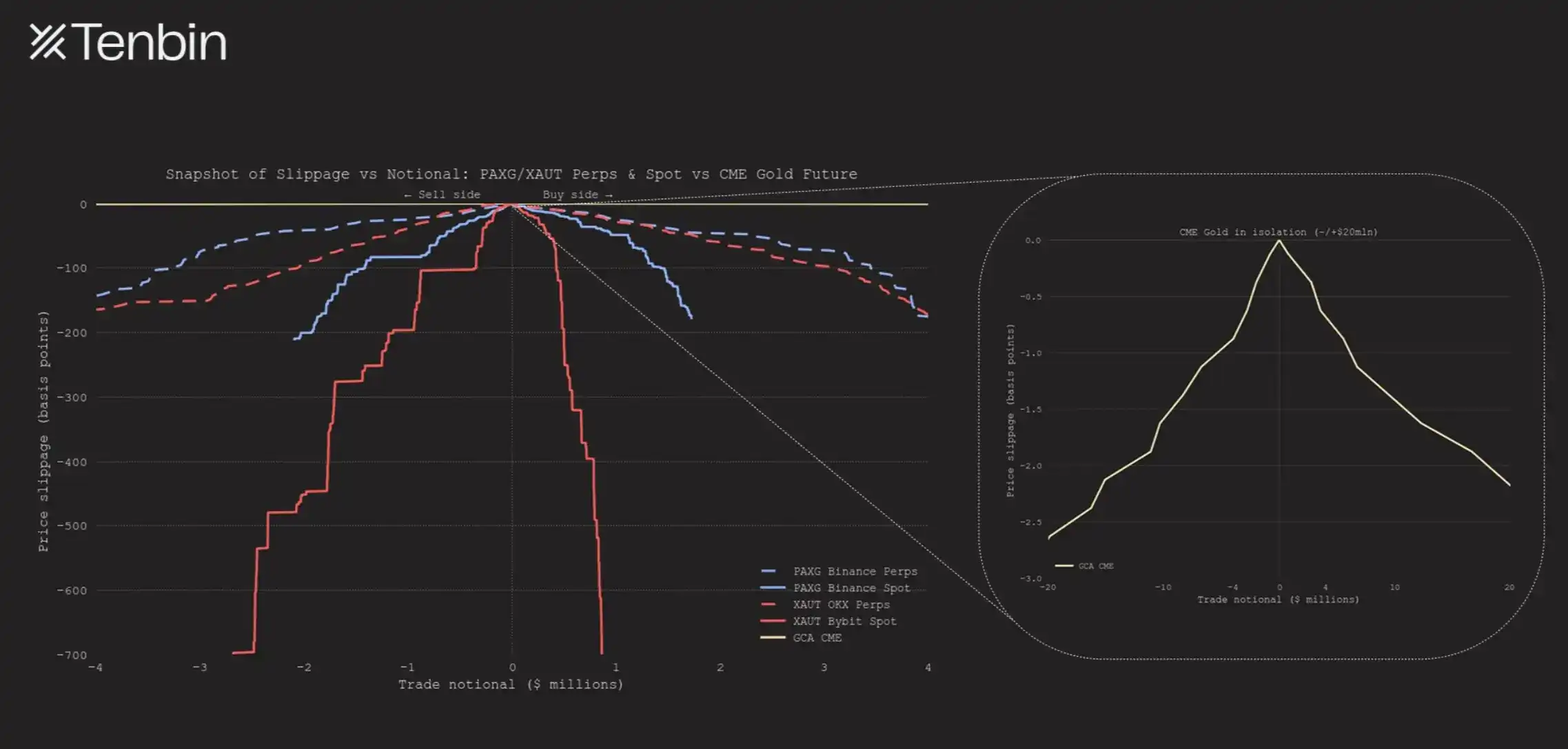
(Chart description: Slippage vs. trade size comparison for PAXG/XAUT perps & spot vs. CME Gold Futures (physical delivery contracts))

As trade size increases, the slippage for PAXG and XAUT perpetual contracts grows exponentially, reaching about 150 basis points (bps) at a notional value of approximately $4 million. In contrast, the slippage curve for the CME (Chicago Mercantile Exchange) is almost flat against the zero axis, barely distinguishable from the X-axis.

The spot markets for PAXG and XAUT are even more constrained. Although the chart shows the most liquid spot markets for each token, the depth on either side of the order book does not exceed $3 million. This limitation is evident from the early truncation of their curves.

Another chart on the right shows the CME curve separately, highlighting its near-flat liquidity profile. Even at notional values far exceeding $4 million, its slippage remains extremely stable. A $20 million gold futures trade would incur a price impact of less than 3 basis points. CME's liquidity is several orders of magnitude deeper than any cryptocurrency trading venue.

This difference has direct consequences. In deep traditional markets, price impact is negligible even for large trades. In shallow tokenized asset markets, the same trade incurs immediate costs and becomes increasingly difficult to unwind. The comparison of average daily trading volume below clearly shows the magnitude of this gap, which exists not only in the gold market but also for many other assets.
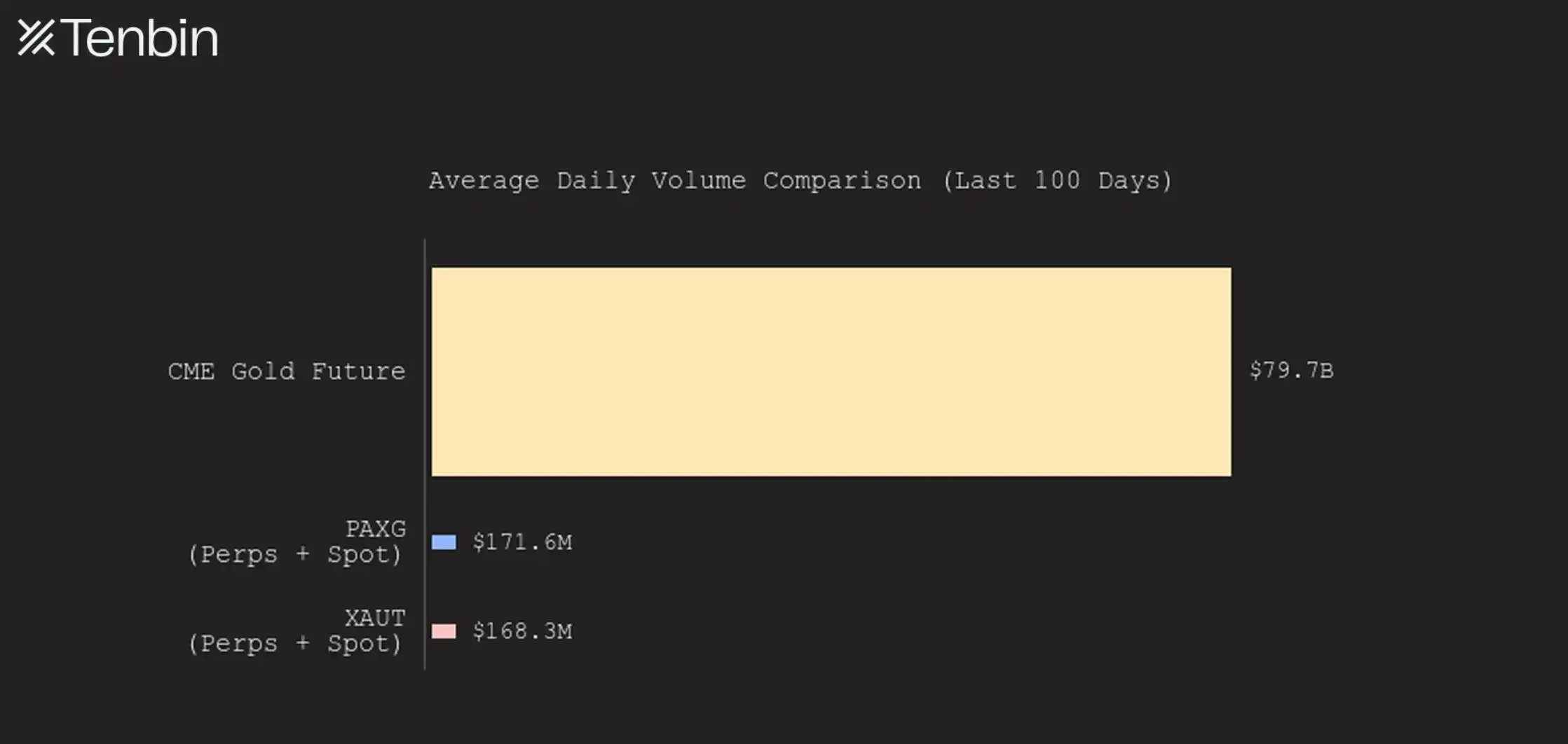
(Chart description: Average daily trading volume comparison: CME Gold Futures vs. PAXG/XAUT Perps & Spot)

So far, these examples have focused on centralized exchanges. What about AMMs (Automated Market Makers)? The short answer is: it's worse.

Look at this XAUT trade from February 2025. A user spent 2,912 USDT to receive only $1,731 worth of XAUT (at the real gold price at the time), paying a 68% premium.

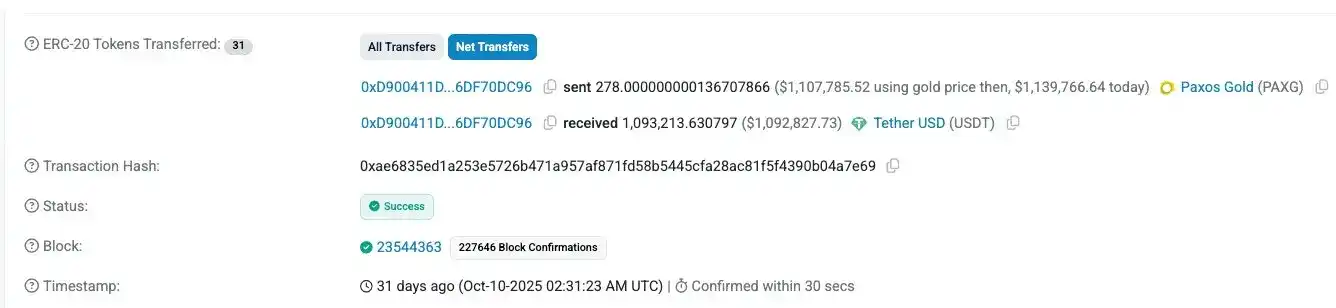
Another trade shows a user selling $1.107 million worth of PAXG (at the gold price at the time) and receiving only 1.093 million USDT, a slippage of about 1.3%. While less extreme, this level of slippage is still unacceptably high in the context of traditional markets, where price impact is typically measured in single-digit basis points, not percentages.
Furthermore, over the past six months, the average slippage for XAUT and PAXG trades on Uniswap has ranged between 25 and 35 basis points, occasionally even exceeding 0.5%.
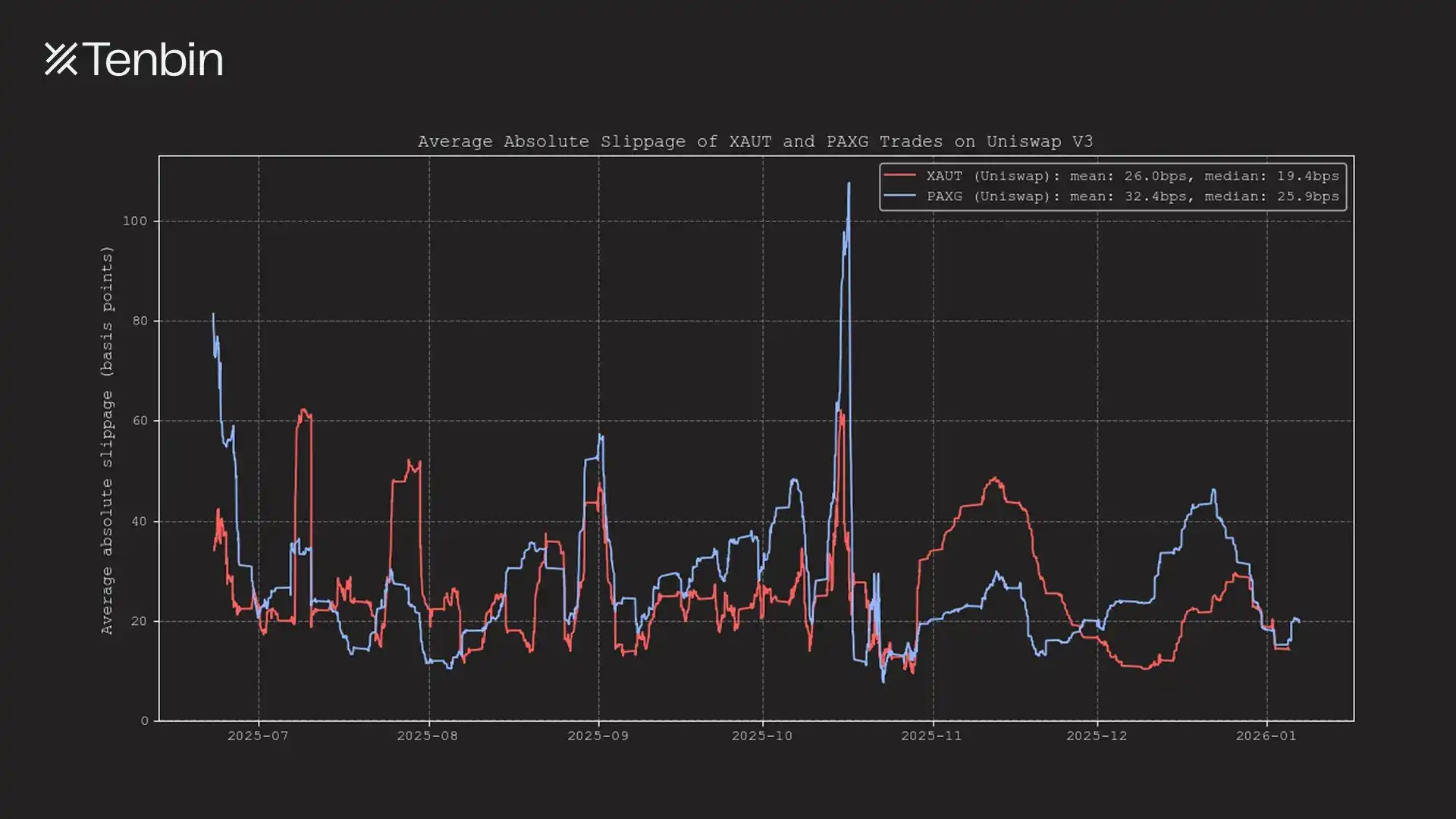
(Chart description: Average absolute slippage for XAUT and PAXG trades on Uniswap V3)

We use gold for this analysis because it is currently the largest non-dollar, non-credit tokenized asset on-chain. But the same pattern applies to tokenized stocks.
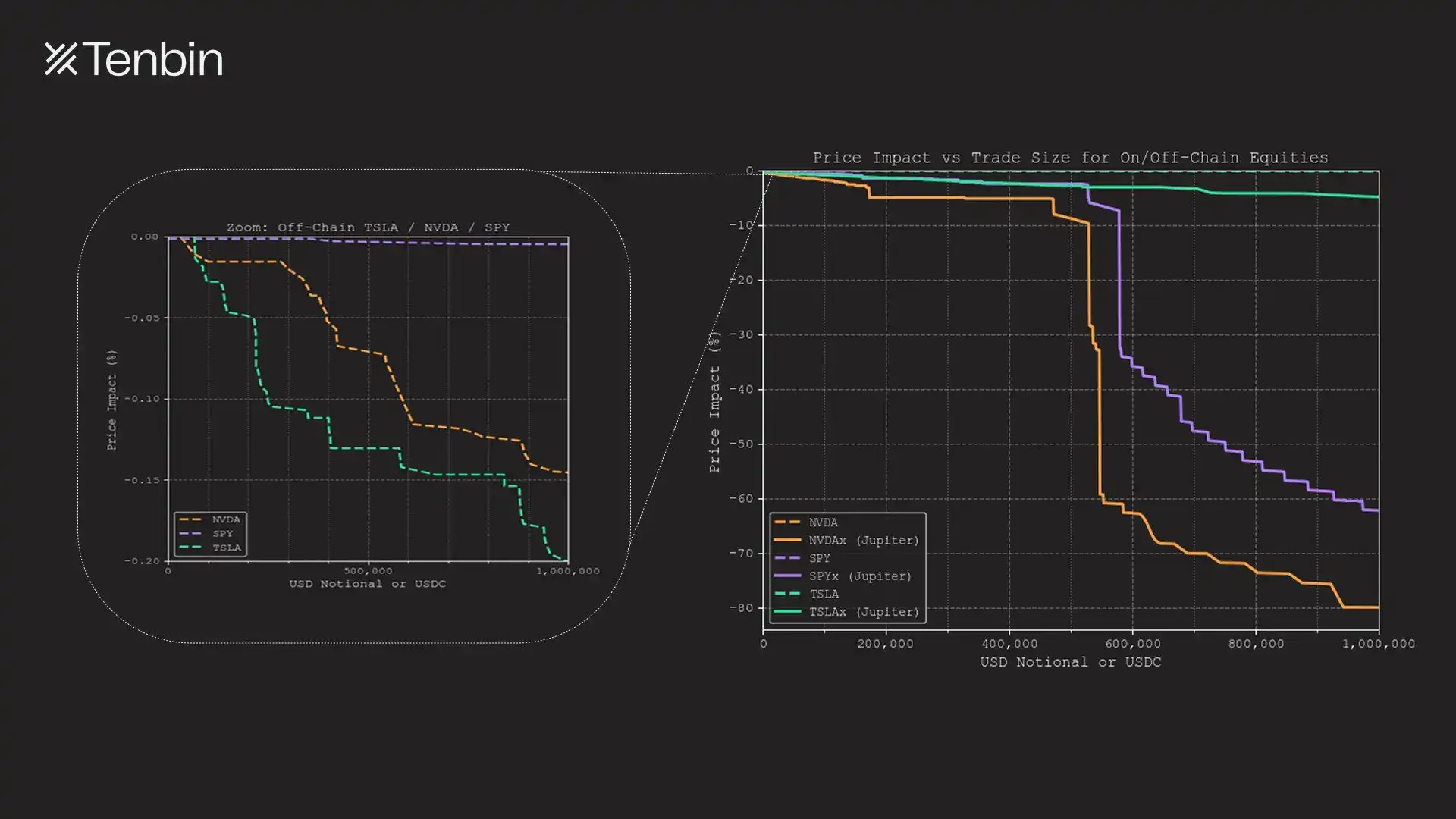
(Chart description: Slippage vs. trade size comparison: Nasdaq's NVDA/TSLA/SPY vs. NVDAx/TSLAx/SPYx)

TSLAx and NVDAx are currently two of the top ten single-name tokenized stocks. On Jupiter, a $1 million trade for TSLAx would incur about 5% slippage. NVDAx faces an insurmountable 80% slippage. In contrast, a $1 million trade for Tesla or Nvidia in the traditional market would incur a price impact of only 18 basis points and 14 basis points respectively (and this doesn't even include the liquidity from off-exchange venues like dark pools).

These costs are easily overlooked in small trades but become unavoidable once users attempt to scale. Illiquidity translates directly into real losses.

Are On-Chain Tokenized Markets Dangerous?

Illiquidity not only increases transaction costs but also disrupts market structure.

When liquidity is thin, pricing mechanisms are极易 distorted, order books are filled with noise, and oracle price feeds subsequently inherit this noise. Small trades can trigger chain reactions in interconnected systems.

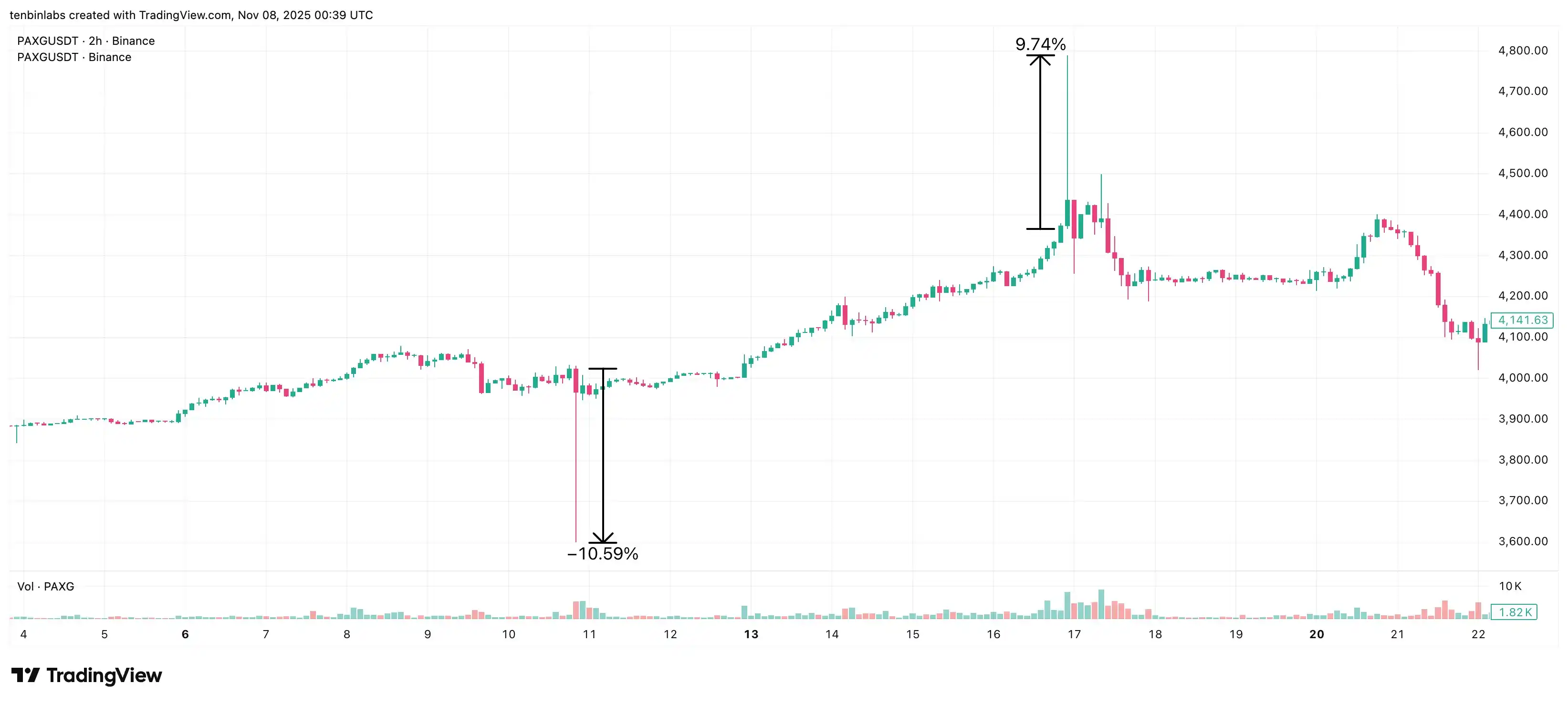
In mid-October 2025, Binance's PAXG spot market experienced two "flash crash" within a week. On October 10th, the price dropped 10.6%; on October 16th, it surged 9.7%. Both moves quickly reversed, indicating they were driven by order book fragility rather than fundamental changes.
Because the tokenized asset ecosystem is highly interconnected, instability in a major trading venue does not remain localized. Binance's spot price carries the highest weight in Hyperliquid's oracle construction. As a result, during these two events, $6.84 million in long positions and $2.37 million in short positions were liquidated on Hyperliquid—a figure that even exceeded the liquidation volume on Binance itself.

This outcome is disconcerting. It demonstrates how a single low-liquidity venue can propagate and amplify volatility across multiple markets. In extreme cases, this also increases the risk of oracle manipulation. Participants who never traded on the original spot market can still suffer losses through liquidations, price distortions, and widening spreads.

All of this traces back to the same root cause: a lack of true liquidity in the primary market.
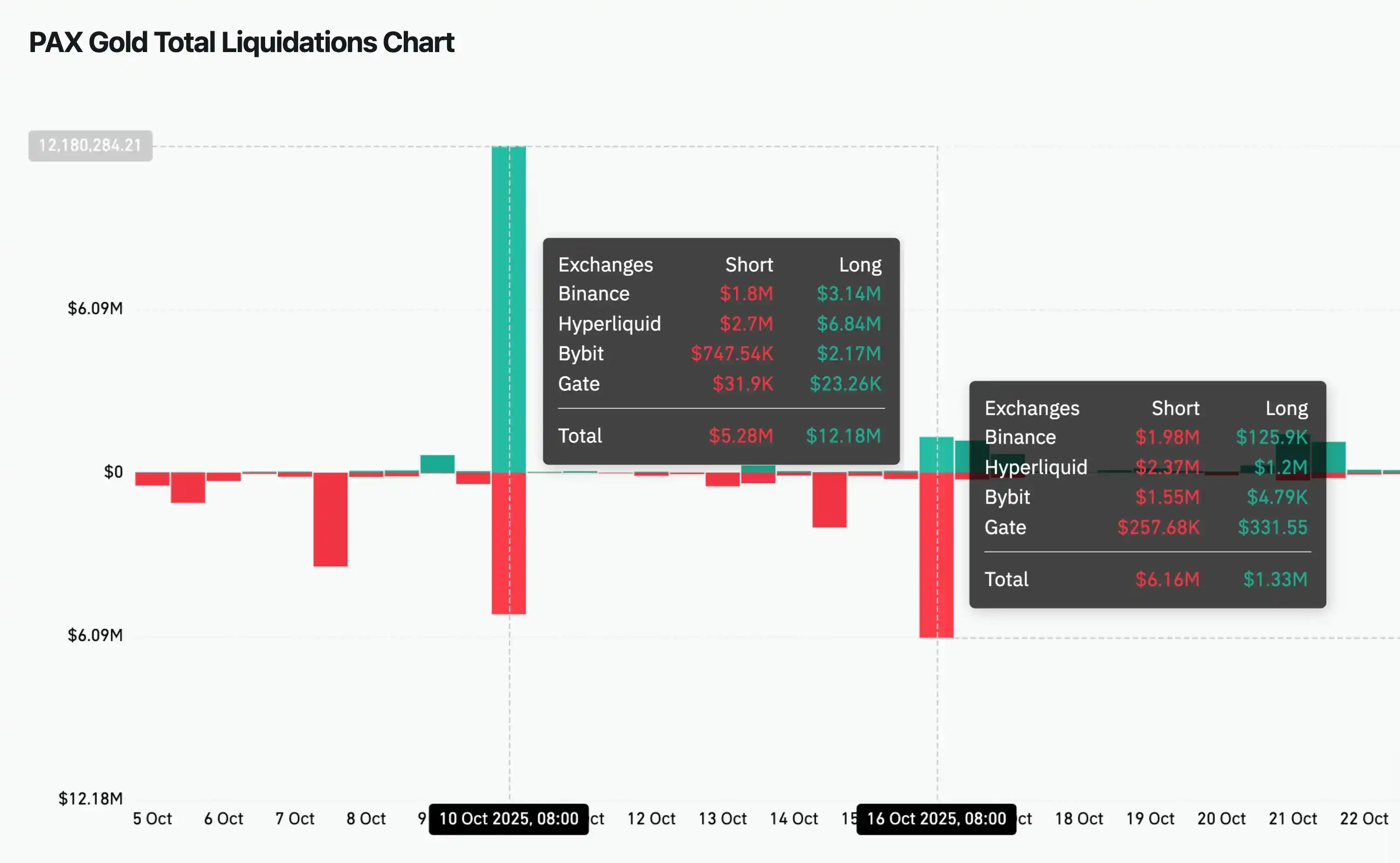
(Chart description: CoinGlass's PAXG liquidation chart)

The Structural Problem of Illiquidity

The illiquidity of tokenized assets is a structural problem.

Liquidity does not automatically appear once an asset is tokenized. It is provided by market makers, who are inherently capital-constrained. They allocate capital to places where inventory can be deployed efficiently, risk can be managed continuously, and where they can exit with minimal time and cost friction.

Most tokenized assets fail on these dimensions.

To provide liquidity, market makers must first mint the asset. In practice, minting involves not only explicit costs (issuers typically charge 10 to 50 basis points in minting and redemption fees) but also operational coordination, KYC, and settlement through custodians or brokers, rather than atomic on-chain execution. Market makers must deposit funds upfront and wait hours or days to receive the tokenized asset.

Once inventory is established, it cannot be redeemed. Redemption windows are typically measured in hours or days, not seconds. Many tokenized assets only allow redemption on a T+1 to T+5 basis, with daily or weekly limits. For larger positions, fully unwinding can take days or even longer.

From a market maker's perspective, this inventory is effectively illiquid and cannot be quickly recycled.

Market makers providing depth must hold inventory through market cycles, absorbing and hedging price risk while waiting for redemption. During this time, the same capital could have been deployed in other crypto markets, where inventory requirements are minimal, hedging is continuous, and positions can be closed instantly; this is why the opportunity cost for market makers in tokenized assets is extremely high.

Faced with this trade-off, rational liquidity providers allocate capital elsewhere.

The current market structure is not suited to solve this problem. AMMs shift inventory risk to liquidity providers while inheriting the same redemption constraints. Order book-based venues merely aggregate fragmented maker liquidity from various exchanges.

The result is a market stuck in a chronically shallow equilibrium. Limited liquidity discourages participation, and low participation further reduces liquidity. The entire tokenized asset ecosystem is trapped in this vicious cycle.

A New Market Structure

Illiquidity is a structural barrier to the growth of tokenized assets.

Insufficient depth hinders scaled positioning, fragile markets propagate instability across protocols and venues. Assets that cannot be reliably exited cannot serve as trustworthy collateral. In today's tokenized model, liquidity remains constrained, and capital efficiency remains low.

For tokenized assets to truly achieve scaled adoption, the market structure must change.

What if price and liquidity could be mapped directly from off-chain markets, rather than being rediscovered and cold-started on-chain? What if users could access tokenized assets at any scale without forcing market makers to hold illiquid inventory? What if redemption was fast, predictable, and unrestricted?

The failure of tokenization stems not from putting assets on-chain, but from never truly putting the markets that underpin them on-chain.


Domande pertinenti

QWhat is the main structural problem with tokenized assets discussed in the article?

AThe main structural problem is the lack of deep and robust liquidity in tokenized asset markets, which leads to high slippage, market fragility, and an inability to support large-scale transactions or function as reliable collateral.

QHow does the slippage for large trades in tokenized gold (like PAXG/XAUT) compare to traditional markets (like CME)?

ASlippage for large trades in tokenized gold markets increases exponentially, reaching around 150 basis points for a $4 million trade, whereas CME gold futures show nearly flat slippage, with less than 3 basis points even for a $20 million trade.

QWhat are some of the hidden costs and risks for market makers providing liquidity for tokenized assets?

AMarket makers face high opportunity costs, non-liquid inventory due to slow redemption times (T+1 to T+5), operational friction like KYC and settlement delays, and difficulty in hedging price risk efficiently compared to other crypto markets.

QHow did the low liquidity in Binance's PAXG spot market affect other platforms like Hyperliquid?

AThe low liquidity caused flash crashes on Binance, which were propagated to Hyperliquid through oracle price feeds, resulting in $6.84 million in long positions and $2.37 million in short positions being liquidated on Hyperliquid, exceeding Binance's own liquidations.

QWhat solution does the article suggest to overcome the liquidity problem in tokenized assets?

AThe article suggests a new market structure where price and liquidity are directly mapped from off-chain markets instead of being rediscovered on-chain, enabling fast, predictable, and unrestricted redemptions without requiring market makers to hold illiquid inventory.

Letture associate

7 Months After the Collapse of Huiwang, Southeast Asia's Escrow Platforms Undergo a Major Reshuffle

Following the collapse of Huione Pay—dubbed the "Alipay of Southeast Asia"—seven months ago, the region's underground financial guarantee platform sector is undergoing a significant reshuffle. This power vacuum has been swiftly filled by emerging platforms such as XinBi, Tiger/Navigator, JinBei (renamed JinBo), Dali/Tiancheng, and FullyLight. These platforms, operating largely via Telegram and offering services like escrow for illicit transactions, have absorbed the vast user base and markets left behind by Huione. While positioning themselves as "trust intermediaries," their primary clientele consists of networks involved in online scams, money laundering, illegal gambling, and even human trafficking. For instance, the Tiger/Navigator platform explicitly provides "escrow" services for kidnapping-for-ransom operations ("强押车交易"). Data underscores the immense scale: Huione alone processed over $103 billion in cryptocurrency payments and facilitated over $31 billion through its escrow market before its downfall, linking it to Cambodia's notorious Prince Group. Since its collapse, competitors have seen explosive growth. For example, the XinBi platform has accumulated over $1.6 billion in total USDT revenue, while platforms like NewPay, OkPay (under Dali), and FullyLight Wallet collectively processed over $4.8 billion in USDT in a single year. This ecosystem thrives in regions like Cambodia and Myanmar, where regulatory gaps allow these platforms to act as critical financial infrastructure for sprawling cybercrime industries, from scam compounds to online casinos. The article concludes that the moniker "Southeast Asian Alipay" is a misnomer, obscuring the platforms' fundamental role in enabling serious criminal enterprises rather than representing legitimate financial innovation.

Odaily星球日报36 min fa

7 Months After the Collapse of Huiwang, Southeast Asia's Escrow Platforms Undergo a Major Reshuffle

Odaily星球日报36 min fa

The Changing Landscape: What Are Crypto VCs Experiencing?

Title: The Shifting Landscape of Crypto Venture Capital The era of dedicated crypto venture capital funds is undergoing a significant transformation. Once essential for navigating the sector's complexity and high risk, these specialized funds are now facing an identity crisis as the market matures. This shift mirrors historical patterns in other specialized investment classes like cleantech and SPACs, where initial information advantages dissipate as technologies become mainstream and integrated into existing industry frameworks. The article argues that crypto is reaching a critical inflection point, transitioning from a "building phase" to an "integration phase." Major players like Stripe, BlackRock, and Visa now engage with crypto not for its novel mechanics but as a foundational financial infrastructure. Their needs—regulatory compliance, banking partnerships, distribution channels—align with traditional fintech, a domain easily understood by large, generalist funds like Sequoia and Founders Fund. This evolution creates a "barbell effect" within the VC landscape. On one end are massive, diversified platforms that can incorporate crypto as one vertical among many. On the other are small, nimble funds focused on niche, experimental projects. The middle ground—medium-sized dedicated crypto funds—is being squeezed out. Their typical fund size makes it impossible to generate sufficient returns solely from early-stage crypto bets, yet they cannot compete with giants for later-stage deals. Consequently, leading crypto-native firms like Paradigm and Framework Ventures are expanding into AI, robotics, and other sectors, driven partly by LP pressure for better returns amid a broader VC DPI crisis. Others, like Dragonfly and a16z, have narrowed their crypto focus predominantly to financial infrastructure like stablecoins, reframing the sector's core narrative. For crypto entrepreneurs, this consolidation presents challenges. While generalist funds offer larger checks and broader resources, crypto projects now compete fiercely with AI for attention and capital within these firms. Furthermore, the long-term, non-commercial foundational work that built the ecosystem—funded by dedicated crypto VCs—is less likely to attract generalist capital focused on direct returns. The conclusion is that "crypto investor" as a standalone category is becoming obsolete, akin to "internet investor." Crypto is becoming a baseline infrastructure layer. The future will see a barbell structure: large-scale growth financing handled by generalist funds, while pioneering, speculative projects are funded by small, specialized vehicles. The dedicated crypto funds of the 2017-2021 boom, which incubated core infrastructure, are giving way to this new, bifurcated reality.

Foresight News53 min fa

The Changing Landscape: What Are Crypto VCs Experiencing?

Foresight News53 min fa

As Consensus Accelerates, What Are Young Investors Betting On?

Title: As Consensus Forms Faster, What Are Young Investors Betting On? In the rapid evolution of tech investment, a new generation of young investors is navigating a landscape where AI, robotics, commercial aerospace, and quantum computing are advancing simultaneously. Traditional investment logic based on financial models is giving way to a need for deep technical understanding and the ability to act before industry consensus forms. An analysis of trends from the "WAIC FUTURE TECH" list of young investment leaders reveals key shifts in focus. The first major trend is the movement of AI from the digital screen into the physical world. Investment is shifting from large language models and chatbots towards embodied AI, robotics, AI hardware, and edge computing. While demonstrations generate excitement, the real challenge lies in achieving scalable, reliable, and cost-effective delivery in complex real-world environments like factories and logistics. Success depends not just on algorithms but on the integration of sensors, actuators, and control systems. Second, the competitive focus for large models is moving beyond raw capability toward building an "intelligence flywheel." The goal is to create self-reinforcing systems where user interaction generates data, improving the model, which in turn enhances the user experience and attracts more engagement. Companies that successfully embed AI into workflows to create these closed-loop systems can build lasting value that isn't easily erased by the next model upgrade. Third, facing a potential bottleneck in high-quality human-generated data, investors are looking at new underlying technologies. Reinforcement learning and self-play, as demonstrated by AlphaGo Zero, offer paths for AI to generate its own experience. Scientific foundation models, which aim to build general AI capabilities for fields like life sciences and materials discovery, represent a non-consensus direction that could unlock new frontiers of knowledge and data. Finally, in deep-tech areas like quantum computing, commercial aerospace, and space-based infrastructure, patient capital is essential. These fields have long, uncertain development and validation cycles involving complex engineering, supply chains, and regulations. Investment here requires a long-term view, focusing on foundational team capabilities and the eventual emergence of market demand, even if commercial returns are distant. Collectively, these trends illustrate how young investors are adapting to a new era. They are learning to make earlier, technically-informed judgments, balance hype with real-world viability, and provide the patient capital needed to build the deep-tech foundations of the future.

marsbit1 h fa

As Consensus Accelerates, What Are Young Investors Betting On?

marsbit1 h fa

Trading

Spot
活动图片




