The Founder of Coinbase Is Going to Research Immortality

marsbitPubblicato 2026-06-03Pubblicato ultima volta 2026-06-03

Introduzione

Coinbase founder Brian Armstrong has co-founded NewLimit, a longevity biotech startup, which just raised $435 million in a Series C funding round led by Peter Thiel’s Founders Fund. The round values the company at $3.1 billion, more than triple its valuation from a year ago. NewLimit is developing drugs aimed at reversing cellular aging to extend human healthspan. Its approach builds on Nobel Prize-winning research on cellular reprogramming (Yamanaka factors), with a focus on identifying specific gene combinations that can restore younger cell function. The company plans to begin human clinical trials next year, initially targeting alcohol-related liver disease as a form of accelerated aging. Founded in 2021 by Armstrong alongside biotech investor Blake Byers and scientist Jacob Kimmel, NewLimit has now raised over $700 million across multiple rounds. It joins a growing field of well-funded longevity ventures backed by tech billionaires, including Sam Altman’s Retro Biosciences and Jeff Bezos-backed Altos Labs, reflecting a surge of interest in using science to combat aging and extend healthy lifespan.

Author | Azuma(@azuma_eth)
At 3:00 AM Beijing time on June 3, longevity technology startup NewLimit announced the completion of a $435 million Series C funding round. This round was led by Peter Thiel's fund Founders Fund, with continued participation from Abstract Ventures, Kleiner Perkins, NFDG, Eli Lilly Ventures, Valor Equity Partners, among others, while also introducing new investors such as Thrive Capital, Greenoaks, and Quiet Capital.

A WSJ report indicated that NewLimit's valuation in this round reached $3.1 billion, more than triple its valuation from a year ago.
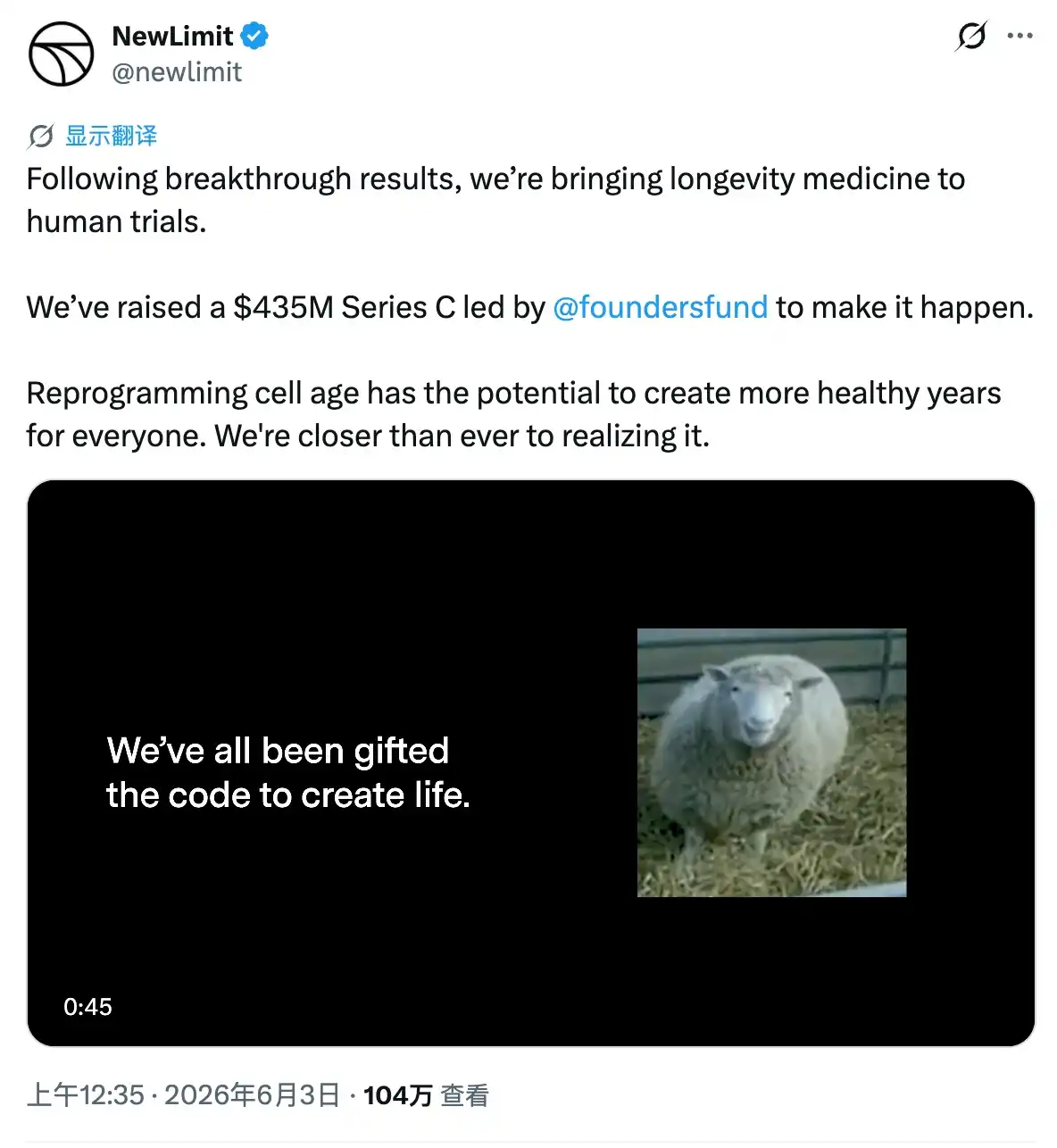
In its funding announcement, NewLimit revealed that following breakthrough research achievements, the company is advancing longevity medicine into the human clinical trial stage. Its first drug targeting alcohol-related liver disease is expected to commence clinical trials next year.

NewLimit also emphasized: "By reprogramming cell age, humans may achieve longer health spans, and now, we are closer than ever to the goal of delaying or even reversing aging."

The Founder Turns Out to Be an Old Acquaintance

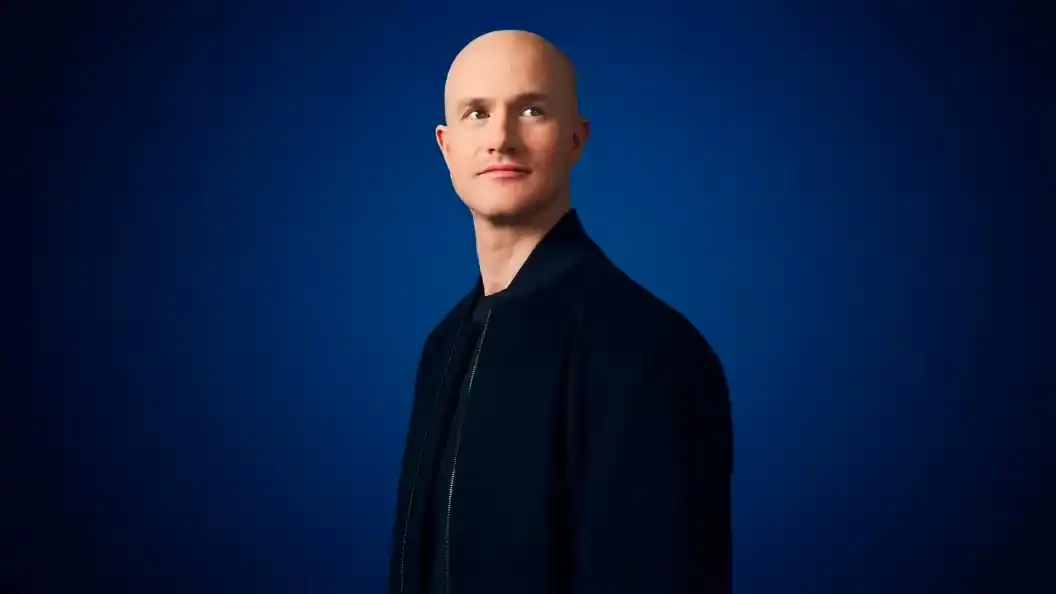
It is worth mentioning that one of NewLimit's co-founders is none other than our old acquaintance — Coinbase founder and CEO Brian Armstrong.

In 2021, Brian Armstrong, together with former GV partner and bioengineer Blake Byers and stem cell biologist Jacob Kimmel, invested $110 million to establish NewLimit in South San Francisco.

Picture: The NewLimit founding team

Prior to this funding round, NewLimit had already completed three rounds of financing, as detailed below.

  • May 2023: Completed a $40 million Series A round, with investors including Dimension, Founders Fund, and Kleiner Perkins;
  • May 2025: Completed a $130 million Series B round, reaching a valuation of $810 million, led by Kleiner Perkins, with participation from Founders Fund, Khosla Ventures, and Human Capital, among others;
  • October 2025: Received an additional $45 million investment, bringing the post-money valuation to $1.62 billion, with investors including Lilly Ventures, Duke University, Section 32, etc.;

According to NewLimit's official introduction, the company is dedicated to developing drugs that can extend human health span — "As humans age, cellular function gradually declines, making people more susceptible to diseases. It was once believed that aging was inevitable, but emerging science shows that the aging process can be reversed at the cellular level. We are developing the first drugs based on these discoveries to restore the youthful function of aging cells."

In simpler terms, NewLimit is using scientific methods to research immortality!

Reversing Aging is Not a Fantasy

Over the past few decades, while the scientific community has long recognized the link between aging and cellular functional decline, it could not precisely find a way to make cells "rejuvenate." The turning point came in 2006 when Japanese scientist Shinya Yamanaka discovered that activating just a few specific transcription factors could reprogram adult cells into a youthful state resembling embryonic stem cells. This discovery was later named "Yamanaka Factors" and helped him win the 2012 Nobel Prize in Physiology or Medicine.

Odaily Note: Picture shows Shinya Yamanaka speaking in Tokyo

Yamanaka's research first proved something previously considered impossible — that cellular age is not irreversible. And the story told by NewLimit is built precisely upon this discovery.

NewLimit writes on its website: "Our drugs can reprogram a cell's epigenome to a younger state by activating specific transcription factor genes. We already know this reversal is possible. However, for different cell types, exactly which combinations of transcription factors are needed to restore their youthful function remains unknown. Finding and discovering these effective payloads is the core challenge of our work."

NewLimit's strategy is to first target a specific disease to obtain drug approval, and then explore broader applications. As mentioned earlier, NewLimit is advancing a drug for alcohol-related liver disease into clinical trials.

NewLimit Co-founder and CEO Jacob Kimmel further explained, "Liver disease can actually be viewed as an 'accelerated version of aging,' it just presents the aging process that everyone experiences in a faster and more intense manner."

The Biggest Investors in This Sector Are All Billionaires

NewLimit is not the only tech company currently targeting "immortality."

In 2022, Sam Altman invested $180 million in Retro Biosciences, which is developing drugs to rejuvenate aging cells. Last month, Retro Biosciences disclosed its valuation had reached $1.8 billion.

Furthermore, Altos Labs, reportedly backed by Jeff Bezos's funding, also launched in 2022 with $3 billion and has since raised nearly twice that amount in total funding.

It's easy to see that from Peter Thiel to Sam Altman to Jeff Bezos, the biggest investors in this sector are without exception super-rich individuals at the pinnacle of technology and wealth. Peter Thiel has publicly expressed extreme aversion to death, advocating similar views on multiple occasions: "Death is humanity's greatest enemy, yet we treat it as a natural law..."

The logic behind these tech titans' willingness to invest hundreds of millions is not hard to understand — when wealth and power reach their peak, time becomes the only enemy, the only luxury that cannot be bought directly with money.

Having earned enough money, "how to live longer" becomes the greatest challenge.

Domande pertinenti

QWhat is NewLimit, and what is its primary goal?

ANewLimit is a longevity biotechnology startup. Its primary goal is to develop drugs to extend human healthspan by reversing the aging process at the cellular level.

QWho is the notable co-founder of NewLimit mentioned in the article?

AThe notable co-founder is Brian Armstrong, who is also the founder and CEO of the cryptocurrency exchange Coinbase.

QWhat scientific breakthrough is NewLimit's research based on?

ANewLimit's research is based on the discovery of the 'Yamanaka Factors' by Japanese scientist Shinya Yamanaka in 2006, which showed that adult cells can be reprogrammed into a younger, pluripotent state.

QHow much funding did NewLimit recently raise and at what valuation?

ANewLimit recently raised $435 million in a Series C funding round, which valued the company at $3.1 billion.

QWhy are super-wealthy tech figures like Peter Thiel and Sam Altman investing in longevity companies?

AFor super-wealthy individuals, time is seen as the ultimate luxury that money cannot directly buy. After achieving immense wealth and power, extending their healthspan and potentially reversing aging becomes a primary focus.

Letture associate

SpaceX, OpenAI, Anthropic: The Three AI Giants Racing for IPO, Which One Is Worth Betting On?

SpaceX, OpenAI, and Anthropic are poised for historic IPOs within weeks, potentially raising a combined $180 billion—a sum exceeding the entire internet bubble's fundraising. The hosts of the Limitless Podcast argue this isn't just individual company financing but an unprecedented capital concentration for AI infrastructure, driven by an insatiable need for compute, data centers, power, and chips. SpaceX's IPO is notable for reportedly changing market index rules to allow faster inclusion, potentially funneling trillions in passive retirement funds into its stock, despite its unproven space-based data center business model. In contrast, Anthropic demonstrates explosive growth, with ARR reportedly hitting $45 billion and approaching profitability, fueled by strong enterprise adoption of products like Claude Code. Google's separate $80 billion raise highlights the immense capital pressure, even for giants. The discussion acknowledges bubble risks but leans optimistic. The hosts contend the massive spending is building essential physical infrastructure for the next technological era. A key bottleneck isn't capital but the real-world limits of chip manufacturing and construction speed. As long as demand for AI compute outstrips supply, this investment cycle represents a foundational build-out rather than a purely financial bubble. All three companies are seen as foundational bets on the future, with Anthropic often cited as the most immediately compelling due to its proven revenue trajectory.

marsbit36 min fa

SpaceX, OpenAI, Anthropic: The Three AI Giants Racing for IPO, Which One Is Worth Betting On?

marsbit36 min fa

From 'Old Guys' to 'New Favorites': How AI Is Revaluing Old Infrastructure from Dell to Nokia?

From "Vintage Tech" to "New AI Darlings": How AI Revalues Old Infrastructure One year ago, tech giants like Dell, Nokia, Cisco, and Western Data were seen as slow-growth, low-valuation stories, far from the AI spotlight dominated by players like Nvidia. Now, these legacy tech stocks are gaining market attention, sparking debate on whether this is genuine industry revaluation or a temporary narrative. As AI moves from model parameters to real-world data centers, the market is recognizing companies with proven delivery and infrastructure capabilities. This shift marks a change in the AI investment thesis: from pure model and GPU focus to the complex systems engineering required for deployment. Companies like Dell, HPE, and Corning are being revalued not for being "sexy" AI innovators, but for their decades of accumulated expertise in supply chains, enterprise delivery, and infrastructure—assets that have become critical in the AI buildout phase. The revaluation is unfolding across three key infrastructure lines: 1. **Servers & System Integration:** Dell and HPE are emerging as crucial system integrators or "general contractors" for AI data centers, translating GPU orders into complete, deployable server racks integrated with power, cooling, and networking. 2. **Networking & Connectivity:** AI's scale demands robust high-speed connections. Corning (fiber optics), Nokia (AI-RAN, 6G), and Cisco (data center switches) are gaining importance for enabling efficient data transfer within and between AI clusters. 3. **Storage:** Beyond high-speed memory (HBM/DRAM), the AI data explosion is driving demand for high-capacity hard drives (HDDs) from companies like Western Digital and Seagate to handle training data, logs, and cold storage cost-effectively. For this revaluation to be substantive and not just a narrative, three criteria are key: 1) Concrete AI-related order and revenue growth (e.g., Dell's AI server sales), 2) Upward revisions to company financial guidance, and 3) Sustainable improvements in profit quality, not just top-line revenue spikes. In essence, AI's transition to a real construction phase is re-pricing "old assets" against "new demand." The opportunity, however, is selective. Only those legacy firms that are demonstrably integrated into the capital expenditure chains of data center and enterprise AI deployment are likely to experience a true "logic re-rating" rather than just a temporary valuation bounce.

marsbit42 min fa

From 'Old Guys' to 'New Favorites': How AI Is Revaluing Old Infrastructure from Dell to Nokia?

marsbit42 min fa

The Merger of Codex and ChatGPT Marks the Beginning of a Major Reshuffle in Programming Tools

OpenAI is shifting its strategic focus from ChatGPT to Codex, merging them along with the browser tool Atlas into a unified desktop super-app. This move signals an internal belief that Codex, originally a programming tool, represents the next evolution of AI more than conversational models like ChatGPT. Over the past year, Codex's weekly active users have surged past 5 million. The key distinction is that while ChatGPT answers questions, Codex executes tasks. Enterprises increasingly value this ability to get work done over simply receiving advice. Consequently, Codex is attracting professionals beyond developers, including analysts, bankers, marketers, and product managers. OpenAI's reorganization and increased investment in Codex stem from recognizing that the future of AI competition lies in execution capabilities, not just conversation. The company is launching role-specific plugins (e.g., for data analysis, sales, design) to transform Codex into a broad knowledge work platform that automates and redefines white-collar workflows. Beyond being a tool, Codex reflects OpenAI's ambition to redefine software. New features like "Sites"—which generates interactive websites from documents—and collaborative "Annotations" aim to create a paradigm where the AI understands the goal and handles the tools and steps, functioning more like a digital colleague than traditional software. The ultimate goal is a unified experience where the user cares only about the completed task.

marsbit51 min fa

The Merger of Codex and ChatGPT Marks the Beginning of a Major Reshuffle in Programming Tools

marsbit51 min fa

Interpreting Investment Opportunities in the Age of Great Navigation, Invesco Great Wall Fund Releases '2026 Report on Chinese Enterprises Going Global'

Invesco Great Wall Fund has released its "2026 China Corporate Globalization Report," titled "The 'Great Navigation Era' of Chinese Enterprises." The report analyzes the new trends and investment opportunities as Chinese companies expand globally, moving from simple product exports to comprehensive overseas operations involving services, branding, and local production. Driven by factors like trade friction, the pursuit of higher profit margins abroad, and policy support, globalization is becoming essential for Chinese companies. The report outlines an evolution: from early product export ("Globalization 1.0") to the current "Globalization 2.0," characterized by overseas capacity, capital goods investment, consumer brand expansion, and service exports. Chinese firms' competitive advantages are highlighted, including a vast engineer talent pool, low-cost and robust infrastructure, and complete industrial clusters. Specific sectors with significant出海 potential are identified: * **Capital Goods** (e.g., engineering machinery, power equipment): Benefiting from global demand, especially in Belt & Road markets and the AI-driven power grid upgrade cycle. * **Consumer Brands**: Transitioning from cost to brand advantage, leveraging供应链 efficiency. * **Technology & Innovation**: Including AI applications, optical modules within global tech supply chains, and new energy vehicles focusing on local production. * **Pharmaceuticals**: Chinese biotech firms are becoming preferred partners for global pharma, with potential for breakthrough drugs in areas like oncology and weight loss. The report concludes that corporate globalization represents a sustained, core theme for China's capital markets, though companies must navigate challenges like geopolitics and localization.

marsbit1 h fa

Interpreting Investment Opportunities in the Age of Great Navigation, Invesco Great Wall Fund Releases '2026 Report on Chinese Enterprises Going Global'

marsbit1 h fa

Trading

Spot
Futures
活动图片