The First Person to Fly by Mars Will Be a Bitcoin Miner

marsbitPubblicato 2026-05-24Pubblicato ultima volta 2026-05-24

Introduzione

The first person to conduct a flyby of Mars will be a Bitcoin miner. In 2026, Wang Chun, co-founder of the F2Pool mining pool, announced from Bouvet Island that he would command a SpaceX Starship on humanity's first crewed interplanetary mission to Mars. His journey began in childhood, fascinated by blank spaces on maps and later by programming and systematic record-keeping. After discovering Bitcoin in 2011, he co-founded F2Pool, which grew to mine over 1.3 million BTC. His wealth from mining and his later PoS venture, stake.fish, funded his ambitions. After traveling to Earth's poles, he conceived and funded a private SpaceX mission, Fram2, achieving the first crewed polar orbit in 2025. Now, he plans a two-year Starship mission to fly by Mars, representing a shift where private individuals, empowered by new wealth like cryptocurrency, can personally define and fund humanity's next frontiers in space.

By: Bibi News

On May 21, 2026, during the global live broadcast of SpaceX's Starship V3 launch, Wang Chun, co-founder of F2Pool, stood on the most remote island in the South Atlantic, Bouvet Island, and announced that he would soon command the Starship to execute humanity's first crewed interplanetary flight mission: a flyby of Mars.

Many people know F2Pool, a mining pool that has cumulatively mined over 1.3 million bitcoins, accounting for more than 9% of all Bitcoin blocks in human history and, at its peak, holding one-third of the network's total hashrate.

The funds heading to Mars primarily came from his mining pool fee income accumulated over more than a decade since starting F2Pool in 2013, as well as wealth generated from his stake.fish PoS business founded in 2018.

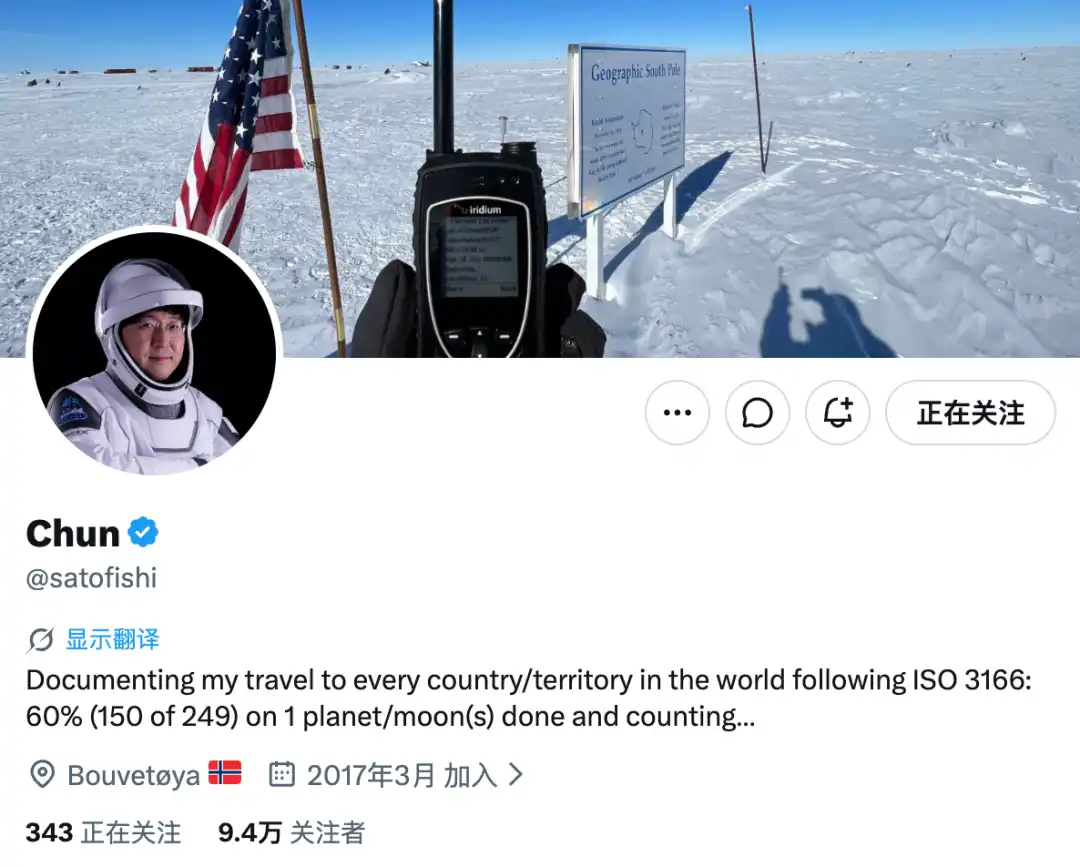
His X profile continues to be updated with records: following the ISO 3166 standard, documenting travels to every country and region in the world, currently having explored 60% of one celestial body (150 out of 249), still updating......
The Vast Blank on the Map

In 1987, Wang Chun's grandfather brought home a found world map. Wang Chun lay down and was captivated by the enormous blank space in the polar regions at the map's bottom. He was five years old then, living mostly with his grandparents, rarely venturing far, yet he was already deeply drawn to those distant and unknown places.

At age 13, upon graduating elementary school, he saved up to buy his first 486SX computer. He wrote himself a planetary gravity simulator and watched the solar system's motion trajectories on the monitor.

On the first day of registering for QQ in middle school, he set his name to 1. The next day he changed it to 2, the day after to 3, incrementing daily like this, persisting for nearly seven years, counting all the way up to 2523, until one day he found it boring and stopped.

No special reason to start, no particular reason to stop, and finally that number remained there forever. The '2' in F2Pool's name later came from this QQ number.

Although this habit stopped, his way of understanding the world did not change. He turned time into something countable, turned progress into a marked scale, stamped every ordinary day with a timestamp, making them a progress bar he could look back on.

He later meticulously recorded every train journey down to the minute and second, numbered every flight, and marked off visited countries one by one on a list. These things seemed laborious to outsiders, but for him, it was just instinct.
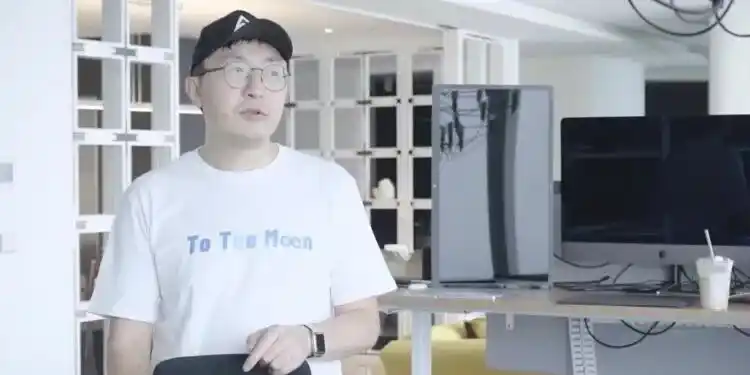
After graduation, he went to a Norwegian software company in Beijing. To save money, he slept on a French colleague's sofa, slept in the office. After work on Friday, he headed straight to the train station, returning Monday morning.

In the year 2007, he traveled 75,900 kilometers by train, equivalent to spending two full months on the road. He recorded every segment of the journey, precise to the minute or even second, posting it on forums. Someone gave him a nickname: Thousand-Trip High-Speed Rail Man.

In 2010, he went abroad for the first time, to Nepal, then India. In India, he boarded the country's longest-running train, the 16317 Himsagar Express, traveling all the way from the southernmost Kanyakumari to Kashmir, spending his entire savings at the time, $1,000.

Launching the F2Pool Bitcoin Mining Pool

In May 2011, he read two articles about Bitcoin on Solidot. That night, he opened the Bitcoin Wiki and read it from start to finish all night long. He described the feeling as if he had discovered a new continent.

On May 28, he bought his first bitcoin at a unit price of $8.70, borrowed $40,000 from his father, went to Zhongguancun to buy two graphics cards, rented four civilian houses, equipped dozens of mining rigs, second-hand motherboards, 512MB RAM, 4GB USB drives installed with Ubuntu, and started mining like that.

In the first two years, he mined 7,700 bitcoins, used 4,000 to pay for electricity, exchanged 660 for an iPhone (which was stolen in the St. Petersburg metro station). He sold the rest in January 2013 at $17 each, repaid his father's money, and made a small profit of over ten thousand dollars.

In April of that year, he and Mao Shixing, online nickname 'Shenyu' (which means 'Magic Fish'), launched F2Pool in Wenzhou, the first Bitcoin mining pool in China, later familiarly known as 'Fish Pool'.

Wang Chun wrote the backend code, Shenyu handled operations. A mining pool is different from a mining farm; a farm mines for itself, while a pool organizes the computing power of global miners, distributes rewards based on contribution, charges a handling fee, more like infrastructure for the Bitcoin network.

After going online, the pool expanded rapidly. This infrastructure business brought continuous cash flow and became an important source of his long-term wealth. Over the past decade-plus, F2Pool has helped global miners cumulatively mine over 1.3 million bitcoins.

In 2015, he used 2,900 bitcoins to buy his first apartment in Pattaya, Thailand. In 2018, he founded stake.fish in Thailand, a PoS staking service. This company later supported over twenty public chains including Ethereum, Solana, Cosmos, managing assets exceeding $3 billion.

The PoW mining pool and PoS validation, two infrastructure businesses based on different technological routes, together formed the foundation of his wealth. It is widely estimated that Wang Chun's wealth has reached hundreds of millions of dollars, but the specific figure has never been disclosed.
Flying into Space, Overlooking the Poles

On-paper wealth grew, but his lifestyle hardly changed: writing code, traveling, counting.

In December 2021, he stood at the South Pole. In July 2023, the North Pole. All geographical poles on Earth had been reached; there were no farther endpoints left, yet the questing heart did not stop.

It was then that he saw SpaceX's Falcon 9 booster landing vertically back on the launch pad. He felt that feeling again, exactly like the first time he heard about computers, the first time he discovered Bitcoin.

On April 23, 2023, lying in a hotel bed in Saudi Arabia, he asked himself: if he could design his own mission, where would he fly? The poles were the final frontier, but since 1961 when humans entered space, almost all crewed spacecraft had operated in mid-to-low inclination orbits. No vessel had ever truly flown over the poles, not because it couldn't be done, but because no one thought to do it, or no one had the resources to do it.

He thought of Darwin's HMS Beagle, the Beagle 2 Mars lander named after it, and then he thought of the Fram, the Norwegian exploration ship that conquered the poles multiple times, meaning 'Forward' in Norwegian.

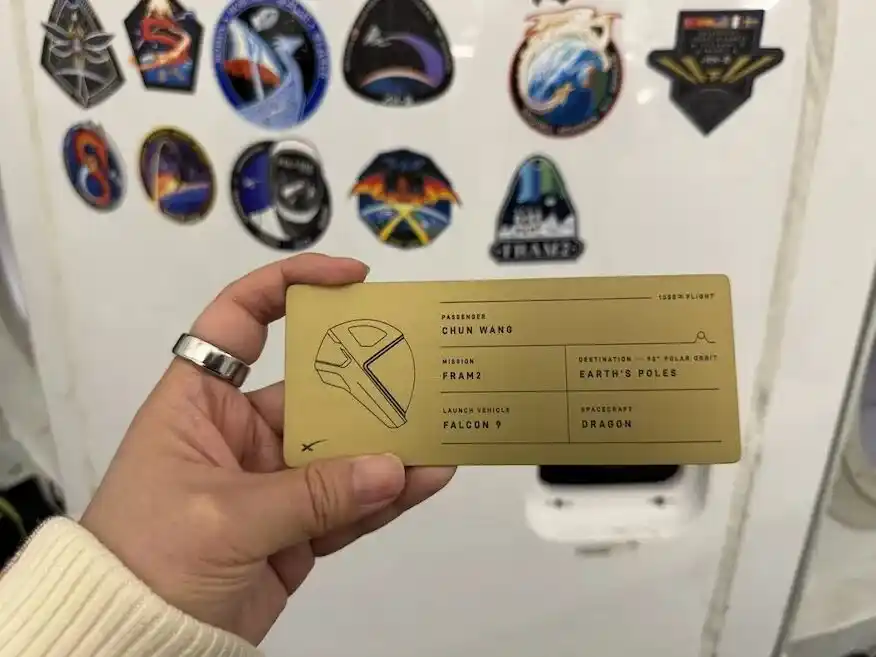
So he planned and designed everything, submitted a private mission proposal to SpaceX, requesting to charter an entire Crew Dragon, enter orbit at a 90-degree polar inclination, and fly over the poles.

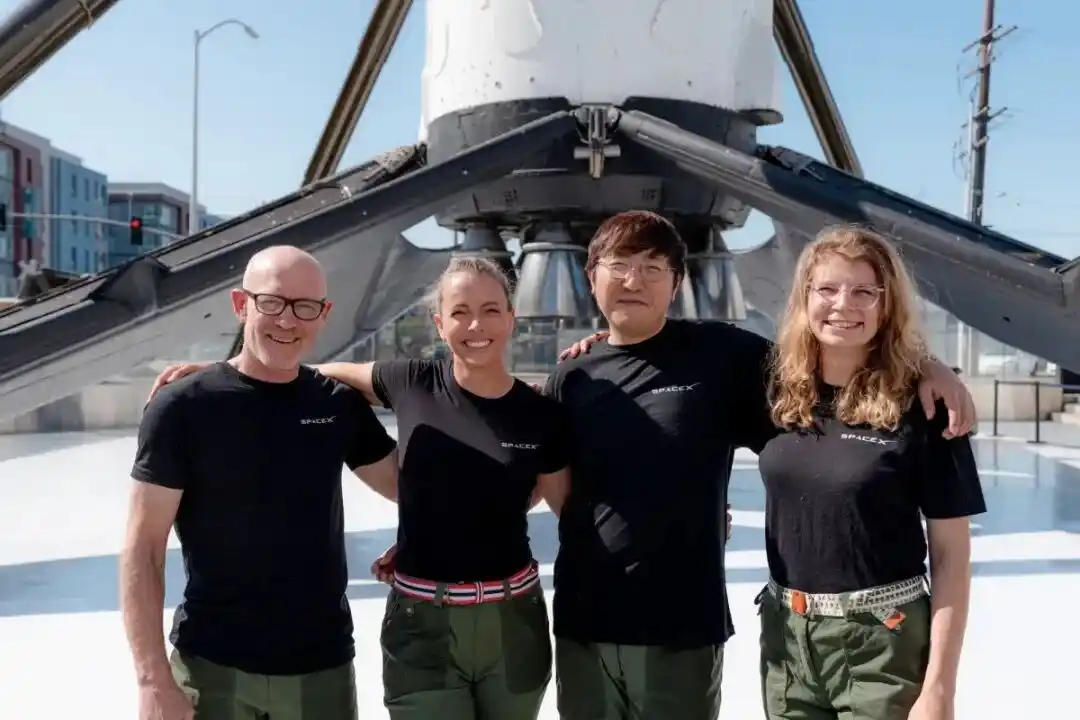
The entire mission was fully self-funded, no sponsors. No brokers, no NASA approvals. He treated SpaceX as a charter company, negotiated requirements and costs, became the mission commander himself, fully responsible for overall decisions, coordinating the crew, and interfacing with ground control.

He deliberately chose the crew too: a Norwegian, a German, an Australian, all non-American citizens, because this was a purely private decision.
SpaceX sent him 2.8GB of learning materials, including mission procedure manuals, spacecraft system operation documents, guides for 22 scientific experiments, and explanations of polar orbit-specific risks.

Over the next 8 months, he underwent rigorous training: centrifuge high-G training, parabolic microgravity flights, cabin pressure loss simulation, polar survival drills, unassisted autonomous egress training, and more.

On March 31, 2025, the Falcon 9 lifted off from Kennedy Space Center.

Day one, the whole crew experienced space motion sickness. Day two, he wrote: feeling completely fine, like starting over.

The pole came into view, and he sent a message: Hello, Antarctica. Looking down from 430 kilometers high, a pure white expanse, no signs of human activity visible.

Suspended above Earth, he thought of Heisenberg's uncertainty principle, modeling his situation using quantum mechanics.

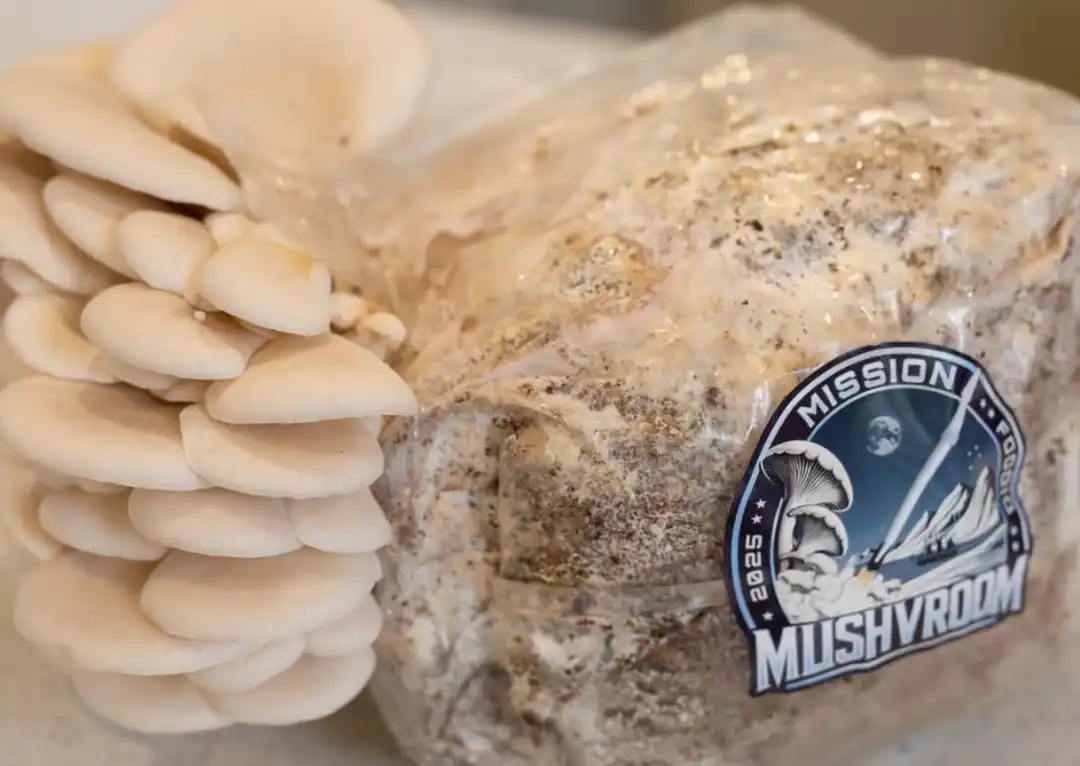
In three and a half days, the Fram2 mission completed 22 scientific experiments, including the first X-ray image taken in space by humans, growing oyster mushrooms in microgravity, monitoring polar radiation data, photographing auroras......

On April 4, 2025, the Crew Dragon splashed down off the coast of California. This was humanity's first crewed polar orbit flight, with an inclination of 90.01 degrees, breaking the 65-degree record set by the Soviet Union's Vostok 6 in 1963.
Mars Flyby

After Fram2's success, Wang Chun was already in line for SpaceX's next, even grander project.

In May 2026, on the eve of SpaceX's live broadcast of the Starship V3's first launch test, the camera cut to Bouvet Island, where Wang Chun formally announced he would command the Starship to execute humanity's first crewed interplanetary flight mission: leaving the Earth-Moon system, flying by Mars, and returning to Earth, expected to take two years.

Before that, he would also complete the first commercial Starship lunar flyby mission with Dennis Tito and his wife, flying by within 200 kilometers of the lunar surface, as a warm-up for the official mission.

Twenty years ago, ordinary people had no chance to participate in deep space missions. Between 2001 and 2009, only seven extremely wealthy private individuals paid to hitch a ride to the International Space Station via Russian spacecraft, each trip costing around $20 million and requiring strict qualification review.

SpaceX changed the underlying structure of this logic. Reusable rockets lowered costs, private individuals could directly charter an entire spacecraft, mission forms shifted from brief visits to the space station to free-flight, allowing custom orbits, experiments, and crew selection.

Wang Chun's Fram2 was the first privately customized crewed polar orbit mission, and this Starship Mars flyby is humanity's first privately funded crewed interplanetary mission, with communication delays up to 20 minutes, no quick return windows, no possibility of rescue, the entire mission handled by SpaceX, unrelated to NASA.
The Continuously Expanding Map

Bitcoin played a special role in this change, creating a path for wealth accumulation not attached to the traditional financial system, and this wealth is flowing in some way towards the boundaries of civilization's expansion.

Wang Chun used mining-accumulated capital to charter the polar orbit, used mining pool operating profits to wait for Starship. It's not mere wealth consumption, but investing the resources Bitcoin gave him into the direction he's been oriented towards since he was five years old.

Over the past few decades, crewed spaceflight has long been dominated by national systems. Who could go up, where to go, what to do, was basically decided by space agencies.

Now, a programmer from Tianjin can define his own mission, choose his own orbit, be his own commander, and decide to fly by the side of Mars.

The counting continues, just on a map with a larger scale.

Domande pertinenti

QWhat is the source of the wealth that enabled Wang Chun to fund his private space missions?

AThe primary source of his wealth is the accumulated revenue from fees generated by the F2Pool Bitcoin mining pool he co-founded and the PoS staking service provided by stake.fish, which he later established.

QWhat was the name and significance of Wang Chun's first private space mission?

AHis first private space mission was named 'Fram2'. It was the first-ever privately funded, crewed mission to achieve a 90.01-degree polar orbit, flying directly over the Earth's North and South Poles, breaking the 1963 record of 65 degrees set by the Soviet Vostok 6 mission.

QWhat ambitious future mission did Wang Chun announce in May 2026?

AIn May 2026, he announced his plan to command the Starship spacecraft to execute humanity's first crewed interstellar flyby mission to Mars, leaving the Earth-Moon system, flying past Mars, and returning to Earth, with an estimated mission duration of two years.

QHow did Wang Chun first get involved with Bitcoin?

AHe first learned about Bitcoin in May 2011 from articles on Solidot. Intrigued, he read the entire Bitcoin Wiki in one night, describing the feeling as 'discovering a new continent'. On May 28, he bought his first Bitcoin for $8.7 and soon after borrowed money to begin mining.

QAccording to the article, what role has Bitcoin played in the broader context of space exploration?

AThe article suggests Bitcoin has played a special role by creating a path for wealth accumulation independent of the traditional financial system. This new wealth is now being channeled towards the frontiers of civilization expansion, enabling private individuals like Wang Chun to fund and define their own ambitious space missions.

Letture associate

Under the squeeze between giants Tether and Circle, how can foreign exchange stablecoins break through?

In the face of dominance by Tether (USDT) and Circle (USDC), new entrants in the stablecoin space face significant challenges competing directly, especially in the foreign exchange (FX) market. A more viable and efficient path forward is the adoption of synthetic foreign exchange (Forex) built atop existing USD stablecoin rails. The rise of stablecoin neo-banks represents the next major growth area for mass crypto adoption, with FX becoming a core component. However, replicating the vast liquidity, distribution channels, and network effects of USDT/USDC is extremely difficult for new FX stablecoin issuers. The total market cap of all FX stablecoins is a fraction (roughly 1/700th) of USD stablecoins, leading to issues like poor liquidity, peg instability, limited acceptance, and complex compliance hurdles. Instead of issuing spot FX stablecoins, the article advocates for a model inspired by traditional finance's non-deliverable forwards (NDFs). Users would continue to hold underlying USDT/USDC, while their account balances are displayed and economically settled in their preferred local currency through MtM (Mark-to-Market) NDF structures. This approach leverages the deep liquidity and infrastructure of USD stablecoins while providing synthetic forex exposure. Key advantages include strong peg stability via oracles, retained access to USD stablecoin yields and liquidity, high capital efficiency, and easy scalability to new currencies. Primary use cases for this on-chain NDF forex include: 1. Neo-banks, custodians, and wallets offering multi-currency accounts to attract international users and increase deposits. 2. Forex carry trade strategies, potentially offering more stable and scalable yields compared to crypto-native products like Ethena. 3. Global corporate payments, allowing businesses to receive payments in local currencies while hedging forex risk on-chain, similar to services offered by Stripe in traditional finance. This synthetic forex model presents a pragmatic solution to overcome the network effects of incumbents and unlock the next wave of stablecoin utility for global consumers and businesses.

marsbit3 h fa

Under the squeeze between giants Tether and Circle, how can foreign exchange stablecoins break through?

marsbit3 h fa

Trading

Spot
Futures

Articoli Popolari

Cosa è BITCOIN

Comprendere HarryPotterObamaSonic10Inu (ERC-20) e la sua posizione nel mondo delle criptovalute Negli ultimi anni, il mercato delle criptovalute ha assistito a un aumento della popolarità delle meme coin, catturando l'interesse non solo dei trader, ma anche di coloro che cercano coinvolgimento comunitario e valore di intrattenimento. Tra questi token unici c'è HarryPotterObamaSonic10Inu (ERC-20), un progetto intrigante che mescola riferimenti culturali nel tessuto delle criptovalute. Questo articolo esplora gli aspetti chiave di HarryPotterObamaSonic10Inu, analizzando i suoi meccanismi, l'etica guidata dalla comunità e il suo coinvolgimento con il panorama crittografico più ampio. Che cos'è HarryPotterObamaSonic10Inu (ERC-20)? Come suggerisce il suo nome, HarryPotterObamaSonic10Inu è una meme coin costruita sulla blockchain di Ethereum, classificata secondo lo standard ERC-20. A differenza delle criptovalute tradizionali che possono enfatizzare l'utilità pratica o il potenziale investimento, questo token prospera grazie al valore di intrattenimento e alla forza della sua comunità. Il progetto mira a creare un ambiente in cui gli utenti coinvolti possono riunirsi, condividere idee e partecipare ad attività ispirate a diversi fenomeni culturali. Una caratteristica notevole di HarryPotterObamaSonic10Inu è la zero tassa sulle transazioni. Questo elemento allettante tende a incoraggiare il trading e il coinvolgimento della comunità, privo di costi aggiuntivi che possono scoraggiare i trader di piccole dimensioni. L'offerta totale della moneta è fissata a un miliardo di token, un numero che segna la sua intenzione di mantenere una circolazione sostanziale all'interno della comunità. Creatore di HarryPotterObamaSonic10Inu (ERC-20) Le origini di HarryPotterObamaSonic10Inu sono avvolte in un certo mistero; i dettagli sul creatore rimangono sconosciuti. Lo sviluppo di questo token non presenta un team identificabile o un piano esplicito, cosa non rara nel settore delle meme coin. Invece, il progetto è emerso organicamente, con il suo progresso fortemente dipendente dall'entusiasmo e dalla partecipazione della sua comunità. Investitori di HarryPotterObamaSonic10Inu (ERC-20) Per quanto riguarda investimenti esterni e finanziamenti, HarryPotterObamaSonic10Inu rimane ambiguo. Il token non elenca alcuna fondazione di investimento conosciuta o un sostegno organizzativo significativo. Invece, la linfa vitale del progetto è la sua comunità di base, che informa la sua crescita e sostenibilità attraverso azioni collettive e coinvolgimento nello spazio crittografico. Come funziona HarryPotterObamaSonic10Inu (ERC-20)? In quanto meme coin, HarryPotterObamaSonic10Inu opera principalmente al di fuori delle strutture tradizionali che governano spesso il valore degli asset. Ci sono diversi aspetti distintivi che definiscono il funzionamento del progetto: Transazioni senza tasse: Senza costi fiscali sulle transazioni, gli utenti possono comprare e vendere liberamente il token senza preoccuparsi di costi nascosti. Coinvolgimento della comunità: Il progetto prospera sull'interazione della comunità, sfruttando le piattaforme social per creare entusiasmo e facilitare il coinvolgimento. Discussioni, condivisione di contenuti e coinvolgimento sono elementi cruciali che aiutano ad espandere la sua portata e a favorire la lealtà tra i sostenitori. Nessuna utilità pratica: Va notato che HarryPotterObamaSonic10Inu non offre un'utilità concreta all'interno dell'ecosistema finanziario. Piuttosto, è classificato come un token principalmente per attività di intrattenimento e comunitarie. Riferimento culturale: Il token incorpora astutamente elementi della cultura pop per attirare interesse, collegandosi a appassionati di meme e seguaci delle criptovalute. HarryPotterObamaSonic10Inu esemplifica come le meme coin operino in modo diverso rispetto ai progetti di criptovalute più tradizionali, entrando nel mercato come costrutti sociali innovativi piuttosto che come asset utilitari. Cronologia di HarryPotterObamaSonic10Inu (ERC-20) La storia di HarryPotterObamaSonic10Inu è segnata da diversi traguardi notevoli: Creazione: Il token è emerso da un meme virale, catturando l'immaginazione di molti appassionati di criptovalute. Le date di creazione specifiche non sono disponibili, sottolineando la sua crescita organica. Inserimento negli scambi: HarryPotterObamaSonic10Inu ha fatto il suo ingresso in vari scambi, consentendo un accesso e un trading più facili da parte della comunità. Iniziative di coinvolgimento della comunità: Attività in corso volte a migliorare l'interazione della comunità, comprese gare, campagne sui social media e generazione di contenuti da parte di fan e sostenitori. Piani di espansione futura: La tabella di marcia del progetto include il lancio di una collezione NFT, merchandising e un sito di eCommerce relativo ai suoi temi culturali, coinvolgendo ulteriormente la comunità e cercando di aggiungere più dimensioni al suo ecosistema. Punti chiave su HarryPotterObamaSonic10Inu (ERC-20) Natura guidata dalla comunità: Il progetto dà priorità al contributo collettivo e alla creatività, garantendo che il coinvolgimento degli utenti sia al centro del suo sviluppo. Classificazione come meme coin: Rappresenta l'epitome delle criptovalute basate sull'intrattenimento, distinguendosi dai veicoli d'investimento tradizionali. Nessuna affiliazione diretta con Bitcoin: Nonostante la somiglianza nel nome del ticker, HarryPotterObamaSonic10Inu è distintivo e non ha alcuna relazione con Bitcoin o altre criptovalute consolidate. Focus sulla collaborazione: HarryPotterObamaSonic10Inu è progettato per creare uno spazio per la collaborazione e la condivisione di storie tra i suoi detentori, fornendo un canale per la creatività e il legame comunitario. Prospettive future: L'ambizione di espandersi oltre il suo presupposto iniziale verso NFT e merchandising delinea un percorso per il progetto per potenzialmente entrare in strade più mainstream all'interno della cultura digitale. Poiché le meme coin continuano a catturare l'immaginazione della comunità crittografica, HarryPotterObamaSonic10Inu (ERC-20) si distingue per i suoi legami culturali e il suo approccio centrato sulla comunità. Anche se potrebbe non adattarsi al modello tipico di un token orientato all'utilità, la sua essenza risiede nella gioia e nella camaraderia coltivate tra i suoi sostenitori, evidenziando la natura in evoluzione delle criptovalute in un'epoca sempre più digitale. Con la continuazione dello sviluppo del progetto, sarà importante osservare come le dinamiche della comunità influenzano la sua traiettoria nel panorama in continuo cambiamento della tecnologia blockchain.

1.5k Totale visualizzazioniPubblicato il 2024.04.01Aggiornato il 2024.12.03

Cosa è BITCOIN

Come comprare BTC

Benvenuto in HTX.com! Abbiamo reso l'acquisto di Bitcoin (BTC) semplice e conveniente. Segui la nostra guida passo passo per intraprendere il tuo viaggio nel mondo delle criptovalute.Step 1: Crea il tuo Account HTXUsa la tua email o numero di telefono per registrarti il tuo account gratuito su HTX. Vivi un'esperienza facile e sblocca tutte le funzionalità,Crea il mio accountStep 2: Vai in Acquista crypto e seleziona il tuo metodo di pagamentoCarta di credito/debito: utilizza la tua Visa o Mastercard per acquistare immediatamente BitcoinBTC.Bilancio: Usa i fondi dal bilancio del tuo account HTX per fare trading senza problemi.Terze parti: abbiamo aggiunto metodi di pagamento molto utilizzati come Google Pay e Apple Pay per maggiore comodità.P2P: Fai trading direttamente con altri utenti HTX.Over-the-Counter (OTC): Offriamo servizi su misura e tassi di cambio competitivi per i trader.Step 3: Conserva Bitcoin (BTC)Dopo aver acquistato Bitcoin (BTC), conserva nel tuo account HTX. In alternativa, puoi inviare tramite trasferimento blockchain o scambiare per altre criptovalute.Step 4: Scambia Bitcoin (BTC)Scambia facilmente Bitcoin (BTC) nel mercato spot di HTX. Accedi al tuo account, seleziona la tua coppia di trading, esegui le tue operazioni e monitora in tempo reale. Offriamo un'esperienza user-friendly sia per chi ha appena iniziato che per i trader più esperti.

3.8k Totale visualizzazioniPubblicato il 2024.12.12Aggiornato il 2025.03.21

Come comprare BTC

Cosa è $BITCOIN

ORO DIGITALE ($BITCOIN): Un'Analisi Completa Introduzione all'ORO DIGITALE ($BITCOIN) L'ORO DIGITALE ($BITCOIN) è un progetto basato su blockchain che opera sulla rete Solana, con l'obiettivo di combinare le caratteristiche dei metalli preziosi tradizionali con l'innovazione delle tecnologie decentralizzate. Sebbene condivida un nome con Bitcoin, spesso definito “oro digitale” a causa della sua percezione come riserva di valore, l'ORO DIGITALE è un token separato progettato per creare un ecosistema unico all'interno del panorama Web3. Il suo obiettivo è posizionarsi come un asset digitale alternativo valido, anche se i dettagli riguardanti le sue applicazioni e funzionalità sono ancora in fase di sviluppo. Cos'è l'ORO DIGITALE ($BITCOIN)? L'ORO DIGITALE ($BITCOIN) è un token di criptovaluta esplicitamente progettato per l'uso sulla blockchain di Solana. A differenza di Bitcoin, che fornisce un ruolo di stoccaggio di valore ampiamente riconosciuto, questo token sembra concentrarsi su applicazioni e caratteristiche più ampie. Aspetti notevoli includono: Infrastruttura Blockchain: Il token è costruito sulla blockchain di Solana, nota per la sua capacità di gestire transazioni ad alta velocità e a basso costo. Dinamiche di Offerta: L'ORO DIGITALE ha un'offerta massima fissata a 100 quadrilioni di token (100P $BITCOIN), sebbene i dettagli riguardanti la sua offerta circolante siano attualmente non divulgati. Utilità: Sebbene le funzionalità precise non siano esplicitamente delineate, ci sono indicazioni che il token potrebbe essere utilizzato per varie applicazioni, potenzialmente coinvolgendo applicazioni decentralizzate (dApp) o strategie di tokenizzazione degli asset. Chi è il Creatore dell'ORO DIGITALE ($BITCOIN)? Attualmente, l'identità dei creatori e del team di sviluppo dietro l'ORO DIGITALE ($BITCOIN) rimane sconosciuta. Questa situazione è tipica tra molti progetti innovativi nel settore blockchain, in particolare quelli allineati con la finanza decentralizzata e i fenomeni delle meme coin. Sebbene tale anonimato possa favorire una cultura guidata dalla comunità, intensifica le preoccupazioni riguardo alla governance e alla responsabilità. Chi sono gli Investitori dell'ORO DIGITALE ($BITCOIN)? Le informazioni disponibili indicano che l'ORO DIGITALE ($BITCOIN) non ha alcun sostenitore istituzionale noto o investimenti di venture capital prominenti. Il progetto sembra operare su un modello peer-to-peer incentrato sul supporto e sull'adozione della comunità piuttosto che su percorsi di finanziamento tradizionali. La sua attività e liquidità si trovano principalmente su exchange decentralizzati (DEX), come PumpSwap, piuttosto che su piattaforme di trading centralizzate consolidate, evidenziando ulteriormente il suo approccio di base. Come Funziona l'ORO DIGITALE ($BITCOIN) Le meccaniche operative dell'ORO DIGITALE ($BITCOIN) possono essere elaborate in base al suo design blockchain e alle caratteristiche della rete: Meccanismo di Consenso: Sfruttando il proof-of-history (PoH) unico di Solana combinato con un modello di proof-of-stake (PoS), il progetto garantisce una validazione efficiente delle transazioni contribuendo all'alta performance della rete. Tokenomics: Sebbene meccanismi deflazionistici specifici non siano stati dettagliati ampiamente, l'ampia offerta massima di token implica che potrebbe soddisfare microtransazioni o casi d'uso di nicchia che devono ancora essere definiti. Interoperabilità: Esiste il potenziale per l'integrazione con l'ecosistema più ampio di Solana, inclusi vari piattaforme di finanza decentralizzata (DeFi). Tuttavia, i dettagli riguardanti integrazioni specifiche rimangono non specificati. Cronologia degli Eventi Chiave Ecco una cronologia che evidenzia traguardi significativi riguardanti l'ORO DIGITALE ($BITCOIN): 2023: Il dispiegamento iniziale del token avviene sulla blockchain di Solana, contrassegnato dal suo indirizzo di contratto. 2024: L'ORO DIGITALE guadagna visibilità poiché diventa disponibile per il trading su exchange decentralizzati come PumpSwap, consentendo agli utenti di scambiarlo contro SOL. 2025: Il progetto assiste a un'attività di trading sporadica e a un potenziale interesse per impegni guidati dalla comunità, sebbene non siano state documentate partnership significative o avanzamenti tecnici fino ad ora. Analisi Critica Punti di Forza Scalabilità: L'infrastruttura sottostante di Solana supporta alti volumi di transazioni, il che potrebbe migliorare l'utilità di $BITCOIN in vari scenari di transazione. Accessibilità: Il potenziale basso prezzo di trading per token potrebbe attrarre investitori al dettaglio, facilitando una partecipazione più ampia grazie a opportunità di proprietà frazionata. Rischi Mancanza di Trasparenza: L'assenza di sostenitori, sviluppatori o di un processo di audit pubblicamente noti potrebbe generare scetticismo riguardo alla sostenibilità e all'affidabilità del progetto. Volatilità del Mercato: L'attività di trading è fortemente dipendente dal comportamento speculativo, il che può comportare una significativa volatilità dei prezzi e incertezze per gli investitori. Conclusione L'ORO DIGITALE ($BITCOIN) emerge come un progetto intrigante ma ambiguo all'interno dell'evolvente ecosistema di Solana. Sebbene tenti di sfruttare la narrativa dell'“oro digitale”, la sua partenza dal ruolo consolidato di Bitcoin come riserva di valore sottolinea la necessità di una chiara differenziazione della sua utilità e struttura di governance. L'accettazione e l'adozione future dipenderanno probabilmente dall'affrontare l'attuale opacità e dalla definizione più esplicita delle sue strategie operative ed economiche. Nota: Questo rapporto comprende informazioni sintetizzate disponibili a ottobre 2023, e potrebbero essersi verificati sviluppi oltre il periodo di ricerca.

99 Totale visualizzazioniPubblicato il 2025.05.13Aggiornato il 2025.05.13

Cosa è $BITCOIN

Discussioni

Benvenuto nella Community HTX. Qui puoi rimanere informato sugli ultimi sviluppi della piattaforma e accedere ad approfondimenti esperti sul mercato. Le opinioni degli utenti sul prezzo di BTC BTC sono presentate come di seguito.

活动图片











