The End of the 'Talk-to-Earn' Era? X Delivers Heavy Blow, Bans InfoFi, Cutting Off Funding for a Batch of Projects

比推Pubblicato 2026-01-16Pubblicato ultima volta 2026-01-16

Introduzione

On January 15, X (formerly Twitter) revoked API access for InfoFi applications, effectively ending the "post-to-earn" model. The platform cited concerns over AI-generated spam and low-quality replies as the reason for the policy change, prioritizing user experience over the significant revenue these apps generated. Major InfoFi platforms like Kaito and Cookie DAO are now pivoting to alternative models, such as content marketing tools and market intelligence services. The move triggered sharp declines in related token values and NFT floor prices, with some teams accused of insider trading prior to the announcement. The crackdown is seen as a necessary step to combat spam and improve content quality on the platform, though it also reflects broader challenges in the crypto content ecosystem.

Author: Nancy, PANews

Original Title: 'Talk-to-Earn' Players' 'World Collapses'! Twitter Bans InfoFi, Ecosystem Projects Forced to Adapt Drastically


On the night of January 15th, the crypto Twitter circle (CT) was suddenly hit by a silent 'earthquake'.

With X (formerly Twitter) issuing an announcement cutting off API access for InfoFi applications, the 'post-to-earn' mechanism was brought to a halt. Project teams are choosing to pivot, while 'talk-to-earn' players exclaim that 'the sky has fallen'.

Revoking API Access, Rejecting Millions in 'Toll Fees'

The InfoFi sector changed overnight.

X's Product Lead and Solana Ecosystem Advisor, Nikita Bier, officially announced last night that the platform is revising its developer API policy and will no longer allow applications that reward users for posting, directly naming InfoFi.

Nikita stated bluntly that such incentive mechanisms are the root cause of the platform being flooded with a large amount of AI-generated spam and low-quality replies. Currently, X has revoked the API access permissions for these applications. Once the bots realize they are no longer being paid, the user experience should begin to improve soon.

For developers whose accounts were terminated, Nikita also 'thoughtfully' suggested that teams could help them transition their business to Meta's Threads and the decentralized social media platform Bluesky, a comment full of sarcasm.

More importantly, X resolutely chose to forgo this revenue, even though high-frequency API-calling applications like InfoFi contributed significant 'toll fees'. "InfoFi applications were already paying us millions of dollars for enterprise API access. We don't want that money," Nikita said. This statement also indicates that user experience is X's current strategic priority, especially since these earnings are insignificant compared to X's overall annual revenue.

This officially宣告 (declares) the end of the InfoFi model寄生 (parasitizing) the X ecosystem. The simple and brutal 'talk-to-earn' era is gone for good.

In fact, this is not the first time Nikita has 'declared war' on low-quality content.

Not long ago, he criticized crypto tweets for heading towards suicidal demise. Nikita posted at the time that since last October, a notion has been spreading within CT that users need to reply hundreds of times a day to achieve account growth. However, each post consumes part of the day's influence. Since the average user only browses 20 to 30 posts per day, the platform cannot show all posts from one user to all their followers. Therefore, crypto Twitter users end up wasting all their influence on hundreds of 'gm' replies. When they post substantive content like project announcements, very few people see it. The decline of crypto tweets stems from their own behavior, not algorithm issues.

This post sparked strong dissatisfaction within the crypto community at the time, even leading to a large-scale 'GM' counter-attack, which eventually resulted in the tweet being deleted. But in hindsight, X's determination to clean up low-quality content had already been foreshadowed.

Ecosystem Projects Make Drastic Survival Moves, Teams Accused of Dumping Tokens Early

As X tightens its API policy, the InfoFi narrative is facing a cold spell.

CoinGecko data shows that in the past 24 hours, the market capitalization of the InfoFi sector fell to $350 million, with many tokens experiencing double-digit declines. Even the floor price of Yapybaras NFT from Kaito couldn't escape, plummeting.

Faced with a survival test, multiple InfoFi applications have announced pivots.

Yu Hu, founder of the representative project Kaito, stated that the company will gradually terminate Yaps and the incentivized leaderboard system, instead launching a new Kaito Studio. This decision stems from the platform's issues with low-quality content and spam, as well as a shift in the crypto industry from a high-frequency global distribution model towards more precise marketing. After discussions with the X platform, both parties reached a consensus: a completely permissionless distribution system is no longer viable and does not meet the needs of high-quality brands, serious content creators, or the X platform itself. Over the past few months, the platform has been developing Kaito Studio. This product will adopt a layered traditional marketing model, connecting brands with high-quality creators through top-tier analytical tools, covering multiple platforms like X, YouTube, TikTok, and expanding beyond cryptocurrency into areas like finance and AI.

Meanwhile, Cookie DAO, after consulting with the X team, decided to immediately shut down the Snaps platform and all creator activities. Cookie DAO stated it will wait for confirmation and guidance from the X platform to determine if creator activities similar to Snaps can operate in any form in the future. Simultaneously, the platform is communicating directly with all project teams running Snaps activities. Some situations are more complex, involving pre-paid activity fees and promised rewards. While full solutions are not yet available, they will adhere to principles of fairness and communicate directly with each project. The platform has taken snapshot archives of all active activities and will provide updates to creators as soon as possible. Other products under Cookie are unaffected. Additionally, over the past six months, the platform has been continuously developing Cookie Pro, a crypto real-time market intelligence tool, planned for launch in the first quarter.

Judging from the project teams' statements, this policy adjustment is not a sudden black swan event; the teams were already aware of the changing winds and had布局 (laid out plans for) a pivot in advance. This has also sparked market controversy, with the community质疑 (questioning) whether projects knew about the negative news in advance and dumped their tokens.
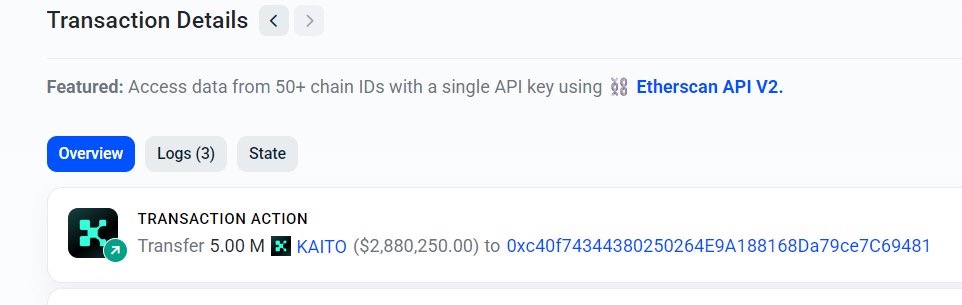
Taking Kaito as an example, its multi-signature contract address distributed and transferred a cumulative 24 million KAITO (approx. $13.31 million) to 5 addresses two weeks ago. Among them, according to monitoring by crypto KOL "vasucrypto", the 0x049A address associated with the Kaito team transferred 5 million KAITO to Binance 7 days ago, possibly for sale. More intriguingly, crypto KOL "加密无畏" (Crypto Fearless) added that Kaito's staking unlocks also peaked in the past few days. 1.1 million KAITO tokens are also scheduled to unlock tomorrow (January 17th), with the unstaking period being 7 days.

Farewell to the 'Talk-to-Earn' Era, Long-Overdue Content Justice

X's brutal industry purge is not just an adjustment of platform rules but also a reshaping of the crypto content ecosystem.

For X, which highly relies on advertising revenue and subscription services, facing external pressures like slowing user growth, inefficient traffic monetization, and the strong rise of competitors, this adjustment is an inevitable choice for survival. In fact, over the past few months, X has already begun making sweeping reforms in content and traffic distribution, including adjusting algorithm weights and increasing revenue for high-quality creators. Ultimately, X's true target is not solely the InfoFi model, but the low-quality content that severely dilutes the platform's value and drives away real users.

For the crypto Twitter circle, this is also a long-overdue form of content justice. Although the original intention of the InfoFi model was to encourage creators to produce high-quality content through token incentives, and it did shine briefly, this mechanism was also hijacked by 'airdrop farming' behavior, where a large number of profit-seekers疯狂制造 (frantically produced) low-quality and repetitive spam information. This false流量繁荣 (traffic prosperity) not only made content dull but also caused truly deep and valuable content to be drowned out by noise, accelerating the loss of real users.

This 'ban' is undoubtedly a 'noise filter' for CT users who are tired of spam; their timelines can finally catch a breath.

However, the decline in CT's热度 (heat) is not entirely attributable to InfoFi; it is also closely related to the overall downturn cycle of the crypto industry. Even the viewership of crypto content on YouTube has fallen to its lowest level since January 2021.

Regardless, the end of this InfoFi model is a necessary path to improving the readability of crypto content and returning to the essence of content. For InfoFi projects, now that the shortcut of寄生 (parasitizing) Web2 giant traffic has been cut off, how to establish a SocialFi mechanism based on the flow of real value is a难题 (challenge) that urgently needs answering.


Twitter:https://twitter.com/BitpushNewsCN

Bitpush TG Discussion Group:https://t.me/BitPushCommunity

Bitpush TG Subscription: https://t.me/bitpush

Original Link:https://www.bitpush.news/articles/7603422

Domande pertinenti

QWhat major change did X (formerly Twitter) announce regarding InfoFi applications on January 15th?

AX revoked API access for InfoFi applications, effectively ending the 'post-to-earn' model that rewarded users for posting.

QAccording to X's product lead Nikita Bier, why was the API access for InfoFi apps terminated?

ABecause these incentive mechanisms were identified as the main cause of a large amount of AI-generated spam and low-quality replies on the platform, which degraded user experience.

QHow did the InfoFi ecosystem react to X's policy change, as mentioned in the article?

AProjects like Kaito and Cookie DAO announced they were pivoting or shutting down their incentivized platforms, with Kaito developing a new marketing tool and Cookie DAO focusing on a market intelligence product.

QWhat controversy emerged concerning the Kaito team's actions prior to the official announcement?

AThe community questioned if the team had prior knowledge of the policy change, as a team-associated address transferred a large amount of KAITO tokens to Binance potentially for selling, and a significant token unlock was scheduled around the same time.

QWhat does the article suggest is the broader implication of X's crackdown on InfoFi for the crypto content ecosystem?

AIt is seen as a necessary step to filter out low-quality content and spam, a 'long-overdue content justice' that could improve readability and push the ecosystem to focus on genuine value and content quality rather than artificial engagement for rewards.

Letture associate

TurboFlow Announces Strategic Partnership with Global Giant Susquehanna Crypto, Introducing Wall Street Institutional-Grade Liquidity and Dynamic Odds Market Structure Support

TurboFlow announces a strategic partnership with Susquehanna Crypto, a leading global proprietary digital asset trading firm. As part of this collaboration, Susquehanna Crypto will act as an on-chain liquidity provider and market maker for all TurboFlow products. This partnership brings institutional-grade liquidity, market-making support, and expertise in professional trading, market structure, price discovery, and risk management to the TurboFlow ecosystem. This marks a significant milestone for TurboFlow as it expands its product suite, which includes perpetual contracts and newly launched Event Contracts with durations as short as 30 seconds. Enhanced liquidity depth, efficient price discovery, and market stability are becoming increasingly critical for user experience. Notably, TurboFlow is transitioning its Event Contracts from a traditional fixed-odds model to a more dynamic, market-driven odds structure. Susquehanna Crypto will inject deep liquidity through TurboFlow's proprietary PFOF (Payment for Order Flow) architecture. This aims to ensure minimal slippage and millisecond-level execution for users, even during extreme market volatility, whether trading 1000x leveraged perpetuals or short-duration event contracts. Looking ahead, TurboFlow plans to onboard more top-tier institutional market makers to build a diversified liquidity network. The platform will continue expanding its product ecosystem across several verticals: Event Contracts (extending to assets like crude oil and gold), prediction markets and Telegram Mini Apps, and perpetual contracts. TurboFlow's mission is to democratize trading by making professional-grade infrastructure and a simplified, engaging experience accessible to all users.

链捕手4 min fa

TurboFlow Announces Strategic Partnership with Global Giant Susquehanna Crypto, Introducing Wall Street Institutional-Grade Liquidity and Dynamic Odds Market Structure Support

链捕手4 min fa

$30 Billion DeFi Capital Exodus: LayerZero Stumbles, Chainlink Feasts

Following the major DeFi security incident involving Kelp DAO, a significant migration of funds is underway from the cross-chain protocol LayerZero to Chainlink's CCIP (Cross-Chain Interoperability Protocol). Over $30 billion in Total Value Locked (TVL) from protocols like Kelp DAO, Solv Protocol, Re, and Tydro has moved to Chainlink in the past week, driven by security concerns. LayerZero is facing a severe trust crisis after the attack. Initially denying responsibility, LayerZero Labs has now issued a public apology, acknowledging management oversights. These include a vulnerable "1/1" single-node configuration for its Decentralized Verification Network (DVN) and past misuse of a multi-signature wallet by a team member. The protocol's weekly bridge volume has slumped to near-historic lows of around $470 million. In contrast, Chainlink is experiencing a surge in adoption and activity. Its independent active addresses recently hit multi-month highs, and whales have been accumulating LINK tokens. Beyond DeFi, Chainlink is securing partnerships with traditional finance giants like DTCC, European stock exchange operator SIX Group, and asset manager Amundi. While LayerZero has announced security upgrades—such as migrating to stronger multi-signature configurations and developing a second DVN client—and contributed to a rescue fund, the event underscores that security is becoming a decisive competitive factor as DeFi matures.

marsbit47 min fa

$30 Billion DeFi Capital Exodus: LayerZero Stumbles, Chainlink Feasts

marsbit47 min fa

The $13 Trillion Repo Market Is Quietly Being Rewritten by Blockchain

The $13 trillion repurchase agreement (repo) market, a crucial artery for global short-term funding, is experiencing a significant transformation through blockchain technology. After years of limited impact in finance, blockchain is finding substantial adoption in repo transactions. Major institutions like JPMorgan Chase, HSBC, and Broadridge are deploying tokenized repo platforms, with daily volumes already reaching tens of billions of dollars. Traditional repo markets operate with fixed hours, rely on intermediaries, and involve manual, time-consuming processes. Tokenized repos, by contrast, use blockchain to create digital tokens representing cash and securities collateral. This enables near-instantaneous settlement, 24/7 trading, automated execution, and enhanced auditability. The key drivers for adoption include maturing technology, more receptive regulators, and growing client recognition of tangible benefits like reduced operational friction and capital efficiency. Analyses, such as one from Broadridge, indicate that moving a portion of repo activity onto blockchain can significantly reduce a bank's required liquidity buffers, potentially freeing up billions in capital. The infrastructure is also seen as foundational for a future of round-the-clock trading for traditional assets. Challenges remain, including the existence of fragmented blockchain networks, the need for stress testing under extreme market conditions, and the loss of operational flexibility compared to manual processes. However, the industry consensus is that these are implementation hurdles. Tokenized repo has moved beyond pilot stages to become one of blockchain's most concrete and impactful applications in traditional finance, marking a pivotal shift in how a core market functions.

marsbit47 min fa

The $13 Trillion Repo Market Is Quietly Being Rewritten by Blockchain

marsbit47 min fa

Trading

Spot
Futures

Articoli Popolari

Come comprare ERA

Benvenuto in HTX.com! Abbiamo reso l'acquisto di Caldera (ERA) semplice e conveniente. Segui la nostra guida passo passo per intraprendere il tuo viaggio nel mondo delle criptovalute.Step 1: Crea il tuo Account HTXUsa la tua email o numero di telefono per registrarti il tuo account gratuito su HTX. Vivi un'esperienza facile e sblocca tutte le funzionalità,Crea il mio accountStep 2: Vai in Acquista crypto e seleziona il tuo metodo di pagamentoCarta di credito/debito: utilizza la tua Visa o Mastercard per acquistare immediatamente CalderaERA.Bilancio: Usa i fondi dal bilancio del tuo account HTX per fare trading senza problemi.Terze parti: abbiamo aggiunto metodi di pagamento molto utilizzati come Google Pay e Apple Pay per maggiore comodità.P2P: Fai trading direttamente con altri utenti HTX.Over-the-Counter (OTC): Offriamo servizi su misura e tassi di cambio competitivi per i trader.Step 3: Conserva Caldera (ERA)Dopo aver acquistato Caldera (ERA), conserva nel tuo account HTX. In alternativa, puoi inviare tramite trasferimento blockchain o scambiare per altre criptovalute.Step 4: Scambia Caldera (ERA)Scambia facilmente Caldera (ERA) nel mercato spot di HTX. Accedi al tuo account, seleziona la tua coppia di trading, esegui le tue operazioni e monitora in tempo reale. Offriamo un'esperienza user-friendly sia per chi ha appena iniziato che per i trader più esperti.

332 Totale visualizzazioniPubblicato il 2025.07.17Aggiornato il 2025.07.17

Come comprare ERA

Discussioni

Benvenuto nella Community HTX. Qui puoi rimanere informato sugli ultimi sviluppi della piattaforma e accedere ad approfondimenti esperti sul mercato. Le opinioni degli utenti sul prezzo di ERA ERA sono presentate come di seguito.

活动图片