The dollar is weakening – The next crypto rally might start from Japan

ambcryptoPubblicato 2026-04-07Pubblicato ultima volta 2026-04-07

Introduzione

The article discusses how the weakening US dollar, combined with Japan's rising bond yields, could trigger the next cryptocurrency rally. Japan's 10-year bond yield has reached a multi-decade high of 2.42%, signaling persistent inflation and potential monetary tightening by the Bank of Japan. This has caused the yen to stabilize after a period of weakness, impacting the JPY/USD pair. Concurrently, cooling US Treasury yields are contributing to a softer US Dollar Index (DXY). Historically, a weaker dollar leads investors to rotate capital from traditional safe-haven assets into riskier ones like crypto, seeking higher returns. Analysts, including Peter Schiff, suggest an overvalued dollar could be a key catalyst for capital flowing into crypto markets. The convergence of these factors—rising Japanese yields reshaping global capital flows and a softening dollar—creates a favorable macro environment for a potential crypto market rally.

The ongoing West Asia crisis is still creating ripple effects across global markets. And Japan is becoming a clear case study.

Data from Trading Economics shows Japan’s 10-year bond yield climbing to 2.42%, the highest level in nearly three decades.

Rising yields point to persistent inflation pressure, leaving the Bank of Japan with little room to cut rates. Instead, markets are slowly starting to price in the possibility of further tightening.

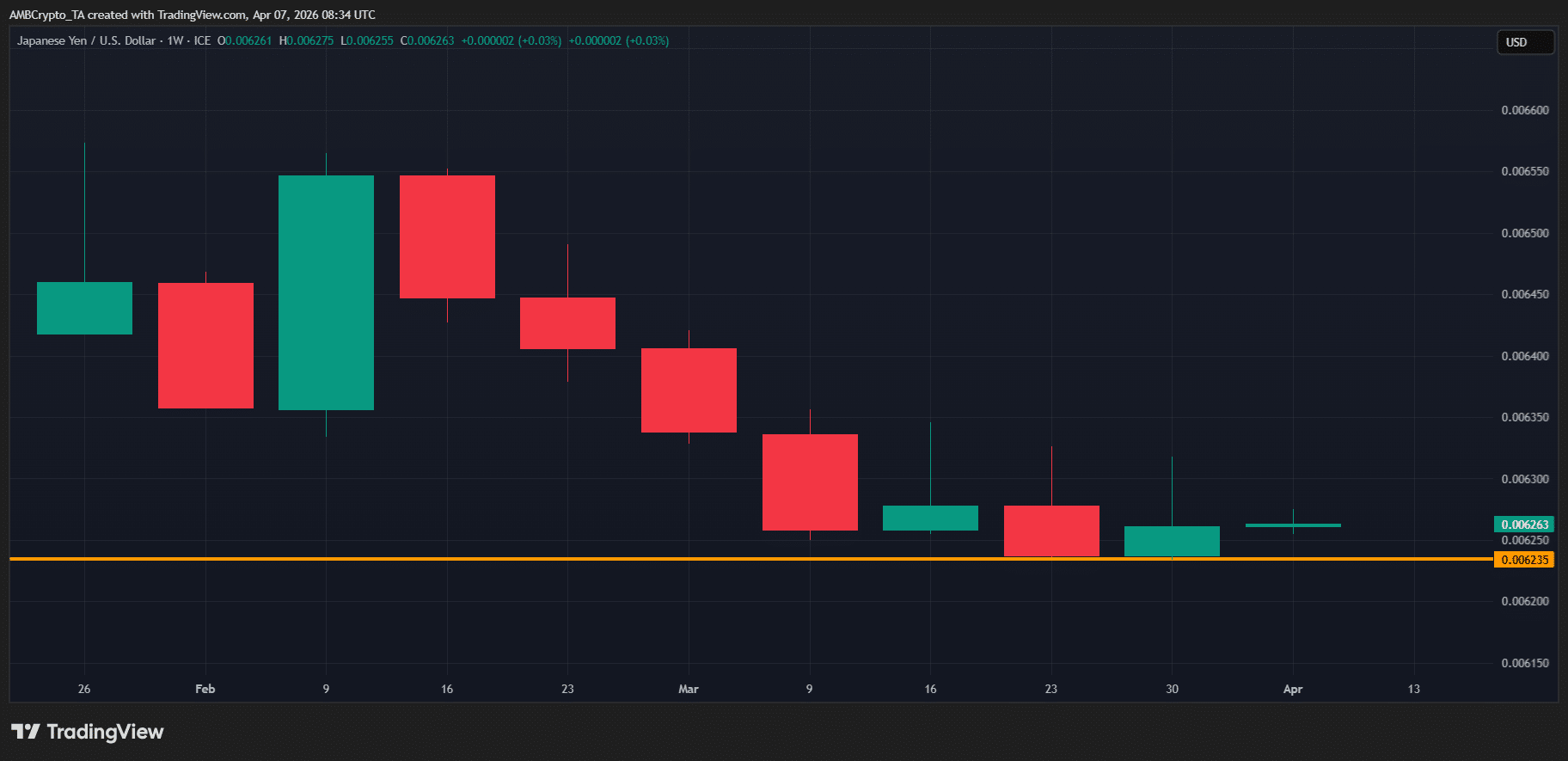
Notably, the currency market is already reacting. Throughout most of March, the JPY/USD pair moved into consolidation, and a similar structure is now forming in April, potentially signaling a local bottom.

For crypto markets, this is a macro signal worth paying attention to.
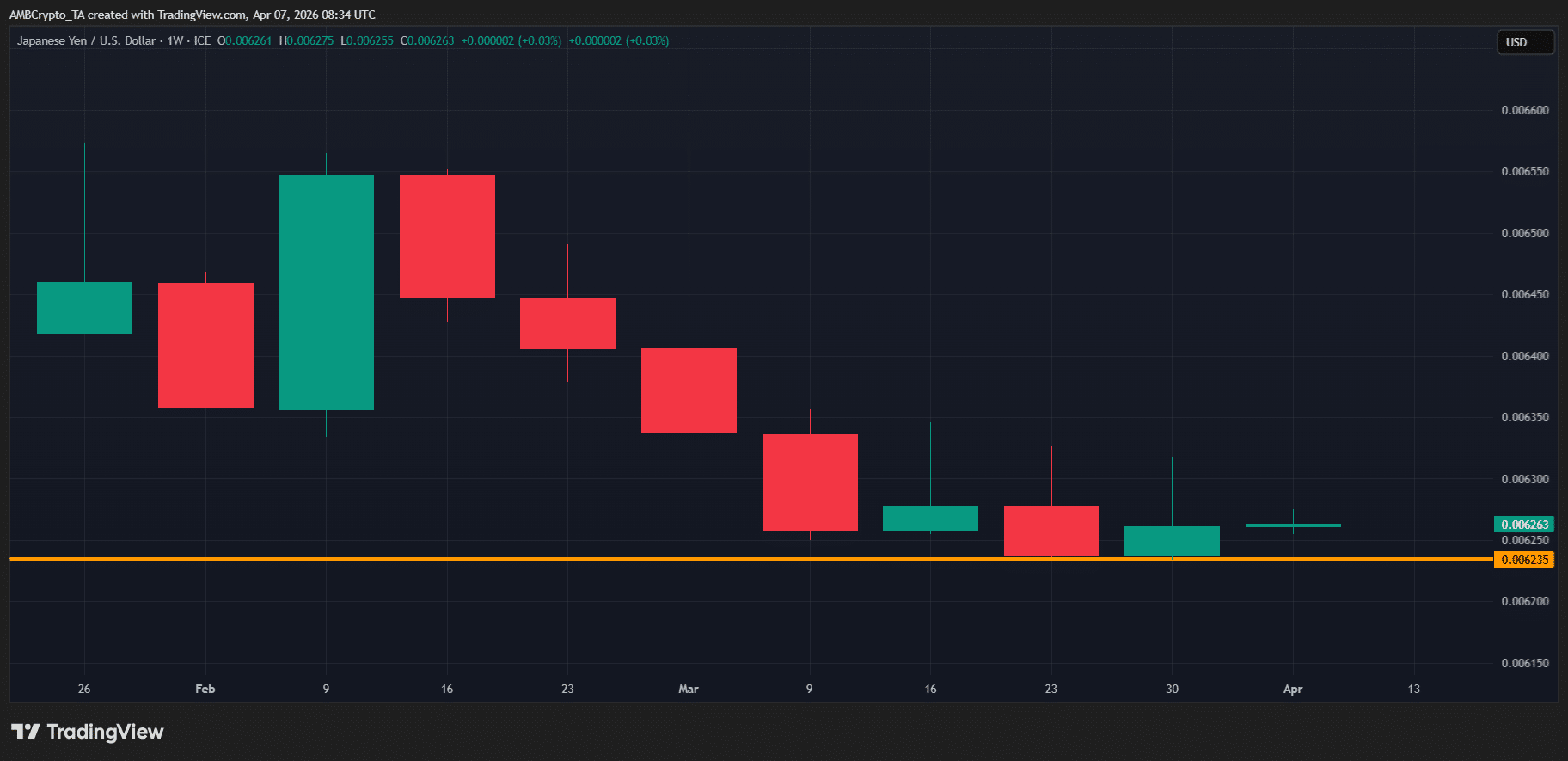
Source: TradingView (JPY/USD)

From a technical standpoint, rising bond yields usually point to capital rotating toward traditional safe-haven assets as investors prepare for tighter monetary conditions and the possibility of further rate hikes.

At the same time, the choppy behavior in the JPY/USD pair reflects the aftereffect of this adjustment phase.

In simple terms, the yen appears to be transitioning from sustained weakness into a stabilization phase. However, the bigger takeaway for crypto is what this means for the U.S. Dollar Index (DXY).

Historically, periods of dollar weakness have triggered capital rotation into risk assets, as yields from traditional safe havens become less competitive compared to the faster upside potential seen in equities and crypto.

Naturally, that raises a key question: Could a weaker dollar give crypto the macro tailwind it needs to break through the current FUD?

Analysts point to an overvalued dollar as crypto’s catalyst

U.S. Treasury yields are cooling off, and the dollar is starting to reflect it.

According to Trading Economics, the 10-year U.S. Treasury yield has dropped nearly 3% from its late-March peak of 4.43%, the highest level since July 2025.

This pullback highlights how ongoing geopolitical tensions have weighed on inflation and put the Fed in a tricky spot. The cooldown, however, now points to a shift in market expectations, with investors starting to price in a softer monetary stance.

Notably, the impact is showing up in markets. The DXY is down 0.35% this week after topping 100, while the total crypto market cap has rallied 3.5% since kicking off April’s run.

Taken together, this reinforces Peter Schiff’s point: An overvalued dollar can act as a catalyst for capital rotation into risk assets, including crypto.
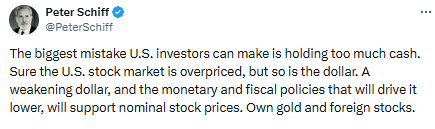
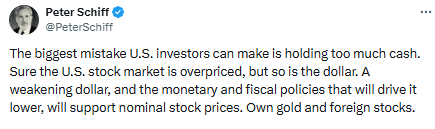
Source: X

In this context, Japan’s yield jumping to a multi-year high starts to carry real weight. Economically, rising Japanese yields are starting to shift global capital flows, as investors rotate into the yen and Japanese bonds, reshaping liquidity patterns.

When combined with a softening dollar, this setup becomes even more significant, creating conditions that could support inflows into risk assets like crypto.

For investors, this is a key macro signal to watch closely, highlighting where capital might flow next.


Final Summary

  • Japan’s multi-year high yields are reshaping capital flows, creating favorable conditions for crypto.
  • An overvalued dollar, as Peter Schiff highlights, can act as a key catalyst driving crypto inflows.


Domande pertinenti

QWhat is the significance of Japan's 10-year bond yield reaching 2.42%?

AJapan's 10-year bond yield climbing to 2.42% is the highest level in nearly three decades, indicating persistent inflation pressure and limiting the Bank of Japan's ability to cut rates, with markets starting to price in further monetary tightening.

QHow is the currency market, specifically the JPY/USD pair, reacting to these economic conditions?

AThe JPY/USD pair moved into consolidation throughout most of March and is forming a similar structure in April, which potentially signals a local bottom and a transition of the yen from sustained weakness into a stabilization phase.

QAccording to the article, what historical relationship exists between the U.S. dollar and risk assets like crypto?

AHistorically, periods of dollar weakness have triggered capital rotation into risk assets, as yields from traditional safe havens become less competitive compared to the faster upside potential seen in equities and crypto.

QWho is cited as pointing out that an overvalued dollar can act as a catalyst for crypto, and what evidence supports this view?

APeter Schiff is cited, and the evidence includes the DXY dropping 0.35% after topping 100 while the total crypto market cap rallied 3.5%, indicating a shift in capital flows.

QWhat is the combined effect of Japan's rising yields and a softening U.S. dollar, according to the analysis?

AThe combination of Japan's multi-year high yields shifting global capital flows and a softening U.S. dollar creates significant conditions that could support inflows into risk assets like cryptocurrency.

Letture associate

In Jinjiang, Fujian, a Storage Super Unicorn Lies Quiet

In Fujian's Jinjiang, a city known for sportswear, lies a quiet semiconductor giant: Fujian Jinhua Integrated Circuit Co. (JHICC). Once a promising domestic DRAM manufacturer alongside Yangtze Memory and ChangXin Memory Technologies (CXMT), its journey was derailed in 2018 when the U.S. placed it on an Entity List and filed criminal charges for alleged trade secret theft. This halted production for years. A turning point came in February 2024 when a U.S. federal court found JHICC not guilty. However, it had lost crucial time. While CXMT soared to become a top-valued A-share company in 2024, JHICC, with an estimated valuation of 80 billion RMB, was just restarting. Its current output is primarily customized DDR4 chips, not the advanced DDR5/HBM demanded for AI, but it still benefits from the broader memory chip upcycle. JHICC's story is tied to Chen Zhengkun, a veteran engineer who left Micron to lead the venture. Founded in 2016 with state-backed funding, JHICC partnered with Taiwan's UMC to develop DRAM technology. Rapid progress was cut short by the U.S. actions, which Micron initiated, partly due to its heavy reliance on the Chinese market. Post-sanctions, Chen's team worked to rebuild the production line with reduced reliance on U.S. technology. According to its records, JHICC achieved small-scale production and revenue growth under immense pressure. It now focuses on the stable "niche" DRAM market (e.g., TVs, routers) with a monthly capacity of ~40,000 wafers, aiming for 60,000 by 2026. It holds over 1,000 patents but remains on the Entity List. For Jinjiang, investing in JHICC was a bold industrial leap. The local government provided unwavering financial and logistical support during the crisis, helping the company survive. JHICC has become the anchor for a growing local semiconductor cluster. Though its scale lags behind domestic peers, JHICC's persistence symbolizes a hard-won foothold in a global market long dominated by Samsung, SK Hynix, and Micron. Having missed one boom, it seeks a place in the new AI-driven memory supercycle.

marsbit1 h fa

In Jinjiang, Fujian, a Storage Super Unicorn Lies Quiet

marsbit1 h fa

Trading

Spot
活动图片