The CLARITY Act Enters a Critical Review Today: What You Should Focus On?

marsbitPubblicato 2026-05-14Pubblicato ultima volta 2026-05-14

Introduzione

The CLARITY Act (Digital Asset Market Clarity Act), a landmark bill to establish a regulatory framework for cryptocurrencies, enters a crucial committee markup in the U.S. Senate Banking Committee. While it has a significant chance of advancing to a full Senate vote, its path is narrowing with over 130 proposed amendments. Key tensions surround the bill: whether stablecoin rewards constitute unfair competition for bank deposits, if the legislation genuinely protects investors or merely enables industry expansion, and the push from Democrats to include ethics provisions related to the Trump family's crypto dealings. Banking lobbyists strongly oppose the stablecoin reward compromise, and with the summer recess and midterm elections approaching, the window for passage is tightening. Prediction markets currently assign about a 60% probability of the bill becoming law this year.

Editor's Note: On May 14th, at 10:30 AM Eastern Time (10:30 PM Beijing Time) today, the U.S. Senate Banking Committee will conduct a committee review of the "Cryptocurrency Market Structure Act" (known as the CLARITY Act). This is a critical step in the legislative process. If passed, the CLARITY Act will advance to a full Senate vote.

The committee's official website shows that this Executive Session has been scheduled on the agenda. Previously, Senate Banking Committee Chairman Tim Scott, along with Cynthia Lummis and Thom Tillis, released the latest version of the market structure bill text on May 12th. They stated its goal is to provide "clear rules" for digital assets, protect ordinary investors, combat illicit financial activities, and keep financial innovation within the United States.

This article is from Fortune, focusing on the political maneuvers on the eve of the CLARITY Act's review by the Senate Banking Committee. The most noteworthy aspect is not whether the bill is "pro-crypto," but how, as it nears passage, it exposes three key tensions in U.S. crypto regulation: First, whether stablecoin yields are payment incentives or de facto deposit competition; Second, whether the crypto market structure legislation is protecting investors or opening an institutional pathway for industry expansion; Third, given the deep involvement of the Trump family in crypto businesses, whether ethical constraints must be simultaneously incorporated into the market structure reforms.

From the current situation, the CLARITY Act still has a relatively good chance of entering a full Senate vote, but its margin for error is narrowing. Fortune reports that members of the Senate Banking Committee have already submitted over 130 amendments before the review, with Elizabeth Warren alone proposing 44. Meanwhile, the banking industry is concerned that stablecoin reward mechanisms could siphon off bank deposits and has sent a large number of opposition letters to Senate offices.

Although the key Republican swing vote John Kennedy has indicated a tendency to support it, and the chance of the bill entering full Senate consideration remains high, with the summer recess and midterm elections approaching, the window for the CLARITY Act's passage is narrowing. Prediction markets have also lowered its probability of passing this year to about 60%.

Below is the original text:
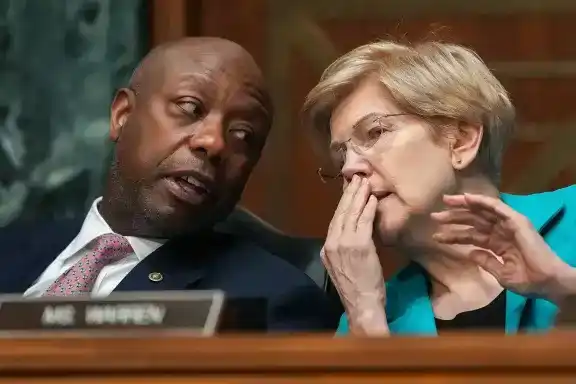
The CLARITY Act is a landmark bill aimed at establishing a regulatory framework for the U.S. crypto industry. The bill will begin its markup review process in a Senate committee starting Thursday. Its passing prospects have boosted investor sentiment, but there remain several significant hurdles to cross before Congress can send the bill to President Trump's desk.

CLARITY is short for the "Digital Asset Market Clarity Act." The bill passed the House of Representatives last year but encountered resistance in the Senate Banking Committee due to disputes between banks and stablecoin companies over whether and when rewards can be paid on stablecoin balances. Now, as senators prepare to propose amendments, Democrats are pushing to include ethical constraint clauses related to the Trump family's crypto businesses.

According to a copy of proposed amendments reviewed by Fortune, members of the Senate Banking Committee have submitted over 130 proposed amendments ahead of Thursday's markup, with Senator Elizabeth Warren alone submitting 44.

Some of the proposed amendments are minor, but others aim to advance the positions of the bill's opponents. These opponents include banking interests concerned that stablecoins could weaken the deposit base of banks, as well as those worried about ethical and national security risks accompanying the crypto industry's expansion.

"I think it will pass, based on the progress made in both chambers of Congress so far and the White House's support for this bill," Steve Yelderman, general counsel for the Ethereum-focused initiative Etherealize, told Fortune. "Having said that, this is Washington, and anything can happen."

Earlier this year, the CLARITY Act came close to entering a Senate Banking Committee markup, but Coinbase withdrew its support for the bill over a proposed ban on stablecoin rewards. Since then, Senator Thom Tillis (R-N.C.) and Senator Angela Alsobrooks (D-Md.) reached an agreement on the stablecoin yield issue. However, banking lobbying groups now complain that this compromise is too friendly to stablecoin companies. Reportedly, members of the American Bankers Association have sent over 8,000 letters to Senate offices criticizing this yield compromise.

A Senate aide told Fortune that during tomorrow's markup, Senate Banking Committee Chairman Tim Scott (R-S.C.) is expected to emphasize protecting "ordinary people," safeguarding national security, and keeping crypto innovation in the United States as the main goals of the CLARITY Act. Another Senate aide said Democrats are expected to focus on the ethical issues raised by President Trump's numerous crypto connections.

"Democrats are increasingly concerned that if ethics provisions are not included in the version of the bill marked up by the Banking Committee, they may not be included later," the staffer said. They added that Democrats are focused on addressing the issue of the Trump family profiting from cryptocurrencies within the market structure legislation. Republicans and Democrats have met several times this week to discuss how to add ethics clauses to the CLARITY Act.

For now, the bill's chances of reaching a full Senate vote remain significant. A key Republican who had previously been hesitant about the CLARITY Act in the Banking Committee, Senator John Kennedy of Louisiana, told Semafor he plans to support the bill. However, with the summer recess and midterm elections approaching, the margin for error for the CLARITY Act remains quite limited. Traders on Polymarket have become less optimistic about the bill's prospects this week. The prediction market currently puts the probability of the bill passing this year at 60%.


Domande pertinenti

QWhat is the CLARITY Act and what is its primary goal?

AThe CLARITY Act refers to the 'Digital Asset Market Clarity Act'. It is a landmark bill aimed at establishing a regulatory framework for the crypto industry in the U.S., with the primary goal of providing clear rules for digital assets while protecting retail investors, combating illicit finance, and keeping financial innovation in the United States.

QWhy was the progression of the CLARITY Act in the Senate Banking Committee previously stalled?

AThe bill's progress in the Senate Banking Committee was previously stalled due to disputes between banks and stablecoin companies over the question of whether and when stablecoin balances could pay rewards.

QWhat are the key tensions in U.S. crypto regulation highlighted by the CLARITY Act's progress?

AThe article highlights three key tensions: 1) Whether stablecoin rewards are a payment incentive or a form of indirect deposit competition; 2) Whether the crypto market structure legislation protects investors or opens a regulatory pathway for industry expansion; 3) Whether market structure reform must incorporate ethical constraints given the deep involvement of the Trump family in crypto businesses.

QWhat is one major concern Democrats are trying to address with proposed amendments to the CLARITY Act?

ADemocrats are trying to address ethical concerns by pushing to incorporate ethical constraint clauses related to the Trump family's crypto business profits into the market structure legislation.

QAccording to prediction markets, what is the current estimated probability of the CLARITY Act passing in 2025?

AAccording to the prediction market Polymarket, the estimated probability of the CLARITY Act passing in 2025 is currently around 60%.

Letture associate

ENS Founder Seeks to 'Seize Power' from DAO

On June 29th, the ENS community entered the on-chain voting phase for a proposal to renew the ENS DAO Security Council's veto power for two more years. Shortly after voting began, ENS founder Nick Johnson used his substantial ENS holdings to cast over 3.55 million votes against the proposal, swinging the outcome despite initial strong support. The Security Council was established in July 2024 with a 4/8 multisig veto power to protect the DAO's treasury (valued over $350 million) from malicious proposals during a period of low voter participation. Its powers were limited to vetoing only harmful proposals, not normal ones. Nick Johnson's opposition stems from broader concerns about ENS DAO's governance. In late 2025, he and others expressed frustration that the DAO had become mired in political gamesmanship, with capable contributors leaving and leadership falling to less experienced or misaligned parties. This context set the stage for a major restructuring proposal by ENS COO Katherine Wu on June 19th, titled "Next Era of ENS DAO: Empowering the ENS Foundation." The controversial proposal aims to transfer daily operations, treasury management, and long-term strategy to a restructured ENS Foundation with a professional board, while the DAO would retain core protocol governance powers. Critics, including original ENS constitution author Brantly Millegan, argue this effectively transfers treasury control from token holders to ENS Labs (the core development team), undermining the DAO's original decentralized design. Nick's massive "no" vote on the Security Council renewal is seen as the first move in this power struggle. He explained his vote was due to concerns about insufficient checks on the Council's power and the potential for its veto to be used politically. In response, Katherine Wu submitted a revised proposal with higher execution thresholds (5/8 instead of 4/8) and stricter limits. The push for change comes as ENS's annual revenue has declined significantly, from over $10 million in 2023 to under $2 million in 2025, increasing pressure to manage the treasury more effectively. Nick Johnson now faces the challenge of proving that a more structured foundation can steer ENS better than the current DAO model.

Foresight News9 min fa

ENS Founder Seeks to 'Seize Power' from DAO

Foresight News9 min fa

Predicting World Cup Knockout Matches: Why Are Different AI Models So Far Apart?

AI performance in predicting the 2026 FIFA World Cup knockout matches varied significantly, according to an analysis of models including ChatGPT, Grok, DeepSeek, Gemini, and Claude. The standout predictions came from DeepSeek and Gemini for the Netherlands vs. Morocco match. Gemini precisely forecasted a 1-1 draw and a penalty shootout win for Morocco, while DeepSeek correctly identified the high probability of a draw and Morocco's potential to advance via a defensive and counter-attacking strategy. Grok and Tongyi Qianwen (千问) demonstrated strength in predicting accurate scores for matches with clearer favorites. They correctly called the narrow 1-0 win for Canada over South Africa and Brazil's 2-1 victory over Japan, as well as Norway's 2-1 win over Ivory Coast. ChatGPT and Claude excelled more in match process analysis than in predicting exact scores or upsets. They frequently identified potential challenges for favorites, such as Japan's pressing against Brazil or DR Congo's defensive tactics against England, even when predicting the favorite's ultimate victory. A notable failure was the unanimous misjudgment of Germany vs. Paraguay. All models incorrectly favored Germany, underestimating Paraguay's ability to force a penalty shootout and cause an upset. In summary, Gemini and DeepSeek showed the most insight for high-stakes, unpredictable matches. Grok and Qianwen were reliable "score predictors" for less volatile games. ChatGPT and Claude were strong "analytical models," adept at outlining match dynamics but often hesitant to predict upsets.

Odaily星球日报38 min fa

Predicting World Cup Knockout Matches: Why Are Different AI Models So Far Apart?

Odaily星球日报38 min fa

Will There Be a Next Wave of Web3 Games? Veteran Player's Review: At the Peak of Hype, You Should at Least Sell Half

**Title: Is There Another Wave for Web3 Gaming? A Veteran Player's Review: When Hype Peaks, You Must Exit at Least Half** **Summary:** In an interview, veteran player "Earn Money Chicken" shares his journey and reflections on Web3 gaming. He transitioned from being a traditional in-game trader to a Web3 gamer, having profited from games like Mobox, StepN, and Seraph, but also experiencing significant losses. He defines himself primarily as a player, not an investor, attracted to Web3 games for the blend of earning potential, engaging gameplay, and the satisfaction of researching game mechanics. While he enjoys strategic "gambling" within games, he emphasizes it's not about zero-sum competition with other players. The interview explores the complex, often adversarial relationship between players, projects, and major investors (whales). The player's experience as a traditional game merchant helped develop his analytical mindset for spotting opportunities, but wasn't directly transferable. He identifies the core sources of profit in early Web3 gaming as **"era红利" (era-specific红利)** and strategic foresight, not just simple calculations. He warns that the biggest mistake ordinary players make is calculating their return-on-investment (ROI) period at peak hype, as asset and yield depreciation can trap them. Reflecting on his wins and losses, he now advocates for managing expectations. His most successful exit was from Seraph, where he sold at a relatively good time. The key problem with current Web3 games, he argues, is that most are not mature games first. A successful Web3 game must primarily be a **good, fun game** with a genuine player base willing to spend money for enjoyment, not just participants seeking profit. The blockchain element should solve problems within that context, not be the primary driver. While he believes the sector might see another speculative boom (possibly another strong "Ponzi" model attracting hype), a truly mature and sustainable Web3 game likely needs to come from a traditional major game studio. It would leverage a proven IP, mature content, a functional NFT trading system, and attract both traditional and crypto-native players, offering more normalized returns rather than extreme暴利. His final advice: Newcomers without prior experience should avoid the space now, as it's like searching for a diamond in the rough. For those remaining, the rule is: be brave when assets are low and overlooked, but **when everyone is talking about it (at peak hype), you must sell at least half your holdings.**

marsbit1 h fa

Will There Be a Next Wave of Web3 Games? Veteran Player's Review: At the Peak of Hype, You Should at Least Sell Half

marsbit1 h fa

Trading

Spot
活动图片