The Body is the Ultimate Cold Wallet: Don't Lose the Private Key to Your Health

marsbitPubblicato 2026-01-23Pubblicato ultima volta 2026-01-23

Introduzione

English Summary: The article argues that one's physical body is the ultimate "cold wallet" – the foundational asset upon which all other investments and achievements depend. Drawing parallels between financial portfolio management and biohacking, the author details a comprehensive, data-driven protocol to optimize health and cognitive performance for high-stakes decision-makers. The system is built on four pillars of biometric monitoring: continuous glucose monitoring (CGM) to stabilize energy, a WHOOP band to track recovery via HRV, a body composition scale to audit visceral fat, and genetic testing to understand inherent strengths and weaknesses. The core strategies focus on fixing metabolic inflexibility through intermittent fasting and a low-sugar diet, and combating the "liquidity crisis" of sedentary life with a standing desk and under-desk treadmill. The author also outlines a precise "supplement Stack" investment portfolio, categorized into defensive infrastructure (e.g., Omega-3s, anti-inflammatories), performance enhancers for mitochondrial function (e.g., ALA, CoQ10), and maintenance tools for sleep and gut health. The execution protocol involves data-driven eating to flatten glucose curves and a structured exercise regimen combining Zone 2 cardio with strength training. The ultimate goal is not just longevity but ensuring the brain and body operate at all-time highs (ATH) to consistently capture alpha in all aspects of life. The best foundational asset is one...

Author: Chen Xiaomeng

A healthy person has a thousand wishes, while a sick person has only one.

— Naval Ravikant

In the crypto market and capital games, I have always emphasized a concept: the cornerstone assets of human civilization.

I buy NVIDIA/GOOGL to bet on the future of the computing power civilization, and I hold BTC to hedge against the collapse of the fiat system. I scrutinize every project's whitepaper, tokenomics, and on-chain data with extremely critical eyes.

However, upon crossing the threshold of 30, I have become increasingly aware of an obvious yet often overlooked Beta risk: if the "cold wallet" of the body loses its private key, or if the hardware suffers irreversible failure, then all the asset appreciation on-chain becomes meaningless.

For those of us who require all-day, high-intensity mental decision-making and frequently cope with violent market fluctuations, physical function is actually the second largest cornerstone asset, after BTC and AI.

To build the most robust biological moat, I have constructed a full-stack Biohacking protocol.

This is a war about efficiency, metabolic rate, and ROI.

I. Due Diligence: Building a High-Frequency Data Dashboard
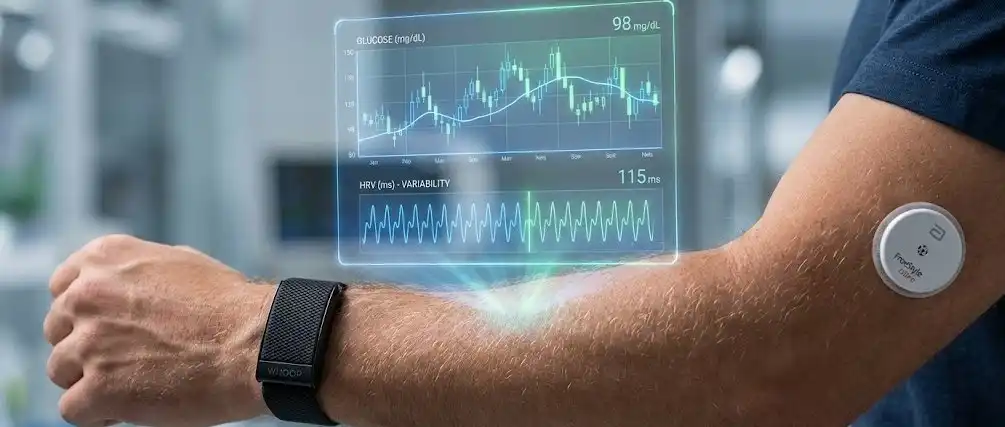
Investment requires data support, and body management should never rely on feelings. To precisely control this complex biological system, I introduced a four-dimensional data monitoring system, equivalent to building a Dune dashboard for the body:

Real-time Metabolic Monitoring: Continuous Glucose Monitor (CGM) I wear an Abbott FreeStyle Libre CGM patch. While it's used by diabetics, high-performers can also use it as a real-time volatility monitor.

  • Logic: Dramatic blood sugar fluctuations are the main culprits behind post-meal drowsiness and the collapse of focus and willpower. Through the CGM, I can visually see the "K-line trend" that each bite of food brings to my body, thereby keeping my blood sugar within a stable, narrow fluctuation range.

  • System Recovery Monitoring: WHOOP monitors Heart Rate Variability (HRV) and deep sleep. This determines whether my strategy for the day is aggressive or conservative.

  • Body Composition Audit: 8-electrode body fat scale focuses on muscle mass and visceral fat level. Visceral fat is the biggest hidden liability and must be liquidated at all times.

  • Underlying Code Audit: Full genome testing to understand my factory settings (source code) and formulate the safest interaction strategies for genetic weaknesses.

II. Core Algorithm Upgrade: Repairing Metabolism and Liquidity

For someone like me who sits in front of a computer all day, the two biggest systemic risks are: metabolic rigidity and blood liquidity depletion.

1. Repairing Metabolic Flexibility

The watershed after 30 is whether the body, this mining rig, can still operate efficiently. Many people's problem lies in insulin resistance—this is like congestion and high Gas Fees on the Ethereum network, preventing energy from being used efficiently by cells and instead accumulating as fat.

  • Strategy: I aim for a hybrid power system. The body can burn glucose (electricity) and also smoothly switch to burning fat (oil) during fasting periods.

Means:

Intermittent Fasting (16:8): Give the digestive system a 16-hour daily maintenance shutdown to clear memory garbage.

  • Sugar-Control Diet: Reduce intake of refined carbohydrates to avoid frequent insulin spikes and crashes.

2. Combating the Sedentary Crisis

Sitting is the new smoking. For me, sitting for long periods is not just a posture issue; it's an internal liquidity crisis. Long-term inactivity reduces lipase activity by 90%, like an exchange pulling the plug—all transactions halt instantly.
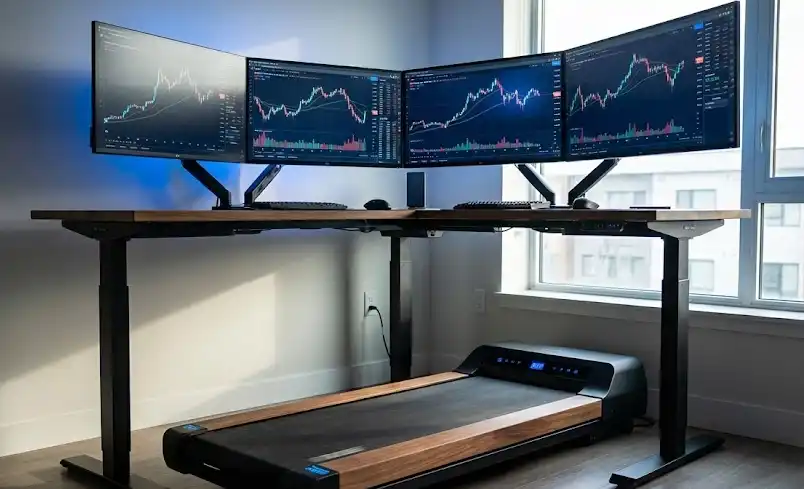
Hardware Upgrade:

Standing Desk: Switch to a standing posture at any time to break the僵局 (deadlock).

  • Under-desk Treadmill: This is my secret weapon. During leisure or entertainment, maintain a slow walk to increase blood flow to the brain, directly doubling mental clarity.

III. Portfolio Strategy: My Supplement Investment Portfolio

Based on the above logic, I have built a supplement portfolio called "The Stack." I only select long-term proven blue-chip assets.

Sector 1: Infrastructure & Defense

Goal: Counter the inflammatory response caused by sedentary habits and high pressure.

  • High-Purity Omega-3 (EPA/DHA): Vascular scavenger, combats blood viscosity from sitting, and is a hardware lubricant for the brain.

  • Milk Thistle + Curcumin: "Insurance" for the liver. Handles熬夜 (staying up late) stress and reduces systemic chronic inflammation.

  • Vitamin D3 + K2: Essential basics for indoor workers.

Sector 2: Computing Power Enhancement & Metabolic Optimization

Goal: Optimize mitochondrial function, address metabolic sluggishness.

  • Alpha-Lipoic Acid (ALA) + Coenzyme Q10 + PQQ: This is an extremely powerful combination. ALA is not only an antioxidant but also mimics insulin action, helping brain workers like me metabolize blood sugar more efficiently, sending energy into cells instead of storing it on the belly. The Mitochondrial Trio. The heart and brain are the organs with the highest energy consumption. This combination can significantly increase energy output (ATP) at the cellular level, resolve brain fog, and make decision-making more decisive.

  • Active B-Complex Vitamins: Stabilizers for the nervous system, combat anxiety.

Sector 3: Maintenance & Garbage Collection

  • Magnesium Glycinate: The holy grail of sleep, improves sleep ROI.

  • Psyllium Husk Powder: A physical firewall for gut health, reduces toxin absorption.

IV. Execution Protocol: Data-Based Alpha Strategy

With hardware monitoring and supplement leverage, daily behaviors are the foundation for Beta returns.

  • Data-Driven Dietary Algorithm: No longer blindly follow a certain diet, but adjust in real-time based on CGM feedback. The core principle is to flatten the blood sugar curve. High protein, quality fats, large amounts of fiber, and strategic intake of low-glycemic carbs. This is essentially a low-volatility strategy; keeping blood sugar stable means keeping focus stable.

Structured Exercise Protocol:

DCA (Dollar-Cost Averaging): 3-4 sessions of Zone 2 low-intensity steady-state cardio per week to build a strong cardiopulmonary foundation and metabolic base.

  • Building Support Levels: 2-3 strength training sessions per week. Muscles are the body's armor and metabolic organs, crucial for maintaining structural support levels and preventing a crash as age increases.

V. Conclusion

Investment is an infinite game. Those who live long will see the prosperity of the next cycle.

After 30, building a biological moat is a necessity. I must not only prevent capital shrinkage but also prevent muscle loss, metabolic collapse, and vascular hardening.

This is not just for longevity, but also to ensure that at every critical moment, the brain is in ATH (All-Time High) condition to capture its own Alpha.

The best cornerstone asset is always yourself.

Domande pertinenti

QWhat is the main analogy the author uses to describe the human body in the context of high-performance work and investing?

AThe author uses the analogy of the body being the 'ultimate cold wallet', where health is the private key. If this 'hardware' fails or the 'private key' is lost, all other asset accumulation becomes meaningless.

QAccording to the author, what are the two biggest systemic risks for someone who sits at a computer all day?

AThe two biggest systemic risks are metabolic rigidity (metabolic inflexibility) and a liquidity crisis in blood flow.

QWhat is the primary purpose of the author's 'The Stack' supplement portfolio?

AThe purpose of 'The Stack' supplement portfolio is to function like a selection of proven 'blue-chip' assets to support the body's infrastructure, enhance cognitive performance (compute power), optimize metabolism, and aid in maintenance and 'garbage collection'.

QHow does the author use a Continuous Glucose Monitor (CGM) beyond its typical medical application?

AThe author uses a CGM as a real-time volatility monitor to track how different foods affect blood sugar levels, aiming to keep glucose in a stable, narrow range to avoid post-meal fatigue and crashes in focus and willpower.

QWhat is the ultimate goal of building what the author calls a 'biological moat'?

AThe ultimate goal is not just longevity, but to ensure the brain is consistently performing at an 'All-Time High' (ATH) state to capture alpha opportunities, making the individual themselves the best foundational asset.

Letture associate

The Value Distribution of Stablecoins

**Summary: The Value Distribution of Stablecoins** The article argues that stablecoins are evolving from mere trading tools into broader channels for dollar access. It divides the stablecoin ecosystem into four layers to analyze how value is distributed: 1. **Issuance Layer:** Mints stablecoins, holds reserve assets, and captures the spread between reserve yield and user costs (e.g., Tether, Circle). This layer currently earns the largest profit margin. 2. **Infrastructure Layer:** Connects stablecoins to the traditional financial system, handling fiat on/off-ramps, banking integration, compliance (KYC/AML), and asset management (e.g., Bridge, BVNK). This is the "unglamorous" but critical work, building the essential bridges between crypto and real-world finance. 3. **Acquiring/Distribution Layer:** Integrates stablecoins into merchant systems, manages payment flows, and provides enterprise financial software (e.g., Stripe, Coinbase). They act as the access point for businesses. 4. **Application Layer:** The end-users and businesses that ultimately use stablecoins for payments, settlements, or as a store of value. They benefit from convenience but have little pricing power. The core thesis is that while the issuance layer currently dominates profits, the often-overlooked **infrastructure layer holds significant long-term potential**. The real challenge and barrier to mass adoption is not the on-chain transfer of stablecoins (which is simple), but the complex "last mile" integration into existing business workflows, banking systems, and regulatory frameworks across different countries. Companies in this layer are currently in a "land grab" phase, investing heavily to build networks, secure bank partnerships, and establish compliance pathways. While their position is currently pressured by the profitable issuers above and distribution platforms below, the article suggests that if stablecoins become a default financial rail for businesses, the infrastructure providers who have done the hard work of integration will ultimately gain strong pricing power and become entrenched, essential players.

marsbit28 min fa

The Value Distribution of Stablecoins

marsbit28 min fa

The Value Distribution of Stablecoins

The Value Distribution of Stablecoins The article argues that stablecoins are evolving from a mere trading tool into a broad "dollar channel." It analyzes the industry's value chain through four layers: 1. **Issuance Layer (e.g., Tether, Circle):** The top layer that mints stablecoins, holds reserve assets, and captures the thickest interest rate spread. 2. **Infrastructure Layer (e.g., Bridge, BVNK):** Connects stablecoins to the traditional financial system, handling critical but complex "dirty work" like fiat on/off-ramps, banking integration, compliance (KYC/AML), and cross-border settlement. 3. **Acquiring/Distribution Layer (e.g., Stripe, Coinbase):** Embeds stablecoins into merchant systems, manages payment flows, and integrates with enterprise software. 4. **Application Layer:** End-users and businesses that ultimately use stablecoins for payments, settlement, or storing value. The author posits that while the issuance layer currently captures the most profit, the most overlooked and potentially critical layer is infrastructure. The core challenge for stablecoin adoption isn't the on-chain transfer (which is simple), but bridging the gap between blockchain and the real-world financial system. This involves solving practical problems for businesses: fiat conversion, reconciliation, tax handling, and user onboarding. Infrastructure companies are currently in a difficult "land-grab" phase—building networks, securing banking relationships, and achieving compliance country-by-country. They face pressure from both the profitable issuance layer above and distribution platforms below. However, the author suggests this layer is building a crucial moat. Once stablecoins become a default business rail, the infrastructure players who have done the hard work of integration may gain significant, durable value and pricing power.

链捕手32 min fa

The Value Distribution of Stablecoins

链捕手32 min fa

How to Do Research Well: Deliberately Practice the Real Skills That Matter

No one truly teaches you how to do research. You're often given a desk, a pre-selected problem, and vague instructions to "create something new." Consequently, many people reverse-engineer the job based on visible outputs—papers, posts, announcements—learning only how to *appear* like a researcher rather than how to *become* one. True research capability is built from stacking small, trainable skills, nearly all of which can be developed through deliberate practice. **Pick Your Own Problem:** Most researchers absorb problems from advisors or trends, lacking the underlying reasoning. Choosing a problem you genuinely care about, as John Schulman advises, leads to original work. Develop "taste" like a muscle: predict experiment outcomes, guess paper results from methods, and track which findings remain important over time. **Upgrade Your Inputs:** Relying on shared reading lists (arXiv hot lists, filtered group chats) leads to unoriginal conclusions. Undervalued old literature often holds crucial insights (e.g., MoE, LSTM, backpropagation). Richard Sutton's "The Bitter Lesson" or Claude Shannon's 1952 talk on creative thinking are more predictive than lengthy modern surveys. Breadth matters as much as depth: draw from neuroscience, mechanism design, hardware knowledge, and honest statistics. Read papers directly, especially appendices and limitations sections. **Write Everything Down:** As Paul Graham noted, writing exposes flaws in seemingly mature ideas. Writing is the cheapest defense against self-deception. Following Feynman's principle, Darwin programmatically wrote down facts contradicting his theory to combat memory bias. Maintain a detailed log of hypotheses, setups, predictions, results, and updated understandings. Reviewing past logs fosters essential humility.

marsbit2 h fa

How to Do Research Well: Deliberately Practice the Real Skills That Matter

marsbit2 h fa

Trading

Spot
Futures
活动图片





