The Advancing MM 1: Market Maker Inventory Quoting System

marsbitPubblicato 2025-12-28Pubblicato ultima volta 2025-12-28

Introduzione

The article "Advancing MM 1: Market Maker Inventory Quoting System" explains why retail traders often experience price movements against their positions after buying altcoins. It argues this is not due to market manipulation but is a result of automated market maker (MM) systems responding to inventory risk and toxic order flow. When traders place large buy orders, MMs sell inventory, creating a short exposure. To mitigate this risk, MMs adjust their pricing using the Avellaneda-Stoikov model. They skew quotes lower to attract sellers and widen spreads to reduce transaction probability, aiming to return inventory to a balanced state while protecting against adverse selection. The reservation price, central to this model, is calculated as the mid-price adjusted by inventory levels and risk aversion. The article notes that retail traders are particularly affected because their orders are often large, concentrated, and not hedged—especially in low-liquidity altcoins. A suggested strategy for traders is to break large orders into smaller, less detectable increments, allowing them to buy at progressively better prices as the MM’s quoting system reacts. The post teasers follow-up articles on order book dynamics and toxic flow.

Author: Dave

Have you ever experienced a situation where, after buying some altcoins, the price keeps moving in the opposite direction in a short time, as if the "whales" are targeting you? Why does this happen? Is it really a conspiracy by the whales?

This post will introduce the market maker's quoting system and unveil the mystery behind the "whale conspiracy." The conclusion is: prices often move against us not due to subjective manipulation, but rather due to Inventory-based pricing quote skew under the Avellaneda–Stoikov model and the protective mechanisms for handling toxic flow. How exactly? Once upon a time...

First, let's understand the concept of inventory. Everyone knows that market makers are not directional investors. Under strict hedging, spot price changes should not affect the total P&L. At this point, holding inventory is a "passive" behavior. Changes in inventory lead to an expansion of positions—the more positions you hold, the greater your risk exposure to adverse price movements. At this time, retail buying and selling orders cause changes, and market makers react to the risks brought by these inventory changes.

In a nutshell: you break their balance, and the MM has to protect themselves and try to return to equilibrium. The means of protection is the quoting system.

1. Quote Skew

When the MM is heavily bought by you, it is equivalent to: the MM has sold heavily, and the inventory becomes a short exposure. What does the MM hope to do at this time: (1) Replenish the inventory as soon as possible. (2) Protect the exposed short position.

The MM's reaction is: lower the price to attract selling, prevent further buying, and ensure that their net short position remains temporarily non-loss-making, giving them time to hedge.

2. Spread Widening

When the inventory continues to deteriorate, the MM not only skews the price but also widens the spread to reduce the probability of execution.

Their goal is to reduce the risk of execution per unit time while earning more through spread profits to protect against price losses.

While writing this article, every additional mathematical formula reduces the number of readers by 10%, but in case some小伙伴们 want to see something substantial, I'll briefly introduce the formation of quotes (which is also the mathematical mechanism behind the above quote changes).

The price at which we trade with the market maker is called the Reservation Price, which comes from the Inventory-based pricing model:

Reservation Price = Mid price − γ⋅q

q: current inventory

gamma γ: risk aversion coefficient

Actually, the Reservation Price looks like the following, but I don't want to gross you out, so just take a glance:

When retail traders buy or sell heavily, q changes significantly, causing the Reservation Price to change significantly. The exact amount of change comes from the Avellaneda–Stoikov model. As you might guess, since buying and selling cause small changes in inventory, this model is a partial differential equation. Guess what? I'm not interested in deriving this equation either, so we only need to know the core conclusion:

The optimal quote is symmetrically spread around the Reservation Price. Inventory must mean-revert to 0. The optimal spread widens with risk.

If you don't understand the above, it's okay. Just know that after retail buying, prices often move against the bullish direction, essentially because our flow changes the market's risk pricing. The reasons retail traders often encounter this situation are:

• Retail traders are almost always takers.

• Concentrated size, non-stealthy timing.

• No hedging.

• No time slicing, no order splitting.

In small altcoins, this situation is even more severe because altcoin liquidity is poor. Often, your order is one of the few aggressive orders in a 5-minute window. In large-cap assets, natural hedging might occur, but in small coins, you are the whale's counterparty.

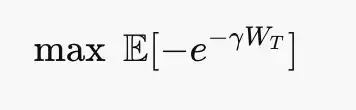
So professional MMs are not trying to crush you; they are maxE[Spread Capture]−Inventory Risk−Adverse Selection. Actually, their objective function looks like this, with inventory risk being exponentially penalized:
Readers who have made it this far must be韭菜 with dreams of becoming whales. So, to激励 the brave, here's a little trick to利用 the quoting mechanism. We said retail traders often have concentrated size and non-stealthy timing—so just do the opposite. Suppose Dave wants to go long 1000U. Instead of going all in at once, using the whale's method, first buy 100U. The quoting system will lower the price, allowing me to build a position at a cheaper level. Then I buy another 100U, and the price will continue to drop, so my average entry cost will be much cheaper than going all in at once.

The story of retail misfortune is only half told here. Besides inventory management and quoting factors, the MM's handling of order flow is another element causing price divergence—the toxic flow mentioned at the beginning. In the next part, I will introduce the market maker's order book and order flow, and I will also speculate on the micro-market reasons behind the 1011惨案.

To find out what happens next, stay tuned for the next episode.

"The Advancing MM 2: Market Maker Order Book and Order Flow"

"The Advancing MM 3: Statistical Edge and Signal Design"

Domande pertinenti

QWhat is the main reason why altcoin prices often move against retail traders after they buy, according to the article?

AIt is not due to subjective manipulation, but rather the result of the Avellaneda-Stoikov model's Inventory-based pricing quote skew and protection mechanisms against toxic order flow.

QHow does a market maker (MM) react when its inventory becomes short due to large retail buying?

AThe MM will lower its prices to attract sell orders and discourage further buying, while also widening the bid-ask spread to reduce the probability of execution and protect its exposed short position.

QWhat is the 'Reservation Price' in the context of the market maker's pricing model?

AThe Reservation Price is the price at which trades occur with the market maker, and it is calculated as the Mid Price minus the product of the risk aversion coefficient (γ) and the current inventory (q).

QWhat are the characteristics of retail trader orders that make them particularly vulnerable to adverse price movements in illiquid altcoins?

ARetail orders are often aggressive (taking liquidity), concentrated in size, not stealthy in timing, unhedged, and not split or timed strategically.

QWhat practical tip does the article suggest for a trader who wants to buy a large position to get a better average entry price?

AInstead of buying the entire position at once, the trader should split the order into smaller parts. Buying a small amount first causes the MM's pricing system to lower the price, allowing subsequent buys to be executed at cheaper levels, resulting in a lower average cost.

Letture associate

Trading

Spot
Futures

Articoli Popolari

Cosa è WL

I. Introduzione al ProgettoWorldLand è una L2 o side chain di Ethereum, progettata come una soluzione dal basso verso l'alto per migliorare l'ecosistema di Ethereum.II. Informazioni sul Token1) Informazioni di BaseNome del token: WL (WorldLand)III. Link CorrelatiSito web:https://worldland.foundation/Esploratori:https://bscscan.com/address/0x8aaB31fbc69C92fa53f600910Cf0f215531F8239Social:https://x.com/WorldLand_space Nota: L'introduzione al progetto proviene dai materiali pubblicati o forniti dal team ufficiale del progetto, che sono solo a scopo di riferimento e non costituiscono consulenza per gli investimenti. HTX non si assume alcuna responsabilità per eventuali perdite dirette o indirette risultanti.

304 Totale visualizzazioniPubblicato il 2026.03.28Aggiornato il 2026.03.28

Cosa è WL

Come comprare WL

Benvenuto in HTX.com! Abbiamo reso l'acquisto di WorldLand (WL) semplice e conveniente. Segui la nostra guida passo passo per intraprendere il tuo viaggio nel mondo delle criptovalute.Step 1: Crea il tuo Account HTXUsa la tua email o numero di telefono per registrarti il tuo account gratuito su HTX. Vivi un'esperienza facile e sblocca tutte le funzionalità,Crea il mio accountStep 2: Vai in Acquista crypto e seleziona il tuo metodo di pagamentoCarta di credito/debito: utilizza la tua Visa o Mastercard per acquistare immediatamente WorldLandWL.Bilancio: Usa i fondi dal bilancio del tuo account HTX per fare trading senza problemi.Terze parti: abbiamo aggiunto metodi di pagamento molto utilizzati come Google Pay e Apple Pay per maggiore comodità.P2P: Fai trading direttamente con altri utenti HTX.Over-the-Counter (OTC): Offriamo servizi su misura e tassi di cambio competitivi per i trader.Step 3: Conserva WorldLand (WL)Dopo aver acquistato WorldLand (WL), conserva nel tuo account HTX. In alternativa, puoi inviare tramite trasferimento blockchain o scambiare per altre criptovalute.Step 4: Scambia WorldLand (WL)Scambia facilmente WorldLand (WL) nel mercato spot di HTX. Accedi al tuo account, seleziona la tua coppia di trading, esegui le tue operazioni e monitora in tempo reale. Offriamo un'esperienza user-friendly sia per chi ha appena iniziato che per i trader più esperti.

230 Totale visualizzazioniPubblicato il 2026.03.28Aggiornato il 2026.03.28

Come comprare WL

Come comprare BASED

Benvenuto in HTX.com! Abbiamo reso l'acquisto di Based (BASED) semplice e conveniente. Segui la nostra guida passo passo per intraprendere il tuo viaggio nel mondo delle criptovalute.Step 1: Crea il tuo Account HTXUsa la tua email o numero di telefono per registrarti il tuo account gratuito su HTX. Vivi un'esperienza facile e sblocca tutte le funzionalità,Crea il mio accountStep 2: Vai in Acquista crypto e seleziona il tuo metodo di pagamentoCarta di credito/debito: utilizza la tua Visa o Mastercard per acquistare immediatamente BasedBASED.Bilancio: Usa i fondi dal bilancio del tuo account HTX per fare trading senza problemi.Terze parti: abbiamo aggiunto metodi di pagamento molto utilizzati come Google Pay e Apple Pay per maggiore comodità.P2P: Fai trading direttamente con altri utenti HTX.Over-the-Counter (OTC): Offriamo servizi su misura e tassi di cambio competitivi per i trader.Step 3: Conserva Based (BASED)Dopo aver acquistato Based (BASED), conserva nel tuo account HTX. In alternativa, puoi inviare tramite trasferimento blockchain o scambiare per altre criptovalute.Step 4: Scambia Based (BASED)Scambia facilmente Based (BASED) nel mercato spot di HTX. Accedi al tuo account, seleziona la tua coppia di trading, esegui le tue operazioni e monitora in tempo reale. Offriamo un'esperienza user-friendly sia per chi ha appena iniziato che per i trader più esperti.

474 Totale visualizzazioniPubblicato il 2026.03.30Aggiornato il 2026.03.30

Come comprare BASED

Discussioni

Benvenuto nella Community HTX. Qui puoi rimanere informato sugli ultimi sviluppi della piattaforma e accedere ad approfondimenti esperti sul mercato. Le opinioni degli utenti sul prezzo di A A sono presentate come di seguito.

活动图片














