Tezos Art Ecosystem Tops 500K NFT Sales in 2025 as Institutional Adoption Accelerates

TheNewsCryptoPubblicato 2025-12-19Pubblicato ultima volta 2025-12-19

Introduzione

The Tezos art ecosystem achieved over 500,000 NFT sales in 2025, driven by significant institutional adoption and artist growth. Key initiatives included an expanded partnership with the Museum of the Moving Image (MoMI), which introduced 243,000 visitors to digital art and blockchain wallets through free minting stations. A year-long program commissioned twelve artists to integrate FA2 smart contracts into their work. Tezos was prominently featured at major global events like NFT Paris and Art Basel, with highlights including Kiki Picasso’s live demonstration on a historic Quantel Paintbox and the three-day Art on Tezos Berlin festival, which attracted 700+ global attendees. The ecosystem also partnered with the Processing Foundation to advance creative coding education. Notable sales included Mario Klingemann’s AI-generated piece “Triggernometry” for 43,000 tez and qubibi’s live-coded work “hello world” for 62,000 tez. The Francisco Carolinum’s acquisition of on-chain digital art marked a significant institutional milestone. With ongoing partnerships and growing global engagement, Tezos solidified its role as a leading blockchain for digital art and cultural innovation.

2025 was a remarkable year for institutional adoption and artist growth because to the Tezos art ecosystem, which resulted in the sale of more over half a million non-fungible tokens (NFTs) during the year. Art on Tezos continues to show that blockchain technology can effectively support creative activity at scale. This is demonstrated via a variety of initiatives, including ground-breaking museum collaborations and unique educational programs.

This year, the Tezos Foundation extended its relationship with the Museum of the Moving Image (MoMI), therefore converting the Herbert S. Schlosser Media Wall at the museum into a platform for creative experimentation that is based on blockchain technology. The MoMI has exposed approximately 243,000 people to digital art since the first collaboration exhibition in June 2024. Many of these visitors have created blockchain wallets for the first time via the museum’s free minting station experience. A total of twelve artists will be commissioned to produce unique works that include FA2 smart contracts as an intrinsic part of their artistic practice as part of the new initiative that will last for a whole year. Additionally, the FA2 Fellowship will be created, which is intended to educate artists and developers about Tezos FA2 smart contracts.

Throughout the year 2025, the Tezos ecosystem was found at important art events, which served as evidence of its widespread existence. At NFT Paris in February, digital art pioneer Kiki Picasso gave a live demonstration on an original Quantel Paintbox from the 1980s. This was the same machine that was used to produce the MTV logo and early digital masterpieces by artists such as David Hockney. The presentation garnered a lot of attention. The “Paintboxed – Tezos World Tour” transported this machine from the history of digital art to four different cities: New York, Miami, Paris, and Basel during Art Basel. The purpose of the tour was to introduce thousands of people to the origins of the medium while also showcasing fresh works created by experienced artists who are now making art on the blockchain.

One of the most significant events of the year was Art on Tezos Berlin, a festival that took place over the course of three days and turned Berlin into a worldwide center for digital art. The event included over 500 artists, dozens of exhibitors, and featured the world’s finest artists in their areas investigating the convergence of art, technology, and artificial intelligence. It drew more than 700 guests from all around the globe. Artists such as p1xelfool, OONA, and the poet Franziska Ostermann delivered performances that pushed the frontiers of live digital art. Meanwhile, the pieces that were on display displayed a wide range of artistic practices, ranging from generative art to interactive experiences.

These activities, in conjunction with the successful activations that took place at Paris Photo and other worldwide festivals, involved tens of thousands of visitors during the course of the year. Many of these visitors created their very first digital artwork via the immersive experiences that they participated in. At the Paris Photo show, Artverse had a stand that included notable artists such as Niceaunties, Grant Yun, Reuben Wu, Shavonne Wong, Emi Kusano, and Genesis Kai. Several of these artists were publishing their works on Tezos for the very first time. Because of the outstanding sales results, the curation was made available for purchase via objkt one, and it attracted a large number of first-time purchasers on Tezos.

All during the year, education remained a primary focus of attention. The month of August saw the announcement of a strategic alliance with the Processing Foundation, a non-profit organization that works to promote software literacy in the arts and technology. This cooperation was announced in conjunction to the MoMI x Tezos FA2 Fellowship as well. The collaborative program is in the process of developing a full tutorial series for p5.js 2.0, which will provide students all around the world access to creative coding education. Earlier initiatives that were backed by the Tezos Foundation, such as WAC Labs, which provided blockchain education to professionals across more than forty institutions, and Newtro in Argentina, which focused on onboarding artists via workshops and practical training, are being expanded upon by this effort.

The year 2025 was a celebration of a number of notable creative accomplishments within the ecosystem. Recent highlights include the purchase of TeleNFT pieces by the Francisco Carolinum, which were first displayed at Art on Tezos Berlin. This substantial institutional addition of totally on-chain digital art marks a significant milestone for the institution. Following its presentation during his solo exhibition at Galerie Met, the live-coded generative piece hello world by artist qubibi was also shown in Berlin. It was purchased for 62,000 tez during the exhibition. Earlier this year, Mario Klingemann’s early artificial intelligence piece, Triggernometry, which was a generative music video, was also sold for 43,000 tez at the Digital Art Mile. It was curated by Anika Meier for objkt one, which highlights the rising presence of generative art across both market and exhibition settings.

As the year 2025 draws to a close, it looks that the basis for ongoing expansion is solid. The relationship with MoMI will continue until January 2027, and subsequent stages will introduce new artists and creative ways to the integration of blockchain technology.

Tezos is a blockchain that is both cutting-edge and energy-efficient. It has been used by thousands of artists from all over the world for the purpose of creating and selling digital art. Additionally, cultural organizations such as the Serpentine Gallery, the Musée d’Orsay, and the Las Vegas Art Foundation have utilized it for their unique approaches to cultural programming.

TagsAltcoinBlockchain

Crypto di tendenza

Domande pertinenti

QWhat was the total number of NFT sales in the Tezos art ecosystem in 2025?

AThe Tezos art ecosystem sold over half a million (500,000) non-fungible tokens (NFTs) in 2025.

QWhich major museum did the Tezos Foundation extend its partnership with, and what was the name of the media wall they transformed?

AThe Tezos Foundation extended its partnership with the Museum of the Moving Image (MoMI) and transformed the Herbert S. Schlosser Media Wall into a platform for creative blockchain-based experimentation.

QWhat was the name of the three-day festival in Berlin that became a global hub for digital art on Tezos?

AThe three-day festival was called Art on Tezos Berlin.

QWhat was the price and title of the live-coded generative piece by artist qubibi that was sold during an exhibition?

AThe live-coded generative piece titled 'hello world' by artist qubibi was sold for 62,000 tez.

QWhat is the focus of the strategic alliance announced between the Tezos ecosystem and the Processing Foundation in August?

AThe strategic alliance focuses on promoting software literacy in the arts and technology, specifically by developing a comprehensive tutorial series for p5.js 2.0 to provide creative coding education to students worldwide.

Letture associate

The "Impossible Triad" Is Fundamentally a Pseudo-Problem

The article argues that blockchain's fundamental limitation is not the scalability trilemma (decentralization, scalability, security), which has been largely solved, but the lack of **privacy** and, until recently, clear **legitimacy**. Blockchain is described as a slow, expensive, globally shared computer whose core value is censorship resistance and verifiability. While ideal for native digital assets like money (e.g., stablecoins), its default transparency acts as a **tax**, exposing all transactions and enabling MEV extraction, which deters serious institutional capital. Simultaneously, its permissionless nature created regulatory ambiguity. The piece contends that **privacy** is the missing critical feature. It rejects the false choice between total transparency and complete anonymity. Modern cryptography (like zero-knowledge proofs) enables **compliant privacy**: users can prove facts (solvency, KYC status, compliance) without revealing the underlying sensitive data (specific holdings, identities). This preserves auditability for regulators and eliminates the leak of financial information. With recent regulatory progress (e.g., the GENIUS Act) addressing legitimacy, adding default, provably compliant privacy becomes a pure upgrade. It transforms blockchain from a costly, public ledger into a confidential settlement layer, finally bridging the gap to mainstream institutional and individual adoption of on-chain finance.

链捕手9 h fa

The "Impossible Triad" Is Fundamentally a Pseudo-Problem

链捕手9 h fa

Optical Chips: Collective Capacity Expansion

The global optical chip industry is experiencing a massive wave of expansion driven by surging AI data center demand. Major players across the US, Japan, Europe, and China are aggressively investing to ramp up production capacity. In the US, Coherent is expanding its 6-inch Indium Phosphide (InP) semiconductor fab in Texas, supported by CHIPS Act funding and a $2 billion strategic investment from NVIDIA. Lumentum is building a new factory for InP optical devices, and Nokia is scaling its advanced photonic chip packaging and testing capabilities. NVIDIA's investments aim to secure future supply of critical lasers and optical interconnect products for AI infrastructure. Japan's JX Advanced Metals, a leading InP substrate supplier, plans a multi-billion yen investment to increase its capacity 7-10 times, strengthening its grip on the crucial upstream materials market. In Europe, IQE and Tower Semiconductor settled a patent dispute and signed a multi-year InP epitaxial wafer supply agreement, highlighting that next-generation silicon photonics platforms will integrate high-performance InP components. STMicroelectronics and Sivers Semiconductors are also expanding silicon photonics production and partnerships. China is rapidly building out its domestic supply chain. Dongshan Precision's subsidiary, Source Photonics, announced a $12 billion project to expand optical chip and module production. Companies like Sanan Optoelectronics and Yunnan Germanium are scaling up InP chip manufacturing and substrate production, moving towards vertical integration from materials to modules. While debate continues around the exact future architecture—whether CPO (Co-Packaged Optics), NPO, or pluggables will dominate—analysts like Morgan Stanley argue the underlying driver is unchangeable: the explosive growth in bandwidth demand. This will inevitably increase the volume of optical engines, lasers, and related content per GPU, regardless of the final technical path. The competition for "more light" in the AI era has intensified into a global, full-chain capacity race.

marsbit12 h fa

Optical Chips: Collective Capacity Expansion

marsbit12 h fa

Stablecoins Finally Find Real Yield: An In-Depth Look at On-Chain Reinsurance Re | A Conversation with Re Founder Karan Saroya

Stablecoin Real Yield Found: A Deep Dive into On-Chain Reinsurance with Re's Karan Saroya As stablecoin supply exceeds $170 billion, the search for sustainable, non-speculative yield intensifies. Re, an on-chain reinsurance platform, provides an answer: connecting stablecoin capital to the trillion-dollar traditional reinsurance market. Re operates as a regulated reinsurer, accepting stablecoin deposits as collateral to back US insurance companies. These insurers pay premiums, generating yield that flows back to on-chain depositors. Currently supporting 35 insurers and underwriting $500 million, Re projects scaling to over $1 billion soon. Key insights from a Bankless podcast with founder Karan Saroya and investor Avichal of Electric Capital: 1. **Uncorrelated, Real-World Yield:** Re offers stablecoin holders access to reinsurance returns (targeting 12-14%+), an asset class entirely separate from crypto or equity markets. 2. **Operational Efficiency via Smart Contracts:** Re replaces traditional, labor-intensive capital fundraising with smart contracts, allowing a ~12-person team to compete with industry giants. 3. **Regulatory Leverage:** For every $1 of collateral, regulations allow backing $5-7 in written premiums. This leverage amplifies returns from the underlying risk-free rate. 4. **DeFi Integration:** Depositors receive receipt tokens, which can be used in protocols like Morpho for "looping," potentially pushing yields to 18-20%+. 5. **The "DeFi Mullet" Model:** A compliant front-end (regulated reinsurer) paired with a decentralized back-end (smart contracts, DeFi capital markets). 6. **RE Governance Token:** Modeled on Lloyd's of London, the token governs the central capital pool's allocation, counterparty acceptance, and parameters. 7. **Real Economic Impact:** Capital funds real-world productivity (factories, clinics, businesses) via insurance, moving beyond crypto's internal loops. The discussion highlights a pivotal moment: DeFi's supply-side infrastructure is now met by real demand for productive yield, potentially kickstarting a flywheel where vast on-chain stablecoin capital seeks these real-world returns.

链捕手13 h fa

Stablecoins Finally Find Real Yield: An In-Depth Look at On-Chain Reinsurance Re | A Conversation with Re Founder Karan Saroya

链捕手13 h fa

1996 or 1999? Walsh's First Test is 'How to View AI'

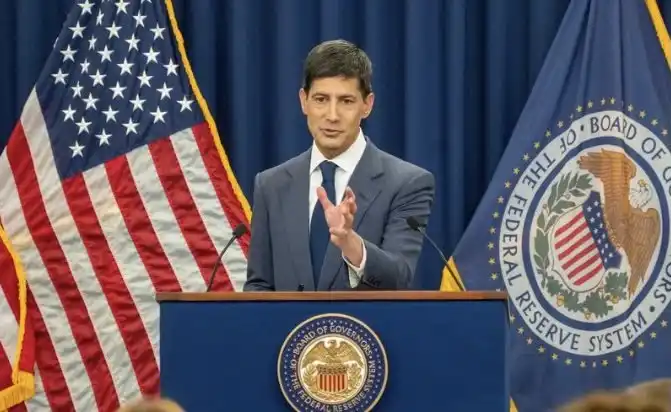
"1996 or 1999? Wall's First Big Test Is 'How to View AI'" Federal Reserve Chairman Wall's initial challenge is not whether to raise or cut rates, but a more fundamental judgment: what kind of boom is the current AI boom? This will determine the Fed's policy path and define his legacy. Economics is split between two opposing views, according to reporter Nick Timiraos. One sees imminent productivity gains that will increase supply and cool inflation, allowing the Fed to hold steady. The other argues that while productivity benefits are distant, demand shocks are here now, and waiting for data confirmation risks missing the intervention window, forcing sharper rate hikes later. Wall has signaled a leaning toward the first view, echoing 1996-era Alan Greenspan, who embraced strong, productivity-driven growth without fear of inflation. However, Wall faces a different macro environment than Greenspan did, with tariff pressures, expanding fiscal deficits, and diminishing globalization benefits, which could force more significant inflation pressures even if AI benefits materialize. Wall's logic, expressed before taking office, is that AI-driven productivity gains won't show in official data for years. If the Fed waits for confirmation, it might mistakenly tighten policy and choke off the very growth that could suppress inflation. This argues for using forward-looking narratives over lagging data. Chicago Fed President Austan Goolsbee presents a key counter-argument. He distinguishes between expected and unexpected productivity booms. A widely anticipated boom, like the current AI wave, can cause people to spend future wealth gains in advance, overheating the economy before productivity actually rises, thus requiring preemptive rate hikes. He cites rising costs for AI data centers as evidence of such overheating. Fed Governor Christopher Waller offers a rebuttal to Goolsbee, noting the "expected spending" mechanism only works if people can borrow against future income, which many households cannot do due to borrowing constraints. Wall also faces a paradox related to his desire to reduce the Fed's use of "forward guidance" (pre-announcing policy moves). This practice was established in 1999 when Greenspan began signaling hikes to avoid market shocks. If the economy follows a less optimistic path, Wall may be forced to choose between using the guidance he wants to abolish or risking market volatility by staying silent. The ultimate question defining Wall's first major test remains: Is this 1996 or 1999?

marsbit14 h fa

1996 or 1999? Walsh's First Test is 'How to View AI'

marsbit14 h fa

Trading

Spot
Futures

Articoli Popolari

Come comprare NFT

Benvenuto in HTX.com! Abbiamo reso l'acquisto di APENFT (NFT) semplice e conveniente. Segui la nostra guida passo passo per intraprendere il tuo viaggio nel mondo delle criptovalute.Step 1: Crea il tuo Account HTXUsa la tua email o numero di telefono per registrarti il tuo account gratuito su HTX. Vivi un'esperienza facile e sblocca tutte le funzionalità,Crea il mio accountStep 2: Vai in Acquista crypto e seleziona il tuo metodo di pagamentoCarta di credito/debito: utilizza la tua Visa o Mastercard per acquistare immediatamente APENFTNFT.Bilancio: Usa i fondi dal bilancio del tuo account HTX per fare trading senza problemi.Terze parti: abbiamo aggiunto metodi di pagamento molto utilizzati come Google Pay e Apple Pay per maggiore comodità.P2P: Fai trading direttamente con altri utenti HTX.Over-the-Counter (OTC): Offriamo servizi su misura e tassi di cambio competitivi per i trader.Step 3: Conserva APENFT (NFT)Dopo aver acquistato APENFT (NFT), conserva nel tuo account HTX. In alternativa, puoi inviare tramite trasferimento blockchain o scambiare per altre criptovalute.Step 4: Scambia APENFT (NFT)Scambia facilmente APENFT (NFT) nel mercato spot di HTX. Accedi al tuo account, seleziona la tua coppia di trading, esegui le tue operazioni e monitora in tempo reale. Offriamo un'esperienza user-friendly sia per chi ha appena iniziato che per i trader più esperti.

507 Totale visualizzazioniPubblicato il 2024.12.10Aggiornato il 2025.03.21

Come comprare NFT

Cosa è AINFT

EternaFi Agents e $AINFT: Un'Analisi Completa dell'Infrastruttura NFT Potenziata dall'AI nell'Ecosistema Web3 L'intersezione tra intelligenza artificiale (AI) e tecnologia blockchain sta rapidamente evolvendo, stabilendo piattaforme innovative che ridefiniscono i modelli di proprietà e partecipazione economica. EternaFi Agents, insieme al suo token nativo $AINFT, esemplifica un approccio rivoluzionario alla tokenizzazione delle infrastrutture AI attraverso i token non fungibili (NFT). Lanciato a luglio 2025 dal team di sviluppo di Nova Club, EternaFi unisce i progressi dell'AI con i meccanismi finanziari decentralizzati della blockchain, presentando un'opportunità di investimento unica per i partecipanti all'interno dell'ecosistema web3. Questo articolo mira a fornire una valutazione approfondita di EternaFi Agents, coprendo i suoi componenti principali, la funzionalità e il significato nel panorama crypto. Introduzione e Panoramica del Progetto EternaFi Agents si presenta come un esempio saliente di come la tecnologia blockchain possa democratizzare l'accesso a capacità avanzate di AI. Il progetto si impegna a rimodellare il paradigma della proprietà dell'AI diversificando la partecipazione economica, rendendo i sistemi AI sofisticati accessibili a un numero maggiore di stakeholder. Al suo interno, il progetto tokenizza un modello di linguaggio di grandi dimensioni (LLM) proprietario sviluppato da Nova Club, consentendo ai detentori di NFT di ottenere un'esposizione frazionaria alle performance economiche del modello. Utilizzando NFT che rappresentano quote nel LLM, EternaFi Agents promuove un modello in cui gli stakeholder non solo partecipano al consumo dei servizi AI, ma godono anche della condivisione delle ricompense economiche generate dalla piattaforma. Questo approccio trasformativo consente lo sviluppo di modelli di reddito sostenibili per i servizi AI, promuovendo al contempo un ampio coinvolgimento della comunità e facilitando una governance trasparente. Cos'è EternaFi Agents? EternaFi Agents rappresenta un progetto di infrastruttura AI-NFT che mira a mescolare le capacità dell'AI con la tecnologia blockchain in un ecosistema coerente. La caratteristica essenziale di questo progetto è la creazione di NFT che fungono da strumenti finanziari, rappresentando frazioni di proprietà nell'infrastruttura AI proprietaria di Nova Club. Ogni NFT simboleggia un'esposizione diretta alle performance economiche del sistema AI sottostante, fornendo un'opportunità redditizia per gli investitori. Il progetto opera sulla blockchain Base, nota per la sua scalabilità e efficienza, garantendo così costi di transazione gestibili mentre facilita un'esperienza operativa senza soluzione di continuità. Una delle caratteristiche notevoli include un meccanismo di condivisione dei ricavi, in cui i detentori di NFT possono ricevere porzioni del reddito da abbonamenti generato dai servizi AI forniti sulla piattaforma. Questo approccio innovativo stabilisce una connessione tra il successo dei servizi AI e i dividendi economici distribuiti tra i detentori, garantendo così un allineamento degli interessi all'interno della comunità. Chi è il Creatore di EternaFi Agents? La forza creativa dietro EternaFi Agents è Nova Club, un team di sviluppo con sede a Singapore esperto nell'amalgama di AI e tecnologia blockchain. La loro esperienza precedente nello sviluppo di AI e nell'analisi delle criptovalute conferisce credibilità al progetto, contribuendo con una vasta gamma di competenze alla creazione di EternaFi Agents. La missione di Nova Club si concentra sulla democratizzazione dell'accesso alle tecnologie AI all'avanguardia, costruendo modelli economici sostenibili che avvantaggiano gli utenti insieme agli sviluppatori. Il loro impegno per la trasparenza, la governance della comunità e l'innovazione si riflette nel design e nell'implementazione della piattaforma EternaFi, mirando a stabilire un ecosistema unico che favorisca un coinvolgimento positivo e la creazione di valore a lungo termine. Chi sono gli Investitori di EternaFi Agents? I dettagli specifici riguardanti gli investitori o le organizzazioni di investimento che supportano EternaFi Agents non sono disponibili pubblicamente. Tuttavia, EternaFi ha adottato un approccio inclusivo per finanziare il suo sviluppo attraverso la vendita di NFT al pubblico, consentendo a una vasta gamma di partecipanti di investire nell'ecosistema. L'architettura del progetto garantisce che l'infrastruttura fondamentale sia finanziata in modo responsabile, consentendo ai membri della comunità di partecipare alla proprietà e ai ritorni economici generati dai servizi AI. Questo modello enfatizza il coinvolgimento della comunità allineando gli interessi degli investitori e degli sviluppatori del progetto, creando un ambiente collaborativo in cui la partecipazione a lungo termine è incentivata. Come Funziona EternaFi Agents? EternaFi Agents opera attraverso un ecosistema multifaccettato in cui gli NFT fungono da principale mezzo di rappresentazione della proprietà all'interno del progetto. Ogni detentore di NFT ha diritto a una quota del reddito mensile da abbonamento prodotto dalla piattaforma AI-powered sottostante, posizionando così la proprietà di NFT come un veicolo di investimento redditizio. Meccanismo di Generazione di Ricavi La principale fonte di generazione di ricavi per la piattaforma EternaFi deriva dalle commissioni di abbonamento relative ai servizi AI forniti. Gli utenti possono accedere a vari servizi a livelli, che vanno da strumenti di analisi di mercato di base a soluzioni di trading assistite da AI complete. Questi servizi sono monetizzati e formano la base per il framework di condivisione dei ricavi, che distribuisce i profitti ai detentori di NFT attraverso contratti intelligenti automatizzati. Una caratteristica innovativa dell'ecosistema EternaFi è il meccanismo di condivisione dei ricavi che opera in modo trasparente, garantendo che le ricompense siano allocate in base a metriche verificabili delle operazioni della piattaforma AI. Questo crea un legame diretto tra le performance dei servizi AI e i ritorni disponibili per gli investitori della comunità, stabilendo un modello economico sostenibile. Meccanismi di Staking e Vesting I partecipanti all'interno di EternaFi possono impegnarsi nello staking dei loro NFT per sbloccare ulteriori benefici economici. Il piano di vesting è progettato per promuovere un impegno a lungo termine tra i partecipanti, premiando coloro che mostrano un supporto continuo per il progetto. Questo garantisce un robusto allineamento degli interessi e favorisce un senso di coinvolgimento della comunità essenziale per raggiungere gli obiettivi a lungo termine del progetto. Governance Trasparente EternaFi Agents abbraccia la governance decentralizzata, consentendo ai detentori di NFT di svolgere un ruolo attivo nel processo decisionale riguardante lo sviluppo della piattaforma e le direzioni future. La struttura di governance include meccanismi di voto della comunità, fornendo ai detentori di NFT l'opportunità di influenzare decisioni significative e contribuendo a un approccio collaborativo alla crescita del progetto. Cronologia di EternaFi Agents La traiettoria di sviluppo di EternaFi Agents mostra un approccio sistematico verso la costruzione di un'infrastruttura AI sostenibile, soddisfacendo le esigenze dei partecipanti della comunità. Di seguito è riportata una cronologia delle tappe importanti nella storia del progetto: Luglio 2025: Lancio di EternaFi Agents, inclusa la vendita pubblica di NFT e il deployment del token $AINFT sulla blockchain Base. Q4 2025: Creazione dell'infrastruttura di mercato, inclusi pool di liquidità e lancio di dashboard di staking per i detentori di NFT. 2026: Inizio di programmi di coinvolgimento della comunità, espansione delle capacità AI e integrazione con tecnologie cross-chain. Q4 2026: Implementazione del sistema di distribuzione dei dividendi, consentendo ai detentori di NFT di raccogliere benefici economici dai loro investimenti. Queste tappe significano l'attenzione verso l'istituzione di un ecosistema funzionale e partecipativo, garantendo al contempo un'evoluzione continua per soddisfare le esigenze del mercato. Infrastruttura Tecnologica e Integrazione Blockchain EternaFi Agents è ancorato in un avanzato framework tecnologico che combina sistemi AI con capacità blockchain. Operando sulla blockchain Base, il progetto sfrutta i vantaggi della scalabilità e dei bassi costi di transazione. L'architettura sottostante dei contratti intelligenti governa la proprietà degli NFT, la condivisione dei ricavi e le caratteristiche di gestione della comunità, garantendo efficienza e trasparenza. Sviluppo del Sistema AI Il modello di linguaggio di grandi dimensioni proprietario che sostiene EternaFi Agents è stato sviluppato in modo indipendente ed è progettato per soddisfare applicazioni generatrici di reddito senza fare affidamento su framework esterni proprietari. Questo impegno riflette una dedizione a creare un'infrastruttura AI versatile e adattabile in grado di fornire servizi significativi agli utenti, generando così valore economico per gli investitori. Misure di Sicurezza La robustezza dell'infrastruttura di sicurezza di EternaFi è fondamentale. Audit regolari e misure di sicurezza rigorose garantiscono l'integrità dei sistemi AI e dei meccanismi blockchain, proteggendo da potenziali vulnerabilità mentre si favorisce la fiducia tra i partecipanti. Conclusione EternaFi Agents segna un'innovazione fondamentale nel campo dell'intelligenza artificiale e della tecnologia blockchain, aprendo strade per la proprietà della comunità e la partecipazione economica in capacità AI avanzate. La strategia globale del progetto di tokenizzare l'infrastruttura AI tramite NFT stabilisce un precedente per futuri ecosistemi decentralizzati. Armonizzando la sofisticazione tecnica con modelli economici centrati sull'utente, EternaFi non solo promuove il coinvolgimento, ma genera anche un framework di condivisione dei ricavi sostenibile per i partecipanti della comunità. L'importanza di EternaFi si estende ben oltre il suo successo operativo, poiché esemplifica come la blockchain possa democratizzare le tecnologie AI all'avanguardia, aprendo la strada a future iniziative in questo spazio intersezionale. L'evoluzione di EternaFi Agents potrebbe annunciare una nuova era di sviluppo dell'AI caratterizzata da governance guidata dai partecipanti, modelli economici sostenibili e verifica trasparente, contribuendo infine alla più ampia democratizzazione dell'AI e dell'accessibilità tecnologica in tutti i settori.

495 Totale visualizzazioniPubblicato il 2025.08.14Aggiornato il 2025.08.14

Cosa è AINFT

Discussioni

Benvenuto nella Community HTX. Qui puoi rimanere informato sugli ultimi sviluppi della piattaforma e accedere ad approfondimenti esperti sul mercato. Le opinioni degli utenti sul prezzo di NFT NFT sono presentate come di seguito.

活动图片